LDS CHALLENGES TO THE CHRISTIAN CONCEPTUALIZATION OF EGYPTIAN HISTORY THROUGH THE USE OF A PROPHETIC LANGUAGE
“By the power of God I translated the Book of Mormon from hieroglyphics, the knowledge of which was lost to the world, in which wonderful event I stood alone, an unlearned youth, to combat the worldly wisdom and multiplied ignorance of eighteen centuries, with a new revelation.”
History of the Church, 6:74
Joseph Smith: Equal Parts Prophet and Translator
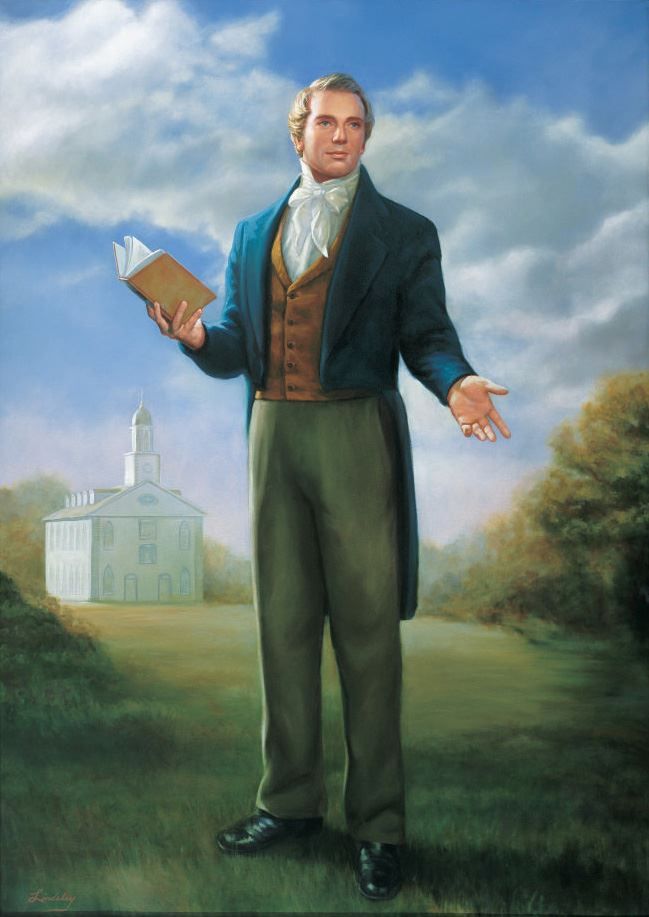
Joseph Smith came from a lower-class family in the northeastern region of the United States. His family often found themselves in debt, and Smith began to work to provide at a young age. His family was influenced heavily by the growing Second Great Awakening of the 19th century which saw shifting Christian denominations and thus created strong divisions of Christian people throughout public life. Smith’s mother felt anxiety from these changes and sought to understand which sect was the true one to take part of–an anxiety that Joseph adopted as well.
The First Vision
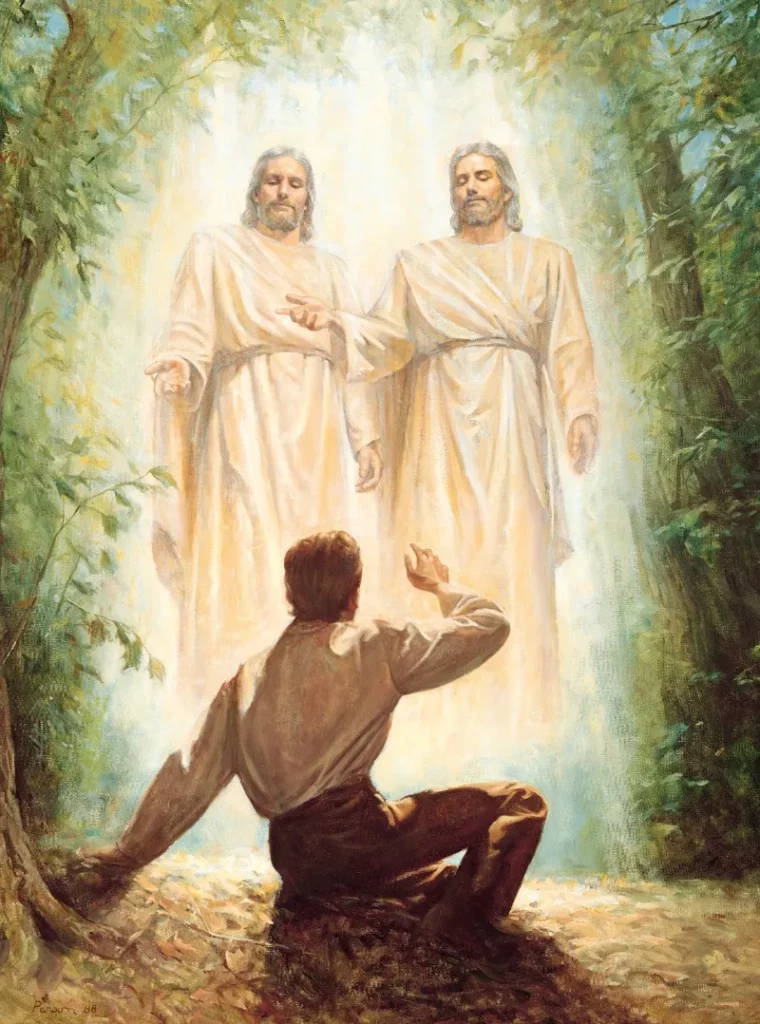
These anxieties about what church to attend caused Smith to pray to God often for guidance on which church was the true church of God, leading to his “first vision,” where at fourteen years old, two white gowned figures appeared to him while he was praying in the woods. The figures told him that none of the existing Christian sects were right, and they were seeking to pursue the commandments of man and not the commandments of God. Three years later, Joseph received his second vision where an angel named Moroni described to Smith the location of two golden plates, upon which was written in Reformed Egyptian and would contain the “fullness of the everlasting Gospel,” a nod to Smith’s curiosity surrounding which church is the correct one. He physically obtained the plates when he was twenty-one, at the instruction of Moroni, and once he acquired them, was instructed not to let anyone else set eyes on them. With the help of other believers of Joseph’s visions, like his wife and friend Martin Harris, Smith would soon take on the tedious task of translating the plates from the Reformed Egyptian language into English, which would soon become the holy religious scripture of the Mormon church.
The religious fragmentation of the awakening likely primed a population ready for a prophet, like Smith, to make bold claims about the correct way to follow religion.
the translation
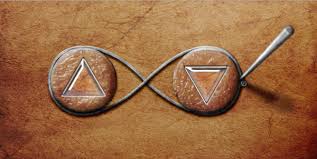
The plates were translated by Smith through the use of “Urim and Thummin”, also known as seer stones. These were a common “magical” tool used by treasure hunters to find, or better yet to attempt to find, buried ancient treasure in the Northeastern plains.
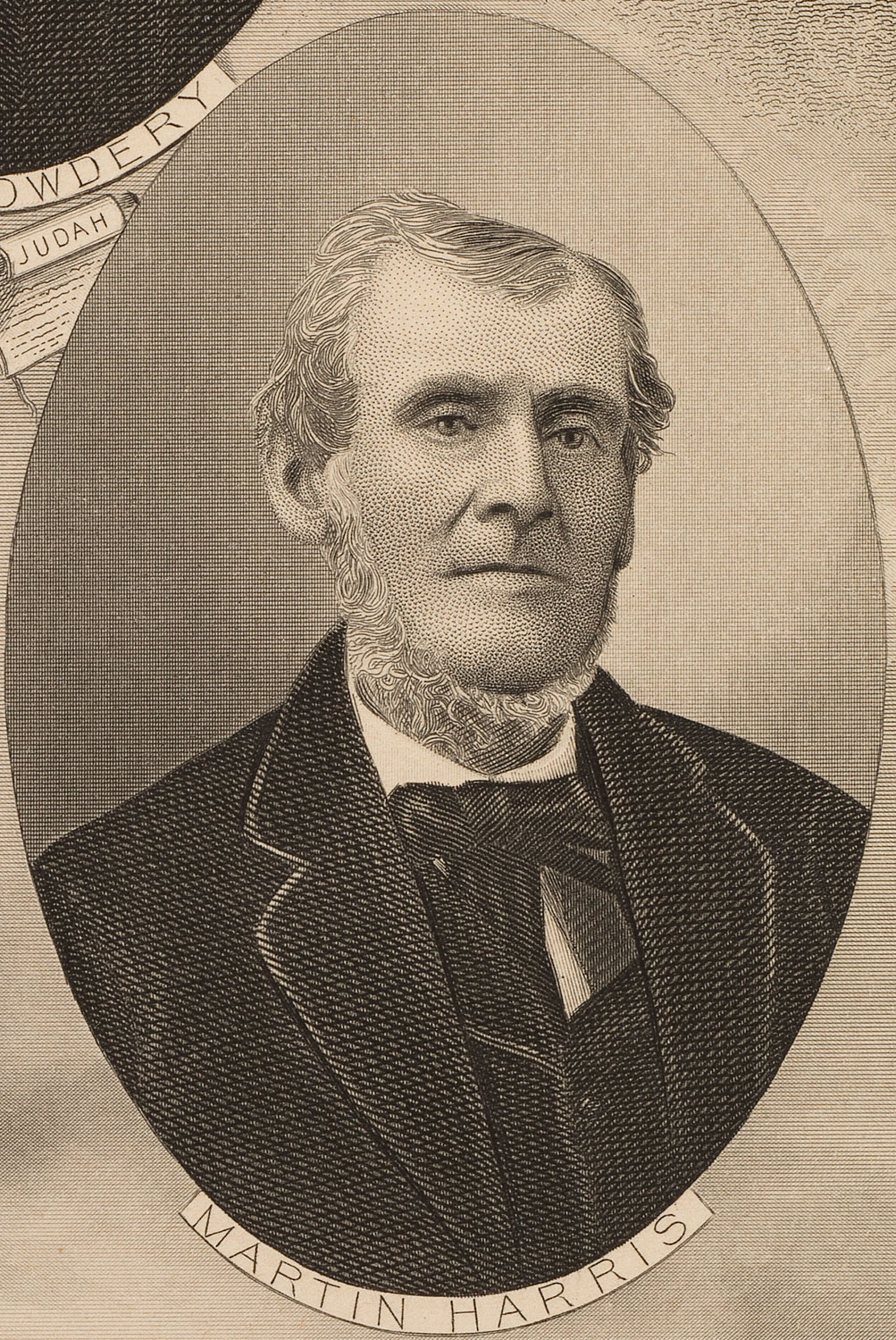
Martin Harris
Martin Harris would become a significant father of the Mormon faith, being one of the three translators of the Book of Mormon. He would also put up the first sum of money towards its publication. The translation process of the Golden Plates was complex, in large part because the angel Moroni had instructed Joseph that no one else was to see the plates (where Harris would just act as a scribe). The challenge of translation was also emphasized because Smith had little formal education and only minimal religious education at that. However, these facts granted Joseph the ability to claim his sudden learnedness on divine revelations given to him by God Himself. This practice of divine revelation would become Smith’s method of translating the Reformed language, also known as inspired translation, a concept which utilized the rather growing fascination of “magical” ability and utilization throughout the northeast to encourage others to believe his ability to be true. Before Smith got too deep into these “translations,” he wanted to verify his accuracy with scholars of linguistics and Egyptology.
The Anthon Transcript
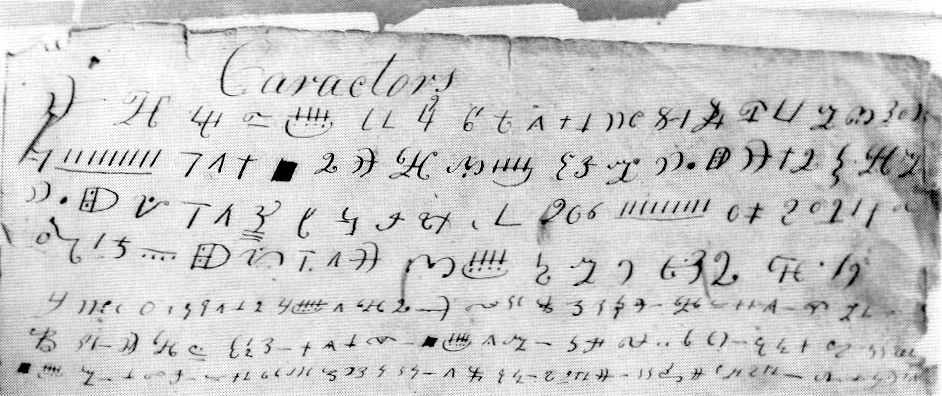
Once Smith recorded a set of characters, he sent Harris to Columbia College to be analyzed by scholar Charles Anthon. The encounter between these two men is largely debated, as they both recorded varying statements about the accuracy of Smith’s translation. These differences depict a strong tension between religious authority and scholarly discovery, where divine revelation does not coincide with historical understanding and thus creates a rift between belief in tangible evidence and faith. This difference in opinion, to members of the Mormon church today, regarding the validity of the translation is understood as a prophetic occurrence that satisfies the prophecy as stated in Isaiah 29:11 of the Hebrew Bible. It notes that “there will come a time when the learned would be unable to read the word of a sealed book.” The sealed book in this case is the Golden Plates. This reasoning creates a key space for Joseph Smith and his supporters to insert themselves into a narrative that requires no foundational knowledge in the provable and legitimate history of Egypt nor of linguistics, because whether the characters are consistent with any proper translation of the Egyptian language (or a reformed version of it) is irrelevant to the divine translations given by God through Smith.
So what?
- Reformed Egyptian characters, for the Mormon church, became a symbol of antiquity to their new faith. This language is not new and magical but rooted in “history.”
- If the language is verified as true, it would confirm Egypt’s role in Latter-day Saint sacred history and bolster the Book of Mormon’s credibility
- The understanding of the divine translation as not something literal but still grounded in historical fact allows Joseph Smith to enter into a space and imagine whatever world he wants, even a world that rewrites the past in the wake of deep Egyptian discovery in the 19th century.
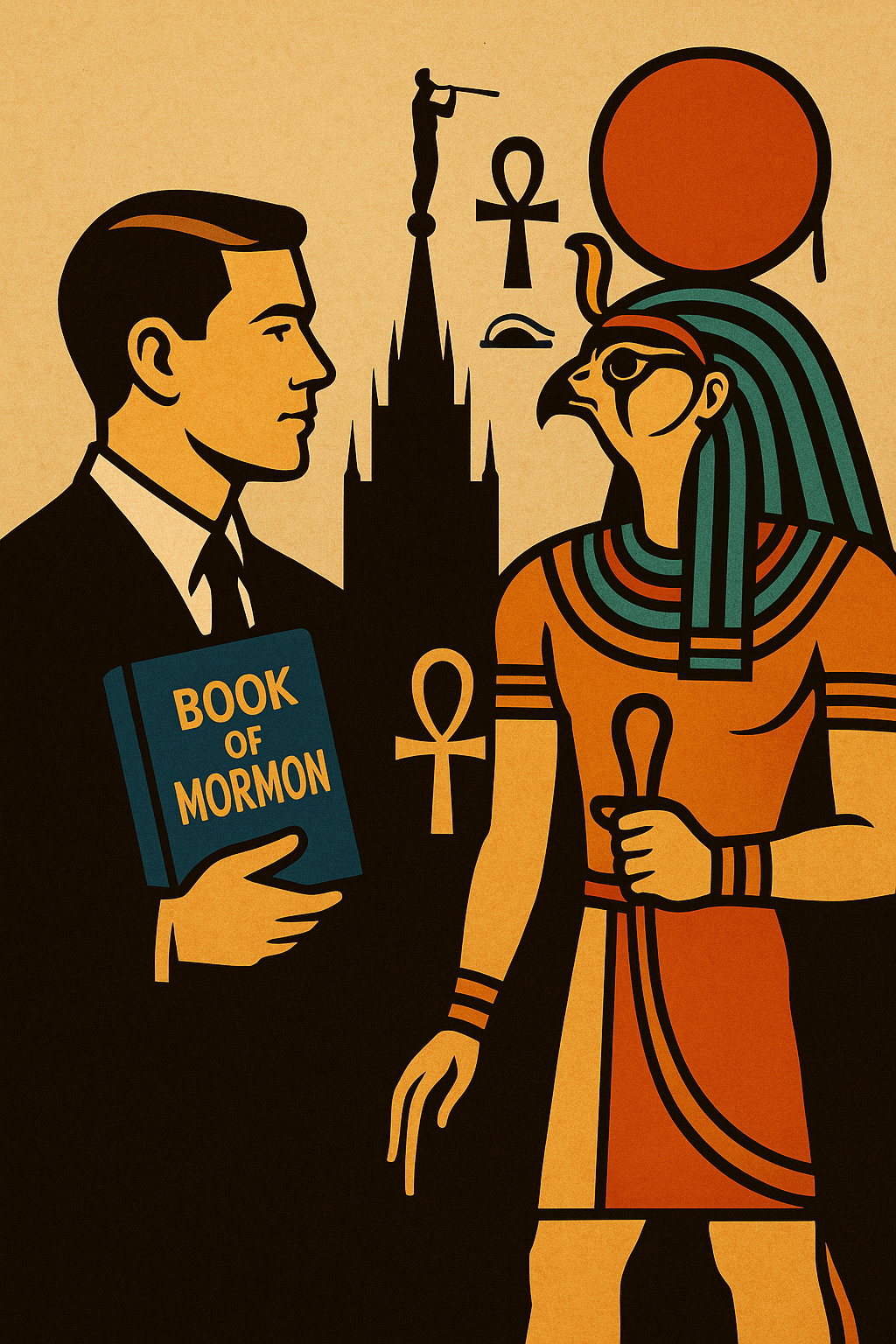
The publication
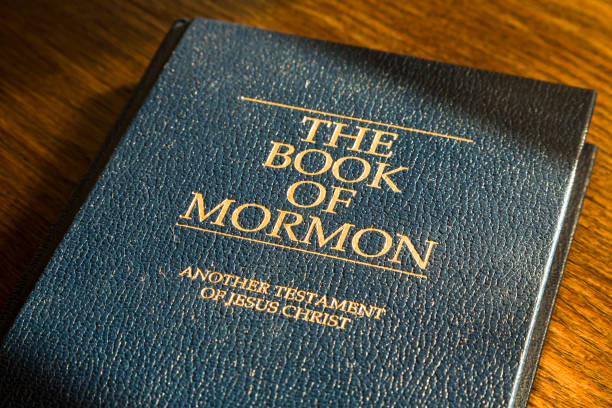
The completed Book of Mormon would be published four years after translations began in 1830. Within the completed Book of Mormon, readers and scholars then receive the history of the people who utilized the reformed language from the “translation” of the plates.
what the book includes
The Book of Mormon is formatted similarly to the Christian Bible, where it is split into books, chapters, and verses. This new book, however, tells of the history of a different group of people than the Hebrew Bible and New Testament do. The story telling, similar to the use of Reformed Egyptian, is utilized by Smith as a way of inserting his own history into something that already exists. For example, finding the holes in historical literature where he can fill with whatever version of history he desires.
Tribes of Israel from hebrew bible
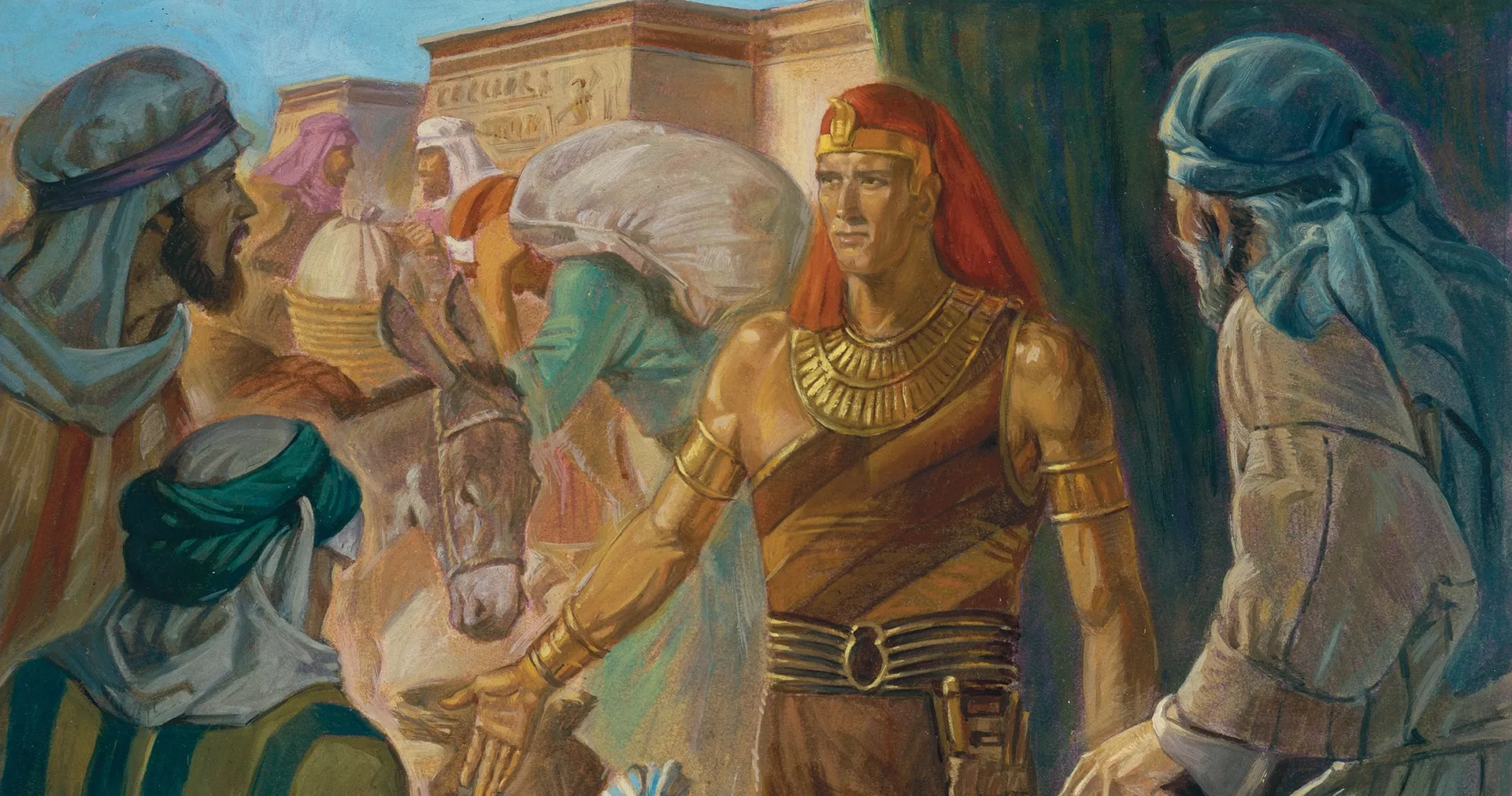
In the Hebrew Bible, a man named Jacob was the head of a lineage that would lead to the traditional twelve tribes of Israel. Of the twelve sons of Jacob, the youngest son, Joseph, would be sold into slavery in Egypt. However, a famine would force the rest of the family to seek food and work in Egypt, where Joseph had risen to great power despite his original status as a slave. Joseph would come to have two sons, Ephraim and Manasseh, who would lead two tribes of Israelites in the place of their father, alongside the brothers of Joseph. These two tribes, along with eight others, would make up the Kingdom of Israel, which would fall in 722 BCE to the Assyrian people, becoming known as the “lost tribes of Israel,” and scattering to create an Israelite diaspora–or so historians believed. This “untraceable” history is where Joseph Smith’s translations are inserted.
What smith inserts…
From the lost tribe of Manasseh and Ephraim comes Joseph Smith and the Latter-day Saints. A man named Lehi, who was a descendant of the tribe of both Ephraim and Manasseh through intermarriage, would become a prophet, receiving divine messages from God regarding the safety of his people. He would lead his family to the Americas, where four primary tribes would emerge through the sons of Lehi–the Nephites, Lamanites, Jaredites, and Mulekites. The Book of Mormon would tell the history and journey of these tribes, through plates recorded by prophets beginning with Nephi, the son of Lehi. All these records were then culminated by a prophet named Mormon, who combined all the recorded history into an “abridged version”, the text that would ultimately be found by Joseph Smith. In the book of First Nephi, he says that reformed Egyptian was “the language of my father, which consists of the learning of the Jews and the language of the Egyptians.”
Reformed history
Like the original Plates abridged by Mormon, the ones written by the ancient prophets were also in a reformed style of Egyptian. Therefore, it is reasonable to assume that the language of Reformed Egyptian was passed down through generations. The Nephites in the Book of Mormon were known as divine record keepers who were connected to God, and this language was used to preserve the sacred records of these lost tribes of Israel. Joseph Smith and the Golden Plates utilizes the Hebrew Bible’s tribes of Israel and sacred importance of lineage to connect established Old Testament literature to the Book of Mormon Characters, and therefore establish some form of historic authority, similar to how his fulfillment of prophecy at the meeting with Charles Anthon took shape. This new understanding of the story of the lost tribes of Israel, from a group lost to the whims of history to a core people set apart by God to receive prophecy of “the only true and living church upon the face of the whole earth,” is an ultra-important facet of Joseph Smith’s utilization and reshaping of Egyptian history for his own religious gain. Egypt as a foundational place for the Mormon faith, rather than a place that created the traditional diaspora of the tribes of Israel, is critical to understanding the importance and weight of Joseph Smith’s translations. Even as noted in the book of Nephi, these translations procured by Smith would come to present and “establish the truth” of the Jewish people and therefore eventually the Mormons.
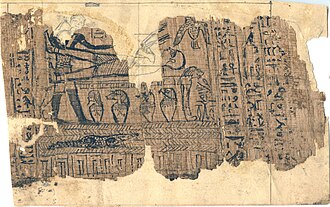
THE PAPYRI
In the height of the Egyptomania, Smith’s fascination with the Ancient culture was noticed by others. A traveling antiquity salesman, possibly taking advantage of Smith’s naivety, brought a group of ancient mummies and papyri (scrolls) for Joseph to buy. He bought some of each, and eventually received revelations telling him that one of the papyri contained the true and ancient record of the ancient patriarchs–Joseph and Abraham. This would be “translated” by Smith through his process of divine translation and turned into the Book of Abraham, now part of the LDS canon. Spoiler alert: these papyri have since been translated by “learned eyes” and are ancient funerary texts, not the history of Abraham.
The Book of Abraham expands on the Book of Mormon, acting as a preface for the information that Smith had already published. It builds on the tribes of Israel, and leads to the story of the Nephites in the Book of Mormon.
Once again, Joseph Smith created a historical foundation and source of antiquity for his “revelations” to rest in, solidifying his ability to bring others to his new faith.
What does this have to do with Egypt?
Through his use of divine revelation and rediscovery of ancient history, Joseph Smith effectively changes the popular Christian understanding of Egypt as a place of bondage and slavery, to a Mormon view as Egypt as the chosen location for the restoration of the Gospel and reception of the priesthood.
Egypt Before Joseph Smith:
- Exodus 20:2 states that “I am the LORD your God, who brought you out of Egypt, out of the land of slavery.”
- Isaiah 19 denotes Egypt as a place of deception for the Jewish people where their pagan gods pretend that they can protect the Jews instead of God himself, saying that Egypt will succumb to its foolishness, and will be set against each other without rescue by “foolish idols.”

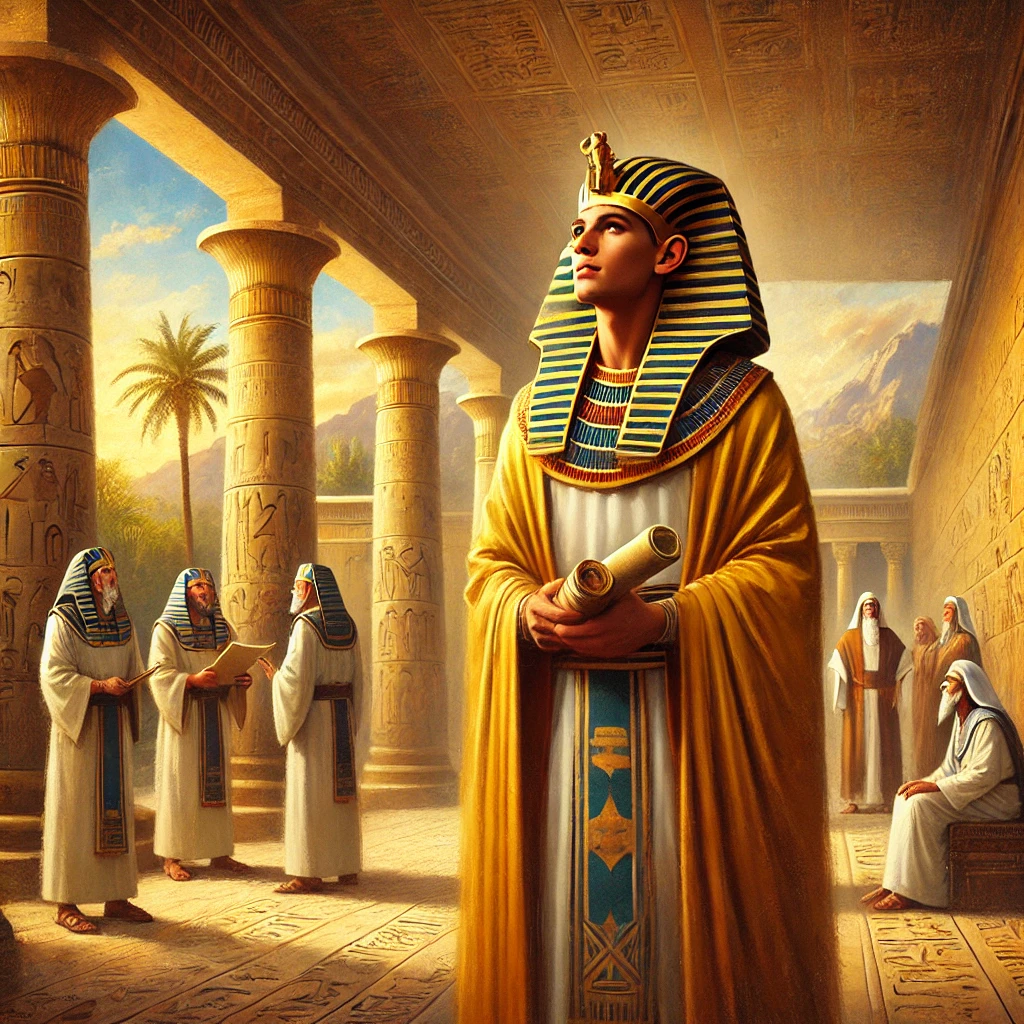
Egypt after Joseph Smith
- The first chapter of the Book of Abraham refers to the Pharaoh as a “righteous man” who wanted to learn how he could receive the correct priesthood of God.
- Abraham was sent so that he could correct the priesthood as he was endowed with it, and not let the skewed version that Pharaoh had learned from his predecessors over time. Egypt, therefore, is no longer a land of bondage but has the potential to become a land of divine order.
- The Pharaoh is no longer an oppressor of people but one who attempts to imitate this divine order of priesthood.
- Further along in the book, Abraham begins to teach the priesthood and the truth of God to the Egyptian royal court through astronomy, which many of the Egyptians’ gods tended to be based on.
- There is now a deep connection between the understanding of the world by the Jews and by the Egyptians, these connections correct a land of understanding as opposed to slavery.
- Abraham tells of his receipt of Urim and Thummim in Egypt, through which he would receive knowledge of the creation story, the eternal nature of spirits, and pre-Earth life.
Therefore…
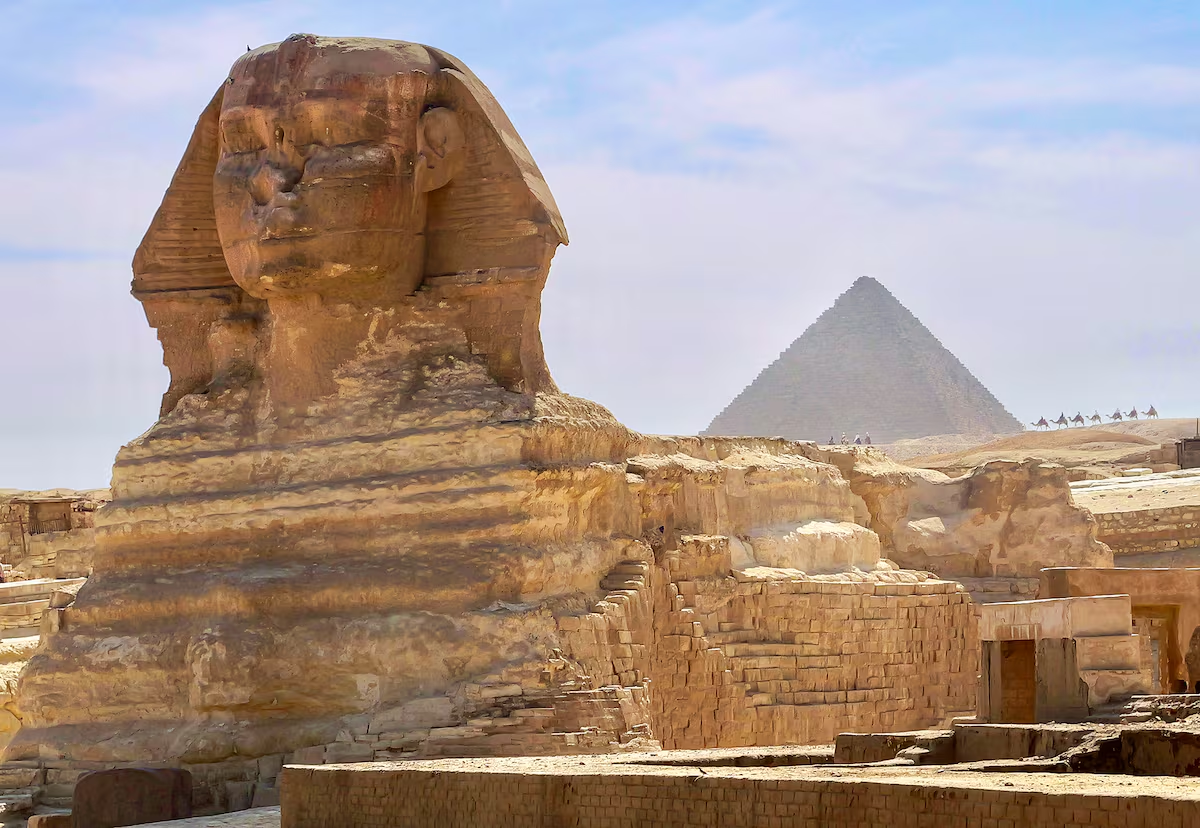
Egypt becomes the chosen location for the restoration of “truth” and Biblical authority through the priesthood of Abraham, which will then be restored through the prophet Joseph Smith. The history of Abraham, as translated by Joseph Smith, using these tools, is a prequel to the work of Smith himself through his divine translation of the Golden Plates and the truth teaching of Jesus to people of the 19th century. The Book of Abraham fully reimagines the history of Egypt in a way that perfectly frames the forthcoming translation of the Book of Mormon, establishing historical precedent to better ground the theology presented through the translation of the Golden Plates. Smith has thus expanded the theological power of the Golden Plates by widening the grasp of the Latter-day Saints’ universe to fully incorporate Egyptian history as imagined by Smith. The Book of Abraham became the groundwork for the altered Egyptian history, where the Book of Mormon relies on the information from the Book of Abraham to provide historical grounding and basis for its wide-reaching claims that alter history as we know it.
Egyptomania 2025
This page was created by Anna Gwyn, Davidson College ’25, History Major.
Primary Sources
New-York Baptist Register (Utica, New York), December 10, 1830. Readex: America’s Historical Newspapers.
The Church of Jesus Christ of Latter-day Saints. Book of Mormon: Another Testament of Jesus Christ. Salt Lake City: The Church of Jesus Christ of Latter-day Saints, 1981.
The Holy Bible: English Standard Version. Wheaton, IL: Crossway, 2001.
Doctrine and Covenants of The Church of Jesus Christ of Latter-day Saints. Salt Lake City: The Church of Jesus Christ of Latter-day Saints, 2013.
The Pearl of Great Price. Salt Lake City: The Church of Jesus Christ of Latter-day Saints, 1981.
Secondary Sources
Bushman, Richard Lyman. Joseph Smith: Rough Stone Rolling. New York: Alfred A. Knopf, 2005.
Calvin, John. “Commentary on Isaiah 19.” In Calvin’s Commentary on the Bible. https://www.studylight.org/commentaries/eng/cal/isaiah-19.html.
Cheesman, Paul R. The Keystone of Mormonism: Early Visions of the Prophet Joseph Smith. Salt Lake City: Eagle Systems International, 1988.
Crapo, Richley. “Lehi, Joseph, and the Kingdom of Israel.” Interpreter: A Journal of Latter-day Saint Faith and Scholarship 33 (2019): 289–304.
Hornung, Erik. The Secret Lore of Egypt: Its Impact on the West. Translated by David Lorton. Ithaca: Cornell University Press, 2001.
Muhlestein, Kerry. “Going into the Book of Abraham with a Scholar.” LDS Living, May 25, 2022. https://www.ldsliving.com/going-into-the-book-of-abraham-with-a-scholar/s/10697.
Petersen, Mark E. Joseph of Egypt. Salt Lake City: Deseret Book Co., 1981.
Shields, Steven L. “The Quest for ‘Reformed Egyptian’.” John Whitmer Historical Association Journal 41, no. 2 (2021): 101–125.
Smoot, Stephen O. “From the Catacombs of Egypt: Latter-day Saint Engagement with Ancient Egypt and the Contest of Religious Identity.” Journal of Mormon History 46, no. 4 (2020): 1–44.
Spencer-Brown, George. Laws of Form. New York: Julian Press, 1972.
Thompson, Jason. “Ancient Egypt in the Age of the Enlightenment.” In Wonderful Things: A History of Egyptology. Vol. 1: From Antiquity to 1881, 75–96. Cairo: The American University in Cairo Press, 2015.
