
From the Genesis to the 1950s Exodus
Tracing major connections and stories between the Egyptians and Jewish people
Biblical Egypt (N/A)
The first interactions between the Egyptians and Jewish people are recorded in the Bible. While it is impossible to confirm the validity of the stories, they are important because they reflect the Jewish people’s early emotions towards the Egyptians. For simplicity, due to the reliance of these early stories on Biblical texts, this section of the Jewish people’s interactions with the Egyptians is titled: Biblical Egypt.
Hyksos Theory
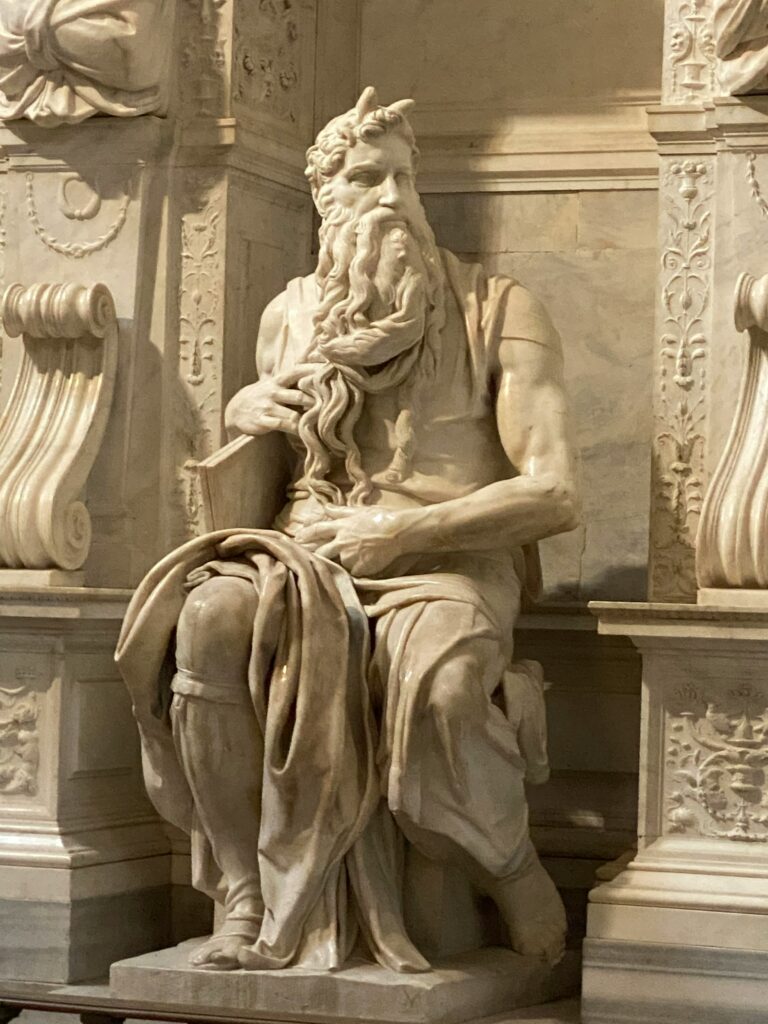
Who are the Hyksos? They were a nomadic group that originated from modern-day Palestine and Syria. During the 16th and 17th centuries BCE, the Hyksos ruled Upper and Lower Egypt. Some scholars theorize that the Jewish people descended from the Hyksos.
Descendants of Ham
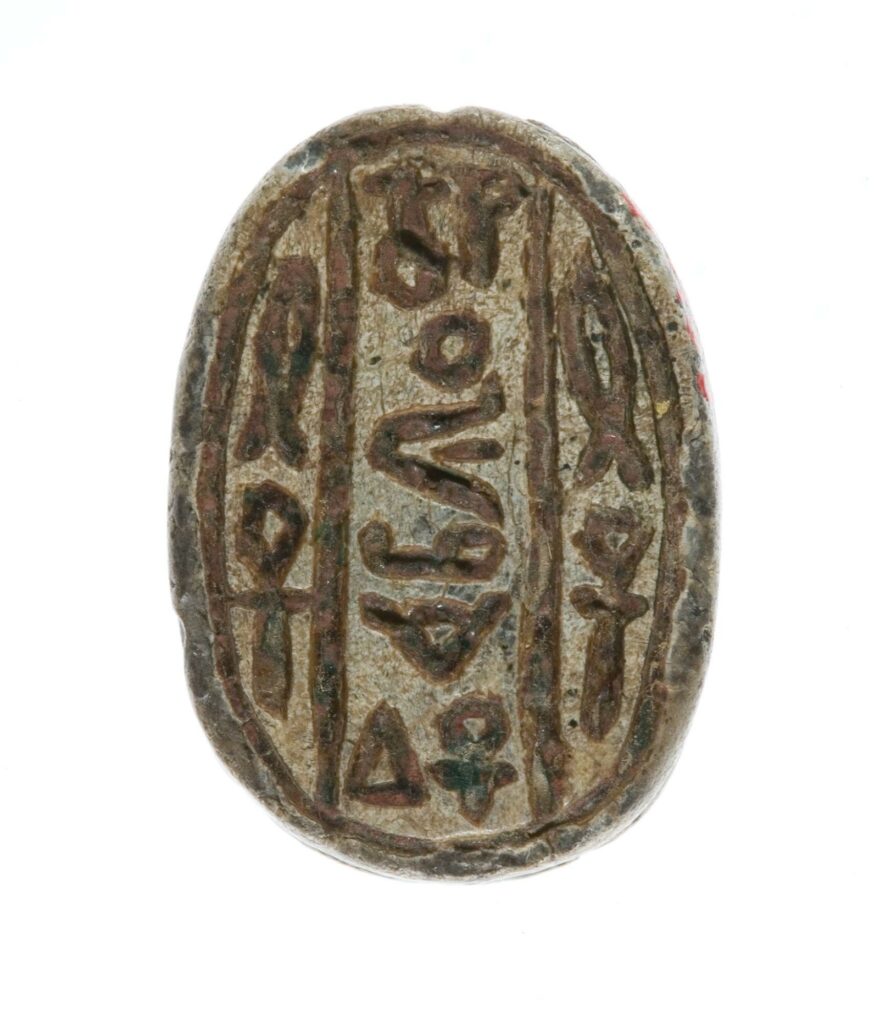
In Genesis 9:21, Noah, who built the ark to avoid God’s flood of the world, becomes intoxicated, and his sons, Ham, Shem, and Japheth, laugh at him while he is naked. Unfortunately for Ham, Noah curses him. This is why the story is called “The Curse of Ham.” Connecting with Egypt, in the “Table of Nations” (Genesis 10), the Egyptians come from the lineage of Ham.
Mosaic Distinction
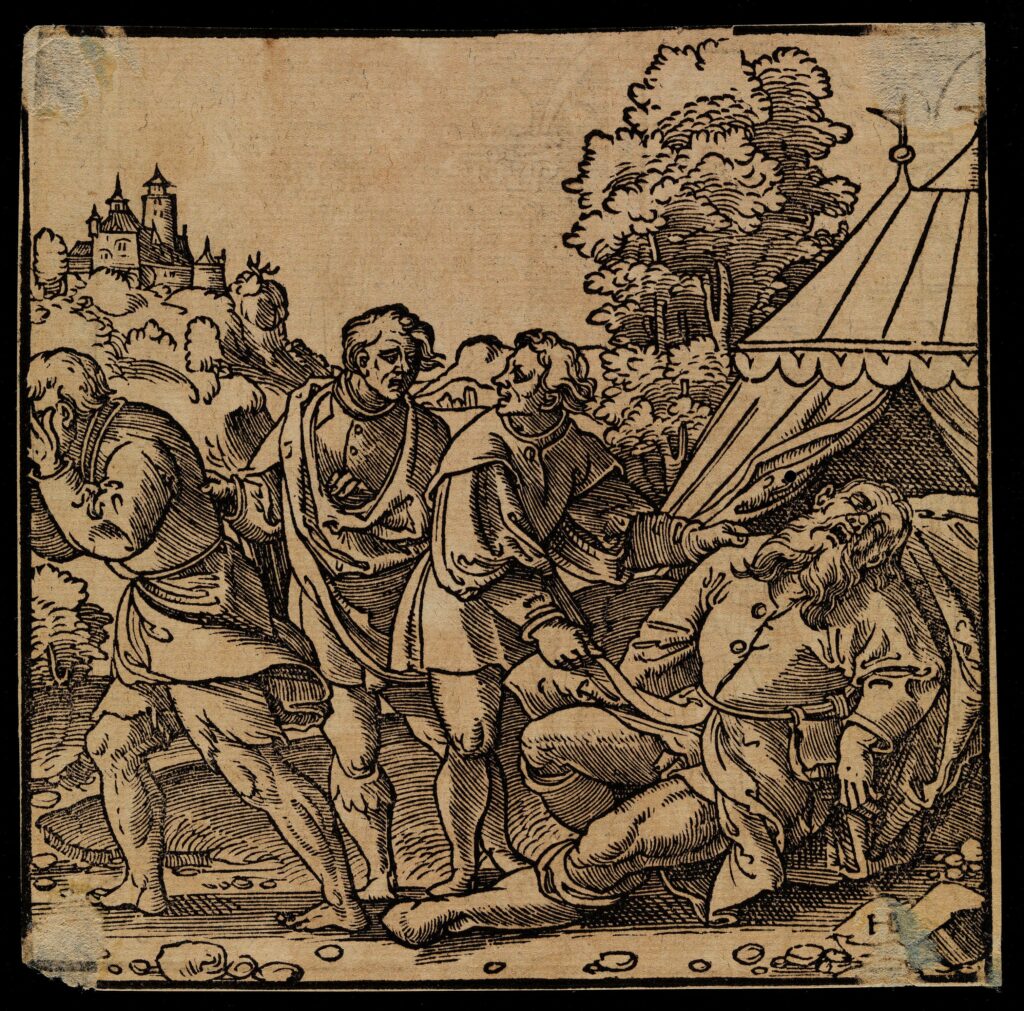
The Mosaic Distinction is the name of a theory proposed by Jewish Historian Jan Assmann. She explores Moses’s impact on different Jewish traditions. One tradition, called the Jewish distinction, sees Moses as a religious leader who led Egypt away from Pagan Egypt. Another tradition, the Eurocentric version, states that Moses was a political leader who helped create a new form of government. The Eurocentric version argues that due to Egypt’s pagan religion, the government combined the church and state, leading to the oppression of the Jewish people. Moses frees the Israelites from this system and establishes a political structure where religion and government are separate.
Additional early interactions between the Jewish people and Egypt
- Joseph (Genesis 37-50): Abraham, the father of the Jewish people, with whom the Jewish God made his covenant, had a son named Isaac. Isaac’s son Jacob had a son named Joseph. Within the first four generations of the Jewish people, Egypt was directly involved in the Jewish people’s story. Joseph’s brothers sold him into slavery in Egypt. The story in Genesis states that through the help of God, Joseph saved Egypt from a famine and subsequently received wealth. This led to the immigration of the Jewish people to Egypt.
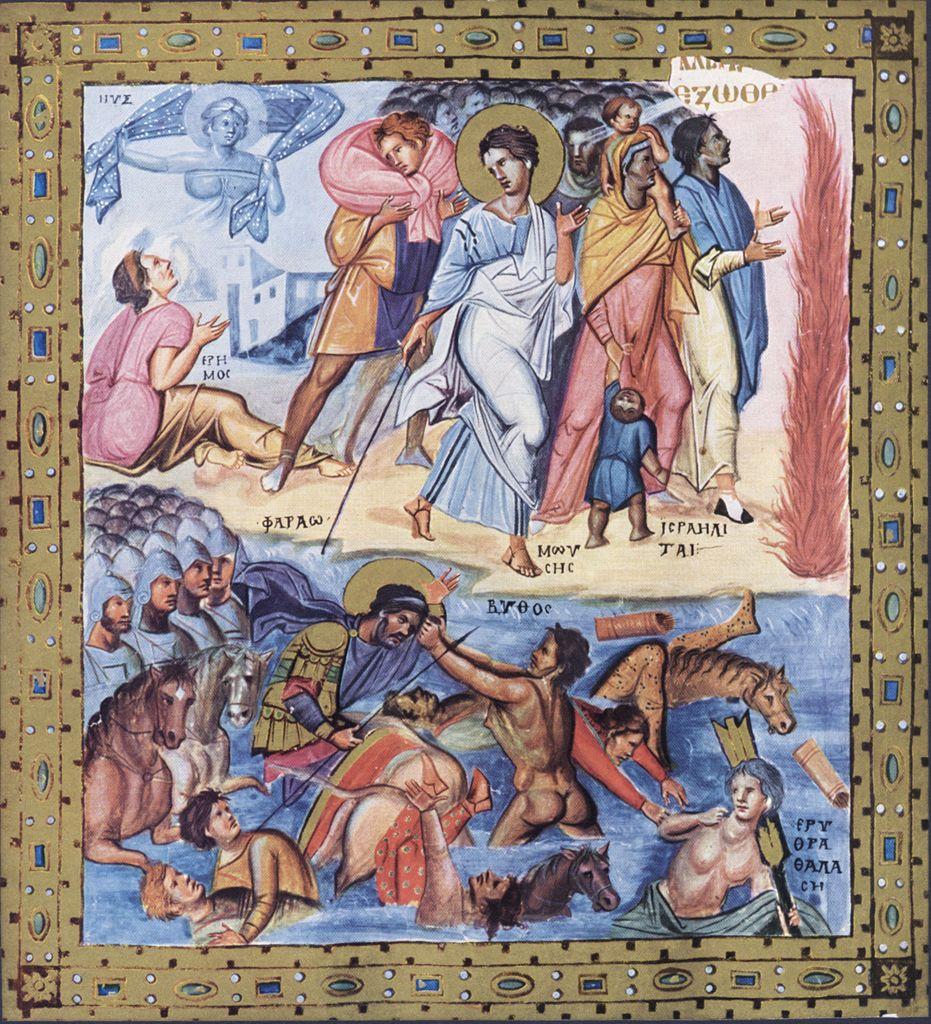
- The Exodus (Exodus 1-18): Many generations after Joseph, the Bible records that the Israelites were held as slaves in Egypt. Moses, through the power of God, compelled Pharaoh to release the Jewish people. After 10 plagues, Pharaoh relented and allowed the Jews to leave Egypt. However, the Egyptians pursued the Israelites to the Red Sea. The story says Moses parted the Red Sea to escape Pharaoh’s grasp. After the Israelites passed through, the sea closed in on Egypt’s army. Moses then led the Jewish people to modern-day Syria and Palestine.
Wait…When did this happen?
The section above draws from Biblical stories about early interactions between the Jewish and Egyptian people. The Bible contains the first five books of the Jewish holy text, the Torah, and additional histories of the Jewish people. For this reason, the Bible is used to help explain cultural stories that provide a glimpse into how the Jewish community remembers Egypt; however, there is no proof that the interactions or stories happened between the two cultures.
If the events happened, there is scholarly debate about when they occurred. Currently, there is no strong consensus on when the events happened. If you are interested in learning more about the argument around dating the biblical period of Egypt, please refer to the text below:
Redford D. B. Egypt, Canaan, and Israel in Ancient Times. Princeton University Press, 1992.
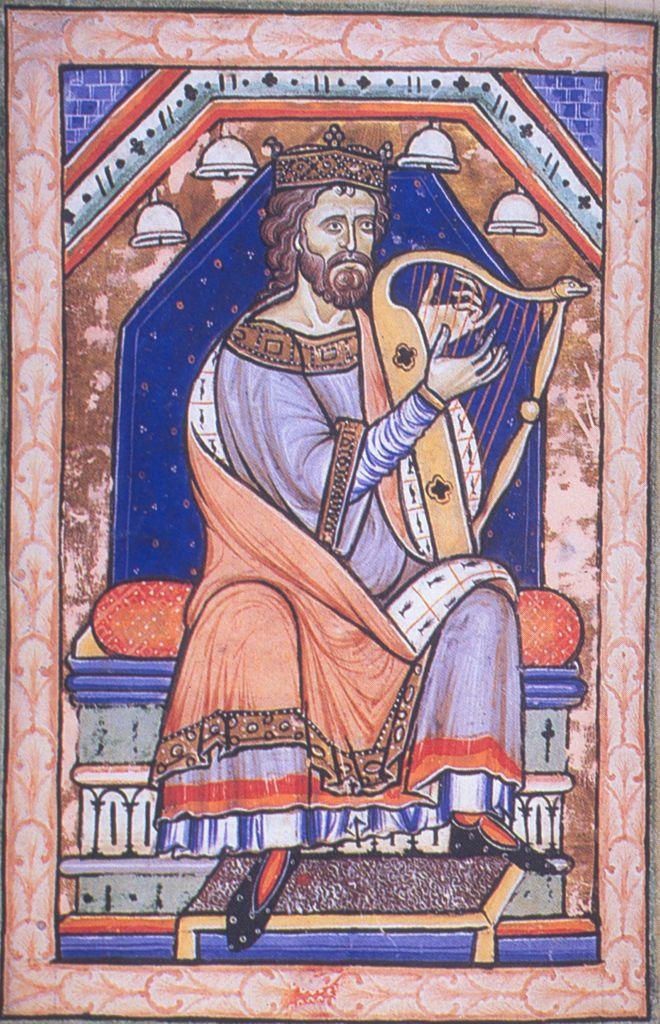
Jewish Communities in Palestine and Syria’s interactions with Egypt (Kingdom of Judah and Israel)
Merneptah Stele (1207 BCE)
In 1896, a British archaeologist discovered a slab of rock with hieroglyphic carvings. Archaeological finds that fit this description are commonly known as steles. A stele was a way for rulers to record and portray events to the general public. The Merneptah Stele’s hieroglyphs reveal Jewish interactions with Egypt during 1200 BCE. Why do some scholars think the Stele proves the Israelites interacted with the Egyptians? First, the words and phrases used by the Stele match certain victory poems recorded in the Bible. For example, 2 Samuel 44-46 discusses how King David was able to defeat his enemies because God was not with them. Similarly, the Stele records that Pharaoh Merneptah defeated the Lybians because the Lybians’ god did not defend them. While other civilizations utilized similar phrases, it is noteworthy that the Jewish kingdoms were involved in this cultural trend. The Stele is also important because it records the name Israel. When listing the names of people that the Pharaoh defeated, it can be seen that the name of Israel is recorded. These details on the Merneptah stele have led some scholars to conclude that Egypt and the Jewish kingdoms interacted during this period.
Interested in the Jewish communities’ early interactions with Egypt?
Assmann, Jan. Of God and Gods: Egypt, Israel, and the Rise of Monotheism. 1st ed.Wisconsin: University of Wisconsin Press, 2008.
Clarke, Patrick. “The Stele of Merneptah – Assessment of the Final ‘Israel’ Strophe and its Implications for Chronology.” Journal of Creation 27, no. 1 (2013): 57 – 64.
Douer, Alisa. Egypt – the Lost Homeland: Exodus from Egypt, 1947-1967 – the History of the Jews in Egypt, 1540 BCE to 1967 CE. Berlin: Logos Verlag Berlin, 2015. Accessed March 21, 2025. ProQuest Ebook Central.

Early Jewish Communities in Egypt
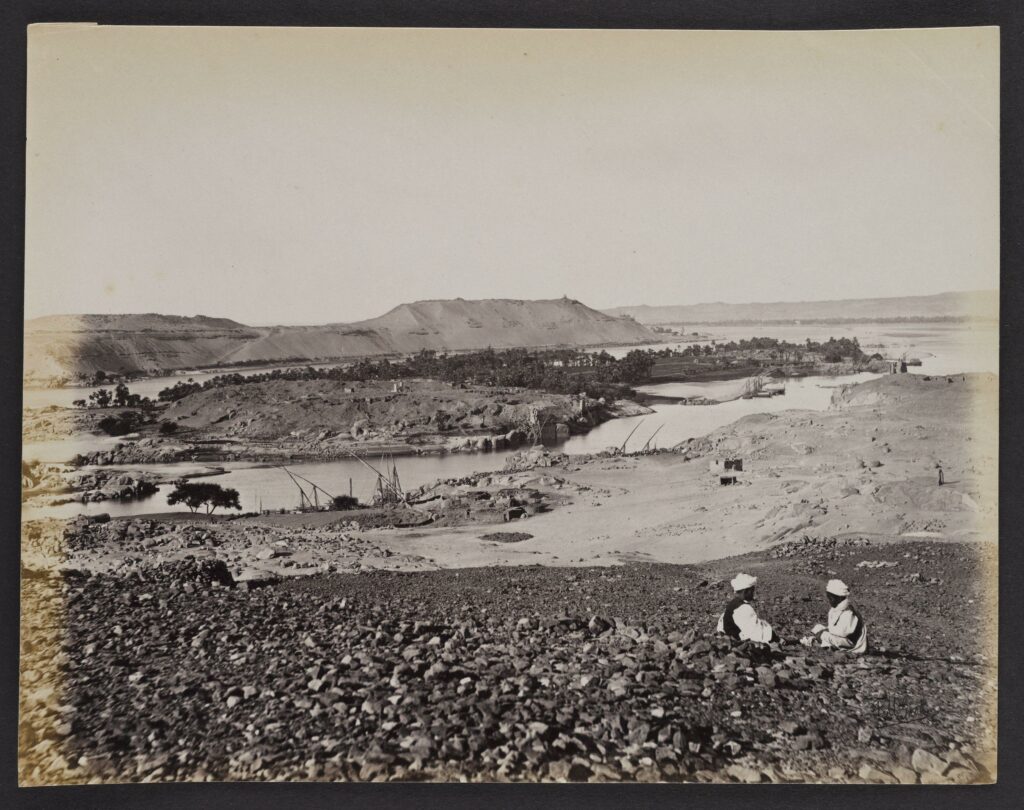
Elephantine Island (9th – 6th Century BCE)
During this period, the Jewish and Egyptian kingdoms were besieged by several conquests from the Assyrians, Babylonians, and the Persians. Due to the conquests, the Jewish people fled to Egypt, seeing the country as a place of asylum. Due to this migration, settlements along the Nile began to form, including on Elephantine Island. According to a series of papyrus documents discovered in the early 1900s, a mercenary community from the Jewish kingdoms inhabited the island. These documents discussed the daily lives of the Jewish community on the island, and the community began to make an imprint on the island in the 9th century. Interestingly, the cultures of the Jewish and Egyptian people mixed. Jewish people engaged in Egyptian culture and religion and took Egyptian wives and servants. Here are three events mentioned in the papyri that provide an overview of the Jewish community’s time on the island.
Zythos Beer
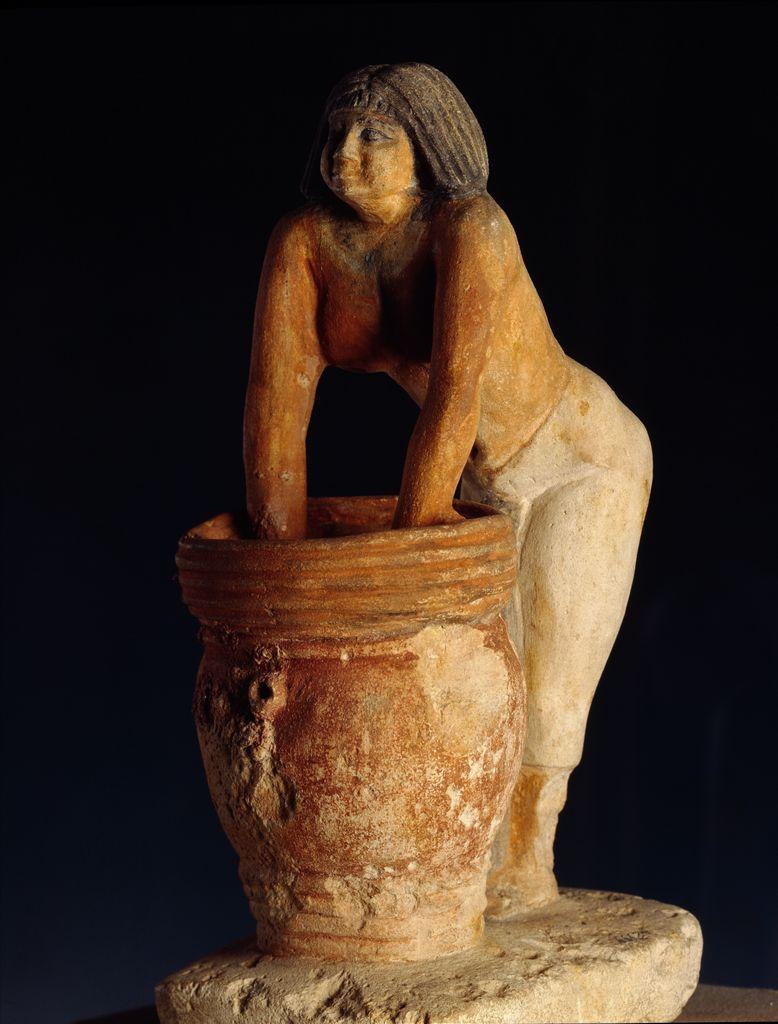
One papyrus document was a letter from Jerusalem. It instructed the Jewish Egyptians not to drink Egyptian beer during the passover. Instead of the beer, they should consume the traditional wine. This story shows that the Jewish people on Elephantine Island were starting to mix their culture with the Egyptian people.
Passover Papyrus
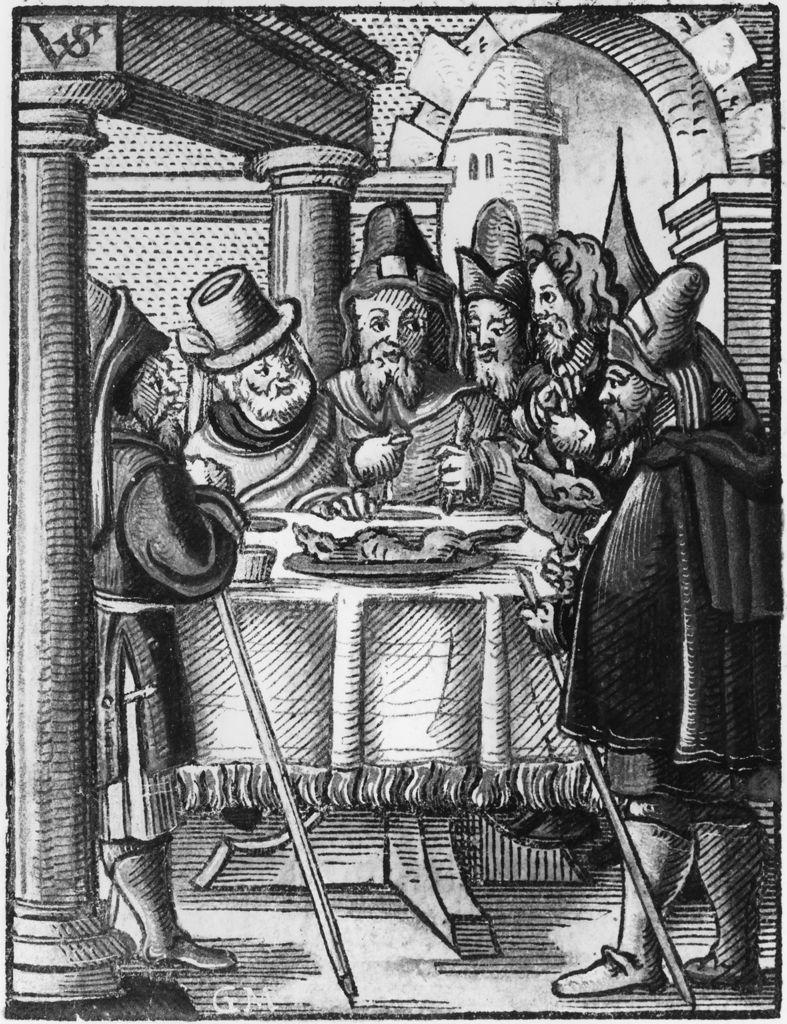
Another papyrus described the dates of Passover. Some scholars believe that the Emperor of Persia, Darius II, influenced the document and was involved in recording the dates of Passover. A possible Jewish prophet, Hannaniah, sent this papyrus. Interestingly, another papyrus writes about the constant onset of trouble from the Egyptian priests after receiving Hananiah’s letter. Did changing the dates of Passover cause trouble for the Jewish community on Elephantine Island?
Destruction of YWH Temple
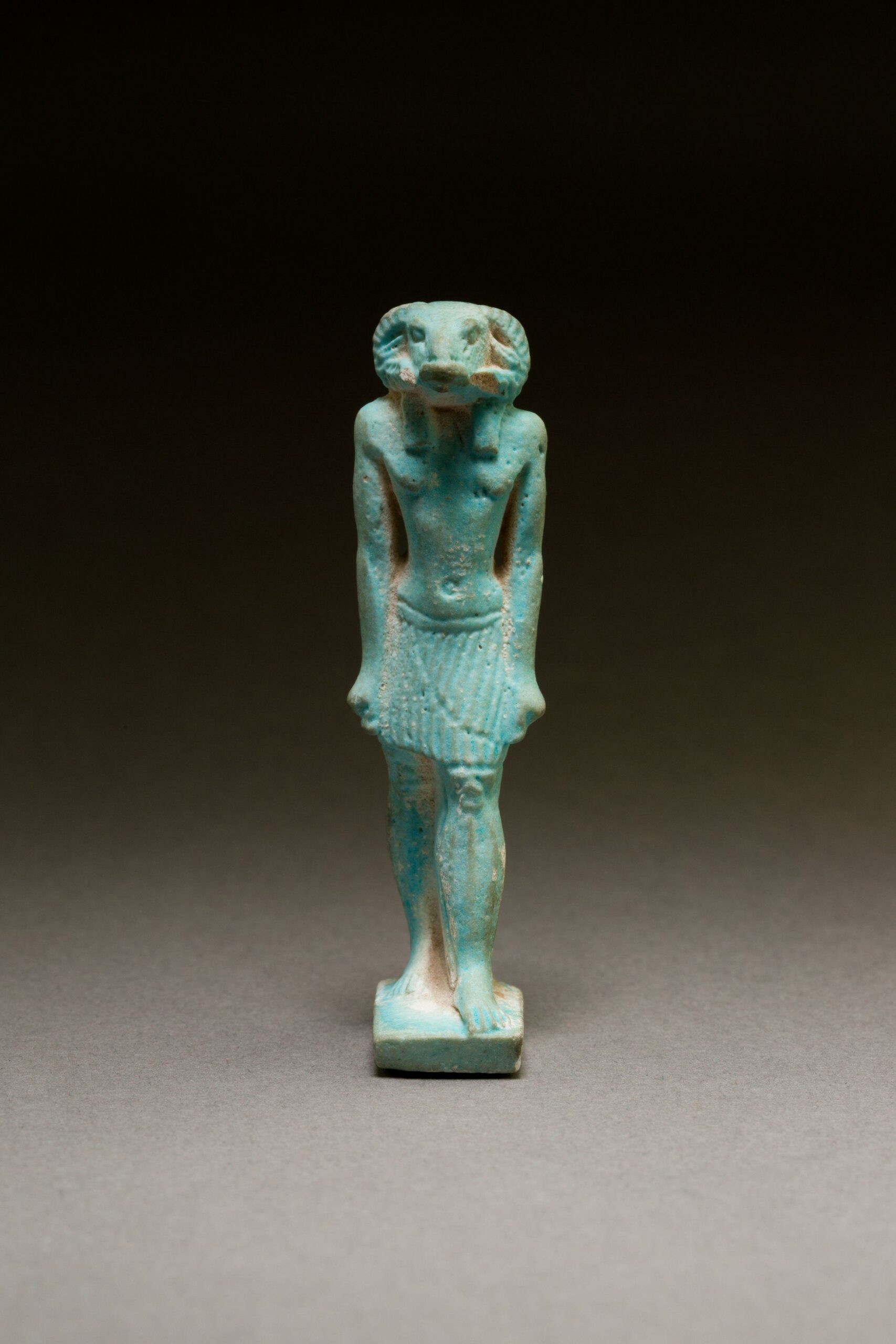
The Jewish community on Elephantine Island also established a Temple, which was the “YWH” Temple. At this time, a Jewish temple in Jerusalem worshipped a God by the initials YHWH, but the similarity of the letters has drawn scholars to conclude “YWH” was an additional temple site. Unfortunately, for the Jewish community, the temple was next to the Egyptian temple of Khnum. Khnum was an Egyptian deity represented as a ram, and Jewish people sacrificed rams at their temple, so it is probable to conclude that animosity arose between the two religious priests. In fact, violence did emerge between the two sides as Khnum priests attacked the “YWH” Temple. Consequently, they were executed.
“Similar to aJew putting a Christmas tree in his house”
Bezalel Porten’s words from Archives from Elephantine, describing the Jews’ relationship with the Egyptian religion
Greco-Roman Period (332 BC – 644 BCE)
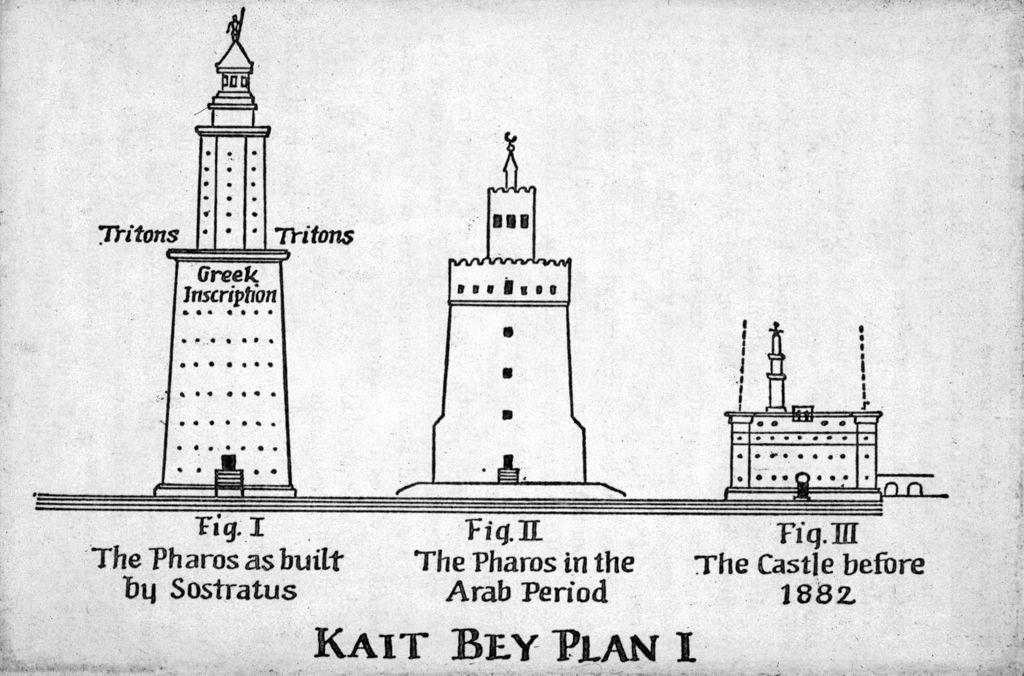
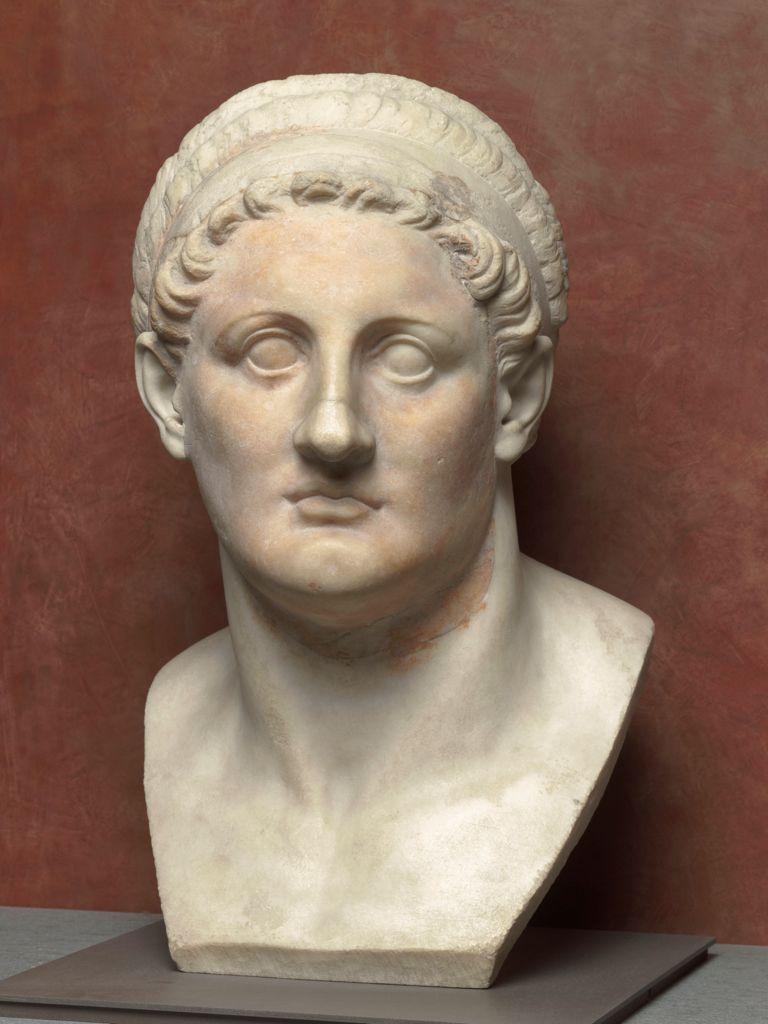
In 332 BC, the Hellenistic Empire led by Alexander the Great conquered Egypt. Following Alexander’s death, Egypt was left in the hands of his general, Ptolemy I. Following years under Greek rule, the Romans conquered Egypt. For both empires, Egypt was important because it supplied wheat, which fed each civilization’s large empires. During this time, Egyptian and Jewish relations soured because of the Greeks and Romans’ unfair treatment of the Egyptian people. Additionally, religious differences between the Egyptians and Jewish people became more prominent at this point, leading to violence in 38 C.E.
Greco-Roman Rule of Egypt (332 BC – 644 BCE)

Social and Political Hierarchy
From administrative documents discovered during this period, scholars conclude that the Jewish people occupied a higher social/political status than the Egyptians. One document outlines that the Jewish people were held in a different tax bracket. Another document shows that Egyptians received harsher punishments for crimes than the Jewish people. Ultimately, this led to animosity between the Egyptian and Jewish people.
4th Century BCE
Exodus Interpretation
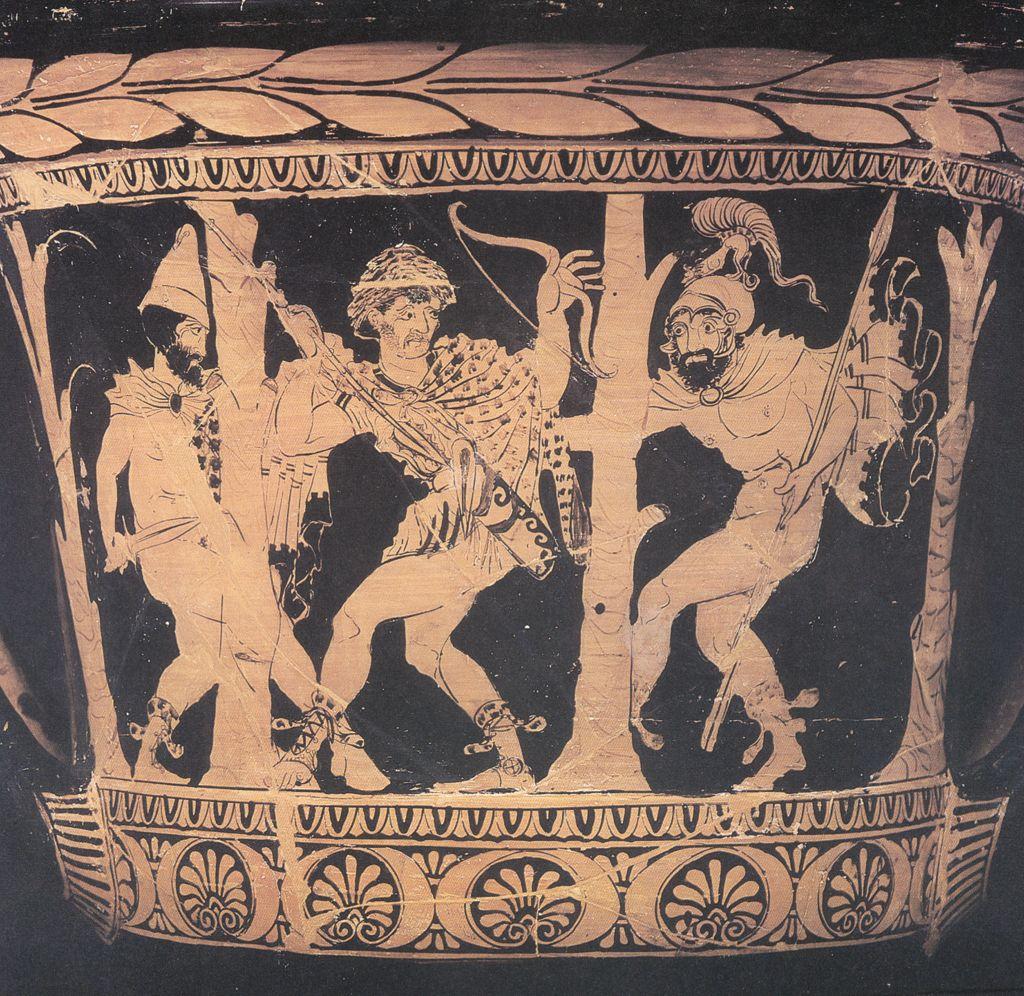
Hectaeus of Abdera, who was a Greek writer, wrote about a new interpretation of the Exodus. Instead of the Jewish people leaving Egypt to escape the oppression of Pharaoh, the Jewish people were forced out of Egypt by the Egyptians. This new interpretation highlights potential religious arguments between the monotheistic Jews, and polytheistic Greeks, and the Egyptians.
Pogrom of 38 C.E.
First Pogrom in Alexandria
The combination of social/political struggle and the difference in religion between the Jewish and Egyptian communities led to violence. The anger of the Egyptians boiled over when they launched a pogrom against the Jewish community in Alexandria. Scholars see the event as the first pogrom in history. A pogrom is an event where an ethnic group is attacked while the police or standing officials do not penalize or stop the attackers.
Jewish Philosopher Philo Judaeus of Alexandria’s views on Egyptians Following the Pogrom of 38 CE:
[The Egyptians] thinking that a very suitable opportunity had occurred, attacked us and brought to light the hatred which had long been smoldering, reducing everything to chaos and confusion.
Those who (Egyptians) defied dogs, wolves, lions, crocodiles, and many other wild animals on the land, in the water, and in the air.
Persons (Egyptians) naturally tyrannical, who do not have the addition of strength to achieve their malignant designs through cunning.
More writings from Philo of Judaeus and further context behind the quotes.
Philo. “Flaccus.” In Philo: In Ten Volumes (and Two Supplementary Volumes), edited by F. H. Colson, G. H. Whitaker, and Ralph Marcus. Cambridge, Mass., London: Harvard University Press, 1962.
Philo. “On the Embassy to Gaius.” In Philo: In Ten Volumes (and Two Supplementary Volumes), edited by F. H. Colson, G. H. Whitaker, and Ralph Marcus. Cambridge, Mass., London: Harvard University Press, 1962.
Fatimids in Egypt (969 AD – 1171 AD)
Following the period of Greco-Roman rule in Egypt, the Egyptians were conquered by different Islamic Empires. In 969 AD, Egypt was controlled by the Fatimid Empire. This Empire allowed the Jewish community to communicate with other Jewish religious groups throughout the Arabian Peninsula. There were Jewish religious groups in Baghdad and Jerusalem. The interaction and exchange of doctrine with the religious community in Jerusalem allowed for the Egyptian Jews to establish a synagogue in Cairo, the Ben Ezra Synagogue. With the growth of the Ben Ezra Synagogue and the autonomy granted to the Jewish community by the Fatimid Empire, the Jews in Egypt during this period developed a Jewish community and, consequently, a Golden Age. A Jewish Golden Age is established with the development of Jewish religious doctrine and poetry.
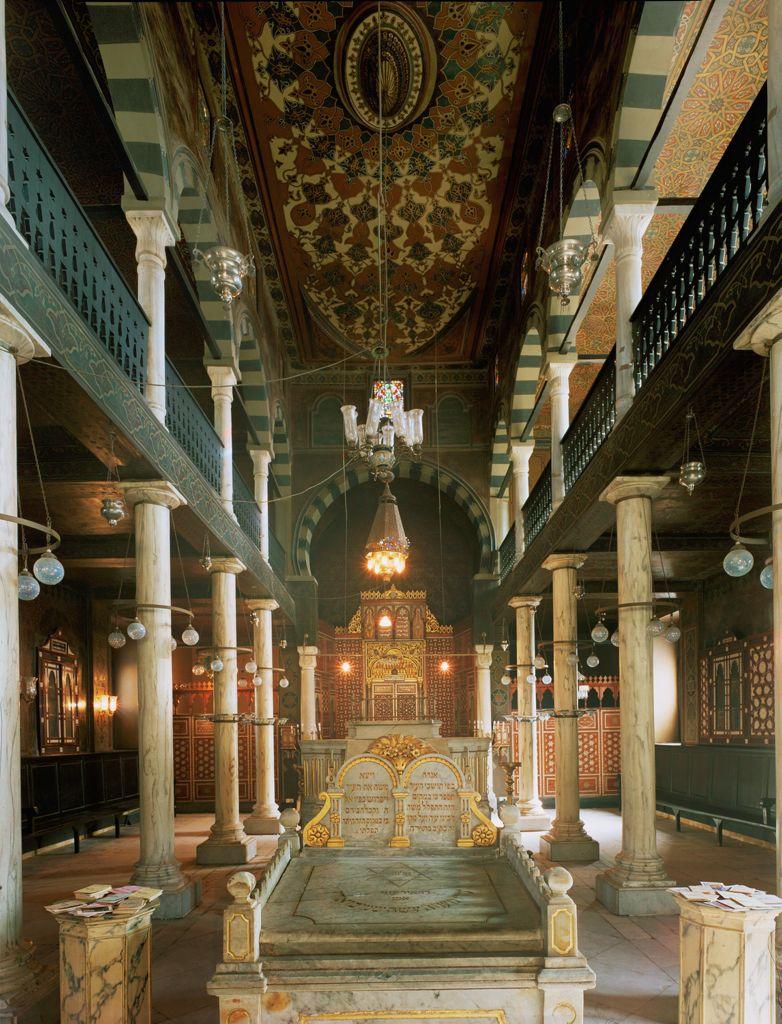
Ben Ezra Synagogue’s Geniza
Development of the Jewish Community
- Through documents from Ben Ezra Synagogue’s Geniza, stories of Jewish people in Egypt during this period emerged.
- A Geniza is a storage place that holds documents, containing the name of God. The Jewish people did not want to throw away documents that had the Lord’s name on them.
- Development of Self-Governance
- Establishment of Jewish Courts
- While the Muslim courts held the true power, Jewish courts provided Jews with an option to seek communal rulings. This led to discussions of internal matters and Jewish law. The Jewish religion is based on laws, so the conversations about the correct laws to administer and execute led to the natural growth of Judaism.
- Reliance on Community
- The Jizyah was a tax administered by the Muslim government to individuals who did not practice Islam. Family members and community elders helped their fellow Jewish community members pay the tax. These actions of helping fellow Jews led to the development of a communal feeling within the Jewish community in Cairo.
- Establishment of Jewish Courts
What was the result of an established Jewish Community?
A golden age of culture for the Jewish people in Egypt
Evidence for A Jewish Golden Age
Egyptian View
At this time, some Jewish people were still angry with the Egyptians. A poet who was captured and spent a night in jail recorded this about the people of Egypt.
“Egyptians oppressed /Adversarial enemies / Brought about pangs / Like the pangs of a woman in labor” – Samuel Ben Hosha’na
Poetry
Jewish poetry begins to blossom in this period. The expansion of Jewish poetry hints towards a renewal of Jewish culture. The poetry is also important because it highlights the Jewish people’s interpretation and memory of Egypt.
“To Egypt, praise beyond all cities” – Judah Ha-Levi
Stories
Letters sent between a Jewish merchant and his boss reveal that the merchant saw Egypt as a place where Jewish culture thrived.
“God has revived learning (in Egypt), illuminated the community and fortified religion” – Jewish Merchant

1950s Egypt
In 1948, the state of Israel was established. Throughout modern history, the area of Palestine was occupied by the Ottoman Empire. With the fall of the Ottoman Empire after World War I, the territory became a British protectorate. Following persecution in Europe and World War II, the Jewish community began to migrate to the Palestinian territory, claiming it to be their ancestors’ homeland. Ultimately, in 1948, global leaders decided to create a partition of the territory, giving part of the territory to the Jews migrating from Europe and the other half to the Arab population of Palestinians living in the region. Arab leaders in the region were strongly against the global leaders’ decision on the territory. Eventually, their distaste for the situation led to a war in 1948. Following the war, the relationship between Jewish Egyptians and the Egyptian people changed. In 1956, Gamal Abdel Nasser came to power in Egypt and pushed the narrative that Egyptians were Arab. This led to the Jewish people being ostracised in society. Eventually, the tense situation led to a mass exodus of Jewish people from Egypt. Below are quotes from Jewish Egyptians who left their homes. Additionally, the video records a Jewish Egyptian woman’s feelings reflecting on the 1950s exodus.
1950 Jewish Quotes
After the nationalist revolution took place in 1952, one felt less at ease. – Dr. Loeb Sachs
As I reflect on it, I would say that we really were European Jews living in Egypt. – Aline Salama Benzakein
At home, we spoke Arabic. – Dr. Victor Cohen
It became mechanical, and we would write what they wanted to hear. – Lucienne Carasso Bulow
My culture was Egyptian – Dr. Ghi Massouda
Want to learn more about the Jewish Community in the 1950s?
Dammond, Liliane. The Lost World of the Egyptian Jews. iUniverse, Inc., 2021.
Krämer, Gudrun. The Jews in Modern Egypt: 1914 – 1952. University of Washington Press, 1989.
