What is Hermeticism?
Hermeticism is an ancient system of wisdom and knowledge created sometime around the first century B.C.E. There are three key foundational texts that have greatly impacted the practice: The Asclepius, Corpus Hermeticism, and The Kybalion.
There are seven key Hermetic principles:
Mentalism
The principle of mentalism explains the creation of the universe and the true nature of power. It embodies the idea of “all is mind” and is considered to be the “master key,” meaning that understanding mentalism provides the resources for understanding everything else.
Correspondence
The principle of correspondence is considered to be the “universal law” of Hermeticism and it provides and understanding of the unknown.
Vibration
The principle of vibration embodies the idea that “everything in motion.” It is understood that mastering this principle will result in you holding the “scepter of power.”
Polarity
The principle of polarity states that everything has an opposite and that the opposites are degrees of the same thing. Take temperature for example. Hot and cold are opposites but they are both degrees of temperature.
Rhythm
The principle of rhythm says that everything flows. Under this principle, the goal is to learn how to control the flow rather than being controlled by the flow.
Cause and Effect
According to the principle of cause and effect nothing merely happens. In a similar way to rhythm, the principle of cause and effect the goal is not to be subjects of the environment but to learn how to dominate the environment.
Gender
Gender is the last of the key Hermetic principles. Gender, under the Hermetic understanding, states that everything has duality. Everything has a masculine and feminine side. It is believed that understanding the principle of gender leads to understanding the mysteries of life.
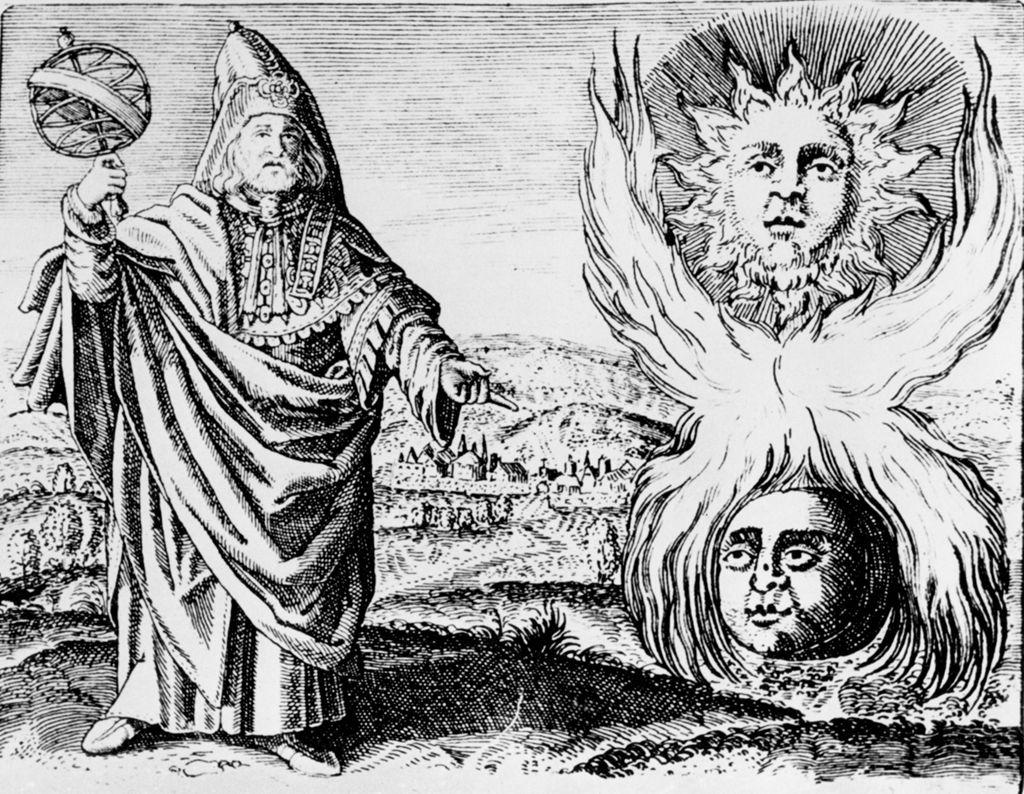
Hermes Trismegistus
Hermes Trismegistus is historical figure that existed around the first century B.C.E., though it is disputed whether Hermes Trismegistus was an actual person that existed or a mythical creation. He is a cross between Thoth, the Egyptian god of wisdom, and Hermes, the Greek messenger god and he is considered to be both the founder of the Hermetic tradition and the author of the key Hermetic texts.
In the seventeenth century Issac Cassaubon asserted that it was impossible for Hermes Trismegistus to have actually authored the key Hermetic texts. Instead, he posed that Hermes Trismegistus could have existed at some point, but not for as long as it had been claimed. Therefore, Cassaubon said, he could have written some of the original texts but not all.
Ja’far al-Sadiq
Ja’far al-Sadiq lived from 702-765 and was the sixth Imam of the Shi’i Muslim community. He was known for his interest in the natural sciences and Hermetic subjects such as divination and alchemy. However, more is known about his interests through the writings of the Imam’s students than his own writings. Jabir bin Hayyan, a renowned chemist, who learned science from the Imam. It is from Jabir bin Hayyan’s writings that more is known about the Hermetic interests of Imam Ja’far al-Sadiq.
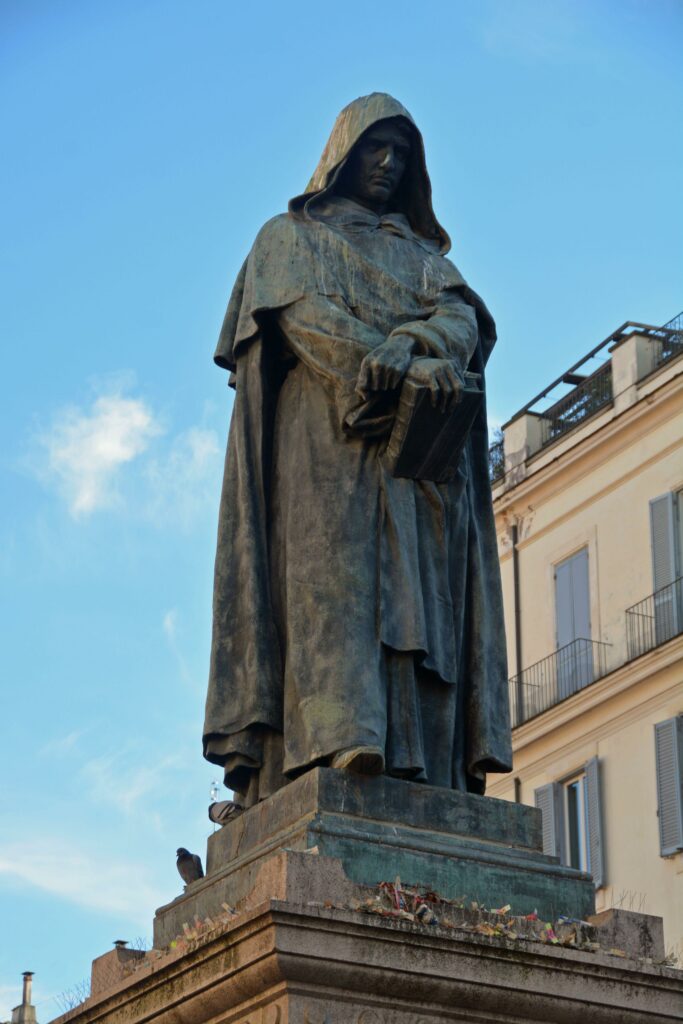
Giordano Bruno
Giordano Bruno was a philosopher who lived from I548 to I600. He was a staunch Hermeticist and leader of the Hermetic movement during the European Renaissance. Bruno believed strongly in Egyptian religious and magical beliefs which characterized his understanding of Hermeticism. In I600, Bruno was burned at the stake in Rome as a heretic that was perceived as a threat to the Catholic Church.
Giordano Bruno also commented on other figures of the time. On the theories of Copernicus, Bruno was noted to be supportive as he believed the theories to be part of the Hermetic tradition. Aristotle, on the other hand, was viewed by Giordano Bruno as someone incapable to seeing the occult and someone who was to literal in his beliefs.
Hermeticism and Religion
Hermeticism as a philosophy can be compatible with multiple religions or even practiced as a religion itself.
Christianity
Christianity has come to a consensus that Hermeticism is a “proto-Christian monotheism,” but there were two sects of beliefs that took stock before this. Those who believed that Christianity and Hermeticism are compatible believed that the shared notions joined the groups. They believed in God as a creator that one could never truly know. Those who disagreed believed that Hermeticism supports pagan idolatry and is an attack on Christianity.
Islam
Islam is noted to have had a cultural relationship with Hermeticism with some smaller sects sharing principles like the transmigration of souls. It has also been noted that it is unlikely that there would be open Hermeticists in Islam.
Judaism
The relationship between Hermeticism and Judaism is noted to be complex, specifically due to the stories from the Old Testament. For example, during the Exodus, the Jewish community was forced out of Egypt yet Egypt also served as a safe space for the Jewish community during times of famine.
Hermeticism in Modern-Day Society
Hermeticism is still practiced today! There are plenty of books and scholarly works on Hermeticism but there are also websites and organizations that support the Hermetic tradition.
The Way of Hermes: Hermetic Theory and Practice
This is a website that allows interested individuals to buy courses that claim to teach Hermeticism.
The Hermetic Order of the Golden Dawn
This organization was founded in the late I800s in England and has served as a place for those interested in the study of Hermeticism and the occult.
If you are interested in learning more about Hermeticism, here are a few good starting places: The Kybalion by Three Three Initiates, The Secret History of Hermes Trismegistus translated by David Lorton, and Giordano Bruno and the Hermetic Tradition by Frances Yates.
