You Can’t Have One Without the Other
Overview: Hellenism in Egypt
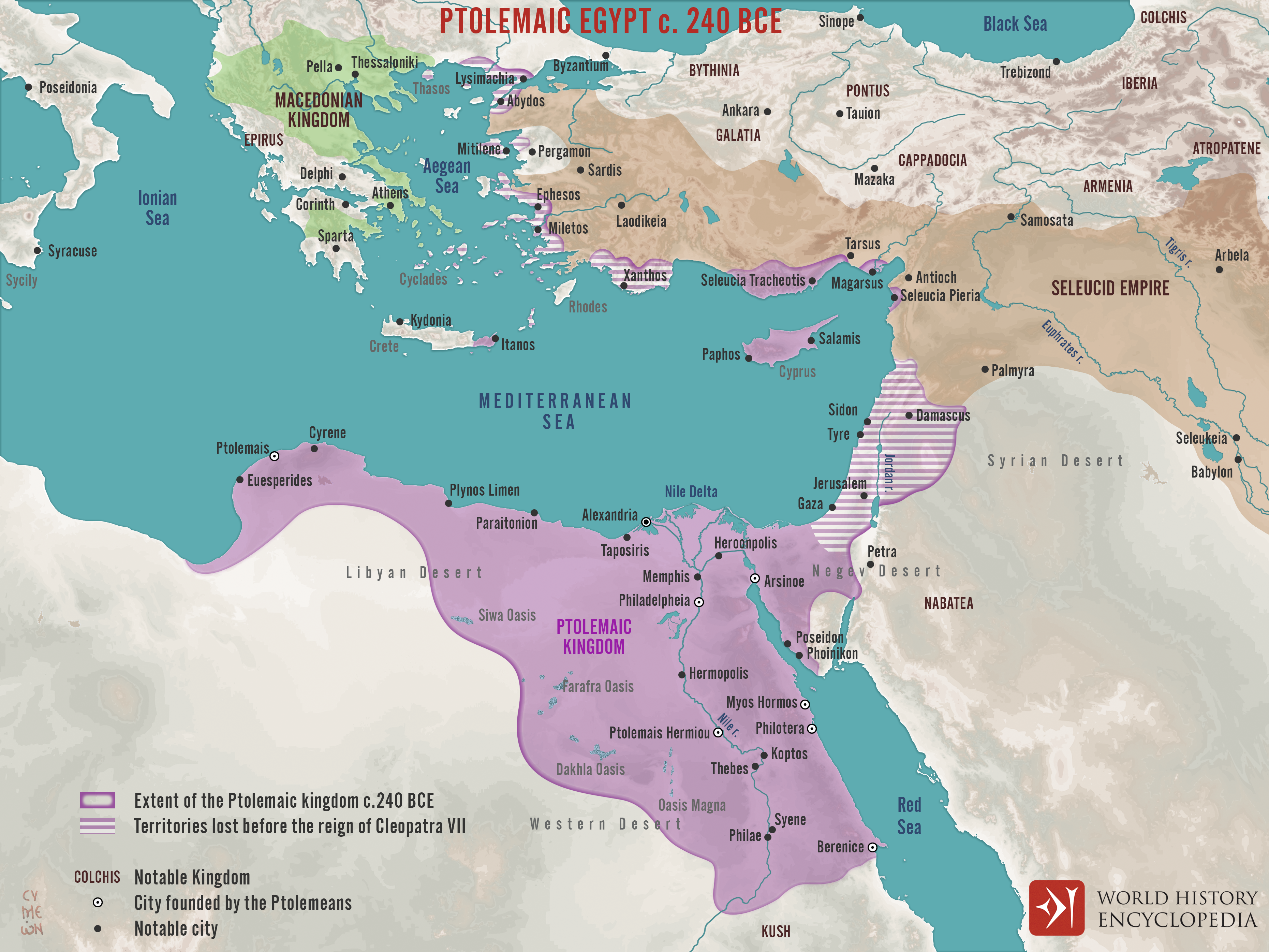
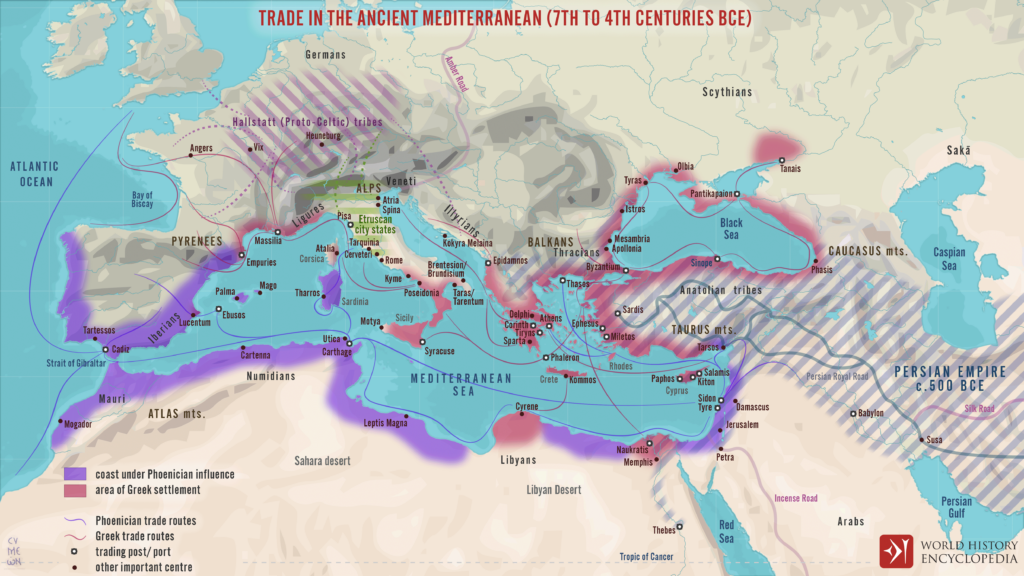
Greece and Egypt share an interconnected cultural, religious, political, and economic history that traces back to potentially as early as 2600 BCE. Major interactions between the two civilizations began to increase in the 7th century BCE when Greek settlers established the trading colony of Naucratis in Lower Egypt on the Canopic Branch of the Nile Delta. Prominent Greek figures such as Herodotus in the 5th century traveled to Egypt and documented their society; while some accounts express sentiments of superirioty and judgment against the Egyptians, most Greeks believed that much of their culture, including their religion, art, mythology, and even the way their society functioned, derived from Egyptian culture. In the 4th century, Alexander the Great demonstrated a deep respect for the Egyptian people and culture, and his establishment of the Ptolemaic Dynasty in Egypt, one of the most prosperous and iconic periods of Hellenistic Egypt, and founding of the city of Alexandria on the northern coast of Egypt strengthened Graeco-Egyptian connections and solidified their kinship for the rest of history. In the end, Greeks were Egyptianized and Egyptians were Hellenized; neither civilization would be the same today without the other.
“After the 5th century BC…the Ancient Greeks, though proud of themselves and their recent accomplishments, did not see their political institutions, science, philosophy or religion as original. Instead they derived them—through the early colonization and later study by Greeks abroad—from the East in general and Egypt in particular.”
– Source: Martin Bernal. 2020. Black Athena : The Afroasiatic Roots of Classical Civilization Volume I: The Fabrication of Ancient Greece 1785-1985. Vol. Volume I. New Brunswick: Rutgers University Press Classics. https://research-ebsco-com.proxy048.nclive.org/linkprocessor/plink?id=c51f230a-224e-38c1-85da-37a96020934b.
Alexander the Great
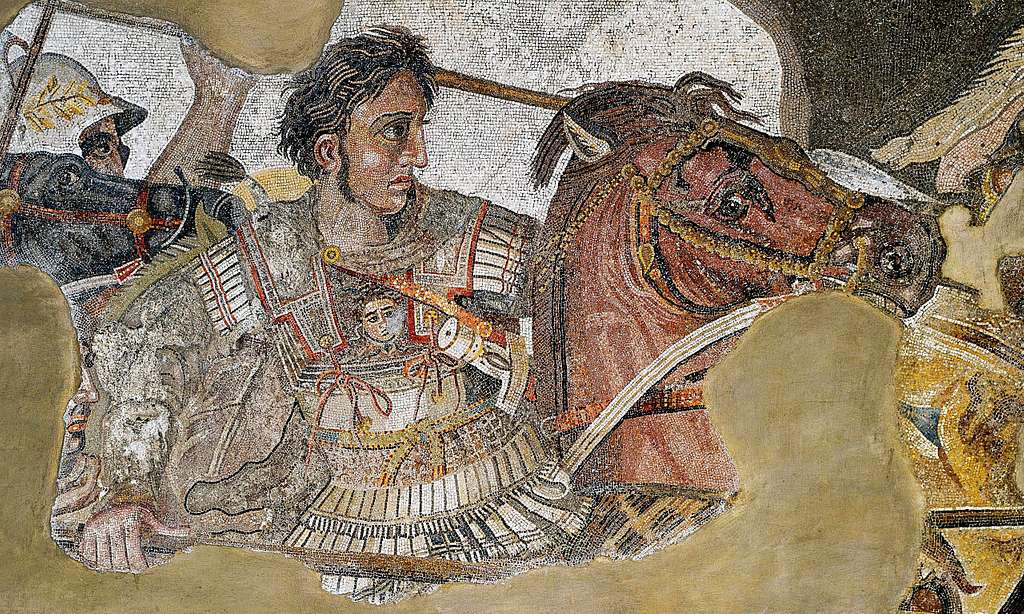
Famous mosaic of Alexander the Great.
Alexander was a Graeco-Macedonian king who conquered the territories of the Persian Empire, such as Egypt, the Middle East, and more. He felt a deep connection to Egypt all his life, and legend says he was buried there when he died.
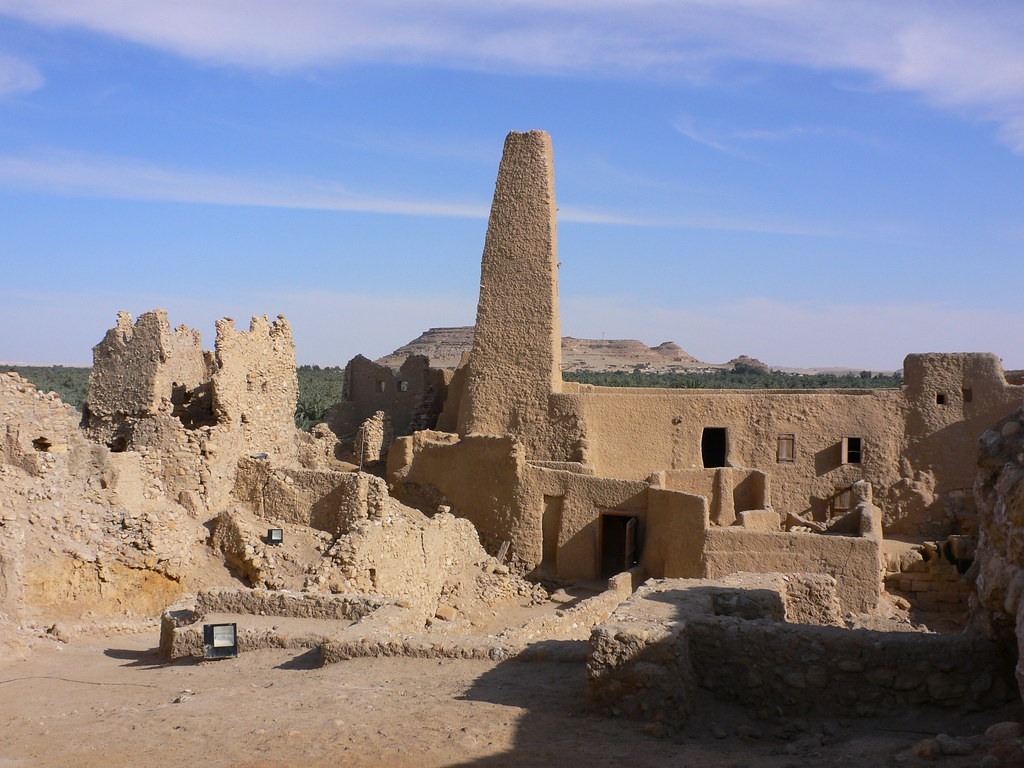
The temple of the Oracle of Ammon at the Siwa Oasis.
Alexander the Great held a great respect for Egyptian religious and cultural traditions and ideologies. He traveled here to confirm his belief that he was the son of Ammon, the Egyptian King of the Gods, despite his Graeco-Macedonian heritage.
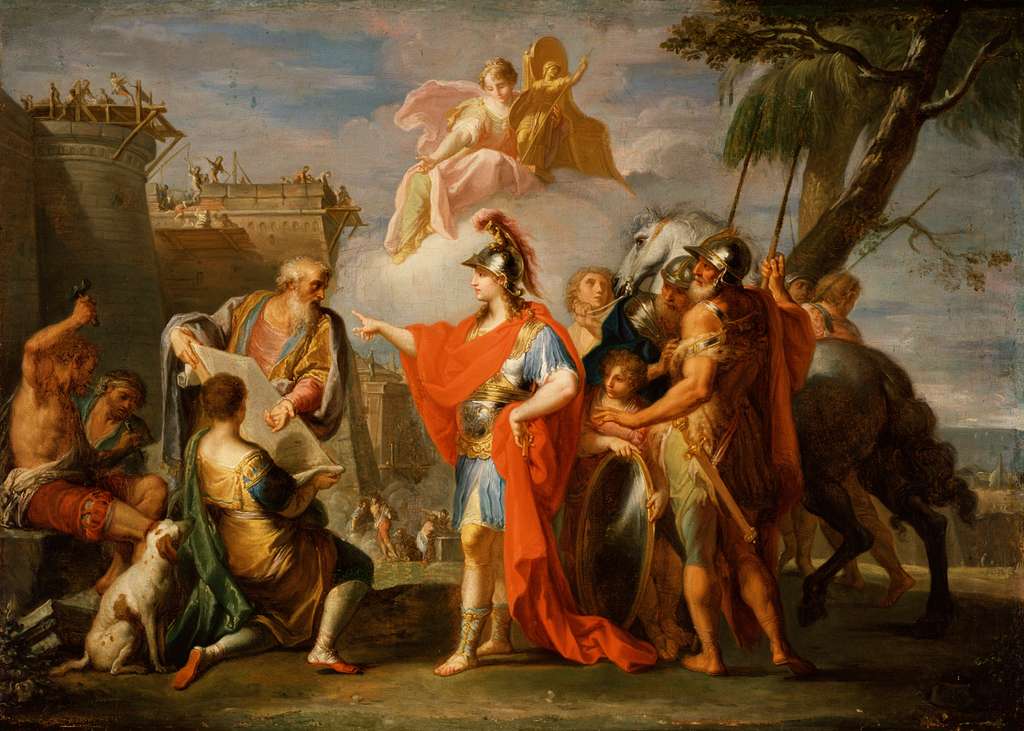
Alexander founding Alexandria.
Alexander’s foundation of the city of Alexandria in 331 BCE, just one year before his untimely death, opened Egypt up to the broader Hellenistic world. Because of this, Greek immigrants, including merchants, mercenaries, and economic opportunity seekers, came to Egypt, solidifying the strong Graeco-Egyptian cross-cultural connection.
Trade Between Greece and Egypt

Corn stalks.
Egypt exported corn to Greece between1100-332 BCE; their agricultural business was booming, so many civilizations depended on Greece for food. Unfortunately, corn was the only product of interest they could offer to Greece during this time.
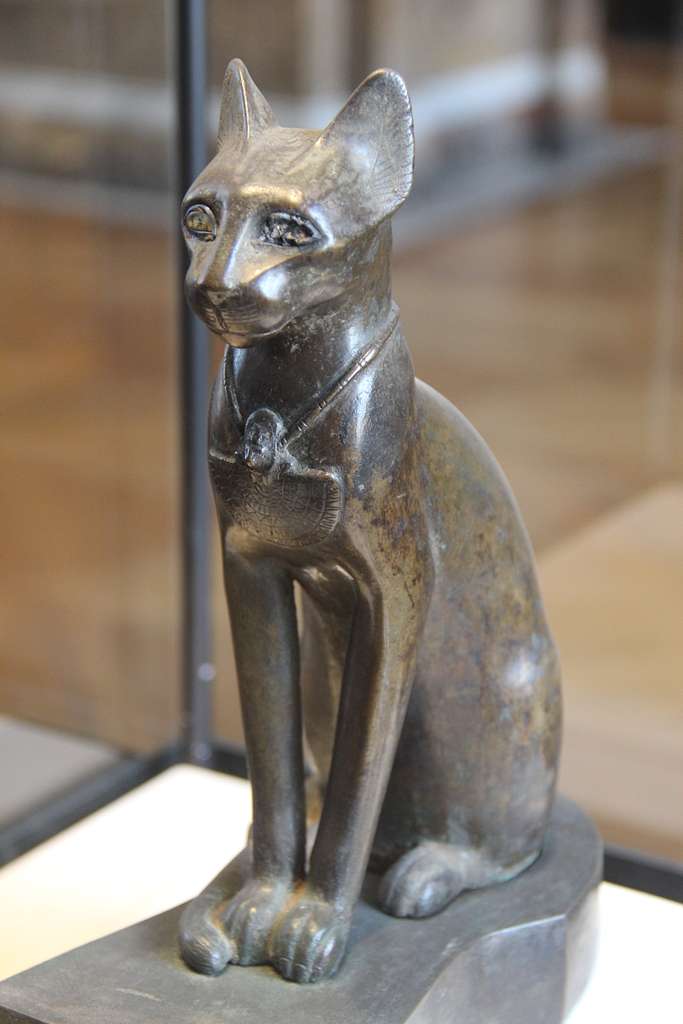
Egyptian cat statue made of silver.
Egypt had no local sources of silver, so they sourced much of their silver from Greece essentially since the beginning of Ancient Egypt. They did not receive their silver directly from Greece, however, instead leveraging their relationships with other cities to gain access to Grecian silver.
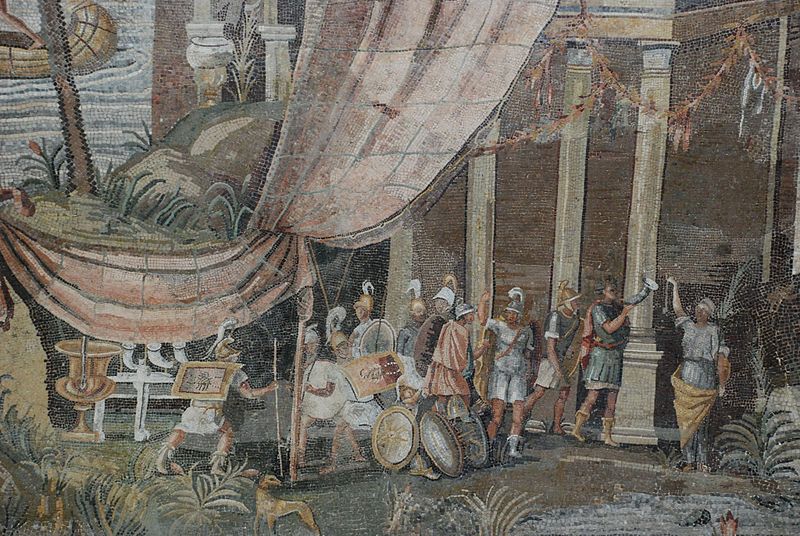
Mosaic of Ptolemaic soldiers.
Greek immigrants, such as merchants, mercenaries, literateurs, artists, and economists, traveled to Egypt between the 7th and 1st centuries BCE; immigration peaked in the 3rd century BCE and came to a halt by the 1st century BCE. Egyptian scholars traveled to Greece for Hellenistic studies as well.
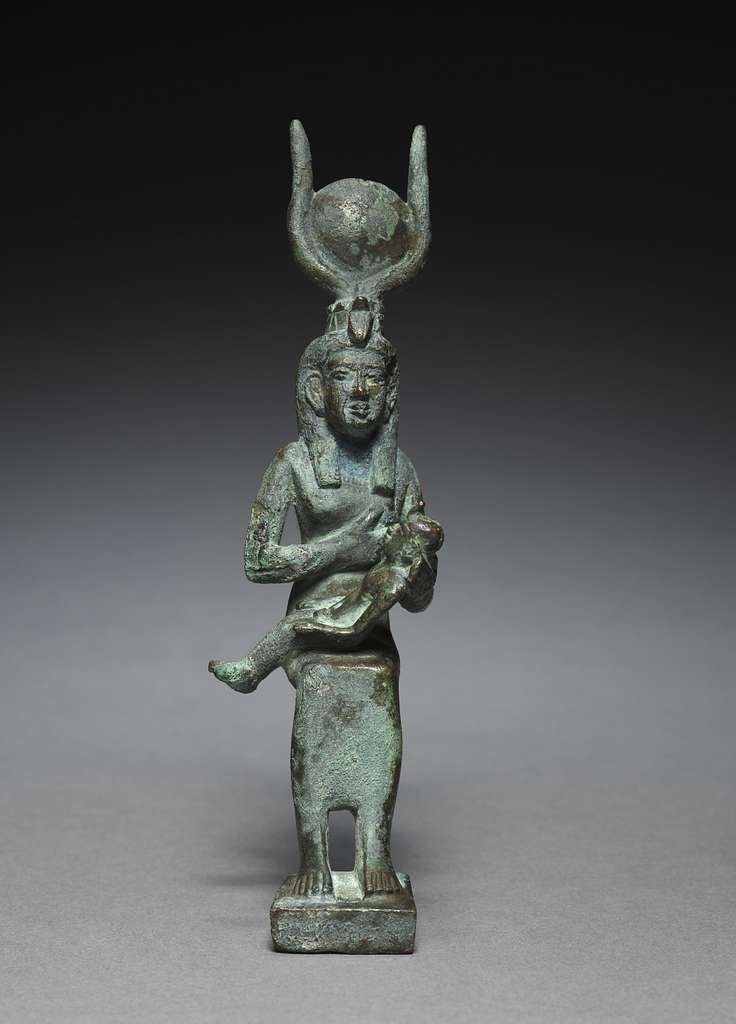
Statue of Isis likely from the Ptolemaic period.
Many Greek religious traditions can be traced back to Egyptian origins, such as the cult of Isis, the cult of Serapis, the god Dionysis and his celebratory processions, oracles, methods for worshipping the gods, and more; this exchange increased in the 7th century BCE when Greeks began flooding into Egypt.
A Deeper Dive Into Graeco-Egyptian Religion and Mythology
Click on the arrow to expand for further information!
The Cult of Isis
- Popular in modern days but originated with the Egyptian goddess Isis, a deity representing fertility and motherhood
- Greek settlers in Egypt started to participate in Egyptian cults of Isis
- Over time, Isis became a popular Graecized deity
- Became associated with Io, the main character in a well known Greek myth (explained below)
- Temples of Isis in Greece, such as:
- Supposedly one near the Akropolis in Athens in the 2nd century BCE
- Ruins of one in Delos
Dionysis
- Most well known as the Greek god of wine, madness, sensuality, and festivities, but originally an Egyptian god
- Famous Greek phallic procession in his celebration was also originally an Egyptian religious tradition
- Greeks claimed Dionysis as their own
Zeus and Ammon
- Many Greek deities, if not completely stolen from Egyptian religious tradition, had Egyptian counterparts or were associated with Egyptian gods
- Zeus and Ammon were both the king of their respective gods
- These gods symbolized power, and being considered a son of one of them earned a ruler respect
- Alexander the Great, one of the most powerful ancient historical figures, sought to prove his lineage as a son of Ammon
- There are remains of a sanctuary of Zeus-Ammon and Dionysis in Sparta
Greek Myth of Io
- Zeus impregnates Io, the daughter of the King of Argos and a priestess of Hera
- Hera turns Io into a cow out of jealousy
- Io flees Argos and makes it to Egypt, giving birth to her son Epaphus
- Hera steals her child, and Io goes in search for him all over Egypt
- Reminiscent to Isis searching for Osiris’ body, and Io’s motherly dedication reflects what Isis represents
- Isis and Io become connected in Greek religious thought later on
Legend of the Danaides
- Io’s descendents many generations later were brothers Danaos and Aigyptos
- They were Greeks by nature but heavily Egyptianized culturally
- Danaos had 50 daughters who were supposed to marry Aigyptos 50 sons, but the Danaides (the name for Danaos’ daughters) did not want this
- The Danaides killed Aigyptos’ sons and fled from Egypt back to Argos
- This ended a decades long feud between the brothers, and Danaos was able to retake the throne of Argos
Heracles’ encounter with an Egyptian king
- King Busiris of Egypt was a tyrant, and each year he would choose a stranger to sacrifice to his gods
- Heracles finds himself in Egypt for other reasons and gets chosen as the yearly sacrifice
- Heracles did not like that, so he killed King Busiris
- Manetho, who documented the lineage of Egyptian pharaohs, never mentioned a King Busiris, so this myth is likely an exaggerated negative depiction of Egyptians
A Final Comment
Despite all of the positive features of Graeco-Egyptian cultural interaction and transmission over the course of history and especially during the Hellenistic period, the Greeks did not always view the Egyptians with gratitude. Many looked down on Egyptian society and culture as “barbaric,” and it is clear that some Greeks were only interested in Egypt because they were fascinated in and fetishized the culture. Egyptians do not deserve to be looked at but rather to be appreciated for all they have contributed to societies and cultures around the world, from the beginning of history to the present day. The Greeks owe much of their culture, religion, and societal structure to the Egyptians, and much of our modern Western society derives from Greek society. Following that logic, everyone today owes a whole lot to the Egyptians!
