Cleopatra’s Suicide In Western Visual Art
Before you read any further,
imagine what Cleopatra looks like in your mind. What kind of images appear? Do you picture blue eyeshadow and sharp black eyeliner? Perhaps she is adorned with gold jewelry and flowing clothing. You might even think of a Cleopatra character from a movie, video game, or book.
It may come as a surprise, then, that historians remain uncertain about Cleopatra’s exact physical appearance.
In fact, the only authentic images of the Egyptian queen are coin portraits issued during her lifetime. If we cannot fully reconstruct Cleopatra’s appearance, how did her legacy shift from that of a powerful political figure—worthy of being minted on currency—to the image you just imagined?
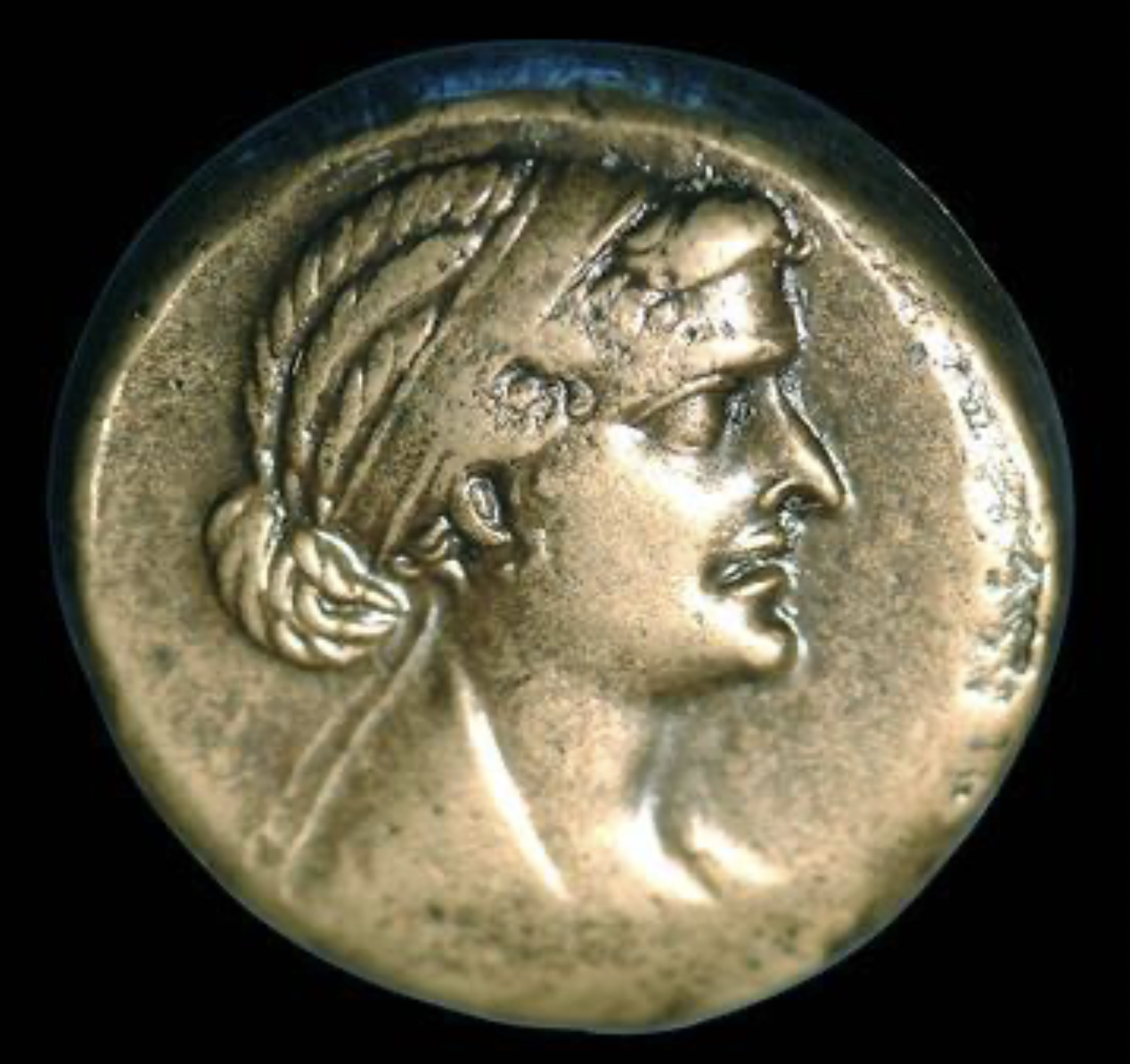
Explore the rest of this page to see how Western visual artists have remembered Cleopatra, and how their depictions have shaped contemporary views of her and her political legacy.
Cleopatra’s biography
69 B.C.
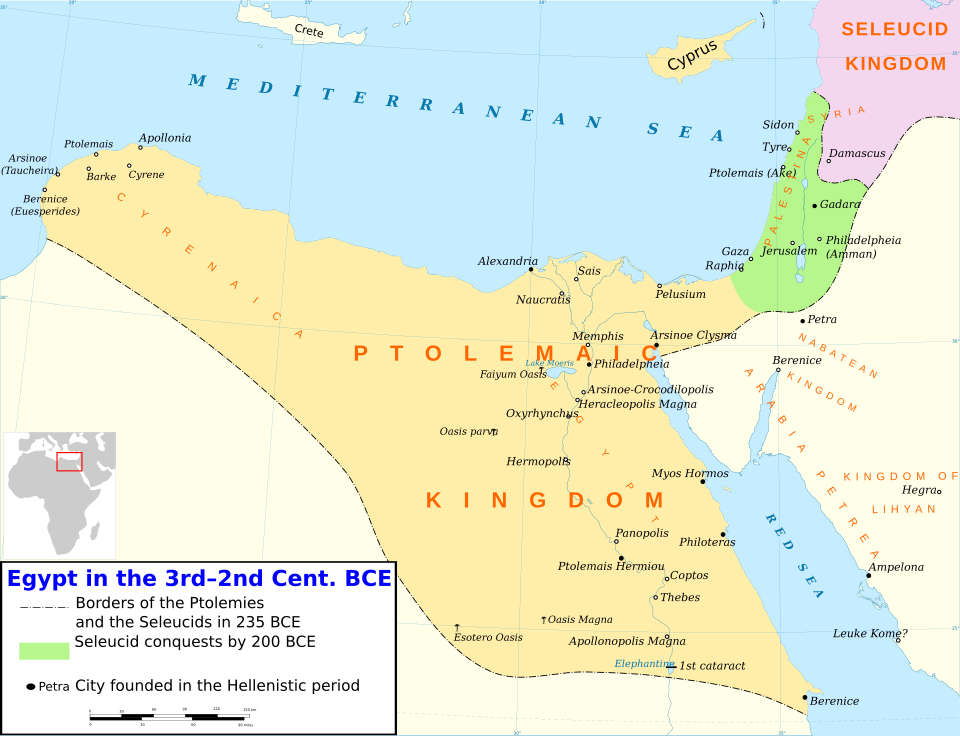
Cleopatra’s Birth
Cleopatra IV Thea Philipator was born in Alexandria into the Ptolemaic dynasty, a set of Macedonian Greek monarchical rulers that began with one of Alexander the Great’s generals. She was the second oldest of five children to Ptolemy XII Auletes and Cleopatra V.
69-51 B.C.
Cleopatra’s Education
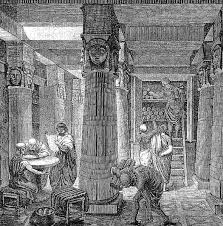
Cleopatra had access to an elite education, especially with the famous Library of Alexandria and its attached museum right next to her. It is likely she even surpassed the education of her parents!
51 B.C.
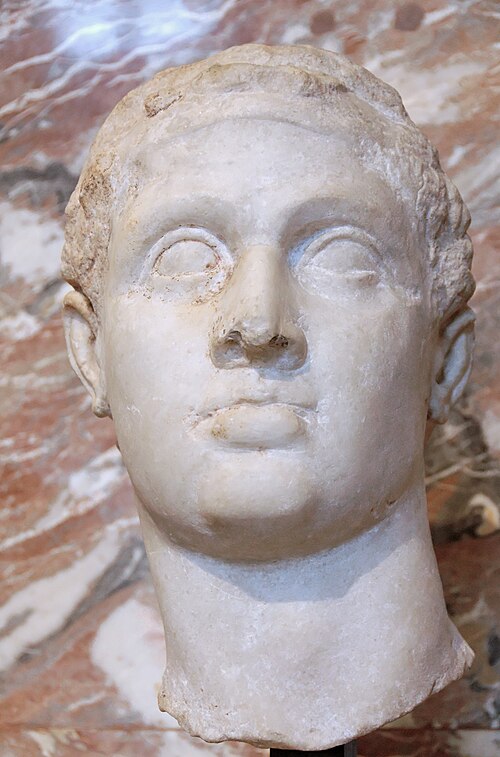
Death of Cleopatra’s Father
While Cleopatra was completing her education, her father succumbed to a fatal illness and died, leaving his children to inherit the throne.
51 B.C.
Cleopatra Marries Her Brother to Co-Rule Egypt
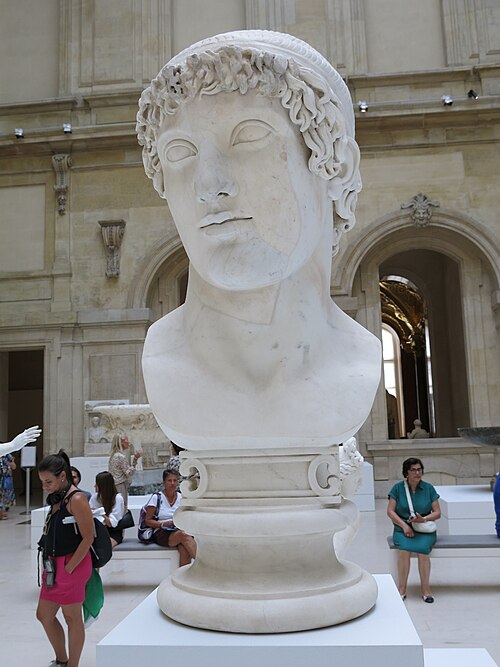
Cleopatra was next in line to rule Egypt, but because she was a woman, she was required to co-rule with her younger brother, Ptolemy XIII. Following Ptolemaic tradition, she married him when he was ten and she was eighteen.
48 B.C.
Cleopatra is Exiled to Syria
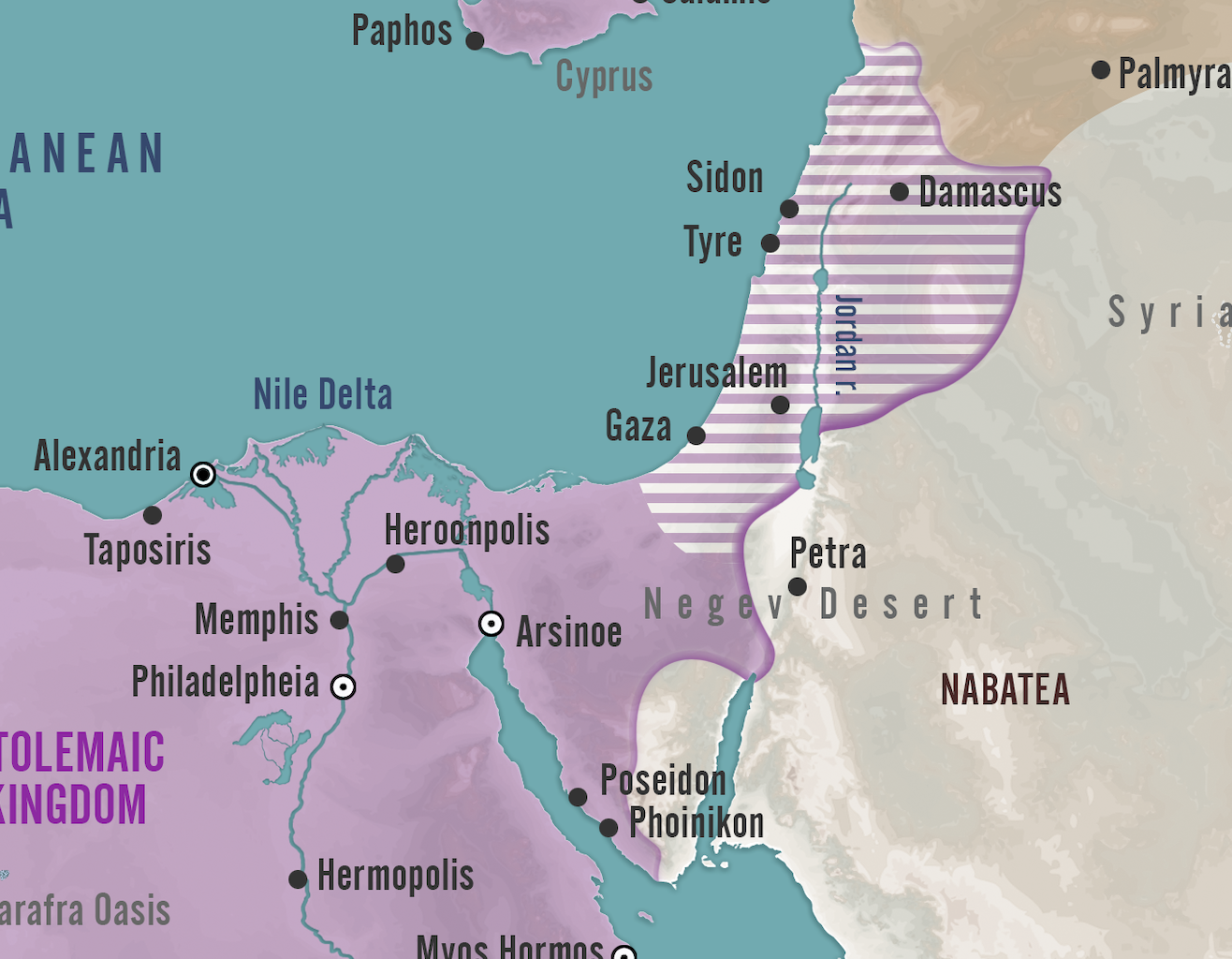
Cleopatra and her brother-husband did not get along, as she sought to rule Egypt alone. Their rivalry eventually forced Cleopatra into exile in Syria.
47 B.C.
Cleopatra’s Affair with Julius Caesar Begins
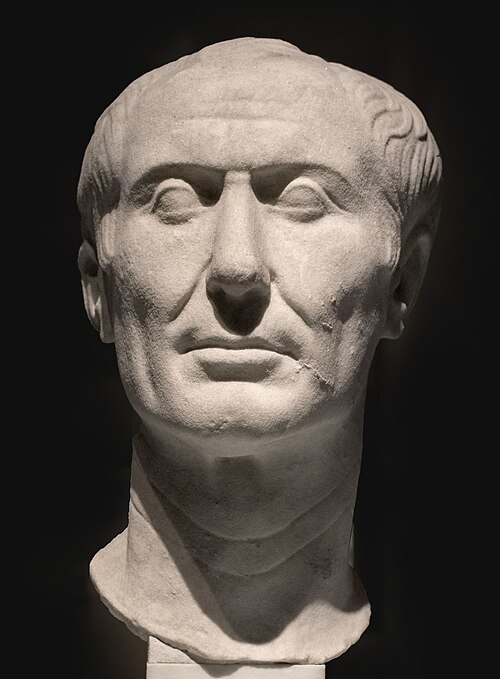
While in Syria, Cleopatra saw an opportunity to reclaim the throne from her brother-husband when Julius Caesar arrived in Egypt to pursue his rival, Pompey. She returned to Egypt and began an affair with Caesar, who helped her defeat and ultimately kill Ptolemy XIII. Cleopatra and Caesar had a son, Caesarion, before Caesar returned to Rome.
41 B.C.
Cleopatra’s Affair with Mark Antony Begins
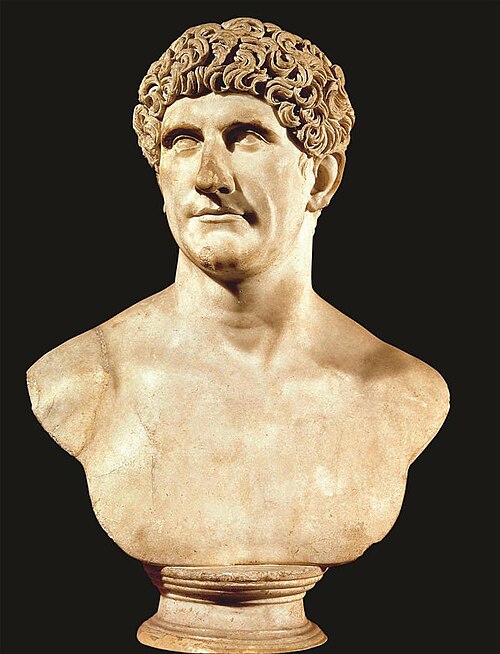
Cleopatra began an affair with Mark Antony to produce heirs to the throne and forge useful political alliances. Together, they had three children.
30 B.C.
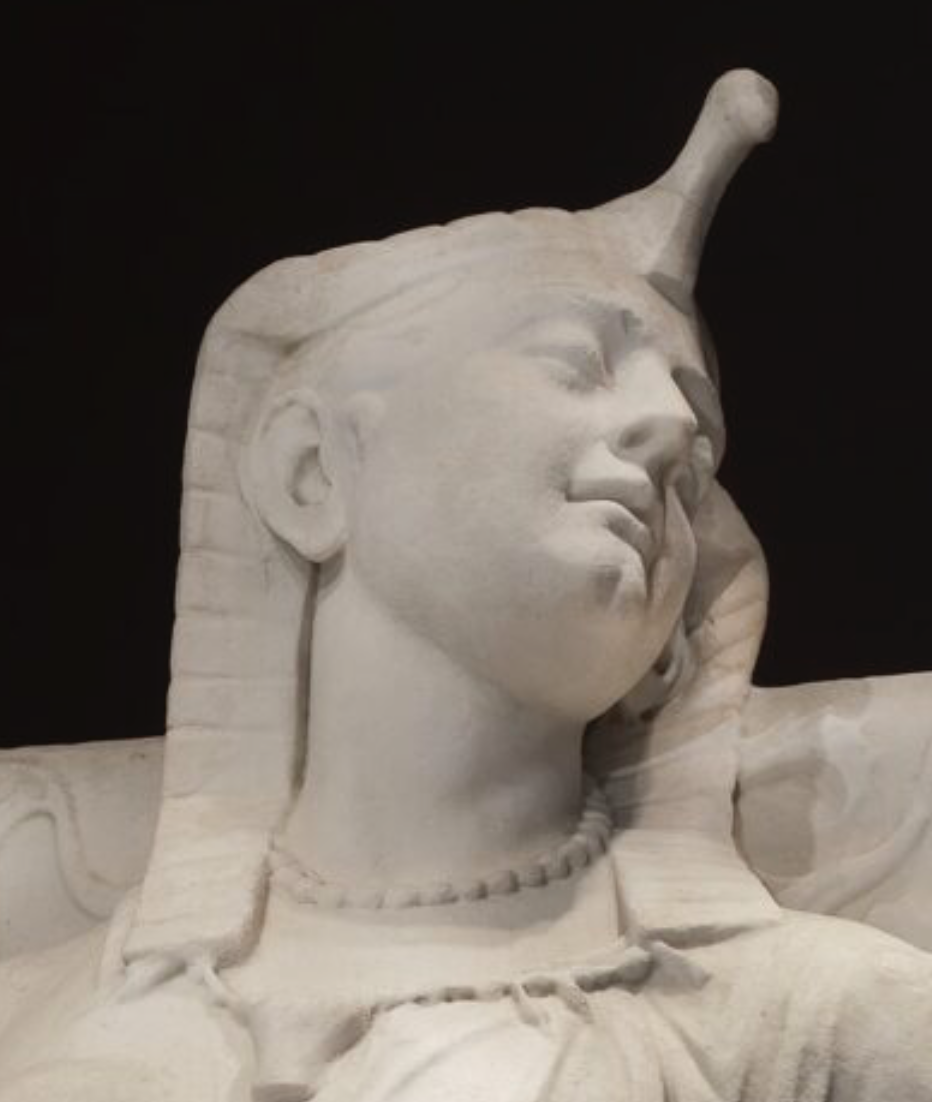
Cleopatra’s Death
Cleopatra and Antony’s relationship provoked hostility from Rome, particularly from Octavian (later Augustus). This tension culminated in the Battle of Actium, where Egypt suffered heavy losses. Due to the devastating defeat, Antony and Cleopatra took their own lives because Cleopatra refused to be paraded through Egypt by Octavian as a symbol of Rome’s conquest.
Did you know…
Historians do not know exactly how Cleopatra took her life, but myths and legends claim she used the poison from an asp, or Egyptian cobra. Nonetheless, most artistic and literary depictions of her death feature a snake.
Cleopatra’s death in Western Visual Art
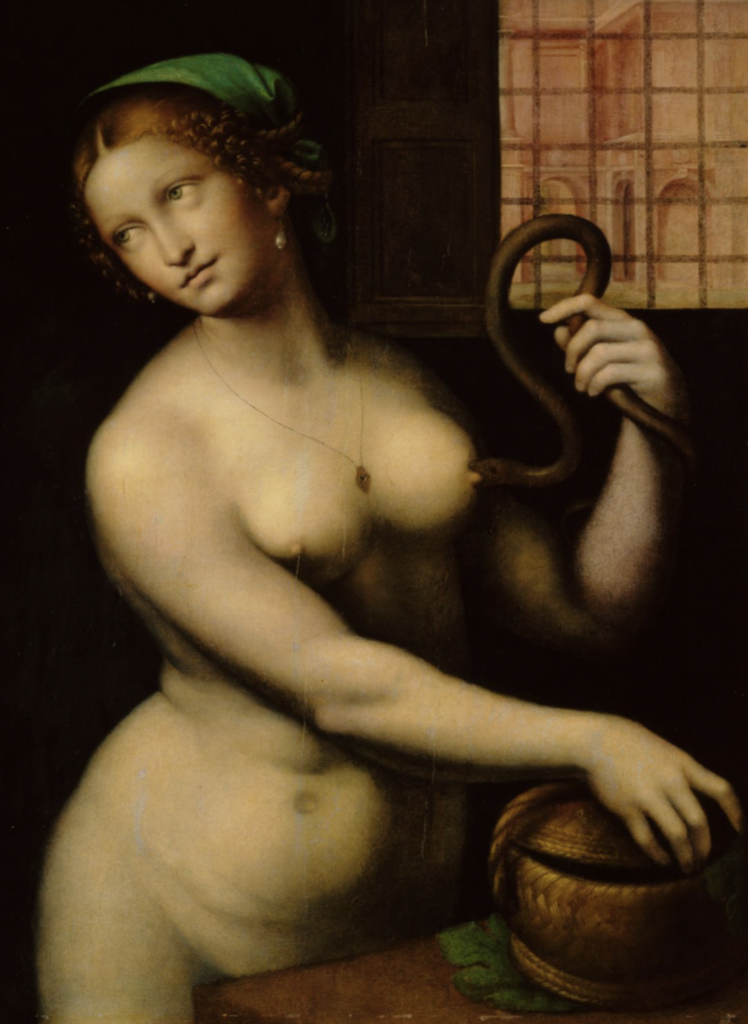
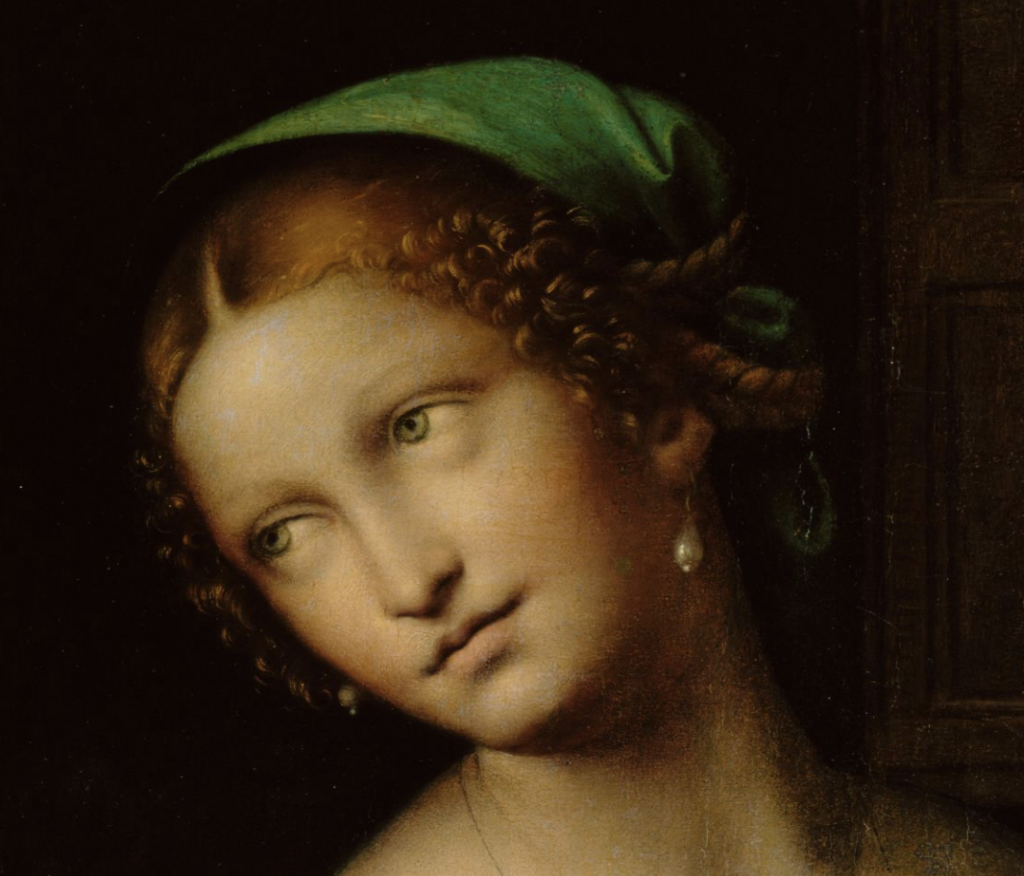
Cleopatra by Giampietrino
Year(s) Constructed: c. 1520-1540
Medium: Oil on painting, mounted on mahogany
Dimensions: 75.9 x 53.7 cm.
Repository: Allen Memorial Art Museum, Oberlin College, Oberlin, OH
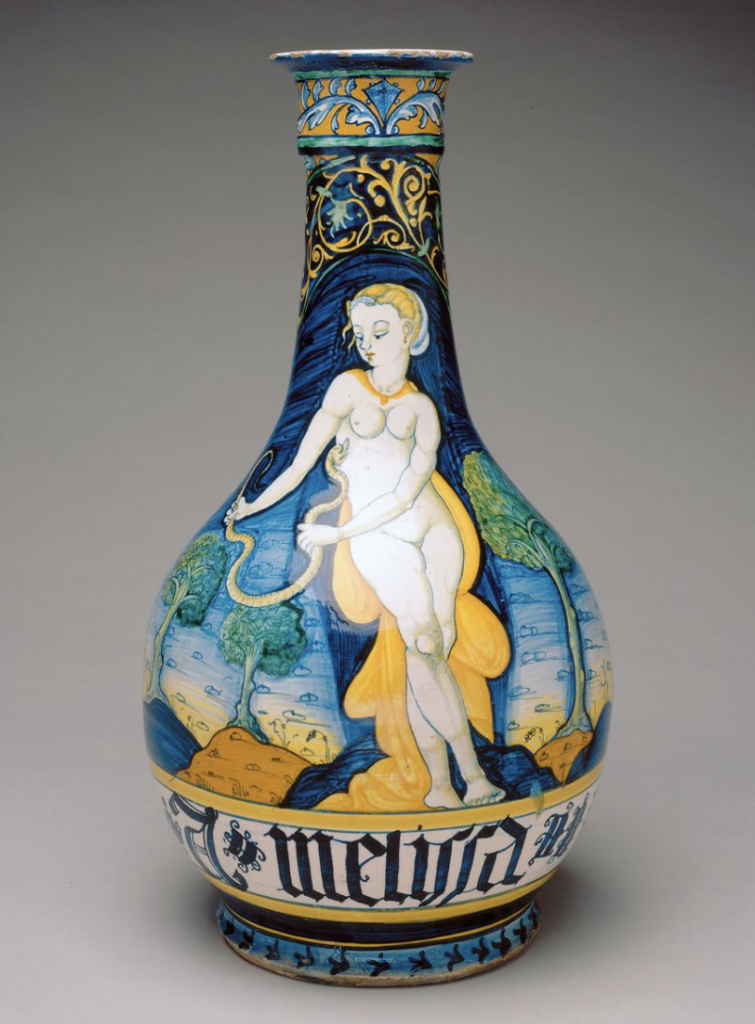
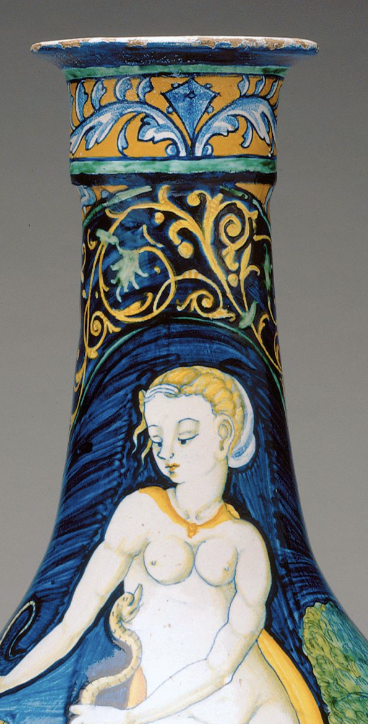
Tall Drug Bottle with the Death of Cleopatra by Orazio Pompei
Year(s) Constructed: c. 1540-1550
Medium: Tin-glazen earthenware
Dimensions: 43.97 x 20 cm.
Repository: The National Gallery of Art, Washington DC
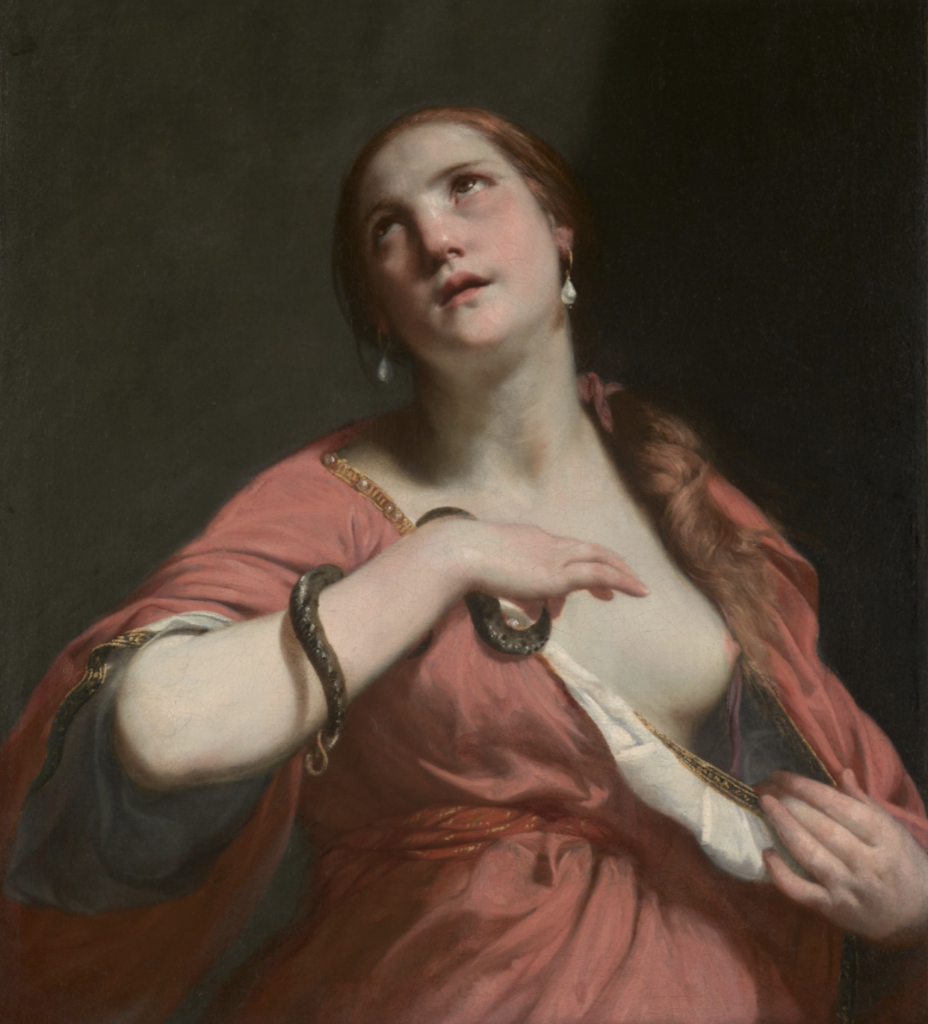
The Death of Cleopatra by Guido Cagnacci
Year(s) Constructed: c. 1645-1655
Medium: Oil on canvas
Dimensions: 95 x 75 cm.
Repository: The Metropolitan Museum of Art, New York, NY
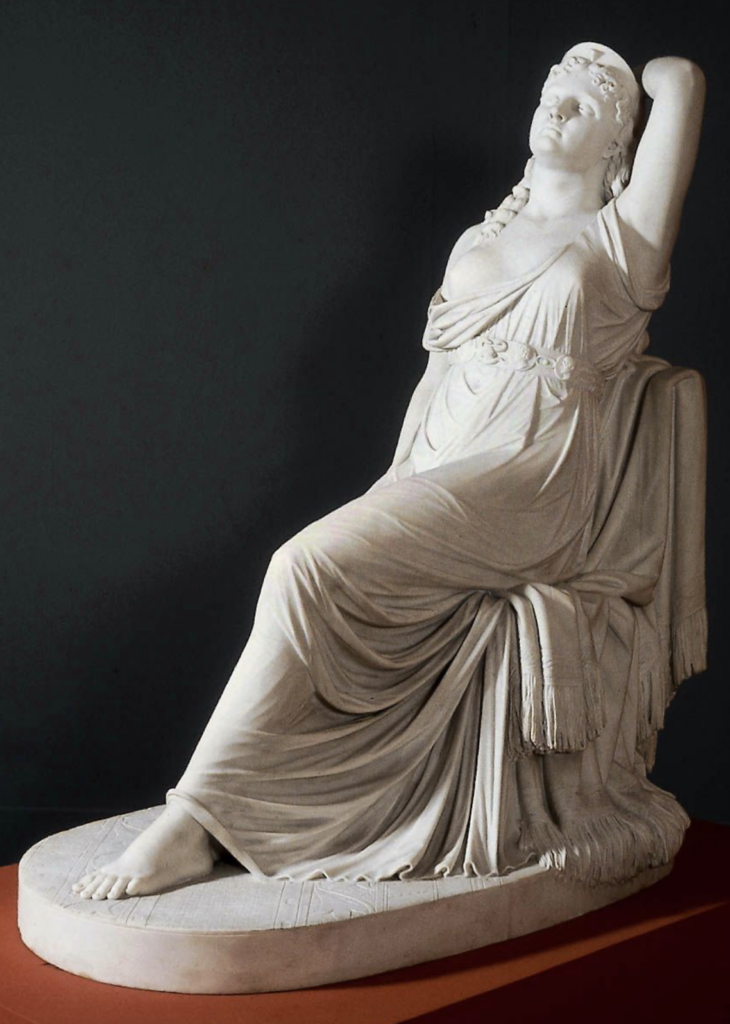
Cleopatra by Thomas Gould
Year(s) Constructed: 1873
Medium: Stone and marble
Dimensions: 144.78 x 63.86 x 125.73 cm.
Repository: Museum of Fine Arts, Boston, MA
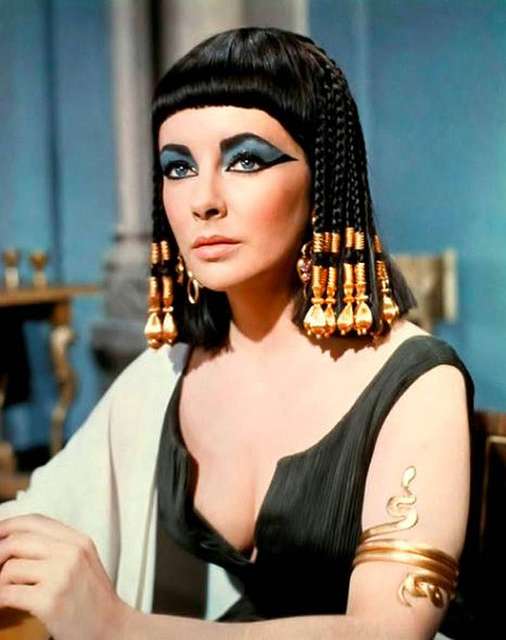
Cleopatra, directed by Joseph Mankiewicz, starring Elizabeth Taylor
Release Date: June 12, 1963
Genre: Drama, Romance
Runtime: 4h 10min
Watch This Clip of Cleopatra’s Death Scene:
Image Themes
The five visual images above represent just a sample of how the West has remembered Cleopatra. While thousands more exist, these examples highlight recurring themes in Western depictions of the Egyptian queen. As noted earlier, historians remain uncertain about Cleopatra’s appearance and the circumstances of her death—yet Western portrayals of her death often look remarkably similar.
Let’s now explore how Western visual artists have Westernized, sexualized, and commodified Cleopatra’s image, shaping the way you may picture her today.
WESTERNIZATION
Cleopatra’s image has been Westernized by these visual artists, actively recasting Cleopatra as a symbol of an imagined East, reinforcing Western cultural dominance and diminishing her role as a strategic ruler.
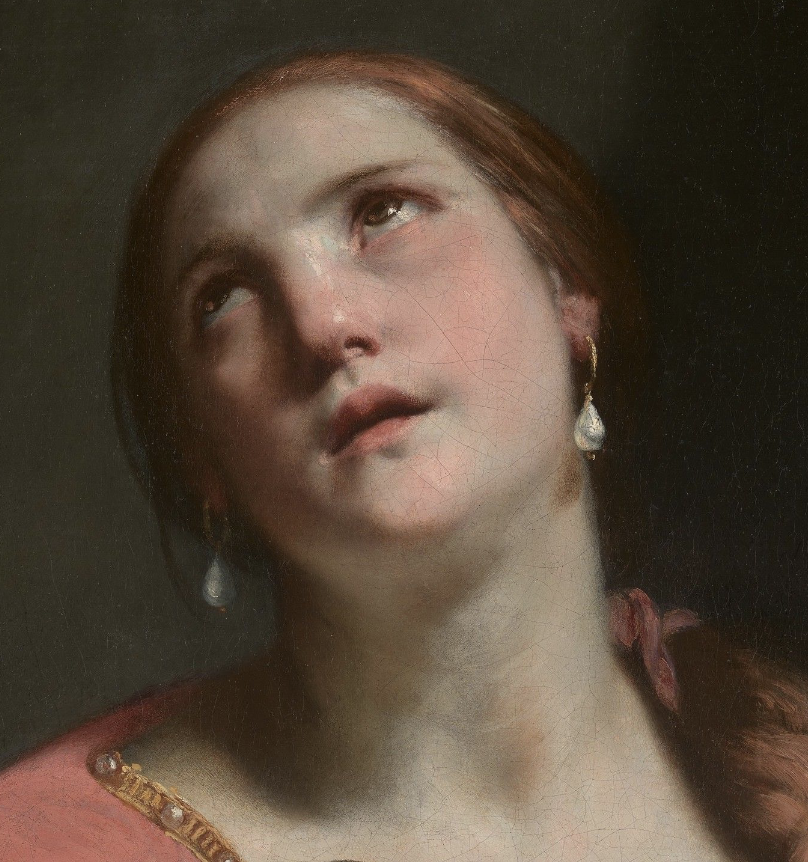
Although Cleopatra was of Greek descent, she likely did not have fair skin comparable to that of Western Europeans. Yet, these artists consistently portrayed her to resemble the women of their own countries.
Cleopatra appears more like a Renaissance woman than an Egyptian queen. By using themes of classicism and humanism, these artists have diminished the political significance of her death.
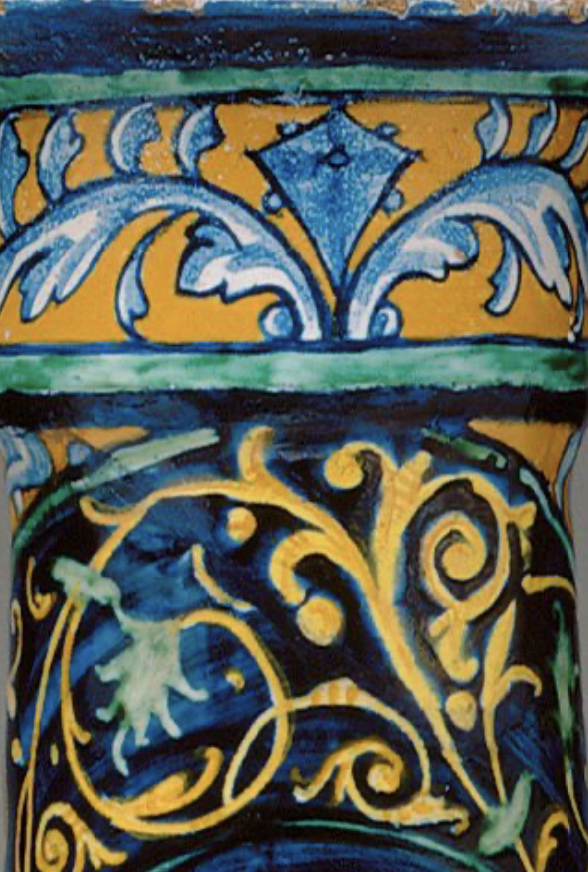
The Orientalist use of highly saturated hues like yellow and turquoise portrays the Egyptian queen in a fundamentally different light—reinforcing Western views of nations like Egypt as exotic and subordinate.
In Cleopatra (1963), the music during her death scene features oboes and tambourines, creating a mysterious and foreign soundscape that reflects Western perceptions of non-Western women.
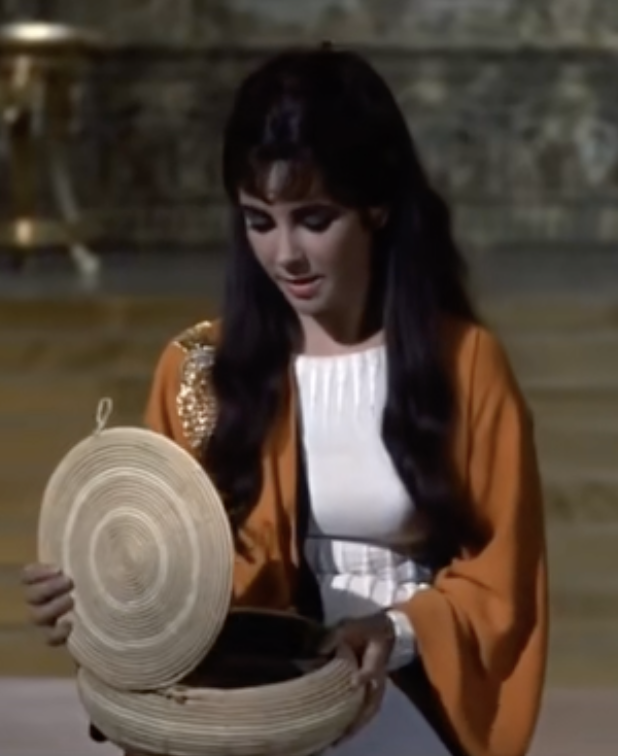
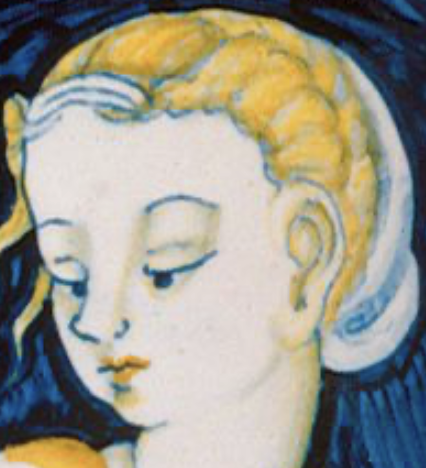
All of the images in this analysis depict Cleopatra with a small nose, pink lips, clear skin, no body hair, and passive or submissive expressions. By applying Western beauty standards, these artists have erased Cleopatra’s traditional Egyptian features.
SEXUALIZATION
By sexualizing Cleopatra’s image, Western artists have shaped her legacy as that of a beautiful and erotic seductress rather than a strong and formidable political leader.
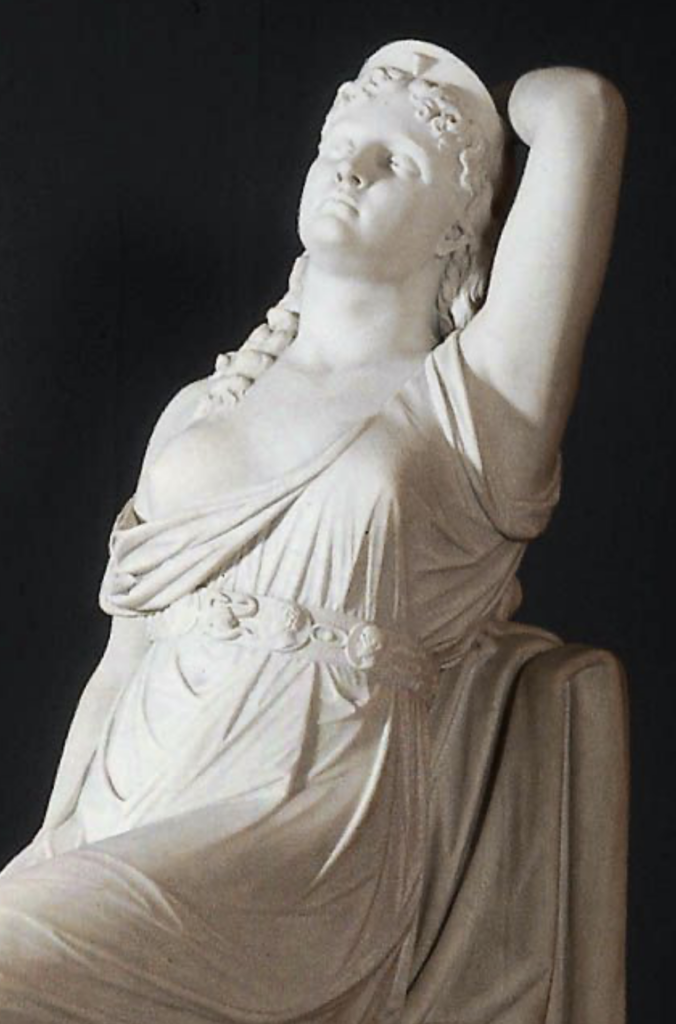
Gould’s unnatural posing of Cleopatra’s body portrays the Egyptian queen as vulnerable and disempowered rather than composed and authoritative.
By portraying Cleopatra selectively removing her clothing and revealing her nude body, these artists highlight her as a sexual object rather than a powerful political figure.
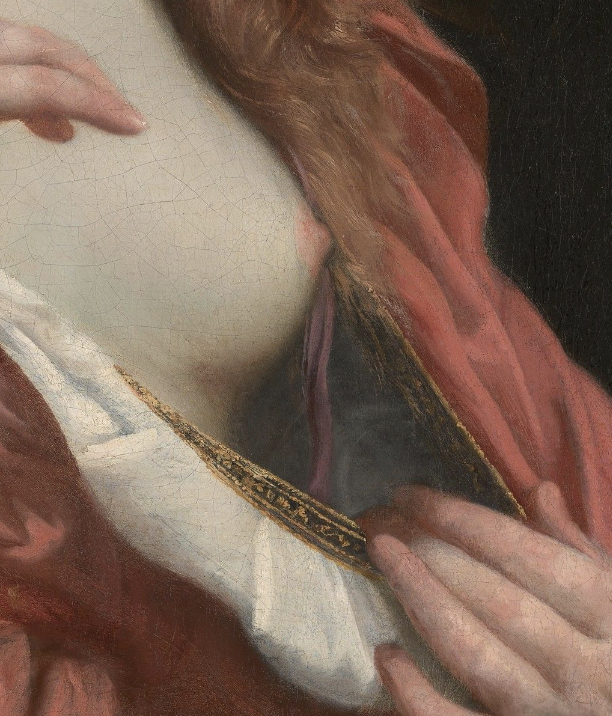
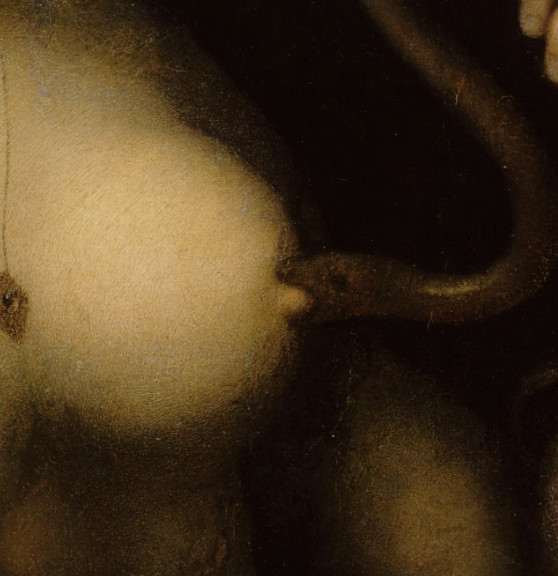
Cleopatra’s nudity in these images is not incidental but a deliberate choice by the artists. The frequency of such depictions suggests that popular culture and commercial markets favored eroticized portrayals of non-Western women.
None of the images depict Cleopatra with pubic hair, presenting her as a pure—and possibly youthful—sexual figure. These choices eroticize her, reducing a politically astute queen to an exoticized symbol and reinforcing colonial and patriarchal narratives.
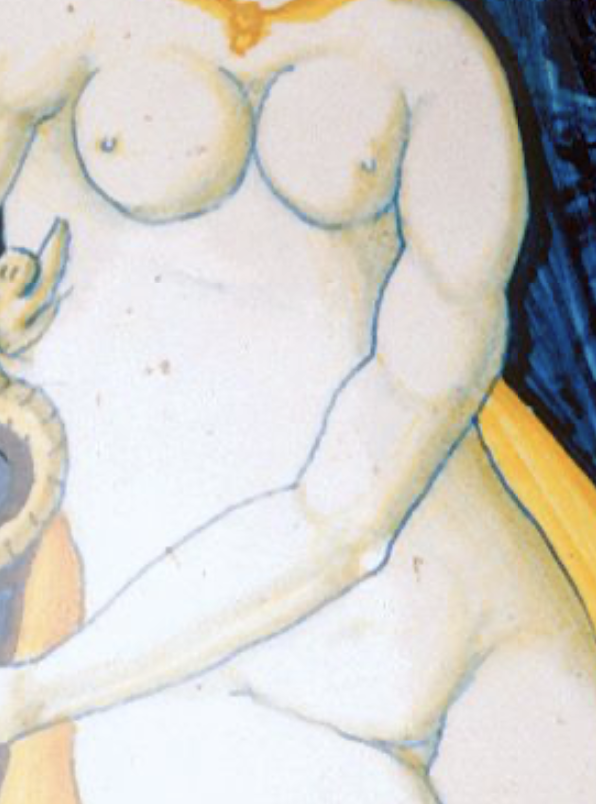
COMMODIFICATION
By commodifying Cleopatra’s image, Western visual artists have repurposed her identity for commercial and domestic use, reinforcing her status as a marketable symbol rather than a historical leader.
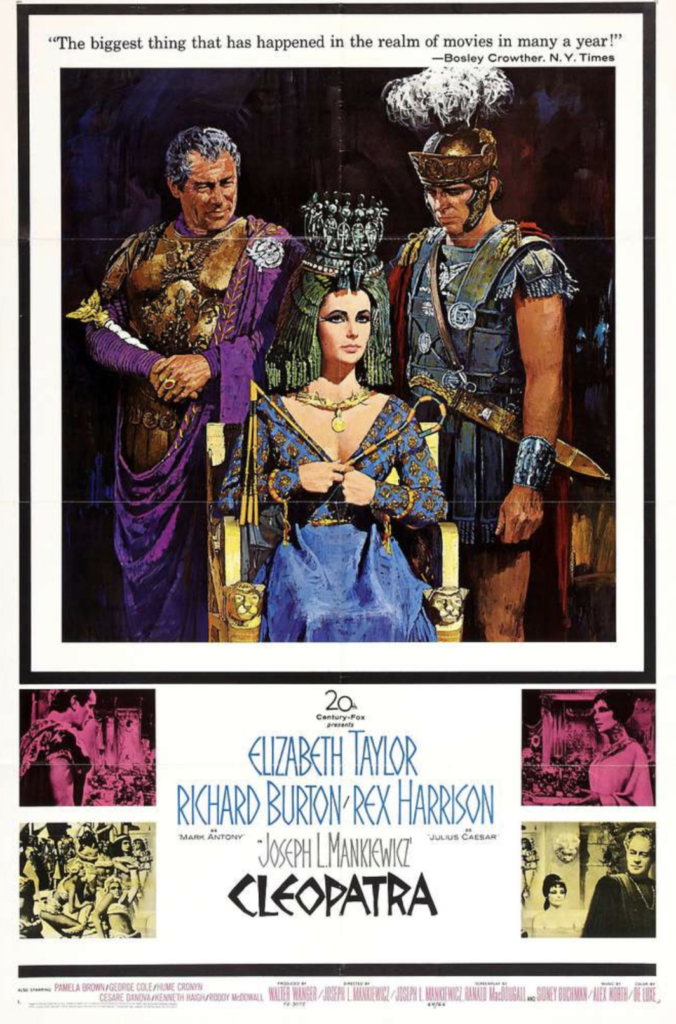
The use of Cleopatra’s image in films and popular culture has sparked a new wave of Egyptomania, shaping how broader audiences imagine Cleopatra and other non-Western female political figures.
By placing Cleopatra’s image on everyday objects like bottles, these artists have commodified a selective portrayal of the queen for mass consumption, leaving audiences unaware of her political legacy.
Conclusion
Cleopatra’s death has long captivated Western visual artists, but their depictions have largely reflected the fantasies and ideologies of their own cultures rather than the reality of Cleopatra as a political figure. Across time periods and mediums, artists have Westernized, sexualized, and commodified the Egyptian queen, casting her as an eroticized spectacle rather than a sovereign leader. Ultimately, these depictions of Cleopatra not only distort her legacy but also reveal how art, shaped by Western ideals, continues to silence the voices of powerful women who shaped history on their own terms.
Suggested Reading
Bahrani, Cyrino. Women of Bablyon: Gender and representation in Mesopotamia. Routledge, 2001.
Roller, Duane. Cleopatra: A Bibliography. Oxford University Press, 2010.
Said, Edward. Orientalism. Vintage Books, 2008.
Schiff, Stacy. Cleopatra: A Life. Back Bay Books, 2011.
Thompson, Jason. A History of Egypt: From Earliest Times to the Present. Anchor Books, 2008.
Walker, Susan and Peter Higgs. Cleopatra of Egypt: From History to Myth. Princeton University Press, 2001.
