• Skip to main content
  • Skip to footer

Deliberative Citizenship Initiative

Building Democracy One Conversation at a Time

  • The Initiative
    • Programs
      • Deliberation Across the Curriculum
      • Deliberation on Campus
      • Deliberation in the Community
      • Research on Deliberation
    • Motivations
      • Why Deliberative Citizenship?
      • Why Davidson? Why Now?
    • Who’s Involved?
      • DCI Fellows Cohorts
        • 2025-2026 Fellows
        • 2024-2025 Fellows
        • 2023-2024 Fellows
        • 2022-2023 Fellows
        • 2021-2022 Fellows
        • 2020-2021 Fellows
      • DeeP Collaborative Cohorts
        • 2024-2025 DeeP Collaborative Faculty
        • 2023-2024 DeeP Collaborative Faculty
      • Advisory Council
    • History
      • What Sparked the Initiative?
    • Key Deliberative Dispositions
    • Frequently Asked Questions (FAQ)
    • Annual Report
  • Get Involved!
    • Participate in a Forum
    • Join a D Team
    • Become a Fellow
    • Take Courses
    • Get Training
    • Come to Guest Lectures
  • Events
    • Upcoming Events
      • 250th Anniversary Deliberative Forum Series on American Values
    • Past Events
  • Connections
    • The Deliberative Citizen: The DCI’s Monthly Newsletter
    • Efforts on Campus
    • Efforts in the Community
    • Efforts Elsewhere
    • Readings and Resources
      • DCI-Published Guides
      • DCI Guide to One-on-One Conversations
      • How to Disagree
      • Demonstration of Facilitation Styles
      • Deliberative Pedagogy Mini-Course
    • How We Can Help: DCI’s LET’S DELIBERATE! Partnership Opportunities
    • DCI in the News
  • DCI Blog Posts
    • Recent Blog Posts
    • All Blog Posts

The DCI Blog

If Not Deliberation, Then What?

January 5, 2026 by Desi Molina

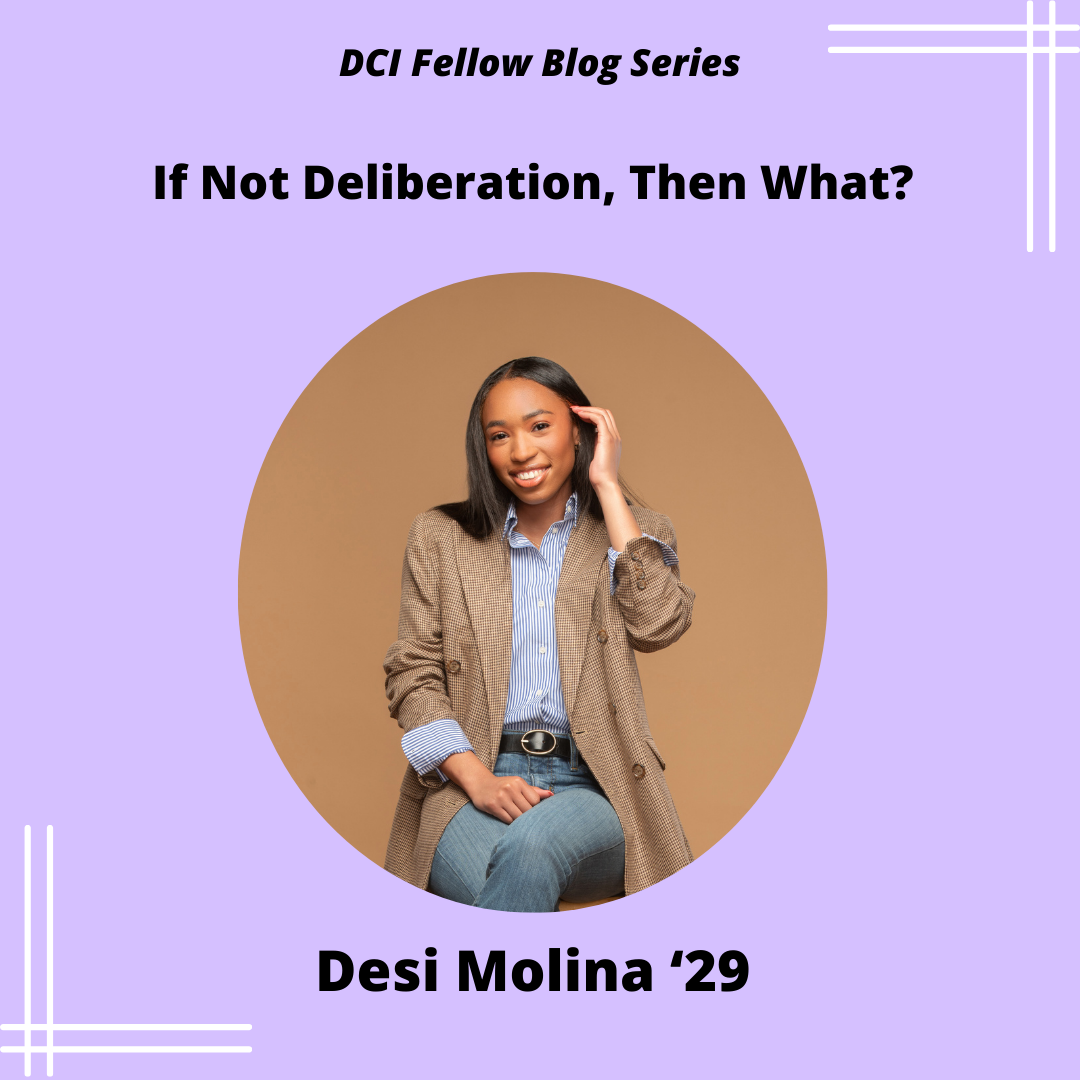
By Desi Molina ’29 (DCI Fellow)

Growing up in such a divisive political environment, misinformation and polarization feel like a new normal. As a college student stepping into this landscape, being tasked with fixing a world that feels unmendable, I often find myself wondering what’s the point of debating or talking across the aisle, when no one seems to listen? The art of true deliberation, and the willingness to participate in it, feels almost lost.

In DCI, we’ve been reading Why We Argue by Robert Talisse and Scott Aikin, a book that has discussed why argument isn’t just inevitable but essential in free society. One discussion we had on this book was led by Professor Layman of the Philosophy Department. As someone who has always found philosophy to be both fascinating and frustrating – circles of endless questions and no definitive answers – I wasn’t sure what I’d make of this conversation. During the discussion I very predictably found myself moving back and forth between perspectives, firm in one belief, then agreeing with the opposite moments later.

Despite the conversation proving to be a bit dizzying for me, the end of it left me with a question that is still echoing in my head: if not argumentation or deliberation, then what else can we resort to?

This question has in part reshaped the way I think about deliberation. As exhausting and sometimes disheartening discourse can be, the alternative can be much worse. Without argument, humans lose the ability to challenge our own assumptions, build understanding with those we may differ from, or even coexist peacefully. Deliberation may not always lead to neat conclusions or universal agreement, but it keeps us human.

I think framing deliberation around this question is what our society needs right now. While there are many reasons why one may not want to deliberate with their peers, it’s important to keep in mind that if we don’t deliberate, what else is there? Deliberating through discomfort is a sign of love, as Dr. Bullock would say. It shows that you’re willing to wrestle with complexity instead of retreating into simplicity and polarization. In a time when shouting matches often replace meaningful conversations, choosing to deliberate, listen, question, and reflect is itself an act of hope. While entering this polarized world still feels daunting to me, I’ve come to understand the necessity of deliberation within it. If not deliberation, then what else must we resort to?


Filed Under: Fellow Posts

Passing Along Some Tips for Holiday Conversations

December 23, 2025 by Ruby Aaver

In this holiday season of gathering with loved ones, you may be wondering what to do if sensitive topics come up that stimulate disagreement and discord. Should you follow the age-old dictum to “not talk about politics and religion” with loved ones? Or is there a way to navigate these conversations effectively?

Two organizations recently published some tips on how to best handle discussions over the holidays on contentious issues. The Constructive Dialogue Institute’s “Holiday Conversation Guide” and the Difficult Dialogues National Resource Center  “Six Strategies for Staying Productive During Holiday Conversations”  both emphasize that meaningful conversations during emotionally charged moments—especially around politics and identity—depend first on managing tensions rather than winning arguments.

When conversations escalate, people become less capable of listening and more likely to entrench their views. Both guides therefore stress slowing down, pausing before responding, and stepping away when emotions run high. De-escalation is framed not as avoidance, but as a necessary condition for understanding: conversations improve when participants shift their goal from persuasion or “being right” to maintaining connection and openness. This reframing helps prevent conflict from damaging relationships and creates space for mutual learning.

A second shared insight is the importance of curiosity, dignity, and perspective-taking. Both texts encourage asking questions that surface the sources, values, experiences, and emotions underlying people’s beliefs rather than reacting to positions alone. Ask someone you disagree with to share a resource that influenced their perspective. By acknowledging emotions and inviting others to share their stories, participants signal respect even amid disagreement. Research cited in the two documents suggests that perspective-taking, especially when people share vulnerabilities, can reduce biases and deepen understanding over time. Importantly, neither document suggests agreement is required; instead, they argue that recognizing others’ humanity and moral frameworks is central to sustaining constructive engagement across difference.

Finally, both documents underscore that productive conversation is a skill that requires judgment and practice. Not every comment demands a response, and timing matters as much as content. Choosing when to engage, when to listen, and when to step back can help preserve relationships and maintain connections. Tools such as storytelling, feeling-based language, and structured approaches like pausing, acknowledging, listening, and sharing help participants respond deliberately rather than reactively. Taken together, the documents present a hopeful message: with practice, intentionality, and care, difficult conversations, especially with those closest to us, can become opportunities for growth, connection, and shared understanding rather than sources of division.

Filed Under: DCI Posts

Deliberation Beyond Pride and Prejudice

December 19, 2025 by Rosie Arnaudova

By Rosie Arnaudova ’28 (DCI Fellow)

If we imagine debate as a duel, then we could think of deliberation as a roundtable, where everybody contributes to the conversation without competing. Since there are no ‘winners’ in deliberation, participants are given the freedom to agree, disagree and change their opinions when wrong and provided with better reasoning. They should leave behind their pride and welcome the opportunity to learn something new during discussions. For this purpose participants should also cast aside their prejudice when hearing opinions different from their own and listen with open minds. This, of course, does not imply that one should not have a strong position, but it is rather a reminder that often people struggle to accept that their logic might be flawed.

Last spring was my first experience with the DCI, when I joined as a participant in a D Team. My group was carefully selected and incredibly diverse when it came to both political opinions and people – with students from the US and abroad, and adults from the Davidson community with far more experience than us that gave us some professional perspectives on the issues we discussed. Our deliberation was an incredible learning experience for me because my teammates always gave their opinions accompanied with a story from their life, a reason that made them think the way they do. This made disagreeing hard because how can you disagree with somebody’s experience? Whatever prejudice I had towards certain statements was swiftly defeated by the personal insight provided for them. I thought, “I can’t judge a person for thinking this if this is what they have experienced.” and thus my learning journey began.

I would say that an important lesson for me then was to leave my pride behind. I was able to admit to myself that what I think is a product of my environment and since we were such a diverse group, people who grew up differently and in a different country often thought otherwise. I started viewing the concept of right and wrong answers differently, as there never was an absolutely correct answer – as a group we would discuss until we reached a consensus that one answer is simply more right than others. In this way I was able to see the bias in my own beliefs and open up to new perspectives. For instance, we were discussing the Covid-19 epidemic and whether we support full-lockdown. Everybody in the group was against it apart from a person who had lost a close relative. It was clear then that we all took it as an end goal to reduce suffering, despite having a different approach.

In conclusion, finding common ground through empathy and understanding benefits all. When you let go of your prejudice towards different ideas and forget your pride, you will be able to admit that you are wrong or have more clarity about the other person’s reasoning. This is what makes deliberation such a productive and educational experience that can give you a grasp on the full picture when trying to solve a problem.

Filed Under: Fellow Posts

Deliberative Dialogue: A Lesson on Assumptions

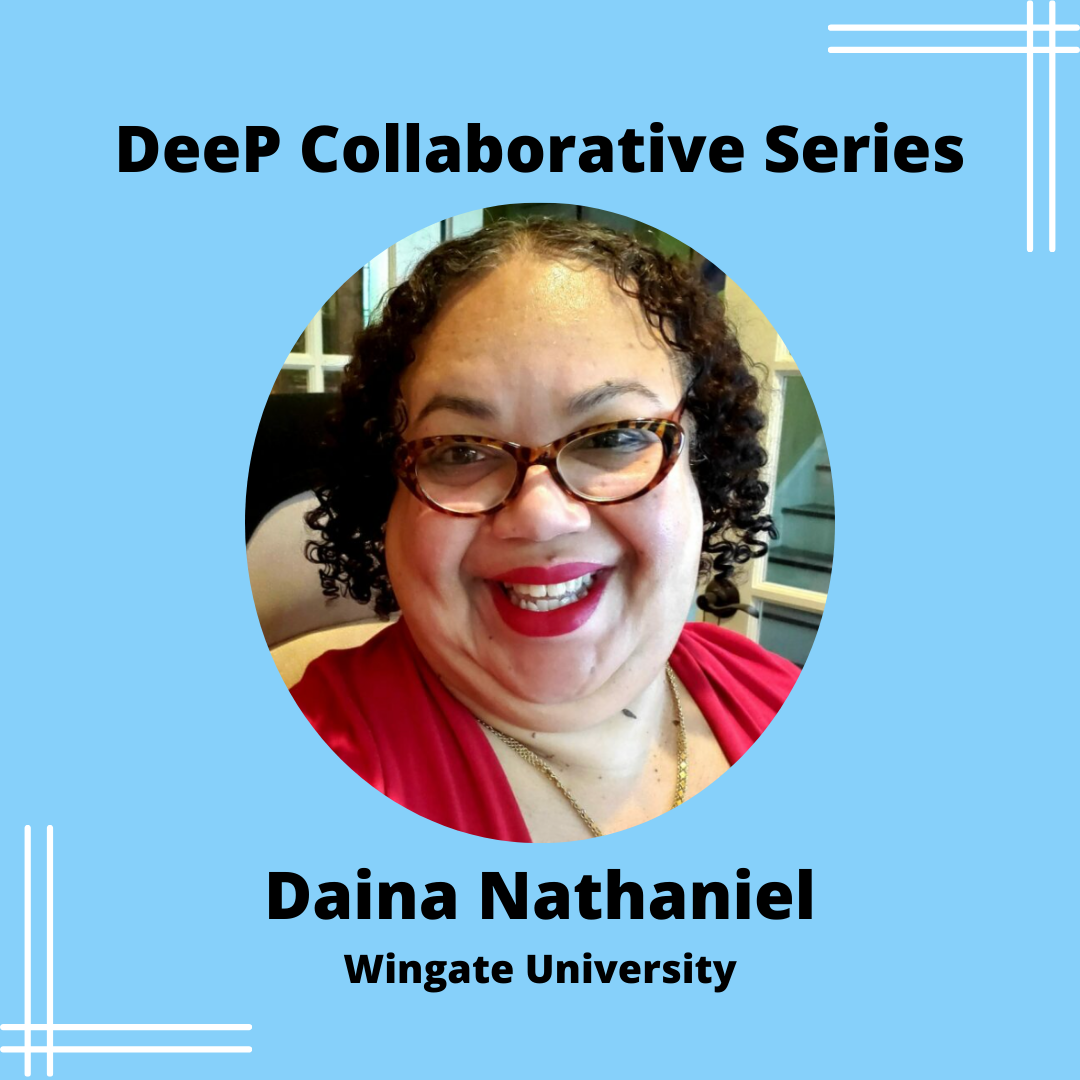
December 18, 2025 by Daina Nathaniel

The Deliberative Pedagogy (DeeP) Faculty Collaborative consists of faculty from Davidson College and other higher education institutions who are committed to learning and implementing new ways to improve and deepen the quality of their class discussions. These faculty come from a wide array of disciplines and backgrounds to study and discuss deliberative pedagogy methods, share their ideas and questions with one another, and work to embed deliberation in their classrooms. In this special blog series, members of the Collaborative describe and reflect on their experiences developing and teaching their deliberation-involved courses.

By Daina Nathaniel (2024-25 Deliberative Pedagogy Collaborative Faculty Fellow)

I was thrilled when I first learned that I was selected to be a part of the Collaborative in 2024-2025. After all, I had been doing deliberation of some form or another in my classes over the last 20 years or so. What I could not have anticipated was the variety of factors that would come to bear on this deliberative exercise, beyond whether students were understanding the content of the course or not.

My Intercultural Communication course seemed to be the perfect match. While I constantly challenge my students with seemingly off-the-wall comments and questions in all of my classes, I knew immediately that this course, which focuses on intercultural interaction, would be well tailored to discussing relevant issues of the day and within the context of the class without much effort to make it seem so.

While I felt confident about being able to integrate Deliberative Dialogue (dare I say) more deliberately in my class, there were some fundamental assumptions that I went with into the process that were in themselves challenged as a matter of course.

Assumptions about Students

It can be a challenge at times to ascertain student interest in current affairs, and often, we as educators simply try to gauge how much they might know about a particular subject or issue. I used the content units of the course to determine the types of deliberative questions the students would consider to demonstrate a clear connection with the course outcomes and learning objectives. At the same time, however, I really sought to understand what issues got students fired up.

What I learned through the Deliberative Dialogue process is that sometimes students may not be able to identify at the outset what they think about certain issues. They can be reticent about even discussing issues out in the open for fear of being judged, particularly by their peers. As I continue to grow in this practice of Deliberative Dialogue, there is some pre-work that needs to be done to prepare students for the discomfort that they might feel and to provide assurances that the classroom will remain a safe space for them to explore ideas – especially those that may be different from others.

Assumptions about Issues

In designing the prompts for the Deliberative Dialogues, I focused on issues that linked with the unit being discussed, but in a way that connected to the students’ current experiences on and off campus. I thought that given this was my first time (and theirs), it was important to keep the integrity of the exercise but make the issues as relatable to students in their current circumstances.

Should I do this in the future, I will solicit ideas from students, not necessarily about the Deliberative Dialogue prompts directly, but about campus and society related concerns that they might have. These may be specific to our campus but could also have implications across other institutions of Higher Education and the wider community. It is clear that when people have a stake in an issue, they are more likely to engage in discussing it. Since this is likely the first time that students will be expected to deliberate about issues in this way, and even take a position with which they don’t agree, getting their buy-in from the beginning might be a good starting point.

Assumptions about Myself as the Moderator

From the start and after the first set of Collaborative training and readings, I felt abundantly prepared to lead the Deliberative Dialogue process. What I could not have anticipated was that a complete change in circumstances could thwart my plans and to pivot seamlessly was a significant challenge. To me, introducing this process to students (maybe particularly my students) is best done in person. I could not have known that I would have had to switch to online classes by the third week of the semester. At my institution, students are not used to having online classes and few are even offered in my department. Given that the course I integrated this exercise into is required or suggested by a number of different departments, many students have not even had a course in my content area. Needless to say, there can be a steep learning curve for many students who may not be used to the structure and style of our courses.

Switching to the online modality was in itself tough in terms of keeping students interested and engaged particularly when this was not what they signed up for. So, making the Deliberative Dialogue exercises meaningful became more of a challenge. I believe that people who are more familiar with online discussions are better able to engage in these dialogues virtually, but honestly, it all felt quite contrived for my students, who arguably did the best with the situation.

Moreover, should I use this exercise again, I would like to train students to be moderators as well, as I believe it is important that they don’t see me as always being in charge and that they learn the skills of moderation as well – a skill that may not be stressed in the program as a matter of course.

Overall, despite some of the pitfalls, Deliberative Dialogue is a useful tool to get students (and community members) to interact about issues of import in their communities. Many have expressed concern that the growth of social media and the use of technology have made people more reticent to deliberate issues in fair-minded ways to bring about increased understanding. This process, in my view, takes the critical thinking process into the realm of the practical by providing opportunities for those involved to figure out what they think and perhaps, what they think about.

Filed Under: Faculty Posts

The Davidson Difference: Lessons from the SNF Ithaca National Student Dialogue

December 17, 2025 by Saeran Dewar

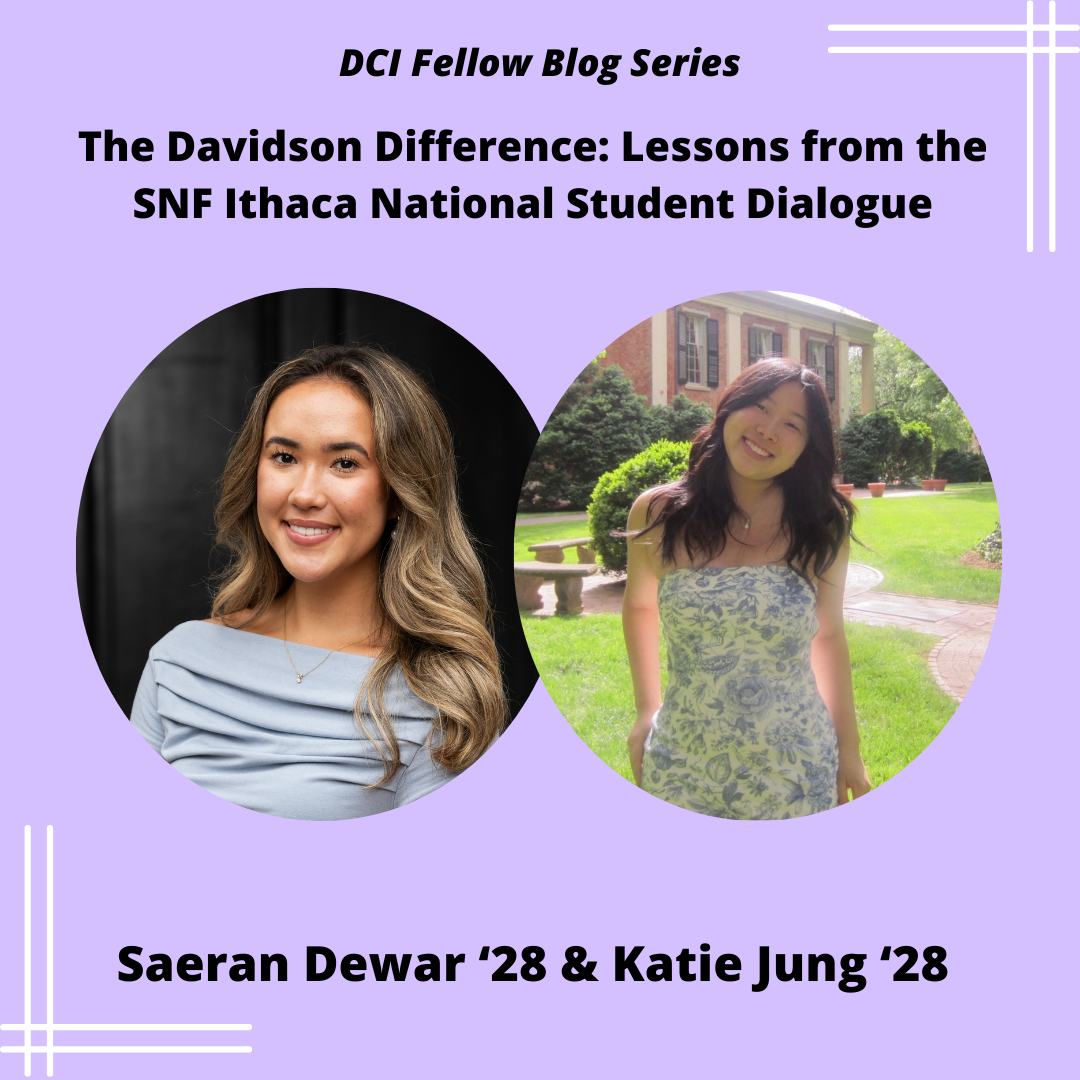
By Saeran Dewar ’28 (DCI Fellow) & Katie Jung ’28 (DCI Fellow)

This October, we (Saeran Dewar ‘28 and Katie Jung ‘28) had the opportunity to attend the SNF Ithaca National Student Dialogue as representatives of the Deliberative Citizenship Initiative and Davidson College. SNF Ithaca, an initiative of the University of Delaware’s Biden School of Public Policy & Administration, is an organization that promotes students to engage in civil discourse and deliberation – and to bring these same skills back to their respective campuses.

Every year, the Dialogue convenes students from nearly 60 colleges and universities across the country. The diversity of student backgrounds and experiences greatly enriched the experience; we got to hear the unique problems faced by Harvard, Bolling Green State, Pomona, the University of Arizona, and Howard, to name a few.

This year’s theme was third spaces on college campuses. Third spaces refer to social areas that are separate from the home and the workplace, such as cafes, parks, libraries, and clubs. These are spaces where we would bump into friends, interact with strangers, and percolate ideas. Unfortunately, these spaces have seen a marked decline, along with civic engagement.

We noticed that while certain schools have these problems more severely (typically of larger size and student populations), Davidson doesn’t seem to suffer in the same way. In fact, it is uniquely positioned for cross-partisan dialogue. Davidson’s small size makes it nearly impossible to leave your room without at least saying a few words to someone. For example, the layout of Union with Davis Cafe surrounded by tables, running into acquaintances on the way to class, Nummit, the library (and its substitutes), Eating Houses, and fraternities provide a robust array of third spaces for students to be in community with one another.

On the other hand, other students described feeling isolated on their college campuses. One student from a large state university, for example, shared that they rarely engaged with their classmates – going to class, returning straight back to their dorm, and having no meaningful conversations in between. Problematically, this experience illustrates how severely lacking third spaces for community have become on many college campuses across the country.

Moreover, students at larger schools reported avoiding political conversations with those who might possibly have differing opinions, particularly men and women avoiding the topic. As we know, this avoidance to engage with diverse viewpoints, especially when polarized by gender, is dangerous. Additionally, Davidson’s small size aids in the task of amplifying DCI; much of our student body is bound to take a class with a deliberative pedagogy, participate in a D Team, have a friend that is involved, or take a class with a professor that is involved. In a tight-knit community like ours, DCI is able to have a wider reach with its programming.

Through reflecting on this experience, we realized what makes Davidson Davidson: It’s not just the small campus size that fosters connection, but the college’s unique mission to bring together diverse perspectives and experiences. It is palpable among students the sense of care that we have on campus, for our intellectual growth, and for each other. We believe this same sentiment should be spread beyond Davidson’s campus – serving as a model for how other institutions can cultivate genuine community and conversation.

Filed Under: Fellow Posts

  • « Go to Previous Page
  • Page 1
  • Interim pages omitted …
  • Page 7
  • Page 8
  • Page 9
  • Page 10
  • Page 11
  • Interim pages omitted …
  • Page 75
  • Go to Next Page »

Footer

Blog Post Categories

  • Announcements
  • Blog Posts
  • DCI Posts
  • Events
  • Faculty Posts
  • Fellow Posts
Image of a compass superimposed by the text "Deliberative Citizenship Initiative" and "Davidson College." Clicking on this image leads to the Initiative page.

Recent DCI Blog Posts

  • We Tried to Fix Jubilee’s “Middle Ground” – Here’s How It Went
  • A Case for Deliberation in the Natural Sciences
  • Welcoming New Staff to the DCI and DCN
  • Facebook
  • Twitter
  • Instagram
  • LinkedIn


Copyright © 2026 · Infinity Pro on Genesis Framework · WordPress · Log in