• Skip to main content
  • Skip to footer

Deliberative Citizenship Initiative

Building Democracy One Conversation at a Time

  • The Initiative
    • Programs
      • Deliberation Across the Curriculum
      • Deliberation on Campus
      • Deliberation in the Community
      • Research on Deliberation
    • Motivations
      • Why Deliberative Citizenship?
      • Why Davidson? Why Now?
    • Who’s Involved?
      • DCI Fellows Cohorts
        • 2025-2026 Fellows
        • 2024-2025 Fellows
        • 2023-2024 Fellows
        • 2022-2023 Fellows
        • 2021-2022 Fellows
        • 2020-2021 Fellows
      • DeeP Collaborative Cohorts
        • 2024-2025 DeeP Collaborative Faculty
        • 2023-2024 DeeP Collaborative Faculty
      • Advisory Council
    • History
      • What Sparked the Initiative?
    • Key Deliberative Dispositions
    • Frequently Asked Questions (FAQ)
    • Annual Report
  • Get Involved!
    • Participate in a Forum
    • Join a D Team
    • Become a Fellow
    • Take Courses
    • Get Training
    • Come to Guest Lectures
  • Events
    • Upcoming Events
      • 250th Anniversary Deliberative Forum Series on American Values
    • Past Events
  • Connections
    • The Deliberative Citizen: The DCI’s Monthly Newsletter
    • Efforts on Campus
    • Efforts in the Community
    • Efforts Elsewhere
    • Readings and Resources
      • DCI-Published Guides
      • DCI Guide to One-on-One Conversations
      • How to Disagree
      • Demonstration of Facilitation Styles
      • Deliberative Pedagogy Mini-Course
    • How We Can Help: DCI’s LET’S DELIBERATE! Partnership Opportunities
    • DCI in the News
  • DCI Blog Posts
    • Recent Blog Posts
    • All Blog Posts

The DCI Blog

DCI Contributes to ACUE Deliberative Dialogue Quick Studies

December 15, 2025 by Graham Bullock

ACUE logo with Deliberative Dialogue: A Catalyst for Critical Thinking

One of the big challenges — and opportunities — for encouraging more robust deliberation on college campuses is providing faculty members with the tools and frameworks that can help them create more deliberation-based courses. The DCI has contributed to this work through its Deliberative Pedagogy (DeeP) Collaborative, which has included over 60 faculty members from 28 institutions who have integrated deliberation about contentious topics into their syllabi. But how do we scale that work to include more faculty at more institutions, both across the country and around the world?

With support from the Arthur Vining Davis Foundations, the Association of College and University Educators (ACUE) recently launched a five-part online series about deliberative dialogue that can help many more faculty members incorporate these strategies into their teaching. The series will be available to the more than 60,000 faculty at over 600 higher education institutions that partner with ACUE to help them improve the quality of their teaching. As a series of short Quick Studies, the series includes expert videos, student voices, real classroom examples, and an accessible “Engage, Envision, Experience, Explore” framework that makes deliberation both compelling and feasible for faculty members to adapt to their classrooms. An introduction to the series is available below.

DCI Faculty Director Graham Bullock served as the featured expert for the first two Quick Studies in the series, “What is Deliberative Dialogue?” and “Integrating Deliberative Dialogue into Your Course.” In his first short video, he explains how deliberative dialogue differs from other forms of discourse (conversation, discussion, dialogue, and debate), and why it is a useful framework for the college classroom. You can view the full video below.

“What is Deliberative Dialogue?”

In his second video, Dr. Bullock discusses why and how faculty might integrate deliberative dialogue into their courses. He explores how to introduce the principles and practices of deliberation to students, how to select topics for deliberation, how to design deliberative classroom activities, and how to assess student engagement. The short video is available below.

“Integrating Deliberative Dialogue into Your Course“

The other Quick Studies focus on “Preparing for Deliberative Dialogue Through Practice,” “Launching a Deliberative Dialogue,” and “Facilitating a Deliberative Dialogue,” and they feature insights from other experts on deliberation in higher education, including Nick Longo and Quincy Bevely from Providence College, John Rose from the University of North Carolina, Chapel Hill, Sandy Marshall and Jennifer Uno from Elon College, and Sarah Donovan from Wagner College.

If you are interested in viewing all of these Quick Studies and completing ACUE’s full series on deliberative dialogue, inquire with your institution to see if it is a member of ACUE. If so, you can access the series via the ACUE Commons.
Filed Under: DCI Posts

Deep in the Heart of a Municipal Election in Texas

December 12, 2025 by Gina Amatangelo

The Deliberative Pedagogy (DeeP) Faculty Collaborative consists of faculty from Davidson College and other higher education institutions who are committed to learning and implementing new ways to improve and deepen the quality of their class discussions. These faculty come from a wide array of disciplines and backgrounds to study and discuss deliberative pedagogy methods, share their ideas and questions with one another, and work to embed deliberation in their classrooms. In this special blog series, members of the Collaborative describe and reflect on their experiences developing and teaching their deliberation-involved courses.

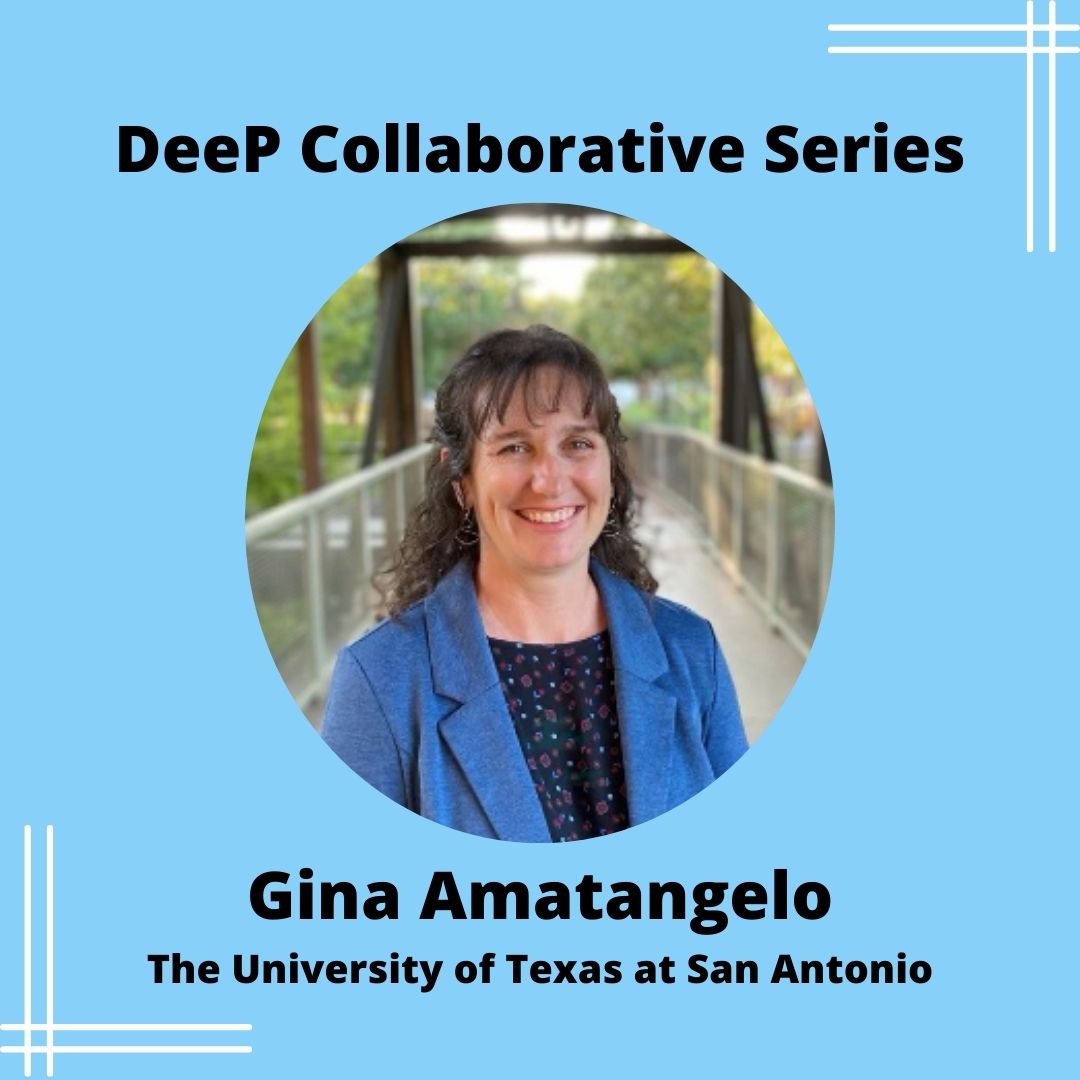
By Gina Amatangelo (2024-25 Deliberative Pedagogy Collaborative Faculty Fellow)

What we did:

I integrated deliberation techniques into our undergraduate Civic Leadership seminar, a service learning course offered in partnership between the Public Administration program and the Honors College.

As a service project for the course, students wrote deliberation guides on a range of issues that were relevant to the May 2025 municipal election. Given that municipal elections in San Antonio are nonpartisan, and voter turnout is historically very low, ranging between 15-17% in recent elections, this seemed like a good opportunity to educate students on the issues impacting by city and county government and attempt to inspire more participation among college students.

We discussed the role of deliberation in addressing community challenges, and practiced deliberation in class using a deliberation guide created by my graduate class from a prior semester. Students researched the issues in teams and were encouraged to provide a range of perspectives on the issues in the guides. We went through a process of peer review and faculty review and students revised and submitted final guides for use in our campus event. We devoted one class session to facilitation training and a second session to facilitation practice, using the guides created by the students themselves. Students then organized a campus forum in which other UTSA students could come and learn about issues such as infrastructure investment, housing affordability, homeless encampments, city funding for reproductive care, and a proposed sports and entertainment district. Authors of the guides served as table facilitators.

What we gained from it / What worked well:

Students who opened up the session did a wonderful job of articulating the value of deliberation for community engagement and encouraging democratic participation. Here is an excerpt from their presentation:

  • “Heart of democracy
  • Creates a safe space to discuss ideas
  • Allows participants to engage with new perspectives
  • Strengthens community ties through problem-solving
  • Fosters a nuanced understanding of issues, creating informed individuals”

Additionally, most of the students who attended the forum seemed to genuinely engage in the discussion. Several groups were still immersed in animated conversation when it was time to close the session. Students generally seemed to appreciate the opportunity to serve as a discussion facilitator and reflected on the skills that they gained from the experience.

What could we improve in the future:

Time to review the guides: Our event was a drop-in event in which a range of students participated out of curiosity or a desire for extra credit or Honors event credit. As a result, participants were not provided the deliberation guides in advance of the event. Instead, facilitators gave them an overview and walked them through the background materials prior to the discussion. At some tables, this led to an imbalance in participation as some participants were more knowledgeable about the topics. If we were to host a deliberation event again, we would partner with another class so that students would be provided materials in advance and have more opportunity to prepare and know what to expect prior to the deliberation.

Time to learn about a range of issues: Additionally, we agreed that in the future, we would try to host 2 sessions, one session to simply offer information on issues related to the municipal election, and a second session for an in-depth deliberation. Students talked about the tradeoff of allowing students to move around the room and learn about all of the topics represented in the room versus remaining at one table for a full in-depth deliberation.

How students responded:

Most students enjoyed the role of facilitator. Their feedback on the service project and process of writing the guides was very positive.A few students expressed difficulty with maintaining neutrality with individuals with opposing viewpoints or with questions that stemmed from their intellectual curiosity. In the future, I might more explicitly discourage students from facilitating discussions on topics about which they feel very strongly.

This student perspective captures the spirit of the event well. “By hosting this event, we raised awareness of topics in San Antonio that people should care about but may not know about. By hosting an event where people are welcome, and all ideas are meant to be heard in a respectful manner, an event like this has the ability to bring people together. For change to happen, people need to be aware of the things going on in their city, feel like other people care too, and work together to make a difference. I think that this event accomplished a piece of that process.”

Filed Under: Faculty Posts

Face to Face: Rediscovering Our Shared Humanity Through In-Person Deliberation

December 11, 2025 by Mary Blackstock

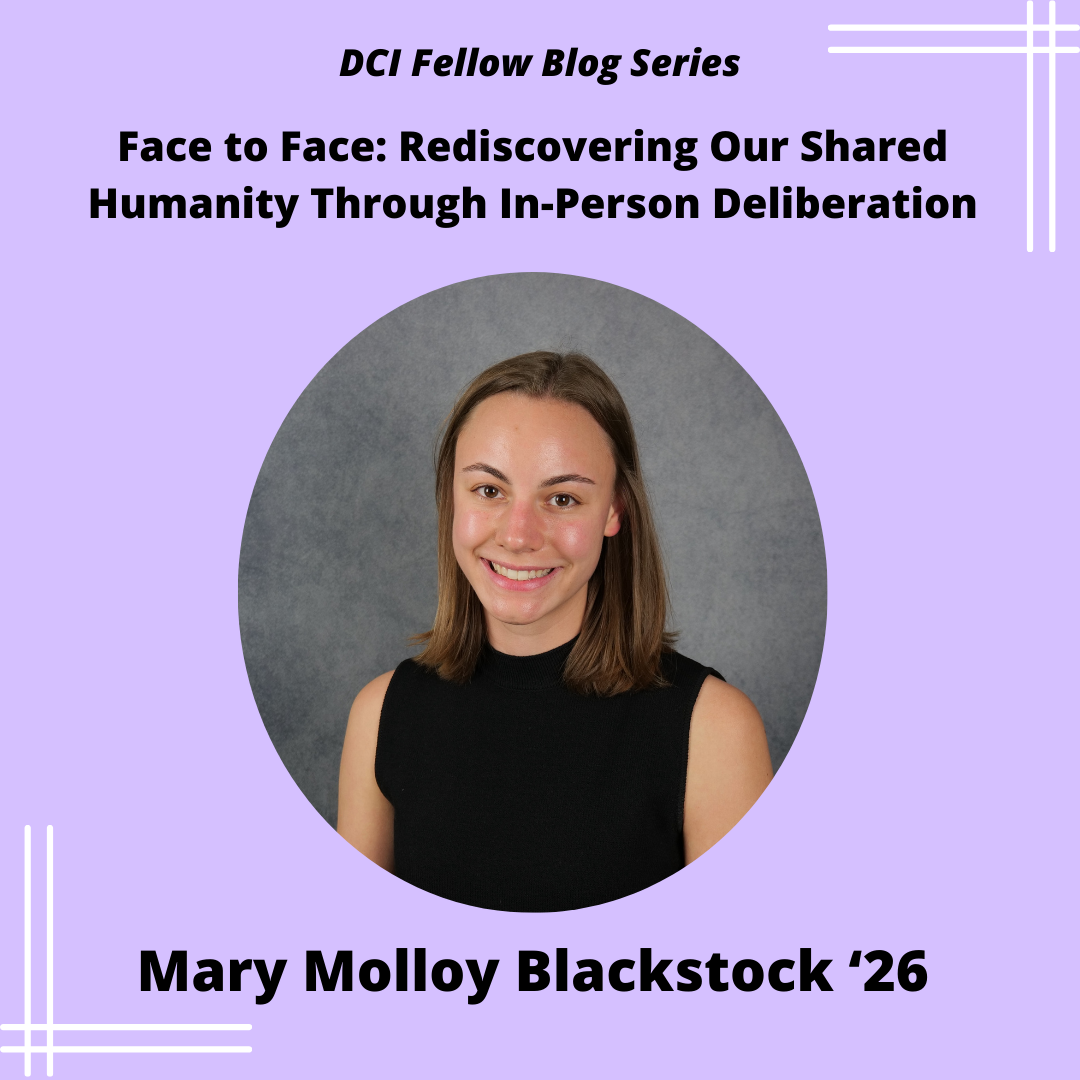
By Mary Molloy Blackstock ’26 (DCI Fellow)

We live in an age where the majority of communication no longer happens face to face. When we relegate important conversations to online platforms, eliminating all elements of nonverbal communication, something essential is lost. Without tone, body language, or eye contact, our words quickly become harsher, our empathy minimized.

Earlier this semester, I served as a facilitator for a DCI D Team centered on immigration policy. I was nervous, anticipating the deliberation would mirror the unproductive, unyielding, and sometimes cruel discourse I had seen online. Instead, I was struck by how easily the participants found common ground.

During the reflection portion, one of the participants raised the question of online vs in-person political conversation. Another brought up Yik Yak, an anonymous posting platform used on Davidson’s campus. While often discussed, it’s hard to grasp just how polarizing interactions become when you strip away names, or even just faces.

Would these same D Team participants, who come from different backgrounds and lived realities, have found commonalities if the same deliberation had taken place on Yik Yak? Instagram? Facebook? If you’ve ever looked at a comment section on any of these platforms, you’ll come to the conclusion that it’s very unlikely.

In deliberation, disagreement still arises. Oftentimes, though, it only comes after a foundation of shared understanding has been laid, whether that’s through a mutual interest in Marie Antoinette (true story) or something deeper, like a shared concern for the future of your community. That order of common ground first, disagreement second makes all the difference. When we begin by recognizing what brings us together, we’re able to approach what divides us in a much more graceful and constructive manner.

We all hold opinions that depart from the mainstream, but we also all hold others that conform to it. Remembering that balance can be a powerful place to start.

Ultimately, deliberation is important because it reminds us of our shared humanity. At the beginning of each D Team session, we review the DCI’s ten key deliberative dispositions: values like empathy, respect, and open-mindedness, to name just a few. Each serves as a reminder of what makes genuine, productive deliberation possible. Online, disagreement and cruelty often come naturally. But when you’re looking into someone’s eyes as you speak, empathy and open-mindedness come far more easily.

Participating in intentional, structured deliberation reveals that in person, it’s often much harder to find points of conflict than it is to find shared ground.

In a time when public discourse so often feels fractured and impossible, deliberation serves as a much-needed model for how things could be different. Deliberation reveals that when people are given a space to listen and be listened to, the divides that seem insurmountable online can still be bridged.

When you’re staring at a screen, it’s easy to forget that there’s a person just like you on the other side. Across a table, it’s impossible to ignore.

Filed Under: Fellow Posts

DCI’s NC Collaborations Highlighted at National Conference Hosted at UC San Diego

December 5, 2025 by Graham Bullock

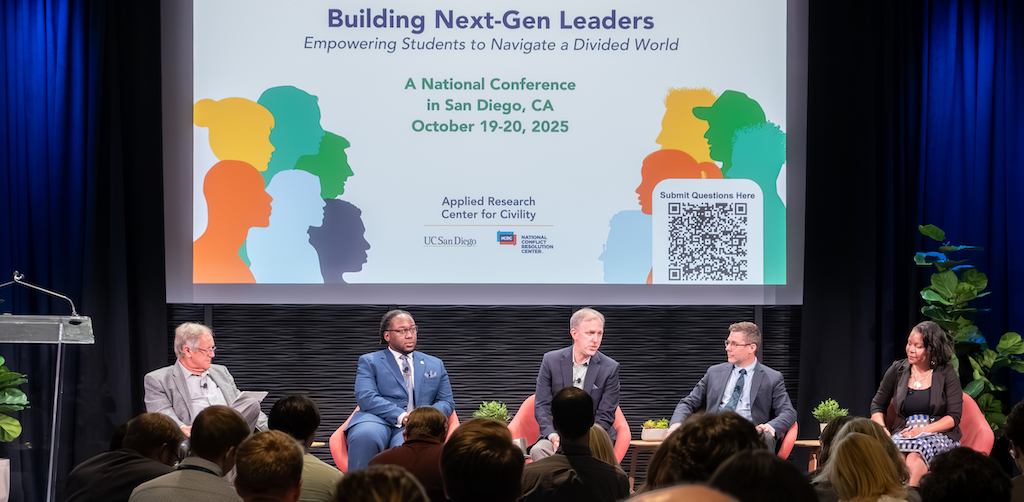
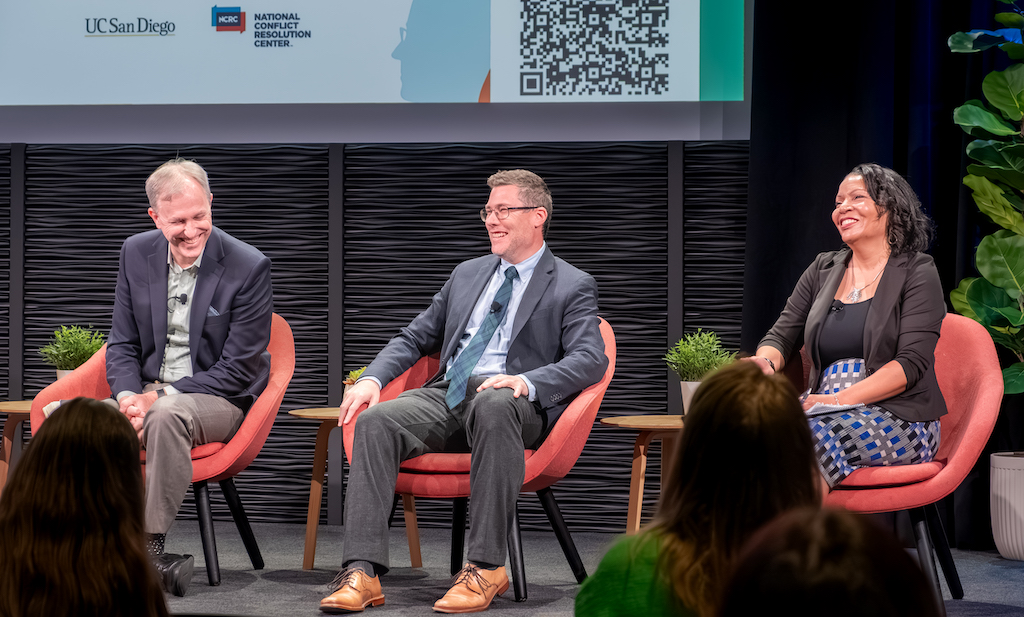
Panelists sitting in front of a screen on a stage

One of the most innovative and important efforts of the DCI in recent years has been its collaborations with other institutions in North Carolina on promoting civil discourse in higher education. In 2024, for example, we collaborated with UNC Charlotte, UNC Chapel Hill, Elon University, and NC Campus Engagement to co-host the first-ever NC Campus Discourse Leaders Conference that brought together staff and faculty from over 25 institutions across North Carolina. This year, we are co-organizing with Duke University and UNC Chapel Hill another cross-institution initiative, the American Values Deliberative Forum Series, in commemoration of the 250th anniversary of the Declaration of Independence.

This work has been noticed at the national level, as DCI’s Faculty Director Graham Bullock was recently invited to join a panel of our North Carolina collaborators at a national conference hosted by the University of California, San Diego, the National Conflict Resolution Center, and the Applied Research Center for Civility. The other panelists included Kevin Marinelli from UNC Chapel Hill, Leslie Garvin from NC Campus Engagement, and Donavan Bethea from from North Carolina A&T State University, and we had a lively discussion about our efforts to connect across our institutions. We utilized a range of basketball metaphors to highlight both the opportunities and challenges of doing this work, and had some good laughs along the way.

The other sessions of the conference were equally important and engaging; they included panelists from some of the organizations doing this work at the national level, including the Constructive Dialogue Institute, BridgeUSA, Narrative 4, and the Sustained Dialogue Institute, and on other campuses, including the University of Chicago, Colorado State University, Seattle University, UCLA, and Seattle University. The conference began with welcoming and keynote remarks from Elizabeth Simmons, UC San Diego’s Executive Vice Chancellor, Steven Dinkin, President of the National Conflict Resolution Center, and Jennifer Mnookin, Chancellor of the University of Wisconsin. See the short video below with highlights from the conference.

The conference introduced a major new report by researchers Karina Shklyan and Kelly Nielsen from UC San Diego’s Center for Research and Evaluation that examined 45 civil discourse programs at higher education institutions across the country. The DCI is one of four programs spotlighted in the report and is recognized for its “all-of-campus approach” that “not only broadens participation but also deepens institutional commitment to fostering a campus-wide culture of dialogue civic engagement.” Dr. Shklyan also mentioned the DCI in her remarks at the conference when a poll of the audience revealed a strong preference for “all of the above” approaches to campus civil discourse that includes a cohort model, course-based model, embedded courses, campus-wide efforts, and faculty fellows. She noted the DCI as an exemplar of this “wrap-around” model and encouraged participants to reach out to us to learn more. See her full remarks and the proceeding panel discussion in the video below.

The conference concluded with breakout sessions for participants to learn about specific approaches to civil discourse in higher education. Overall, the event provided lots of opportunities for the nearly 200 participants to share insights from their work with one another, as they explored how to best create opportunities for robust and respectful deliberation on college campuses across the country.

Filed Under: DCI Posts, Events

The Silent Stakeholders: Why Youth Voices Matter in Deliberation

December 4, 2025 by Nehal Bhatia

By Nehal Bhatia ’29 (DCI Fellow)

When I think about deliberation, I picture a circle of people earnestly trying to understand one another and learn from each other’s opinions and life experiences. Yet, one group that often sits quietly in such discussions are young people. The silence can be striking, but I’ve learned it usually stems from uncertainty and not disinterest.

In my experience, this hesitation often comes from self-doubt. Young people wonder if their ideas are obvious, repetitive, or not “smart enough.” Usually, they say things like, “It’s probably already been said…” or “Maybe this doesn’t make any sense…” before cutting themselves off. This kind of self doubt may be difficult to notice in group conversations but it shapes who speaks up in a deliberation and how valuable the deliberation ends up being.

But their perspective is essential. In deliberation, every voice adds something unique, and the voices of young people bring fresh perspectives and honesty, which is what deliberation is meant to be about in the first place. Young people often see problems from angles older adults do not, they question assumptions that older participants may hold only because of conformity or Echo-chamber thinking. Because they have not yet fallen into the usual patterns of thinking that older adults sometimes do, they often approach issues with curiosity rather than certainty. This helps them be better listeners and also brings a new perspective that sometimes challenges the status quo.

I remember feeling the same way during my own training in our mock D Team deliberations as a freshman DCI Fellow, surrounded by upperclassmen who spoke confidently and seemed to know exactly what to say. I was nervous to share my perspective; I kept thinking, “what if I misunderstood the question? Or what if this sounds obvious?” It took me a few meetings to finally speak up, after being encouraged by facilitators. But once I did, I realized my perspective added something valuable and was welcomed. 

As a facilitator for a D Tam with a mix of college students and older adults, I noticed this issue again. However, I felt that trying to encourage them to speak by directly calling on them, and remaining engaged when they did speak up, helped them feel more comfortable. I noticed the college students were apprehensive about speaking, but once I called on them their options were unique and brought a new perspective to the deliberation. Additionally, thanking them for their input and smiling or nodding while they spoke also helped them stay engaged and continue to share throughout the deliberation.

In the D Team discussions I have been a part of, the older adults always mention in our reflection sections how much they valued hearing from the younger members. They often say they wish even more college students would join and share their perspectives. I have heard them express appreciation that younger people are willing to engage with difficult issues and that the next generation is interested in deliberations at all.

What I’ve learned is that creating space for young voices is about egalitarianism. Everyone deserves to feel their perspectives matter, no matter their age or experience. Taking the time to engage and ask questions is something we should all do in our daily life. This can make our conversations honest and make society feel connected.

Filed Under: Fellow Posts

  • « Go to Previous Page
  • Page 1
  • Interim pages omitted …
  • Page 8
  • Page 9
  • Page 10
  • Page 11
  • Page 12
  • Interim pages omitted …
  • Page 75
  • Go to Next Page »

Footer

Blog Post Categories

  • Announcements
  • Blog Posts
  • DCI Posts
  • Events
  • Faculty Posts
  • Fellow Posts
Image of a compass superimposed by the text "Deliberative Citizenship Initiative" and "Davidson College." Clicking on this image leads to the Initiative page.

Recent DCI Blog Posts

  • We Tried to Fix Jubilee’s “Middle Ground” – Here’s How It Went
  • A Case for Deliberation in the Natural Sciences
  • Welcoming New Staff to the DCI and DCN
  • Facebook
  • Twitter
  • Instagram
  • LinkedIn


Copyright © 2026 · Infinity Pro on Genesis Framework · WordPress · Log in