• Skip to main content
  • Skip to footer

Deliberative Citizenship Initiative

Building Democracy One Conversation at a Time

  • The Initiative
    • Programs
      • Deliberation Across the Curriculum
      • Deliberation on Campus
      • Deliberation in the Community
      • Research on Deliberation
    • Motivations
      • Why Deliberative Citizenship?
      • Why Davidson? Why Now?
    • Who’s Involved?
      • DCI Fellows Cohorts
        • 2025-2026 Fellows
        • 2024-2025 Fellows
        • 2023-2024 Fellows
        • 2022-2023 Fellows
        • 2021-2022 Fellows
        • 2020-2021 Fellows
      • DeeP Collaborative Cohorts
        • 2024-2025 DeeP Collaborative Faculty
        • 2023-2024 DeeP Collaborative Faculty
      • Advisory Council
    • History
      • What Sparked the Initiative?
    • Key Deliberative Dispositions
    • Frequently Asked Questions (FAQ)
    • Annual Report
  • Get Involved!
    • Participate in a Forum
    • Join a D Team
    • Become a Fellow
    • Take Courses
    • Get Training
    • Come to Guest Lectures
  • Events
    • Upcoming Events
      • 250th Anniversary Deliberative Forum Series on American Values
    • Past Events
  • Connections
    • The Deliberative Citizen: The DCI’s Monthly Newsletter
    • Efforts on Campus
    • Efforts in the Community
    • Efforts Elsewhere
    • Readings and Resources
      • DCI-Published Guides
      • DCI Guide to One-on-One Conversations
      • How to Disagree
      • Demonstration of Facilitation Styles
      • Deliberative Pedagogy Mini-Course
    • How We Can Help: DCI’s LET’S DELIBERATE! Partnership Opportunities
    • DCI in the News
  • DCI Blog Posts
    • Recent Blog Posts
    • All Blog Posts

The DCI Blog

Voice, Identity, and Self: The Value of Dialogue in the Writing Classroom

December 2, 2025 by Fangzhi He

The Deliberative Pedagogy (DeeP) Faculty Collaborative consists of faculty from Davidson College and other higher education institutions who are committed to learning and implementing new ways to improve and deepen the quality of their class discussions. These faculty come from a wide array of disciplines and backgrounds to study and discuss deliberative pedagogy methods, share their ideas and questions with one another, and work to embed deliberation in their classrooms. In this special blog series, members of the Collaborative describe and reflect on their experiences developing and teaching their deliberation-involved courses.

By Fangzhi He (2024-25 Deliberative Pedagogy Collaborative Faculty Fellow)

Since voice in writing is increasingly diluted by generative AI, identity can be camouflaged by technology, and the self is still under exploration during the first year, it’s not hard to imagine that students enrolled in my Writing 101 course, “Voice, Identity, and Self,” primarily to fulfill a graduation requirement. But I want more for them: I want them to use writing to ask deeper questions, and I aim to engage them in learning that is authentic, courageous, and reflective.

In Spring 2025, I experimented with deliberative pedagogy. In addition to reading and writing on the course theme, I invited students to discuss meaningful ideas, research relevant literature, and listen to diverse perspectives. These deliberative sessions cultivated a richer, more dynamic classroom culture where students didn’t merely state their views but truly engaged with the views of others.

Designing the Space for Dialogue

Our weekly discussions built the foundation. Each week centered on a theme, from voice in academic writing and concepts of self to identity and ableism, even generative. Students came prepared to discuss assigned readings. These smaller discussions were informal and scaffolded by guiding questions. Over time, they became practice grounds for our more structured deliberative dialogues. Students grew their awareness of the norms of deliberation: respectful listening, building on others’ ideas, supporting ideas with evidence, and thinking before speaking.

We held three major deliberation sessions, after soliciting students’ ideas and interests. Each one required students to draw upon the course materials, their personal experiences, and their rhetorical skills:

  1. Does writing empower or limit identity formation?
  2. Should diversity, equity, and inclusion (DEI) programs in educational institutions be restricted under federal civil rights law?
  3. How can generative AI impact learning in higher education?

Each deliberation was framed differently. The first one was like a debate, where one group of students who shared the same argued against an opposing group. The second one was run in the form of a town hall, where students were assigned different roles to defend their position, such as parents, first-generation students, university or Corporate Diversity Officers, and government officials. The third one was organized like a seminar, where students take turns answering the questions in the deliberation guide. The goal was not to win an argument but to explore the tensions, assumptions, and values behind differing perspectives. Before each session, students worked in small groups, searching for relevant sources and drafting their arguments. After each session, they wrote an essay to write just what they heard, but how their own thinking shifted, citing scholarly sources and connecting the course readings.

What Worked Well

The most rewarding part of this pedagogy was watching students realize that learning happens not just in solitary study, but in community. Many commented that they had never had the chance to engage with peers in such depth about real-world issues. They valued hearing opinions that differed from their own, especially when grounded in lived experience.

In one session, a student noted, “To begin with, I only knew writing to be an emancipating way of letting oneself be found. I now understand how institutional conventions work as a gatekeeping function, limiting whose voices get to be heard and valued.” In another session, a student who initially viewed DEI initiatives as “creating reverse discrimination and undermining the spirit of civil rights” reconsidered after hearing a peer describe how such programs created a sense of belonging on campus. Another student, skeptical of generative AI in education, became more open after a classmate shared how ChatGPT helped him as a multilingual writer to find proper expression and reduce his anxiety over writing in English. These statements evidenced thoughtful expansions of perspective.

The structure also encouraged more reserved students to participate. In the deliberative format, everyone had a role, and the focus shifted from answering correctly to contributing meaningfully. Some of the quiet students became insightful contributors when freed from the pressure of formulating a polished argument on the spot.

Where We Stumbled

Deliberation takes time. Sometimes, we had to rush over the topic within the assigned time. Occasionally, students tended to arrive at a consensus, avoiding deeper conflict or disagreement. I also noticed that students sometimes struggled to use scholarly evidence, solely relying on personal experiences. More scaffolding might improve this, such as pre-deliberation writing prompts.

In topics like DEI, students felt it hard to defend their position enthusiastically, either because of the assigned role or the emotional intensity. I realized the need for explicit guidance on difficult conversations, including how to disagree constructively and how to recognize privilege or positionality in conversation.

What We Gained

Through deliberative pedagogy, students practiced respectful listening, logical reasoning, critical reflection, and rhetorical agency. They discovered that voice in writing is not just individual expression; rather, it is shaped in dialogue with others. Many students described moments of feeling “seen” or “heard” in ways they hadn’t expected. They also noted that the deliberation sessions helped them know better other students as individuals, especially when they used their personal experiences to support their arguments.

The deliberations also helped break down binaries between empowerment and constraint, pro- and anti-AI stances, and support and critique of DEI. Students realized that real thinking happens in moments of disagreement and that writing can be a way of navigating complexity.

Looking Ahead

I plan to incorporate deliberation into my future courses since students shared that they greatly enjoyed it. I’m thinking about building more intentional bridges between deliberations topics, the course themes, and written assignments. I’m also considering assigning more roles like “devil’s advocate” or “evidence checker” to deepen the quality of engagement.

Deliberative pedagogy reminds me that education isn’t just about transmitting knowledge; it’s about fostering democratic habits of mind. It’s about creating space for disagreement, uncertainty, and dialogue. In the increasingly polarized world, the classroom can be a valuable space for nuanced conversation. I’m grateful to my students for showing me just how much they are committed to learning and are ready for any challenge.
Filed Under: Faculty Posts

Meaningful Deliberation in the Online Public Sphere

December 1, 2025 by Ezra Minard

By Ezra Minard ’28 (DCI Fellow)

It is in our nature to be social creatures. From the forums of ancient Greece to the protest movements of the modern era, we have always sought spaces to gather and deliberate about the systems that govern us. It’s no surprise, then, that political discourse and deliberation has transcended physical spaces and moved into the digital realm.

Today, the social media ecosystem is arguably the most influential platform in which social and political discourse occurs in America. For younger generations, platforms like TikTok, X, and Instagram are where politics happens. For older generations, the public forum includes the neighborhood Facebook page. The internet is a new commons, but like the Wild West, the rules that govern it have yet to catch up. The effects of this innovative yet unpredictable space cannot be overstated. One key convention is the erosion of trust of major media institutions.

Given these developments, we must consider what meaningful deliberation looks like in this new, digital public square. We must learn the skills necessary to foster the best possible relationship with social media, particularly in this moment of political upheaval.

At its best, the internet offers a powerful democratic tool as a space where people can challenge each other and share ideas across thousands of miles. People can form social and political groups without ever meeting each other in-person. The barriers to entry for public speech have never been lower. But this access is complicated by the complex ecosystem that online platforms have created.

These platforms reward engagement above all else because, unlike the prototypical public square, the platforms themselves are a business. Nuance, reason, and context do not drive profits in this space, unlike virally appealing memes. This landscape allows fringe groups, conspiracy theories, and ideological cosplay to be promoted disproportionately. The internet economy is one of outrage and confrontation.

Consider the growing fetishization of niche, obscure, or extreme political beliefs dressed as ‘edgy’ memes. These interactions teach viewers a politics that is insincere, opportunistic, and often hateful. These are the politics that one is unlikely to share with their grandmother, or their book club, or their congregation. An optimist may assert these beliefs are manufactured by the internet attention economy itself, rather than organically growing through society. A pessimist might suggest that the internet is just amplifying what is already spreading among us.

In these online spaces, political expression appears more like cosplay than grounded ideology; influencers may be pretending to be extreme rather than actually believing in the views they share. The internet uplifts these voices even if they hold little practical value in real-world politics. More concretely, we need to be mindful of a generation that receives news and information not from those they know but from a person behind a screen who does not know them but wants their money, or at least, their attention.

A 2022 Pew Research survey found that 64% of Americans believe social media is a “bad” thing for democracy,[1] while 79% of Americans believe social media has made people’s political opinions more divided.[2] Why? For one thing, the internet makes us appear more combative than collaborative. It also enables extreme forms of personalization that creates a digital experience that is curated to each individual’s tastes and biases. The result is a social media landscape of echo chambers. While convenient, personalization leaves users more alone and less connected to real people;imagine our town hall meetings consisting of a multitude of self-selected smaller meetings, all disconnected from one another.

Recently, prominent journalist Ezra Klein has described a “ricochet effect” of polarization, in which high engagement movements rise and are met by equally high engagement counter-reactions from their opposition—resulting in a climate of exponential polarization.[3]

Still, the internet is not irredeemable. Whether or not we see it as a net positive, we live in the internet age. The work ahead is not to retreat from the internet but to learn how to foster a positive relationship with it. As a major force in society, citizens have the obligation to engage in this work. So what are the solutions? Government crackdowns on hate-speech? Or state-verified social media profiles?

No. Rather, imagine a social contract for the digital age in which we create and uphold norms of civility, integrity, and pluralism for the greater good. The government, for its part, ought to set legal regulations that prevent abuse by either users or platforms. It should initiate an open process for us all to deliberate about how we define such abuse and what we should do about it. More importantly, we all have an obligation  to use this gift of interconnectedness with great care. In their book, Why We Argue, American philosophers Aikin and Talisse state, “In order to have the humanizing effect we all need, our relations of mutual interdependence must be in some sense reciprocal.” Reciprocity is the core of my argument for a better media landscape.

Reasonable pluralism states that we can live together peacefully while disagreeing. Maintaining restraint and assuming good faith are two positive steps. What about disinformation, we might ask. With the prominence of AI art and Large Language Models (LLMs), it is becoming increasingly difficult to differentiate between the human-made and not, between reality and fiction. As such, media literacy has never been more important. We can’t necessarily control what’s on the internet but we can control how we respond to it.

Clearly, the ways in which we deliberate in person trickle into the online sphere, and vice versa. Therefore, we would mutually benefit from greater mindfulness about how we engage in online discourse. The internet has changed communication, but it has not changed the fact that we must communicate. We ought to approach digital communication with the same energy and care we bring to a town hall or a dinner table.


[1] Richard Wike et al. 2022. Social Media Seen as Mostly Good for Democracy Across Many Nations, But U.S. is a Major Outlier. Pew Research Center.

[2] Richard Wike et al. 2022. Social Media Seen as Mostly Good for Democracy Across Many Nations, But U.S. is a Major Outlier. Pew Research Center.

[3] Ezra Klein. 2025. A Theory of Media That Explains 15 Years of Politics. New York Times.

Filed Under: Fellow Posts

Meet our 2025-26 DCI Fellows!

November 25, 2025 by Ruby Aaver

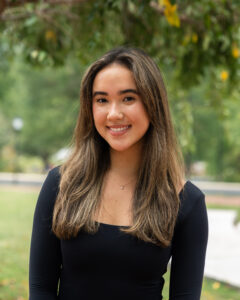
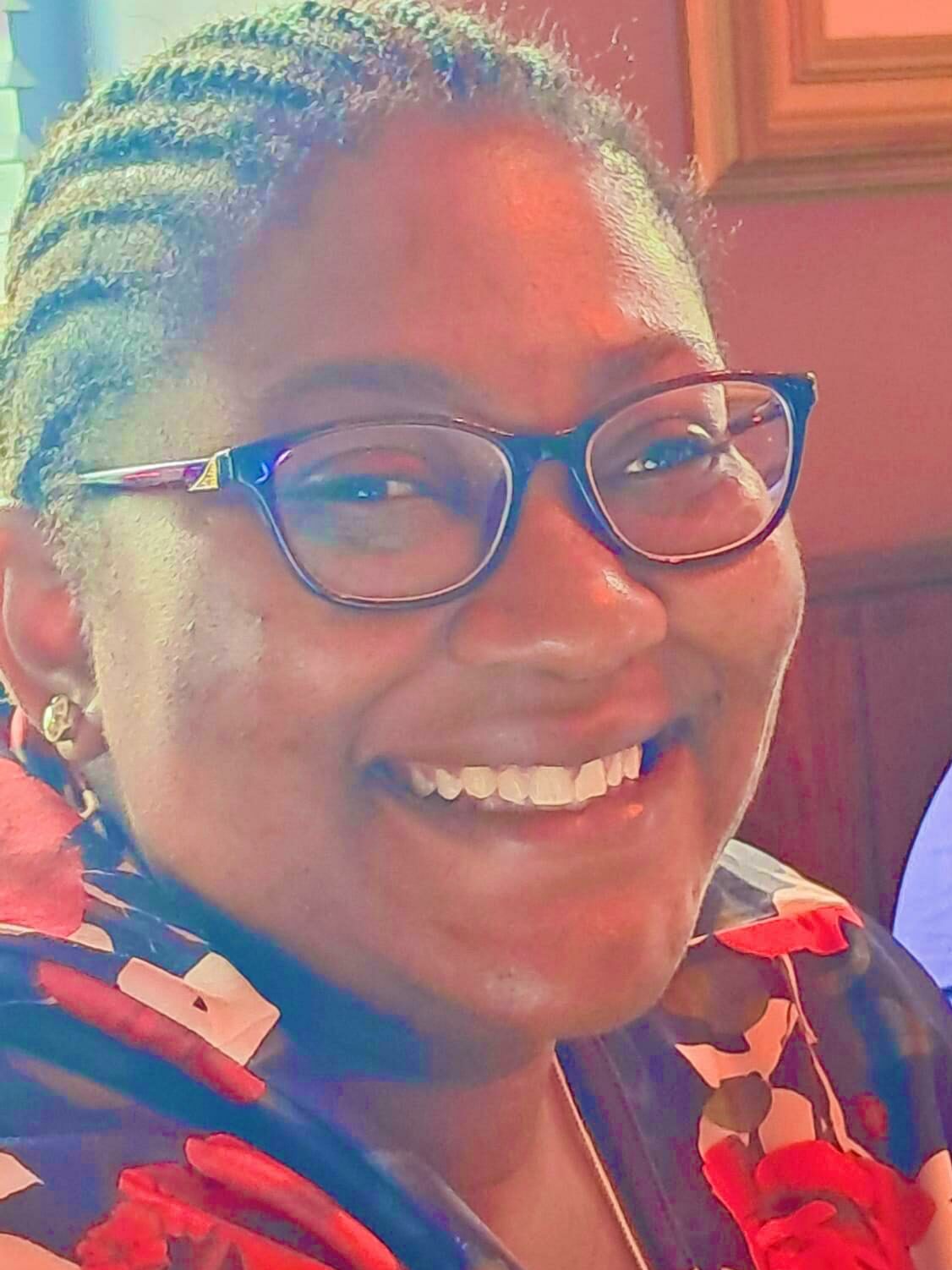
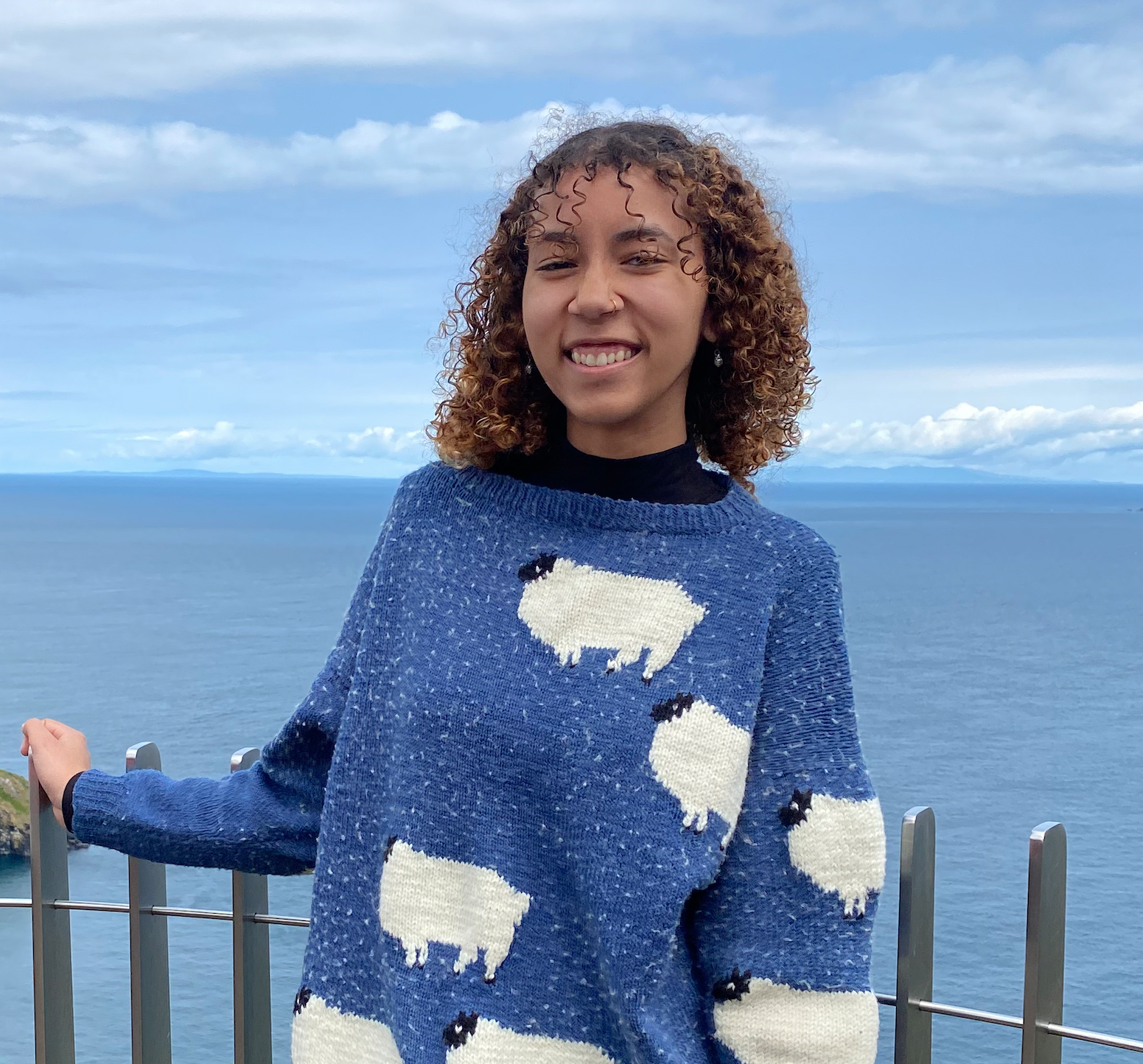
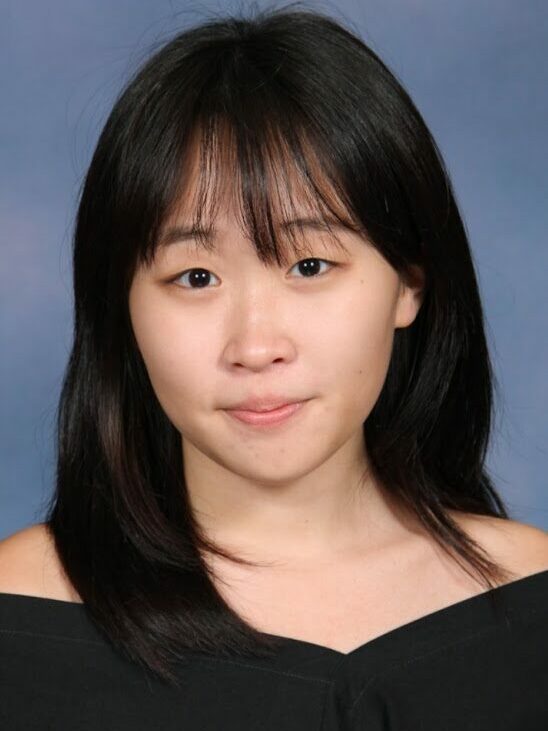
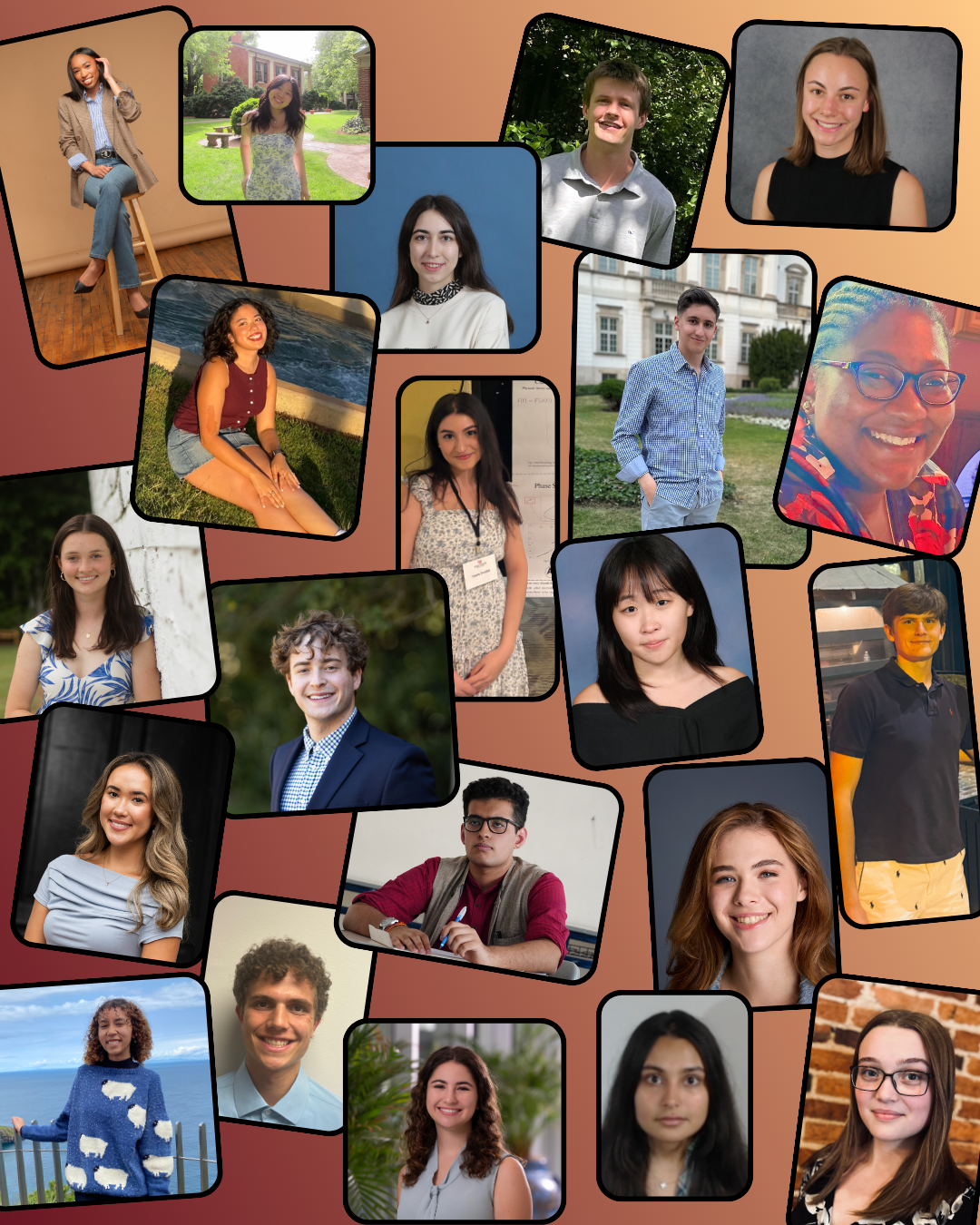
This year we have another cohort of amazing DCI Fellows that we would like to introduce you to! They include first years through seniors, students from Ukraine, India, 4 different states, and majors in Philosophy, German, Politics, Physics, Economics, Biology and more! They all share a deep commitment to free expression, respectful dialogue, and robust deliberation, and they have all been trained as deliberation facilitators. They have utilizing their skills as D Team facilitators this fall and deliberating with one another in their weekly Fellows meetings. They are also planning some amazing deliberation projects for the spring — stay tuned for more information on that front! You can learn more about their backgrounds and why they joined the DCI in their bios below.

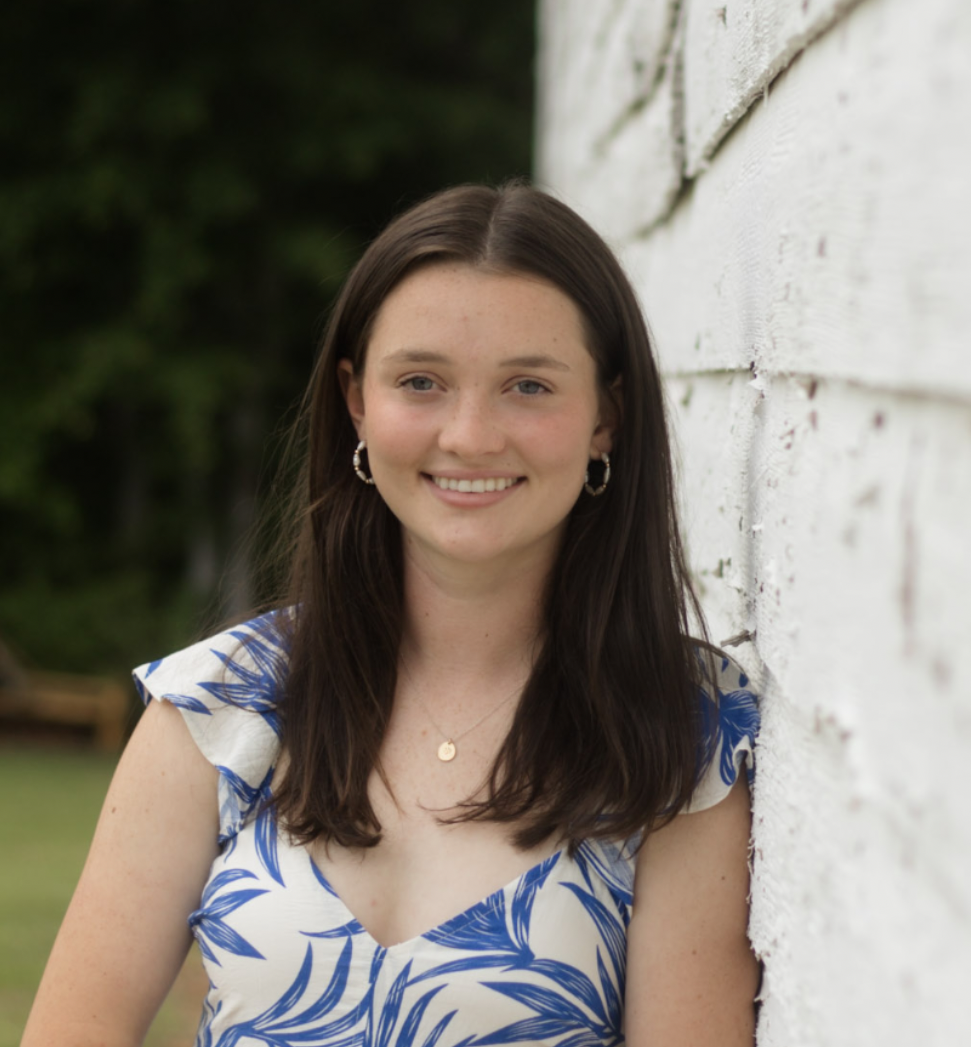
Katie Jung ’28

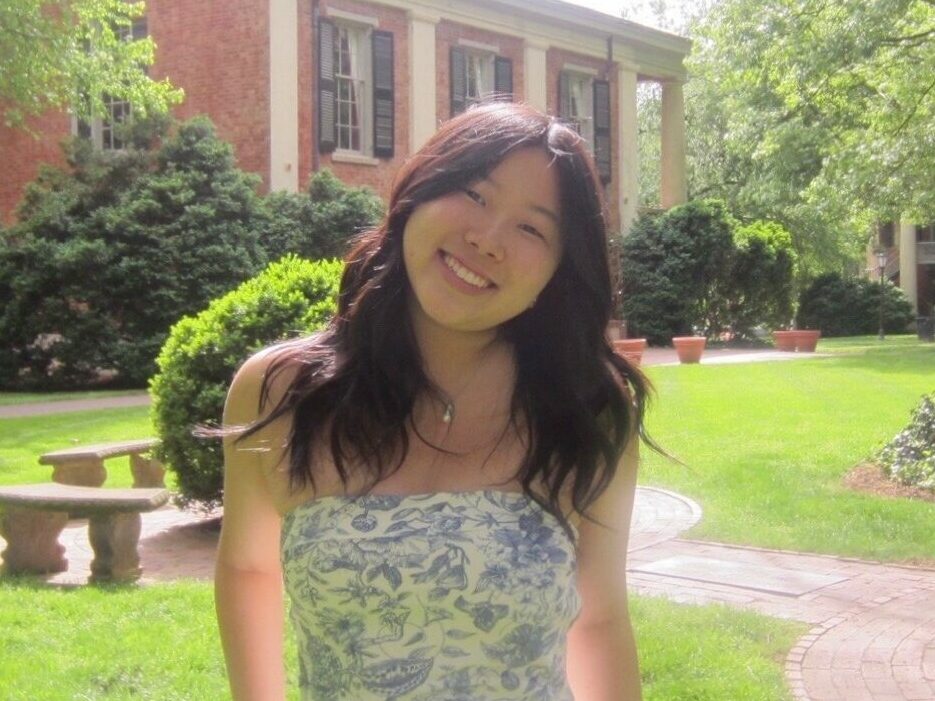
Photo of Katie

Hi my name is Katie Jung and I am a sophomore intended Philosophy, Politics, & Economics (PPE) and history double major. On campus I am involved in DCSO, Mock trial, SGA, and PASA! In my free time I enjoy watching documentaries and listening to all types of music.

I joined DCI because it provides an outlet for me to help both myself and others grow. By collaborating with people from diverse backgrounds and interests, I have gained nuanced perspectives that challenge me to think in new ways. As I continue to facilitate and deliberate in conversations, I look forward to engaging with individuals who bring unfamiliar ideas to the table and contribute my experiences and passion for civic engagement to the program.

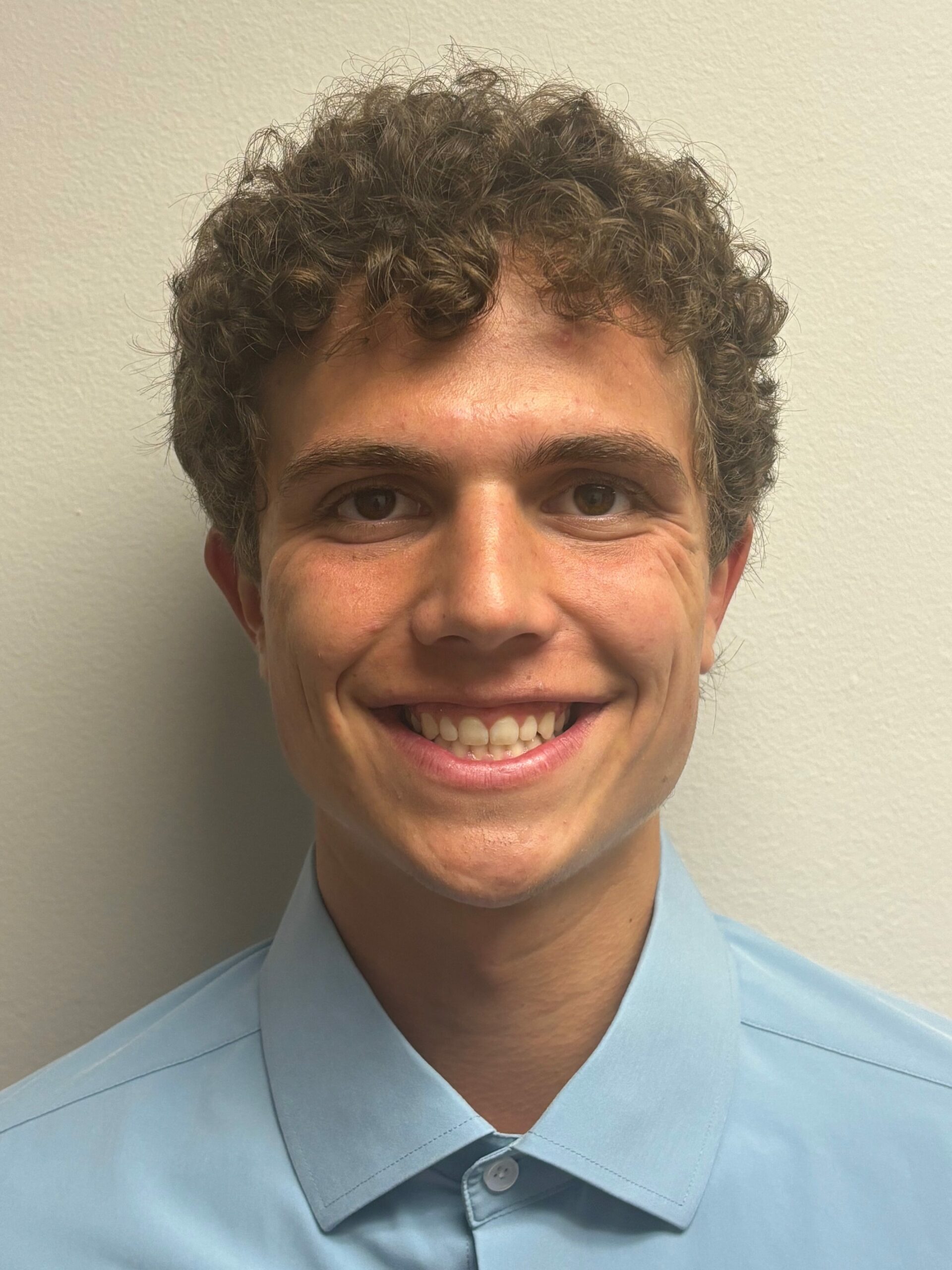
Mary Molloy Blackstock ’26

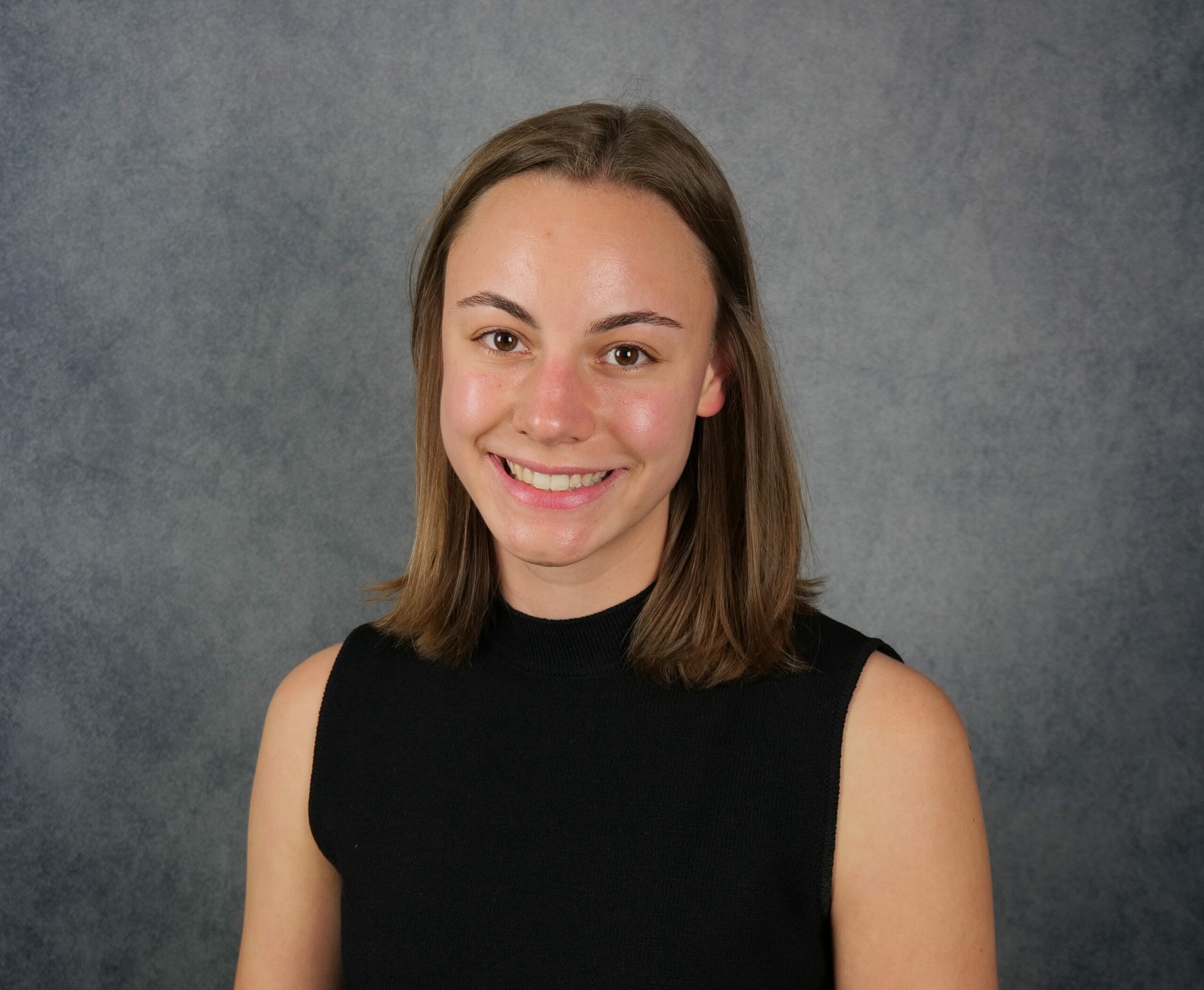
Photo of Mary

Hi, I’m Mary Molloy Blackstock, a senior at Davidson College majoring in Political Science and German Studies. On campus, I work as an AT in the German Studies department, contribute to student programming through the Union Board, and am a member of Warner Hall Eating House. Outside of academics, I love traveling and spending time outdoors!

I joined the DCI because I believe it is crucial to create and engage in spaces where productive political deliberation across differing opinions is not only possible but encouraged. DCI’s mission of fostering free and open dialogue is deeply important, and I am excited to help advance the values it represents.

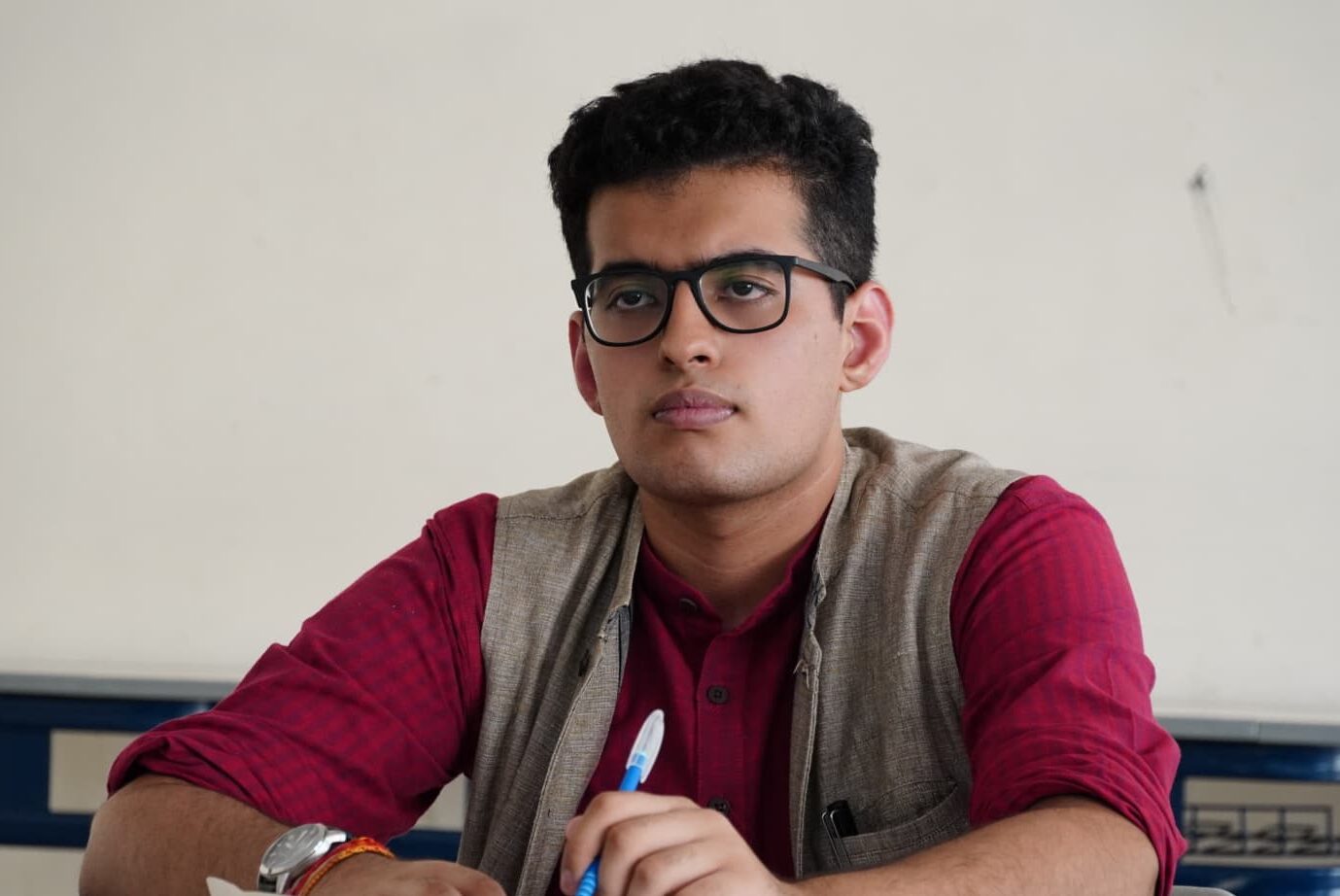
Nikita Aleksii ’28

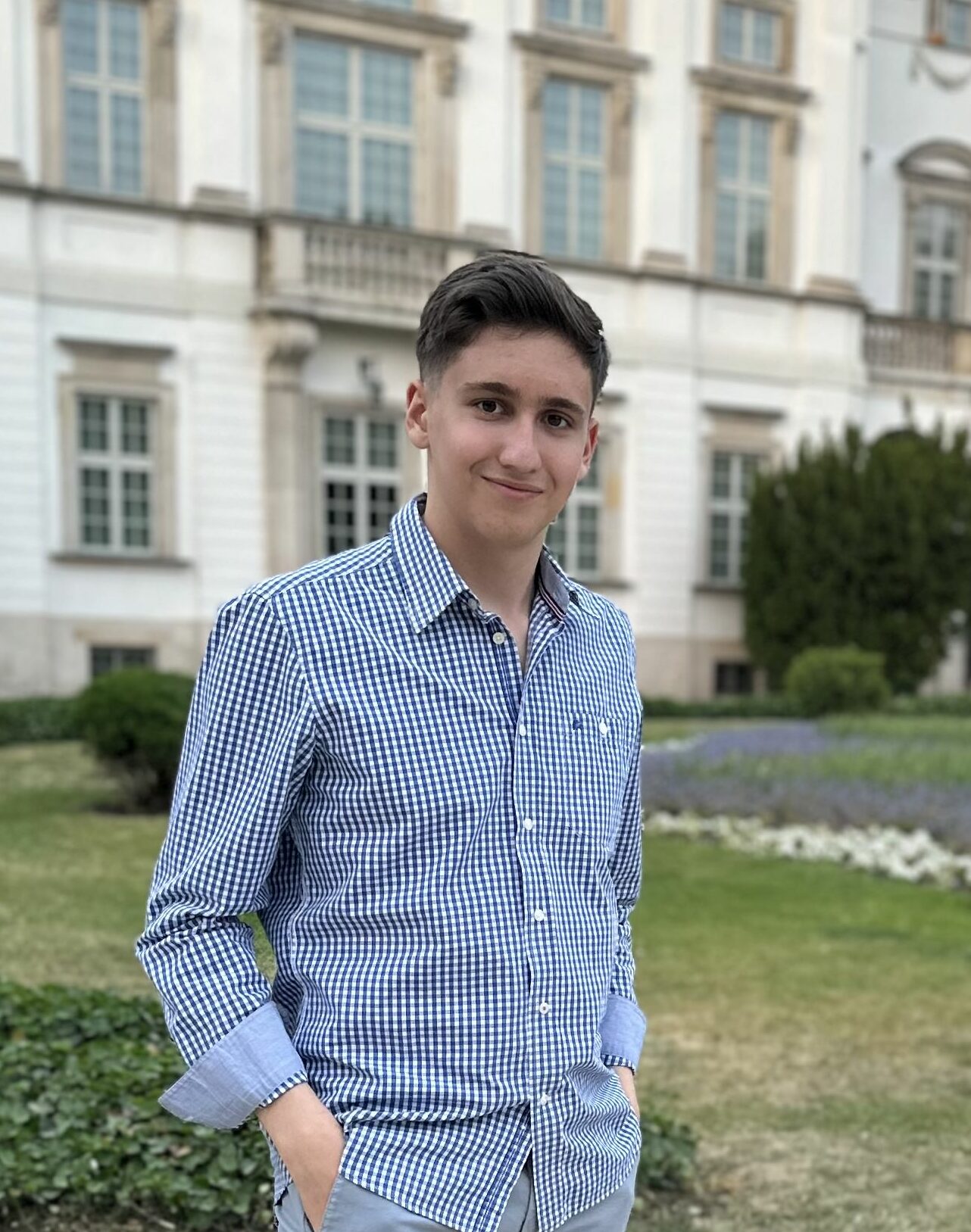
Photo of Nikita

Hi! My name is Nikita and I’m from Odessa, Ukraine. I’m a sophomore double-majoring in Computer Science and Physics. With my degree in Physics, I plan to pursue a PhD in a physics-related field to work for the prosperity of humanity. Why I chose Davidson? I chose it because of its vibrant and united community that nurtures the spirit of being a diligent and responsible citizen. An interesting fact about me is that I know four languages: Russian, Ukrainian, English, and German.

I’m also very passionate about discussing hot topic issues, such as gun control, immigration, and climate change. While debating, it is complicated to discuss such contentious questions without cursing each other. That’s why I joined DCI–to participate in respectful conversations by recognizing differences and limitations within the community. I genuinely believe that if we actively and respectfully listen to each other, we will be able to understand our opinions more clearly while also encouraging a proactive campus involvement in the political life.

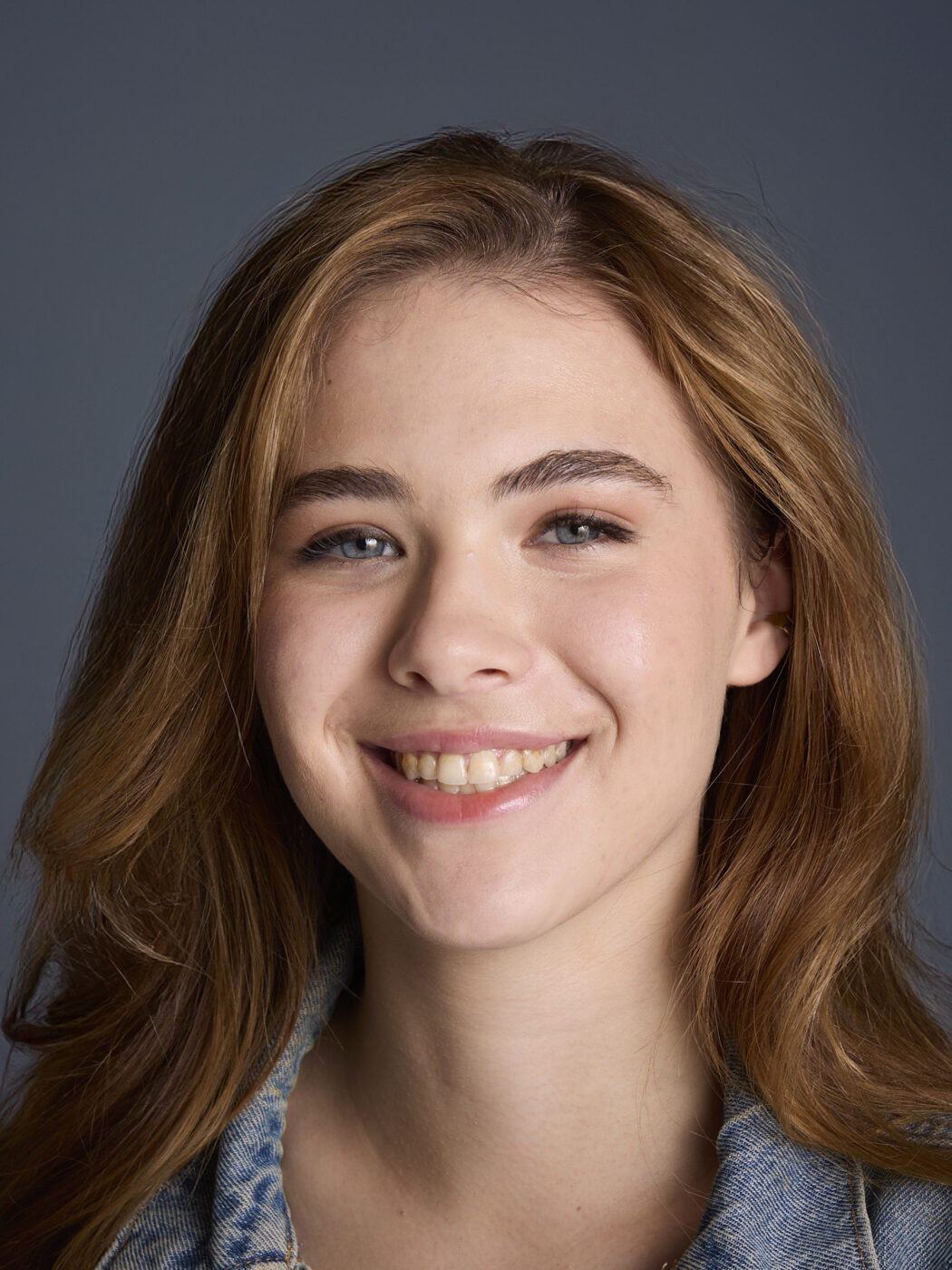
 Oliver Genovese ’28

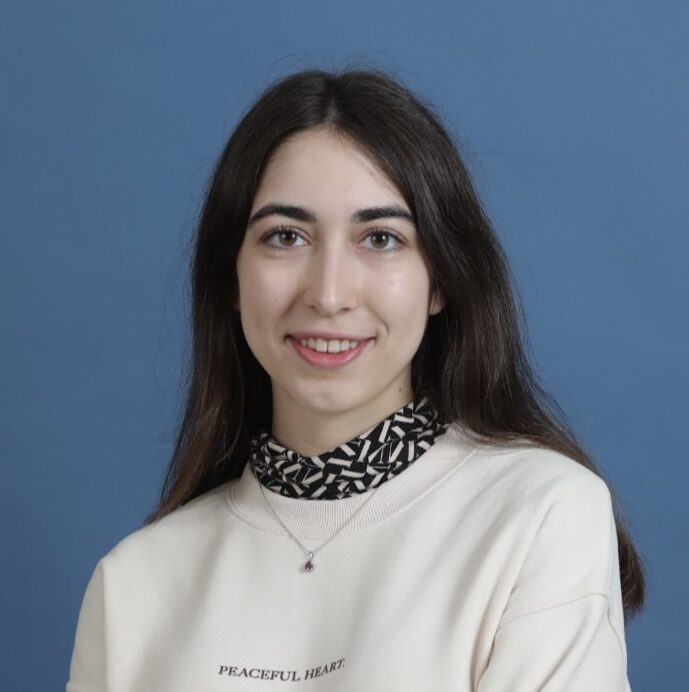
Picture of Oliver

Hello! My name is Oliver Genovese and I live in Charleston, South Carolina. I am sophomore here at Davidson and am majoring in economics with a minor in hispanic studies. I have lived in San Francisco, Los Angeles, and New York throughout my life before Charleston, so I have lived in many different areas of the nation. Something interesting about me is that I am a marathon runner and plan on competing in my first Ironman during the upcoming year in Maryland. I love the adrenaline rush and having to push myself to keep going as marathons are mostly mentally challenging I believe, not physically challenging really.

I am interested in deliberation as I think that especially in today’s society, having productive discourse is very important so that people can express their viewpoints on issues without the deliberation becoming unnecessarily heated. Additionally, I signed up to be a DCI Fellow as I debated in the presidential debate that Davidson has every four years, and so I thought that DCI would be an excellent opportunity for me to continue to improve my deliberation skills and would help me be a better listener and to understand better other peoples’ viewpoints on current topics. Overall, I think that by taking part in DCI, I will learn how to be a better citizen overall by learning the key skills needed to not only deliberate successfully, but to facilitate deliberations amongst others.

Rosie Arnaudova ’28

Hello! I am Rosie Arnaudova, a sophomore at Davidson College, majoring in Philosophy, Politics and Economics, with minor in Communication studies and specialization in German language and culture. Some of my hobbies are doing sports, reading, hiking and playing the piano.

I am born in the United States, however, all my life I have lived in Sofia, Bulgaria and now my family is in Vienna, Austria. My international experience has sparked my interest in international relations, politics and global economics. This summer I worked in the Supreme Court of Bulgaria as an assistant and my work involved reading lots of court cases related to immigration. There were certain cases that shocked me, for instance, a young man with death penalty order from Afghanistan was denied entry in Bulgaria and in the territory of the EU because his order was found to be fake. His case made me reflect a lot on immigration laws and the immigration issue in general. For me, the DCI is the perfect opportunity to share what I know and learn more from the others about such complex topics because I want to continue to discuss hard problems that are important for our society. I hope that I can be useful as well to the mission of the DCI and bring people together to create a learning environment, where ideological and political opinions can be expressed respectfully and without judgement.

Saeran Dewar ’28

Hello! I’m Saeran Dewar, from Seattle, Washington. I’m a Philosophy and Political Science double major planning to attend law school. I study philosophy because I enjoy being challenged to think deeply, and political science because I’m passionate about organizing and driving social change. In addition to DCI, I am involved in Davidson Mock Trial, the Davidson Democrats, Students Against Sexual Violence, and serve as a Health Adviser. In my free time you’ll find me in Baker playing club volleyball, or exploring new restaurants with my friends.

No matter the setting, I love asking people questions. From the casual to the philosophical to the political, I love hearing people’s responses and asking more questions after. I listen first, and contribute my own thoughts later, if appropriate. Whether at the dinner table or on a late night drive, I love sparking meaningful conversations. I believe that thoughtfully crafted questions, and the conversations that ensue, are crucial in forming relationships, and therefore in forming a community. I feel incredibly grateful to be part of DCI and to have the opportunity to lead D Teams and foster meaningful conversations with students and community members.

Saffron March ’27

Hi, my name is Saffron March. I am a junior at Davidson College majoring in Psychology with a minor in English. I’m an international student from Birmingham, England. On campus, I’m part of RUF’s Servant Team and the Davidson International Association. Outside of class, I enjoy reading, writing my own stories, and playing video games to relax and stay connected with friends.

As someone who hopes to become a psychologist, I’m drawn to dialogue that allows people to express themselves freely, feel genuinely heard, and reflect critically—both on their own experiences and those of others. I see deliberative discourse as a powerful tool for building mutual understanding, emotional resilience, and inclusive leadership. Being a DCI Fellow is the ideal opportunity for me to strengthen the communication and interpersonal skills that are essential to global citizenship and to my future work supporting, mentoring, and empowering others through psychology.

Savannah Dowtin ’28

Hi! My name is Savannah Dowtin and I’m a Sophomore and intended Educational Studies Major. I grew up in Greensboro, North Carolina and I’m very excited to be a part of DCI this year. On campus involved in Walt 1610 student radio, Turner Eating House, and Fashion Club, and in my free time I enjoy hiking, roller skating, and crafting!

I joined DCI because I believe that college provides the unique and precious opportunity for students to engage with people from all different upbringings, possibly encountering views drastically different from your own for the first time! I want to take advantage of this moment and learn from others around me through productive deliberation, so that I can enter future conversations better understanding the nuance and perspectives on important issues.

Sharon Song ’28

My name is Sharon, and I am so excited to be one of the DCI Fellows this year! Besides being a DCI fellow, I am involved in Women in Math, C2i, Girls in Stem, and the Korean Student Association.

As a Biology major, I was interested in all the ways DCI could explore the intersections of biotechnology and equity within society. Coming from a FGLI-background, I care deeply about questions of affordability and access, especially in healthcare. Through DCI, I hope to engage with diverse perspectives that strengthen my ability to navigate complex ethical and civic questions around healthcare accessibility.

Abi Barkley ’29

Hi, I’m Abi Barkley, a freshman here at Davidson and I’m currently undecided on my major. I grew up on a small farm in Vale, North Carolina. Aside from being involved in DCI, I spend a lot of time outdoors, running, rock climbing, and backpacking whenever I can. If I’m not doing that, you can find me trying to appreciate the events and fun activities on campus, or just spending time with my friends!

I joined DCI because I grew up in a small community with deeply rooted traditional values and shared beliefs. While this created a sense of unity, it also limited open discussion of differing perspectives. In today’s increasingly divisive political climate, I’ve seen how misunderstanding can quickly shift into intolerance or even hostility. I wanted to be part of something that encourages dialogue instead of division.

Ezra Minard ’28

Hello! I am a sophomore English major on the pre-law track from Marietta, Ohio. In my free time, I enjoy reading, creating art, and playing club soccer. Additionally, I write and edit for the Libertas Magazine. I love to stay active by biking, hiking, and running.

I joined the DCI because I am passionate about deliberation, especially around contentious topics. My interest in becoming a DCI Fellow also stems from growing up in an area that did not generally reflect the views of my family or me. By joining the DCI, I hope to improve our democracy by fostering productive deliberation.

Coralyn Cairns ’29

Hi! My name is Coralyn Cairns, and I am a freshman here at Davidson interested in pursuing a major in Anthropology on the pre-health track. I am from Augusta, Georgia, but no, I don’t like golf. On campus, I am a member of The Nuances and the swim club. I also enjoy participating in Q&A events.

I come from a community with very different beliefs of my own, so growing up, I often felt like my own opinions were too insignificant in the context of my surroundings to be of use to anyone. However, as I have come into my own identity, I have become increasingly aware of how precious every perspective is in building a society based on democratic principles. I joined DCI to help me find my own voice in a time in which doing so is the scariest, yet bravest thing you can do, and also so that I can facilitate others in finding their voices and sharing them.


Aditya Pratap Singh Phogat ’29

Hey there! My name is Aditya, and I’m a freshman who intends to major in Politics at Davidson and hopes to pursue a higher education and a career in international relations. I enjoy studying South Asian history (William Dalrymple’s my favourite, though I’m open to any and all suggestions!), composing poetry, and listening to music. Here at the College, I’m currently involved with the Center for Civic Engagement, Moot Court, the Dean Rusk Global Corps, and the South Asian Students’ Association.

As an international student who hails from India, I have witnessed firsthand what happens when discourse disappears from a community: democracy dies, and people get hurt. It is in order to understand why productive discourse is rejected for volatile violence, how it may be prevented on a global scale, and to attempt the defence of the structural strength of the concept of democracy, that I join the DCI as a fellow.

Chase Thomas ’29

Hi, I’m Chase Thomas. I went to Beacon High School in Manhattan and my home is in Forest Hills, Queens. I love playing tennis, painting, thrifting, conducting interviews, and spending time with my family, friends, and dogs. I’m passionate about understanding how emerging technologies impact society and cognition, with an emphasis on identifying risks and safeguarding human well-being, human agency, and democracy in a rapidly evolving digital world. I pursue this through avidly researching, interviewing, reading, and working with the DCI.

The decline of productive discourse troubles me deeply; I don’t believe we lack solutions to our shared problems—we lack the collaboration, systems, and sustained attention to bring those solutions to life. I’ve seen how deliberation creates space for real transformation when done with the DCI’s key deliberative dispositions. With formal training through the DCI, I am determined to help forge both local and global communities where diverse voices not only coexist but come together to shape a better future.

Jackson Strelo ’26

Hey! I’m Jackson Strelo, a current senior and Economics major. I’m from St. Louis, Missouri, but despite this, I ardently root for the Philadelphia Eagles and Oklahoma City Thunder (but go Cards!). When I’m not following sports, I’m usually either listening to music, golfing, following the news, or some combination of the three.

I’ve always had a fascination for the social sciences and politics. Stemming back to my time before Davidson, I’ve had the privilege of being surrounded by great mentors and minds who inspired me to take on many opportunities to work closely with our history as well as the people of my community. Fast forward to now … DCI presented me with an amazing opportunity to continue such work while reinforcing critical thinking skills and principles of deliberative communication. Our training provided us with the toolbox to facilitate conversations that effectively unpack the wicked problems that our world faces. While Davidson’s liberal arts philosophy has helped foster the next generation of professionals, problem solvers, and innovators, DCI helps push us further. Through the artfully constructed conversations that we host, as well as initiatives to promote deliberative discussion throughout the Davidson community and beyond, I believe that the DCI will serve me (and those who open their minds to our work) well beyond my Davidson years.

Camryn Friedman ’27

Hi! My name is Camryn Friedman and I am a Junior from Raleigh, NC. I am majoring in Political Science and Environmental Studies, and am interested in pursuing environmental law. At Davidson, in addition to DCI, I’m a campus tour guide, and I’m involved with The Sustainability Collective, the Jewish Student Union, and Turner Eating House. Outside of school, I love spending time in nature and birdwatching!

Throughout my time at Davidson, I have enjoyed learning from my peers who have both similar and different political views from my own. I value these discussions and feel that being open-minded is critical in protecting democracy and mitigating polarization. I joined DCI because I wanted to continue learning from these conversations and I align closely with the DCI’s goals of productive deliberation.

Bolling Lewis ’28

Hi, I’m Bolling Lewis, a sophomore from Richmond, VA, double-majoring in economics and political science. Outside of DCI, I’m involved in extracurriculars such as the Davidson Investment and Finance Association, the Davidson Impact Fund, and the Pickleball Club. In my free time, I love running, hiking, and watching sports.

I decided to join the DCI program because I believe that the opportunity to hear diverse viewpoints concerning an array of contentious topics is an invaluable experience that helps people become more cognizant and empathetic. Spaces where conversations help remind ourselves that we have more in common than what divides us are increasingly limited, further intensifying the importance of DCI’s role at Davidson. I also view the Fellowship as a chance to strengthen my listening and communication skills, which are applicable to many other aspects of life.

Delila Cruz ’28

Hello! My name is Delila Cruz, and I am a sophomore at Davidson. I am still undecided on my major, so I’m hoping that my involvement with DCI will help me focus and refine my interests. I’m from Asheville, NC, but I grew up in northern New Jersey. At Davidson, I am House Manager of Turner Eating House, Business Director of the Civic Engagement Council, a violist in the Davidson College Symphony Orchestra, and a student worker in College Communications.

I originally learned about DCI from my participation in D-Teams last year as a part of Dr. Bullock’s WRI 101 course, Good Argument. I resonated with the DCI’s emphasis on constructive dialogue, and I believe that the ability to effectively communicate is a skill that transcends the sphere of deliberation. I’m excited and honored to help promote a deliberative culture at Davidson!

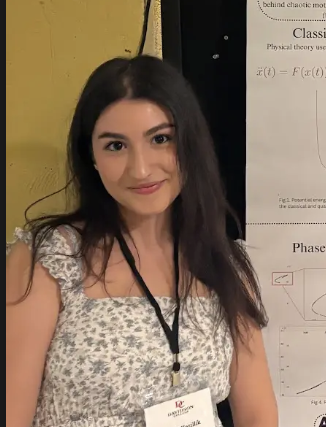
Ceyda Yesillik ’28

Hi! I’m a sophomore double-majoring in Physics and Economics at Davidson College. I’m from Ankara, Turkey. On campus, I am involved with Turner, SPS, DFA, and DIFA.

I always found discussing your ideas with others was a great way to develop your thinking. Skills we grow in deliberation such as listening, understanding, and synthesizing translate so well to our daily life, and I’m quite excited to learn and grow through DCI.

Desi Molina ’29

Hi! I’m Desi Molina, and an intended Political Science and Educational Studies double major from Chicago. As a freshman, I’m not involved in much yet, besides the DCI I’m the freshman representative for our Black Student Coalition and a member of our club running group. I also love to spend my time exploring new restaurants on main street or in Charlotte and binge watching my favorite show Scandal.

Throughout my life I’ve grown to understand the importance of discourse, whether it be in discussing with family members during thanksgiving or in a classroom setting. I love the opportunity to work with the DCI because it’s a space that values diverse viewpoints and the ability to listen to and understand the perspectives of others, something our nation desperately needs. Through the DCI I hope to learn more about how to be a good deliberator as well as how to encourage others in my life to engage in important, sometimes contentious conversations.

Nehal Bahtia ’29

Hi! I’m an international student from India, and a current freshman at Davidson College. I intend to double major in Biology and Psychology, because I want to become a clinical psychologist and I love both subjects in general. On campus, I’m involved in Club Rowing, Quips and Cranks, Dance Ensemble, etc, and I’ve really enjoyed branching out into different activities this year. In my free time, I love doing crafts, especially with friends. So far, exploring all these new experiences has been really fun, and the Davidson community has made it even better with its inviting and supportive atmosphere. One of my favorite classes right now is Religious Worlds of South Asia. It’s made me realise that even though I’ve grown up in India my whole life and been exposed different religions throughout my childhood there’s still a lot I don’t know.

I joined DCI because I wanted to learn more about deliberation and politics and felt that thoughtful discussion is the best way to do so. I’m open-minded and try not to judge people based on their views, which makes deliberation something I’m naturally drawn to. I’m excited to keep learning and engaging through DCI.

Filed Under: DCI Posts

Why is Language Important in Deliberation?

November 21, 2025 by Coralyn Cairns

By Coralyn Cairns ’29 (DCI Fellow)

On a superficial level, I think most people can agree that deliberative discourse is important to democracy, as communication and representation of diverse groups is a cornerstone of democratic beliefs. With that being said, critics of deliberative theory argue that deliberation is less effective in the maintenance of democracy than it is reported to be due to linguistic exclusion. In “Language, Power, and Persuasion: Toward a Critique of Deliberative Democracy” (2000), Margaret Kohn suggests, “Under the guise of equality and impartiality, deliberative democracy privileges the communicative strategies of elites” (p. 426). In addition to amplifying elitist voices, deliberation may also exclude non-native speakers. About 37% of Americans have no higher education experience, and one-in-five (67.8 million people) speak a language other than English in the U.S (U.S. Census, 2022). Thus, the conversation of how best to accommodate deliberators of diverse backgrounds is incredibly important in the current U.S. landscape.

The U.N. deems language rights as human rights and declares that states should protect the existence of linguistic minorities (U.N. General Assembly, 1992). If that is to be respected, then policies promoting linguistic pluralism should be prioritized over assimilation to a “language franca.” This, however, creates a roadblock for democratic discourse, or, does it? In “Towards Multilingual Deliberative Democracy: Navigating Challenges and Opportunities” (2025), Lisa Verhasselt argues for a shared understanding instead of a shared language. Regarding linguistic pluralism, she states, “it should not be viewed as a problem requiring a solution but rather as a reality to be accepted and incorporated” (p. 62). So how do we accept and incorporate language diversity?

The first and most obvious way in which multilingual deliberation can be addressed is through training multilingual facilitators. With Spanish being the second most spoken language in the U.S, many professions such as medicine and law are now encouraging bilingual skill sets. Similarly, we should encourage civic-minded individuals to experience and learn about different ways in which people communicate, whether that be through formal language acquisition or familiarity with how different social and cultural groups converse.

Beyond facilitator translation, some groups are advocating for the use of generative AI to streamline and enhance understanding in deliberation across language barriers (Kalampokis et al, 2024). It is argued that generative AI can not only translate but also aid in comprehension, which is often lost in translation, especially when deliberating on divisive topics. Tools such as mind maps and automatic summarizations could be used as supplements during deliberation to support the transfer of ideas.

Deliberative discourse needs to occur across linguistic barriers, whether they are due to gaps in education or differences in language. Deliberation is meant to raise voices and bring people together, which cannot happen if others are excluded. For example, Hispanic and Latinx people represent 20% of the US population and 14% of the eligible voter population, yet they make up only 11% of those registered to vote, and registration does not always equate to casting a ballot (Pew Research Center, 2024; NY Times, 2024). This statistic, of course, is not entirely shaped through language inequality; however, we should strive to make civic engagement as accessible as possible through as many means as possible. And this necessitates that, as people dedicated to deliberative discourse and deliberative democracy, we need to find ways to make deliberation inclusive of diverse language backgrounds.

Sources:

“Cross-Tabs: July 2024 Times/Siena Poll of Registered Voters Nationwide.” New York Times, 25 July 2024, www.nytimes.com/interactive/2024/07/25/us/elections/times-siena-poll-registered-voter-crosstabs.html.

“Declaration on the Rights of Persons Belonging to National or Ethnic, Religious and Linguistic Minorities.” United Nations, General Assembly 47/135, 18 December 1992, www.ohchr.org/en/instruments-mechanisms/instruments/declaration-rights-persons-belonging-national-or-ethnic.

Dietrich, Sandy and Erik Hernandez. “Language Use in the United States: 2019.” United States Census Bureau, August 2022, www.census.gov/content/dam/Census/library/publications/2022/acs/acs-50.pdf.

“Educational Attainment in the United States: 2021.” United States Census Bureau, 24 February 2022, www.census.gov/data/tables/2021/demo/educational-attainment/cps-detailed-tables.html

Kalampokis et al. “Fostering Multilingual Deliberation through Generative Artificial Intelligence.” EGOV-CeDEM-ePart conference, September 1-5 2024, Ghent University and KU Leuven, https://ceur-ws.org/Vol-3737/paper22.pdf.

Kohn, M. “Language, Power, and Persuasion: Toward a Critique of Deliberative Democracy.” Constellations, 2000, 7: 408-429. doi.org/10.1111/1467-8675.00197

Krogstad et al. “Key facts about Hispanic eligible voters in 2024.” Pew Research Center, 10 January 2024, www.pewresearch.org/short-reads/2024/01/10/key-facts-about-hispanic-eligible-voters-in-2024/#detailed-data.

Verhasselt, Lisa. “Towards Multilingual Deliberative Democracy: Navigating Challenges and Opportunities.” Representation, 2025, 61:1, 57-74, doi.org/10.1080/00344893.2024.2317781.

Filed Under: Fellow Posts

Reimagining an Upper-level Biology Course Through Deliberation

November 19, 2025 by Kate LeCroy

The Deliberative Pedagogy (DeeP) Faculty Collaborative consists of faculty from Davidson College and other higher education institutions who are committed to learning and implementing new ways to improve and deepen the quality of their class discussions. These faculty come from a wide array of disciplines and backgrounds to study and discuss deliberative pedagogy methods, share their ideas and questions with one another, and work to embed deliberation in their classrooms. In this special blog series, members of the Collaborative describe and reflect on their experiences developing and teaching their deliberation-involved courses.

By Kate LeCroy (2024-25 Deliberative Pedagogy Collaborative Faculty Fellow)

This spring, I re-designed my Conservation Biology course at Rhodes College with the hope of improving students’ engagement with each other about big, current problems in conservation biology. Over the course of the semester, students became not just consumers of information, but active contributors to our shared process of inquiry. We did this by embedding structured deliberations into our weekly rhythm, and we transformed Wednesday classes into deliberations where students navigated environmental “wicked problems” together.

The Topics

We explored five main topics this way: the re-introduction of wolves in Colorado, the consequences of honey bee conservation in North Amerca, philosophical and practical questions surrounding zoos, management of invasive species, and trophy hunting. Each of these issues carried ethical tension, tradeoffs, and a diversity of stakeholder perspectives. Students examined scientific literature alongside economic reports, Indigenous perspectives, and public policy analyses. In doing so, they developed both ecological literacy and gained fluency in collective reasoning.

The Structure

Deliberation, as we practiced it, went beyond discussion. It was a structured, collaborative inquiry into disagreement. It required that students engage with uncertainty, interrogate assumptions, and stretch their thinking by listening carefully to others. Each deliberation spanned two weeks. On the first Wednesday, we focused on mapping out the dimensions of a given issue and identifying a range of positions. Students prepared by reading three assigned articles, conducting their own “ground research,” and submitting their interpretations through an issue survey to capture their initial thinking. In class, three student presenters introduced the week’s topic and synthesized what they had learned from a given assigned reading. Student moderators then guided the class through a group activity that involved collaboratively identifying causes, consequences, stakeholders, and tradeoffs of the issue, and ultimately mapping three or more distinct positions that a person could take.

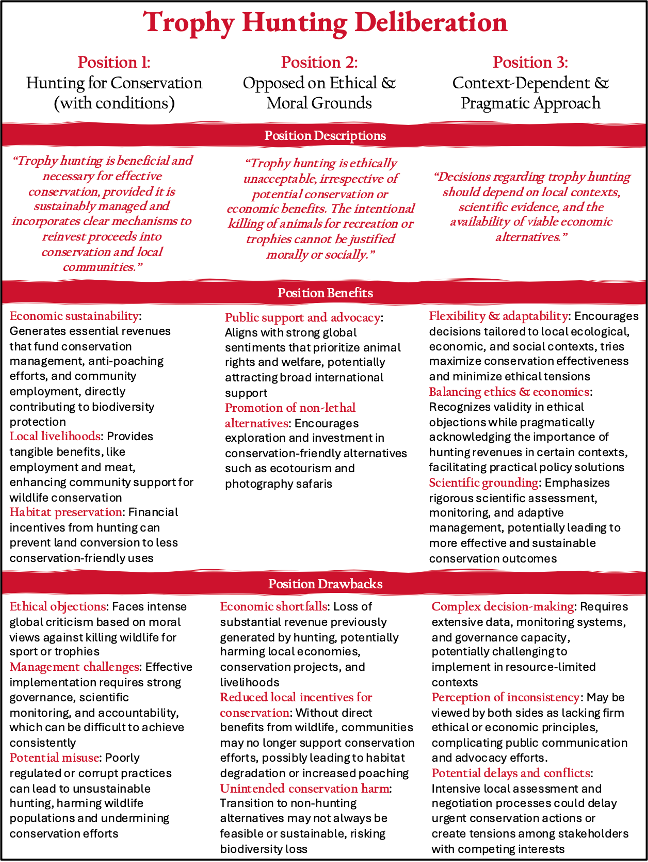
On the second Wednesday of a deliberation sequence, the focus shifted from mapping to actively deliberating. Students signed up to for leadership roles in these second Wednesdays, and each of the 16 students tried at least one of the roles: one student acted as the Opener, summarizing the positions mapped the week before in a graphical handout they designed (example below) along with a brief introduction. Two Deliberation Facilitators then posed questions to the rest of the class, guiding the deliberation process, and a Scribe took notes and captured the conversation in detail, using attribution to help document the deliberation. In the final portion of class, students reflected on how the deliberation impacted their overall takeaway about the issue and broader conservation biology contexts.

Example of an “Opener” handout we used in a deliberation

Outcomes & Feedback

Student evaluations of their experience confirmed that the deliberative approach deepened their engagement with the material. Many cited the structure, especially the issue forms and leadership roles, as key to their preparation and confidence. They reported that the most engaging topics were those with no easy answers. Trophy hunting, for example, was one of the most popular because it forced students to grapple with competing conservation strategies, moral philosophies, and economic realities. The topic of honey bee conservation surprised many students by upending the assumption that saving honey bees in North America is always a good thing, leading to nuanced discussions about native species and ecological balance.

Several students noted that acting as facilitators, openers, or scribes helped them develop leadership skills and a better grasp of classroom dynamics. They reported growing more comfortable with ambiguity, and as facilitators, they became more confident in drawing quieter voices into the conversation. Disagreement, when it occurred, was overwhelmingly described as respectful and generative. Students recognized that it was not only acceptable, but necessary, to encounter views that differed from their own.

By the end of the semester, students had not only built a strong foundation in conservation biology but had also experienced the kind of civic learning in an upper-level biology course necessary for preparing early-career professionals for a society where misinformation and eroding trust of scientific information is all too common [1]. They learned to navigate complex issues collaboratively, communicate across difference, and listen with the intent to understand. The deliberation format gave them practice in collective reasoning, and the role structure ensured accountability and inclusion.

If the goal of teaching is to help students become more thoughtful, informed, and responsible stewards of the world, then I feel deliberative pedagogy proved itself a worthy foundation. This is a model I plan to keep refining and one I believe could enrich classrooms far beyond mine.

Acknowledgements and References: I would like to thank my first students in the Spring 2024 conservation biology course for inspiring me to learn more about boosting student interactions in class, and I thank the sixteen students enrolled in conservation biology for Spring 2025 for being willing to experiment and try out deliberations. Without their curiosity and willingness to try something new, we wouldn’t have accomplished this work. Lastly, I am deeply grateful to Graham Bullock and the Davidson College Deliberative Citizenship Initiative for their generosity of time, training program resources, and funding. Reference: [1] Osborne, J., & Pimentel, D. (2023). Science education in an age of misinformation. Science Education, 107(3), 553–571. PDF link

Filed Under: Faculty Posts

  • « Go to Previous Page
  • Page 1
  • Interim pages omitted …
  • Page 9
  • Page 10
  • Page 11
  • Page 12
  • Page 13
  • Interim pages omitted …
  • Page 75
  • Go to Next Page »

Footer

Blog Post Categories

  • Announcements
  • Blog Posts
  • DCI Posts
  • Events
  • Faculty Posts
  • Fellow Posts
Image of a compass superimposed by the text "Deliberative Citizenship Initiative" and "Davidson College." Clicking on this image leads to the Initiative page.

Recent DCI Blog Posts

  • We Tried to Fix Jubilee’s “Middle Ground” – Here’s How It Went
  • A Case for Deliberation in the Natural Sciences
  • Welcoming New Staff to the DCI and DCN
  • Facebook
  • Twitter
  • Instagram
  • LinkedIn


Copyright © 2026 · Infinity Pro on Genesis Framework · WordPress · Log in