• Skip to main content
  • Skip to footer

Deliberative Citizenship Initiative

Building Democracy One Conversation at a Time

  • The Initiative
    • Programs
      • Deliberation Across the Curriculum
      • Deliberation on Campus
      • Deliberation in the Community
      • Research on Deliberation
    • Motivations
      • Why Deliberative Citizenship?
      • Why Davidson? Why Now?
    • Who’s Involved?
      • DCI Fellows Cohorts
        • 2025-2026 Fellows
        • 2024-2025 Fellows
        • 2023-2024 Fellows
        • 2022-2023 Fellows
        • 2021-2022 Fellows
        • 2020-2021 Fellows
      • DeeP Collaborative Cohorts
        • 2024-2025 DeeP Collaborative Faculty
        • 2023-2024 DeeP Collaborative Faculty
      • Advisory Council
    • History
      • What Sparked the Initiative?
    • Key Deliberative Dispositions
    • Frequently Asked Questions (FAQ)
    • Annual Report
  • Get Involved!
    • Participate in a Forum
    • Join a D Team
    • Become a Fellow
    • Take Courses
    • Get Training
    • Come to Guest Lectures
  • Events
    • Upcoming Events
      • 250th Anniversary Deliberative Forum Series on American Values
    • Past Events
  • Connections
    • The Deliberative Citizen: The DCI’s Monthly Newsletter
    • Efforts on Campus
    • Efforts in the Community
    • Efforts Elsewhere
    • Readings and Resources
      • DCI-Published Guides
      • DCI Guide to One-on-One Conversations
      • How to Disagree
      • Demonstration of Facilitation Styles
      • Deliberative Pedagogy Mini-Course
    • How We Can Help: DCI’s LET’S DELIBERATE! Partnership Opportunities
    • DCI in the News
  • DCI Blog Posts
    • Recent Blog Posts
    • All Blog Posts

The DCI Blog

The Careful Art of Devil’s Advocacy in Deliberation

November 14, 2025 by Jackson Strelo

Jackson Strelo ’26 (DCI Fellow)

In a time where the answers to our pressing questions are often formed quickly – from the press of a button, or maybe from a 15-second clip from social media – it seems as if we’ve somewhat abandoned the art of holistic problem solving. At almost all stages of our lives, many of our learnings derived from thoughtless exploration. In our youth, we likely didn’t learn to not touch the hot stove because Google told us so, but rather because curiosity got the best of us. While not every conclusion that we draw requires us to dive off the high board, we must learn to occasionally draw some distance between an issue and our conclusions. In other words, we must practice the careful art of devil’s advocacy in deliberation.

Martin Carcasson (2014) identifies The Devil’s Advocate as one of his four primary deliberation styles. In his eyes, one playing this role raises perspectives that are not being expressed, a style that aims to complicate a particular discussion that may lack dimensionality or diversity. While this is essentially as far as the DCI Deliberation delves into Carcasson’s properties and goals of the Devil’s Advocate style, their limitations of its intention must be noted to truly understand its value and apply it in our dialogues.

As alluded to earlier, a good deliberation doesn’t need to be intensely probed to achieve the goals of this style, especially if the topic contains sensitive subject matter. I believe that the base of the philosophy of Devil’s Advocacy is the aim of challenging thinkers to avoid drawing too-swift conclusions. Thus, it’s important to understand that word choice in this role can be the difference between progression towards curious thinking or regression away from it. In our training, even as a participant in a mock deliberation, I made sure to be thoughtful about the climate at our table. Did anyone share particularly personal or intimate accounts of an interaction with this issue? Even if the answer was yes, was there a productive or empathetic opportunity to dig deeper? Depending on the answers to these questions, I may evaluate whether the topic is too “hot” to explore, or if there’s a chance to promote curiosity.

Furthermore, a Devil’s Advocate should strive to not lead participants – explicitly or implicitly – towards a counter-conclusion. For example, facilitators in a roundtable discussion on climate change should challenge the thinking or conditioning behind their ideas – “what if our community was a fracking haven, would that change your sense of our environmental policy?” – rather than their political orientation as it relates to an ideological attachment to the issue. Jamieson, Valdesolo, and Peters (2014) found that dissent roles affect both physiological and psychological needs, with targets of Devil’s Advocacy or similar dissenting styles displaying avoidance behaviors as well as threats to belonging, self-esteem, and other basic psychological needs. Of course, there is certainly some variance in the presence of these threats stemming from blindly executed devil’s advocacy, but much of it can be erased by following fair principles of deliberation.

One crucial requirement in effective and productive dissent is to strive to maintain an egalitarian attitude in terms of what perspectives the Devil’s Advocate challenges. While perfectly balancing the level and frequency of dissenting questions posed to the one, or many, sides of the issue isn’t always feasible within the structure of a deliberation, maximizing equality and minimizing partisan choices and implicit biases should be prioritized. This is not only necessary in terms of respect and fairness, but also in fostering a climate in which all participants are encouraged to voluntarily dig deeper as they contribute to the conversation.

The second requirement is anticipation – thinking about the potential immediate impact as well as the chain-reaction of a potentially contentious dissent. Will my attempt at a light-hearted dissent be viewed as such in the context of the topic, the language of choice, as well as the climate of the deliberation?  Have any parts of previous interactions or sections of the deliberation prompted the use of a more cautious approach to deepen discussion? Of course, it would be foolish and limiting to ignore creative methods to challenge the group to explore arguments and counterfactuals out of fear. However, the art of effective Devil’s Advocacy requires the ability to forecast for and prepare for friction, and to limit scenarios in which that friction violates the bounds of productive deliberation.

While I could write all day about how other guiding principles – empathy, attentiveness, humility, the list goes on – should bake into the ideal Devil’s Advocate, I want to end how I began by highlighting the growth potential of this noble art. In my facilitator training, DCI Fellows were advised to essentially “roleplay” their positions in our final mock deliberation. In doing so, understandably, we struggled at first to articulate our dialogues under these roles. On its face, it seemed like a bland attempt at preventing one-dimensional discussion. However, as the depth of thought required in our sections increased, we rose to the challenge of our given roles. How does this relate to Devil’s Advocacy? Well, that relation wasn’t apparent until we began our reflections. While most of us agreed that it was difficult to stand on our given positions, it also gave us each the chance to practice holistic argumentative inflection – the main goal of Devil’s Advocacy.

As I serve as a DCI Facilitator this year, I will be thinking of how to sharpen this tool, to both challenge my own beliefs as well my ability to invoke curiosity into my deliberations.

References

Jamieson, J. P., Valdesolo, P., & Peters, B. J. (2014). Sympathy for the devil? The physiological and psychological effects of being an agent (and target) of dissent during intragroup conflict. Journal of Experimental Social Psychology, 55, 221–227. https://doi.org/10.1016/j.jesp.2014.07.011
Filed Under: Fellow Posts

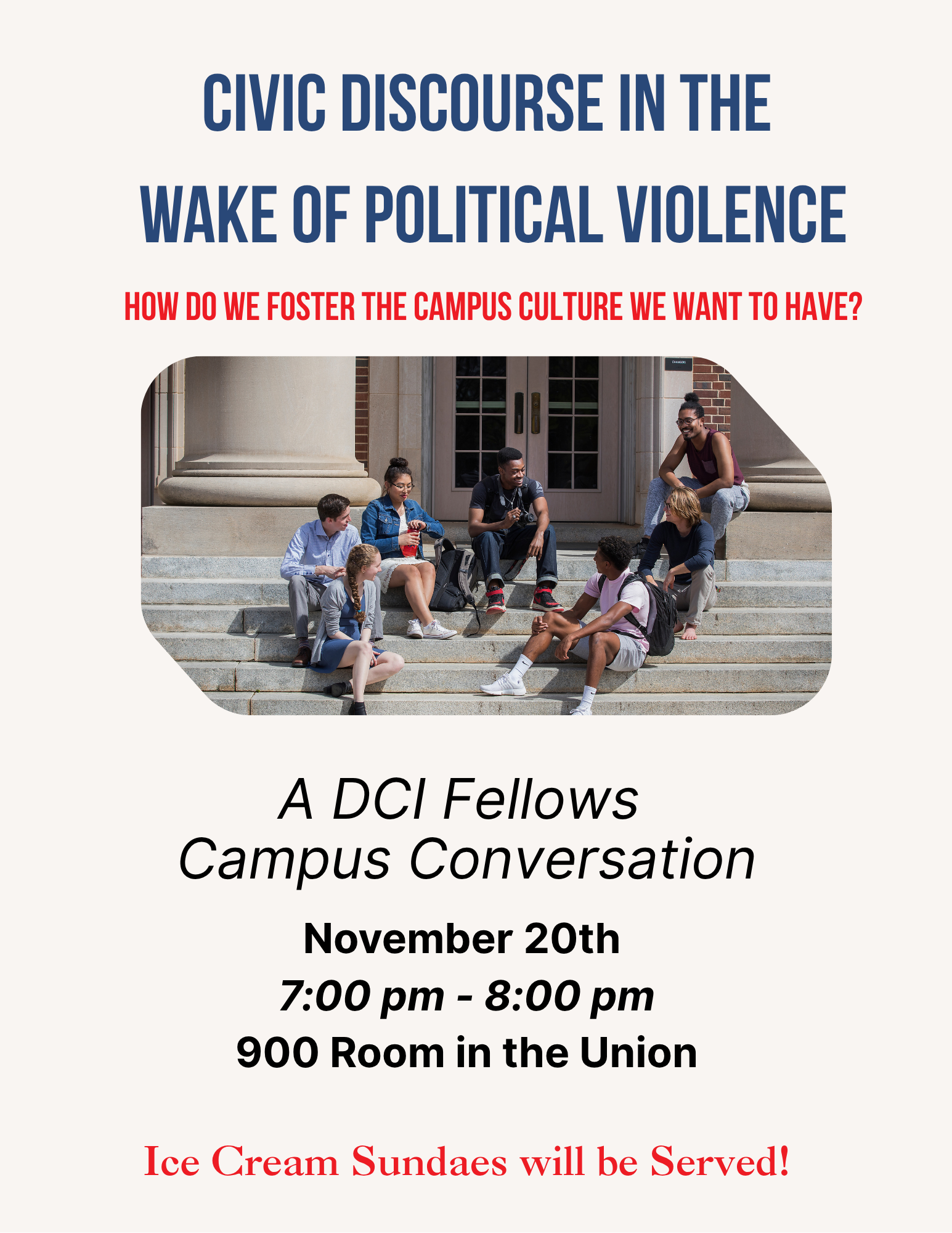
Civic Discourse in the Wake of Political Violence: A DCI Fellows Campus Conversation

November 13, 2025 by Graham Bullock

Thursday, November 20 | 7:00 p.m. | 900 Room

Ice cream sundaes will be served! Join us and bring some friends!

In a time marked by a troubling rise in political violence, how can we, as a campus community, model the kind of civic discourse our society so urgently needs? This campus conversation invites students, faculty, and staff to reflect together on how we can foster a culture of free expression, respectful dialogue, and robust deliberation at Davidson. This event seeks to follow-up on the September joint editorial in The Davidsonian by the presidents of the College Democrats, College Republicans, and College Libertarians that included a multi-part pledge to promote a culture of free expression that rejects political violence. Several Deliberative Citizenship Initiative Fellows have been developing a set of aspirational commitments designed to build on that pledge by articulating specific, community-driven principles to help us navigate the tensions inherent in public discourse today. 

After the Fellows present their initial ideas, attendees will break into small groups to explore how these aspirations might play out in specific campus scenarios. They’ll also be invited to offer their own ideas on how we might develop a shared vision for an inclusive and deliberative culture of civic discourse at Davidson. The goal is not to generate new rules or regulations, but to cultivate a meaningful and authentic grassroots framework for how we engage with one another across differences, an approach that could serve as a model for other campuses across the country. 

Filed Under: Blog Posts, DCI Posts, Events

DCI’s First-Ever Watch Party: Tuning into UNC Chapel Hill’s Expert Roundtable on Presidents, Institutions, and the People

November 12, 2025 by Graham Bullock

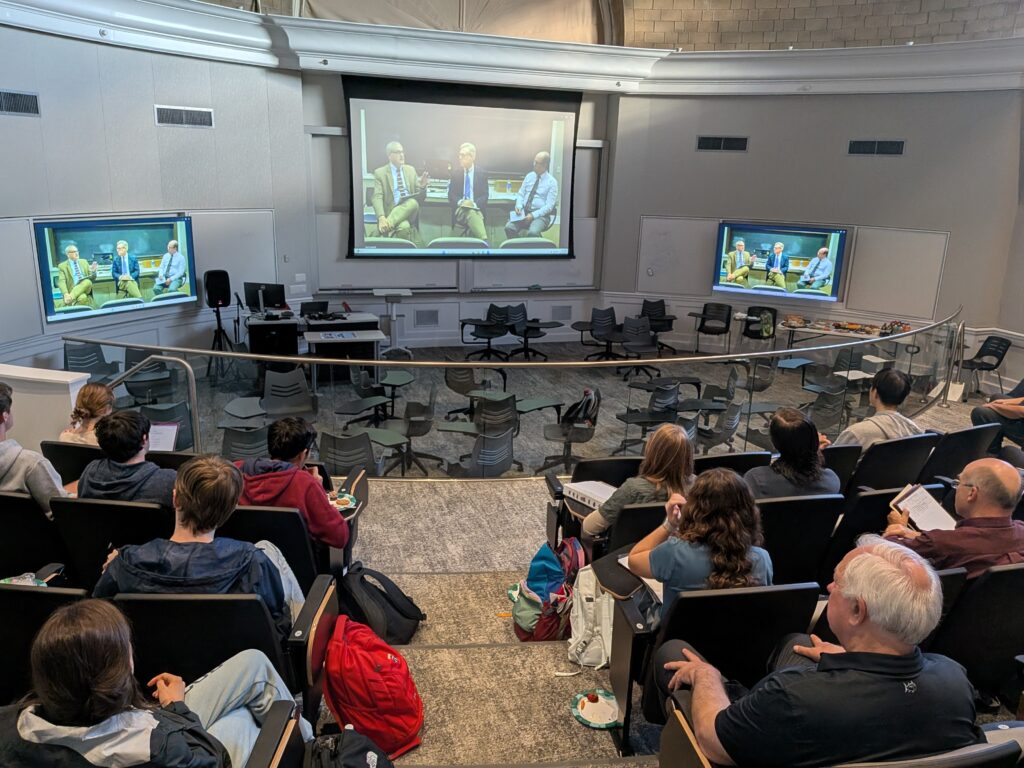
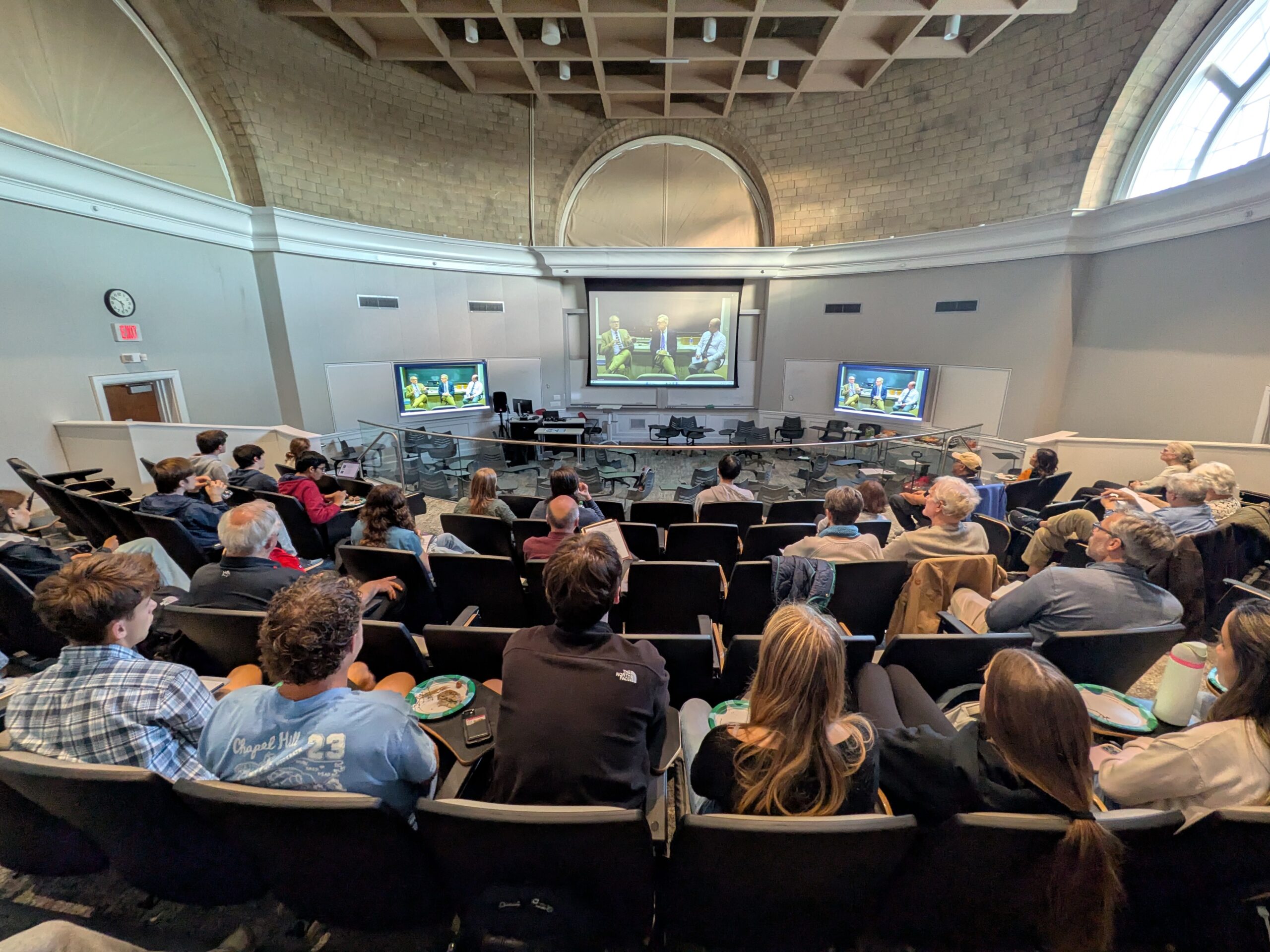
Photo of audience watching screens at Watch Party

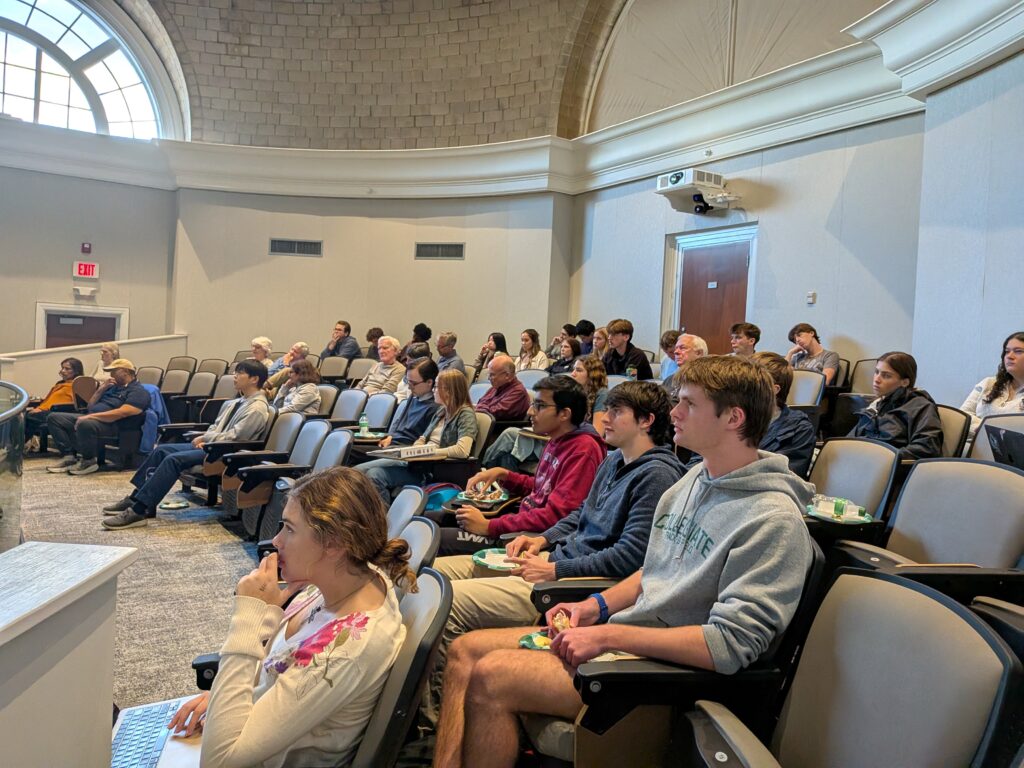
On October 30, 2025, the Deliberative Citizenship Initiative hosted its first-ever watch party of an expert roundtable held not at Davidson College, but on another college campus. UNC Chapel Hill’s Program for Public Discourse hosted the second event in the American Values Deliberative Forum Series on “Balancing Self-Government and National Stability: The Case of Presidents, Institutions, and the People.” Approximately 50 Davidson students, faculty, staff, and community members gathered in Hance Auditorium to view the nearly two hour conversation — and more joined via UNC’s livestream via Zoom.


image of audience

The panelists on this roundtable included Thomas Frank (best-selling author of What’s the Matter with Kansas?) and John Gastil (professor of communication studies, public policy, and political science at Penn State). Unfortunately the third panelist, Jennifer Mascott (professor of law and founder of the Separation of Powers Institute at Catholic University, was unable to attend at the last minute due to travel challenges, UNC Chapel Hill professor of political science Kevin McGuire served as the moderator of the panel discussion, which was followed by a Q&A session with the audience.

Image of audience

250th Anniversary American Values Deliberative Forum Series

This event is the second Expert Roundtable in the 250th Anniversary American Values Deliberative Forum Series, which is designed to commemorate the upcoming 250th anniversary of the Declaration of Independence. This anniversary represents an important opportunity to both deepen and elevate the discourse about the values that have animated American social and political debates throughout its history. The goal of the series is to enable Americans of all backgrounds – college students, high school students, families and neighbors, members of faith communities and other civic organizations – to authentically, respectfully, and constructively engage with each other about our foundational ideals and how they are relevant to contemporary policy issues.

Co-hosted by Davidson College’s Deliberative Citizenship Initiative (DCI), Duke University’s Provost’s Initiative on Pluralism, Free Inquiry, and Belonging, and the University of North Carolina at Chapel Hill’s Program for Public Discourse, this year-long program will include both Expert Roundtables and Community Conversations dedicated to unpacking, understanding, and applying the values that are foundational to the United States – and to many other countries around the world.

Community Conversations

During the week after the roundtable, both Davidson and UNC Chapel Hill hosted Community Conversations for members of their communities to discuss the same issues covered by the panelists. At Davidson, these conversations were part of the DCI’s D Team series, which involved 16 small groups — over 130 people — gathering to share their thoughts with each other both in-person and online, guided by student facilitators trained by the DCI.

The recording of the roundtable is posted below, as are some guides that you can use to host such conversations. The Deliberation Guide provides both important background information on the topics in question and a specific framework for engaging with these topics in the context of a two-hour facilitated conversation, which is the format that the DCI’s D Teams will use to explore the topic. The Issue Guide is similar to the Deliberation Guide but does not include the structured format for group conversations. The Issue Brief provides a brief outline of the main ideas that are presented in the Deliberation Guide and Issue Guide. While both include a similar list of questions to consider about the topic, they are designed for personal reflection before, during, or after our expert roundtable on the same topic.

Other institutions are welcome to use these resources to highlight their own conversations about the important issues covered in this forum. For ideas on how to host such a discussion, check out the webinar that DCI Faculty Director Graham Bullock hosted that provides an overview of different strategies and options that might work well in different organizational and community contexts. Please email dci@davidson.edu if you have any questions or ideas you’d like to share.

ISSUE BRIEF

DCI-Self-Government-National-Stability-Issue-Brief

ISSUE GUIDE

DCI-Self-Government-National-Stability-Issue-Guide

DELIBERATION GUIDE

DCI-Self-Government-National-Stability-Deliberation-Guide

Filed Under: Events

Can We Talk About That?: Deliberation About Controversial Topics

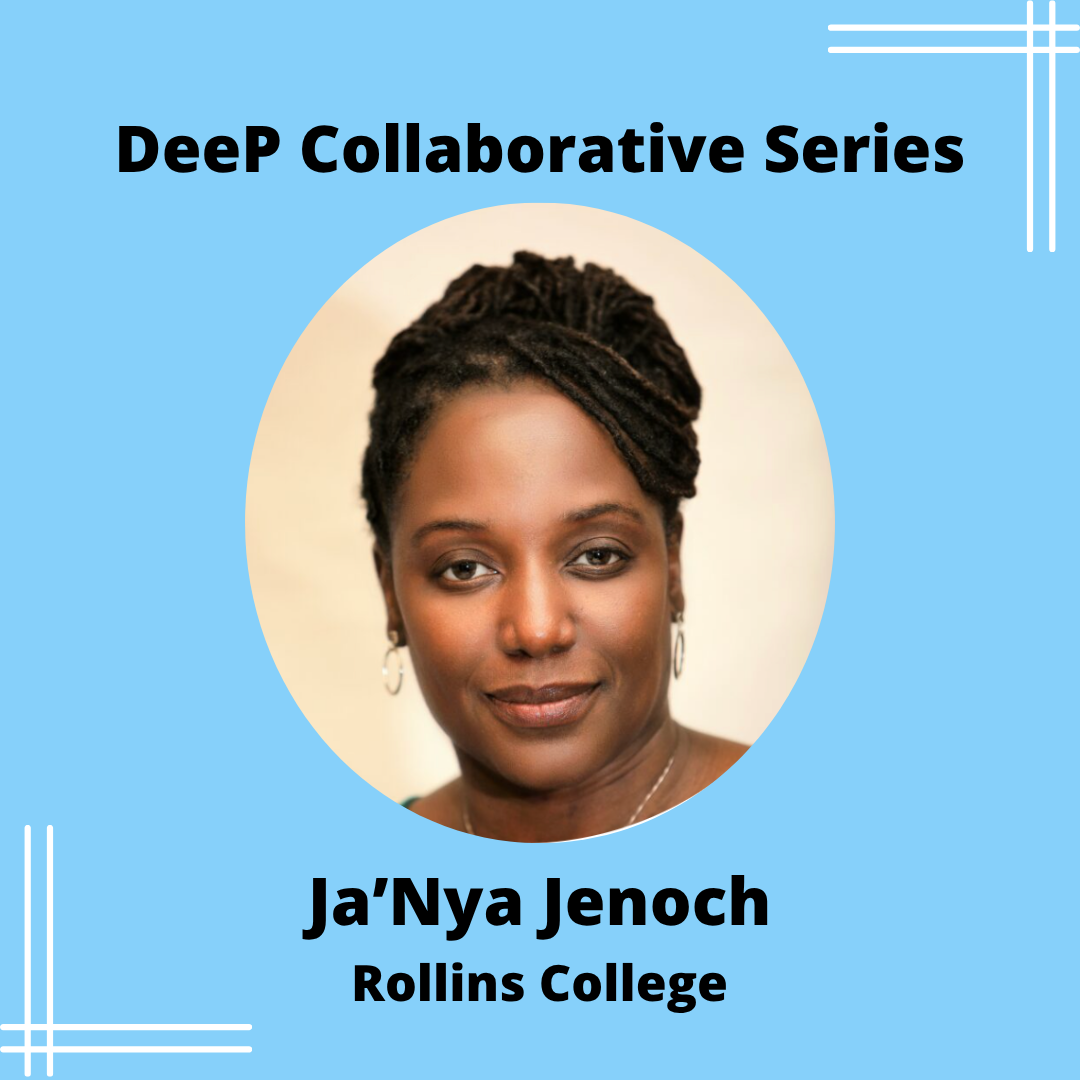
November 10, 2025 by Ja'Nya Jenoch

The Deliberative Pedagogy (DeeP) Faculty Collaborative consists of faculty from Davidson College and other higher education institutions who are committed to learning and implementing new ways to improve and deepen the quality of their class discussions. These faculty come from a wide array of disciplines and backgrounds to study and discuss deliberative pedagogy methods, share their ideas and questions with one another, and work to embed deliberation in their classrooms. In this special blog series, members of the Collaborative describe and reflect on their experiences developing and teaching their deliberation-involved courses.

By Ja’Nya Jenoch (2024-25 Deliberative Pedagogy Collaborative Faculty Fellow)

The Process

When I first saw the email about applying for a Deliberative Collaborative Initiative (DCI) fellowship, I was intrigued and excited. As an early scholar, I enjoyed another teaching and learning fellowship two summers ago and it helped me to develop my teaching skills and increase confidence. So, I was curious to see what this DCI fellowship could bring.

The goal of the fellowship is for professors to develop and implement a deliberation-based syllabus in one course. I did not even know that deliberative pedagogy was a thing before reading that email; however, during our summer 2024 orientation my cohort and I were immersed in this innovative pedagogy for advancing civil conversations in the classroom. We not only learned what deliberative pedagogy was, we were supplied with ample tools and resources and sent back to our home colleges and universities with a 9-month plan for creating classes where students will be engaged in meaningful dialogue about our nation’s most pressing issues.

The Design

My pilot course for teaching deliberative pedagogy was a course about Black Americans—a topic that had been given a swift controversial/banned label after January 2025 by national leaders. It was being taught to upper-level sociology students at a private liberal arts college with full administrative support. My approach to the course was multi-fold and had the following goals:

  1. Provide a course that surveyed the topic using an historical lens.
  2. Introduce students to deliberative pedagogy through readings, observations, and practice.
  3. Have students present live class deliberations for their final course project.
  4. Maintain awareness of the impact of the political climate on course topics.

To give students the historical lens that I wanted them to include in their deliberations, we visited the college’s archives for a curated tour. The librarian shared with the students an

actual indenture document and they learned about the challenges with reading and interpreting writing from that time. They also left with lots of resources and instructions on how to find archival data.

Next students read some of the more popular literature on deliberative pedagogy such as chapters from the book, Why We Argue. Afterwards we discussed the readings and identified key elements of deliberative pedagogy. I also introduced students to other practices that are in the civil discourse arena. These included a Living Room Conversation about the course topic and a Civil Dialogue on the benefits and disadvantages of the Civil Rights Act. According to the hierarchy of types of discourses, I viewed each of these early activities as practice and preparation for deliberation.

Once students were immersed and more knowledgeable about civil discourse in general, in week five of the course they were required to attend one of the DCI online forums. They attended the forum on religion and enjoyed it tremendously. Students were asked to write a reflection about the forum in response to these four questions:

  1. Describe the facilitation styles that you observed and will plan to practice during your deliberation.
  2. Were there parts of the deliberation that were more helpful than the others (e.g., panel, deliberation, guide, etc.)? Explain why they were more helpful to you.
  3. What parts of the deliberation guide were most helpful in preparing you for the deliberation?
  4. What three things will you take away from the forum to create your own deliberation?

After the forum I led the class through an in-class deliberation. The topic was integration in Boston Public Schools in 1965, and we used a deliberation guide from the National Issues Forum website. The purpose of this deliberation was to provide a second model of a live deliberation. Students were tasked with identifying facilitator roles such as refereeing and weaving during this class deliberation. The deliberation guide also served as another example of what a guide should look like. The one that we used did an excellent job of outlining the three options for the topic.

The course ended with pairs of students leading the class in deliberations on topics of their choosing. In pairs they wrote deliberation guides that included archival data, standard deliberation guide requirements, and two to three options for their topic. During the deliberation class each partner in the pair led a small group of five students through an identical deliberation. Students were assessed jointly on their deliberation guide and separately on their deliberation practice as a facilitator. Their final assignment for the deliberation project was to write a brief reflection in response to two out of eight questions/prompts.

Results: Improved Engagement

After a year of learning about and implementing deliberative pedagogy, I would say that this is a teaching tool that I definitely plan to use many times in the future. I found that when students were informed about how we were going to engage in the classroom, when they were given a set of guidelines, when they were allowed to observe & experience what they’re being asked to do, they felt more confident engaging in the classroom and exploring new topics in unique ways. Remember that this was a class where almost half of the students were seniors. It was smaller than average and most of the students knew each other personally or from prior courses. I thought this helped the deliberation process to unfold with deeper connection to the material. However, I conducted a mini deliberation in an intro sociology course and the students were as engaged as the upper-level students.

Deliberation enabled quiet students to participate meaningfully and take on leadership roles.

Results: The Importance of Structure & Observation

Given that this was the first deliberation-focused class that I have ever taught, I was curious to see what fostered engagement in both upper and lower-level classes. What I noticed was that students connected well with the structure of deliberation. They liked reading conversation agreements and deliberative dispositions. I placed slides with these structured aspects of the deliberation on the screen and asked for students to volunteer reading a few statements out loud. The deliberation practice of outlining what was going to take place and for how long also helped students to feel anchored in this practice. When students knew what to expect, they were quick to align with the goals of deliberation.

In my upper-level course, I feel that having students attend the DCI’s online forum was a game changer. After attending the forum, students returned to class knowing exactly what deliberation looked and felt like. One student was excited that he got to be in a breakout room with real practitioners and was able to engage in conversation with them. I found the live forum attendance to be greatly beneficial to student learning. Another adaptation that made deliberation work well in this course was pairing students to complete the guide and then have them practice facilitation individually during class. I would use this format again

since during the guide preparation students can work together, bounce ideas of each other, and create a more comprehensive guide. During the class deliberation I could assess each person’s level of participation in creating the guide.

Results: Students’ Response

The responses from students were positive. They enjoyed delving into topics in a meaningful way. They liked the deliberations and reported that the class should be mandatory for all students due to how much they learned and the way that they learned. They also enjoyed choosing topics for their personal deliberations. Having a deliberation- style class also allowed us to include current topics related to our course in a seamless way. We were able to include current topics like the 2025 Superbowl halftime show, the impacts of hot-of-the-press executive orders, and other topics that were not on the syllabus, and still feel like we were on track with the course outline.

I was nervous at the start of the semester. This was because I did not know how comfortable students would feel discussing topics that were banned nationwide in many classrooms. Initially I noticed some hesitation to voice thoughts about topics relevant to Black America, however as the semester progressed students became more comfortable expressing their thoughts, feelings, and concerns about the course topic. We had some animated discussions and some where students stayed 10 to 15 minutes after class to continue discussions. By the time that students had to lead their own deliberations I was happy to observe a classroom of students who were fully in charge of their learning and engagement. That was a beautiful sight to see each time. Deliberation allowed students to focus on the art of engaging in civil interactions about difficult topics even in the middle of controversy.

Conclusion & Next Steps

Overall, the DCI experience was a positive one. I have learned a pedagogy that enlivened my classes and helped students form deeper connections with each other and with the course material. Some things I would change are that I would assign one key reading at the beginning instead of several chapters at once. This would give students an introduction and they could learn more through class discussion and lectures on deliberative pedagogy. I would also have them watch a deliberation from the DCI video archives before attending a live deliberation.

The ability to ask questions is a cornerstone of sociological inquiry. This was also true of deliberative pedagogy. When I was preparing mini-deliberations and giving students feedback on their deliberation guides, I found that asking key questions can make a deliberation spark active discussion or have it fall flat. Next time I will focus more time learning the art of asking questions to foster even better deliberations.

I plan to implement deliberation in a similar way into other upper-level classes. In the semester that I piloted deliberation in the one class, I ended up including mini deliberations in other classes and students mentioned in their course evaluations that they liked these activities and the class discussions that emerged. Deliberative pedagogy is an effective pedagogical practice. If the structure, questions, and setting are right, it can bring classroom discussions to life and make them full of meaning and candor.

Filed Under: Faculty Posts

What if Deliberative Competence Was a Core Requirement of General Education?

November 6, 2025 by Vincent Russell

The Deliberative Pedagogy (DeeP) Faculty Collaborative consists of faculty from Davidson College and other higher education institutions who are committed to learning and implementing new ways to improve and deepen the quality of their class discussions. These faculty come from a wide array of disciplines and backgrounds to study and discuss deliberative pedagogy methods, share their ideas and questions with one another, and work to embed deliberation in their classrooms. In this special blog series, members of the Collaborative describe and reflect on their experiences developing and teaching their deliberation-involved courses.

By Vincent Russell (2024-25 Deliberative Pedagogy Collaborative Faculty Fellow)

I have been involved in the public deliberation field for more than a decade, but prior to this DeeP Fellowship, I had never robustly incorporated public deliberation into my pedagogy. In the past, I did what I could to make my courses experiential and discussion-focused, and I often incorporate service-learning. I regularly include current events and controversial topics into my course material to encourage students to apply course content. After all, as a Communication scholar, I am interested in helping my students learn how to better talk to one another, and I believe that preparing students to be participatory and justice-oriented citizens is the fundamental purpose of postsecondary education.

When I told a colleague I had received this fellowship, she congratulated me and said it sounded like it would be a perfect fit for my Intercultural Communication course—an upper-level course I teach every year that focuses on communicating across difference, globalization, and social justice. I surprised my colleague by telling her yes, incorporating deliberation into that course would be a logical fit, but instead I had chosen to incorporate public deliberation into the introductory communication course I teach called Foundations of Communication. Allow me to explain why.

The Challenges of the Basic Course

At WCU, Foundations of Communication (what our discipline refers to as “the basic course”) is required for all students to satisfy the “oral communication” requirement of our general education curriculum. No other WCU courses satisfy the oral communication requirement, so nearly every undergraduate student at WCU must take the course to matriculate. Approximately 2,000 students take Foundations of Communication every year.

Teaching this course presents several challenges. First, students, most often, are not willing participants. They are in class because they must be, not because they chose to be there. Additionally, the students come from a range of majors (including undeclared majors), so their base knowledge of Communication varies widely. Third, despite the course being an introductory-level class intended for first- or second-year students, a significant number of juniors and seniors enroll.

This is partly due to our basic course program being underfunded (we don’t have enough instructors to meet demand, so there is a backlog of students needing to take the course to graduate) but also because of the content of the course. Students with high communication apprehension (colloquially known as “public speaking anxiety”) often delay taking the course until necessary. Thus, in any given section of our basic course, an instructor may have students across a range of ages and school experiences, and most of them did not elect to take the course but are simply there to fulfill a requirement.

Beyond adapting instruction to students’ needs, another challenge of the course is the content itself. The basic course tends to be known as “the public speaking class,” and many people are terrified of public speaking. So not only are students only in class because they must be, the general content we cover is usually unpleasant—if not downright panic-inducing—for the students.

However, our course is not just about public speaking. We also cover interpersonal communication, intercultural communication, small group communication, and mediated communication. It is a lot of material to cover in a single semester, and then you must factor in the days dedicated just to having students deliver presentations in class (and I usually require three presentations each semester). Dedicating class time to presentations reduces the number of days that one can cover and practice content.

As a final note about the challenges of the basic course, our instructor team has noticed since the COVID-19 pandemic that students increasingly struggle with the interpersonal communication aspects of the course. Sure, they still struggle with giving a presentation, too, but what has been new since 2020 is that students appear less confident in their abilities to have casual conversations with classmates, make friends, participate in group work, contribute to class discussions, and perform the other quotidian tasks of face-to-face communication. In other words, our students’ communication apprehension used to be, primarily, about public speaking. Since 2020, we’re finding that their communication apprehension has extended to interpersonal contexts, too. Many of our students appear anxious about simply talking to their classmates. National trends appear to corroborate our experiences, as college students are increasingly anxious and lonely.

The Opportunities of the Basic Course

These challenges of Foundations of Communication also make it ripe for the benefits of public deliberation. First, the class includes diverse students from varying backgrounds, which means they are more likely to have varying viewpoints on public issues than students who self-selected to enroll in an elective course. Second, the plurality of students in the basic course usually are first- and second-year students, so I was hopeful that their opinions on public issues were still malleable and that deliberating about these issues could help students better refine their stances. Third, I believe it’s important to expose students early to the skills of deliberation so that they can reap those benefits in later courses. If they learn the basics of reason-giving, source credibility, and how to disagree with classmates in my basic Communication course, then those skills will serve them will in their future coursework, whatever it may be.

Most importantly, though, I saw deliberative pedagogy as a way to help students reduce their interpersonal communication apprehension. I provided explicit instruction about the communicative orientations and skills necessary to perform deliberation well, along with structured opportunities to participate in (and facilitate) deliberation with classmates. In doing so, I intended to provide opportunities to practice the communication skills of questioning, reason-giving, empathy, managing conflict, problem-solving, and decision-making. This, in turn, would help them feel more comfortable relating to their classmates.

Incorporating Deliberation into the Basic Course

To incorporate deliberative pedagogy into my Foundations of Communication course, I revamped the assigned readings to include several pieces of scholarship about deliberative pedagogy and public deliberation, the facilitator’s guide from the Deliberative Citizenship Initiative, and several chapters out of Lara Schwartz’s Try to Love the Questions. Schwartz’s book was recommended to me by another DeeP faculty fellow, and it does a good job preparing students for the deliberative dispositions I wanted them to practice.

I scaffolded the course so that students were introduced to deliberative pedagogy and its basic concepts at the beginning of the semester. Later, as the semester progressed, they read about specific deliberation skills, such as listening, questioning, and facilitating. I dedicated class time to several “practice deliberations,” where I facilitated 30-minute conversations with the class about social issues. I also used activities from the Constructive Dialogue Institute and the Collaborative Discussion Project to give students chances to practice specific deliberation skills. For instance, on the day we practiced listening, I used the “Listening to Understand” activity from the Collaborative Discussion Project to give students a chance to practice listening skills they read about prior to class that day. All of these examples were ungraded opportunities to practice deliberation skills.

I also had various graded components to promote deliberative learning. Most significantly, students were put into groups and assigned to facilitate a deliberation about a topic I had chosen. I created four groups with six students in each group. On their assigned deliberation day, the entire class was assigned to read a deliberation guide (from DCI and/or) about the topic for that day. I chose issue guides from DCI and the National Issues Forum Institute about social media regulation, economic mobility, immigration, and police reform. On deliberation day, the facilitators were expected to deliver an 8–10-minute informative presentation summarizing the deliberation guide and the perspectives it offered, explaining how the deliberation time would be structured, and offering a conversation agreement.

Following the presentation, the facilitators had 60 minutes to facilitate deliberation about the topic. The class broke into six small groups, with one facilitator in each group, and the facilitators guided the students through the questions in the deliberation guide. I then floated around the groups grading the facilitators on their facilitation skills. After each deliberation day, every student had to complete a reflection essay identifying what they thought they did well, what they want to improve for the next deliberation, and how course concepts manifested during their conversations. Facilitators had a specific set of questions to answer in those essays, while deliberators had a different set of questions.

These graded deliberation days occurred about halfway through the semester. I structured the course in this way so that students already would have had several weeks to build rapport with one another, develop a baseline understanding of public deliberation, and practice their deliberation skills in class before being graded on a student-led deliberation.

This assignment structure accomplished several goals. First, it was efficient. I typically require an informative speech in the class around the middle of the semester, and this deliberation assignment was a way to merge informative speaking with deliberation, thereby combining two assignments into one. Second, every student facilitated one deliberation and participated in three deliberations as a deliberator, so they gained exposure to both roles and had multiple opportunities to practice deliberation skills. Because students were assigned pre-existing deliberation guides (rather than researching and writing their own), the students could focus more on applying the communication skills of deliberation, which was my goal for this introductory course.

In summary, students had three graded assignments related to deliberation. Each group received a group grade for their informative presentation—after all, this course does have a public speaking component. Each student received an individual grade and feedback about their performance as a facilitator, and then every student received grades for their reflection essays (four total).

Outcomes and Next Steps

Overall, my first foray into robust deliberative pedagogy went well, but there are some things I want to change. In the future, I need to make the facilitator groups smaller. I had 24 students in class this semester, so when they would break into six small groups to deliberate, each group had four students in it (one facilitator and three deliberators). Because students sometimes were absent, some facilitators had a group with only two deliberators in it, which isn’t sufficient for robust deliberation. However, creating more facilitator groups means finding additional days in my already jam-packed course schedule to hold graded deliberations. Another improvement I would like to make is to find a way to give students feedback on their deliberation skills. This semester, I only graded each student’s facilitation skills. I had developed a rubric for the deliberators and had the idea of having students fill them out for their peers (so students were giving each other feedback on their deliberation rather than me), but I scrapped the idea because the logistics were too complicated for my first time incorporating these deliberation assignments.

As for outcomes, I believe students appreciated the opportunity to learn about pressing social issues and talk with one another. In their reflection papers, many students remarked upon their anxiety related to discussing “political” issues. Having grown up on social media, they feared that social media dynamics about politics would play out in the classroom (e.g., being “canceled,” people making fun of them, appearing ignorant, etc.). Students tended to appreciate that the deliberation assignment provided a structured way to discuss wicked problems, helping them develop their opinions on these topics; learn that “political” discussion does not have to be tense, hostile, or frightening; and develop interpersonal connections with their classmates.

Another outcome from my perspective as a professor was that by having students deliberate about controversial issues with one another, it took pressure off me to help students navigate those murky waters. In the past, when I’ve had class discussions about controversial issues, I still served as the focal point and leader of discussion, and so students would sometimes form perceptions about my “biases.” The deliberation assignment removed my “bias” from the equation, enabling students to talk with one another without fear of reprisal from the professor. My rubrics also were content neutral, so students knew they were graded on their facilitation skills instead of the stance they took on the topic.

Lastly, an unexpected outcome from this experiment was that students’ presentations were better than they had been in the past. As I mentioned before, the deliberation assignments occurred about halfway through the semester; it was the second of three units in the course. The final unit is about persuasive speaking, and students must deliver an advocacy speech about a social issue. It’s an individual assignment (instead of a group assignment), and they must take a stance on a topic and present a well-researched argument supporting their stance. The students’ advocacy speeches this semester were better than past semesters. I believe the opportunity to discuss controversial issues with their classmates during the deliberation unit helped reduce their anxiety about taking a public stance on a controversial topic. They also already had a chance to practice a “leadership” role by serving as a facilitator, which potentially increased their confidence when standing in front of class to deliver their presentation as an “authority” on their chosen subject. Finally, the deliberation guides provided examples of well-researched arguments about wicked problems, and some students used those guides as starting points to develop their advocacy speeches. Doing so enabled them to craft higher quality, more nuanced, and better sourced presentations than I had seen in previous semesters.

In conclusion, I believe my attempt to incorporate deliberative pedagogy into a foundational course that’s required for all students at WCU was successful. I plan to share my insights with my fellow instructors, and I’m hopeful that we can infuse deliberative pedagogy into more sections of the Foundations of Communication course. Doing so holds the potential of introducing students early in their academic careers to foundational skills necessary for participatory citizenship, which students can then leverage in their future coursework, careers, and communities.

Filed Under: Faculty Posts

  • « Go to Previous Page
  • Page 1
  • Interim pages omitted …
  • Page 10
  • Page 11
  • Page 12
  • Page 13
  • Page 14
  • Interim pages omitted …
  • Page 75
  • Go to Next Page »

Footer

Blog Post Categories

  • Announcements
  • Blog Posts
  • DCI Posts
  • Events
  • Faculty Posts
  • Fellow Posts
Image of a compass superimposed by the text "Deliberative Citizenship Initiative" and "Davidson College." Clicking on this image leads to the Initiative page.

Recent DCI Blog Posts

  • We Tried to Fix Jubilee’s “Middle Ground” – Here’s How It Went
  • A Case for Deliberation in the Natural Sciences
  • Welcoming New Staff to the DCI and DCN
  • Facebook
  • Twitter
  • Instagram
  • LinkedIn


Copyright © 2026 · Infinity Pro on Genesis Framework · WordPress · Log in