• Skip to main content
  • Skip to footer

Deliberative Citizenship Initiative

Building Democracy One Conversation at a Time

  • The Initiative
    • Programs
      • Deliberation Across the Curriculum
      • Deliberation on Campus
      • Deliberation in the Community
      • Research on Deliberation
    • Motivations
      • Why Deliberative Citizenship?
      • Why Davidson? Why Now?
    • Who’s Involved?
      • DCI Fellows Cohorts
        • 2025-2026 Fellows
        • 2024-2025 Fellows
        • 2023-2024 Fellows
        • 2022-2023 Fellows
        • 2021-2022 Fellows
        • 2020-2021 Fellows
      • DeeP Collaborative Cohorts
        • 2024-2025 DeeP Collaborative Faculty
        • 2023-2024 DeeP Collaborative Faculty
      • Advisory Council
    • History
      • What Sparked the Initiative?
    • Key Deliberative Dispositions
    • Frequently Asked Questions (FAQ)
    • Annual Report
  • Get Involved!
    • Participate in a Forum
    • Join a D Team
    • Become a Fellow
    • Take Courses
    • Get Training
    • Come to Guest Lectures
  • Events
    • Upcoming Events
      • 250th Anniversary Deliberative Forum Series on American Values
    • Past Events
  • Connections
    • The Deliberative Citizen: The DCI’s Monthly Newsletter
    • Efforts on Campus
    • Efforts in the Community
    • Efforts Elsewhere
    • Readings and Resources
      • DCI-Published Guides
      • DCI Guide to One-on-One Conversations
      • How to Disagree
      • Demonstration of Facilitation Styles
      • Deliberative Pedagogy Mini-Course
    • How We Can Help: DCI’s LET’S DELIBERATE! Partnership Opportunities
    • DCI in the News
  • DCI Blog Posts
    • Recent Blog Posts
    • All Blog Posts

The DCI Blog

Tips for Conversations about Race: How to Make Them Possible and Productive

October 22, 2025 by Graham Bullock

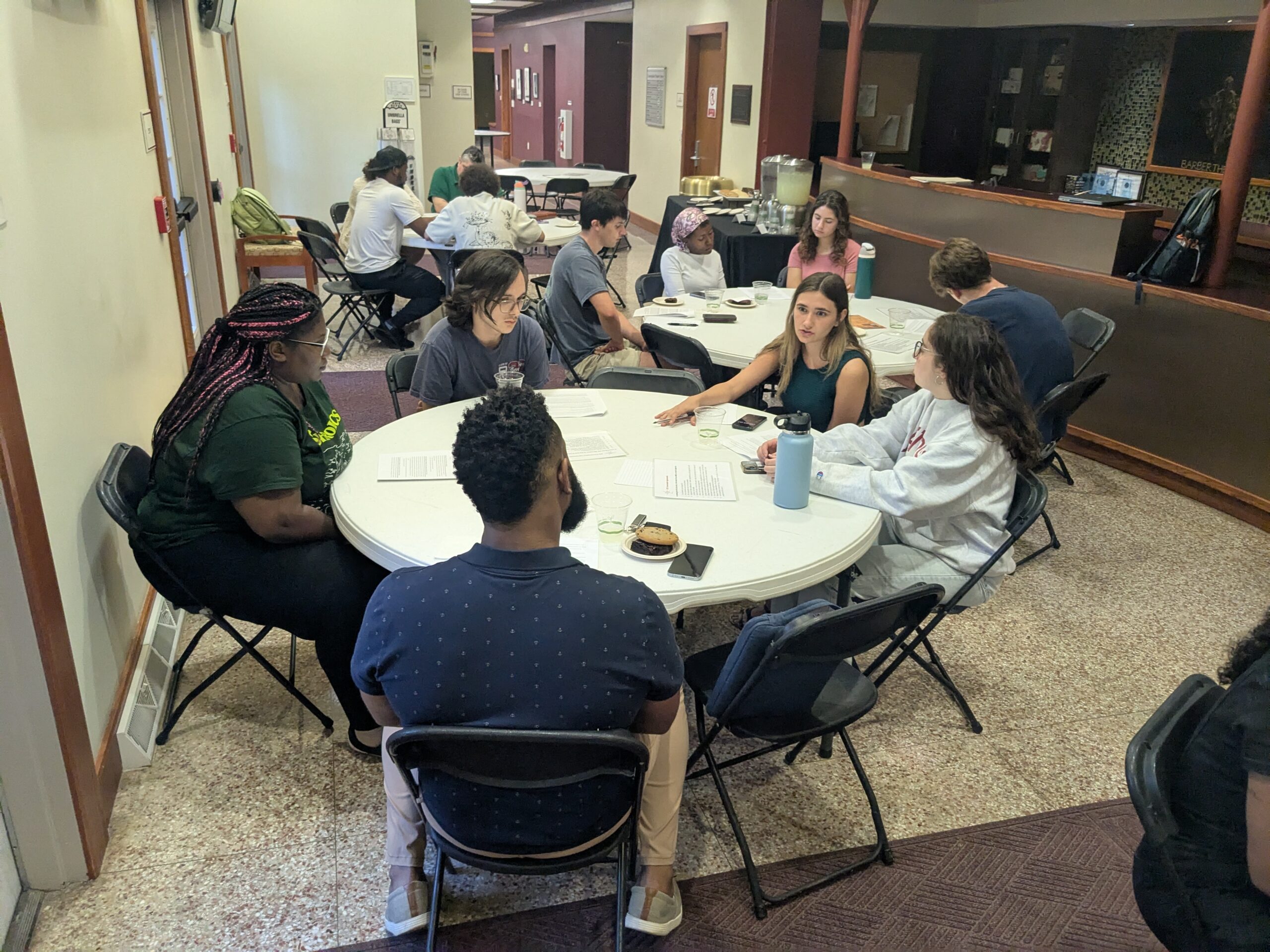
Conversations around round tables

On September 8, 2025, the Davidson College Deliberative Citizenship Initiative (DCI) and the Theatre Department co-sponsored a  Community Conversation on “Talking about Race: What Makes It Possible and Productive?” in the Barber Theatre’s lobby. The conversation was held a week after the production of Dissonance on Monday, September 1 in the Barber Theatre by actor-playwrights Marci J. Duncan and Kerry Sandell. The play, which is directed by Davidson College Assistant Professor of Theatre James Webb, explores what happens when a Black woman and a White woman who have been friends for 20 years have their first open, honest conversation about race, provides a helpful backdrop for this conversation.

Some of the participants in the Community Conversation had seen the play while others had not, but everyone there was committed to exploring the question of what makes conversations about race possible and productive. The conversation was designed by DCI Senior Fellow Alyssa Henke ’26 as part of her DCI fellows deliberation project, and one of Alyssa’s goals was to generate insights and suggestions for future efforts to host conversations about race, whether at Davidson College or elsewhere.
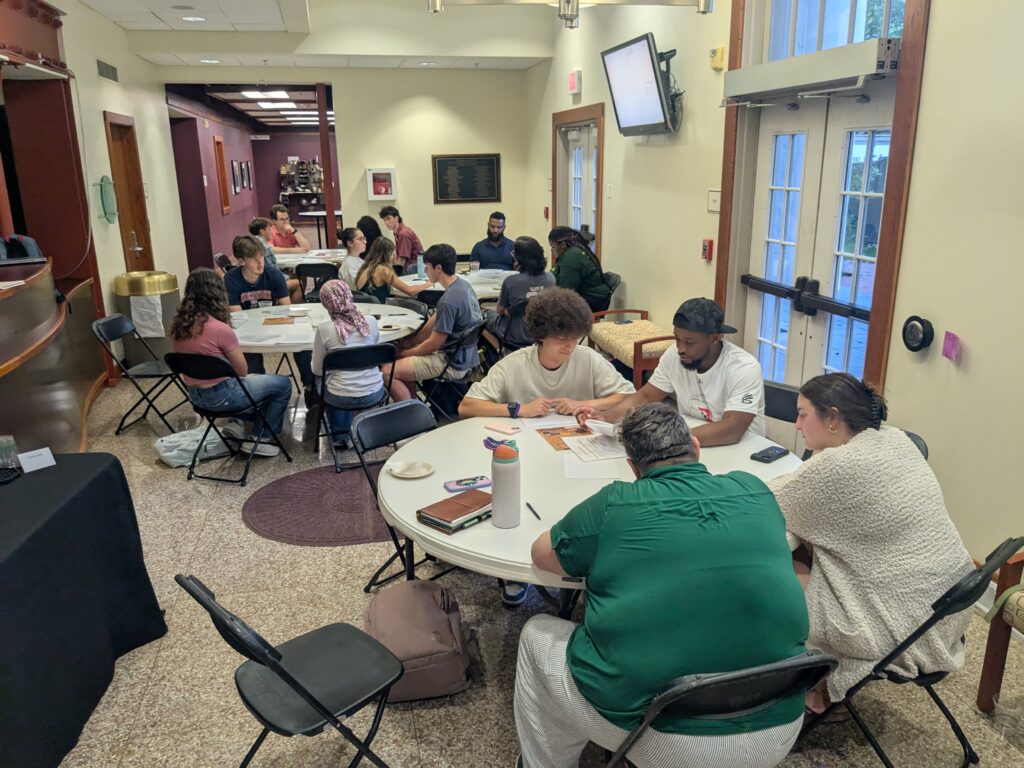
conversations around round tables

Approximately 20 Davidson students and faculty attended the event and participated in small group discussions facilitated by several DCI Fellows. Since the event, Alyssa has compiled the notes taken by the DCI Fellows from their group’s discussions in the document below. She also developed a two-page infographic (also available below) that summarizes some of the main tips that came up in these conversations, from how to prepare for these conversations to what to pay attention to during them. The infographic also provides suggestions for conversations with both close friends and new connections.

Tips-for-Talking-about-Race-Infographic

Talking-About-Race_-What-Makes-It-Possible-and-Productive_-Event-Summary

Race is one of the most challenging topics to discuss with family, friends, colleagues, and our fellow citizens. And yet it is also one of the most important topics to engage with, given our many divides that relate to the history of slavery, Jim Crow, and efforts to advance racial equity and justice. The hope is that these tips will be helpful as we have opportunities to have conversations about race, whether they are in the context of personal relationships, local histories, or national issues.

One such opportunity is Davidson College’s upcoming dedication of its “With these Hands” memorial to the enslaved and exploited on Thursday, October 22, 2025. The memorial is designed to recognize the contributions of African Americans to the College since its founding in 1837 either as enslaved people before the Civil War or exploited people during the Jim Crow era afterwards. It will likely provoke questions and conversations about Davidson’s history, legacy, and future with regard to race; the tips below can enable those conversations to deepen our understanding of different perspectives on these questions and strengthen our relationships and sense of connection in the process.
Filed Under: Announcements, DCI Posts

A Deliberative Approach to Teaching and Learning History

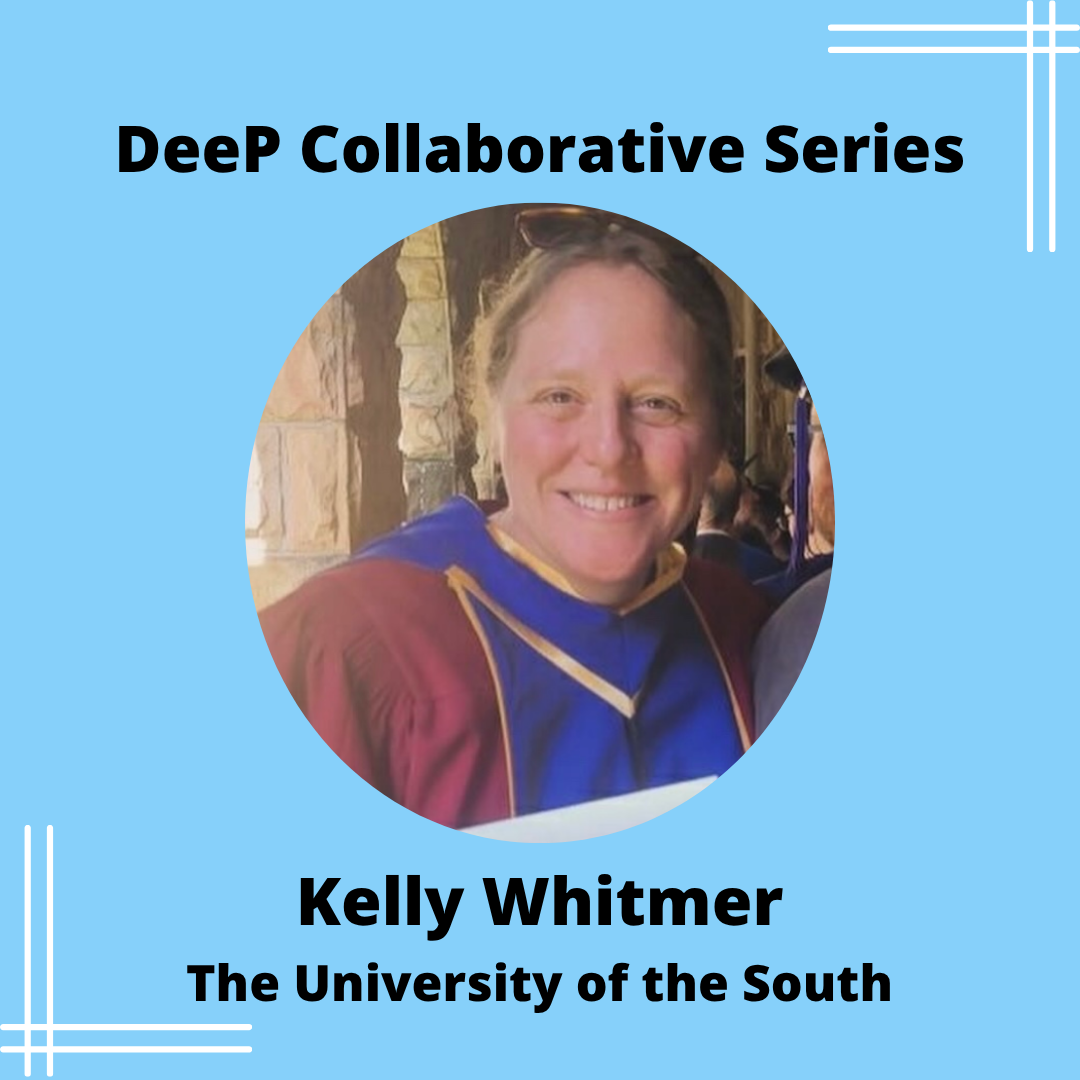
October 21, 2025 by Kelly Whitmer

The Deliberative Pedagogy (DeeP) Faculty Collaborative consists of faculty from Davidson College and other higher education institutions who are committed to learning and implementing new ways to improve and deepen the quality of their class discussions. These faculty come from a wide array of disciplines and backgrounds to study and discuss deliberative pedagogy methods, share their ideas and questions with one another, and work to embed deliberation in their classrooms. In this special blog series, members of the Collaborative describe and reflect on their experiences developing and teaching their deliberation-involved courses.

By Kelly Whitmer (2024-25 Deliberative Pedagogy Collaborative Faculty Fellow)

One of the things I am most interested in as a scholar-teacher is how we come to know what we know and to believe what we do. For me, the study of history creates a powerful foundation for better understanding the sources of our knowledge and beliefs. It creates countless opportunities for critically examining change over time by taking into consideration the worldviews of various historical actors, who (like all of us) often found themselves in difficult situations, had to make quick decisions and even respond to ethical dilemmas while also simply trying to go about their daily lives. I was drawn to participating in the DCI Collaborative because the initiative seemed to me – and my experience as a DeeP Collaborative Faculty Fellow has confirmed this – to be creating new opportunities for students and faculty to explore questions about knowledge, certainty and “tricky problems” in highly reflective and nuanced ways. 

In one of the last readings we did for one of our virtual small group discussions, a chapter focused on ‘bounded autonomy’ in the book The Political Classroom (by Diana E. Hess and Paula McAvoy), I was struck by the authors’ discussion of “what students learned” in the classroom of a particular teacher. The authors noted that a marker of this teacher’s success, particularly when it came to discussing a difficult or divisive topic, was his ability to turn his classroom into a space where students really had time – and also had the tools – to reflect on that topic’s complexity. 

Students reported coming away from class discussions feeling less certain about their views than they did beforehand (p. 145). They also left the class more willing to accept the possibility that they might be wrong, or that they had more to learn about other perspectives. I realized that a similar kind of aspiration had been operating for me at a kind of intuitive level throughout the entire semester. I see now too that many of my students had been telling me in various ways that our deliberations had, in fact, helped them to realize how much they did not know, and still wanted to learn, about the topics we had explored.

I embedded a “deliberative pedagogy” approach in a 100 level History course I teach (primarily for first- and second-year students) called “Science, Society and the Archives.” The course is already associated with a “perspective-taking” General Education requirement in my college, which means that I have arranged it in such a way that students have opportunities to encounter the experiences and perspectives of marginalized historical actors in the history of the sciences and to consider these alongside related histories of socioeconomic and political struggle. But there is a difference between simply considering these experiences and perspectives and actually giving voice to them in the context of a deliberation.

Informed and inspired by our readings and discussions, I decided to create opportunities for students to do role playing as part of my deliberation strategy. I organized the class around four deliberation topics: (a.) animal/human experimentation in the history of the sciences; (b.) natural history and empire; (c.) science and religion (we focused on the Scopes Trial); and (d.) science denial and disinformation. I created a deep framework for students to approach each topic through lectures and engagement with primary sources, after which I assigned them a social identity and then asked them to respond to a deliberation question in the voice/persona of a specific historical actor.

Students wrote “position papers” in the voice of these actors, which were due before our designated “deliberation day.” I found that this step helped students feel more confident in their ability to participate in our deliberation day discussions. I also asked students to write and post short “debrief” responses on Brightspace, where they could talk about what it had felt like to give voice to a perspective they may or may not have entirely agreed with. Some talked about how the experience had helped them gain a new appreciation for the challenges that particular historical actors faced, challenges or struggles they had never really considered before.

I really learned a lot from this experience on the whole and am still processing it! I realized, for example, that the success of the deliberation units I created hinged on how well I had managed to curate the related readings and historical roles. I underestimated how much time and energy it would take me to create a deliberative framework where the issues could be effectively historicized and primed for student engagement, deep reflection. I also struggled a bit with mixed levels of student participation in the actual deliberations. When I teach the course again, I plan to experiment with a “fishbowl” model for the deliberations themselves. I may also create more opportunities for students to assess their own participation and the relative “success” of the deliberation as part of the debrief process, which I left relatively unstructured in this first go around.

Filed Under: Faculty Posts

Expert Roundtable on Balancing Self-Government and National Stability: The Case of Presidents, Institutions, and the People

October 21, 2025 by Graham Bullock

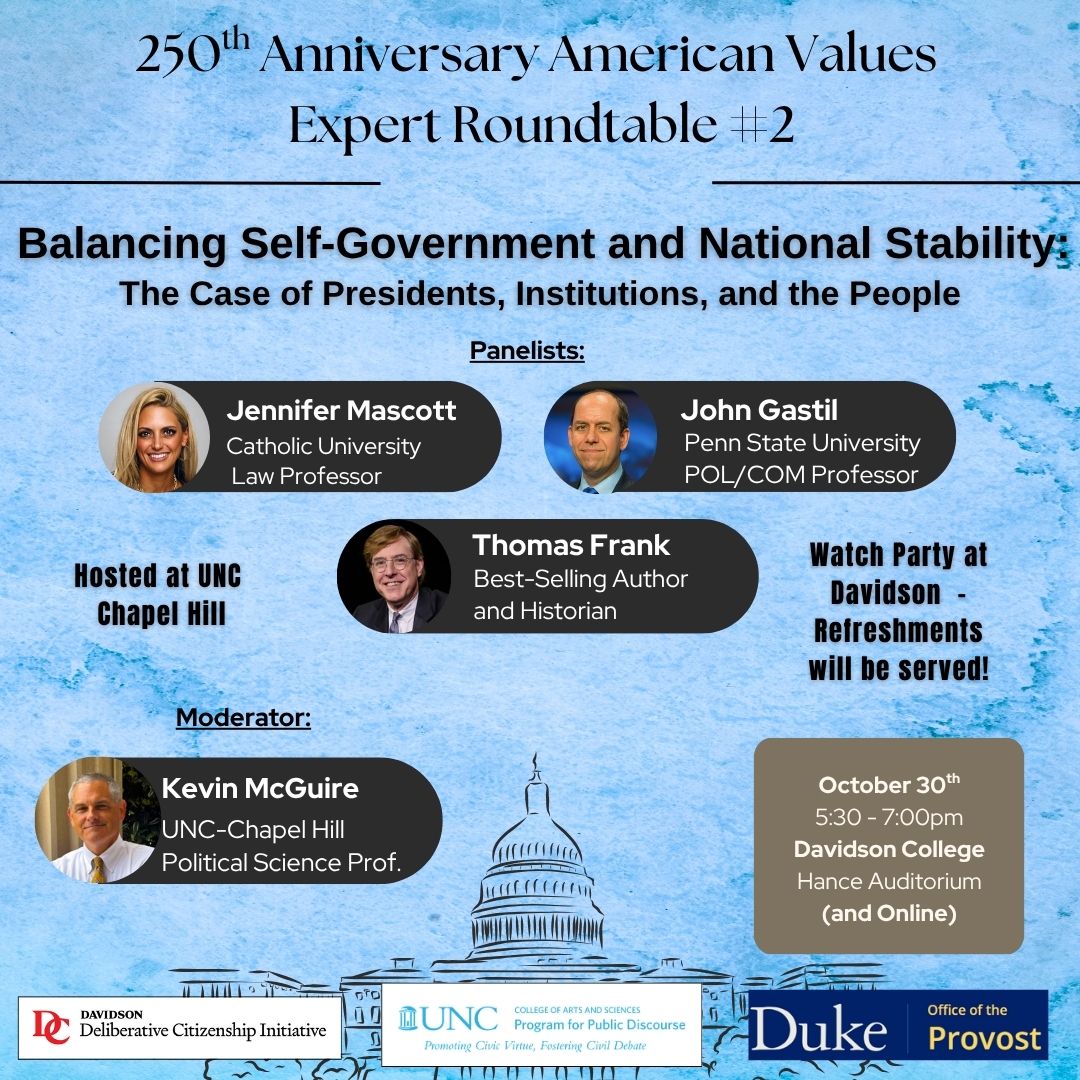
Poster for Expert Roundtable.

The Deliberative Citizenship Initiative invites you to join us for a watch party with Davidson students, faculty, staff, and community members in Hance Auditorium to view the second Expert Roundtable on “Balancing Self-Government and National Stability: The Case of Presidents, Institutions, and the People” that will be hosted at UNC Chapel Hill from 5:30 pm to 7 pm on October 30. Refreshments will be served. Registration is not required, but please help us out with our planning by clicking on this link. If you can’t join us in person, you can also view the Expert Roundtable online yourself by registering for the event via UNC Chapel Hill’s registration page. 

The panelists on this roundtable include Thomas Frank (best-selling author of What’s the Matter with Kansas?), John Gastil (professor of communication studies, public policy, and political science at Penn State), and Jennifer Mascott (professor of law and founder of the Separation of Powers Institute at Catholic University). See below for more info about each panelist and the moderator (Kevin McGuire, UNC Chapel Hill professor of political science):

Thomas Frank is a historian and political analyst known for his critically acclaimed books, such as What’s the Matter with Kansas: How Conservatives Won the Heart of America (2004) and, most recently, The People, No: A Brief History of Anti-Populism (2020). Dr. Frank, who earned a PhD in history from the University of Chicago, is best known for his New York Times best-selling book, What’s the Matter with Kansas, while his more recent book on anti-populism explores the populism movements from the 1890s to the New Deal to the Civil Rights Movement to the present – and the resistance to them.

John Gastil is Distinguished Professor of Communication Studies, Public Policy, and Political Science at Penn State, where he also serves as Senior Scholar at the McCourtney Institute for Democracy and teaches courses on political communication, group behavior, and democratic deliberation. Dr. Gastil studies political deliberation and deliberative governance, and he has authored several books, including, most recently, Hope for Democracy: How Citizens Can Bring Reason Back into Politics (2019), which examines how the State of Oregon’s Citizens’ Initiative Review enables citizens and public officials to work together to bring more rationality and empathy into modern politics.

Jennifer Mascott is Associate Professor of Law (currently on public service leave) and the Founder of the Separation of Powers Institute at Catholic Law. Professor Mascott’s writing focuses on administrative and constitutional law, constitutional and statutory interpretation, and separation of powers in the U.S. context. Professor Mascott clerked for Supreme Court Justices Clarence Thomas and Brett Kavanaugh, served in the US Department of Justice in 2019 and 2020 and in the White House General Counsel’s Office in 2025. She was recently confirmed to serve on the US Court of Appeals for the 3rd Circuit.

Kevin McGuire  is Professor of Political Science at the University of North Carolina at Chapel Hill and will serve as the moderator of the roundtable. Dr. McGuire teaches courses on the U.S. Supreme Court and American constitutional law. His current research interests include the effect of the Court’s institutional arrangements on the Court’s policymaking, the impact of public opinion on the Court, and the measurement and modeling of judicial outcomes. He is the author of Understanding the U.S. Supreme Court and The Supreme Court Bar: Legal Elites in the Washington Community , and co-editor of the forthcoming Creating Constitutional Change: Clashes over Power and Liberty in the Supreme Court .

250th Anniversary American Values Deliberative Forum Series

This event is the second Expert Roundtable in the 250th Anniversary American Values Deliberative Forum Series, which is designed to commemorate the upcoming 250th anniversary of the Declaration of Independence. This anniversary represents an important opportunity to both deepen and elevate the discourse about the values that have animated American social and political debates throughout its history. The goal of the series is to enable Americans of all backgrounds – college students, high school students, families and neighbors, members of faith communities and other civic organizations – to authentically, respectfully, and constructively engage with each other about our foundational ideals and how they are relevant to contemporary policy issues.

Co-hosted by Davidson College’s Deliberative Citizenship Initiative (DCI), Duke University’s Provost’s Initiative on Pluralism, Free Inquiry, and Belonging, and the University of North Carolina at Chapel Hill’s Program for Public Discourse, this year-long program will include both Expert Roundtables and Community Conversations dedicated to unpacking, understanding, and applying the values that are foundational to the United States – and to many other countries around the world.

Watch Parties and Community Conversations

This year, we’re proud to partner with two other North Carolina institutions of higher education, Duke and UNC Chapel Hill, to expand the reach of the series. Davidson will host two of the Expert Roundtables, while Duke and UNC will each host one roundtable on their respective campuses. All four will be available to watch online, with potential for “watch parties” to be held at higher education institutions and other organizations across North Carolina and beyond, including Davidson, Duke, and UNC-Chapel Hill.

Organizations can also host Community Conversations in the week after the Expert Roundtable. For ideas on how to host either a watch party of community conversation, check out the webinar that DCI Faculty Director Graham Bullock hosted that provides an overview of different strategies and options you might work well in different organizational and community contexts. Please email dci@davidson.edu if you have any questions or ideas you’d like to share.

Below are some guides that you can use to host such conversations. The Deliberation Guide provides both important background information on the topics in question and a specific framework for engaging with these topics in the context of a two-hour facilitated conversation, which is the format that the DCI’s D Teams will use to explore the topic. The Issue Guide is similar to the Deliberation Guide but does not include the structured format for group conversations. The Issue Brief provides a brief outline of the main ideas that are presented in the Deliberation Guide and Issue Guide. While both include a similar list of questions to consider about the topic, they are designed for personal reflection before, during, or after our expert roundtable on the same topic.

ISSUE BRIEF

DCI Self-Government & National Stability Issue BriefDownload

ISSUE GUIDE

DCI Self Government & National Stability Issue GuideDownload

DELIBERATION GUIDE

DCI Self Government & National Stability Deliberation GuideDownload
Expert-Roundtable-on-Presidents-Institutions-and-the-People

Filed Under: Announcements

Deliberation as Resistance: Dialogue in a Time of First Amendment Backsliding

October 19, 2025 by Casey Scheiner

Image of people sitting around a table with cityscape behind, American flag in front, fragmented

Casey Scheiner ’28 (DCI Fellow)

For one of the first times in American history, the hallowed practice of deliberation is under attack. For years, conservatives have clung to the First Amendment as its source of authority to oppose a homogeneous liberal narrative from emerging on college campuses, companies, and the government. However, today, enjoying majorities in both houses of Congress, control of the Oval Office, and a sympathetic majority in the Supreme Court, Republicans have gone after one of the fundamental rights defining our country for over two centuries: free speech.

Free speech is a bedrock of all of the deliberations hosted by the Deliberative Citizenship Initiative. At the DCI’s Forums and D Teams, deliberators have a space they can enter where they can share their views without fear of retribution. In fact, understanding diverse perspectives is a key part of the mission of this organization. Tragically, in its first months in office, the current administration has not practiced such a reverence for the heterogeneity of viewpoints that have previously defined American politics.

The Trump administration has wasted no time decimating our right to deliberate. Its primary tool? The immigration system. While the (attempted) deportation of Columbia graduate student Mahmoud Khalil, a pro-Palestine activist, has drawn the most media attention, one does not have to publicly espouse politically sacrilegious viewpoints themself to draw consequences from ICE. Badar Khan Suri, a Georgetown researcher, was detained in pursuit of deportation for the crime of marriage to a pro-Palestine activist. While DCI participants could freely deliberate on their views of Israel-Palestine campus protests and espouse any viewpoint, American permanent residents like Khalil and Suri could be deported for their position (even if indirectly caused by marriage) on the same issue.

However, Middle Eastern politics aren’t the only area of the world fraught with political landmines if one dares to challenge the administration’s orthodoxy. After immigration officials searched a French scientist’s devices upon his arrival in Houston for a research conference and discovered messages criticizing President Trump’s cuts to scientific research, they forbid his entry to the country, citing a fear of terrorism. While the Trump administration alleges that this action pertained to other information found on the phone, the French government maintains the grounds for his removal revolved around his dissident speech. Indeed, the bar for reprehensible conduct is even lower than highly public deliberation expressing heterodox views—just deliberating with friends and disagreeing with US policy, as this scientist did, is now grounds for expulsion from the country.

Even the world of TV and culture is not exempt from such an onslaught. In July, CBS cancelled The Late Show with Stephen Colbert days after its eponymous host criticized CBS owner Paramount for its settlement with the Trump administration as it sought executive approval for a merger. In September, Disney suspended Jimmy Kimmel, another late night television host, following criticisms of his characterization of Charlie Kirk’s murderer and concerns that his planned remarks would further inflame the situation. The suspension came shortly after Federal Communications Chairman Brendan Carr, a Trump appointee, threatened punitive action against Disney if they did not take disciplinary action against Kimmel. When our most high-profile late-night talk show hosts cannot speak freely without facing retribution at the behest of the federal government, ordinary citizens doubt their ability to deliberate without fear.

Regardless of one’s position on the war in Gaza, US funding of science, or Paramount’s merger, this renunciation of deliberation as a core element of American political culture should be disturbing to everyone. An attack on free expression is an attack on the foundation of authentic deliberation. Be it pineapple on pizza or the ethics of abortion, everyone has an opinion that does not conform with the majority view. In a world without pluralist tolerance, the saying “Show me the man and I’ll show you the crime” often attributed to Soviet secret police chief Lavrentiy Beria manifests itself. Seeing as few political outlooks align perfectly with that of the “approved” government stance, most worldviews will at some point fall in the crosshairs of a retributive administration. Without free deliberation, we all are left with two unappealing options: stay silent on any dissenting viewpoints or face potentially life-changing punitive consequences.

Worse yet, these assaults on free speech betray the logic preached by conservatives for years. Though conservatives have (often correctly) lamented the prevalence of “cancel culture” on the left, the Trump administration now seeks to cancel those who do not submit to its orthodoxy. Though conservatives have successfully campaigned for the end of racial affirmative action in college admissions, the Trump administration now pressures universities to functionally practice affirmative action for conservative professors. Though conservatives have previously decried Democratic administrations’ weaponization of the IRS against dissident groups, the Trump administration has influenced the IRS to audit high-profile critics and review Harvard’s tax-exempt status. As many Republicans recognized during the years when they were in the minority, freedom of speech is largely a mechanism to protect those out of power. But now that the shoe is on the other foot, Trump does not appear keen on respecting his foes’ liberties.

So, how do we resist the end of American deliberation? The answer is not that different from the Trump administration’s strategy of “flooding the zone.” One political dissident will go to prison; one million will cause a revolution. This “revolutionary” action is nothing disturbing or foreign to Americans—not violence or even disobedience, but simple conversation. As notable law firms and universities capitulate to financial incentives to be silent, individuals must express their constitutional right to free expression.

Daring to say one disagrees with the government is a tradition of American culture preceding any of us. Today is not the day to abandon that brand of criticism—whether you concur with 1% or 99% of this administration’s agenda. Be it on a social media account with one million followers, a DCI forum with a dozen companions, or a text chain with a friend, our comfort with dissent defines our position as the leader of the free world. Fear of retribution for such unassuming critiques only transpires under an authoritarian political climate that Americans should only be reading about in world history textbooks.

To avoid that reality becoming a defining chapter of our own history, it is time to assertively claim our right to deliberate. It doesn’t matter whether or not you echo the views of the government, your university, or any other important institution, so long as you do deliberate. Go respectively disagree with your uncle at the Thanksgiving dinner table. Go to a town hall and tell your representative how you feel about the government. Go explain your perspective and listen to the perspective of those who feel differently about a particular policy. Go celebrate and claim your constitutionally enshrined ability to deliberate.

Opinions expressed on the DCI Blog are solely those of the author and do not necessarily represent the official views or positions of the Deliberative Citizenship Initiative.

Filed Under: Fellow Posts

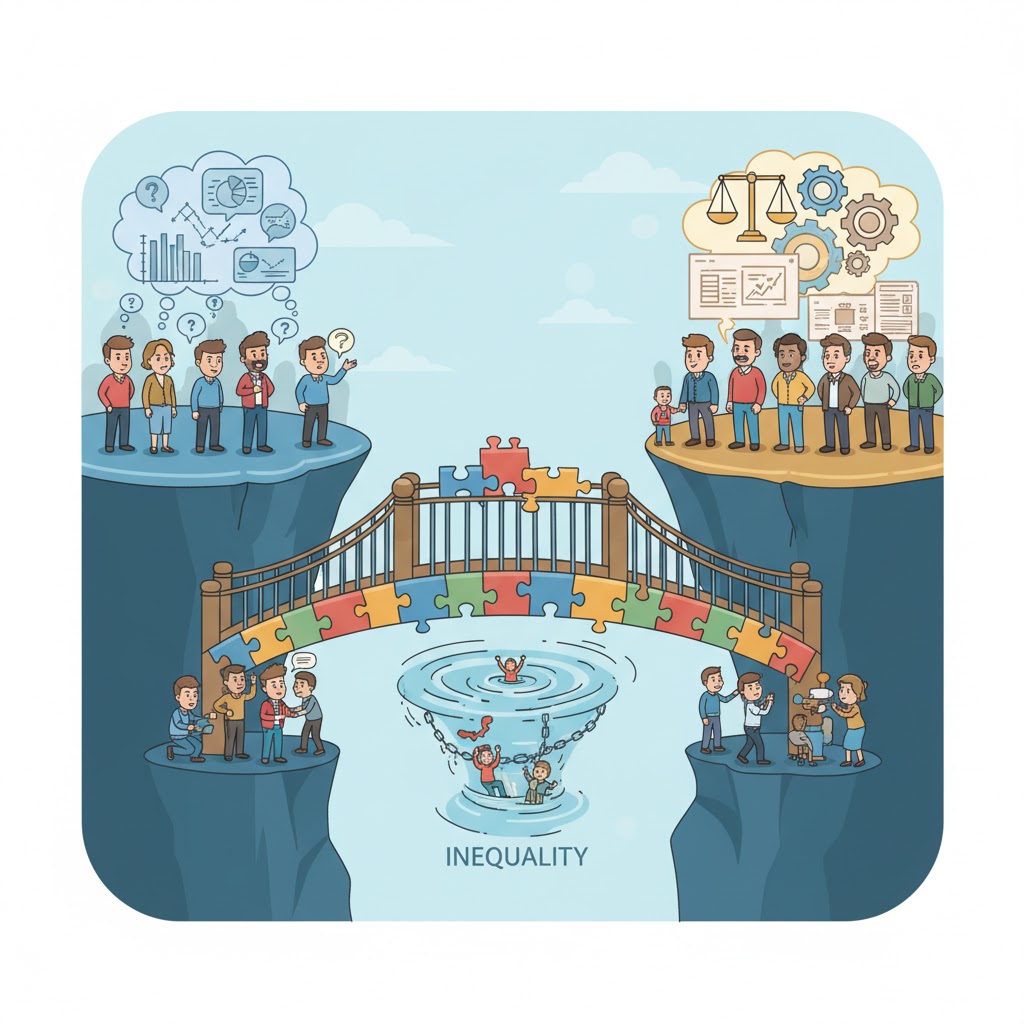
Economic Anxiety in Political Discourse: Bridging Perceptions, Reality, and Inequality through Deliberation

October 9, 2025 by Zak Abdulahi

By Zak Abdulahi ’27 (DCI Fellow)

Why does economic anxiety seem more divisive than ever? Anxiety and uncertainty regarding the economy have shaped and dominated our conversations recently in a rapidly changing geopolitical environment. This trend has been compounded by rising costs and the inequality of economic growth and development. Our perceptions regarding the economy have become increasingly tied to our political beliefs and leanings. We see a pricey carton of eggs and either fully comprehend the complex interplay of inflation, commodity prices, and H5N1 containment germ theory—or we incessantly blame it on whichever politician we already dislike. Despite consistent economic growth, inflation and cost of living concerns have created a large gap between economic reality and perceptions – and public perceptions of the economy has remained consistently negative. 

This raises a key question: Can deliberation cut through partisan framing, misinformation, and economic anxiety? And more importantly—what would our society look like if it did?

How Our Experiences Shape Our Perceptions: Economic perceptions are shaped by a multitude of factors: geography, background, and income level. Rising wealth inequality has exacerbated the differences in lived experiences between the “haves” and “have-nots,” creating a society where economic realities are filtered through vastly different lenses. One person sees a thriving market, tainted with green S&P indexes. Another person sees their grocery bills become less affordable each week through painfully clear lenses. Despite these disparate experiences, it is incredibly important to attempt to create space to bridge these divides. 

Deliberation creates that space. Valuing both data and lived experience, it allows people to share how the economy feels to them, bridging that divide between perception and reality, looking beyond the data to unlock more productive, human centered conversations. 

Deliberation in Action: Davidson College’s Forum on Income Inequality: A powerful example of this approach in action was the November 2024 Deliberative Forum hosted by the Deliberative Citizenship Initiative (DCI) at Davidson College, where nearly 200 students and community members gathered to ask: “How should Americans respond to income inequality?” The event began with a panel of experts from a range of ideological and professional backgrounds, followed by small-group deliberations focused on listening and understanding—not winning arguments.

Comments from participants in the post-event survey revealed how such structured, respectful economic dialogue—especially when rooted in real experiences—can overcome surface-level disagreements and address deeper economic divides.

  • “Deep assessment of a complex problem from multiple perspectives. Outstanding experience.”
  • “Participating in the Deliberative Forum on wealth and income inequality helped me learn more information about these topics and also to discover strategies for finding common ground on the topic.”
  • “The facilitated small group deliberations are… such a breath of fresh air and source of hope amidst our current polarization and paucity of thoughtful discussions across differences.” 

The Wisdom (and Limits) of Deliberation: Scholarly work supports this idea. A 2024 article by Franz Dietrich and Kai Spiekermann in Economic Theory shows how deliberation can improve group decision-making by reducing common voting failures, such as overcounting popular ideas or ignoring valuable minority perspectives. When done right, deliberation allows us to weigh diverse forms of evidence more fairly and make wiser collective choices.

However, they also caution that deliberation isn’t inherently good—it must be structured, inclusive, and balanced to avoid simply reinforcing dominant narratives. That’s especially important in economic conversations, where loud voices or dominant ideologies can drown out marginalized experiences.

Reclaiming Economic Discourse through Dialogue: If we want to confront economic anxiety, inequality, and barriers to growth head-on, we must first change how we talk about them. That means moving past soundbites and toward spaces that prioritize empathy, curiosity, and real listening. It means holding space for both the data and the day-to-day stress of rising costs. It means deliberating.

When we engage with each other across economic experiences—guided by the principles of deliberative citizenship—we don’t just debate policy. We understand each other better. And in today’s political climate, that may be the most valuable form of progress we can make.

Opinions expressed on the DCI Blog are solely those of the author and do not necessarily represent the official views or positions of the Deliberative Citizenship Initiative.

Filed Under: Blog Posts, Fellow Posts

  • « Go to Previous Page
  • Page 1
  • Interim pages omitted …
  • Page 12
  • Page 13
  • Page 14
  • Page 15
  • Page 16
  • Interim pages omitted …
  • Page 75
  • Go to Next Page »

Footer

Blog Post Categories

  • Announcements
  • Blog Posts
  • DCI Posts
  • Events
  • Faculty Posts
  • Fellow Posts
Image of a compass superimposed by the text "Deliberative Citizenship Initiative" and "Davidson College." Clicking on this image leads to the Initiative page.

Recent DCI Blog Posts

  • We Tried to Fix Jubilee’s “Middle Ground” – Here’s How It Went
  • A Case for Deliberation in the Natural Sciences
  • Welcoming New Staff to the DCI and DCN
  • Facebook
  • Twitter
  • Instagram
  • LinkedIn


Copyright © 2026 · Infinity Pro on Genesis Framework · WordPress · Log in