• Skip to main content
  • Skip to footer

Deliberative Citizenship Initiative

Building Democracy One Conversation at a Time

  • The Initiative
    • Programs
      • Deliberation Across the Curriculum
      • Deliberation on Campus
      • Deliberation in the Community
      • Research on Deliberation
    • Motivations
      • Why Deliberative Citizenship?
      • Why Davidson? Why Now?
    • Who’s Involved?
      • DCI Fellows Cohorts
        • 2025-2026 Fellows
        • 2024-2025 Fellows
        • 2023-2024 Fellows
        • 2022-2023 Fellows
        • 2021-2022 Fellows
        • 2020-2021 Fellows
      • DeeP Collaborative Cohorts
        • 2024-2025 DeeP Collaborative Faculty
        • 2023-2024 DeeP Collaborative Faculty
      • Advisory Council
    • History
      • What Sparked the Initiative?
    • Key Deliberative Dispositions
    • Frequently Asked Questions (FAQ)
    • Annual Report
  • Get Involved!
    • Participate in a Forum
    • Join a D Team
    • Become a Fellow
    • Take Courses
    • Get Training
    • Come to Guest Lectures
  • Events
    • Upcoming Events
      • 250th Anniversary Deliberative Forum Series on American Values
    • Past Events
  • Connections
    • The Deliberative Citizen: The DCI’s Monthly Newsletter
    • Efforts on Campus
    • Efforts in the Community
    • Efforts Elsewhere
    • Readings and Resources
      • DCI-Published Guides
      • DCI Guide to One-on-One Conversations
      • How to Disagree
      • Demonstration of Facilitation Styles
      • Deliberative Pedagogy Mini-Course
    • How We Can Help: DCI’s LET’S DELIBERATE! Partnership Opportunities
    • DCI in the News
  • DCI Blog Posts
    • Recent Blog Posts
    • All Blog Posts

The DCI Blog

Recap of Our Fall 2025 Facilitator Training

October 3, 2025 by Graham Bullock

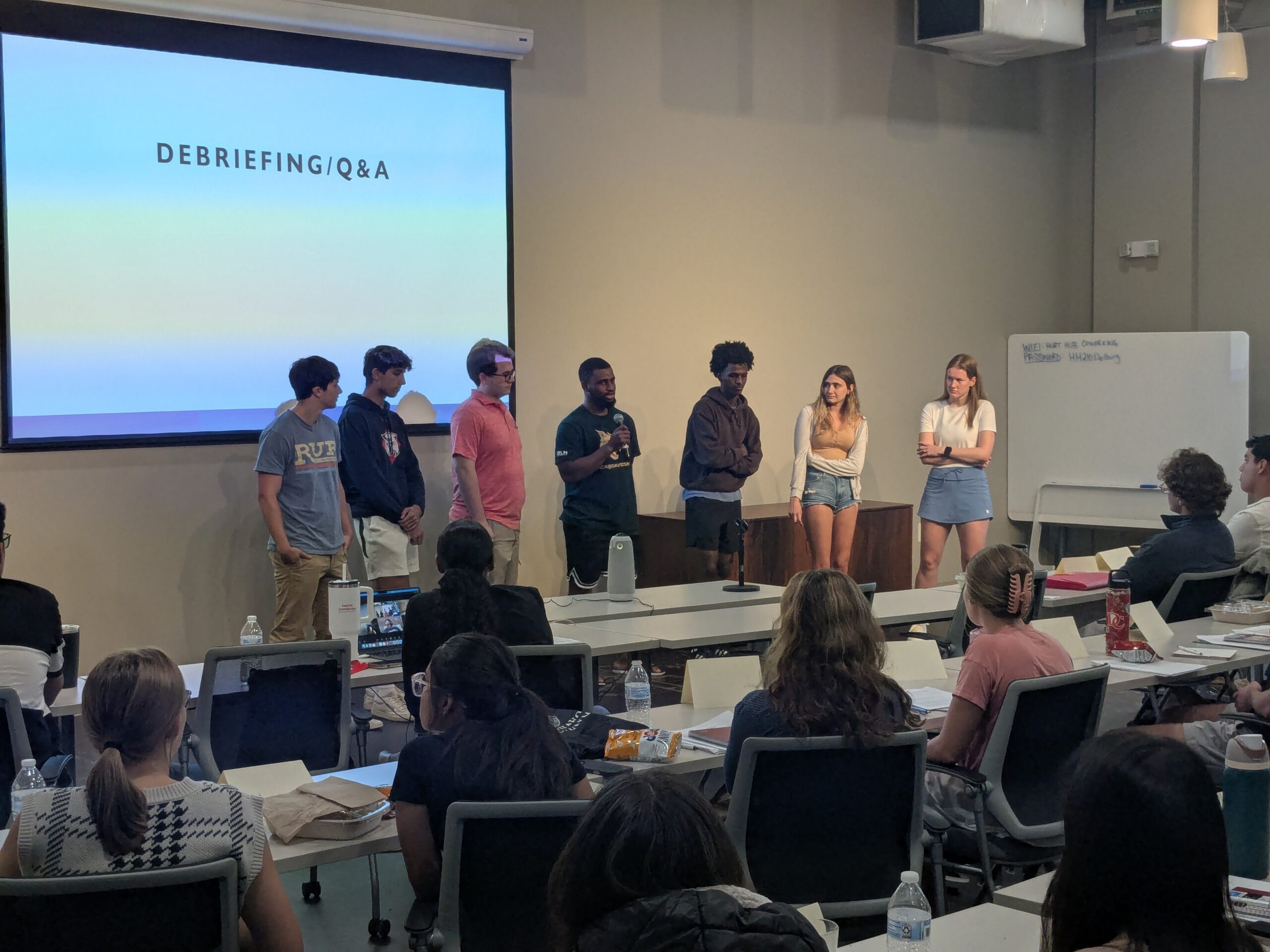
Photo of senior fellows answering questions at training

On August 31st and September 7th, the Deliberative Citizenship Initiative held its annual Deliberation Facilitator Training at the Jay Hurt Hub for Innovation and Entrepreneurship at Davidson College. These trainings, held since the spring of 2020, are designed to empower students, staff, faculty, and community members with essential skills to become facilitators of both formal and informal deliberations. Participants who complete the training become DCI certified facilitators, opening the door for participants to facilitate the DCI’s Deliberative Forums. This 8-hour training, spread over two days, enhances participants’ ability to facilitate meaningful discussions on political and social issues among deliberators with diverse perspectives.

This year, we were excited to welcome a wonderfully diverse group, with 25 participants attending in person and 4 joining us online. The cohort included a rich mix of DCI Fellows, Davidson students, staff, and engaged community members, each bringing unique insights and experiences. This blend of backgrounds created an inclusive, dynamic environment that fostered deep dialogue and collaboration right from the start.
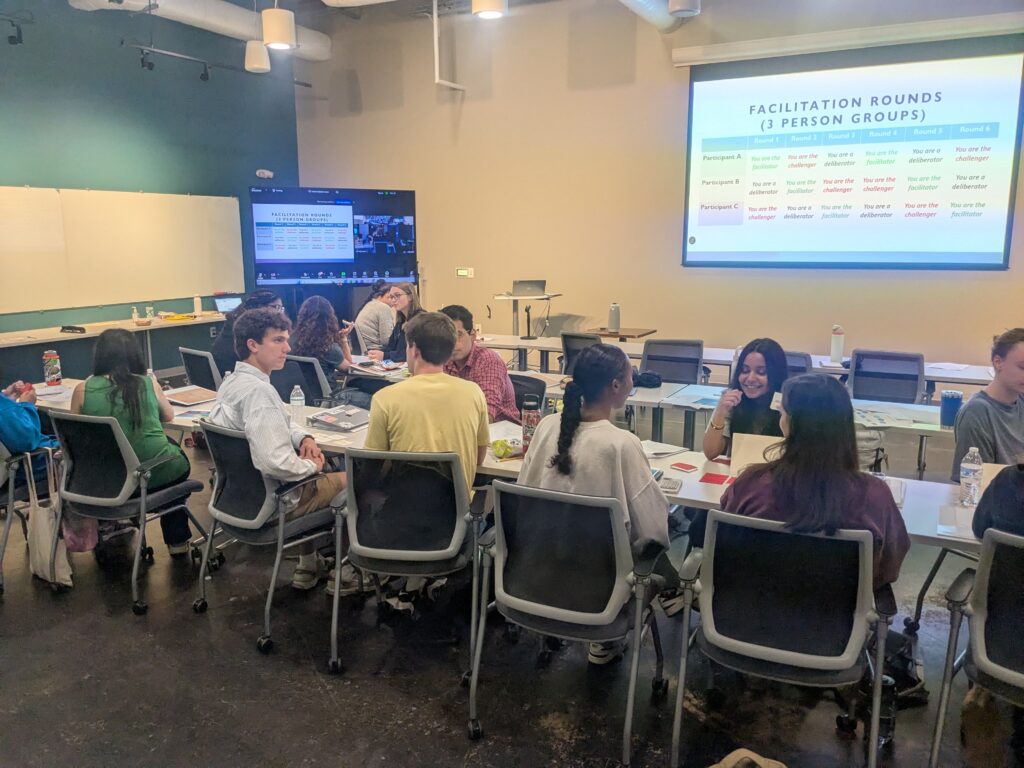
photo of small group conversations during the training.

During the first session, Dr. Graham Bullock guided participants through the essentials of setting up and preparing for deliberation. A highlight was the session’s mock deliberation on Free Speech and Inclusion, facilitated by our Senior Fellows. This hands-on experience allowed trainees to step into the role of deliberators, share personal thoughts, and observe how seasoned facilitators effectively navigate challenging, contentious conversations. The collaborative atmosphere underscored the vital importance of empathy and respect when guiding difficult discussions.
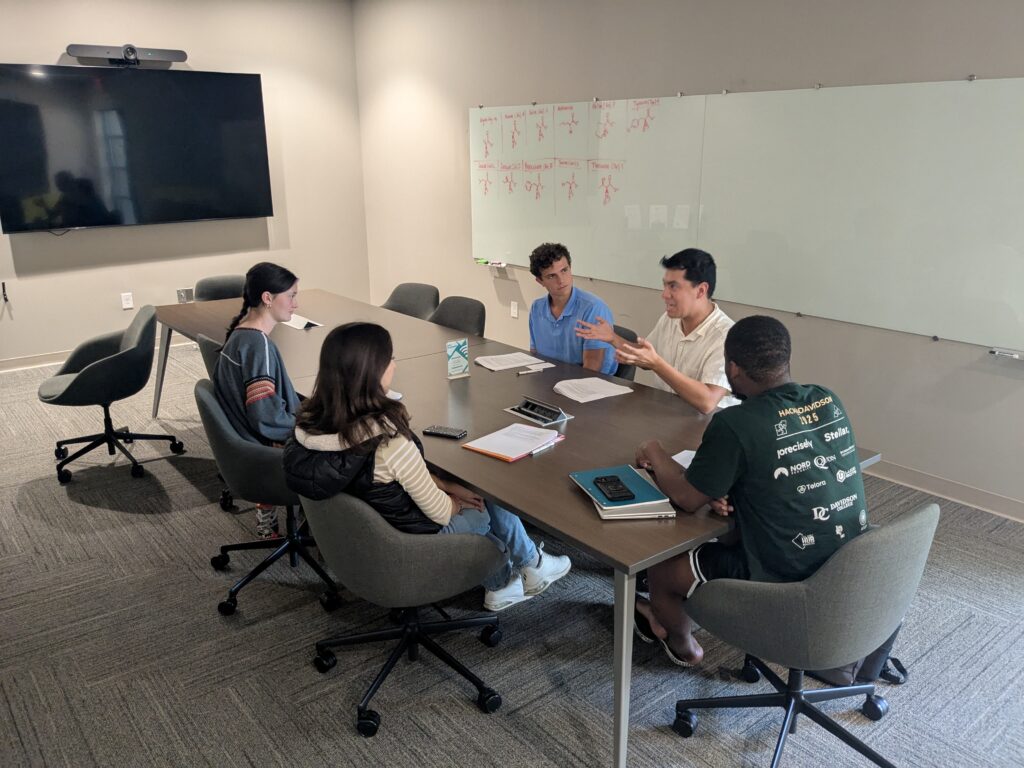
photo of participants in a small group conversation

The following weekend, Dr. Bullock equipped our trainees with advanced techniques for handling the tough moments that arise in discussions on divisive issues. Participants tackled a gamified training experience that brought to life the methods and tools outlined in the Deliberation Facilitator’s Handbook, making the learning process interactive and memorable. To apply their new knowledge, they then engaged in a second mock deliberation, using the DCI’s guide on Religion in the Public Sphere. Here, trainees stepped into the facilitator role themselves, practicing how to effectively explore multiple perspectives and motivate robust conversation. This immersive practice allowed them to build confidence and refine their techniques in a supportive setting.
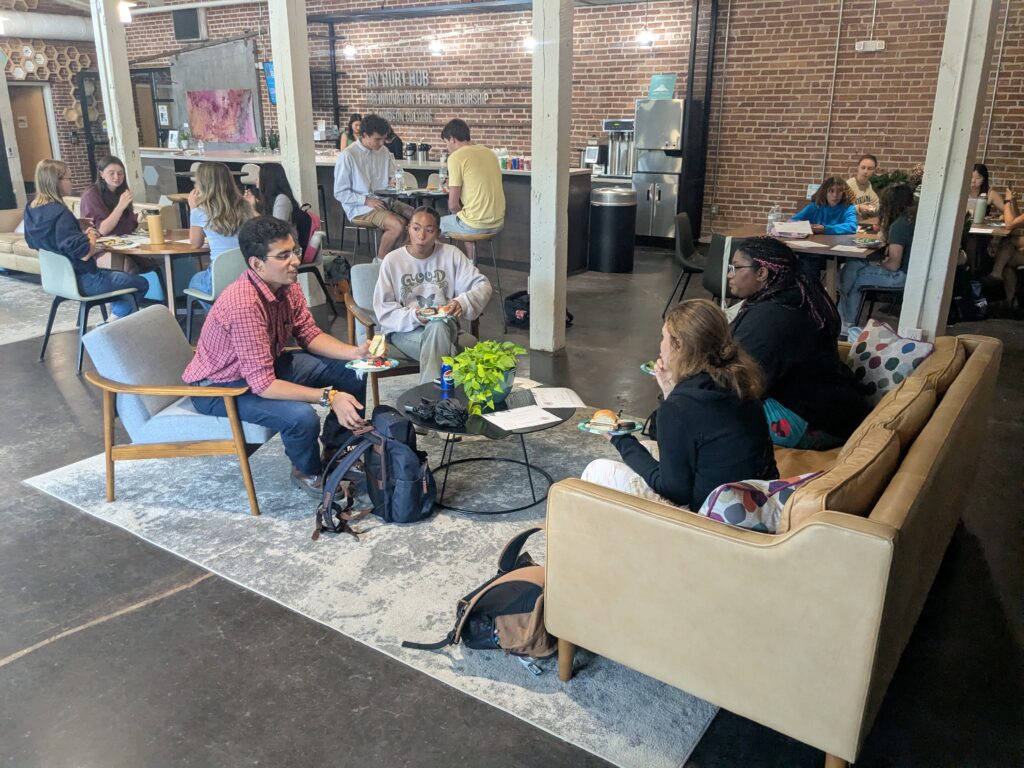
The training concluded with a reception where participants had the chance to connect and build community over food and refreshments. We are immensely grateful for the time spent with all our trainees over these two weekends and are excited to see how they will apply their new skills to foster meaningful conversations within their communities. We warmly welcome them into our community of deliberation advocates who are deeply committed to strengthening our democracy.

We invite all those interested in building a better democracy, one conversation at a time, to keep an eye out for future Deliberation Facilitator Trainings. We would love to welcome you to our community!
Filed Under: Events

Recording Posted of Expert Roundtable on Equality, Unity, and Immigration

October 3, 2025 by Graham Bullock

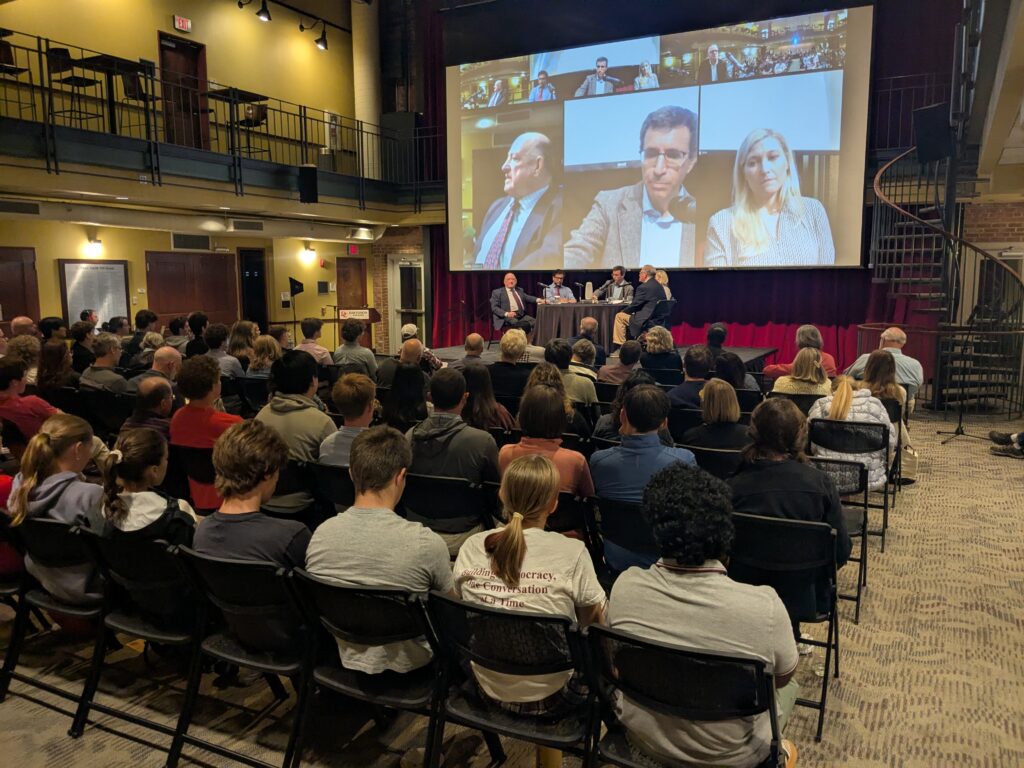
photo of roundtable discussion

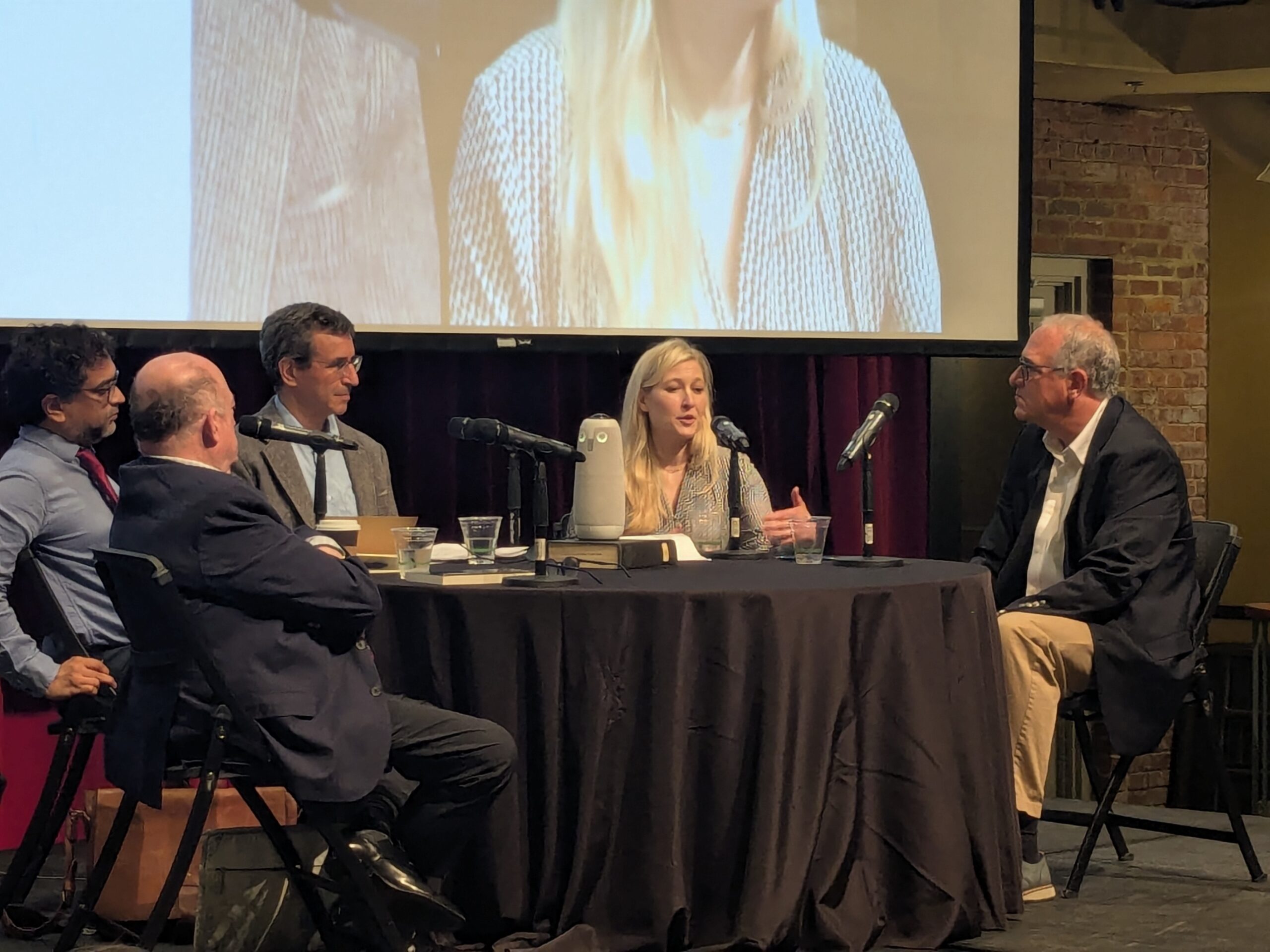
On September 30, 2025, Davidson College’s Deliberative Citizenship Initiative hosted an Expert Roundtable on “Balancing Equality and Unity: The Case of Immigration and Citizenship.” The roundtable is the first event in the Deliberative Forum Series on American Values that Davidson College, commemorating the 250th anniversary of the Declaration of Independence co-hosted by Davidson College, Duke University, and the University of North Carolina at Chapel Hill. This roundtable focused on two particular founding values, unity and equality, and explored them in the context of both American history generally and the specific policy issue of immigration and citizenship.

Image of roundtable with audience and screen in background

It included four panelists, Danielle Battisti (U. of Nebraska at Omaha), Philip Cafaro (Colorado State University, retired), Fernando Tesón (Florida State University, retired), and Hrishikesh Joshi (University of Arizona), and was moderated by John Wertheimer (Davidson College). More info on each panelist is provided below, and more background about the roundtable generally is available at this link. The event was introduced by Graham Bullock (Associate Professor of Political Science and Faculty Director of the Deliberative Citizenship Initiative at Davidson College) and Doug Hicks (President of Davidson College).

image of audience with roundtable in the background

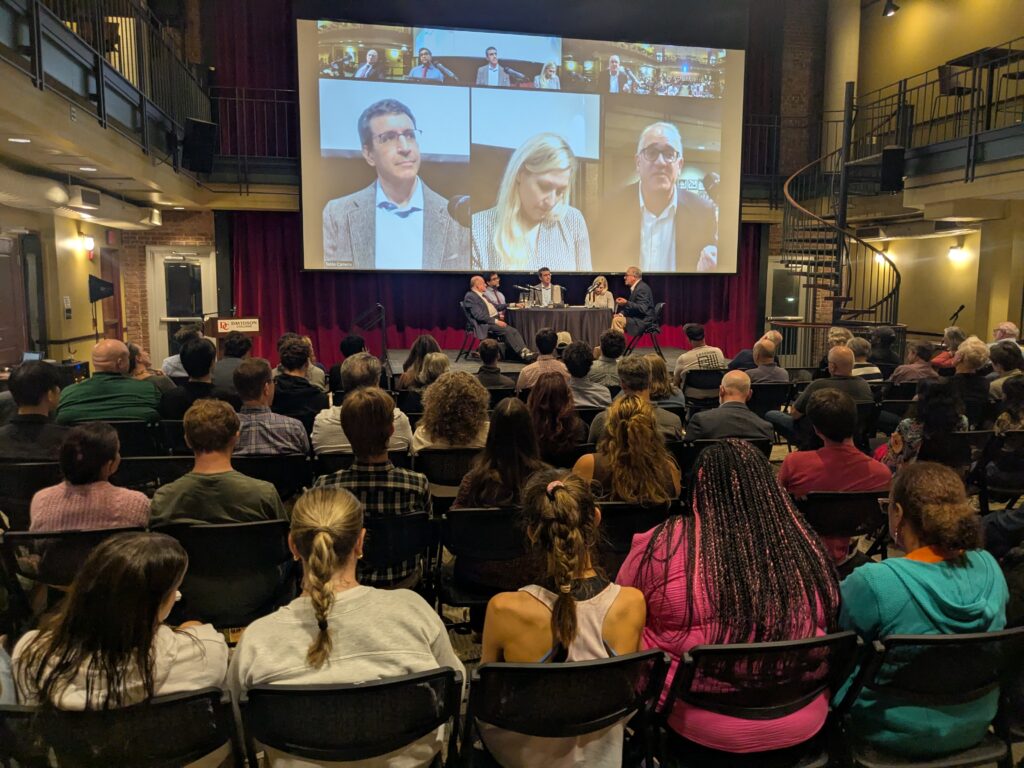
Nearly 100 people attended in person and approximately 200 joined the event via Zoom. After engaging in a spirited and respectful discussion with one another, the panelists answered questions from both the in-person and online audiences. A video recording of the event is available below.

In the week following the Roundtable, Davidson, Duke, UNC, and potentially other institutions will be hosting community conversations building on the roundtable discussion. If you are interested in hosting a conversation yourself, click here to watch a webinar that provides some ideas about how both individuals and institutions can get involved in the series by doing exactly that, either now or over the next several months.

The DCI’s series of Community Conversations during the week of October 6 will build on the scholars’ deliberations. These two-hour deliberative discussions of 6-10 people will be moderated by trained facilitators and will use a similar format to the DCI’s D Teams. To learn more about this opportunity to engage with your fellow citizens — either online or in-person) and reserve a spot at a time that works for you, click here. The primary time for these conversations is Wednesday, October 8 at 7 pm in the Student Union’s 900 Room on the Davidson campus. We’ll have round tables and DCI-trained facilitators on hand to moderate small group discussions of 6-7 people. If you can’t make that time, you can select the other times you are available and we’ll be in touch about another facilitated Community Conversation that you can join. The deadline to sign-up for one of these additional times is October 5, but everyone is welcome to join the Oct. 8 conversation without advance registration.

Included below is a deliberation guide that provides some background information about the topic of the roundtable and the community conversations. Participants are invited to review it in advance of the conversation, as it includes some discussion questions that the facilitators will be asking everyone in their group to share their thoughts on during the conversation.

DCI-Unity-Equality-and-Immigration-Deliberation-Guide

Register to Participate in an Upcoming Community Conversation

Expert Roundtable

  • Danielle Battisti is an associate professor of history at the University of Nebraska at Omaha where she specializes in immigration and ethnic history. Her book, “Whom We Shall Welcome: Italian Americans and Immigration Reform” (Fordham University Press, 2019) examines both the liberal and conservative elements of Italian American efforts to influence American immigration policies in the 1950s and 1960s. It was awarded the Immigration and Ethnic History Society’s best first book award for 2019. She is also the co-editor of Hidden Histories of Unauthorized Migrations from Europe to the United States (Illinois University Press 2025). One of her current projects is examining the immigration laws that largely facilitated Euro-Americans’ efforts to adjust their status from “illegal alien” to “legal permanent resident.” 

  • Philip Cafaro, a philosophy professor who recently retired from Colorado State, is the author of the book, How Many Is Too Many? The Progressive Argument for Reducing Immigration into the United States (University of Chicago Press, 2015), which argues that current immigration levels—the highest in U.S. history—undermine efforts to achieve a more economically just and ecologically sustainable society. He is also the co-editor of Life on the Brink: Environmentalists Confront Overpopulation (University of Georgia Press, 2012) and Virtue Ethics and the Environment (Springer-Verlag 2010) as well as the author of Thoreau’s Living Ethics: Walden and the Pursuit of Virtue (University of Georgia Press 2004) and “The Impact of Immigration Policy on Future US Population Size” in The Journal of Population and Sustainability (2025).
  • Fernando Tesón is Eminent Scholar Emeritus at Florida State University College of Law. An Argentine-American legal scholar, he is a leading authority on humanitarian intervention and the philosophy of international law. He is the editor of The Theory of Self-Determination (Cambridge University Press 2016) and co-author of Debating Humanitarian Intervention: Should We Try to Save Strangers? (Oxford University Press (2017) and Justice at a Distance: Extending Freedom Globally (Cambridge University Press 2015). He has also published articles supporting less restrictive immigration policies, including  “The Bourgeois Argument for Freer Immigration” in The Cambridge Handbook of Classical Liberal Thought and “Brain Drain” in the San Diego Law Review.

  • Hrishikesh Joshi is an Assistant Professor of Philosophy at the University of Arizona, where he also serves as a core faculty member at the Center for the Philosophy of Freedom. His research focuses on normative issues at the intersection of philosophy, politics, and economics (PPE). He has published several chapters related to immigration and citizenship, including “Immigration Enforcement and Fairness to Would-Be Immigrants” (in The Handbook of Philosophy and Public Policy), “Immigration” (in The Routledge Companion to Libertarianism), and “Immigration: Some Arguments for Limits” (in The Routledge Handbook of the Ethics and Economics of Immigration). He has also published a book on Why It’s Okay to Speak Your Mind (Routledge).
  • John Wertheimer, the William R. Kenan, Jr. Professor of History at Davidson College, will serve as moderator of the roundtable discussion. Dr. Wertheimer’s research and teaching focuses on modern U.S. history and legal history; his two books – Law and Society in the South: A History of North Carolina Court Cases (University Press of Kentucky) and Race and the Law in South Carolina: From Slavery to Jim Crow (Amherst College Press) – explore the legal history of the U.S. South.

Unity-Equality-and-Immigration-Roundtable-Poster

Filed Under: Events

A Deliberative Approach to Understanding the Universe

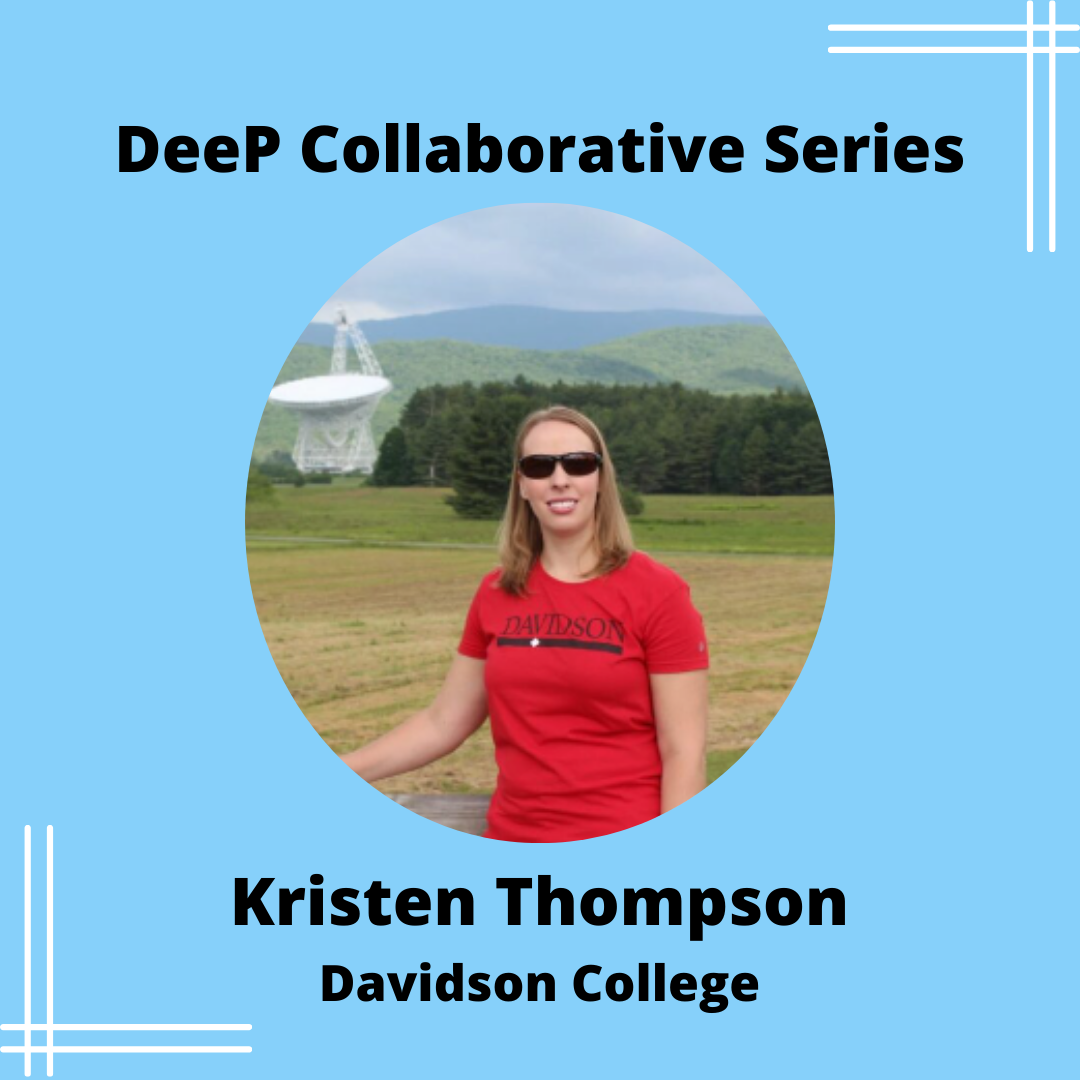
September 23, 2025 by Kristen Thompson

The Deliberative Pedagogy (DeeP) Faculty Collaborative consists of faculty from Davidson College and other higher education institutions who are committed to learning and implementing new ways to improve and deepen the quality of their class discussions. These faculty come from a wide array of disciplines and backgrounds to study and discuss deliberative pedagogy methods, share their ideas and questions with one another, and work to embed deliberation in their classrooms. In this special blog series, members of the Collaborative describe and reflect on their experiences developing and teaching their deliberation-involved courses.

By Kristen Thompson (2024-25 Deliberative Pedagogy Collaborative Faculty Fellow)

Astronomy is the oldest of all sciences, with beginnings that predate recorded history. Artifacts from as early as 1600 BC provide evidence for early observations and understanding of the sky from all around the globe. In a course that explores the whole of the Universe over the whole of time, one is bound to encounter many examples of disagreement, whether about physical laws, interpretations ofvobservations, or topics that are sensitive and meaningful to different cultures. Despite our differences, we all live under the same sky; a sky that transcends conflict and connects us all to the Universe and to each other. This common umbrella of the sky and the rich history of conflict within the field of astronomy inspired me to integrate deliberation into my introductory astronomy course at Davidson College.

The Introductory Astronomy Course

Introductory astronomy is one of the most popular general education STEM classes nationwide and is largely taken by non-science majors who aim to fulfil their Natural Science distribution requirement. As such, astronomy is often students’ only exposure to science in college and the last science course they will ever take. Most of these students will not become scientists, but rather the future teachers, lawyers, physicians, journalists, and citizens who will have a large impact on public perceptions of science.

Of course, I want students to leave my class with an understanding of the field of astronomy. However, I also find it important that they acquire an understanding of the diversity of thought in science, how deliberation can forge stronger collaboration, and a recognition of astronomy as a human endeavor that transcends individual cultures, eons, and our own planet. While I have long desired to merge the worlds of astronomy as a science and astronomy as a human experience, I have struggled to effectively do so, largely due to time constraints.

In a one-semester astronomy course, such as the one offered at Davidson, I am challenged with the task of introducing students to the whole Universe in about 16 weeks. I have found it difficult to add discussions about the human endeavor of astronomy when several important astronomy concepts have been omitted to fit the course into the one-semester format. I have found deliberation to be an effective way to connect these two worlds and create a path for incorporating meaningful discussions into the introductory astronomy course.

How I Incorporated Deliberation

One of the most challenging parts of integrating deliberation was selecting topics that were both current and ones in which I believed students would be invested. I decided to focus on two structured deliberations the first time integrating this new method into the course. The first deliberation came near the beginning of the course while we were discussing constellations, light pollution, and the view of the sky from different parts of the world. Students explored the scientific importance of dark skies for astronomical research and the cultural significance of dark skies to civilizations around the world and throughout time. They were then introduced to “satellite constellations” such as Elon Musk’s Starlink and Amazon’s Project Kuiper. Students wrote deliberation guides that summarized the importance of such satellite constellations and the effect that they have on dark skies and astronomical research. Upon the completion of the deliberation guides and careful research about all sides of the issue, students engaged in a one-hour small-group deliberation during class.

The second deliberation occurred near the middle of the course during our unit about telescope properties, optics, and atmospheric requirements for their successful operation. Students discovered that the best locations for telescope construction unfortunately coincided with mountain tops that are sacred grounds for indigenous peoples. Our deliberation specifically focused on the ongoing debate about the building of the Thirty Meter Telescope (TMT) on the summit of Mauna Kea, a site that is sacred to Native Hawaiians. Students researched the history of Native Hawaiians, their connection to Mauna Kea, the benefits of the construction of the observatory, and various viewpoints about the issue. They once again created deliberation guides prior to hosting a small-group deliberation in class.

Within the small groups, each student was required to first describe their stance on the issue prior to an open group discussion and summarize their key take aways and suggestions for finding common ground at the end of the deliberation. Facilitators monitored the open discussion to encourage balanced participation and to ensure all students were given space and time to express their views.

One of the most significant outcomes of the deliberative format as compared to simple discussions that I have used in the past were the student suggestions for finding a path forward. Many of the suggestions offered were not only creative, but also plausible. Students were generating real solutions to current problems. Some suggestions required action by government officials or other organizations but some referenced actions that community members can take to minimize conflict. The deliberative process and the creation of actionable outcomes helped students see the mutual connection between themselves and the Universe.

Looking Forward

There were several lessons learned during my first experience of integrating deliberation into the astronomy class. The first lesson is that students require much more facilitator training than initially anticipated. Class time was dedicated to learning about the deliberative process and the role of the facilitator. However, students needed more practice guiding the conversation and encouraging participation before the first large deliberation. The next time the course is offered, I plan to introduce several smaller deliberative tasks during which students can practice and refine their skills prior to hosting the first large deliberation.

Secondly, I found that there was little disagreement among students at the beginning of both deliberations, leading to open discussions in which the main response was “I agree” and one-sided arguments. Students often struggled to maintain a meaningful discussion for more than a few minutes without intervention from a facilitator to play devil’s advocate. There are many contentious topics such as immigration or abortion for which students have strong opinions that have been influenced by, for example, personal experiences or political beliefs. They have spent a long time debating these topics with friends and have been exposed to coverage of them by the media and may therefore feel more intimately connected to them.

The topics of light pollution and telescope construction on which we deliberated in class were not as familiar, and perhaps students had a harder time connecting with them. In both deliberations, the majority of students seemed to find the topics less contentious than anticipated. For example, most students were willing to sacrifice dark skies for better internet connectivity via satellite constellations and most quickly came to the conclusion that telescopes simply should not be built on sacred grounds, period. I plan to spend more time connecting students to the issues in the future to help better prepare them for a balanced deliberation.

Thirdly, I believe that the physical environment in which the deliberation is held could influence the outcome. Perhaps students would feel more connected to the discussion if, for example, the discussion about light pollution were held at night, outdoors, under the stars.

Conclusion

While imperfect, my first experience integrating deliberation into an introductory astronomy course was encouraging. As an astrophysicist, my academic experience and training has been based almost entirely on learning physical laws, scientific facts, and equations to describe the workings of the Universe.

Participation in the Deliberative Pedagogy Collaborative has been rewarding and has greatly impacted my teaching and my own thinking. Learning how to effectively guide class discussions and facilitate deliberation has transformed my astronomy class into a space where students not only learn scientific content but also explore the human connection to the subject. While traditional science courses may not include much discussion, I encourage more science faculty to take a deliberative approach to help students personally engage in the subject matter.

Filed Under: Faculty Posts

Can Friendship Cross the Aisle? A College Student’s Take

September 18, 2025 by Grace Zagoria

Grace Zagoria (DCI Fellow ’27)

Walking out of American Politics last semester, two friends and I got into a debate: Can you be friends with someone across the aisle? Let’s call these friends Alice and Corinna. The conversation started when I mentioned a friend of mine—we’ll call her Gabriela. “Wait,” Corinna said. “Isn’t she a Trump supporter?” I paused, caught off guard. I knew for a fact that Gabriela wasn’t, but I also didn’t see why that should determine the validity of our friendship.

“No, she’s not,” I said.  “But her friends are,” they insisted. “Helena and Nicole? Aren’t they in YAF?” “Yeah, they are,” I admitted. “But what does that matter?” Alice shook her head. “I just don’t think I’d want to be friends with someone who voted for Trump.” Corinna added, “Yeah, I couldn’t be close with someone who doesn’t believe in my right to exist. I mean, don’t they think all gay people are going to burn in hell?” And just like that, the debate took off.

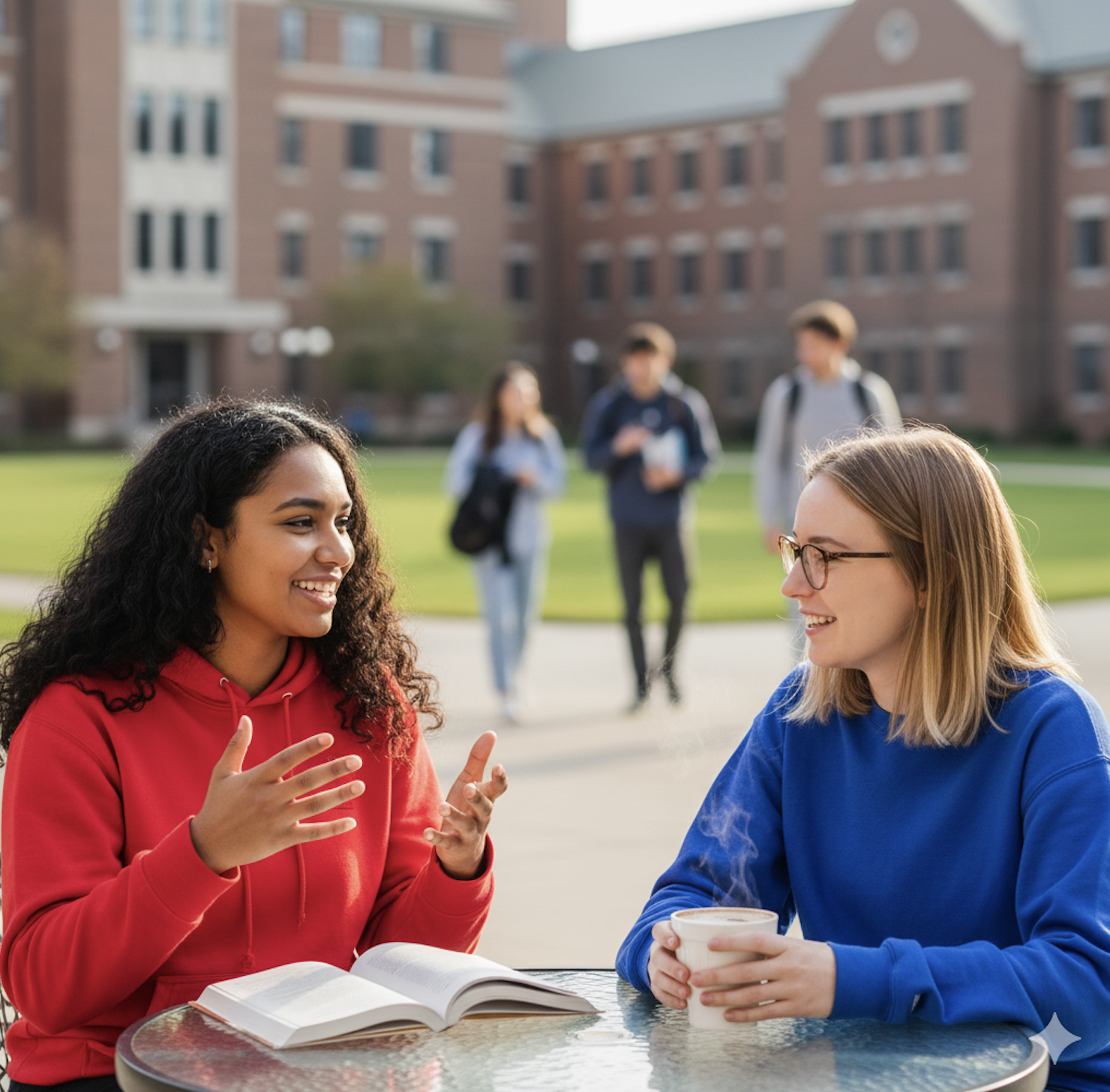
Fast forward to the next weekend. It was a gorgeous, 70-degree North Carolina spring day, and Davidson’s best and brightest gathered among weathered picnic tables just outside Summit Coffee Outpost—“Nummit,” by Davidson slang—to enjoy the light and the Fleetwood Mac blasting from the Kappa Sigma porch. I imagine that when people look back fondly on their college years, they picture moments like these.

I was sitting at a table with Alice, Corinna, and a few other friends, discussing our plans for the fall semester. Alice would be off to Madrid, Corinna to Sydney, and I’d be off to Buenos Aires. In an instant, Gabriela appeared in the corner of my eye, her blonde curls flickering in the sun. She waved me over to her table, where she sat with Helena and Nicole. I headed over.

The four of us chatted about our weekends, and Helena invited me to a party she was hosting later that evening. Our conversation covered the usual topics college students discuss when they don’t know each other very well—our majors, our summer plans, our goals for the future. Helena, I asked, what are you planning on doing after graduation in May? “I’m moving to D.C.,” she replied promptly.

“Oh, awesome!” I responded, relieved that I didn’t have to ask any follow-up questions about what she’d be doing there or who she was working for. I already knew the answer, but I didn’t want to confirm it then and there. Best to keep it simple, I figured. Our conversation moved on to what we did over spring break. I breathed a sigh of relief.

Here’s the big question for me, though. Am I being hypocritical by avoiding political topics with that group of friends? If I’ve preached to Corinna and Alice that you can be friends with people across the aisle, why am I actively avoiding the subject with Gabriela and company?

Today, American society is more polarized than ever. Surveys have shown that Americans’ animosity toward the opposing political party is higher than it has been in decades, geographic political segregation has increased over the past 10 years,[1] and 4 in 10 Americans would be upset if their child married someone from the opposite political party.[2] It should come as no surprise that nearly 80% of Americans now have “just a few” or no friends at all across the aisle, according to research by Pew.[3] For the remaining 20%, or for the few Americans who do have friends with opposing political viewpoints, what is the line between friendship and ideological differences? Should there be a line at all?

My perspective is that such friendships are crucial in helping repair a social fabric that has been worn down and torn up by complex political questions. On a very basic level, I believe we should treat everyone around us with kindness and compassion, regardless of how different we are—whether those differences are political or not. If you consider all your friends, I’m sure you don’t agree with them on every issue under the sun, but that does not mean you cannot engage with them, or that you shouldn’t discuss your conflicting opinions. While political issues can be incredibly divisive, I would argue that you can have civil discussions with friends despite contrasting views. By that logic, my avoidance tactic with Gabriela, Helena, and Nicole was a cop-out.

That said, I do think there is a significant difference between forcing friendships with those who have contrasting ideological backgrounds and letting relationships form naturally. In other words, friendships should begin organically, and only then should political complications be approached with earnestness, understanding, and a desire to learn. From my standpoint, cutting people off without giving them a chance to make an impression on you or explain their point of view is an injustice—to them and to you. There is more to a person than just their political beliefs, and, in any case, I would reason that the best way to win an argument is to understand the other side.

Opinions expressed on the DCI Blog are solely those of the author and do not necessarily represent the official views or positions of the Deliberative Citizenship Initiative.


[1] https://www.nytimes.com/interactive/2021/04/30/opinion/politics/bubble-politics.html

[2] https://www.npr.org/2022/08/13/1117232857/americans-have-increasingly-negative-views-of-those-in-the-other-political-party

[3] https://www.npr.org/2020/10/27/928209548/dude-i-m-done-when-politics-tears-families-and-friendships-apart

Filed Under: Fellow Posts

Embedding Deliberation in a Course on Race Across the Americas

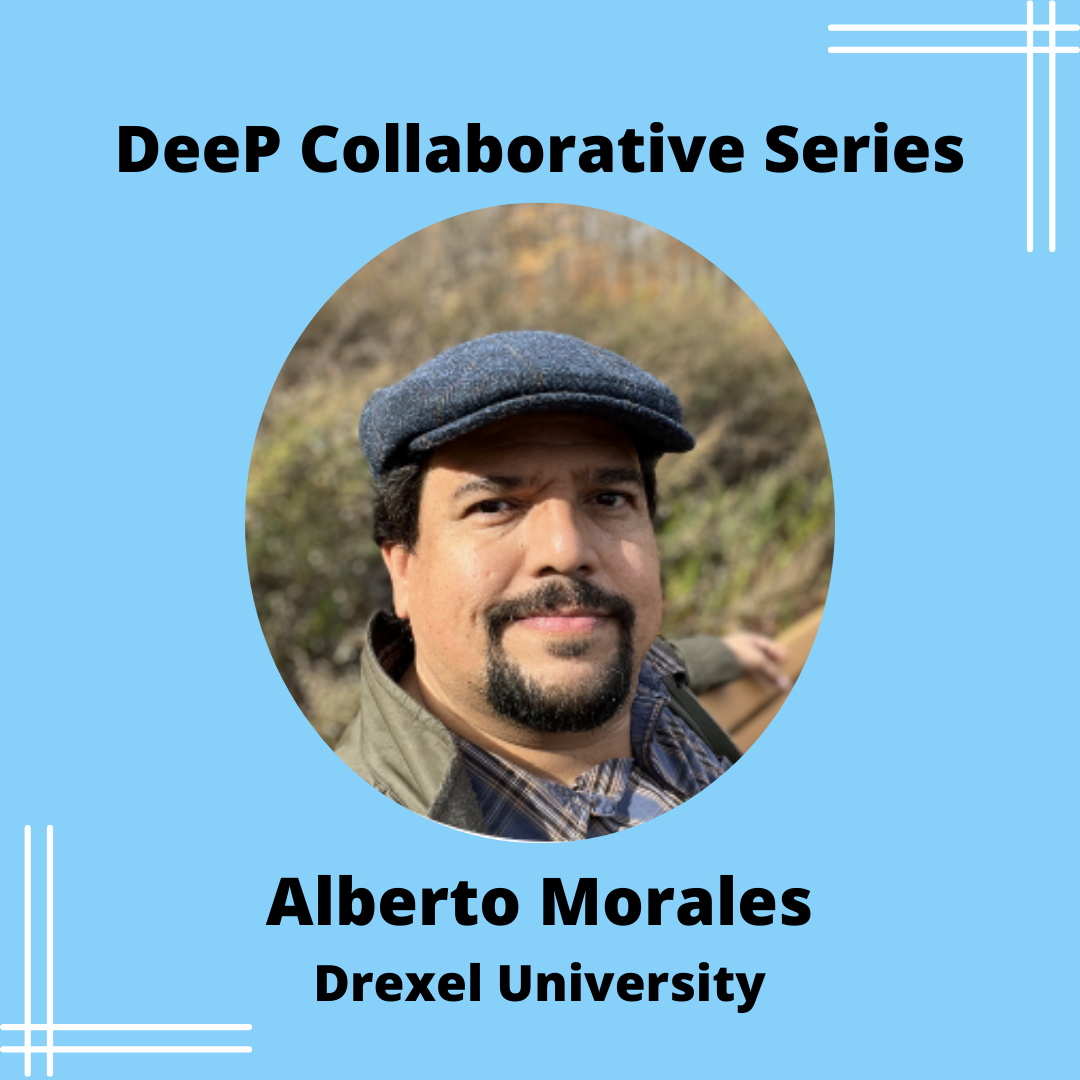
September 16, 2025 by Alberto Morales

The Deliberative Pedagogy (DeeP) Faculty Collaborative consists of faculty from Davidson College and other higher education institutions who are committed to learning and implementing new ways to improve and deepen the quality of their class discussions. These faculty come from a wide array of disciplines and backgrounds to study and discuss deliberative pedagogy methods, share their ideas and questions with one another, and work to embed deliberation in their classrooms. In this special blog series, members of the Collaborative describe and reflect on their experiences developing and teaching their deliberation-involved courses.

By Alberto Morales (2024-25 Deliberative Pedagogy Collaborative Faculty Fellow)

I came to the DeeP Collaborative with a curious mind to deepen and expand my pedagogical and andragogical practice in higher education. My participation in the DeeP Collaborative provided me with an opportunity to revisit some of the lingering questions I have about higher education and learning: what is learning through difference like for these newer generations of students, and how much can students learn through disagreement in a safe and accountable space in today’s political climate?

In my Winter 2025 quarter-term course, ‘Race Across the Americas,’ I introduced deliberative pedagogical exercises as one means of engaging students in class discussions. This course, drawing on Ethnic Studies, Latin American Studies, and Global Studies, offers a comparative exploration of racial formations in Latin America, the U.S.A., the Caribbean, and their transnational and diasporic communities. We adopt a hemispheric approach to the study of race, moving beyond national frameworks to examine how ideas about race have developed dialogically across the Americas. One of the key objectives of this course is to encourage students to critically examine race and racial formations as culturally contextualized and situated within the politics of difference.

I briefly introduced students to the concept and practice of deliberation during our first course meeting following their completion of a pre-course survey. Deliberative practice was a new concept for most students, particularly in understanding that it is not about debate or determining who is right or wrong but about appreciating and enriching each other’s perspectives through careful attention to and engagement with difference. Teaching-wise, scaffolding deliberative approaches through in-class exercises was crucial in helping students become familiar with open communication while examining disagreement and opposing viewpoints. Equally important was a self-reflection writing exercise with open-ended questions, which students completed immediately after the deliberation.

I was skeptical at first, as I did not fully agree with all the deliberative pedagogy parameters, which at times felt too scripted and limiting. However, after putting deliberation into pedagogical practice through three one-hour-long, in-class deliberations and based on students’ feedback, I will continue to explore and develop deliberative pedagogical approaches in future courses. In the remainder of this post, I discuss two of the three deliberative exercises my students participated in, beginning with a 15–20 minute familiarization exercise designed to prepare them for deliberation.

In-Class Pair Activity about Deliberative Strategies

We began to engage with deliberative strategies by having the students respond to an in-class activity in pairs. The worksheet asked them to write out phrases they use when they face different forms of disagreement and help them navigate difficult conversations. For example, I asked students to write sentences that demonstrate how to: acknowledge feelings and offer understanding and support, ask open-ended questions and diffuse tension, and find common ground and diffuse misunderstandings, among other things. During a think-pair-share, students were able to exchange phrases and conversational approaches with one another. After their think-pair-share, they reported back to the class, creating a collective Google Doc. This exercise was inspired by the “Conversations Tips: A Pocket Guide” handout, a resource developed by Living Room Conversations and the Deliberative Citizenship Initiative at Davidson College, which provided practical advice for engaging in productive and respectful conversations.

Small Group Deliberations

Not all deliberations were the same or took on the same form. I purposely designed the in-class deliberative exercises to be different each time so that students could take on various roles and appreciate the diverse content and forms of deliberative practice available. After completing a few readings on deliberation, I placed students into small groups of 4-5 students for their first deliberation experience, using the Living Room Conversations guides on Race.

Of particular interest were the following Living Room Conversations: Race and Ethnicity, Interracial Race and Ethnicity Conversations, and Being White in the Racial Justice Movement. This soft introduction to deliberation was well received by the students, resulting in overwhelmingly positive written feedback. One student expressed that the most meaningful aspect of the Living Room Conversation for them was the groundwork for free speech and expression it provided. “We created a safe space to talk,” the student noted.

All students had the added challenge to employ in this deliberation concepts from our course readings, lectures, and discussions based on the following authors: Aurora Levins Morales’ “What Race Isn’t,” Juliet Hooker’s Theorizing Race Across the Americas, Ruha Benkamin’s Imagination: A Manifesto, and Winston James, Holding Aloft the Banner of Ethiopia on Caribbean political radicalism.

One of the reflection questions students had to answer was, “What concepts, terms, or historical knowledge from this course helped you understand your conversations on race? Their responses were positive and included comments such as the following: “The concept of multiracial democracy provided a useful starting point for thinking about what a society that values racial and ethnic differences might look like.”

Additionally, these initial micro deliberations also encouraged students to practice and develop careful and intentional listening skills. As one student observed, “the most valuable thing in this Living Room Conversation was to talk to my peers and listen to their own stories and perspectives. I appreciated that it was more of a discussion than an argument between different parties, which can be polarizing to many. It was meaningful not only to discuss but also to listen to others in my group.” These reflections underscore the students’ sense of empowerment and the inspiration they drew from the course deliberations.

Micro-Deliberations on Controversial Topics

For the second in-class deliberation exercise, I randomly assigned students to one of five home groups. Now that I had familiarized the students with deliberative pedagogy and practice, I decided to challenge them further by engaging them in micro-deliberations on more controversial topics. Students had to prepare by reading two Deliberation Guides by the Deliberative Citizenship Initiative, one entitled “College Admissions Policies: How Should Applicants’ Backgrounds Be Taken into Account,  If at All?” and the other “Immigration: Who should we welcome? What should we do?”

To facilitate this second in-class deliberation and keep students curious and engaged in the process, I employed the Institute for Civil Dialogues’ Hot Topics/Cool Head toolkit, which encourages spontaneous face-to-face interactions among participants while maintaining respect and equanimity. After having assigned the students into small home groups, students were called up to sit at a table in the front of the class and called to perform one of these randomly assigned positions: “Agree Strongly,” “Agree Somewhat,” “Neutral/Undecided,” “Disagree Somewhat,” and “Disagree Strongly.”

The goal was for them to engage with differing viewpoints on a controversial subject and have spontaneous discussions without demonizing one another. Discussion topics included race-based affirmative action, legacy admissions, underrepresented and minoritized students, border security, foreign-born populations, immigrant rights, ethnoracial composition of immigrant populations, and other concerns related to racialization and social, political, and economic inequalities.

A set of reflection questions also followed this exercise. This second deliberation exercise proved to be the most challenging for the students, and it received mixed reviews due to the added challenge of not being able to choose which perspective or standpoint to deliberate from. On the one hand, those who liked this exercise wrote, “My favorite in-class activity was the deliberation exercise, where we were each assigned a specific stance. It was intense, making it an engaging way to explore different perspectives while strengthening our critical thinking and deliberation skills.”

On the other hand, some students expressed their discontent with the activity, while others had mixed feelings about it, stating, “I was not too fond of the activity where we had to act out an assigned role. However, I also enjoyed this activity because it exposed me to a situation that made me uncomfortable which allowed me to grow as an individual.” I took a risk with this exercise, which involved controlled disagreement and polarization, but I also empathized with the students’ concerns.

Lessons Learned

As a result, I suggest allocating more class time for this type of deliberation exercise, where students engage purposefully with disagreement, to invite them to unpack and vocalize their experiences and reflections through in-class discussions or a decompression session. We were unable to do this as we had reached the end of our scheduled class period. Even though students were very vocal about being assigned to a position where they had to disagree with something they would usually agree on or vice versa, the activity proved helpful in holding space for students to appreciate differences and opposing views. As one student put it, “I gained skills from the deliberation exercises, especially the one where you might have to agree with a view that you do not align with. That exercise made me think about the reasoning behind different viewpoints and why someone may feel a certain way.”

Overall, students in Race Across the Americas had a great experience enriched by deliberation exercises and diverse deliberative pedagogical approaches. As one student summed it up, “Learning about racial imaginations and how they can transcend geographical borders yet manifest differently is an important concept that has altered my view of the social system we live in. Additionally, this course has taught me essential skills for engaging in constructive and respectful conversations on complex subjects.”

Filed Under: Faculty Posts

  • « Go to Previous Page
  • Page 1
  • Interim pages omitted …
  • Page 13
  • Page 14
  • Page 15
  • Page 16
  • Page 17
  • Interim pages omitted …
  • Page 75
  • Go to Next Page »

Footer

Blog Post Categories

  • Announcements
  • Blog Posts
  • DCI Posts
  • Events
  • Faculty Posts
  • Fellow Posts
Image of a compass superimposed by the text "Deliberative Citizenship Initiative" and "Davidson College." Clicking on this image leads to the Initiative page.

Recent DCI Blog Posts

  • We Tried to Fix Jubilee’s “Middle Ground” – Here’s How It Went
  • A Case for Deliberation in the Natural Sciences
  • Welcoming New Staff to the DCI and DCN
  • Facebook
  • Twitter
  • Instagram
  • LinkedIn


Copyright © 2026 · Infinity Pro on Genesis Framework · WordPress · Log in