• Skip to main content
  • Skip to footer

Deliberative Citizenship Initiative

Building Democracy One Conversation at a Time

  • The Initiative
    • Programs
      • Deliberation Across the Curriculum
      • Deliberation on Campus
      • Deliberation in the Community
      • Research on Deliberation
    • Motivations
      • Why Deliberative Citizenship?
      • Why Davidson? Why Now?
    • Who’s Involved?
      • DCI Fellows Cohorts
        • 2025-2026 Fellows
        • 2024-2025 Fellows
        • 2023-2024 Fellows
        • 2022-2023 Fellows
        • 2021-2022 Fellows
        • 2020-2021 Fellows
      • DeeP Collaborative Cohorts
        • 2024-2025 DeeP Collaborative Faculty
        • 2023-2024 DeeP Collaborative Faculty
      • Advisory Council
    • History
      • What Sparked the Initiative?
    • Key Deliberative Dispositions
    • Frequently Asked Questions (FAQ)
    • Annual Report
  • Get Involved!
    • Participate in a Forum
    • Join a D Team
    • Become a Fellow
    • Take Courses
    • Get Training
    • Come to Guest Lectures
  • Events
    • Upcoming Events
      • 250th Anniversary Deliberative Forum Series on American Values
    • Past Events
  • Connections
    • The Deliberative Citizen: The DCI’s Monthly Newsletter
    • Efforts on Campus
    • Efforts in the Community
    • Efforts Elsewhere
    • Readings and Resources
      • DCI-Published Guides
      • DCI Guide to One-on-One Conversations
      • How to Disagree
      • Demonstration of Facilitation Styles
      • Deliberative Pedagogy Mini-Course
    • How We Can Help: DCI’s LET’S DELIBERATE! Partnership Opportunities
    • DCI in the News
  • DCI Blog Posts
    • Recent Blog Posts
    • All Blog Posts

The DCI Blog

Event Re-Cap: Webinar on the American Values Deliberative Forum Series

September 16, 2025 by Graham Bullock

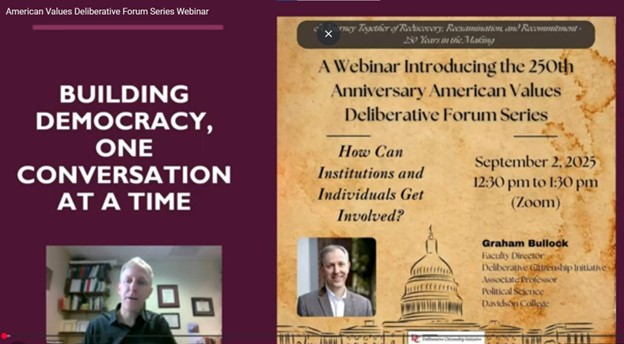
On September 2, the DCI hosted a webinar introducing The 250th Anniversary American Values Deliberative Forum Series and how institutions and individuals can get involved. The series is designed to commemorate the 250th anniversary of the Declaration of Independence and co-hosted by Davidson College, Duke University, and the University of North Carolina at Chapel Hill, the series will include Expert Roundtables and Community Conversations over the course of the 2025-26 academic year.

These Roundtables will include scholars with a diverse range of perspectives and academic backgrounds who will deliberate about the role of different values in American history and policy debates. The first Roundtable, for example, will be held on September 30 and will explore the tensions and complementarities between our commitments to national unity and political equality, both generally and in the specific context of immigration and citizenship.     

The week following each Roundtable, Davidson, Duke, and UNC-Chapel Hill will be hosting Community Conversations that will enable members of their communities to engage with the same questions that the experts discussed. Each institution will design their conversations so that they best match particular contexts. The conversations organized at Davidson, for example, will follow the Deliberative Citizenship Initiative’s D Team model, which are two-hour small group discussions guided by a trained facilitator, but many other models will work as well.

We welcome other institutions and organizations – as well as individual citizens – to organize similar conversations for their communities that utilize the Expert Roundtables as a catalyst for deeper engagement with the values that have animated our history and continue to permeate our political debates. Hosting such conversations is a great way to help bridge the political divides in our country, improve our ability to deliberate with one another as citizens (broadly defined), and start celebrating the upcoming 250th birthday of the United States.

To that end, in the webinar DCI Faculty Director and Associate Professor of Political Science Graham Bullock provided more information about the series itself as well as some ideas for how you might organize something for your community. The DCI has developed a series of Deliberation Guides and Pathways Guides that it will be using for the Community Conversations it will be hosting, and Dr. Bullock shared how you might adapt these guides to your purposes. He also outlined a range of different deliberative formats and designs you might use so that you can select the one that makes the most sense for your specific situation, whether it is a small group of friends gathered for dinner or a large forum with 50-100 people (or more!).  

You can check out a recording of the webinar below:

The slides from the webinar are included below as well:

American-Values-Series-Webinar-Slides
Filed Under: Events

The Power of Language in Writing and Engaging Contentious Histories

September 4, 2025 by Luna Noguchi

By Luna Noguchi ’25 (DCI Fellow)

When I heard discussions about DCI’s new Ginkgo Tree Project, I became immediately interested in the kinds of discussions it would spark. In spring of 2024, Davidson received and planted eight ginkgo trees, trees that were descendants of those that survived the atomic bombing of Hiroshima by the US military. The seeds were donated by Green Legacy Hiroshima and were meant to spread a message of peace and the inhumanity of nuclear war. After the planting of the trees, some students and alumni of Chinese and Korean descent believed that focus on the trees’ direct relationship to the tragedy in Hiroshima failed to capture the historical context of Imperial Japan’s invasions of East Asian countries throughout World War II.

The DCI was then invited to implement a deliberative process that would develop interpretative signage materials designed to provide more context about the trees that had been planted. I was part of a working group (Keya Zhou ‘25, Flo Moser ‘26, Casey Scheiner ‘28, Lily Ogawa ‘28, and Graham Bullock) that organized a deliberative forum for this purpose and then collated the ideas generated into interpretive materials to be put on signage in front of the trees.

While working on the project, I felt myself being stretched by the challenge of designing an event with enough scope of historical information and objectivity to make every viewpoint feel valued. Initially, my knowledge of WWII in East Asia was limited to Japan’s perspective. I have strong family ties to Japan and have both American and Japanese citizenship. I grew up hearing about the horrors of the tragedy and remember feeling changed when I visited the Hiroshima Peace Memorial Museum in Hiroshima, Japan. I was appalled by the level of destruction and inhumanity capable of nuclear weaponry. This spring, I jumped into working on this project so I could expand my understanding of the war’s impact and reshape my perspective while making a tangible impact on campus.

However, writing about a history for the purpose of deliberation required a special attention to the power of language. The experience taught me that when writing about contentious topics for deliberation, one should be attentive to the gravity of the subject while also remaining neutral with regards to particular perspectives about it. Writing about a historical topic as complex as World War II in the Asia Pacific region demanded a comprehensive and nuanced review of the conflict’s events. I quickly realized how easily historical narratives can be shaped by the perspectives we are taught in school or by personal connections to the nations involved. For example, choosing merely between active or passive voice can influence whether a text is interpreted as blaming Japan or remembering victims.

Furthermore, the biggest challenge of the project was navigating the implications of certain word choices. While researching and writing the deliberation guide, I had to actively check whether my words assigned blame or victimhood to certain actors or drew misleading connections between events. For example, we wrote sections on Imperial Japan’s impact on countries in East Asia, such as China, Korea, and Southeast Asia. We discussed how to emphasize that Japan was the perpetrator of violence without assigning blame or judgment.

Because of the strong emotions associated with the victims’ experiences, we had to make sure each event that involved victims in the war was emphasized to the same degree. We had to strike a balance between calling for countries’ accountability while memorializing the victims of the war. The experience taught me about the kind of language that can spark respectful dialogue on sensitive topics, and as a senior who just graduated, I look forward to bringing these lessons with me into my career after Davidson.

Opinions expressed on the DCI Blog are solely those of the author and do not necessarily represent the official views or positions of the Deliberative Citizenship Initiative.

Filed Under: Fellow Posts

DCI x Theatre: A Community Conversation on “Talking about Race”

September 2, 2025 by Graham Bullock

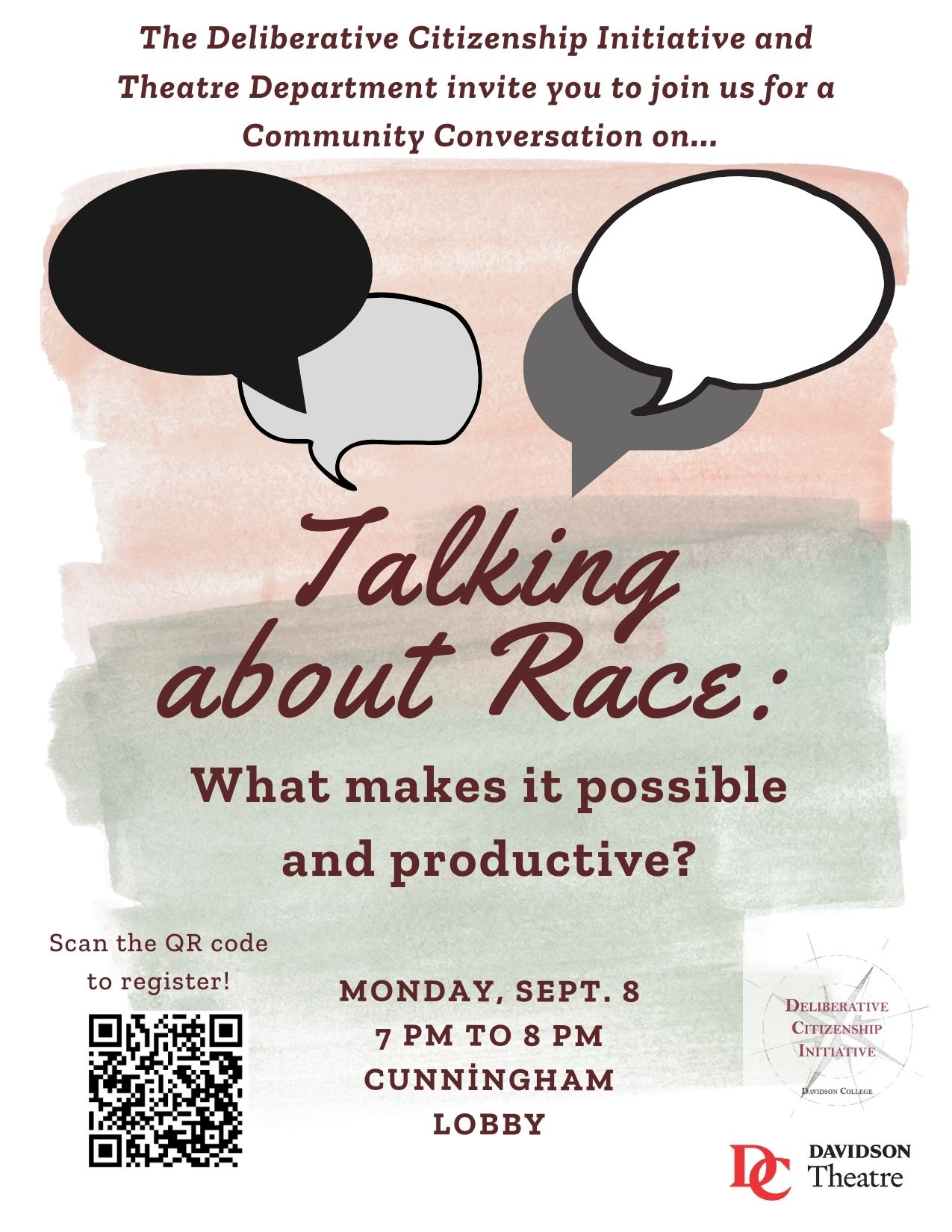
Conversations About Race Mini-Flyer

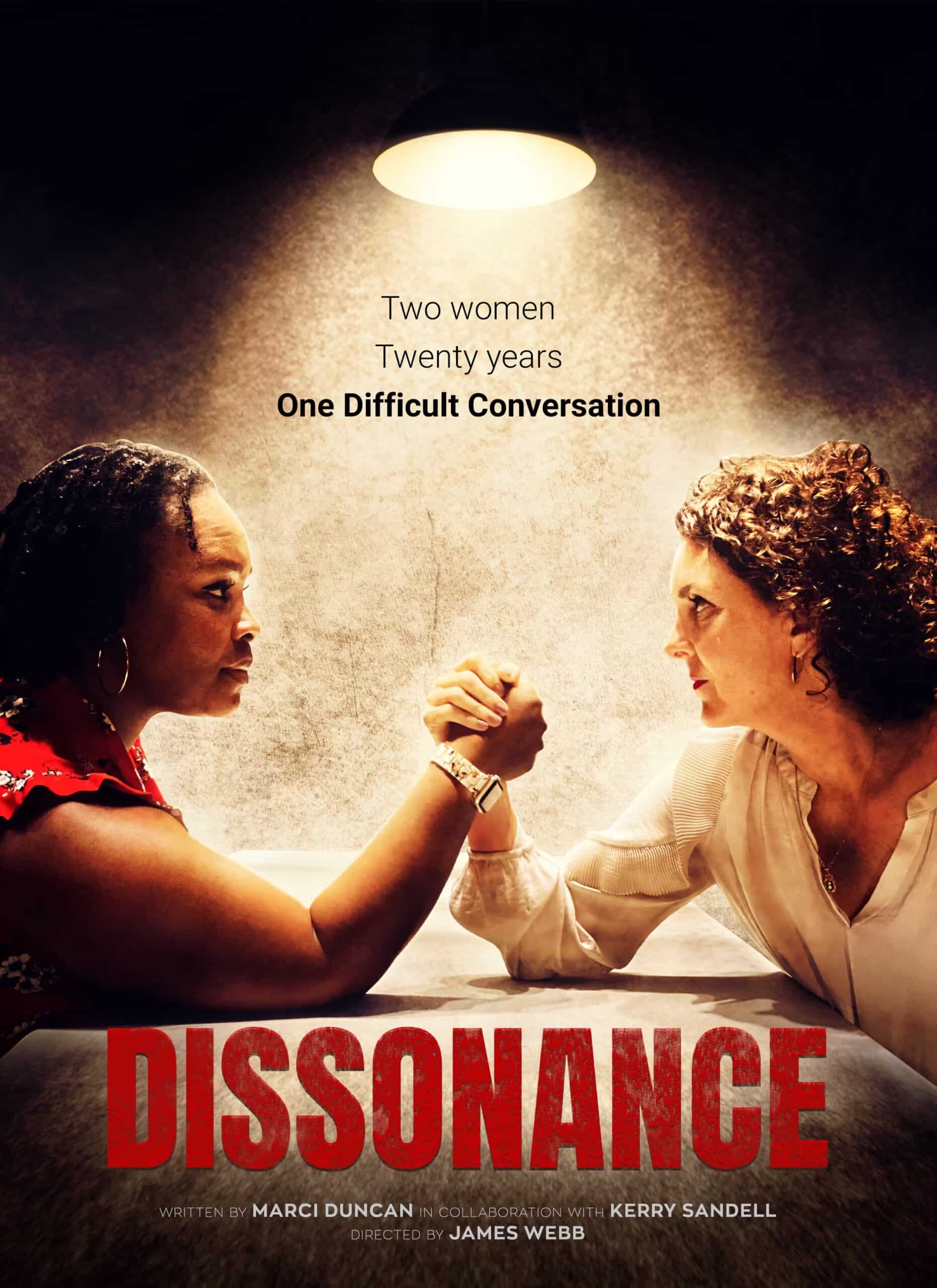
Following the riveting production of Dissonance on Monday, September 1 in the Barber Theatre by actor-playwrights Marci J. Duncan and Kerry Sandell, Davidson College’s Theatre Department and Deliberative Citizenship Initiative (DCI) are co-hosting a Community Conversation on “Talking about Race: What Makes It Possible and Productive?” on September 8 at 7 pm in the Barber Theatre’s lobby.

The play, which explores what happens when a Black woman and a White woman who have been friends for 20 years have their first open, honest conversation about race, provides a helpful backdrop for this conversation. You do not have to have seen the play, however, to participate in the conversation; we welcome all members of the Davidson community — students, staff, faculty, alumni, and community members — who are able to join us for this in-person event.

This Community Conversation has been designed by DCI Senior Fellow Alyssa Henke ’26 as part of her DCI fellows deliberation project. If you register at the link below, we will send you a deliberation guide for the conversation that will outline the questions we’ll discuss during our hour together. Our hope is that this discussion will help us generate some insights and suggestions for future efforts to host conversations about race, whether at Davidson College or elsewhere.

Race is one of the most challenging topics to discuss with family, friends, colleagues, and our fellow citizens. And yet it is also one of the most important topics to engage with, given our many divides that relate to the history of slavery, Jim Crow, and efforts to advance racial equity and justice. We therefore hope you will join us for this important opportunity to discuss how best to have these conversations — Monday, Sept. 8 from 7 pm to 8 pm, in the Barber Theatre Lobby. We’ll have cookies, brownies, and some good conversation. Click the link below to register for the event.

Click here to Register for this Community Conversation

Filed Under: Announcements

Dissonance: A Play about Two Women and One Difficult Conversation

August 29, 2025 by Graham Bullock

Race is one of the most challenging topics to discuss with family, friends, colleagues, and our fellow citizens. And yet it is also one of the most important topics to engage with, given our many divides that relate to the history of slavery, Jim Crow, and efforts to advance racial equity and justice. For this reason, the Deliberative Citizenship Initiative has incorporated conversations about race into our programming since its inception back in the fall of 2020, when one of our D Team conversations focused on the local legacies of slavery in Davidson and the north Mecklenburg region.

This engagement continues in a collaboration with Davidson College’s Theatre Department, which is presenting the touring production of Dissonance on Monday, September 1 at 7:00 p.m. in the Barber Theatre. Written and performed by Marci J. Duncan and Kerry Sandell, this compelling play explores what happens when a Black woman and a White woman—who have been friends for 20 years—have their first open, honest conversation about race. Dickson Foundation Assistant Professor of Theatre James Webb served as both dramaturg and director of the show, which has been called “an emotional powerhouse of a production” (Anne Valentino, Washington DC Theatre Review).

The performance will be followed by a brief talkback with the playwrights/actresses and the director, moderated by DCI Faculty Director Graham Bullock and DCI Fellow Alyssa Henke ’26. They will also be introducing a Community Conversation that the DCI and Theatre Department are co-hosting a week after the performance on Sept. 8 at 7 pm that will enable Davidson students, staff, faculty, and community members to discuss what makes talking about race possible and productive. We’ll share more info about this conversation next week after the production.

Admission is free to the play for everyone, but reservations are required. Please click here to secure your seats. We warmly encourage you to join us for what will be an engaging and thought-provoking evening.

Filed Under: Announcements

Small Talks, Big Ideas: Transforming Informal Conversations into Deliberation

August 26, 2025 by Jane McNeill

By Jane McNeill ’28 (DCI Fellow)

On Davidson College’s 2,000 student campus, it’s not unusual to run into people you know, especially on routine walks to class. Whether it’s individuals leaving their class that ended before yours or others heading to the same building where you’re headed, these brief moments of interaction are common. In these encounters, you’re likely to exchange a quick, “Hi,” or “How are you?,” as you walk opposing directions. These brief interactions offer a sense of acknowledgement, weaving individuals into the fast-paced and busy rhythm of campus life. Despite their brevity, these moments contribute to a larger sense of belonging for all members of the community.

However, as communal as these exchanges may be, they often remain surface level. Responses like, “Good, how are you?” offer little more than a passing glimpse into one another’s lives. While the exchanges are genuine, the context doesn’t typically lend itself to deeper reflection or conversation. A “How are you?” on campus rarely sparks a meaningful discussion–it serves more to maintain connectivity than to foster substantive dialogue or deliberation.

Yet, the apparent insignificance of these interactions doesn’t diminish their value. These brief conversations can serve as entry points to more thoughtful, deliberative exchanges. They establish rapport and trust, crafting an environment where deeper interactions can develop, these seemingly trivial exchanges can lay the groundwork for dialogue that fosters greater understanding, empathy, and more thoughtful deliberation. It was this thinking that inspired the idea for my Spring Deliberation Project.

As I began exploring possible topics, I was drawn to a project from a previous fellow–“Five Minute ‘Bite-Sized’ Conversations”–which seemed to align with transforming casual exchanges into informal deliberations. I found my peer fellows Izzy Cevallos, Ben Files, and Liam Mann shared a similar interest in how these short conversations could evolve into more intentional dialogues.

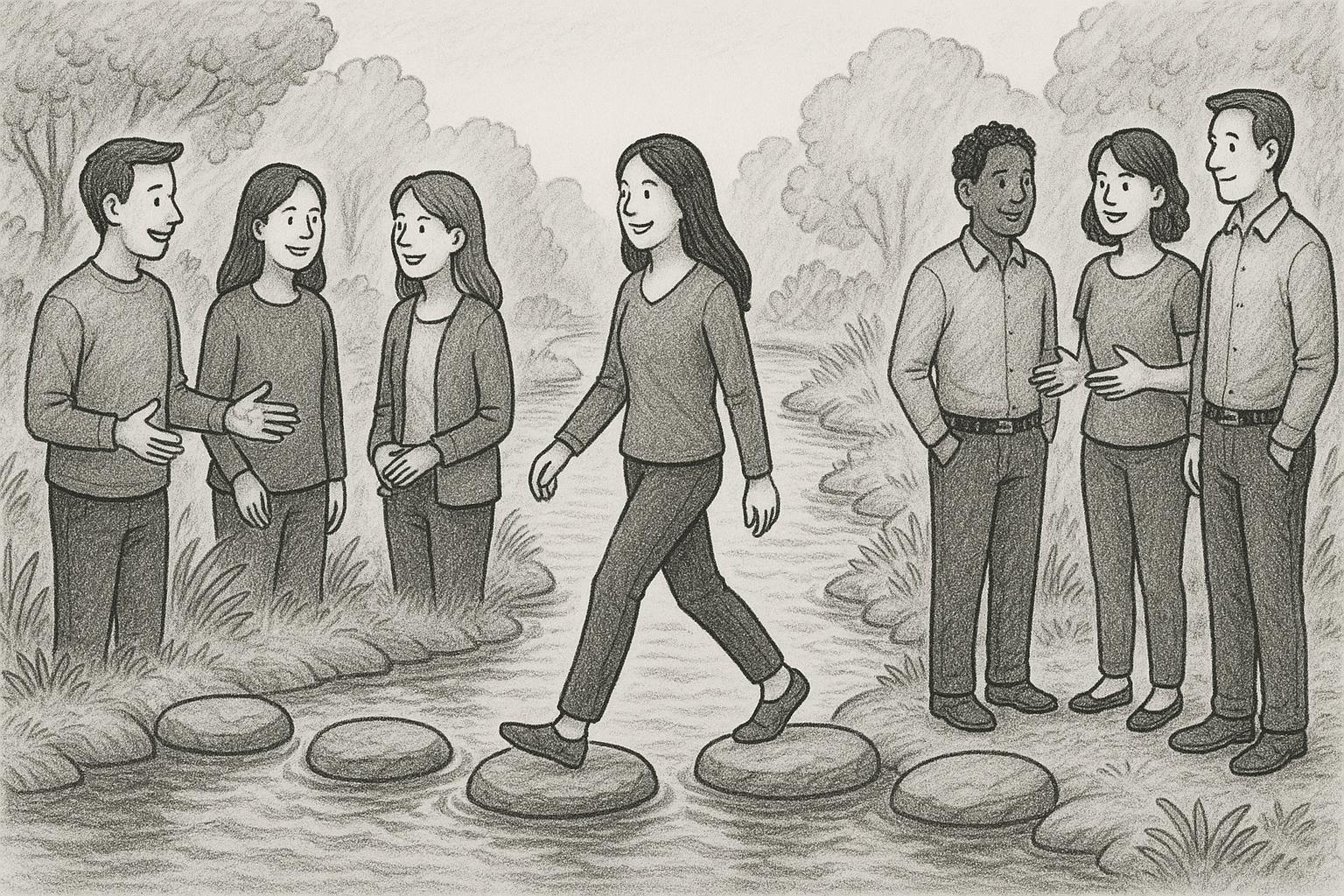
We were also inspired by fellows at the Kenan Institute for Ethics at Duke University who hosted informal “couching” sessions with a mobile living room that pop-up around campus. Similarly, Davidson’s Deliberative Citizenship Initiative (DCI) has hosted Commons Conversations and DCI Outposts, which aim to create approachable, informal spaces for deliberation. These efforts share a common goal: to make deliberation more accessible and casual, encouraging greater engagement with the process. Their informal conversations act as stepping stones to more in-depth deliberation. For busy students, committing to a two-hour DCI deliberation three times a semester can feel overwhelming. But smaller, more casual conversations are easier to engage with and can spark meaning conversations and reflection.

For our pop-up deliberations, we designed a variety of questions that range from philosophical to political, as well as more lighthearted topics. Questions like “What’s one thing you think everyone should try at least once in their life?” or “Are we defined more by our actions or our intentions?” or “Is there a political issue you’ve completely changed your mind on?” allow participants to explore various levels of depth. The goal was to encourage responses based on reasoning, prompting people to think about why they hold certain beliefs. This format also provided us with the opportunity to ask follow-up questions based on what participants share, allowing the conversation to develop more organically.

Through these pop-up deliberations, we made deliberation not only more approachable and accessible but also more fun. By creating an environment where participants feel comfortable engaging in informal but thought-provoking discussions, we hope we were able to foster deeper connections and spark curiosity about the larger deliberative process.

Filed Under: Fellow Posts

  • « Go to Previous Page
  • Page 1
  • Interim pages omitted …
  • Page 14
  • Page 15
  • Page 16
  • Page 17
  • Page 18
  • Interim pages omitted …
  • Page 75
  • Go to Next Page »

Footer

Blog Post Categories

  • Announcements
  • Blog Posts
  • DCI Posts
  • Events
  • Faculty Posts
  • Fellow Posts
Image of a compass superimposed by the text "Deliberative Citizenship Initiative" and "Davidson College." Clicking on this image leads to the Initiative page.

Recent DCI Blog Posts

  • We Tried to Fix Jubilee’s “Middle Ground” – Here’s How It Went
  • A Case for Deliberation in the Natural Sciences
  • Welcoming New Staff to the DCI and DCN
  • Facebook
  • Twitter
  • Instagram
  • LinkedIn


Copyright © 2026 · Infinity Pro on Genesis Framework · WordPress · Log in