• Skip to main content
  • Skip to footer

Deliberative Citizenship Initiative

Building Democracy One Conversation at a Time

  • The Initiative
    • Programs
      • Deliberation Across the Curriculum
      • Deliberation on Campus
      • Deliberation in the Community
      • Research on Deliberation
    • Motivations
      • Why Deliberative Citizenship?
      • Why Davidson? Why Now?
    • Who’s Involved?
      • DCI Fellows Cohorts
        • 2025-2026 Fellows
        • 2024-2025 Fellows
        • 2023-2024 Fellows
        • 2022-2023 Fellows
        • 2021-2022 Fellows
        • 2020-2021 Fellows
      • DeeP Collaborative Cohorts
        • 2024-2025 DeeP Collaborative Faculty
        • 2023-2024 DeeP Collaborative Faculty
      • Advisory Council
    • History
      • What Sparked the Initiative?
    • Key Deliberative Dispositions
    • Frequently Asked Questions (FAQ)
    • Annual Report
  • Get Involved!
    • Participate in a Forum
    • Join a D Team
    • Become a Fellow
    • Take Courses
    • Get Training
    • Come to Guest Lectures
  • Events
    • Upcoming Events
      • 250th Anniversary Deliberative Forum Series on American Values
    • Past Events
  • Connections
    • The Deliberative Citizen: The DCI’s Monthly Newsletter
    • Efforts on Campus
    • Efforts in the Community
    • Efforts Elsewhere
    • Readings and Resources
      • DCI-Published Guides
      • DCI Guide to One-on-One Conversations
      • How to Disagree
      • Demonstration of Facilitation Styles
      • Deliberative Pedagogy Mini-Course
    • How We Can Help: DCI’s LET’S DELIBERATE! Partnership Opportunities
    • DCI in the News
  • DCI Blog Posts
    • Recent Blog Posts
    • All Blog Posts

The DCI Blog

Democracy in Action: Mark Your Calendars for the Phi-Eu Debate!

October 8, 2024 by Willow Paul

The highly anticipated debate between the College Democrats and Republicans is just around the corner, and it’s an event you won’t want to miss! Happening only once every four years, this debate promises to be an exhilarating clash of ideas, perspectives, and enthusiasm that will leave a lasting impression. 

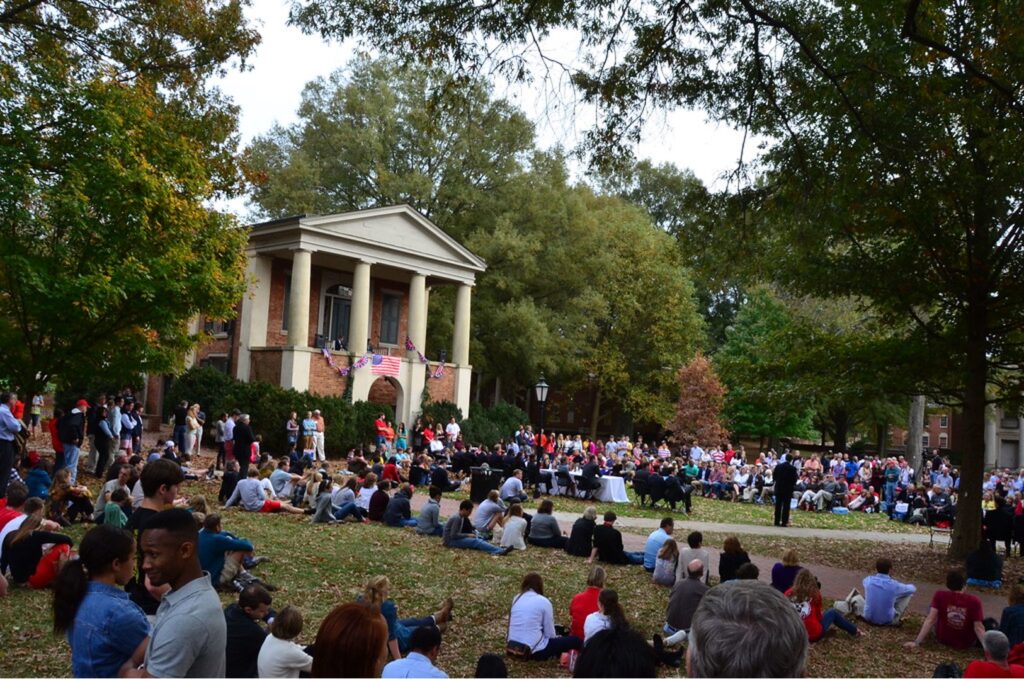
Join us for an engaging evening as representatives from both the College Democrats and Republicans dive into a spirited exchange on some of the most pressing issues in American politics today. Covering a wide range of topics—from economic policies to social justice concerns —the debate will enable each side to present their viewpoints and engage in discussion. In keeping with the tradition of past Phi-Eu debates, this year’s event will take place from the balconies of Phi and Eu Halls, building on the legacy of the college’s first debate societies that date back to the 1800s.

What makes this year’s debate particularly special is the inclusion of audience participation. After each round of the debate, attendees will have the chance to engage in respectful discussions with one another guided by the DCI’s trained facilitators. In an atmosphere of respectful dialogue, insightful debate, and constructive deliberation, you’ll be able to ask questions about the topics being debated, share your own perspective on them, and listen to the ideas of others also attending.

Whether you’re a political advocate or just interested in hearing different viewpoints, this debate offers a unique opportunity to witness democracy in action and gain valuable insights from across the political spectrum.

2024-Phi-Eu-Hall-Debate

Mark your calendars for Friday, October 18th, when we’ll gather in front of Eumenean and Philanthropic Halls from 5:00 PM to 7:00 PM EST. Bring your friends and get ready for an evening filled with thought-provoking discussions and engagement. This is more than just a debate; it’s a chance to be part of an important moment in American history, where your voice can be heard alongside those of your peers and fellow citizens.

Don’t let this opportunity pass you by! Be there to witness the exchange of ideas, share your thoughts, and become an active participant in the vibrant political discourse on campus. Click here to RSVP. We look forward to seeing you there!
Filed Under: Announcements, Events

The Value of Choosing a Deliberation-Oriented College 

October 2, 2024 by Charlotte Juge

Like many high schoolers, I faced the daunting task of choosing a college to spend my next four years at just sixteen. The COVID-19 pandemic gave me time to fully dive into the process, starting with a spreadsheet of 160 schools and attending numerous virtual calls. While I don’t remember many specifics from those calls, I realized that I wanted a college where open, honest conversation and the exchange of challenging ideas could thrive.

As I narrowed down my list, I began to focus more on the importance of campus dialogue—something that wasn’t often discussed on tours. Caught up in the allure of prestige, majors, and quirky traditions, I nearly lost sight of what truly mattered to me: the freedom of open discourse.

When deciding between two schools for early decision, I asked both their representatives the same question: “How open is this campus to discussion?” The first responded dismissively, almost shocked by the question, revealing a closed mindset that became evident during my campus visit.

The second school’s representative, however, paused and thoughtfully explained how the campus encourages diverse thought processes, ideas, backgrounds, and life experiences in order to provoke deeper discussions and challenge each student’s preconceived notions. After that conversation, I knew without hesitation that Davidson College was my first choice.

In October 2022, I reached out to the Faculty Director of Davidson’s Deliberative Citizenship Initiative (DCI) and received a reply from Professor Graham Bullock. He wrote, “This is very much the focus of Davidson’s DCI, which is committed to creating spaces for students, faculty, staff, alums, and the broader community to engage with the difficult issues facing our society and community.” Little did I know that two years later, I would become part of this initiative, fully committed to its mission.

My first year at Davidson came with challenges. As an 18-year-old entering a new environment with people from vastly different backgrounds, I had to navigate new perspectives. Growing up in debate, I was used to open conversations, but class discussions required a balance between sharing ideas and being comfortable doing so. Although I was used to challenging my thoughts and perspectives, I sometimes felt that there was only one narrative allowed in discussions. While I understand we often have strongly-held views about particular issues that come up in the classroom, in my opinion, class discussions should not be a form of debate in which there are winners and losers; in fact, that mentality makes us all losers. Instead, there should be an openness to listen, disagree, agree, or potentially change your mind; however, if we go into a space closed off to being challenged, it creates a divisive classroom setting.  

During the 2023-2024 school year, Davidson faced key issues like campus protests, police violence, and free speech. One moment stood out: in the midst of the Middle East conflict, a professor paused the scheduled lesson to create space for discussion. For that class of 30 students, the opportunity to reflect and challenge assumptions solidified what I believe college should be—a place to learn, engage, and grow together. 

When I shared this experience with friends at other schools, they were shocked we had space for such a discussion. Some didn’t even know what was happening on their own campuses and, when they tried to find space to process, faced hostility. Their frustration made me question what a college education should offer and what students should consider when choosing a school.

Reflecting on my time at Davidson, I’m incredibly grateful for the unique opportunity to engage in meaningful deliberation, both through the DCI and in the classroom. Being here is about more than just academic learning; it’s about personal discovery—understanding what I truly value and believe. College should provide a space where we can challenge, reinforce, and reshape our beliefs, and that kind of growth is essential not just for our minds, but for our souls.

As a tour guide, I always end my tours by explaining why I chose Davidson: its commitment to deliberation and its respect for diverse perspectives. This is what sets Davidson apart for me—an institution that fosters learning through dialogue while creating safe spaces for growth.

To current and future students, faculty, and staff, I urge you to embrace this commitment to deliberation. Having difficult conversations isn’t easy, but it’s a vital part of growth. The ability to articulate our thoughts, engage with others, and remain open to change is a lifelong skill that I believe we should all strive to nurture.

Filed Under: Blog Posts, Fellow Posts

From “Small Group Discussions” to Micro-Deliberations: Transforming Everyday Student-Centered Discussion

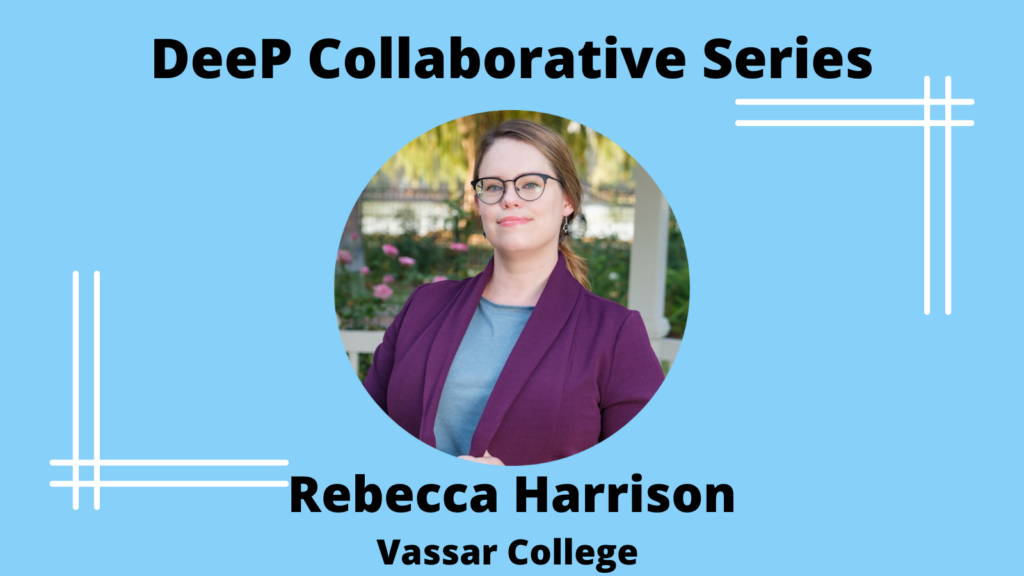
October 1, 2024 by Rebecca Harrison

I came to the DeeP Collaborative with some experience with student-centered, discussion-oriented pedagogy, due to prior interest and involvement in promoting inclusive and equity-minded pedagogical techniques. But much of that work was very “individual” and a little haphazard, things I’d pursued or developed on my own as a non-expert, based on my own reading and/or workshops that I’d helped develop from the ground up in grad school (because nobody else was doing it at the time!) — So, my participation in the DeeP Collaborative was an excellent opportunity to approach this element of my courses much more systematically, and with the depth and support the Deliberative Pedagogy workshop provided. 

There are a wide variety of ways in which I incorporated what I learned from the DeeP Collaborative into my classroom, but I think the most immediately impactful change I made involved how I approached and structured “small group discussions.” It can be challenging to come up with small group discussion assignments that help students move past certain somewhat unfocused, superficial, and/or “disagreement-avoidant” discussion habits, and some of the tools I learned through my participation in the DeeP Collaborative were immediately helpful to that end. So, I’d like to share my experiences with that, in the hopes that it will be useful to any other faculty who would like to promote more productive and satisfying-to-everybody student discussion in their classrooms.

Setting Up The Deliberative Environment

I teach an introductory level class on the Philosophy of Love & Sex, which seemed like a prime candidate for building in more Deliberative Pedagogy techniques. I had already devoted Day 1 of classes to having an open discussion about pedagogy, and about students’ own approaches to learning. I added some material from the Collaborative to the assigned readings for that day, including selections from Aikin & Talisse’s “Why We Argue?” as well as Adam Grant’s “Actions for Impact,” in order to orient students towards a deliberation-focused classroom and establish certain deliberative values for our class. 

The Aikin & Talisse reading seemed to have an especially positive effect. In particular, discussing thoughtful disagreement as a form of care and respect really set the tone for the course, and helped get students out of a certain “conflict avoidance” mindset that sometimes keeps them from voicing alternative ideas in the classroom. I believe that this “conflict avoidance” largely derives from an overall positive desire to display respect for differing opinions, so being able to reframe that same respect as expressible throughdisagreement was extremely helpful. I also had students complete a “Discussion Agreements” “quiz” adapted from the DCI’s “Conversation Agreements” after our first-day discussion, in order to make sure students were all on the same page about our values and intentions in our classroom.

Micro-Deliberations

My courses already included in-class small group discussions whenever possible, but my approach to drawing students into productive engagement with each other was mostly limited to trying to come up with really good discussion questions. Very early on in my experience with the DeeP Collaborative, it became apparent to me that what my students were lacking was structure: some sort of guidance through the actual deliberative process. The DeeP Collaborative workshops taught me how to structure these discussions into micro-deliberations, so that they would rise to the level of productive “deliberation” rather than simply casual surface-level discussion. 

Drawing on material from our workshops and discussions with other Collaborative members, I developed a simple set of procedural steps for students to follow during the first several weeks of our class, and I talked through them in detail with students the first time we had an in-class micro-deliberation assignment. These steps included:

  1. Describe your own reaction / initial thoughts (every group member should do this before moving on to Step 2!)
  2. Diagnose points of agreement and disagreement as a group
  3. Discuss your reasons for your initial thoughts, and ask about your classmates’ reasons for theirs
  4. Develop these reasons further by evaluating them against each other, and attempting to reach agreement
  5. Determine the landscape: have you been able to reach agreement? If so, why/how did you land on this idea, and not possible alternatives? If not, what is the source of disagreement? 

Probably the most important of these was step (1) — the requirement that all students in a small group have an opportunity to voice a “gut reaction” thought in response to their assigned discussion question beforeanyone actually articulates whether or not they agree with each other, let alone begins defending their own view. I think that doing this step well, in a classroom environment that values the exploration of disagreements, sets students up for (2)-(5) to happen rather naturally from there.

On a day-to-day level, this one change — giving students specific deliberation-supporting steps to follow, rather than basically just letting them loose on a guiding discussion question — had probably the biggest immediate impact on my classroom environment. Being guided through the process of voicing their own thoughts and exploring disagreements helped them become much more comfortable with doing those things on their own, and by the fourth week of class I largely did not have to remind students of these steps. I think it was also extremely valuable to make “agreement” equally demanding of explanation — this makes it especially clear that the goal is not mere superficial agreement, but thoughtful and considered unity in light of plausible alternatives. It also makes it more clear that disagreement is not a bad thing; we want to be oriented towards agreement in order to avoid a certain sort of empty relativism, but articulating a genuine disagreement well is more valuable (and completes this set of procedures more successfully!) than unconsidered “agreement.” 

Final Thoughts

It is worth noting that each step of this procedure may require some guidance, especially the “evaluating reasons” section. If your students are not already well-prepared to engage in some real critical thinking at that stage, you may need to include some further general instruction early on in your class and/or modify the assignment in order to set them up for it. That said, this is something that can be worked out in class as well: students in my classes are required to articulate step (5) to the rest of the class (and me) directly, and if the reasoning or explanation there is not especially good, we can work through it together at that point. But even if there may be some sticking points, giving students a clear procedure that orients them towards deliberation, over and above mere “discussion,” is an extremely valuable and powerful tool.  

Filed Under: Blog Posts, Faculty Posts

A Deliberative Forum on Income and Wealth Disparities

September 27, 2024 by Willow Paul

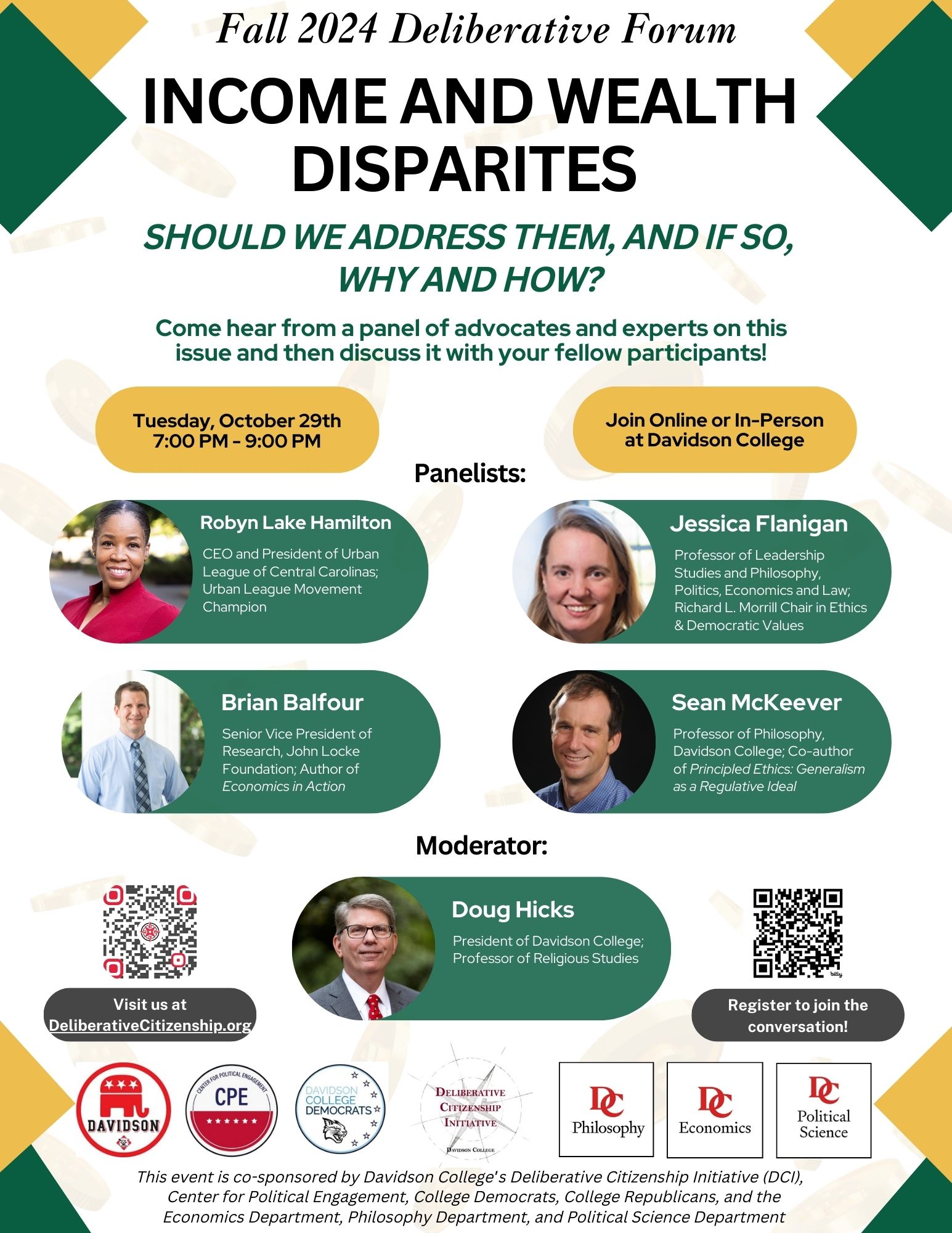
Poster for Income and Wealth Disparities Forum.

Income and wealth disparities are a prominent topic in American politics that raise important philosophical and policy questions. Should we address these inequalities? If so, why and how? Should a just society allow or encourage the accumulation of individual wealth? What are the potential benefits and risks associated with policies such as increased taxation on the wealthy, universal basic income, or a higher minimum wage that are designed to reduce income and wealth disparities? 

To explore these questions, Davidson College’s Deliberative Citizenship Initiative, Center for Political Engagement, College Democrats, College Republicans, Philosophy Department, Political Science Department, and Economics Departments, invite you to join us for a Deliberative Forum on Income and Wealth Disparities on Tuesday, October 29, from 7 PM to 9 PM ET at the Lilly Gallery or online. 

This Deliberative Forum will enable participants to actively engage with this important issue, first by hearing from a panel of experts and advocates with diverse perspectives on the topic. Then participants will actively deliberating with one another in facilitated small group discussions (either in person or virtually) about these questions. This is a fantastic opportunity to learn from experts, listen to the viewpoints of others, and share your own ideas about this challenging and complex topic.

The event is free but registration is required. Click here to register. We request that all registrants plan to attend both the panel and the small group discussions, which are designed to complement each other. Participants may join both in-person and online. Spaces are limited due to the number of trained DCI facilitators we have available to moderate the small group discussions. The Zoom link will be sent to online participants after they register.

Our panel features the following experts who hold a range of perspectives on the topic of the forum. They include: 

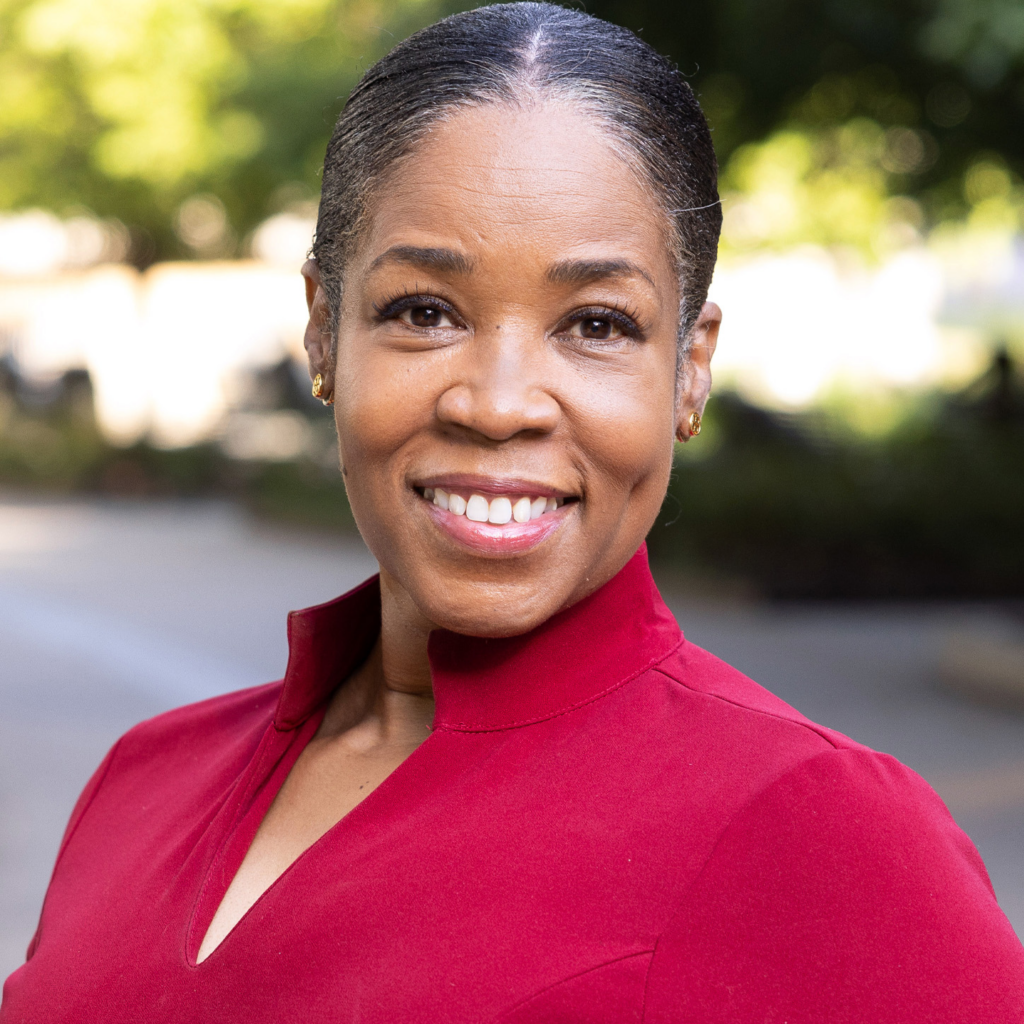
Robyn Lake Hamilton is the CEO and President of the Urban League of Central Carolinas, which is on advocating for and equipping African Americans and all underserved communities with the tools to achieve social and economic equality. Hamilton was recognized in 2024 with the Urban League Movement Champion Award for her leadership in housing and community development. 

Jessica Flanigan is Professor of Leadership Studies and Philosophy, Politics, Economics and Law, Richard L. Morrill Chair in Ethics & Democratic Values at the University of Richmond’s Jepson School of Leadership Studies. Co-author of “Wealth without Limits: In Defense of Billionaires,”  Flanigan has published in a wide range of academic journals and is a proponent of effective altruism. 

Brian Balfour is Senior Vice President of Research at the John Locke Foundation. Balfour previously worked for the Civitas Institute for 13 years and specializes in fiscal policy issues. He is the author of the book “Economics in Action” and articles including “Higher Taxes Doesn’t Guarantee Better Services” and “Markets, Not Politics, Are the Real Problem Solver.”

Sean McKeever is Professor of Philosophy at Davidson College, where he has been a faculty member since 2005. He holds a PhD in philosophy from the University of North Carolina at Chapel Hill. Co-author of the book, Principled Ethics: Generalism as a Regulative Ideal, McKeever’s academic focus is primarily in ethics, including topics such as metaethics and normative ethics.

Doug Hicks Photo

The panel will be moderated by Doug Hicks, President of Davidson College and Professor of Religious Studies. President Hicks has a longstanding interest in income inequality, one of his nine books, published by Cambridge University Press, is Inequality and Christian Ethics. Hicks received an AB degree magna cum laude with honors in economics from Davidson, a Master of Divinity summa cum laude from Duke University, and MA and PhD degrees in religion from Harvard University.

This event is a chance to dive deep into pressing questions about economic inequality, hear from diverse panelists, and engage in lively discussions with fellow participants. Don’t miss this opportunity to contribute your voice and insights on such an important topic. Click here to register, and we look forward to an engaging evening together!

Filed Under: Announcements, Events

I Have Become a More Empathic Person: Deliberation as a Journey Towards Developing Empathy

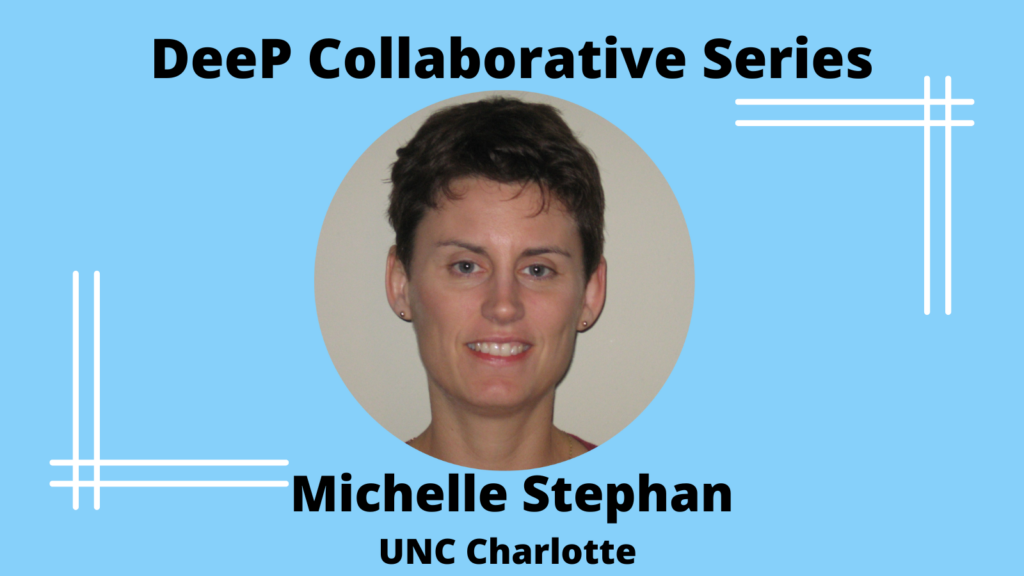
September 19, 2024 by Michelle Stephan

The Deliberative Pedagogy (DeeP) Faculty Collaborative consists of faculty from Davidson College and other higher education institutions who are committed to learning and implementing new ways to improve and deepen the quality of their class discussions. These faculty come from a wide array of disciplines and backgrounds to study and discuss deliberative pedagogy methods, share their ideas and questions with one another, and work to embed deliberation in their classrooms. In this special blog series, members of the Collaborative describe and reflect on their experiences developing and teaching their deliberation-involved courses.

Neurologist Dr. Helen Riess argues empathy is at an all-time low due, in large part, to the role that social media has played in allowing people to hide safely behind a computer screen, spewing negative comments at one another (2018). According to Riess, 90% of effective communication is non-verbal, including gestures, tone, eye contact, and body posture. And we live in a time where we are more ideologically divided than any time since the 1970s (Pew Research Center*) with no common ground to be found. In fact, many states, including my own, are following Florida’s lead in dissolving Diversity, Equity, and Inclusion (DEI) offices and staff positions across universities, implementing bathroom bills, and forcing teachers to out their transgender students to parents. The world could use a little empathy.

My job is to prepare candidates to become middle and high school teachers. In this country, we have seen a shift from a majority white student population in public schools to white students now outnumbered by students of color. With the increasing diversity of students in our classrooms, it is critical that future teachers develop an understanding of and appreciation for students from culturally-rich communities that might be different than their own. It is not an option for my teaching candidates to explore issues of race, gender, immigration, and sexuality. It is a must!

Given our polarized climate where DEI is being erased from PK-12 classrooms and universities, I was faced with two challenges: 1) How do I help teaching candidates develop an understanding of and empathy for PK-12 students who likely come from populations significantly different than theirs, especially when DEI is no longer valued by the State? 2) In a cancel culture where people cannot share their opinions without the fear of social repercussions, how do I engage teaching candidates in rich dialogue about controversial topics in a safe and instructive way?

Searching for solutions to these two challenges led me to engage in a year-long professional development program run through Davidson College’s Deliberative Citizenship Initiative. I wondered, “Could a deliberative approach, paired with studying the neuroscience of trauma and empathy, provide the safe environment to have tough conversations that develop empathy for a diverse set of PK-12 students?” I drew up a plan to integrate empathy and deliberation into my 15-week course called Inclusive Classrooms. A brief outline of key activities follows.

Readings

Course Textbook: 

Perry, B. D. & Winfrey, O. (2021). What happened to you? Conversations on trauma, resilience, and healing. Flatiron books.

Excerpts: 

Reiss, H. (2018). The empathy effect: Seven neuroscience-based keys for transforming the way we live, love, work, and connect across differences. 2018 Brilliance Publishing, Inc.

Milner, R., Cunningham, H., Delale-O’Connor, L., & Kestenberg, E. (2019). “These kids are out of control”: Why we must reimagine “classroom management for equity.” Corwin Publishing.

Activities

Weekly journaling with prompts such as “Are you comfortable with talking about controversial topics? What support can I give you if you start feeling anxious during a deliberation or class period?”

Read or watch news that is ideologically opposite of your position for 30 minutes; write a reflection.

Empathy plays in which two students act out a scene depicting an empathic or non-empathic interaction between a student and teacher; use an empathy observation protocol to note key empathic moves.

Deliberations

Engage in three class deliberations, twice as an observer and once as a participant. The three class deliberations were facilitated by the instructor with eight new students each time. Observers were given an observation guide to note the facilitator’s moves, the norms of the deliberation, and new content that was learned. All candidates were given a deliberation guide and one class period to work in small groups to help the deliberator prepare. The three topics involved poverty, book banning, and tracking in PK-12 education.

For the fourth deliberation, candidates were divided into four small groups, assigned a facilitator, and given a deliberation guide on the North Carolina Parents’ Bill of Rights. The facilitators were responsible for video recording the deliberation and sending it to me for assessment. 

For all four deliberations, each participant and observer turned in a reflection afterward. For the first three deliberations, teaching candidates were allowed to argue their own position, but for the last deliberation, I assigned each person a role that I knew would take them out of their ideological comfort zone.

Final project

Deliberation and me portfolio – each student submitted five artifacts that signified their growth in deliberation over the 15 weeks and a one-page reflection that explained how these artifacts illustrated their growth.

Overwhelmingly, students reported that they are more comfortable talking about controversial topics and can see themselves taking this newfound confidence and skill set to discussions outside the classroom. Additionally, they said that the trauma and empathy readings helped them understand why they needed to develop their empathy skills and that deliberation was the approach that helped them do this. As one student said, Overall, I have learned so much about the deliberative process and the beauty that different perspectives and collaboration can bring. I look forward to extending this knowledge and applying it to my educational career.

* Desilver, D. (2022). The polarization in today’s Congress has roots that go back decades.

Filed Under: Blog Posts, Faculty Posts

  • « Go to Previous Page
  • Page 1
  • Interim pages omitted …
  • Page 32
  • Page 33
  • Page 34
  • Page 35
  • Page 36
  • Interim pages omitted …
  • Page 75
  • Go to Next Page »

Footer

Blog Post Categories

  • Announcements
  • Blog Posts
  • DCI Posts
  • Events
  • Faculty Posts
  • Fellow Posts
Image of a compass superimposed by the text "Deliberative Citizenship Initiative" and "Davidson College." Clicking on this image leads to the Initiative page.

Recent DCI Blog Posts

  • We Tried to Fix Jubilee’s “Middle Ground” – Here’s How It Went
  • A Case for Deliberation in the Natural Sciences
  • Welcoming New Staff to the DCI and DCN
  • Facebook
  • Twitter
  • Instagram
  • LinkedIn


Copyright © 2026 · Infinity Pro on Genesis Framework · WordPress · Log in