• Skip to main content
  • Skip to footer

Deliberative Citizenship Initiative

Building Democracy One Conversation at a Time

  • The Initiative
    • Programs
      • Deliberation Across the Curriculum
      • Deliberation on Campus
      • Deliberation in the Community
      • Research on Deliberation
    • Motivations
      • Why Deliberative Citizenship?
      • Why Davidson? Why Now?
    • Who’s Involved?
      • DCI Fellows Cohorts
        • 2025-2026 Fellows
        • 2024-2025 Fellows
        • 2023-2024 Fellows
        • 2022-2023 Fellows
        • 2021-2022 Fellows
        • 2020-2021 Fellows
      • DeeP Collaborative Cohorts
        • 2024-2025 DeeP Collaborative Faculty
        • 2023-2024 DeeP Collaborative Faculty
      • Advisory Council
    • History
      • What Sparked the Initiative?
    • Key Deliberative Dispositions
    • Frequently Asked Questions (FAQ)
    • Annual Report
  • Get Involved!
    • Participate in a Forum
    • Join a D Team
    • Become a Fellow
    • Take Courses
    • Get Training
    • Come to Guest Lectures
  • Events
    • Upcoming Events
      • 250th Anniversary Deliberative Forum Series on American Values
    • Past Events
  • Connections
    • The Deliberative Citizen: The DCI’s Monthly Newsletter
    • Efforts on Campus
    • Efforts in the Community
    • Efforts Elsewhere
    • Readings and Resources
      • DCI-Published Guides
      • DCI Guide to One-on-One Conversations
      • How to Disagree
      • Demonstration of Facilitation Styles
      • Deliberative Pedagogy Mini-Course
    • How We Can Help: DCI’s LET’S DELIBERATE! Partnership Opportunities
    • DCI in the News
  • DCI Blog Posts
    • Recent Blog Posts
    • All Blog Posts

The DCI Blog

Building Community Through Deliberation: Recap of Our Facilitator Training

September 19, 2024 by Willow Paul

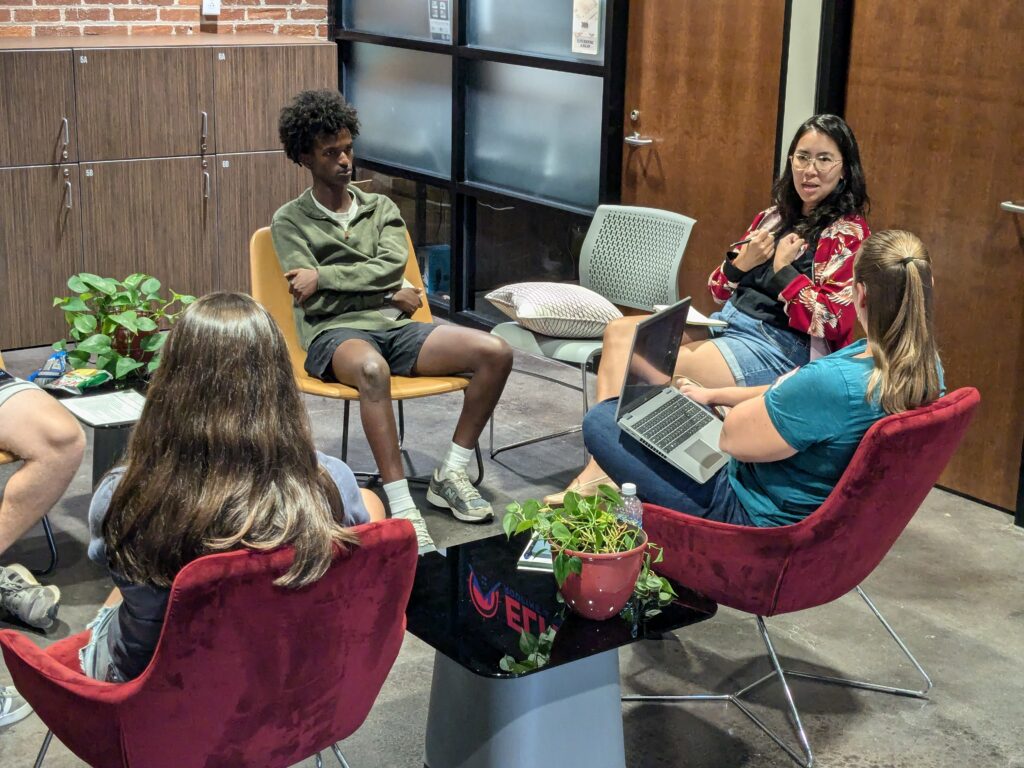
On September 7th and September 14th, the Deliberative Citizenship Initiative launched its annual Deliberation Facilitator Training at the Jay Hurt Hub for Innovation and Entrepreneurship at Davidson College. These trainings empower students, staff, faculty, and community members to become skilled facilitators of both formal and informal deliberations. Participants who complete the training become DCI certified facilitators, opening the door for participants to facilitate the DCI’s Deliberative Forums. This 8-hour training, spread over two days, enhances participants’ ability to facilitate meaningful discussions on political and social issues among deliberators with diverse perspectives.

This year, we welcomed a wide-ranging group of participants, with 21 joining us online and 33 attending in person. Our attendees included DCI Fellows, Davidson students, faculty, staff, and engaged community members, each bringing unique perspectives and experiences to the table. This rich mix fostered an inclusive environment that encouraged meaningful dialogue and collaboration throughout the training.

During the first session, Dr. Graham Bullock guided participants through the essentials of setting up and preparing for deliberation. We were thrilled to invite Senior Fellows to facilitate a mock deliberation using our Deliberation Guide on Free Speech and Inclusion. This hands-on experience allowed trainees to observe how seasoned facilitators navigate challenging conversations on contentious topics. Participants took on the role of deliberators in the mock deliberation, sharing their thoughts and experiences on free speech and inclusion while also engaging in some role-playing activities. The collaborative atmosphere fostered a deeper understanding of the importance of empathy and respect in facilitating difficult discussions.
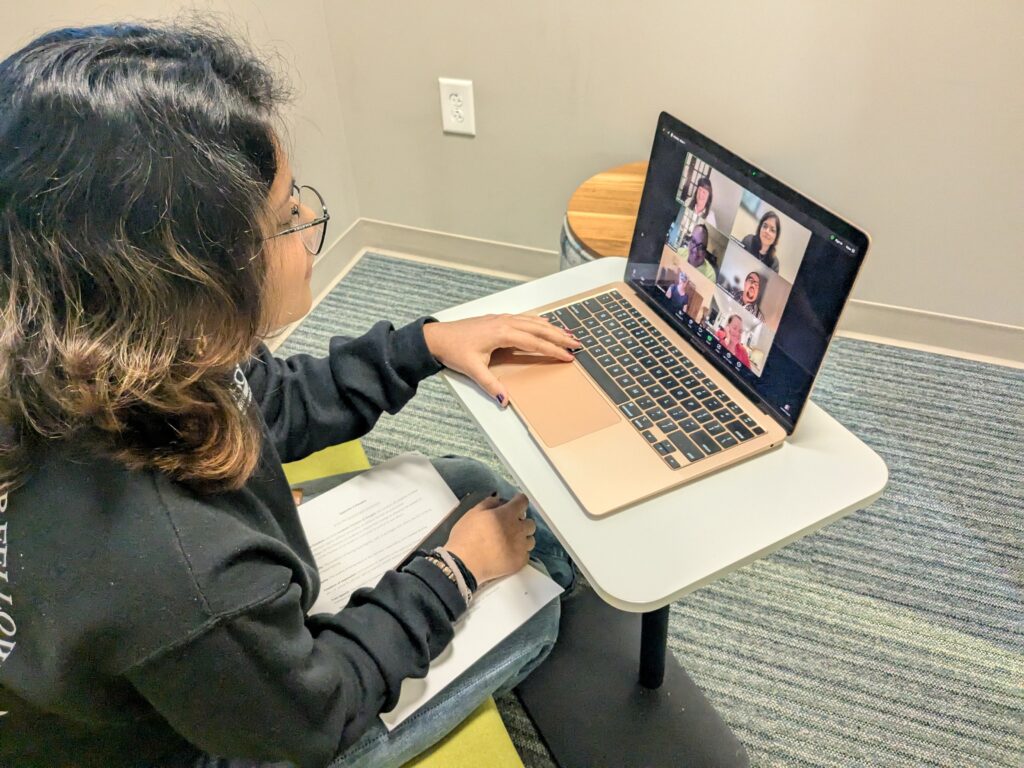
The following weekend, Dr. Bullock equipped our trainees with vital skills for facilitating tough discussions on contentious issues. Participants engaged in a gamified training experience that highlighted methods and tools outlined in the Deliberation Facilitator’s Handbook, making the learning process both interactive and enjoyable. They then practiced their newly acquired skills in a mock deliberation utilizing the DCI’s deliberation guide on Immigration, where they stepped into a facilitator role to explore diverse perspectives and motivate conversation. This immersive practice allowed trainees to build confidence and refine their facilitation techniques in a supportive environment.
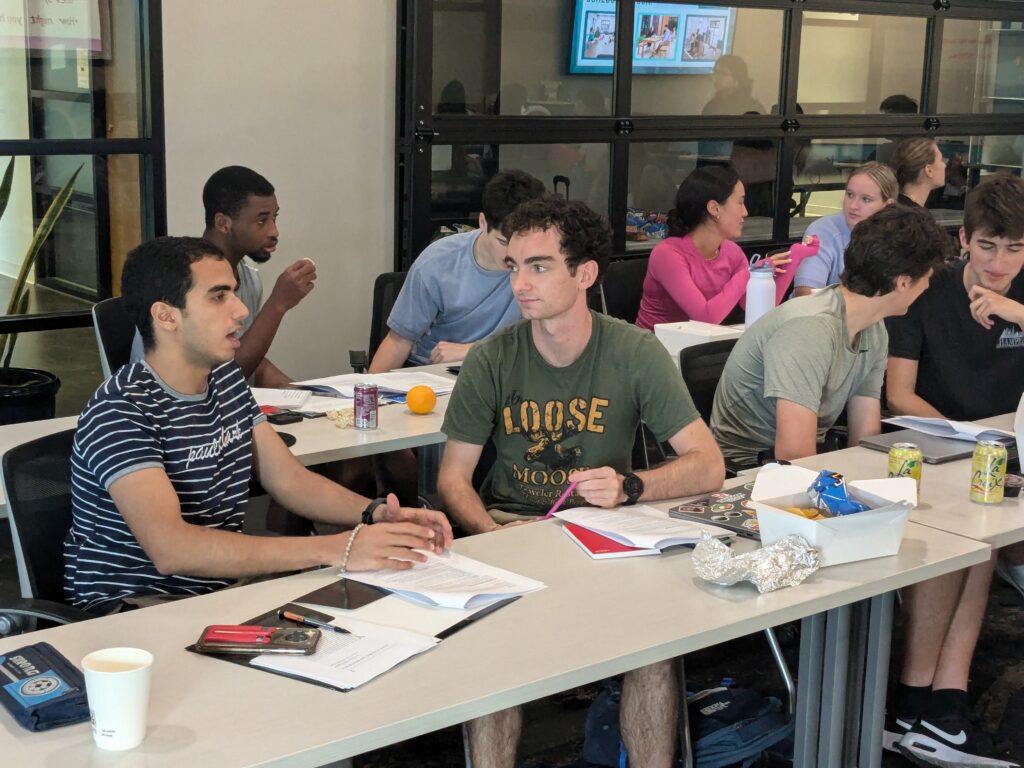
The training concluded with a spirited reception, both virtual and in person, where participants had the chance to connect and build community over food and refreshments. We are immensely grateful for the time spent with all our trainees over these two weekends and are excited to see how they will apply their new skills to foster meaningful conversations within their communities. We warmly welcome them into our community of deliberation advocates, who are deeply committed to strengthening our democracy.

We invite all those interested in building a better democracy, one conversation at a time, to keep an eye out for future Deliberation Facilitator Trainings. We would love to welcome you to our community!
Filed Under: Blog Posts, Events

DCI Publishes its Fourth Annual Report!

September 19, 2024 by Graham Bullock Leave a Comment

Cover page of DCI Annual Report.

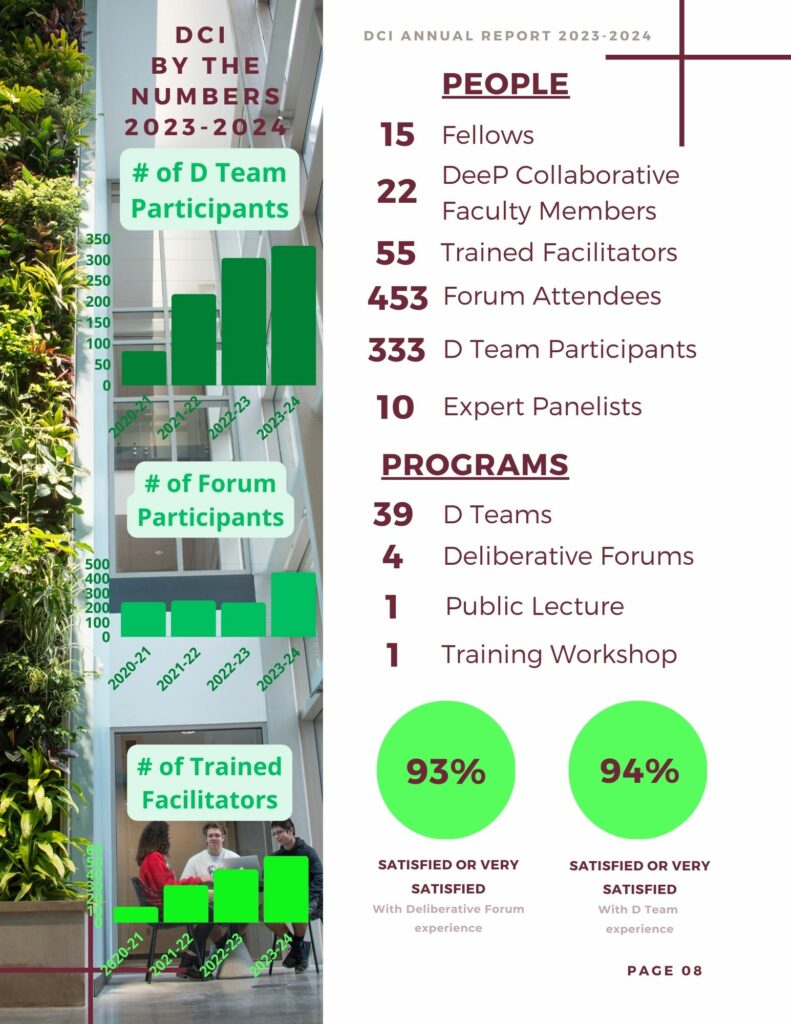
Four Deliberative Forums, 10 expert panelists, 15 Student Fellows, 22 Deliberative Pedagogy Collaborative Faculty Fellows, 39 D Teams, and over 1000 Davidson students, faculty, staff, alumni, and community members who participated in facilitated deliberations on challenging and contentious issues facing our society…2023-24 was a busy year for the DCI! The range and depth of this work is captured in the DCI’s fourth Annual Report that was just published on its website. We’d like to share a few highlights from the report and encourage you to check it out yourself as well. We hope that it will inspire you to join the new and continuing programs that the DCI is planning for the coming year.

Page of data from Annual Report.

The year began with our second annual Fall Semester Kickoff Party and our fifth Deliberation Facilitator Training Program, which trained over 50 people in how to moderate challenging conversations on difficult topics. They included our fourth cohort of DCI Student Fellows and our third cohort of DeeP Faculty Fellows, who came from 13 different colleges and universities from across the country. The student fellows went on to host our Deliberative Forums, D Teams, Commons Conversations, Deliberating GOATs event, and their own personal deliberation projects, while the Faculty Fellows developed and taught courses that systematically incorporated more deliberation about contentious topics into them.

The DCI hosted Christy Vines, CEO and President of the Ideos Institute, for a series of public lectures, workshops, class visits, and small group discussions with students. Vines focuses on empathic intelligence in her work, and her public lecture was titled, Faith, Race, and Politics: Can empathy help bridge our divides in a polarized world? Her visit helped the DCI and the Davidson community grapple with challenging questions related to identity, public discourse, and the pursuit of justice in a pluralistic society.

The DCI’s newly re-imagined Commons Conversations series featured Davidson faculty and staff who hosted discussions on topics related to their expertise. One of the DCI’s forums also highlighted the expertise of Davidson faculty on challenges facing democracy around the world, from Europe to Asia to Africa. The DCI continued to collaborate with academic departments, co-curricular programs, and community partners throughout the year. For example, its final forum of the year on Guns in America was co-sponsored with the Davidson College Democrats, Davidson College Republicans, Davidson College Libertarians, Center for Political Engagement, and the Political Science Department.

The work of the DCI also extended last year beyond Davidson, as it co-organized the first North Carolina Campus Discourse Leaders Conference with colleagues from UNC Chapel Hill, UNC Charlotte, Elon University, and North Carolina Campus Engagement. Hosted on the Chapel Hill campus, the conference brought together over 40 faculty and staff from public and private institutions of higher education from across the state of North Carolina to connect, share, and learn about how to best foster more productive discourse about difficult political and social issues in the classroom, on campus, and with the community.

Suffice to say, it was a rich and rewarding year, and provides a solid foundation for the exciting opportunities that the DCI will be pursuing in the year ahead. Check out the annual report at the link below, stay tuned for more info about our upcoming programs that are coming soon!

Filed Under: Announcements, Blog Posts, DCI Posts

Tackling Difficult Conversations in the Classroom: Sport as a Barrier-Breaker

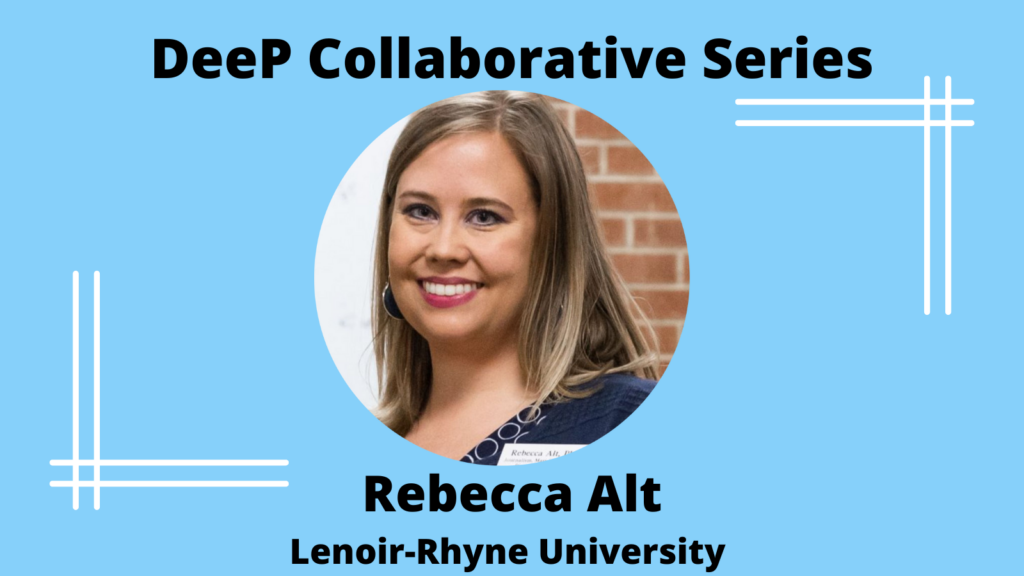
September 13, 2024 by Rebecca Alt

The Deliberative Pedagogy (DeeP) Faculty Collaborative consists of faculty from Davidson College and other higher education institutions who are committed to learning and implementing new ways to improve and deepen the quality of their class discussions. These faculty come from a wide array of disciplines and backgrounds to study and discuss deliberative pedagogy methods, share their ideas and questions with one another, and work to embed deliberation in their classrooms. In this special blog series, members of the Collaborative describe and reflect on their experiences developing and teaching their deliberation-involved courses.

When you really think about it, many parts of our lives can be understood through the lens of sports metaphors, analogies, and idioms. We “fall short of the goal line,” we “drop the ball,” and we view life as “a marathon, not a race.” Political discourse uses sports metaphors even more frequently. We tune in to “horse race” news coverage of political campaigns, we analyze offensive and defensive strategy, and – of course – we view political parties as rival teams vying to win over voters or maintain loyalties. That brings me to what this blog and the Deliberative Citizenship Initiative are about: public discourse and deliberation, particularly in the context of pedagogical practices in the college classroom. 

As a teacher-scholar of communication and rhetoric whose topic specialty is sports culture, not only am I fascinated by what sports metaphors can and can’t do in public discourse, but I also wanted to experiment with it further in my sports communication course, truly putting the “meta” in “metaphor.” Specifically, as part of the Davidson Deliberative Pedagogy Collaborative through the DCI, I sought to infuse deliberative pedagogy into my class and cultivate a “practice field for democracy.” I encouraged my students – which included student athletes and non-student athletes – to view their deliberative skill development as akin to individual athletes and teams training to compete in their sporting endeavors. 

Yet in my classroom, they are practicing deliberative skills to productively engage when it’s politically “game time” – around the Thanksgiving table, in their next class, or in a public context. To practice, we utilize the subject matter of sports and sports communication. Although historically dismissed as the “toy department” of society (and media specifically), what happens on and off the field in the world of sports has a lot more to do with political culture than many students realize. And that’s at the heart of the weekly deliberations I implemented throughout the semester.

My Sports Communication (COM 269) course at Lenoir-Rhyne University, which is offered every spring, has exposed majors and non-majors alike to the important ideas of debate and deliberation in the specific context of sports – a context that is immensely accessible for students to engage in critical discussion about issues of public importance. And yet, I hadn’t made these skills explicit in learning outcomes or assessment. When I applied for the Deliberative Pedagogy cohort, I intended to revise my course to make it more deliberative from top to bottom. That is exactly what I did. First, I include two formal learning outcomes focused on deliberation. Second, I redesigned the major assignments to align with those outcomes. Finally, I incorporated deliberation and rhetoric frameworks throughout the semester, including work on the relationship among democracy, rhetoric, and athletics in Ancient Greece.  Concepts from the deliberative pedagogy literature helped us determine what topics and behaviors were “in bounds,” for our practices; rhetorical frameworks served as the equipment students would use while we tackled different issues.

Deliberative Learning Outcomes and Assessment 

  • DLOC 1: Students will engage in productive disagreement and agreement about key social, political, and cultural issues in sports communication theory and practice 
  • DLOC 2: Students will deliberate to advance a novel solution to a policy-based communication problem

Deliberating Case Studies

To assess DLOC 1, students participated in weekly practice deliberations in class each week for the duration of a 6-week unit. With students guiding the selection of general topics,* as the deliberation facilitator I then framed questions for us to deliberate on formally during the deliberation day of each week’s “case study.” Students considered questions like “what is the value of the human in sports officiating technology?” and “what are the positive and negative impacts of sports spectacle on our sociopolitical processes?” 

In the practice deliberations, our purpose was to come to a deeper understanding of an issue in sports communication that also extends beyond the sports realm. Questions about the value of humans in sports technology reflect larger conversations around advanced technology and AI in our world. Thinking critically about the Super Bowl shed some light on how everyone being tuned in to the big event means that they can be distracted from pretty significant global events that occur during the broadcast. And at the same time, aren’t we, in a sense, entitled to a little bit of escape? 

These are just two example practice deliberations that provided an opportunity for students to engage in critical discussion, the crafting and debating of arguments, and listening to other perspectives with respect and empathy. The question(s) we explored through the practice deliberations required thoughtful engagement. Participating in the DeeP Collaborative provided the concepts and strategies needed in order to foster a deeper level of conversation. 

*If you would like to know more about this unit and its role in creating a “practice field for democracy,” I encourage you to check out my chapter in the forthcoming book from Lexington Press titled Encouraging College Student Democratic Engagement in an Era of Political Polarization, edited by Angela McGowan-Kirsch.

Final Deliberative Forum

After concluding the Deliberating Case Studies unit, where the goal was to practice deliberating on a variety of questions, the class selected a policy-based topic for a final deliberative forum, which corresponds to DLO2. We engaged in “sportified” deliberations to choose the topic; first, students brainstormed topics which were “seeded” into a “bracket” (March Madness style) to set up “topic face-offs.” Bracket by bracket, we deliberated the pros and cons of each topic, gave ratings and voted, and after deliberating between two final options, ultimately arrived at the final topic of “sports and fraud.” 

Then, for the remaining 5 weeks of the semester, students broke out into different roles to play in the deliberation: league commissioners, athletes, fans, investigative journalists, PR professionals, coaches, policy analysts, and sports law/ethics experts. In addition to researching topics like Performance Enhancing Drugs (PEDs), match-fixing, and illegal sports betting, students engaged in “character research” to understand the different perspectives involved in a policy conversation about fraud. In addition to locating information about training, credentials, and experiences of their assigned role, I also asked them to engage in an informational interview with a real or “simulated” person (we used ChatGPT – students prompted the chatbot to “assume the role of policy analyst in the context of sports and fraud,” for example). 

After performing some individual research, students worked together first in similar roles (e.g., Public Relations specialists and Investigative Journalists) and then in pairs where roles might experience conflicts in values (investigative journalists paired with league commissioners, for example). In these activities, I wanted students to come to a greater understanding of the various perspectives on the issues and the unique pressures faced by each. Why might an athlete engage in point-shaving, and how can we extend greater empathy to those who cheat? This foundation was necessary for policy deliberations on what to do about sports and fraud. 

The final deliberative forum (occurring over two class periods, which was not enough!) featured deliberation over the merits and drawbacks of prevention versus penalty, and the role of communication in restoring public trust in sport. Imagine the parallels between the issue of fraud in the sports context and issues of lying, manipulation, cheating, and stealing in our larger political context. Assigning roles for students to play helped them, even if imperfectly, see and argue for perspectives they might not hold themselves. Many of the students in sports communication are student athletes, but asking them to think of themselves as coaches, journalists, or even just a fan encouraged them to draw on different lines of reasoning and evidence during our deliberations. In final reflections, several students mentioned that they appreciated this feature of the final unit. I was intentional about these roles as well: students might one day become coaches, public relations professionals, or lawyers. At every turn, I tried to craft a deliberative sports communication course that also encouraged career application in addition to democratic application. 

I gained many valuable things by participating in the DeeP collaborative. I sharpened my knowledge and skills on how to incorporate deliberative pedagogy in the day-to-day practices in the classroom, from facilitating small-group and full-class discussions, to incorporating role-play, framing issues effectively for deliberation, returning to my love of metaphor and scholarly roots in the rhetorical tradition, and more. I found myself inspired to be creative and innovative to keep the course fresh and interesting. I was also constantly provided with intriguing ideas to wrestle with, challenged to be agile and flexible, and encouraged to embrace mistakes and learn for next time – see what I did there? 

I believe that incorporating formal deliberation instruction and assessments provided a distinct experience for students wanting to learn more about sports, while also helping them improve their abilities to engage in deliberation about any topic in the public sphere. The level of preparation provided by the DeeP experience, including resources on strategies to implement, troubleshooting difficulties, and support from fellow DeeP members, gave me a solid foundation on which to build a successful deliberative sports communication course. 

Filed Under: Blog Posts, Faculty Posts

Transform Your Classroom: The Fall 2024 Deliberative Pedagogy (DeeP) Faculty Panel and Lunch

September 13, 2024 by Willow Paul

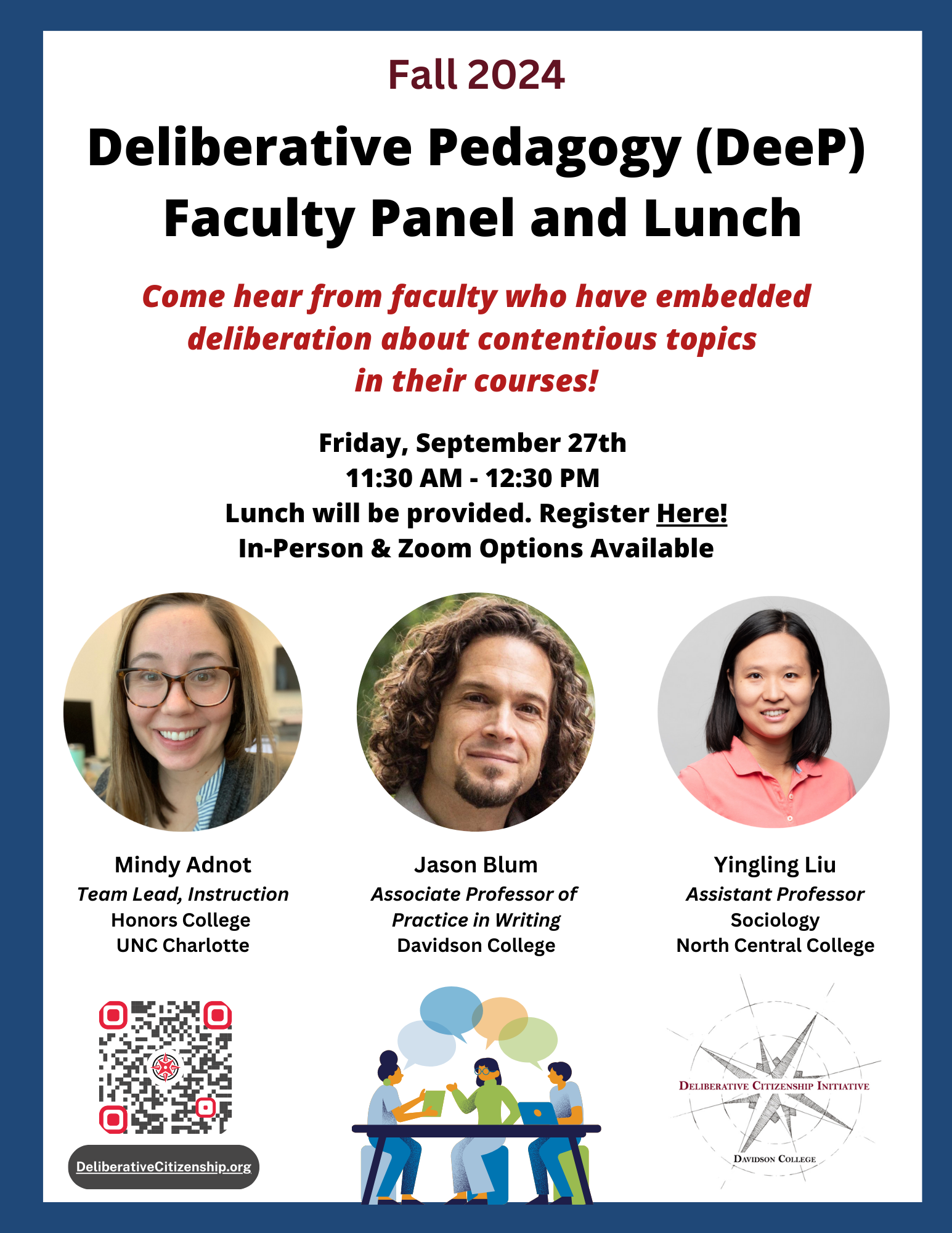
An Associate Professor in the Practice in Writing, Assistant Professor of Sociology, and Honors Program Team Lead are all serving on an upcoming panel. What do they have in common? Experience embedding deliberation about difficult and contentious topics into their classrooms!

On Friday, September 27 from 11:30 am to 12:30 pm, Professors Jason Blum (Practice in Writing, Davidson), Yingling Liu (Sociology, North Central College), and Mindy Adnot (Team Lead, Instruction and Selection, UNC Charlotte) will be sharing their work as members of the Deliberative Pedagogy (DeeP) Collaborative. Through their participation in the Collaborative, these faculty members embedded more deliberation into their courses on Religion in the Public Square, Introduction to Sociology, and Labor, Leisure, Learning, and a Good Life, respectively. Graham Bullock, Faculty Director of the DCI, will also provide a brief overview of what contributes to a “deliberative classroom,” and participants will have an opportunity to think about how they might make one of their own courses more deliberative.

Over 60 faculty members from 25 different institutions have participated in the Collaborative, which enables professors from across the humanities, natural sciences, and social sciences to work together on developing and implementing innovative ways to stimulate deeper discussions in their courses. 

Are you a faculty member who is curious about how you might do something similar in your classroom? Or perhaps you already do, and are interested in picking up some new ideas? Then come join our Fall 2024 Deliberative Pedagogy (DeeP) Faculty Panel and Lunch, hosted by the Deliberative Citizenship Initiative. You can join either in-person in Studio D at the Davidson College Library or virtually. Lunch will be provided for all in-person participants, but seats are limited so sign up here today!

To learn more about the Deliberative Pedagogy Collaborative, the DCI’s Deliberation Across the Curriculum Program, and the upcoming panel, check out the attached flyer, this webpage, and these blog posts by faculty members who have participated in the Collaborative over the past two years.

We hope you can join us!

Filed Under: Announcements

Celebrating Community and Conversation: The DCI’s Kickoff Party Success

September 12, 2024 by Willow Paul

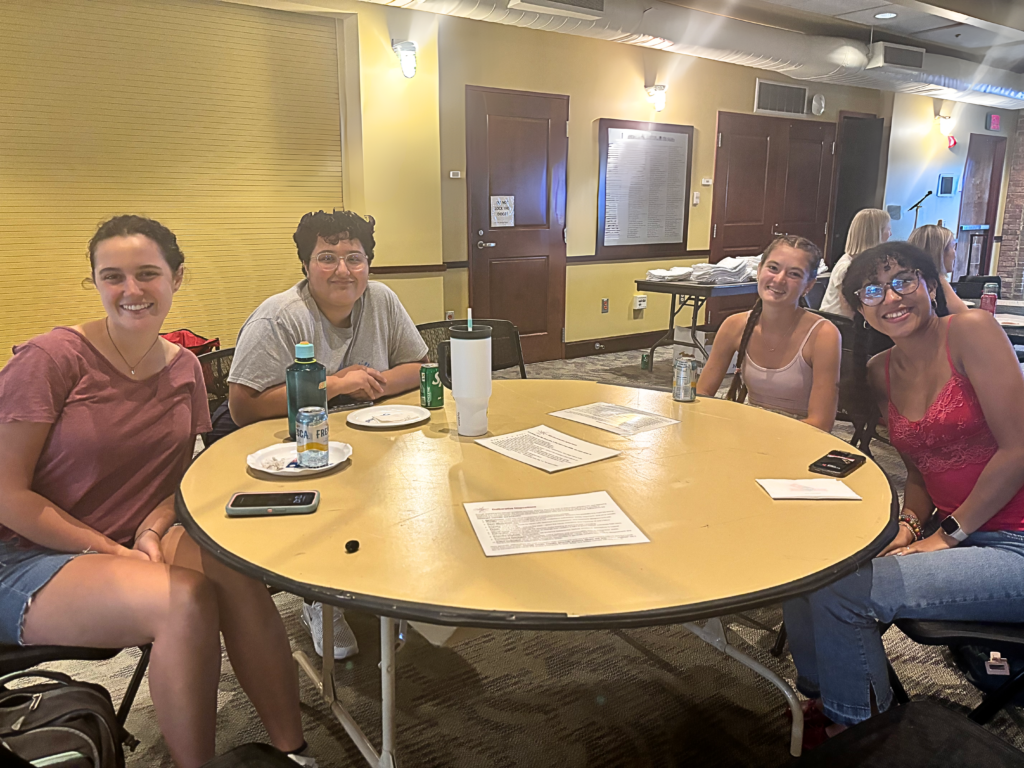
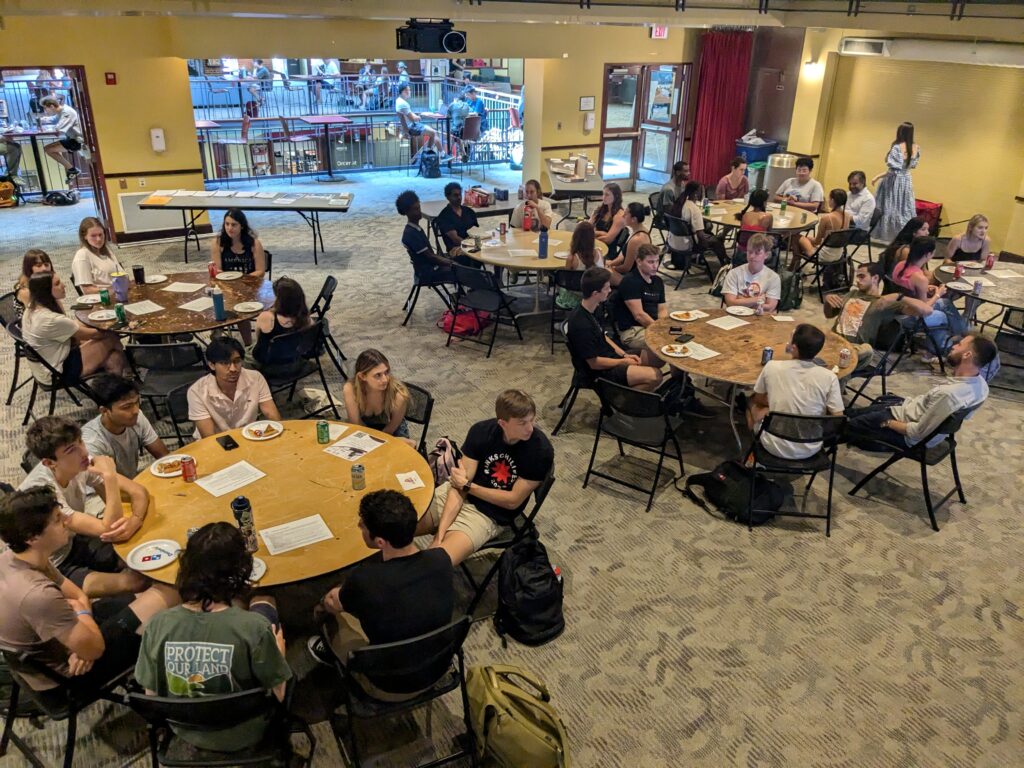
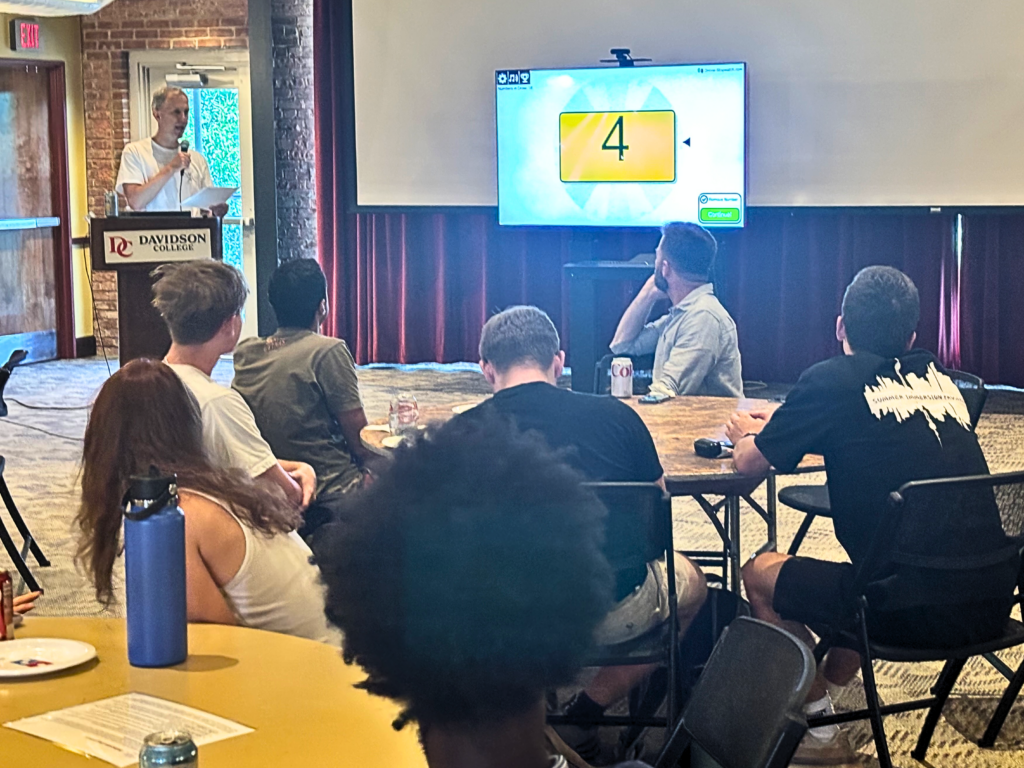
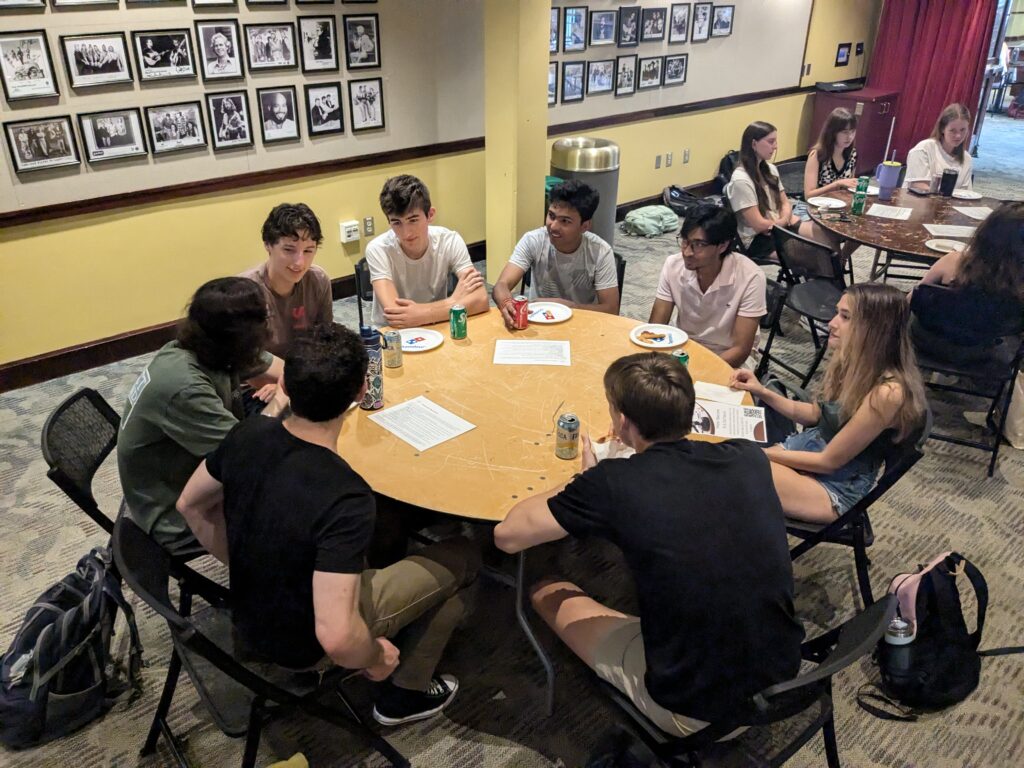
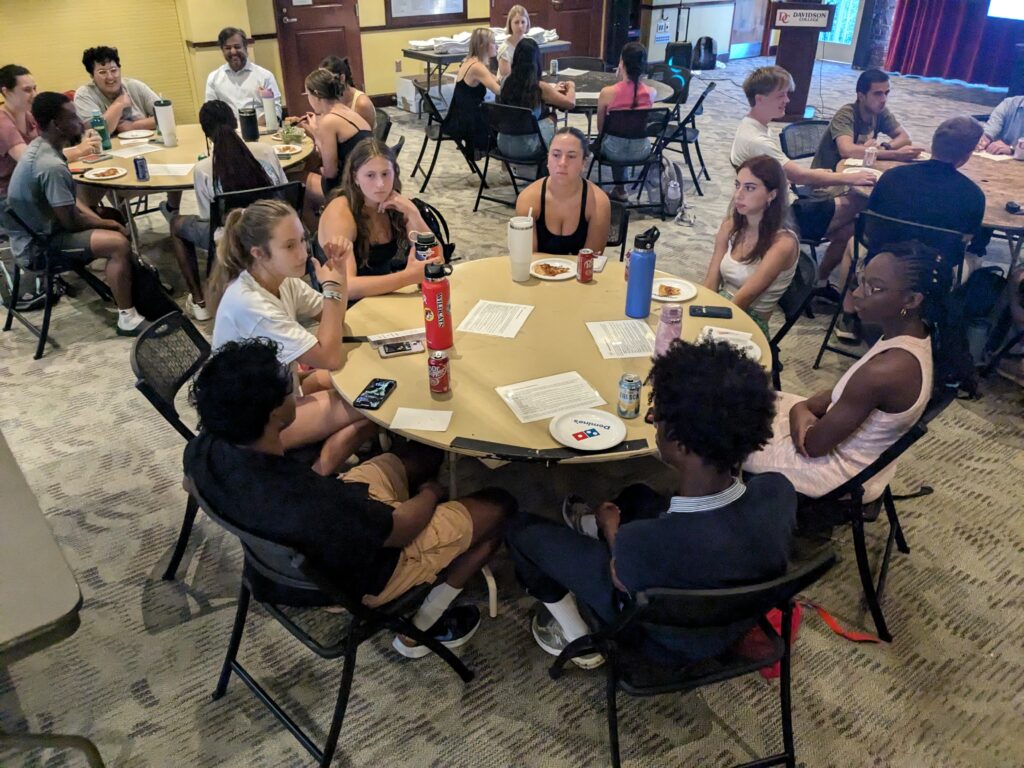
On Friday, August 30th, the DCI kicked off the school year with a burst of energy and enthusiasm! Around 40 people gathered to dive into lively discussions over pizza, connecting with fellow Davidson students, faculty, and staff. The event was a vibrant mix of newcomers to the DCI and seasoned veterans, all eager to mingle and engage.

photo of students deliberating

The celebration took place in the College Union’s 900 Room, where tables engaged in conversation on a diverse array of topics. Our new cohort of DCI Fellows did an exceptional job inviting students, staff, and faculty from the College Union, creating a welcoming atmosphere that encouraged dialogue. Each table was thoughtfully equipped with Conversation Agreements and Deliberative Dispositions to help guide discussions.

Every 15 minutes or so, the DCI Faculty Director, Dr. Graham Bullock took the floor to briefly highlight upcoming DCI events and offer useful deliberation tips. To keep the energy high, we also held a fun raffle— each attendee had a chance to win a coveted DCI T-shirt. The excitement was palpable as names were drawn, and every winner received their prize with a smile, adding a festive touch.

The event proved to be a fantastic start to the school year, providing participants with a meaningful opportunity to connect in new and engaging ways. It highlighted the DCI’s dedication to fostering respectful and thoughtful dialogue in today’s polarized climate. By embodying the DCI spirit of building democracy, one conversation at a time, the event set a wonderful tone for what promises to be an enriching year of DCI programs and events.

photo of students deliberating
photo of raffle numbers being drawn

Filed Under: Blog Posts, Events

  • « Go to Previous Page
  • Page 1
  • Interim pages omitted …
  • Page 33
  • Page 34
  • Page 35
  • Page 36
  • Page 37
  • Interim pages omitted …
  • Page 75
  • Go to Next Page »

Footer

Blog Post Categories

  • Announcements
  • Blog Posts
  • DCI Posts
  • Events
  • Faculty Posts
  • Fellow Posts
Image of a compass superimposed by the text "Deliberative Citizenship Initiative" and "Davidson College." Clicking on this image leads to the Initiative page.

Recent DCI Blog Posts

  • We Tried to Fix Jubilee’s “Middle Ground” – Here’s How It Went
  • A Case for Deliberation in the Natural Sciences
  • Welcoming New Staff to the DCI and DCN
  • Facebook
  • Twitter
  • Instagram
  • LinkedIn


Copyright © 2026 · Infinity Pro on Genesis Framework · WordPress · Log in