• Skip to main content
  • Skip to footer

Deliberative Citizenship Initiative

Building Democracy One Conversation at a Time

  • The Initiative
    • Programs
      • Deliberation Across the Curriculum
      • Deliberation on Campus
      • Deliberation in the Community
      • Research on Deliberation
    • Motivations
      • Why Deliberative Citizenship?
      • Why Davidson? Why Now?
    • Who’s Involved?
      • DCI Fellows Cohorts
        • 2025-2026 Fellows
        • 2024-2025 Fellows
        • 2023-2024 Fellows
        • 2022-2023 Fellows
        • 2021-2022 Fellows
        • 2020-2021 Fellows
      • DeeP Collaborative Cohorts
        • 2024-2025 DeeP Collaborative Faculty
        • 2023-2024 DeeP Collaborative Faculty
      • Advisory Council
    • History
      • What Sparked the Initiative?
    • Key Deliberative Dispositions
    • Frequently Asked Questions (FAQ)
    • Annual Report
  • Get Involved!
    • Participate in a Forum
    • Join a D Team
    • Become a Fellow
    • Take Courses
    • Get Training
    • Come to Guest Lectures
  • Events
    • Upcoming Events
      • 250th Anniversary Deliberative Forum Series on American Values
    • Past Events
  • Connections
    • The Deliberative Citizen: The DCI’s Monthly Newsletter
    • Efforts on Campus
    • Efforts in the Community
    • Efforts Elsewhere
    • Readings and Resources
      • DCI-Published Guides
      • DCI Guide to One-on-One Conversations
      • How to Disagree
      • Demonstration of Facilitation Styles
      • Deliberative Pedagogy Mini-Course
    • How We Can Help: DCI’s LET’S DELIBERATE! Partnership Opportunities
    • DCI in the News
  • DCI Blog Posts
    • Recent Blog Posts
    • All Blog Posts

The DCI Blog

Real Conversations, Real Impact: Reflections from the SNF Ithaca National Student Dialogue

November 26, 2024 by Willow Paul

It’s rare that we get to witness such a powerful convergence of energy, ideas, and purpose as we did at this year’s SNF Ithaca National Student Dialogue. Over the course of two days starting on October 18th, 120 students from across the country came together to engage in conversations that matter, tackling some of today’s most pressing issues. Throughout the dialogue I was in awe of how well our student representatives, Charlotte Juge ’27 and Casey Scheiner ’28, rose to the occasion, engaging in critical discussions with poise and insight. Casey and Charlotte are current DCI Fellows and truly exemplified the caliber of leadership we hope to foster through our Fellows program.

The SNF Ithaca National Student Dialogue is designed to bring students together to discuss and address the challenges they encounter on their campuses, from campus protests to DEI initiatives to university policies. By sharing experiences and perspectives with peers from other colleges, students identify common struggles or obstacles and then collaborate to develop practical solutions. The ultimate goal is for participants to return to their respective campuses with a clear action plan to tackle the issues they’ve pinpointed—whether it’s creating more inclusive spaces, improving campus policies, or finding ways to foster productive dialogue around contentious topics. This collaborative approach not only strengthens connections between students across institutions but also empowers them to drive meaningful change on their own campuses.
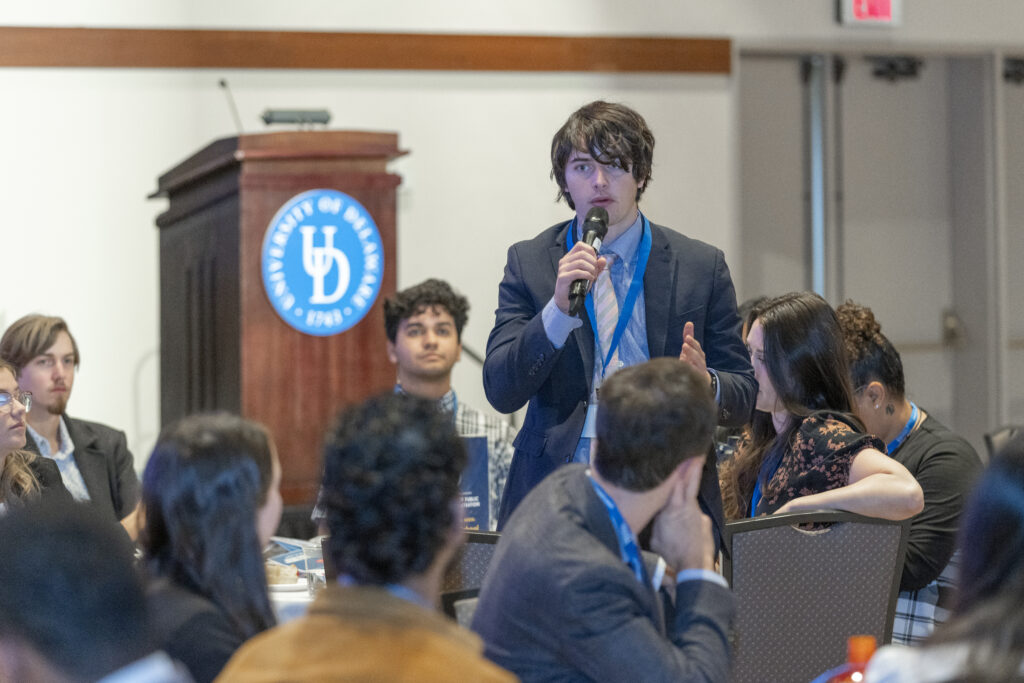
Photo of student speaking at conference.
Casey Scheiner ’28 speaking at a plenary session during the conference

We are proud to share Charlotte Juge ’27 represented Davidson College on a panel during the first day of the event titled, “My Story to Our Story: The Impact on Students’ Lives.” In this session, students shared their personal political backgrounds and discussed the experiences that have shaped their political identities. Charlotte’s thoughtful contribution highlighted the importance of understanding how individual stories influence broader campus dynamics, especially in today’s politically charged environment. Her perspective not only enriched the panel discussion but also showcased the kind of student leadership that the DCI strives to cultivate. By reflecting on how political beliefs are formed and shaped by personal and collective experiences, Charlotte and her peers sparked a deeper conversation about how universities and colleges can create spaces where students feel heard, respected, and empowered to express their views in constructive ways.
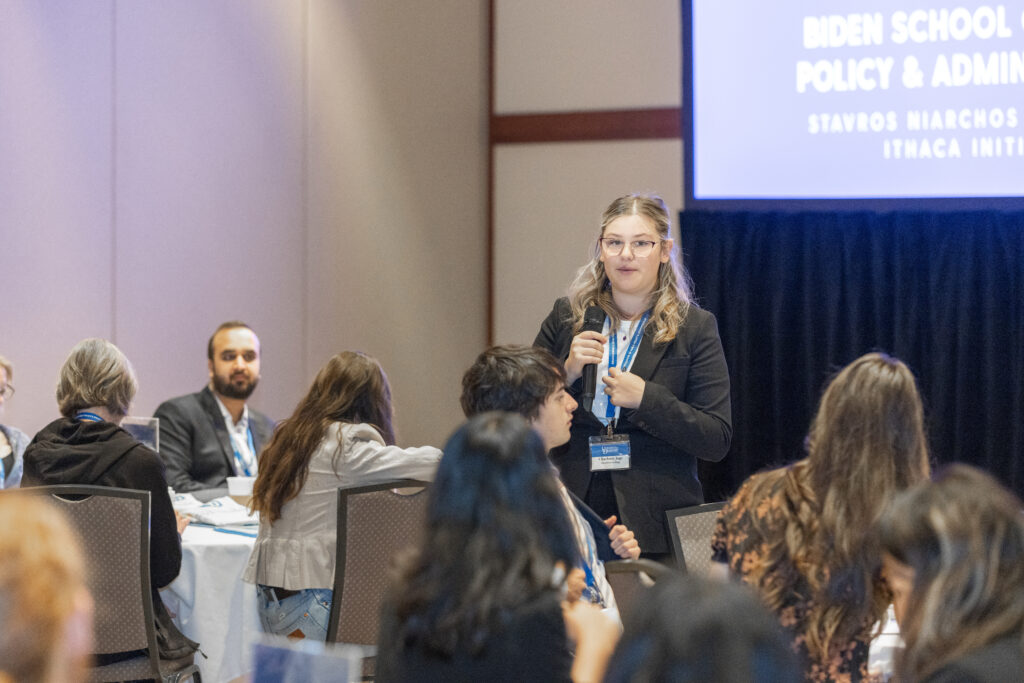
Charlotte Juge ’27 sharing her perspective at the conference

On the second day of the event, students took a hands-on approach to addressing the challenges they had identified on their campuses by workshopping solutions and engaging in stakeholder analysis. In small groups, they brainstormed actionable plans to tackle challenging campus issues. They also identified key stakeholders—such as administrators, faculty members, student organizations, and local community leaders—who could support their efforts. By mapping out these critical contacts, students were able to develop clear strategies for reaching out once they returned to campus, ensuring that they had the necessary resources and support to make meaningful progress in implementing their solutions. This collaborative, strategic approach not only helped students refine their ideas but also gave them the tools to turn their discussions into real-world action.

As staff, it was truly rewarding to be there in support of the DCI Fellows and students from across the country as they worked together to workshop solutions and engage in stakeholder analysis. Watching these students collaborate with peers from diverse institutions was a powerful reminder of the strength that comes from student dialogue. This event provided a unique opportunity for students to exchange ideas, perspectives, and strategies with others facing similar challenges on their campuses, while also learning from different approaches to addressing complex issues. Being part of this process allowed us to witness the students’ growth as leaders, as they not only developed concrete plans for change but also built connections that will support their efforts back on campus. It was inspiring to see them take ownership of the solutions they were creating and to see firsthand how they engaged with the stakeholder process to ensure their efforts could be effective and sustainable.
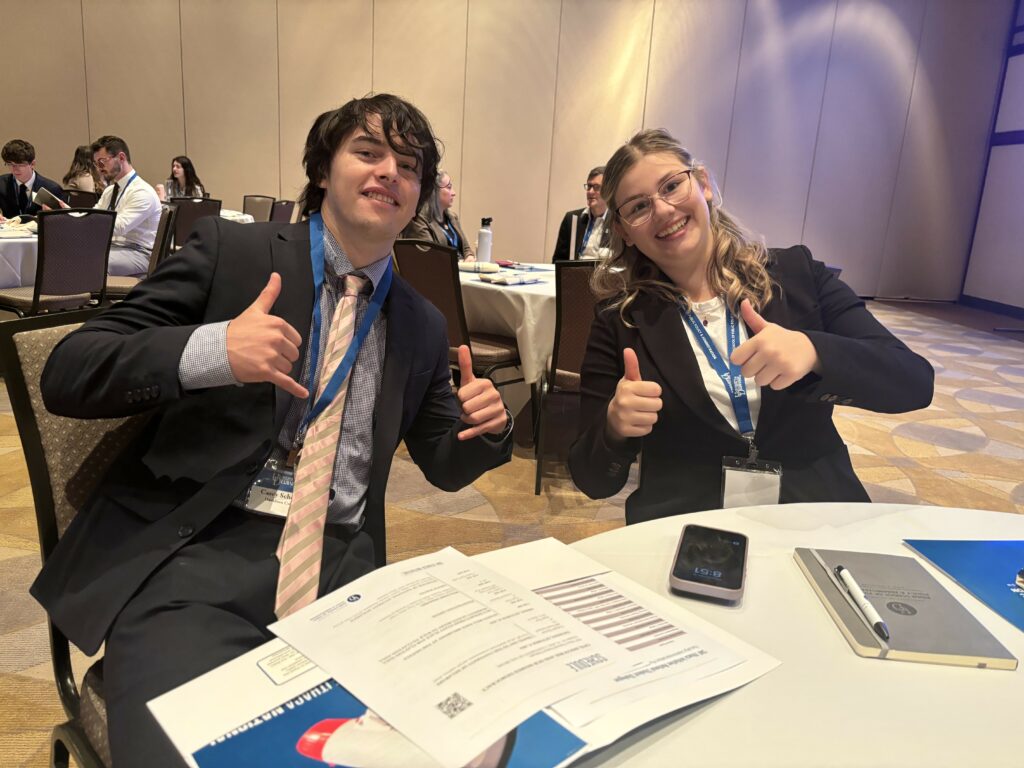
The SNF Ithaca National Student Dialogue was a truly inspiring event, bringing together passionate students from across the country to engage in critical discussions and develop real solutions to challenges on their campuses. It was incredible to see our Charlotte and Casey step up, engaging in difficult conversations with insight and maturity. Their contributions, along with those of their peers, are a powerful reminder of the potential for young leaders to drive change. As these students return to their campuses, we’re excited to see how they turn their collaborative ideas into action. To learn more about the event, check out this article from the University of Delaware that recaps the highlights and impact of the Dialogue.
Filed Under: DCI Posts

Innovation within Tradition: Eu-Phi Debate Includes DCI-Supported Audience Deliberations 

November 26, 2024 by Graham Bullock

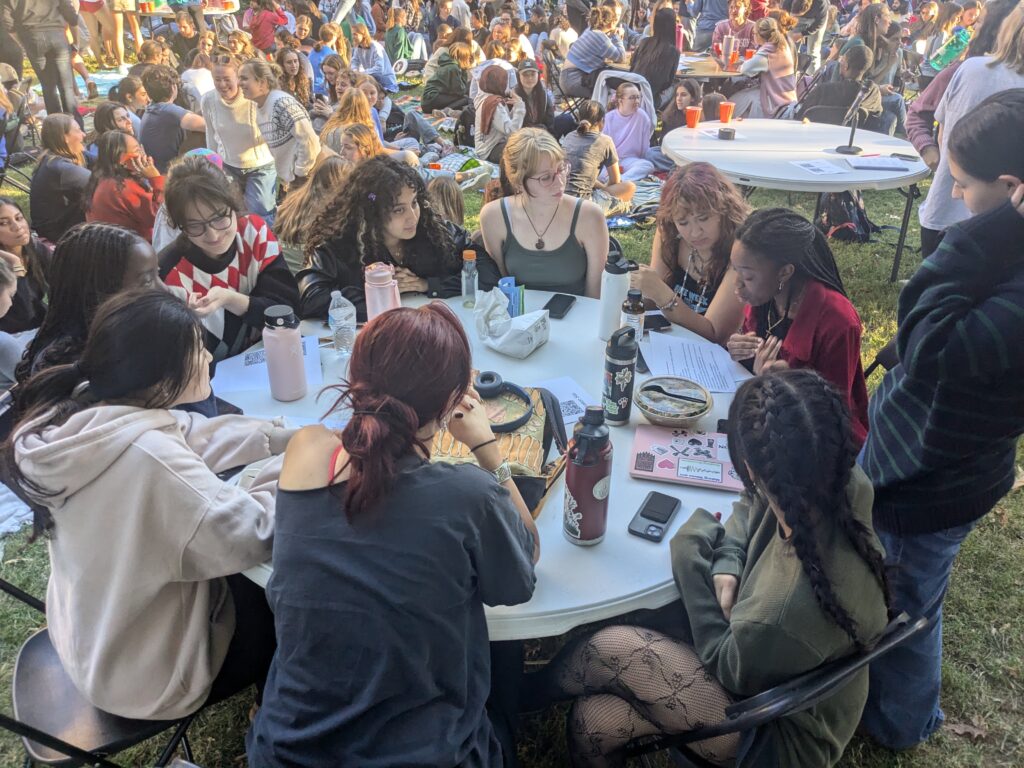
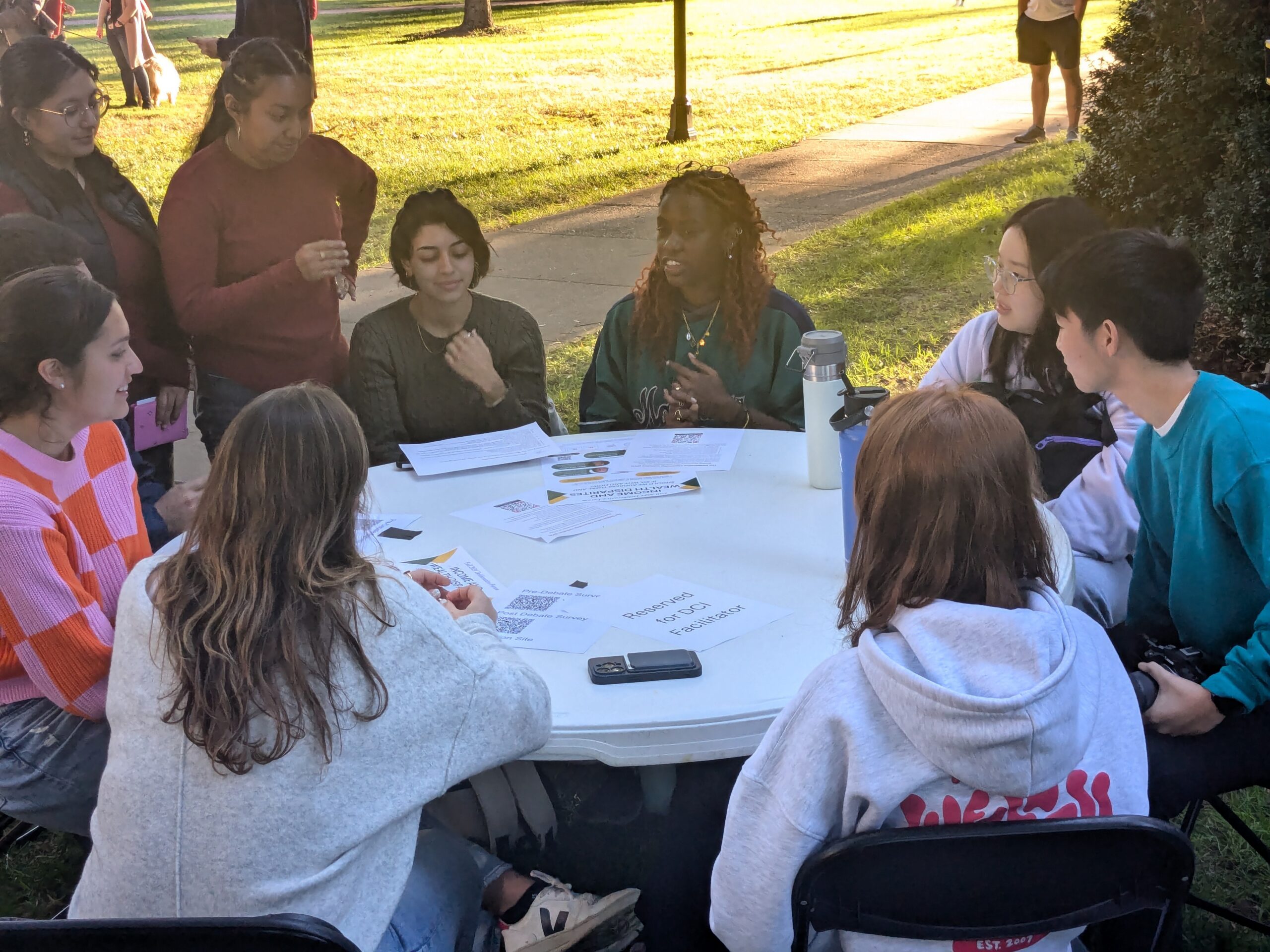
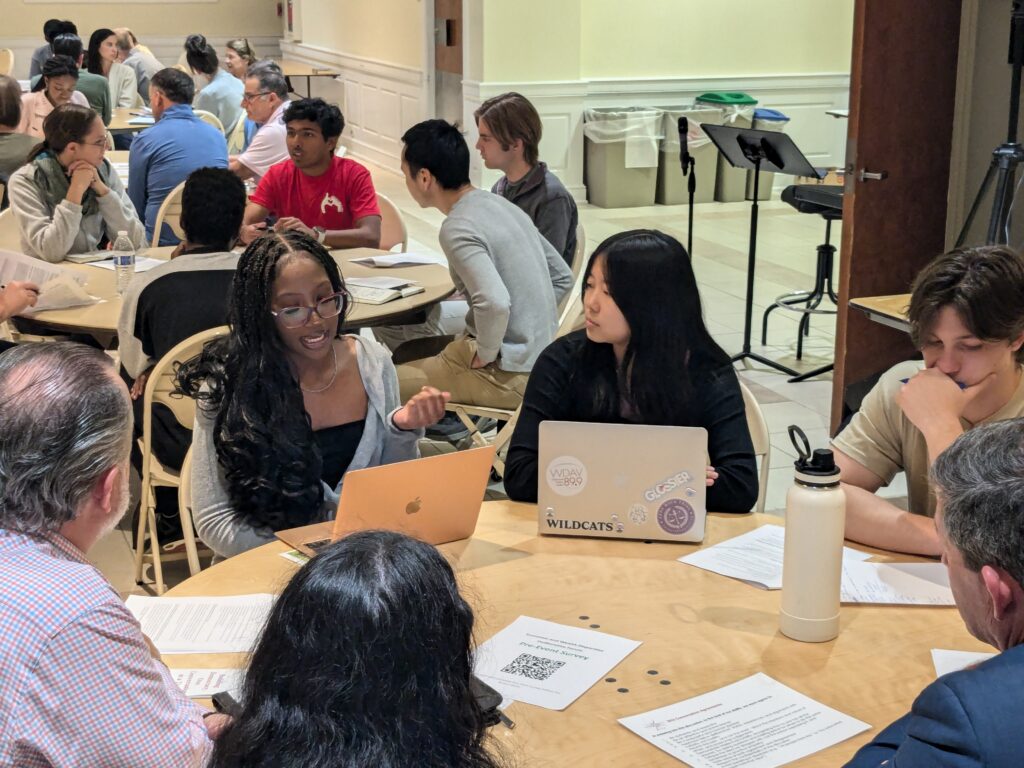
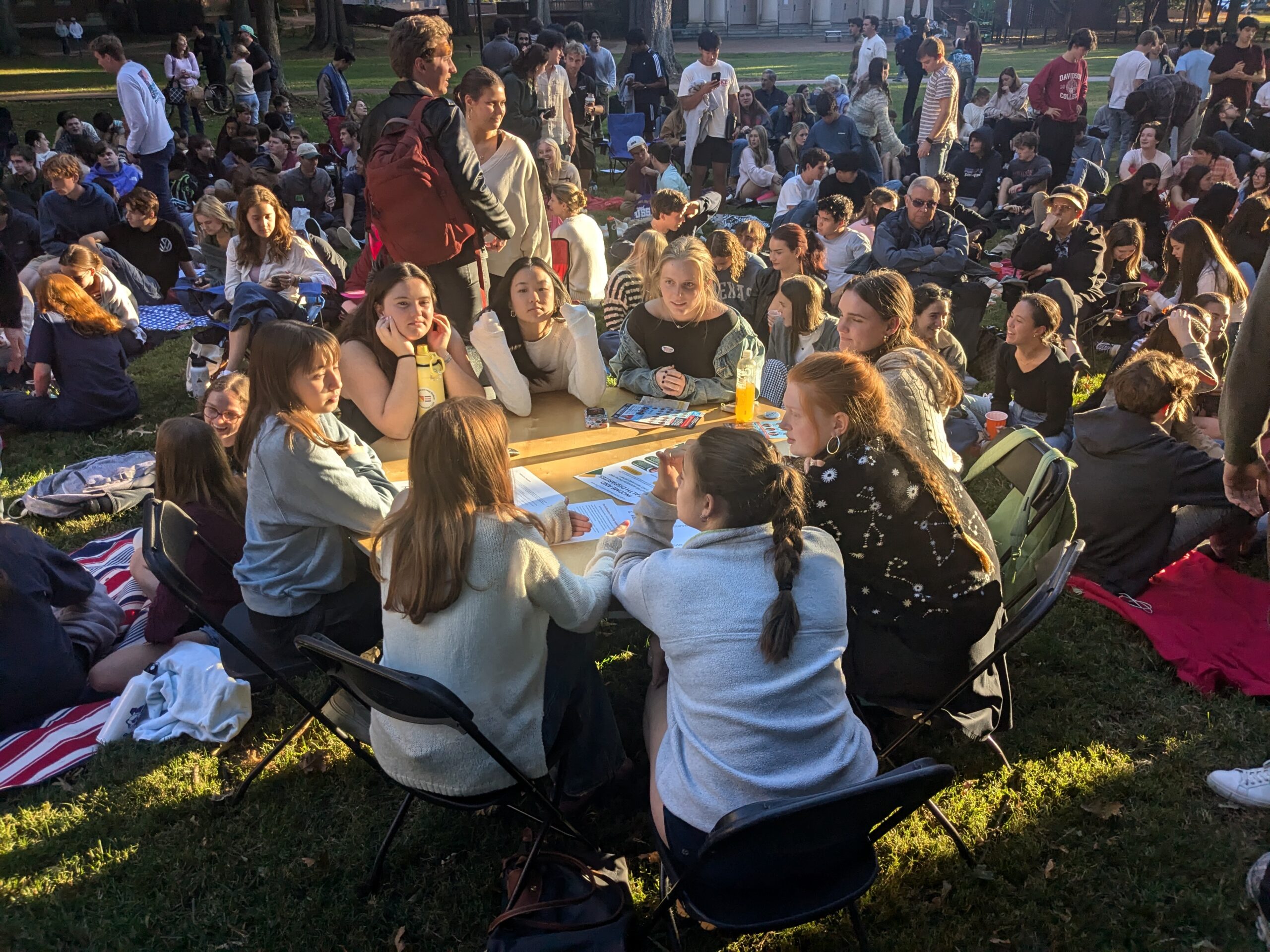
Group of students sitting around a table discussing

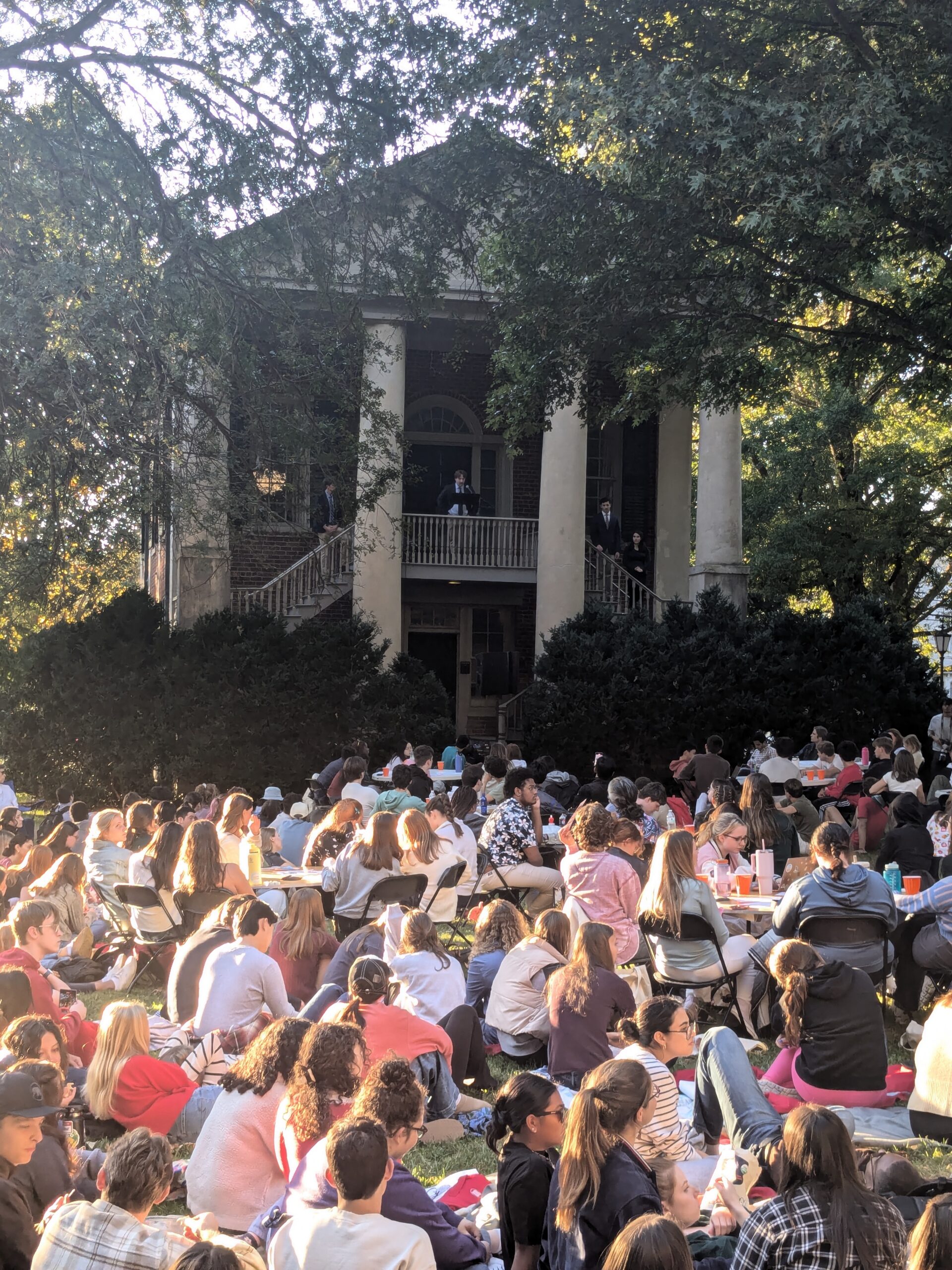
Every four years since at least 2000, the Davidson College Democrats and Republicans have held debates focused on key issues in the presidential election. They have been held between Eu and Phi Halls, two of the oldest buildings on campus, and have built on an even older tradition of debates between the Davidson’s two literary societies, Eumanean Society and Philanthropic Society, that date back to the college’s founding in 1837.

This fall, the College Democrats and College Republicans collaborated with the Deliberative Citizenship Initiative (DCI) to add a new element to the debate experience. In the past, the audience at these debates were generally passive spectators, listening to the arguments made but not having any meaningful way to engage themselves. 

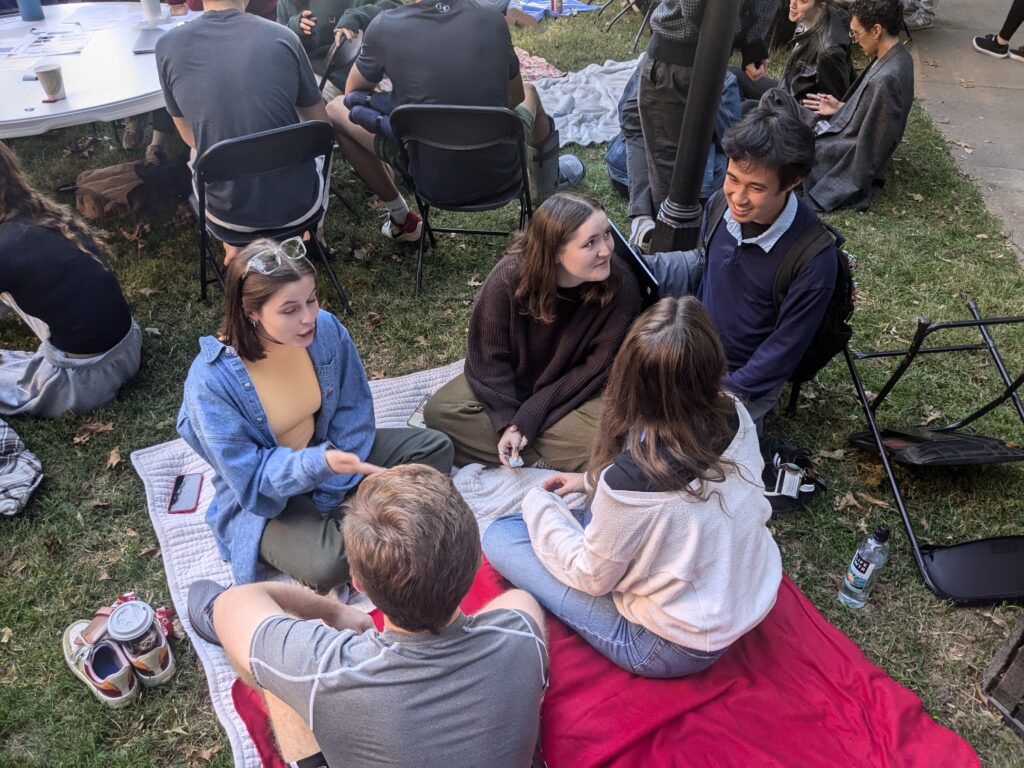
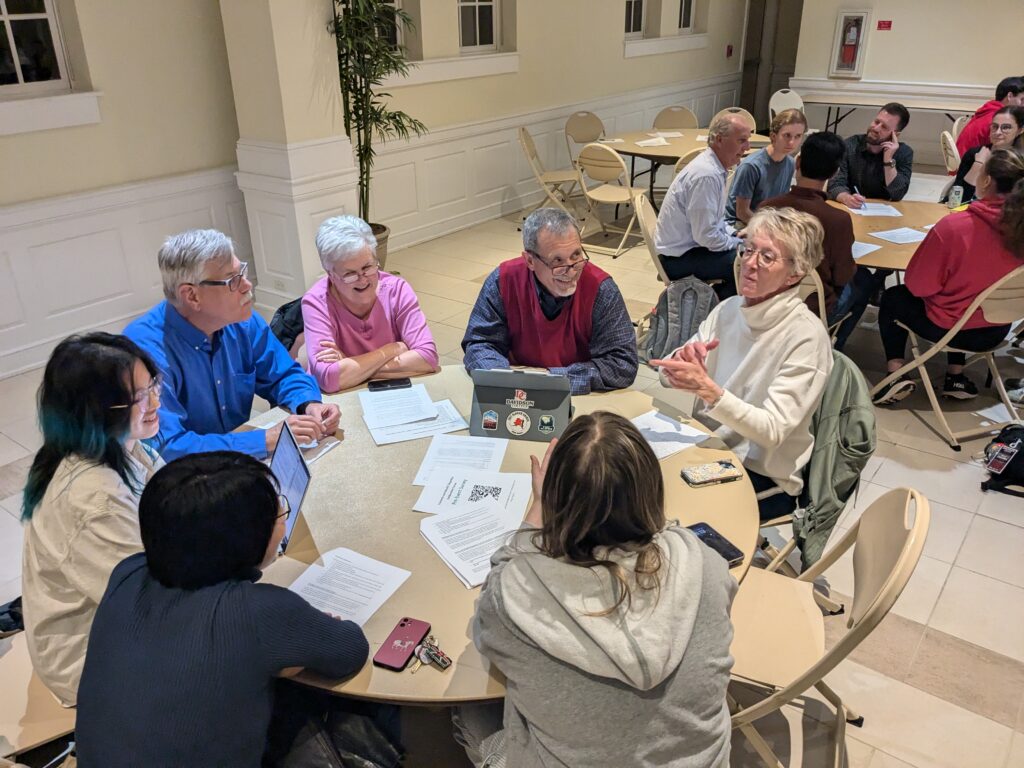
In 2024, however, audience members were given an opportunity to deliberate together about the topics that the debaters covered. In short “deliberative interludes” between each round of debate, DCI-trained facilitators guided conversations at round tables positioned between Eu and Phi Hall, introducing a set of conversation agreements, inviting participants to first share their thoughts with someone sitting next to them, and then to share with the larger group. 

They explored questions like, What insights did you gain from today’s discussion or debate? What arguments or experiences shared today have you thinking differently? What aspects of the conversation would you like to explore further? Which part of the discussion or debate surprised you the most? These lightly-structured conversations provided participants with entry points into the conversation that they could respond to, build on, and explore together. 

Given the hundreds of people who attended the debate (the turnout was incredible!), not everyone was able to join these conversations, and many just chatted informally with their friends during these breaks in the debate. But these interludes allowed everyone – whether they were at a table or not – to consider and discuss the arguments made by the debaters before moving onto the next topic. 

There are certainly tradeoffs associated with this innovation; for example, it took away time from the debaters and for other topics to be debated. But it also made the event more social and broke up the intensity and tension that inevitably comes from discussing challenging topics. Sitting for two hours listening to opposing viewpoints on some of society’s most contentious issues without an opportunity to constructively chime in can be challenging and draining, even for the most committed of us. 

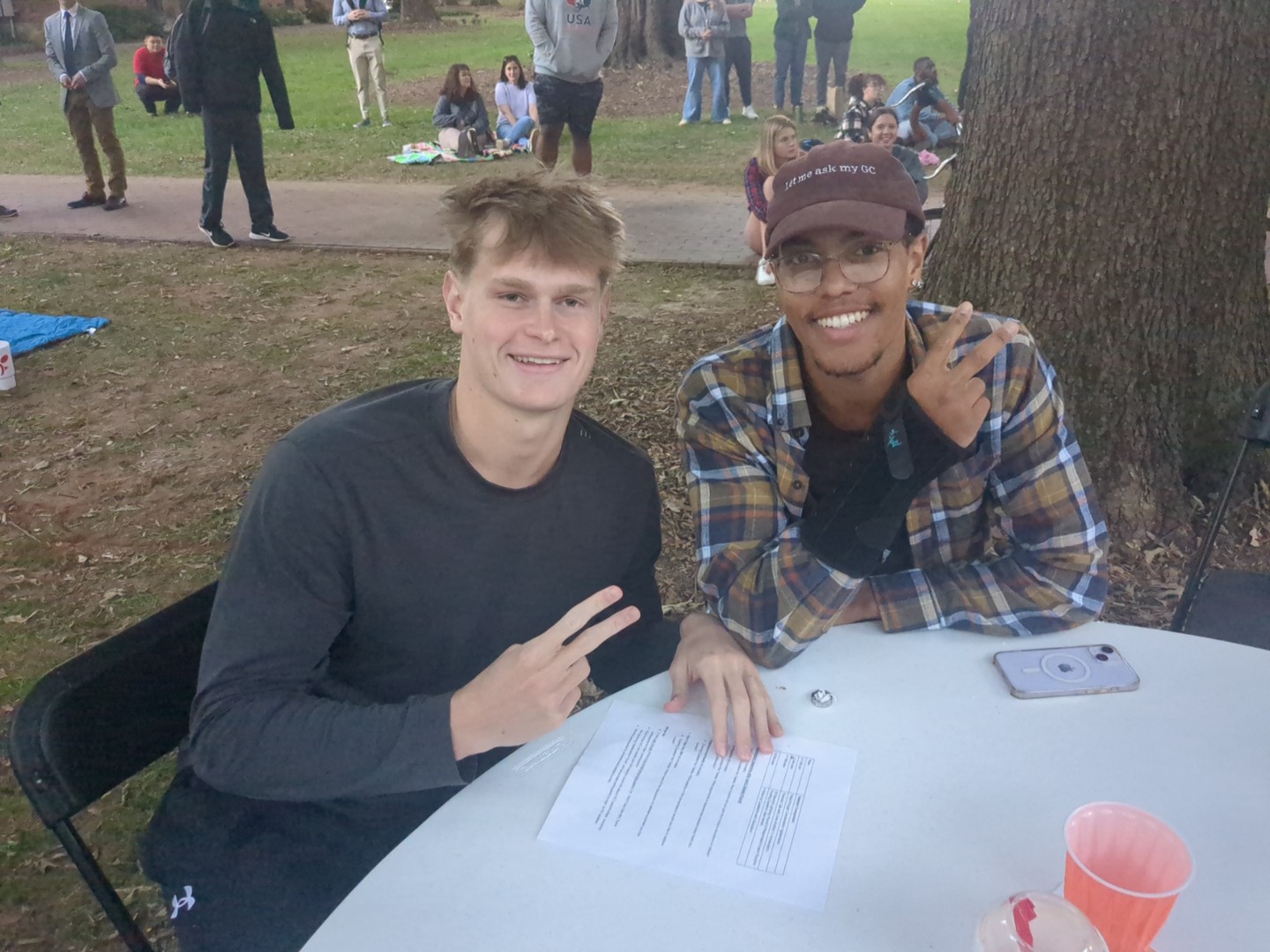
Group of students talking around a table.

The time allotted to the breaks was also limited – only about 10 minutes each – and did not allow for extensive and in-depth exploration of the issues at hand. But they did enable participants to share their initial reflections and connect with one another in ways that they might not do otherwise. As many student participants in the DCI’s programs have reported, they don’t often talk with their classmates about political issues given how sensitive and difficult they are. These breaks provided everyone in attendance a space to engage with one another on these issues, even if it was for a short time, and hopefully increased their interest, capacity, and confidence in diving into deeper conversations in the future, either through the DCI or in other contexts. 

There is still a lot of work to be done to create a more deliberative culture at Davidson and in our larger society, and no one event will accomplish this task. But this debate did advance us towards that goal. It enabled a substantive exchange of ideas through the debate itself and modeled a process by which ordinary people can engage with one another as well. Perhaps just as importantly, it brought together students from across the political spectrum to organize the event together. It was a truly collaborative project between students in the Center for Political Engagement, College Democrats, College Republicans, and the DCI that they all worked hard on to pull off and make successful. 

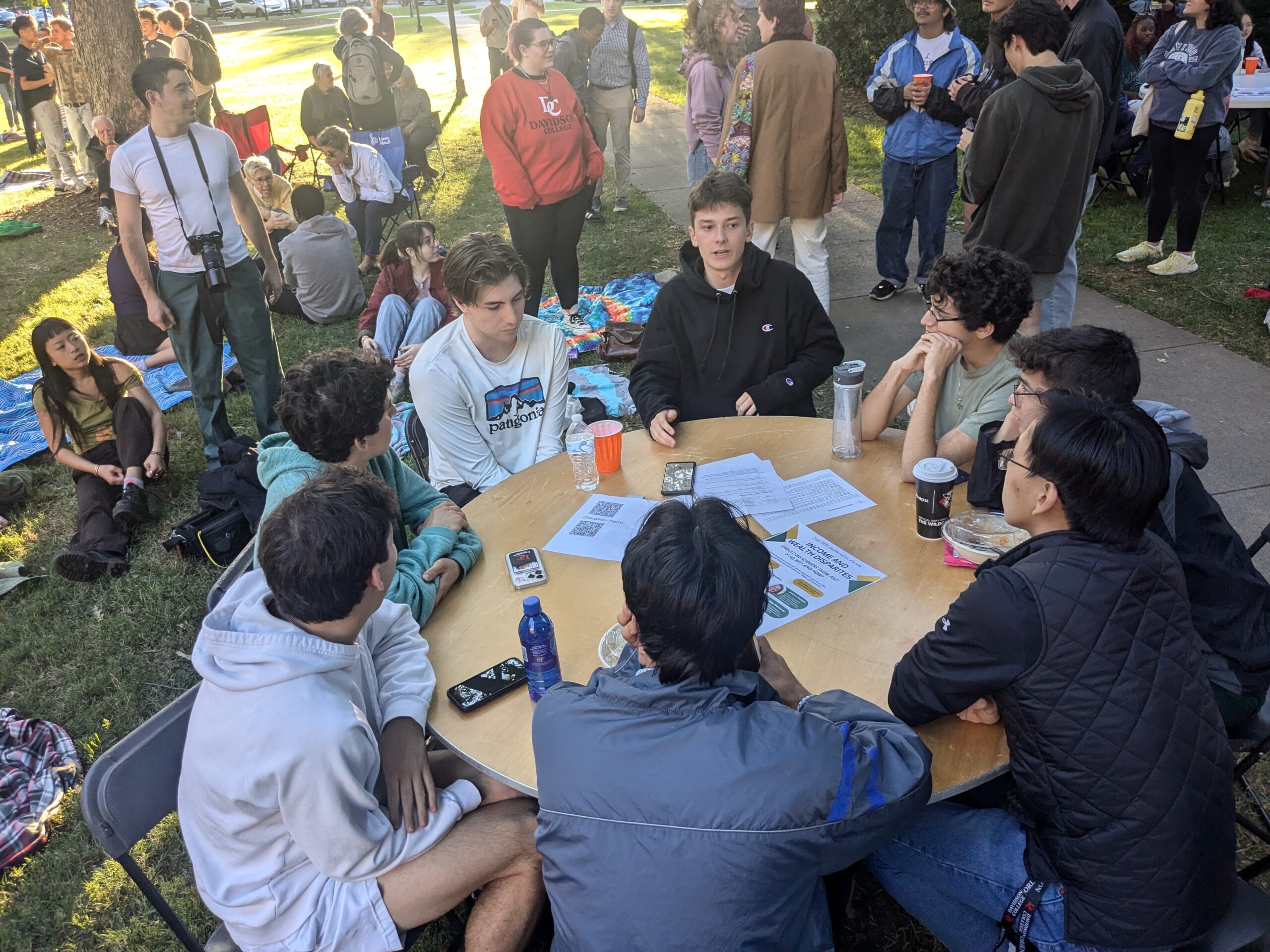
Students sitting around a  table talking.

It will take lots of these types of opportunities (“one conversation at a time”), but taken together, they can help us figure out how to engage with one another more humbly, more courageously, and more constructively. 

To learn more about the event, check out this article published on Davidson’s article. 

Filed Under: DCI Posts

Deliberative Discussions in Class “Bridge the Gap between Film and Reality”

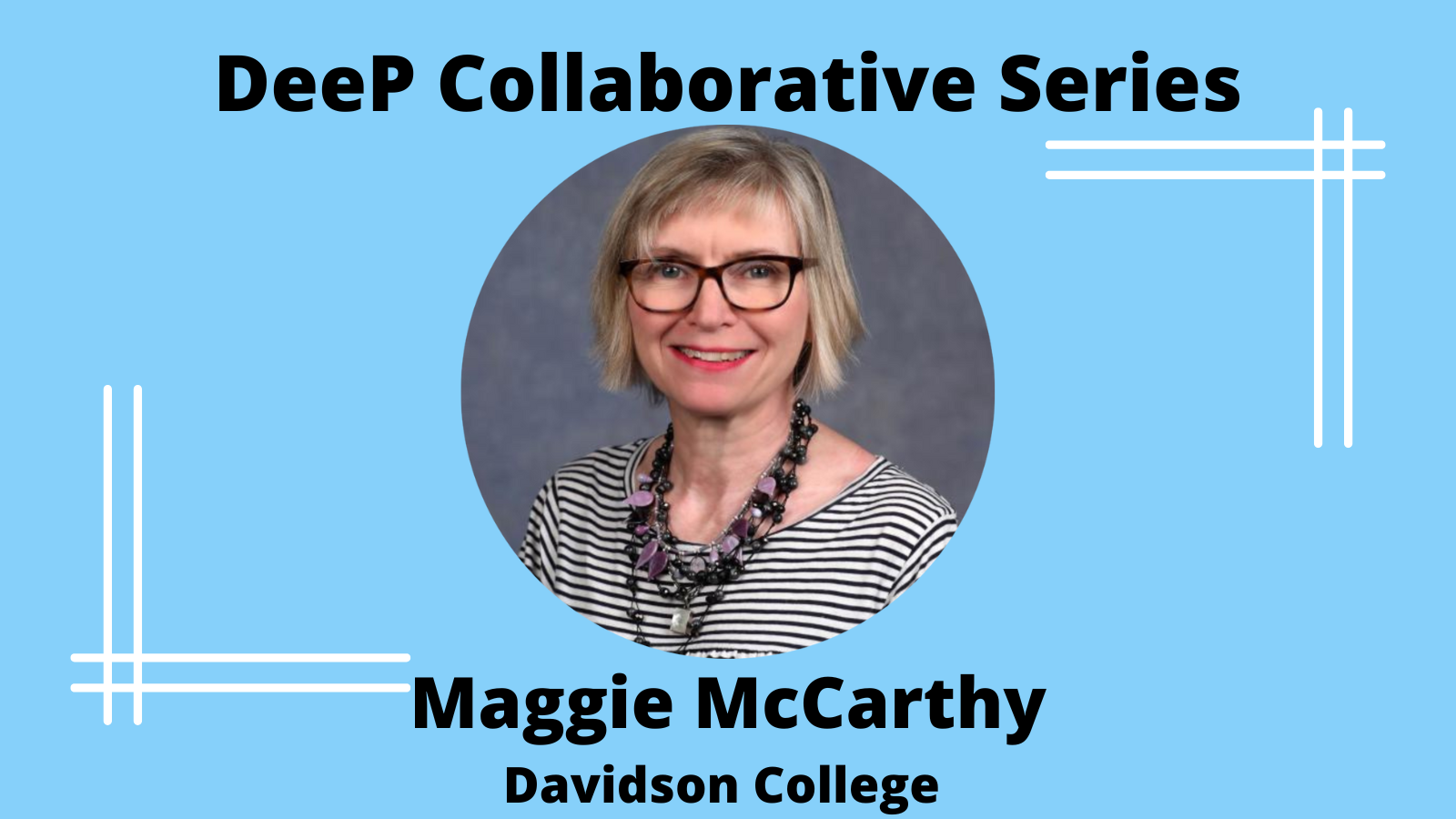
November 20, 2024 by Maggie McCarthy

This past spring I taught a writing course focused on filmic depictions of race, which incorporated four deliberative sessions on related topics of debate. Every other week on Fridays we addressed the following issues: 1) Critical Race Theory: Should States Restrict Discussion of Race in the Classroom 2) Race and Ethnicity in Entertainment. Does the Entertainment Industry Positively and Fairly Portray Minorities? 3) Slavery Reparations: Should the Government Provide Reparations to the Descendants of Slaves? 

For each one, students prepared readings representing both sides as mapped out on the “Engage with Opposing Viewpoints” website. In addition, students on each side were obliged to find additional readings to support their point of view. For the fourth deliberation, students picked the topic, which ended up being an essay on Black actors in fantasy films whose faces were far more often altered by CGI technology than white actors.

Students were divided up into two teams, and over the course of the first three deliberations, each took up one of the following roles: a 2 – 3 minute introduction of the groups’ position; engaging with one member of the other team in a back and forth that could last up to five minutes; presenting a closing statement after huddling with their team to decide which aspects of the exchanges to emphasize; and being one of three evaluators who provided feedback on the strength of each team’s arguments the overall success of the deliberation. 

I purposely assigned students to a position knowing it might not necessarily align with their own because I wanted them to have a deeper knowledge of differing vantage points. In the fourth deliberation, we had a less structured discussion, which was productive and fun, but I didn’t see opposing arguments since students tended to be in sympathy with Black actors dealing with racial imbalances.

In an essay they each wrote about the whole experience, they seemed to appreciate the chance to fully research and understand a position they disagreed with. As one student put it, “Hearing a stance that I do not fully align with no longer ignites a defensive spirit within me.” She also observed: “There were times I would make a counterargument that aligned with my position that I did not agree with. Doing this taught me how to argue points convincingly on the basis of logic rather than personal bias.” Regarding the incorporation of deliberations into a class on racial issues, she concluded: 

“I am incredibly grateful that deliberative discussions were included in this course because it elevated my understanding of the films we watched. For example, watching The Searchers and Black Panther provided us with examples of positive and negative representations in film. However, having a discussion about that topic emphasized the real world implications of said representation. These discussions bridge the gap between film and reality. They had a positive effect on me personally as well. Not only am I a better researcher I am also more empathetic and aware of differing opinions, skills that are necessary for my other commitments like debate, mock trial, and daily interaction.”

For me, it was this experiential component that mattered above all else. From the essays the students wrote, it sounds like they gained the skills the Deliberative Citizenship Initiative seeks to promote.  

Filed Under: Blog Posts, Faculty Posts

Sports Talk as a Model For Deliberation 

November 20, 2024 by Casey Scheiner

LeBron James or Michael Jordan? College football or NFL? Summer or Winter Olympics? Tarheels or the Wolf Pack? Spirited debate topics like these are just as integral to sports fandom as tailgating on a Saturday or filling out a March Madness bracket. Yet, though widely revered as a fun topic of idle chatter, sports are viewed as a less intellectual subject for truly stimulating conversation than politics, science, philosophy, or any other academic discipline. However, in my experience, sports talk is underrated as an effective model for constructive deliberation. 

Before I delve into the substance of what makes sports a valuable domain for deliberation, it’s important to understand that sports are inherently valuable because they provide a space where disagreement is not only acceptable, but welcomed because of its lower stakes nature that features less villainization of opposing viewpoints. It can be scary to challenge someone’s staunchly held view on a hot button issue like abortion due to the inherent vitriol that surrounds such a topic. On the other hand, when talking about sports, disagreement easily elicits laughs, kinship, and new ways of approaching sports analysis, which can serve as a valuable “appetizer” to test out deliberation before diving into more contentious themes. While I’ve never felt comfortable walking up to a stranger and starting an immigration debate, I’ve made many random friendships simply by asking who’s their greatest baseball player of all time.  

Sports don’t just allow us to deliberate more – they also help us deliberate better. In politics, deliberation can be so challenging when both sides come in with very different conceptualizations of the facts, and thus different conclusions. For example, someone who watches MSNBC coverage of Hurricane Helene relief efforts will have a different understanding of their efficacy than a Fox News viewer. In sports, a level of universal objectivity exists: everyone who watched the Super Bowl saw the exact same game. Everyone agrees that Michael Phelps has won 23 gold medals.  

Working from an agreed-upon set of facts makes deliberation easier. Instead of having to get bogged down in how many gold medals Michael Phelps has won, people can cut straight to debating its implications for his legacy or how it compares with Usain Bolt’s achievements. Meanwhile, political deliberators often must spend far more time establishing their agreement on factual details than delving into the implications of those details. More time on meaning equals more time achieving goals of deliberation like mutual understanding. 

Sports also provide a crucial source of unity that invites future deliberation. Democrats and Republicans are more hesitant than ever to engage with one another; however, sports provide a universal topic to discuss. After establishing a shared interest in a particular sports league (If no common sports interest exists, other points of cultural overlap like music and television can be an effective substitute as well), I can easily befriend someone, even amidst differing political beliefs. Once we’ve formed that trust and kinship, it becomes far easier to engage on a more controversial topic. With these norms of civility, respect, and thoughtfulness that we initially establish through sports talk, we can apply this model to a hot-button issue.  

Nonetheless, there exists no easy answer for the question of how to apply the lessons of sports talk to more contentious deliberations. We can’t snap our fingers and make immigration comfortable to talk about or the economy easy to summarize objectively. Still, by applying some practices that we subconsciously practice during our sports conversations—searching for a set of facts to agree upon, recognizing the humanity of the other deliberators, and not being afraid to disagree—we can move towards stronger conversations in the sphere of political deliberation.  

Filed Under: Blog Posts, Fellow Posts

The DCI Takes on Income and Wealth Disparities: A Recap

November 15, 2024 by Stephen Walker Leave a Comment

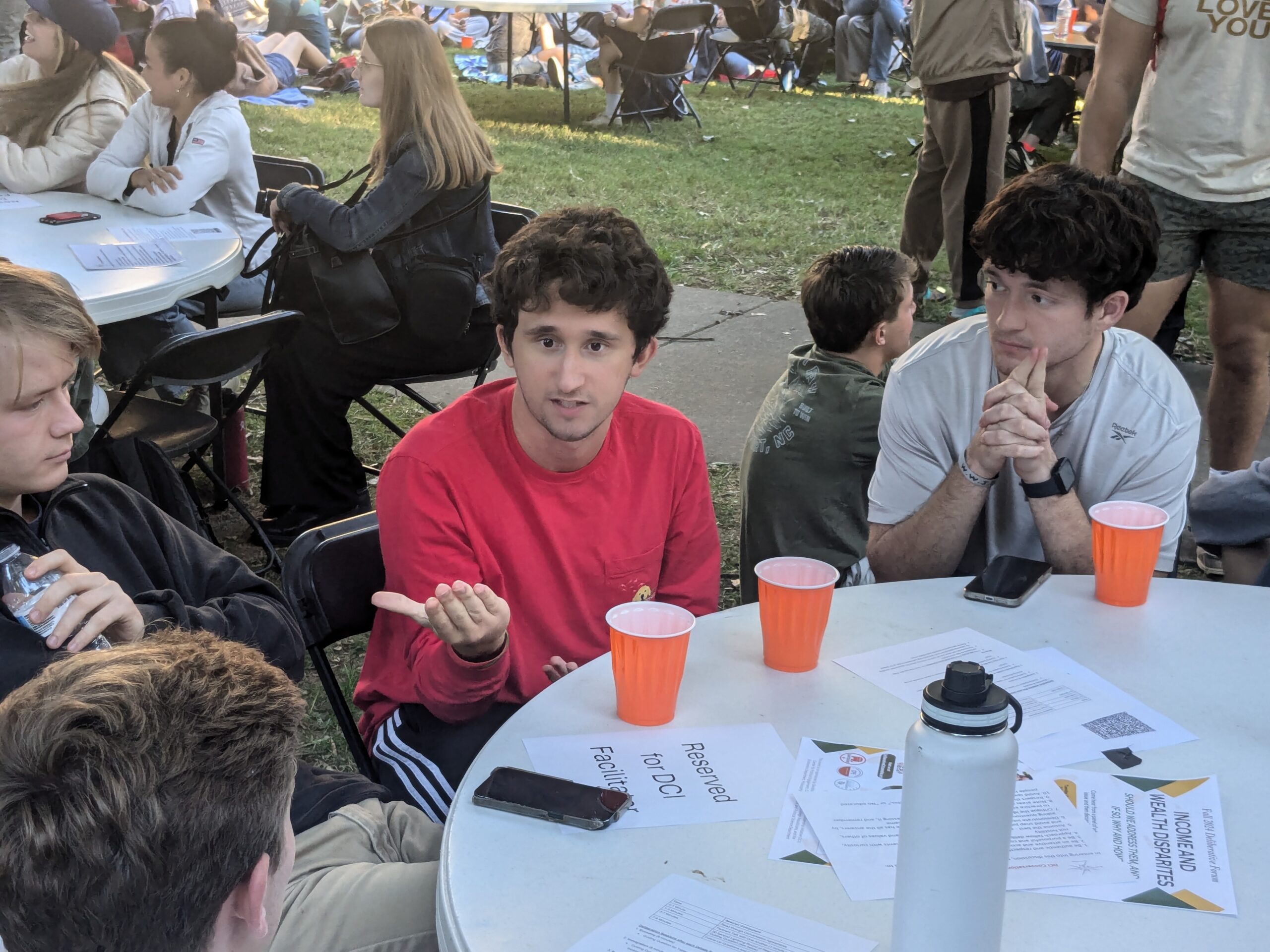
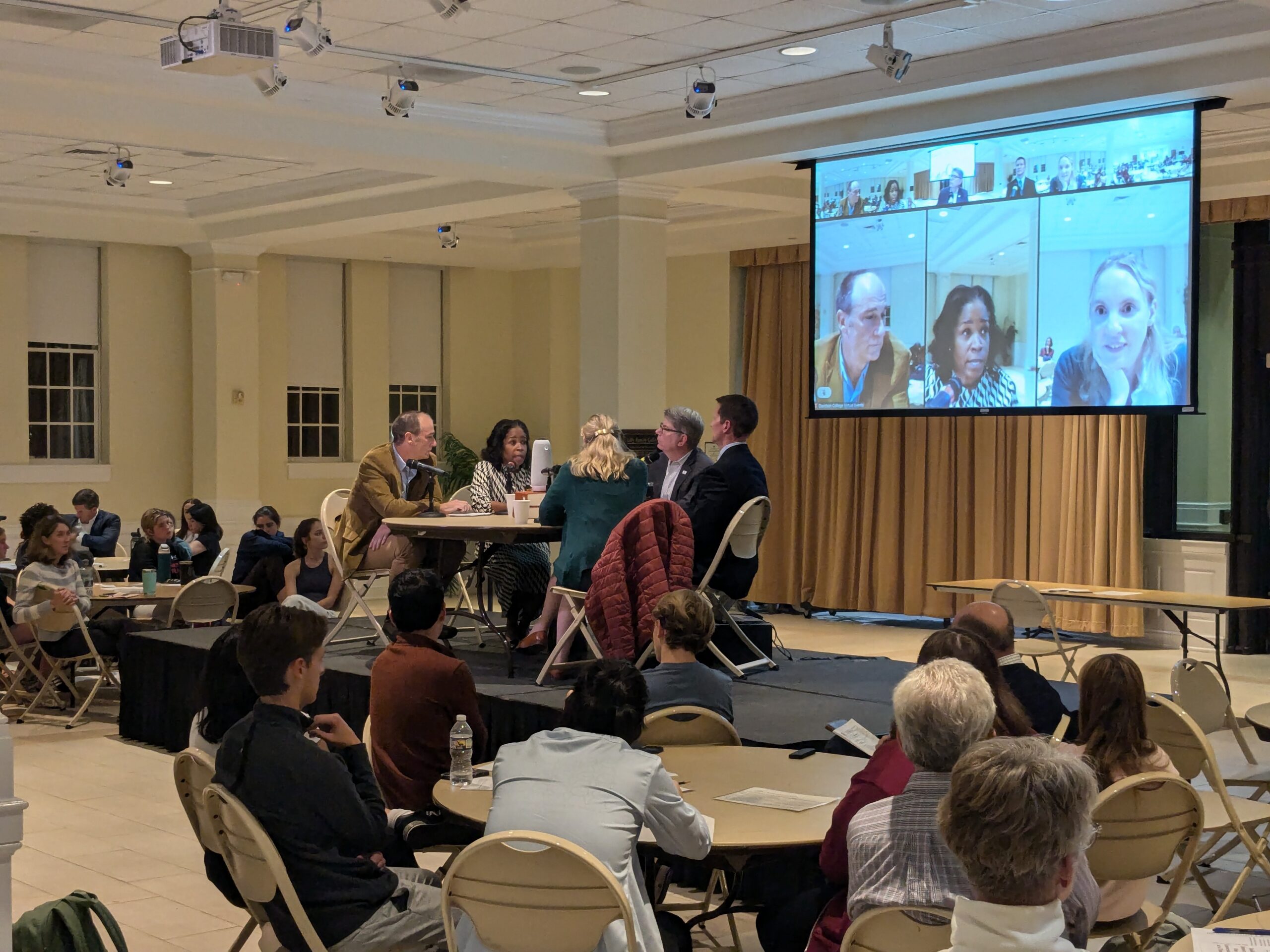
Photo of DCI forum with panelists and participants.

On Tuesday, October 27th at 7:00 PM, members of the Davidson community gathered together on Davidson’s campus to discuss income and wealth disparities. The 164 attendees (76 in person and 88 online) were treated to a meaningful, multifaceted conversation regarding whether or not they pose a problem to society and how, if at all, should they be addressed. Davidson College President Doug Hicks moderated the conversation that included two philosophy scholars, president of a Charlotte-based advocacy organization, and a vice president of a non-profit think tank based in North Carolina. 

These experts included Robyn Lake Hamilton, the CEO of the Urban League of the Central Carolinas, a local leader in the fight to combat inequality. Davidson’s Professor Sean McKeever and University of Richmond’s Jessica Flanigan, professors of philosophy and experts in the study of the phenomenon in question, brought their academic experience to the conversation. Lastly, Brian Balfour, Senior Vice President of the John Locke Foundation, was able to contribute insights from research into economic disparities and their causes and effects. President Hicks kept the conversation among the panelists focused on meaningful exchange of ideas and explorations of the disagreements that further illuminated the issue for those in attendance.

The event was co-sponsored by Davidson College’s Deliberative Citizenship Initiative, Center for Political Engagement, College Republicans, College Libertarians, College Democrats, Economic Department, Philosophy Department, and Political Science Department. Representatives from each of the student political organizations were present for the deliberative half of the evening.

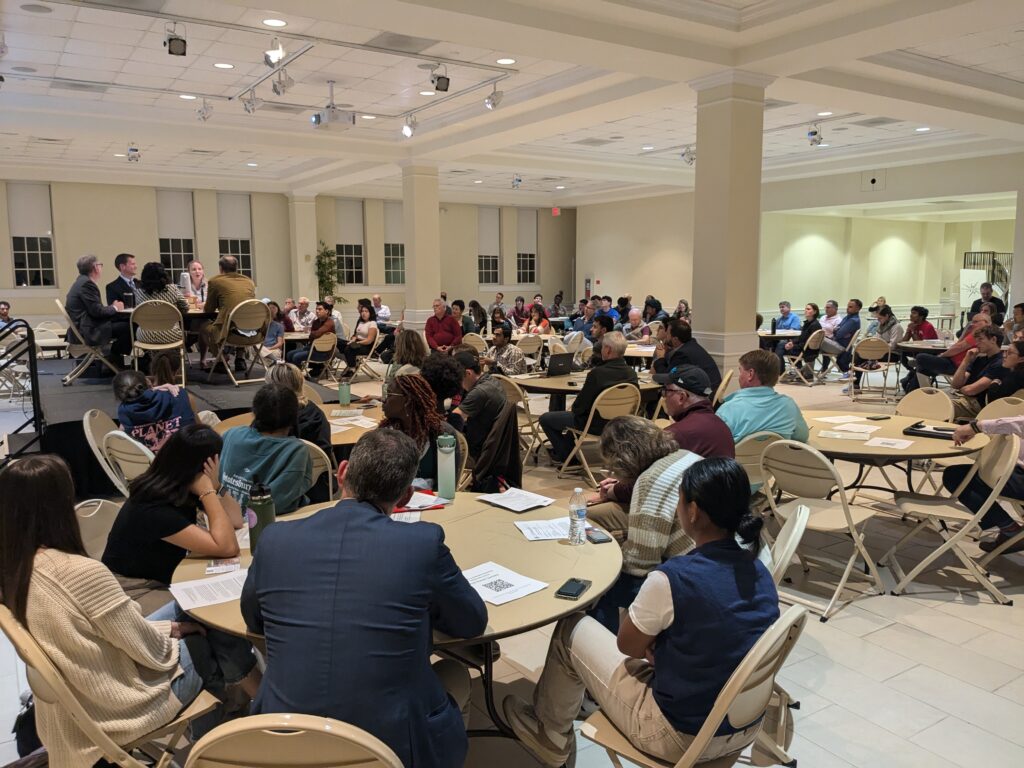
The innovative and successful “round table” format, where the panelists discussed the issue around a table on a stage surrounded by the audience, once again proved to be the most engaging and accessible way to draw the audience into the conversation being held before them. The conversation was recorded with a 360 degree video camera, called the “Meeting Owl,” that was placed on the table the panelists were sitting at for those participants who joined over Zoom. The recording can be viewed by clicking play on the video icon below. 

After the hour-long discussion came to a close, participants turned to each other to continue the discussion. At tables of 6-8 people that included residents of the community, students, faculty, and alumni, trained DCI facilitators led discussions on the topic,  aided by a deliberation guide designed specifically for this event. The guide offered supplemental materials to the conversation to ensure each participant had necessary background knowledge to engage constructively in their group’s conversations. 

These conversations were not an end but the beginning of a long journey the participants have begun to become more comfortable with the disagreement such a complex issue inspires. Participants were more than willing to engage and came away deeply satisfied with their experience. Julio Ramirez, a Davidson College professor who attended the forum, said that the forum provided a “deep assessment of a complex problem from multiple perspectives” and was an “outstanding experience.” See comments from other participants about their experience below:

  • “Not only are the discussion guides balanced and educational, but the facilitated small group deliberations are also such a breath of fresh air and source of hope amidst our current polarization and paucity of thoughtful discussions across differences.”
  • “In these fractious times, it is not just refreshing but also life-affirming to be able to take part in discussion of tough issues with no easy answers, with people are intent not on “scoring points” but on working together to solve problems. Beats hell out of watching TV or playing video games.”
  • “The Deliberative Forum is exactly the type of civic exercise we need right now to practice healthy discourse and “lean in” to the most important issues that will decide our future as world-citizens. Today’s event put the DCI’s goals into action. The panel and the small-group discussion inspired me to dig deeper into this topic and to find ways to take action.”

Check out the video recording of the panel discussion below as well as the event’s deliberation guide.

DCI-Income-and-Wealth-Disparities-Deliberation-Guide_-Fall-2024

Filed Under: DCI Posts, Events

  • « Go to Previous Page
  • Page 1
  • Interim pages omitted …
  • Page 30
  • Page 31
  • Page 32
  • Page 33
  • Page 34
  • Interim pages omitted …
  • Page 75
  • Go to Next Page »

Footer

Blog Post Categories

  • Announcements
  • Blog Posts
  • DCI Posts
  • Events
  • Faculty Posts
  • Fellow Posts
Image of a compass superimposed by the text "Deliberative Citizenship Initiative" and "Davidson College." Clicking on this image leads to the Initiative page.

Recent DCI Blog Posts

  • We Tried to Fix Jubilee’s “Middle Ground” – Here’s How It Went
  • A Case for Deliberation in the Natural Sciences
  • Welcoming New Staff to the DCI and DCN
  • Facebook
  • Twitter
  • Instagram
  • LinkedIn


Copyright © 2026 · Infinity Pro on Genesis Framework · WordPress · Log in