• Skip to main content
  • Skip to footer

Deliberative Citizenship Initiative

Building Democracy One Conversation at a Time

  • The Initiative
    • Programs
      • Deliberation Across the Curriculum
      • Deliberation on Campus
      • Deliberation in the Community
      • Research on Deliberation
    • Motivations
      • Why Deliberative Citizenship?
      • Why Davidson? Why Now?
    • Who’s Involved?
      • DCI Fellows Cohorts
        • 2025-2026 Fellows
        • 2024-2025 Fellows
        • 2023-2024 Fellows
        • 2022-2023 Fellows
        • 2021-2022 Fellows
        • 2020-2021 Fellows
      • DeeP Collaborative Cohorts
        • 2024-2025 DeeP Collaborative Faculty
        • 2023-2024 DeeP Collaborative Faculty
      • Advisory Council
    • History
      • What Sparked the Initiative?
    • Key Deliberative Dispositions
    • Frequently Asked Questions (FAQ)
    • Annual Report
  • Get Involved!
    • Participate in a Forum
    • Join a D Team
    • Become a Fellow
    • Take Courses
    • Get Training
    • Come to Guest Lectures
  • Events
    • Upcoming Events
      • 250th Anniversary Deliberative Forum Series on American Values
    • Past Events
  • Connections
    • The Deliberative Citizen: The DCI’s Monthly Newsletter
    • Efforts on Campus
    • Efforts in the Community
    • Efforts Elsewhere
    • Readings and Resources
      • DCI-Published Guides
      • DCI Guide to One-on-One Conversations
      • How to Disagree
      • Demonstration of Facilitation Styles
      • Deliberative Pedagogy Mini-Course
    • How We Can Help: DCI’s LET’S DELIBERATE! Partnership Opportunities
    • DCI in the News
  • DCI Blog Posts
    • Recent Blog Posts
    • All Blog Posts

The DCI Blog

How to Foster External and Internal Inclusion in D Teams

April 6, 2025 by Luna Noguchi

cartoon people sitting around a table and walking towards the table

Luna Noguchi ’25 (DCI Fellow)

When I host and facilitate deliberation during DCI D Team sessions, I am very conscious of whether I am including enough diverse perspectives into the conversation as possible. Healthy deliberation is sparked through exploration of individual differences, and they make for a rich understanding of the issue being discussed. Without fostering inclusion, important voices lack a platform to share their experiences, and this can shape harmful norms surrounding the types of perspectives that should be shared. When preparing for a deliberation session, it is important to think about fostering both external and internal inclusion.

One of the most prominent barriers to productive deliberation at Davidson is the issue of exclusion. As a fellow, I see an important aspect of my role as fostering both internal and external inclusion. External inclusion involves dissolving the various physical barriers that prevent individuals from being involved in a D Team or a deliberative forum. Internal inclusion involves conceptual barriers to full participation and engagement in the deliberation process, like power dynamics.

I strive to use the framework set by Carcasson and Sprain to foster both internal and external inclusion in my D teams (1). They designed a cyclical process meant to improve the quality of public engagement in deliberation. The 5 steps are deliberative issue analysis, convening, facilitating deliberative engagement, and action.

During deliberative issue analysis, participants gain a deeper understanding of the topic or issue by learning about it through a thorough deliberation guide that cites research and historical events. The right deliberation guide includes a broad range of voices, is objective, and presents accurate and relevant information to participants. In my role as a fellow, I evaluate drafts of deliberation guides to check for areas where the background information could be presented in a more inclusive way.

Convening involves getting a representative sample to participate in the deliberation event. This is important for having a diverse and rounded group of people whose conclusions can be reflective of the broader whole. Removing barriers to people’s attendance to my D teams is essential. This can involve any planning details which make attending more accessible. For example, D teams which occur on campus are made accessible to many students through advertising, scheduling, and location.

Facilitating deliberative engagement is at the core of my role as a fellow. Through deliberation training, I have a strong understanding of how to frame conversation goals, lay down ground rules, prompt deeper thinking, and draw conclusions among participants. To foster internal inclusion, I introduce excluded perspectives into the conversation and ask questions that diversify participants’ way of thinking about the issue. When my group is on the larger side, I initiate smaller group discussions that may help someone feel more comfortable sharing their experiences.

In reporting the content of the deliberation, one should prioritize accurately capturing the perspectives of participants and the conclusions that were drawn from them. This may involve including important background information on the event, like the host of the event, the issue, the questions, and the people involved. It is important to follow up with participants and leave opportunities for further engagement. Inviting them to share thoughts they refrained from sharing during the event ensures their voices are included.

Ideally, the event would result in an attempt at acting on the issue. It should hinge on the conclusions drawn from the deliberation and represent the collective of diverse perspectives. Taking action on a wicked problem takes multiple trips around the cycle, as it can be very difficult to foster inclusion at this stage without hearing as many voices as possible. It can be helpful to inspire members to create a separate project or initiative that works to address the issue. It is also relevant to discuss methods that members can tackle the issue in their own communities.

Each stage of the cycle should build on themselves by fostering external and internal inclusion. This should promote the norm of listening and inviting diverse perspectives. Ideally, the momentum created by including more voices may contribute to a culture of deliberation in daily democratic engagements. While it is very difficult to reach sufficient inclusion with every event, following the outlined guidelines can be a good start.

Note:

(1) Martín Carcasson and Leah Sprain, “Beyond Problem Solving: Reconceptualizing the Work of Public Deliberation as Deliberative Inquiry,” Communication Theory 26, no. 1 (2015): 41–63.


Filed Under: Blog Posts, Fellow Posts

Embracing the Power of Deliberation: Why Thoughtful Conversations Matter

April 6, 2025 by TBC Takougnadi

image of people talking around a table

DCI Fellow Bosisso Charles Takougnadi ’27 (TBC)

Deliberation, to me, is more significant than just well-structured and healthy conversations; it is a true commitment to listening, understanding, inclusivity, and collective growth. During these polarized times, it is often overlooked, but deliberation has become a bridge between entrenched opinions and shared resolutions. Deliberation promotes not only effective and productive discussions but also the following values: attentiveness, listening, and openness. Thus, it challenges us to criticize our assumptions and empathize with perspectives that may at first, look foreign and sometimes create discomfort.

The potential to cultivate community and social resilience is one of the core principles that resonate with me as I navigate the practice of deliberation. Engaging with others’ views not only enriches one’s understanding. Furthermore, it strengthens one’s social fabric by developing trust, creating a sense of belonging as well as spreading knowledge and culture. Deliberation encourages participants to break down complex issues, dig deeper into underlying reasons and values, and collaboratively seek resolutions. Deliberation in that sense embodies a commitment to truth-seeking and a humility that acknowledges that we may not always have the solution, and we may not have all answers, but we are willing to find them together.

Furthermore, deliberation plays a vital role in fostering civic virtues. Deliberation not only encourages but also requires the following qualities: patience, empathy, and open-mindedness that enable a meaningful and effective deliberation. Every participant is should remain patient with the pace of the discussion while they confront biases, which is often a required stage to effective deliberation. They should also practice empathy and respect; indeed, these are essential aspects of democratic societies.

Excellent deliberators must concentrate on the “how” of the conversation, taking part not merely to prove a point of view but to collectively and collaboratively explore opinions and ideas. Its process-oriented nature portrays deliberation as an important skill in this interconnected world.

Reflecting on the deliberation sessions in the DCI D Teams program, it has been inspiring to witness the respect participants hold for each other’s viewpoints, no matter how diverse and different they are. These discussions around hard topics underscore the importance of creating welcoming spaces where people feel comfortable sharing their thoughts, even when they are not fully formed. This encourages vulnerability and honesty, thus easing the breakdown of walls of doubt as well as mistrust.

I believe DCI has made that possible at Davidson College in multiple ways. I am so thankful for the work the DCI has put in to give space for facilitated and respectful discussion around hard topics, as through this opportunity I was able to not only enrich myself but also enhance my skills as a deliberator and a facilitator.

As we continue to practice and refine these skills, I am hopeful that deliberation will not only foster more cohesive communities but also prepare us for the tough conversations ahead. As a student, deliberation as well as discussion about contentious issues will get more complex as we grow in the ‘real’ world where there is even more diversity in all aspects of life, from cultures to ideas. One should be able to continue to engage in the practice of deliberation as well as embody its values.

Filed Under: Blog Posts, Fellow Posts

From Skeptic to Advocate: The Power of Deliberation in Economics Education

April 6, 2025 by Shyam Gouri Suresh

Header for Shyam's post.

When I first considered integrating a deliberation-based approach into my teaching as part of the DeeP Collaborative, I was both curious and skeptical. I have long incorporated significant discussion into relevant courses, and I questioned whether structuring those conversations more deliberately would noticeably enhance engagement. Was deliberation truly a distinct pedagogical tool, or merely a repackaging of traditional classroom discussion?

After developing and teaching a deliberation-centered course, I now recognize it as a valuable addition to my active learning toolkit. While it does not replace traditional discussion or other active learning strategies, deliberation enhances engagement, broadens the scope of inquiry, and cultivates deeper critical thinking.

Why Deliberation? Why in Economics?

I decided to incorporate deliberation into a capstone seminar, where students already had a strong grasp of economic theory. This setting allowed me to design deliberative activities that engaged students at the highest levels of Bloom’s taxonomy—analyzing, evaluating, and synthesizing—rather than focusing solely on comprehension and application.

In economics, both positive analysis (what is) and normative policy decisions (what should be) are subject to debate. Positive disagreements typically stem from differences in underlying economic theories, the choice of datasets, or the methods used to analyze those datasets. Meanwhile, normative debates are shaped by varying values and policy priorities. A deliberative format allows students to engage with these complexities more deeply, fostering discussions that integrate both theory- and data-driven reasoning with ethical considerations.

How Structure Made Deliberation More Effective

One of the most significant benefits of structured deliberation was its ability to foster a more balanced and inclusive discussion environment. In traditional classroom discussions, some students tend to dominate while others remain silent, perhaps due to personality, cultural background, or social pressures. However, the structured nature of deliberation, reinforced by a well-designed rubric, encouraged more equitable participation. Each student was required to deliver an initial monologue, engage in open discussion, and present a summation—reducing the likelihood of a few voices monopolizing the conversation.

The rubric reinforced this by prioritizing the quality of participation over quantity and penalizing overly dominant contributions. Additionally, because student facilitators were assessed on ensuring balanced participation, they took active steps to encourage all voices. This structure led to richer, more diverse exchanges because all incentives were aligned: quieter students were encouraged to speak, more dominant voices had reasons to moderate their participation, and facilitators were motivated to ensure balanced engagement. Together, these mechanisms created a more inclusive and dynamic discussion environment where all students had both the space and the motivation to contribute meaningfully.

Another key advantage of this structured nature of deliberation was the improved quality of discussion. In my previous courses, discussions tended to stay within narrow academic parameters—students primarily referenced assigned readings or lectures. While this made for technically rigorous discussions, it often felt like something was missing: real-world relevance, personal stakes, and interdisciplinary connections. By contrast, in the deliberation format, students were not only encouraged but also assessed students on their ability to bring in diverse sources of insight, including:

  • Personal anecdotes and lived experiences
  • Learnings from other coursework (in economics and beyond)
  • Opinions formed through social discussions with friends and family
  • Broader societal and political contexts

This deliberation format therefore transformed classroom discussions. Students were no longer debating theories in isolation; instead, they synthesized academic knowledge from multiple courses, integrated their lived experiences, and engaged with their personal values to form more holistic arguments. For instance, in a deliberation on student loan forgiveness, one student connected their financial aid experience to broader economic principles they had studied in another class, while another contextualized the debate using historical trends in public higher education funding. By drawing from diverse sources, students brought a richness to the discussion that typical classroom debates often lack.

Additionally, the rubric reinforced that strong arguments could take many forms – whether grounded in empirical data, personal experience, or interdisciplinary insights. More importantly, deliberation shifted the very nature of how students approached each question. Discussions in my courses had never been strictly binary – students already engaged with complexity, recognizing the validity of positions across a full spectrum from complete agreement to complete disagreement.

However, deliberation expanded that spectrum itself. If past discussions explored the nuances within shades of grey, deliberation allowed students to see the full range of colors—where perspectives weren’t just more or less supportive of a position, but layered across multiple dimensions, with intersecting and sometimes contradictory considerations. Different facets of a question became clearer, allowing students to articulate positions that supported certain aspects of a policy while simultaneously critiquing other aspects, with a recognition of the diversity of defensible views on each dimension. This deeper engagement encouraged students to grapple with the interconnected trade-offs and complexities relevant to real-world decision-making.

Challenges and Considerations

Overall, students responded positively to the deliberation-based approach. Many noted that it challenged them to engage with greater depth and nuance than they would have in a traditional discussion. They also appreciated the opportunity to refine their arguments dynamically – responding to new perspectives, adjusting their reasoning, and strengthening their positions through the structured process of monologues, open deliberation, and final reflections.

Despite its strengths, the approach I used in my course revealed areas for refinement. In some discussions, strong counterarguments were lacking, leading to premature consensus. Assigning a ‘devil’s advocate’ role in future iterations could help ensure a more robust exchange of perspectives. Additionally, some students found the time constraints to be restrictive; adjusting the format to allow slightly more open discussion time might improve the balance between structured contributions and spontaneous engagement.

Additionally, while structured deliberation proved to be an effective tool, it heightened emotional engagement, which at times led to sharper disagreements. In courses where students are less familiar with one another, careful facilitation would be necessary to ensure that discussions remain respectful and productive. Setting clear expectations for dialogue and actively guiding discussions could help mitigate potential conflicts.

However, because my course was a senior seminar, students were already part of established friend groups, had experience with academic discussions, and generally possessed a level of emotional maturity that helped ensure disagreements remained constructive. Rather than sowing discord, deliberation may have even strengthened these friendships—giving students a space to challenge each other’s views while deepening their mutual respect and understanding.

Looking Ahead

For now, I don’t plan to introduce deliberation into intermediate economics courses, even though some of the topics-based courses I teach could be well-suited to it in terms of subject matter. My approach is to use deliberation only in courses taken by seniors, where students have the academic experience and emotional maturity to fully engage with this structured format. That said, I know other instructors who have successfully implemented deliberation at different course levels, but based on my experience, I don’t intend to do so.

Ultimately, structured deliberation is not a one-size-fits-all replacement for discussion or other active learning methods, but it is a powerful tool for deepening student engagement in a more holistic way. It also fosters an intellectual community—one that thrives with careful facilitation to ensure productive and respectful dialogue.

Teaching this course has convinced me that deliberation deserves a place in the broader landscape of active learning. Among the many tools available to educators, it stands out for its ability to push students toward deeper thinking, richer discussions, and a more profound connection to the material they study.[1]


[1] The author used ChatGPT for stylistic refinement and editorial support. The content, analysis, and conclusions remain entirely the author’s own.

Filed Under: Faculty Posts

Adding Deliberation to a Dance Course on Critical Writing

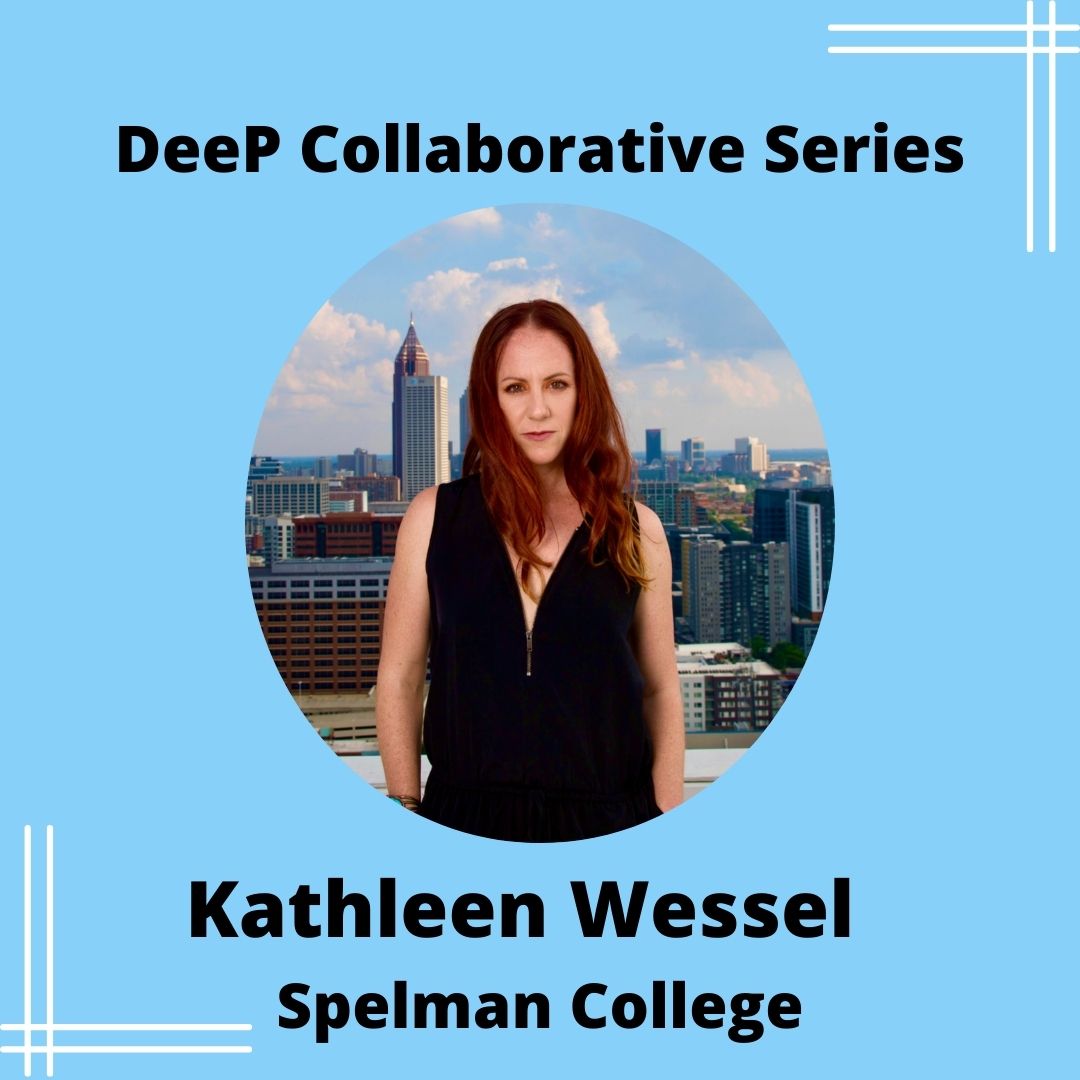
April 6, 2025 by Kathleen Wessel

Header image for DeeP post of Kathleen Wessel.

Last spring, I took my Critical Writing for Dance students to see Alvin Ailey American Dance Theater perform at the Fox Theatre in Atlanta. They were tasked with writing a critical analysis of at least one of the works on the triple bill and all arrived with their notepads and pens in hand. After the first work, they sat in a row (dressed to the nines!) and scribbled out thoughts and first impressions as I had suggested. A nearby audience member, curious to see ten Spelman women furiously writing at the same time, asked what they were doing. One of my students answered, and the audience member responded: “Why? It’s not that deep.”

As the sole faculty member representing the arts in the 2023-24 Deliberative Pedagogy (DeeP) Collaborative cohort, I can attest: it is that deep. But both those who study dance and those who teach it in higher education often feel we must prove ourselves, and that burden can be exhausting. Identifying “wicked problems” and controversial topics to deliberate in a Peace and Conflict Studies or a Philosophy class seems like par for the course. Dance is trickier because it tends to be characterized in popular culture as either individual expression / catharsis or pure entertainment, neither of which – on the surface at least – affords much need for deliberation or critical analysis. And people can get defensive when scholarship, texts, research, and writing are introduced into sacred, emotionally charged movement spaces. Let’s not overthink it, I hear, dance is just about releasing and having fun.

Like all art forms, dance can serve as cultural communication, social commentary, public protest, and historical archive, all of which must be viewed through a critical lens. One of my main learning objectives in Critical Writing for Dance has been to simply get students to see dance as something worthy of analysis, to learn to construct a viable, thought-provoking argument and prove it using evidence from the work rather than writing a book report-style account of the event.

When I joined the DeeP cohort last summer, I looked forward to the spring, imagining my Critical Writing for Dance students engaging in rich dialogue about what a dance meant, posing questions addressing its cultural and social impact, and discussing biases and blind spots held by a majority white pool of professional dance and art critics. As I reworked my syllabus to include deliberative components, I incorporated difficult questions like:

  • Are BIPOC and/or LGBTQIA+ identifying choreographers obligated to represent and/or address their identity in their work?
  • What is Black dance? Is there such a thing? Is that term helpful or harmful?
  • Is there anything a writer should, by default, not review? Is bias in criticism inevitable? Is claiming bias useful?

They were good questions, I thought, but in practice some were either too messy or not messy enough. I was challenged by how difficult it was to get students to take different sides on many of the issues and questions I presented. I considered forcing them to take one side or another but that felt too much like a debate, a different form of discourse. One outgoing person would speak up, most others would agree, and the deliberation would start to deflate. But as time went on and I started incorporating small group deliberations moderated by students, the group deliberations became more robust.

For the first deliberation, I had students read the Alvin Ailey American Dance Theater mission statement on the company website, attend the show, then deliberate on whether the work exemplified or contradicted their mission statement. My intention was to get the students to think critically about a company that [outside of New York City where the critics have seen it all and speak their minds] is often put on a pedestal. I wanted them to see that arts criticism builds dialogue, enhances integrity, and archives what happened and therefore what we should remember. I asked the students to build arguments around what a company intends versus what it produces. In the end, all agreed that the Alvin Ailey American Dance Theater work exemplified the mission statement perfectly. No notes. The deliberation fell flat.

Things progressed a bit with our second deliberation, “What is good writing?” for which the students read a critical analysis of Beyoncé’s “Lemonade” by bell hooks. I was worried I tried to do too much with this deliberation because we were focusing on the idea of “good writing” as a measurable absolute (based on standards and rules created by white men) using a legendary Black feminist writer’s controversial opinion about (arguably) the most beloved pop singer in the world. hooks posited that Beyoncé’s “Lemonade” is “capitalist money-making at its best” and delved into her argument while maintaining the utmost respect for Queen Bey. Even though the students all agreed that the article exemplified “good writing,” they had to confront its controversial content. I think what came out of this deliberation was the understanding that work produced by “untouchable” icons like Alvin Ailey, bell hooks, and Beyoncé is even more interesting when viewed through a critical lens. Critical thinking is good for everyone, viewer and artist alike, and is not the same thing as trashing or trolling. A win!

Oftentimes, the deliberations took left turns, especially when I had the students come up with their own topic and vote on which one they would deliberate. The chosen topic was, Have the comments sections on social media replaced the need for and relevance of traditional long-form arts criticism? I did not expect my class to engage in a deliberation on the validity of my entire course. This was tough for me, but we had a GREAT deliberation on the state of arts criticism in social media and on this issue, students were solidly divided. The reflections were extremely positive, and it had me rethinking assignments for the next time I teach this course, which is always something I welcome.

Another big win came near the end of the semester when I posed the question, “What is Black dance?” During the small group deliberations, I overheard a student say, “I hate this question” then proceed to say all dance is Black dance, a viable argument given the history of dance forms and cultural appropriation in America and on social media. I love it when that which was seen as foundational is called into question, be it my question or… gulp… my entire course. That’s how change comes about. It tells me students are engaging with one another, moving towards productive and respectful discourse, forming arguments that differ from others, and recognizing that opposing opinions on art and the state of arts criticism is how we move forward as a culture.

Even though we spent less time discussing the mechanics of writing, we spent more time constructing, deconstructing, editing, and reworking good arguments. Looking back – and with the looming realization that AI has already replaced the need to teach and learn basic writing skills – developing skills of critical analysis through the deliberative process was the most rewarding and impactful outcome from my time as a member of the DeeP cohort.

Filed Under: Blog Posts, Faculty Posts

Event Recap: The DCI’s Fourth Deliberative Pedagogy Faculty Panel

April 6, 2025 by Graham Bullock

photo of faculty panel

Faculty members with wide range of backgrounds and expertise have participated in the DCI’s Deliberative Pedagogy (DeeP) Collaborative, and this diversity was highlighted in our recent DeeP Faculty Panel and Lunch. Professors who have embedded deliberation on difficult topics in courses on contemporary economic issues, sports communication, the philosophy of love and sex, and race on film all shared their deliberative pedagogy approaches and discussed both their successes and where they want to continue to improve in the future.

On Thursday, March 20 from 11:05 am to 12:15 pm, Professors Maggie McCarthy (German Studies, Davidson College), Rebecca Alt (Communications, Lenoir-Rhyne College), Rebecca Harrison (Philosophy, Vassar College), and Shyam Gouri Suresh (Economics, Davidson College) shared their work as members of the Deliberative Pedagogy (DeeP) Collaborative. Over 60 faculty members from 18 different institutions have participated in the Collaborative, which enables professors from across the humanities, natural sciences, and social sciences to work together on developing and implementing innovative ways to stimulate deeper discussions in their courses. 

photo of in-person and virtual panelists

Nearly 40 people (22 online and 15 in-person) attended the panel and were able to ask questions of the panelists about their courses. You can watch the video below of the panel discussion moderated by Professor Graham Bullock, Faculty Director of the DCI. To learn more about the Deliberative Pedagogy Collaborative, the DCI’s Deliberation Across the Curriculum Program, and the upcoming panel, check out the attached flyer, this webpage, and these blog posts by faculty members who have participated in the Collaborative over the past two years.

You can start with these blog posts by the four faculty members who participated in this panel discussion:

Deliberative Discussions in Class “Bridge the Gap between Film and Reality”

Maggie McCarthy, Davidson College

Deliberative Discussions in Class “Bridge the Gap between Film and Reality”

From Skeptic to Advocate: The Power of Deliberation in Economics Education

Shyam Gouri Suresh

From Skeptic to Advocate: The Power of Deliberation in Economics Education

From “Small Group Discussions” to Micro-Deliberations: Transforming Everyday Student-Centered Discussion

Rebecca Harrison,  Vassar College

From “Small Group Discussions” to Micro-Deliberations: Transforming Everyday Student-Centered Discussion

Tackling Difficult Conversations in the Classroom: Sport as a Barrier-Breaker

Rebecca Alt, Lenoir-Rhyne University

Tackling Difficult Conversations in the Classroom: Sport as a Barrier-Breaker

Filed Under: DCI Posts, Events

  • « Go to Previous Page
  • Page 1
  • Interim pages omitted …
  • Page 23
  • Page 24
  • Page 25
  • Page 26
  • Page 27
  • Interim pages omitted …
  • Page 75
  • Go to Next Page »

Footer

Blog Post Categories

  • Announcements
  • Blog Posts
  • DCI Posts
  • Events
  • Faculty Posts
  • Fellow Posts
Image of a compass superimposed by the text "Deliberative Citizenship Initiative" and "Davidson College." Clicking on this image leads to the Initiative page.

Recent DCI Blog Posts

  • We Tried to Fix Jubilee’s “Middle Ground” – Here’s How It Went
  • A Case for Deliberation in the Natural Sciences
  • Welcoming New Staff to the DCI and DCN
  • Facebook
  • Twitter
  • Instagram
  • LinkedIn


Copyright © 2026 · Infinity Pro on Genesis Framework · WordPress · Log in