• Skip to main content
  • Skip to footer

Deliberative Citizenship Initiative

Building Democracy One Conversation at a Time

  • The Initiative
    • Programs
      • Deliberation Across the Curriculum
      • Deliberation on Campus
      • Deliberation in the Community
      • Research on Deliberation
    • Motivations
      • Why Deliberative Citizenship?
      • Why Davidson? Why Now?
    • Who’s Involved?
      • DCI Fellows Cohorts
        • 2025-2026 Fellows
        • 2024-2025 Fellows
        • 2023-2024 Fellows
        • 2022-2023 Fellows
        • 2021-2022 Fellows
        • 2020-2021 Fellows
      • DeeP Collaborative Cohorts
        • 2024-2025 DeeP Collaborative Faculty
        • 2023-2024 DeeP Collaborative Faculty
      • Advisory Council
    • History
      • What Sparked the Initiative?
    • Key Deliberative Dispositions
    • Frequently Asked Questions (FAQ)
    • Annual Report
  • Get Involved!
    • Participate in a Forum
    • Join a D Team
    • Become a Fellow
    • Take Courses
    • Get Training
    • Come to Guest Lectures
  • Events
    • Upcoming Events
      • 250th Anniversary Deliberative Forum Series on American Values
    • Past Events
  • Connections
    • The Deliberative Citizen: The DCI’s Monthly Newsletter
    • Efforts on Campus
    • Efforts in the Community
    • Efforts Elsewhere
    • Readings and Resources
      • DCI-Published Guides
      • DCI Guide to One-on-One Conversations
      • How to Disagree
      • Demonstration of Facilitation Styles
      • Deliberative Pedagogy Mini-Course
    • How We Can Help: DCI’s LET’S DELIBERATE! Partnership Opportunities
    • DCI in the News
  • DCI Blog Posts
    • Recent Blog Posts
    • All Blog Posts

The DCI Blog

Jubilee’s “Surrounded:” Where Popular Media Deliberation Succeeds and Fails

May 21, 2025 by Liam Mann

Screenshot from Surrounded, with people sitting in a circle around a table with one person at it. Some are holding red flags.

By Liam Mann ’27 (DCI Fellow)

Last year, DCI Fellow Declan O’Donoghue wrote a blog post about Jubilee Media’s “Middle Ground” and “Spectrum” series on YouTube. Middle Ground groups together people from opposing sides (examples: minimum wage workers and millionaires, ex-felons and cops, fit men and fat men), while Spectrum groups people from the same background (teen moms, high schoolers, men) to engage in discussions about their differences in thought, as well as find common ground. These series include some of the most-watched videos of their kind available on YouTube.

Recently, Jubilee has started a new series called “Surrounded.” In these videos, 20 people from one side of the political spectrum sit in a circle around 1 person from the other side who is an established politician or debater with extensive experience explaining their viewpoints. A claim that the central person makes is stated to the audience, and a timer ticks down. Once the timer beeps, a clock starts, and the most motivated of participants rush to the center seat to debate the claim. While the person who reaches the seat first explains their viewpoint, participants not involved in the debate can raise red flags to signal that they want the participant seated to be replaced. When more than half of the participants have raised flags, the participant is removed. This continues until the clock runs out of time, where the central debater then makes a new claim and the cycle repeats. After the claims (5 total) have been exhausted, the person at the center chooses a member from the circle to deliberate a topic of the circle member’s choosing for a 10-minute period.

The “Surrounded” series offers a new and innovative mode of discourse to a wide audience. However, I believe that its structure is less constructive and less deliberative than either “Middle Ground” or “Spectrum.” It is more of a series of mini debates in which participants try to attack each other’s arguments rather than explore the topic in a more deliberative fashion. Why is this the case? First, the red flag policy is not conducive to a productive exchange of ideas. If circle participants feel like their person is “losing” the argument, they will likely vote that person out. This may prevent significant points and ideas from being made. The red flag policy may also make it more difficult to advance conversations and for participants to change their minds. Participants may also have been more likely to engage in anti-deliberative practices, such as interruption and snide comments, to maximize their time debating.

Secondly, the 20-person structure led to great inequality of speaking time. Because participants had to rush to the middle chair to get their voice heard, the most motivated deliberators got much more time to talk than others. In fact, there were many deliberators in the videos that never spoke at all. This led to less diversity of opinion, as many people came up to the middle chair multiple times with the same logic and lines of reasoning (although they could not come up multiple times in the same question).

Third, the structure lacks a facilitator and guidelines that encourage participants to adopt more deliberative dispositions and engage in a respectful exchange of ideas. Rather than encouraging everyone to be open-minded and listen to learn from each other, the model opens the door for personal attacks and creates a more adversarial “win-or-lose” atmosphere focused on listening to re-load and respond.

I thought the best part of the video structure was the 10 minute debate that concludes each session. The central deliberator in both videos chose people that had engaged in challenging conversation and brought up good points. In addition, the prevention of red flag removal in this stage led to the continuation of idea-changing conversation instead of sudden interruption.

“Surrounded” offers a quite entertaining viewing experience, and many clips have gone viral across various social media sites. While “Surrounded” has many issues that limits the quality and amount of productive engagement that occurs, there were bright spots in the videos. Ultimately, Jubilee can hopefully continue to make videos that promote better public discourse to a wider audience and have a role in positively shaping our nation’s political climate.


Filed Under: Fellow Posts

DCI Program Coordinator Application is Open!

May 21, 2025 by Graham Bullock

Image of "job opportunity" with DCI logo

The Deliberative Citizenship Initiative is hiring a new Program Coordinator. We are seeking an energetic and hard-working person to join our team and coordinate the implementation of the initiative’s programs. These include our efforts to create opportunities for productive dialogue and deliberation in diverse classroom settings, outside of the classroom, and in the community. 

Responsibilities include organizing the logistics of the Initiative’s meetings, programs, and events; maintaining and updating the initiative’s website and social media presence; and managing the data collected by the DCI about its programs. The position is also responsible for managing and tracking the expenses and budget of the Initiative and working on special projects related to the mission of the DCI.

Visit the Davidson website to learn more about the position and the application process.

Filed Under: Announcements, DCI Posts

Embedding Deliberation in a Human Rights Course at Guilford College

May 21, 2025 by Zulfiya Tursunova

Image of Zulfiya

The Deliberative Pedagogy (DeeP) Faculty Collaborative consists of faculty from Davidson College and other higher education institutions who are committed to learning and implementing new ways to improve and deepen the quality of their class discussions. These faculty come from a wide array of disciplines and backgrounds to study and discuss deliberative pedagogy methods, share their ideas and questions with one another, and work to embed deliberation in their classrooms. In this special blog series, members of the Collaborative describe and reflect on their experiences developing and teaching their deliberation-involved courses.

By Zulfiya Tursunova (2023-24 Deliberative Pedagogy Collaborative Faculty Fellow)

During my over 20-year teaching career, I have been rethinking the instructional design of the courses I taught and have made some modifications to create meaningful learning experiences. The training offered by Dr. Graham Bullock and Dr. Sara Copic from Davidson College was critical in integrating deliberation into the PECS 315 Human Rights course that I taught in the spring of 2024 at Guilford College.

One of the PECS 315 course’s main goals was to critically understand human rights by examining how power operates in global politics. The course provides an intellectual framework to understand the complexity of factors and issues related to genocide locally and globally from historical, political, socio-economic, and environmental lenses. We analyzed critical contradictions and connections between rights, law, and peacebuilding. Students examined issues related to citizenship, immigration, deportation, family separation, struggles, and solidarity. The case studies of genocide from the USA, Mexico, Sudan, Israel, Palestine, Columbia, Northern Ireland, China, Russia, and other countries were used to examine atrocities and ways societies move from violence to positive peace.

I introduced the theory and practice of deliberation, differentiating it from debate and discussion, and its role in scholarly inquiry and democratic life in highly divided societies. The values of deliberation and its methodology empowered students to create a safe space where they shared different opinions respectfully. One of the students reflected on the importance of learning about deliberation and engaging with each other during war, global conflicts, and power dynamics:

  • “Deliberation allowed us to educate and engage with each other while explaining personal events and experiences related to the world’s power dynamics. As a group, this made our conversations much more personal and powerful. The class allowed us a space to learn about each other while learning about the world and uplifting each other through methods such as conflict transformation on a personal level.“

Deliberative methodology helped to foster ethical peacebuilding and conflict transformation by empowering students to learn and employ deliberative democratic methods of respectful and collaborative problem-solving. The methodology encouraged students to transcend their previously held positions and enabled collective decisions and actions to bring social change and policy for justice and peace. I believe that deliberation theory and practice are congruent with Quaker peace testimonies that nurture the capacities of individuals, communities, and societies to build relationships based on mutual respect and caring for the well-being of all regardless of sexual, religious, and other aspects of our identities. Quakers embrace the transformative power of love and the power of nonviolence, striving for peace in daily interactions with neighbors, families, communities, and people all over the globe.

Five students from various backgrounds took the course. I introduced deliberative pedagogy materials by looking at the issues of immigration using the example Graham Bullock shared with me. Using the talking circle process approach, students shared what they learned in a circle and reflected critically on their learning using human rights justice lenses. One of the students pointed out that “the deliberation was a unique learning experience that now as an academic scholar I can reflect on as one that aided both research skills and facilitation. The overall process of preparing for the deliberation was effective in understanding and being prepared for the actual facilitation.“

One of the students, who deliberated on “International Humanitarian Law: A Focus on Palestinian Women and Children,” shared that deliberation “allowed me to look at human rights from a political perspective rather than just a personal perspective.” Another student indicated that they improved their ability to “evaluate the strengths and weaknesses of different types of evidence.” Through the lens of deliberative pedagogy, students reflected on their learning outcomes focusing on collaboration, reason-giving, synthesis of ideas and information, understanding of trade-offs and tensions, reflection, awareness of relationships, and empathy. It is evident from the students’ answers that the class provided robust opportunities for reflection on the process and outcomes of class deliberations.

The course enabled students to assess and synthesize human rights violations by using international law, policies, and peacebuilding strategies. Furthermore, students learned and cultivated deliberation-related skills including the practical skills of deliberation, self-reflection, empathetic listening, critical thinking, and intellectual collaboration across differences. They also learned about peace and conflict, interdisciplinary analysis and argument using natural resource management, feminist, and political science lenses, as well as communication in both spoken and written forms. This is evident in of the student’s testimony:

  • “Overall, I think the deliberation process was unique and especially valuable to the learning and development for students at Guilford. I would absolutely recommend this process to be applied in other classes as well because it truly is a combination of both research skills and facilitation which is so important to have as for any future career opportunities. Not only that it is a good experience to have continued to bring light to the issues we face globally and being able to open up to local and global communities and have necessary conversations that we usually shy away from and ones that have become so polarized.“

In support of innovative, student-centered learning guided by Quaker testimonies, I have been striving to create an academic environment that fosters creative problem-solving skills and civic engagement to promote positive change. As a class, we worked collaboratively on deliberation to promote respect and accountability for human rights among Guilford College students and the community.

Acknowledgments

The special acknowledgment goes to Dr. Graham Bullock and Dr. Sara Copic from Davidson College for sharing their knowledge about deliberation and dedication to their profession.

Filed Under: Faculty Posts

Event Recap: Deliberative Forum on Freedom of Expression at Davidson

May 21, 2025 by Graham Bullock

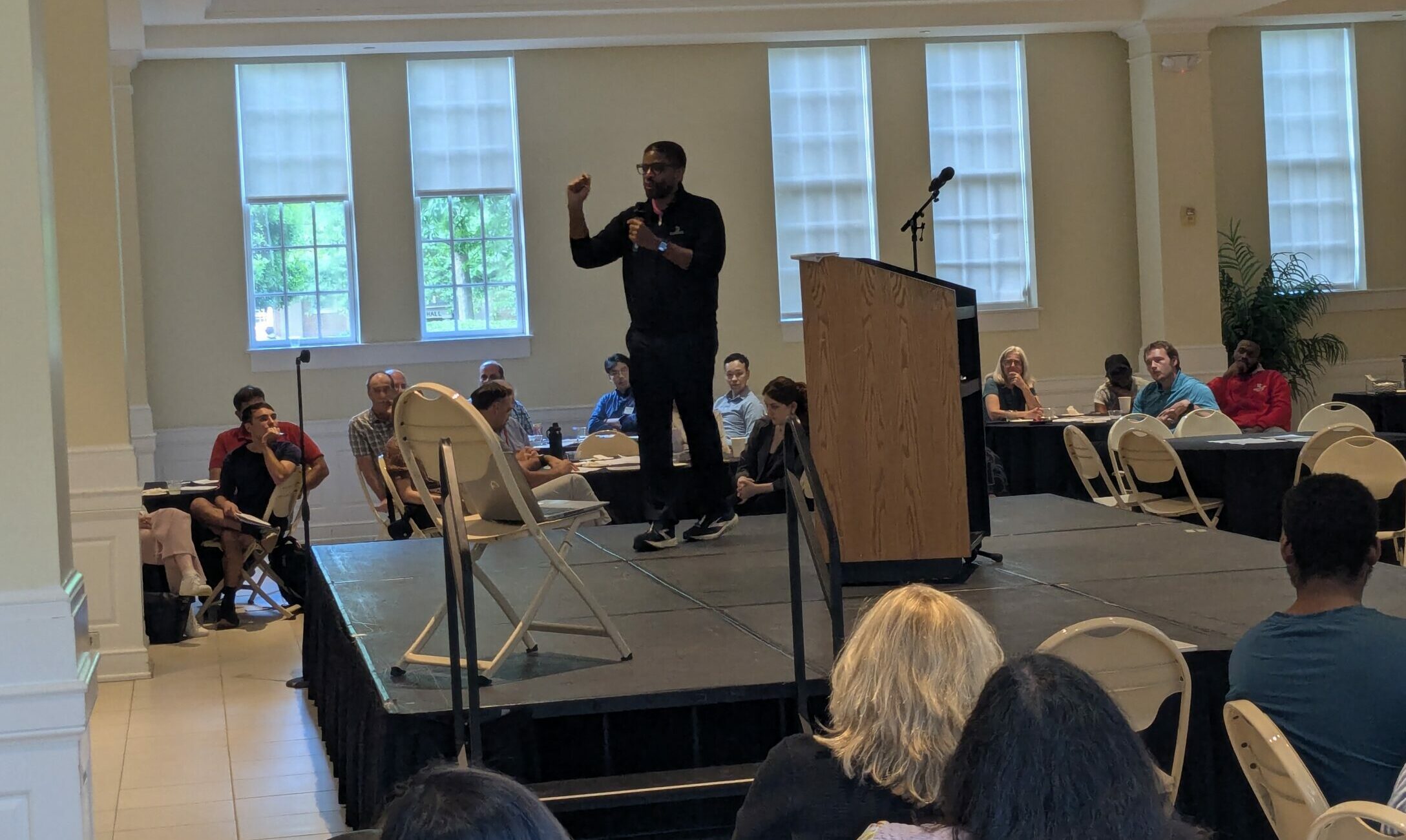
Ike Bailey speaking to the audience.

On April 23, the Deliberative Citizenship Initiative hosted a Deliberative Forum on “Free Expression at Davidson: Rights and Responsibilities during an Uncertain Time.” The forum was the last DCI event to be held in the Lilly Gallery before it is transformed into a study space for the next two years while the library is renovated. A total of 144 people attended the event; 61 in-person and 83 online.

Jim Martin speaking to the audience.
Jacquie Pffeffer Merrill at the podium.

Like most past DCI forums, this event included both expert speakers and an opportunity for the audience to engage with one another on the topic. But instead of a panel or roundtable discussion, this time the speakers spoke sequentially to freely express their thoughts about free expression.

Stacey Riemer at the podium.

The speakers included Melissa Gonzalez (Associate Professor of Hispanic Studies, Gender & Sexuality Studies and Latin American Studies), Dan Layman (Associate Professor of Philosophy), Jim Martin ’57 (Former Davidson Associate Professor of Chemistry and Former Governor of North Carolina), Ike Bailey ’95 (Professor of the Practice in Communication Studies), Jacqueline Pfeffer Merrill (Director of the Campus Free Expression Project, Council of Independent Colleges) and Stacey Riemer (Interim Vice President for Student Life and Dean of Students). The event was moderated by Graham Bullock, Associate Professor of Political Science and Faculty Director of the DCI.

Melissa Gonzalez speaking to the audience.

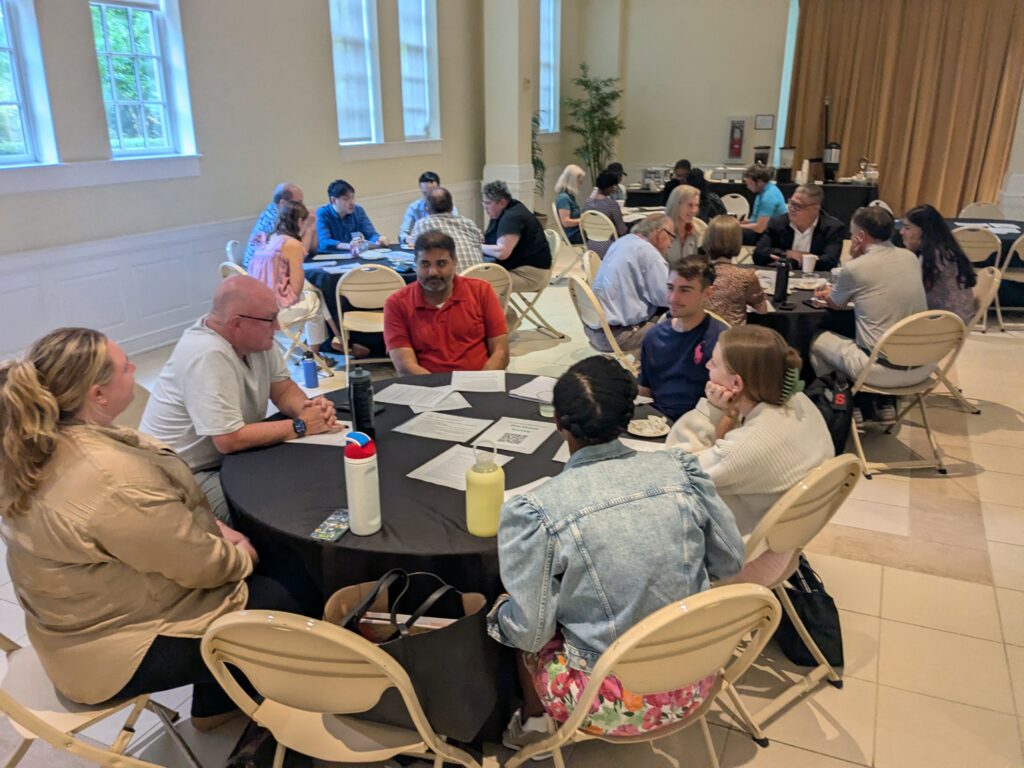
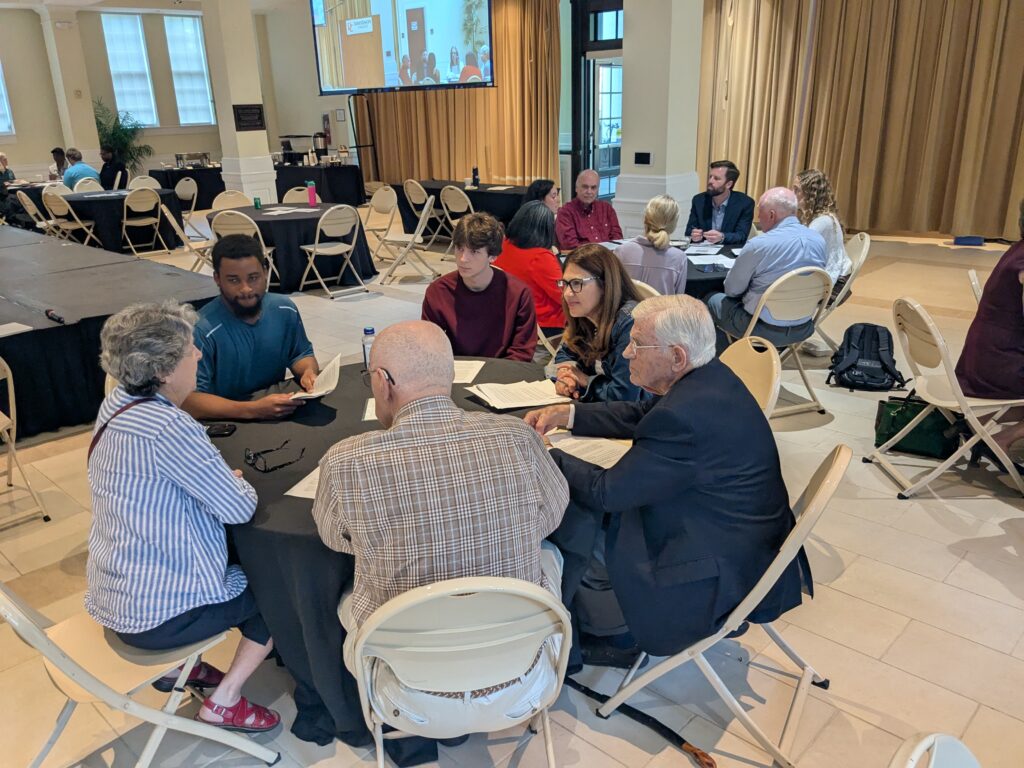
Following the speakers’ remarks, audience members began talking with each other around roundtables in person and in breakout rooms online. Following the DCI’s deliberation guide written for this forum (provided below) and guided by the DCI’s trained facilitators, the discussions explored three related themes and questions:

  1. The Nature and Importance of Freedom of Expression: Why do we value it in a democratic society and in higher education?
  2. The Nature of Responsible Freedom of Expression: What are reasonable limits on our right to “free speech?”
  3. Davidson College’s Approach to Freedom of Expression and the Student Code of Responsibility: How does and how should the College respond to concerns about the expression of particular viewpoints on campus?

Feedback from the event was very positive. 92% of respondents to the post-event survey left either somewhat or very hopeful that we can identify at least some areas of agreement on the importance of free expression and reasonable limits on free speech, 94% reported being satisfied or very satisfied with their small group discussion and likely to participate in another Deliberative Forum in the future, and 97% stated they were likely or highly likely to recommend participating in a Deliberative Forum to a friend.

deliberators sitting around tables.

Below are some of the comments that participants shared about their experience at the forum:

  • “I am really proud to know my alma matter is thinking about this and proactively encouraging discussion. I am proud to be a Davidson Alumni.” Conservative Female Participant
  • “I applaud you for including an ideologically diverse panel. Though I did not agree with one of the members, it was such a great model of civil discourse! Thank you to Dr. Bailey for his inspiring message to us all!! The event was fantastic, and our small group deliberation was a joy. Thank you to the DCI for this Deliberative Forum! Thanks to the deliberation guide, panel, and small group deliberation, I learned much about the topic, as well as how to deliberate together. Deliberative Forums are a very worthy investment in time personally and for our communities and society.” Liberal Female Participant
  • “It’s refreshing and encouraging to see an institution of higher learning actively solicit opinions from and engage with a diverse group of students, faculty, alumni, parents, and friends.  It speaks to the philosophy of the College…a philosophy from which many other institutions could stand to learn.” Moderate Male Participant
  • “I enjoyed participating with other thoughtful, intelligent people of varying ages as they discussed a difficult topic.” Conservative Male Participant
  • “Thank you for hosting this important event, and for the broad range of speakers on the panel.  Our small group was well-facilitated by a current student, who set clear parameters, included everyone, and kept the conversation moving.  The advance reading provided a good foundation while also being an accessible length. Institutions of higher learning have a powerful opportunity and responsibility right now to protect freedom of speech and it is heartening to know how Davidson is striving to stand up for free speech in our current cultural climate. It was refreshing to reconnect with Davidson by learning about the topic of free speech from faculty, staff, and alumni who offered a broad range of perspectives.  I am encouraged to see how carefully this topic is being considered on campus and appreciate the opportunity to connect with others in the structured small group discussion.”  Moderate Female Participant
  • “I thought our moderator was excellent and mature for a sophomore. The organization of the subject matter was great. The diversity of the panel was better than I expected. Being a conservative I did not expect my views to be heard or accepted. I was pleasantly surprised and considered the opposition well formed. I would have enjoyed further discussion.” Conservative Male Participant
  • “How we do anything matters as much as what we do. The DCI brings people together and teaches us how to be deliberative and how to be an effectively engaged citizen, skills that have application across a wide spectrum of critical issues. While I (as a Davidson parent) benefit personally from the wealth of information and opportunities the DCI offers, what I most appreciate is this opportunity for students. The DCI is supporting Davidson’s statement of purpose in countless way, both directly and indirectly.” Liberal Female Participant

Participants were also invited to like to share any other comments, suggestions, or questions about free expression at Davidson that they would like the College to take into consideration in its approach to managing the tensions around protecting freedom of expression and promoting belong and mutual respect. Responses to this question are included in the document below.

DCI-Forum-on-Free-Expression-Participant-Responses

Check out the recording of the speakers’ remarks, deliberation guide, pathways guide and more photos from the event below.

DCI Deliberation Guide on Free Expression at Davidson

DCI-Free-Expression-Deliberation-Guide

Deliberators deliberating around tables.

DCI Pathways Guide on Free Expression at Davidson

DCI-Free-Expression-At-Davidson-Pathways-Guide

Three tables of deliberators.

Filed Under: DCI Posts, Events

Seeing in Color: Why Deliberation Shouldn’t Be Black and White

May 21, 2025 by Mohamed Mustafa

Image of black and white conversation next to conversation in color

By Mohamed Mustafa ’26 (DCI Fellow)

In a world where issues are often reduced to binary choices, we tend to jump to conclusions without acknowledging the nuances of complex topics. This black-and-white approach may be convenient, but it doesn’t reflect the reality of our diverse motivations, experiences, and values. Life is far more complex than a simple “right” or “wrong.” Deliberation offers a way to step back, suspend judgment, and embrace this complexity, helping us see beyond simplistic divisions.

At the start of the DCI Fellows journey, deliberation often seemed like a tool for finding compromise. But as I began engaging in conversations about difficult issues, I soon saw it as much more. Deliberation invites us to understand the “why” behind people’s beliefs and to appreciate the different motivations that drive their perspectives. One D Team discussion I recently facilitated on defensive democracy illustrated this dynamic, reminding me how deliberation can help unpack seemingly opposing views and reveal the complex motivations behind each stance.

Defensive democracy—a concept associated with the tension between protecting democratic principles and restricting certain freedoms in the name of security—tends to trigger strong emotions. For some, imposing restrictions on groups with anti-democratic agendas seemed essential for protecting democracy from internal threats. For others, any restriction on freedom seemed to risk eroding the very principles that democracy is meant to uphold. At first glance, it’s easy to view it as a black-and-white issue: either democracy is defended by limiting certain freedoms, or democracy is protected by preserving civil liberties at all costs. Yet as my D Team participants explored the topic, they discovered each perspective was rooted in motivations that were simultaneously personal, nuanced, and deeply held.

Some participants argued that limiting certain freedoms—such as banning groups with anti-democratic intentions—was crucial to safeguarding democracy itself. They highlighted examples from history where democracies fell because they allowed bad actors to act freely within their borders. Their approach was not about endorsing authoritarianism but about preserving democratic values by preventing harmful ideologies from undermining them.

Others voiced concerns that imposing restrictions, even in the name of democracy, might set a dangerous precedent. They emphasized the slippery slope, suggesting that banning one group could pave the way for further erosions of liberty. They viewed true democracy as strong enough to withstand dissenting voices, since suppressing ideas would betray democratic principles. For these participants, defending democracy meant holding firm to civil liberties, even at the risk of some vulnerability.

Deliberation allowed us to move beyond judging each stance as either “pro-democracy” or “anti-freedom.” Instead, this space provided a framework for examining the motivations behind each position. Listening to one another, participants began to realize that defensive democracy isn’t a straightforward issue with an easy answer; it’s a balancing act shaped by people’s lived experiences and their own personal interpretations of what democracy requires.

Perhaps the hardest part of this discussion—and of deliberation in general—was resisting the urge to label ideas as “right” or “wrong.” Through this experience, participants found that curiosity is essential in deliberative settings. When they approached each other’s motivations with curiosity rather than judgment, they opened themselves to new insights and ways of thinking. This curiosity allowed participants to understand not only each other’s concerns about freedom and security but also the complex values that guide their own views on defensive democracy.

Consider a hypothetical example where two groups debate banning extremist organizations to protect democratic stability. In a deliberative setting, participants from both sides would share why they feel as they do. Those advocating for restrictions might express fears about instability, sharing historical examples of democracies dismantled from within. Meanwhile, those defending free expression could argue that suppressing even dangerous ideas drives them underground, where they might thrive in secrecy. Through deliberation, each side could gain a fuller picture of the risks and values that shape the other’s position, seeing that their motivations stem from shared concerns for democracy, even if their conclusions differ.

Deliberation doesn’t mean everyone will end up on the same page. But it does foster a community in which we see each other as individuals with complex and diverse motivations. In the DCI Fellows Program and my individual D Team, I’ve seen how deliberation nurtures a more humane and compassionate community, one where people look for understanding rather than conflict. This empathy and respect are essential for a healthy democratic society, reminding us to pause, listen, and look for the colors in between the black and white arguments that are being made in a world increasingly polarized by oversimplified narratives.

Filed Under: Fellow Posts

  • « Go to Previous Page
  • Page 1
  • Interim pages omitted …
  • Page 21
  • Page 22
  • Page 23
  • Page 24
  • Page 25
  • Interim pages omitted …
  • Page 75
  • Go to Next Page »

Footer

Blog Post Categories

  • Announcements
  • Blog Posts
  • DCI Posts
  • Events
  • Faculty Posts
  • Fellow Posts
Image of a compass superimposed by the text "Deliberative Citizenship Initiative" and "Davidson College." Clicking on this image leads to the Initiative page.

Recent DCI Blog Posts

  • We Tried to Fix Jubilee’s “Middle Ground” – Here’s How It Went
  • A Case for Deliberation in the Natural Sciences
  • Welcoming New Staff to the DCI and DCN
  • Facebook
  • Twitter
  • Instagram
  • LinkedIn


Copyright © 2026 · Infinity Pro on Genesis Framework · WordPress · Log in