• Skip to main content
  • Skip to footer

Deliberative Citizenship Initiative

Building Democracy One Conversation at a Time

  • The Initiative
    • Programs
      • Deliberation Across the Curriculum
      • Deliberation on Campus
      • Deliberation in the Community
      • Research on Deliberation
    • Motivations
      • Why Deliberative Citizenship?
      • Why Davidson? Why Now?
    • Who’s Involved?
      • DCI Fellows Cohorts
        • 2025-2026 Fellows
        • 2024-2025 Fellows
        • 2023-2024 Fellows
        • 2022-2023 Fellows
        • 2021-2022 Fellows
        • 2020-2021 Fellows
      • DeeP Collaborative Cohorts
        • 2024-2025 DeeP Collaborative Faculty
        • 2023-2024 DeeP Collaborative Faculty
      • Advisory Council
    • History
      • What Sparked the Initiative?
    • Key Deliberative Dispositions
    • Frequently Asked Questions (FAQ)
    • Annual Report
  • Get Involved!
    • Participate in a Forum
    • Join a D Team
    • Become a Fellow
    • Take Courses
    • Get Training
    • Come to Guest Lectures
  • Events
    • Upcoming Events
      • 250th Anniversary Deliberative Forum Series on American Values
    • Past Events
  • Connections
    • The Deliberative Citizen: The DCI’s Monthly Newsletter
    • Efforts on Campus
    • Efforts in the Community
    • Efforts Elsewhere
    • Readings and Resources
      • DCI-Published Guides
      • DCI Guide to One-on-One Conversations
      • How to Disagree
      • Demonstration of Facilitation Styles
      • Deliberative Pedagogy Mini-Course
    • How We Can Help: DCI’s LET’S DELIBERATE! Partnership Opportunities
    • DCI in the News
  • DCI Blog Posts
    • Recent Blog Posts
    • All Blog Posts

The DCI Blog

Beyond the Ballot: The Power of Between-Election Deliberative Small Talk

May 22, 2025 by Zak Abdulahi

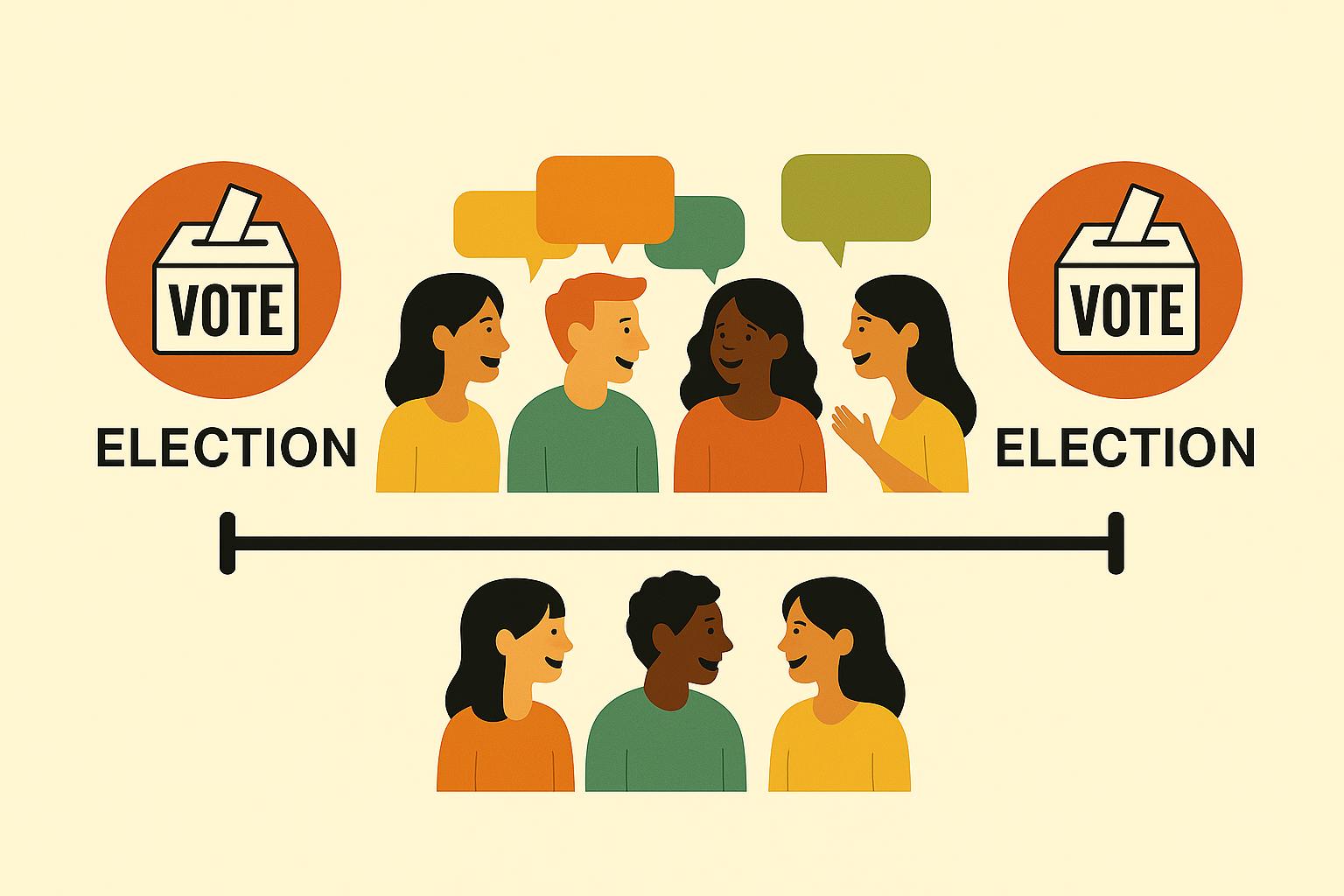
Image of an election timeline with people deliberating between two elections.

By Zak Abdulahi ’27 (DCI Fellow)

This month marks six months from the 2024 elections. Looking back, I can see how as the election dust settled, as the banners began to come down and a collective sigh of relief or anger echoed across the nation, we were tempted to push the whole ordeal to the back of our minds. Irrespective of how we felt about the outcome, most of us did not miss the phone calls from pollsters, constant campaign messages, and barrage of attack ads on TV. 

However, in the wake of the election our emotions, opinions, and beliefs may still be running high, and the euphoria or anxiety stemming from the election outcome is focused on the actions of the current administration and their implications for the next election cycle. But what if instead of sprinting towards the next campaign, we began to utilize this time between elections to engage in something rare but important: small intentional bouts of deliberation? 

Unlike the sweeping national discourse that dominates election season, post-election deliberative “small talk” thrives on localized conversations among friends, neighbors, colleagues and peers. These individuals gather to discuss the outcome and what it means for their communities. These conversations are a vital way to process election results and examine how new policies being implemented are affecting our local community, neighborhoods, and daily lives. In the wake of elections, we can re-engage with each other beyond these sweeping platitudes and campaign rhetoric. 

We can now take time to ask questions like:  What does this outcome mean for my town or city? How might this impact the services we rely on, or issues we care about? These questions are essential in the sense that they can help ground campaign sound bites and platitudes into tangible concrete personal terms. Moreover, smaller, consistent deliberation makes civic engagement sustainable. As opposed to tuning in every 4 years, intentionally creating lower-stakes and regular check-ins with your community will create a collective sense of involvement and shared responsibility.

Though these conversations may not be extremely formal, it is important to adopt and maintain a few key deliberative dispositions during our conversations. We should strive to engage in egalitarian-minded discussions, whether that be at a coffee shop, lunch, or any other social gathering. What matters most is that these conversations ensure everyone has a chance to speak, listen, and be heard. 

Finally, between-election deliberation is critical because it fosters accountability—not just of elected officials to their constituents but also among community members to one another. By coming together to discuss election outcomes and their implications, we build a shared sense of responsibility for staying informed and proactive. These conversations encourage us to reflect on how policies and decisions affect our neighborhoods and daily lives and motivate us to collaborate on solutions to address local issues.

It’s one thing to vote; it’s another to stay informed and invested in the outcomes of those votes on our communities and daily lives. Through small informal bouts of deliberation with our neighbors, colleagues and peers, we remind ourselves that democracy is a constant practice, not a one-time event, and that our engagement doesn’t end on election day.  

The late civil rights activist Kwame Ture once said, “You vote once in four years, and that’s your political responsibility? Politics is every day.” As we live in this time between elections, we must recognize that our democracy neither begins nor ends at the ballot box. By engaging in ongoing deliberation, we can foster lasting, sustainable change and ensure that our communities thrive—not just during election years, but every day.

Filed Under: Fellow Posts

From Threads to Thoughts: How Social Media is Shaping Public Dialogue

May 22, 2025 by Fatima Mukasa

Image of people on social media with some speech bubbles above them.

By Fatima Mukasa ’28 (DCI Fellow)

In a world where public squares are increasingly digital, social media has emerged as an unexpected but powerful arena for deliberative conversations. Whether it’s Twitter threads unpacking Supreme Court rulings, Instagram carousels about healthcare access, or TikTok explainers on climate justice, more and more people are using these platforms not just to post, but to engage. These virtual spaces are becoming hubs of public dialogue, where ideas are shared, arguments are formed, and calls to action are amplified. But this shift invites an important question: can platforms built for speed, entertainment, and algorithms truly foster meaningful deliberation?

To answer that, we must understand what deliberative conversations actually are. At their core, they are thoughtful, inclusive, and respectful exchanges of ideas that aim for collective understanding or decision-making. Historically, such conversations took place in town halls, classrooms, or structured forums, often led by professionals or policymakers. These spaces were formal, exclusive, and frequently inaccessible to those without institutional power or education. The voices that mattered most were typically those deemed authoritative.

Social media, by contrast, is chaotic, informal. Anyone with a smartphone and internet connection can enter the conversation. This has enabled everyday people to express perspectives that might never have made it into traditional deliberative settings. For example, the #BlackLivesMatter movement, which started as a grassroots response to police violence in the United States, gained global momentum largely due to its spread on platforms like Twitter, Instagram, and Facebook. Protest footage, personal testimonies, and educational posts helped spark international demonstrations and influenced public policy discussions. Similarly, conversations about mental health, gender identity, and political accountability have flourished on TikTok and YouTube, bringing nuance and urgency to issues that were once silenced.

However, these benefits don’t come without significant challenges. The same openness that allows everyone to speak also allows misinformation to spread unchecked. Non-experts with a community following can often be biased. Moreover, social media is prone to performative activism, where users share opinions or hashtags for attention rather than genuine engagement. This fosters shallow participation, while meaningful conversations are buried beneath outrage and viral trends. Polarization also intensifies as echo chambers form where users are only exposed to opinions that reinforce their existing beliefs.

So, how can social media be harnessed for better deliberation? One solution is to promote platforms that encourage structured dialogue, like Reddit’s r/ChangeMyView, where users are rewarded for changing their perspectives and for offering thoughtful dissent. These communities model what healthy online deliberation can look like, where curiosity beats contempt, and thoughtful reflection is prioritized over combative rebuttal.

Digital literacy must also be emphasized. Users need the tools to recognize misinformation, question sources, and resist the urge to accept everything they see at face value. Just as we teach students how to research and argue in a classroom, we must teach digital citizens how to participate responsibly in online debates.

Above all, intentionality matters. Deliberation isn’t just about talking—it’s about listening, processing, and being willing to be changed by what you hear. Whether you’re commenting on a post or adding your own post, consider: Am I opening space for understanding, or closing it down? The power of social media is undeniable, but whether it becomes a tool for real democratic engagement or just another space of noise depends on how we use it.

So let us use social media to expand our horizons and refuse to let ourselves be caught in echo chambers. In the next conversation you have online, do it with intentionality, really listening and trying to understand where a person is coming from. Some might say this is giving conversations unnecessary weight, but it is important to approach most conversations with a deliberation mindset. Social media can be our modern public square, but only if we treat it as one.

Filed Under: Fellow Posts

All Bark and No Bite? The Role of Action in Deliberation

May 22, 2025 by Izzy Cevallos

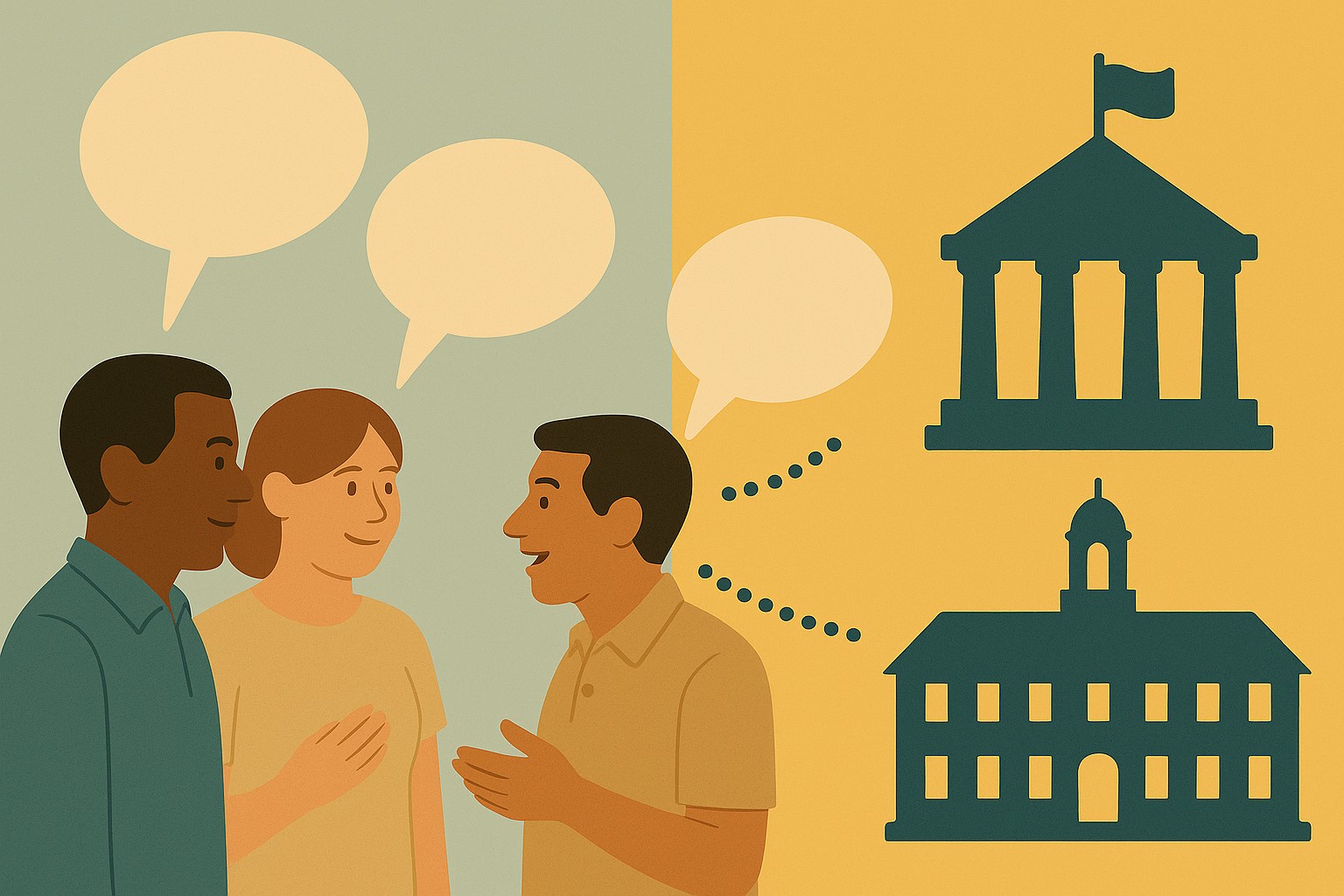
Image of people talking with arrows to a statehouse and a school.

By Izzy Cevallos ’27 (DCI Fellow)

It is February of 2023, at 6:30 on a Friday afternoon and I have just logged off of Zoom. I had just completed my first D Team meeting. Our topic was public education, and the question posed to us was the role of vouchers: when, or should, parents utilize them for their children? As someone who has attended public school my whole life, I had a lot to say about this topic. But even after two hours of discussion, I felt as though I still had another hour’s worth of points to make. I closed my computer, got a drink of water, went to dinner with my friends, and still just felt off- like I hadn’t said enough, or done enough. I was restless. After each D Team meeting that semester I had the same feeling.

So when the opportunity arose to apply to become a DCI Fellow, I jumped at the opportunity, thinking that becoming a Fellow would cure this restlessness and allow me to do more. But at the end of the fall semester, I felt as if only one of these things was true. Yes, I had done more: I had facilitated my own D Team, I had attended a Deliberative Forum and facilitated a discussion at it. I had recruited many of my peers to join DCI the next semester, I had most definitely taken action. But I still felt restless.

A common critique of deliberative institutions like the DCI is that there’s too much talk, not enough action. Why spend all this time arguing about something, when you could be taking action on that very same topic of debate? This is the frustration that I was feeling. I almost felt as if deliberation was not enough.

My dilemma reminded me of an article and a short documentary that the fellows had been tasked with completing at the beginning of the school year. The topic was Ireland’s Citizens Assemblies. Back in 2016, the assembly was established as a way to discuss ways to improve Ireland’s constitution, through the random selection of 100 deliberators. These individuals would discuss a wide variety of topics pertaining to Ireland’s constitution: abortion, term limits, climate change, etc.

But the crucial part about this process is that after the discussions had taken place, the assembly would then make recommendations to members of parliament based on their deliberative conclusions. And these recommendations had significant impacts: results of the 2018 referendum on abortion closely matched the conclusions made by the assembly. Parliament’s climate action plan was also shaped by the assembly’s recommendations.

My point here is that deliberation is only half of the battle: action almost always should follow deliberation. This insight is embedded in the DCI’s “action inclination” deliberative disposition and its Pathways Guides that map out ways participants can follow-up on the topic discussed after each DCI deliberation.

I sat down to write this blog post, fully intending to preach the importance of action post-deliberation and reflect on my own lack thereof, but I realized that I had, in fact, already done so. I was inspired by my own D Team experience to join the DCI. While I didn’t take direct action on public education and the role of vouchers, I took a step towards becoming involved in a community that would give me the opportunity to take action on a multitude of other issues. Just as Ireland’s Citizens Assembly teaches us: deliberation does not exist in a vacuum. It is not always a one-off conversation; it is a first step.

 At the end of my final D Team meeting in the fall, I thanked my participants for their time, and before I could even begin to shamelessly plug more upcoming DCI events, several of my participants asked me how they could continue to stay involved with the DCI. Here was the action I had been waiting for. It may not be an assembly of citizens impacting governmental policy, but it was a step towards something else. Yes, deliberation is just talking about an issue, but it can also function as a precursor to a dozen different actions to take. Essentially, deliberation doesn’t require action, but it is made infinitely more meaningful when it inspires it.

Filed Under: Fellow Posts

All in for DCI!

May 21, 2025 by Graham Bullock

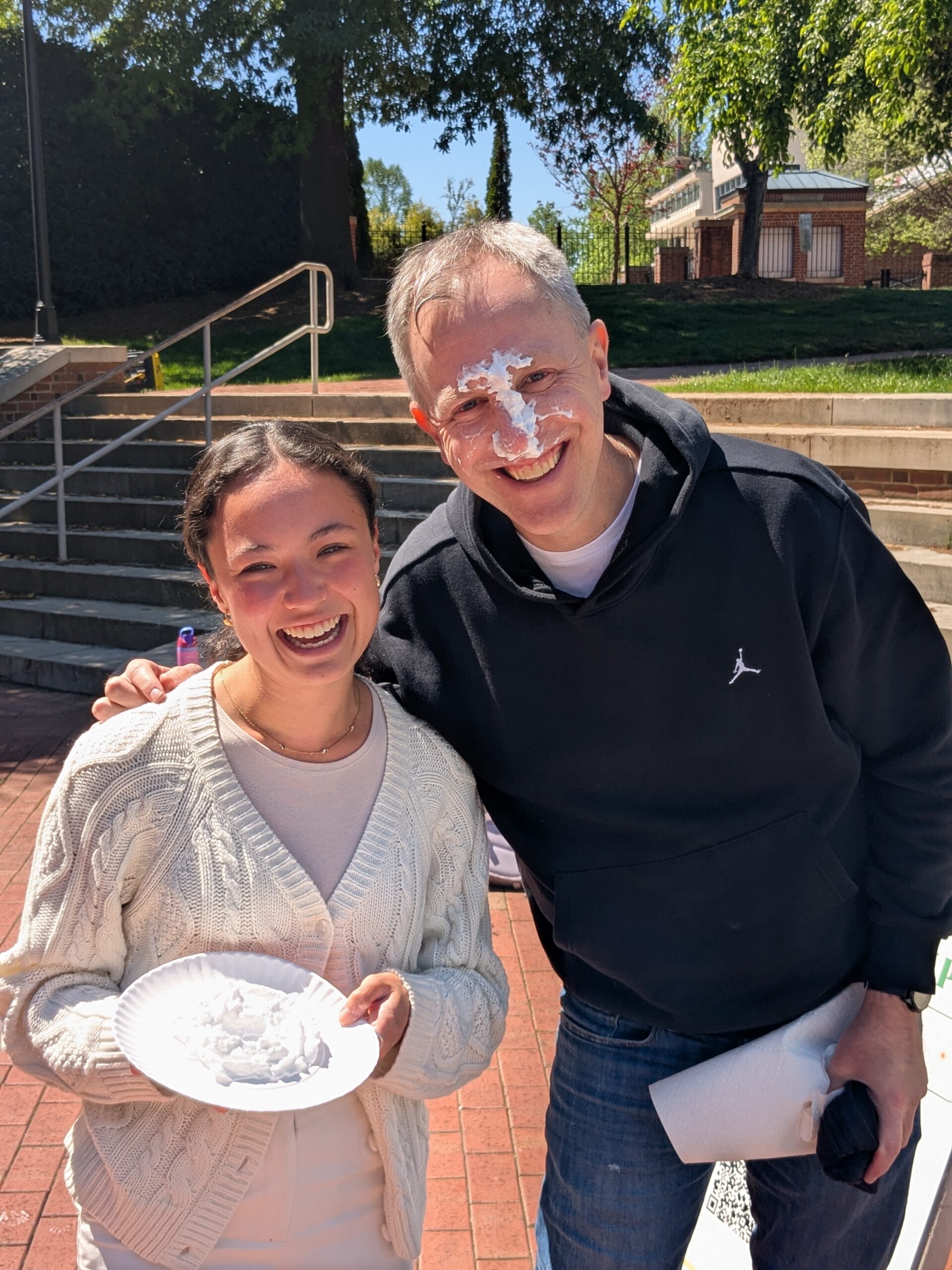
Luna and Dr. Bullock at All in for Davidson, Dr. Bullock has cream on his face.

For the past 12 years, the Davidson campus has celebrated the impact of every gift made to the college on its All in for Davidson day. There are parties and performances across campus, and students have the opportunity to pie faculty and staff in the name of philanthropy. This year, Graham Bullock was invited to participate in this celebration, and he had the good fortune to get pied by several Davidson students, including DCI Fellow Luna Noguchi ’25 (above) and DCI D Team participant, Madeline O’Leary ’27 (below).


If you’d also like to be “All in for DCI” and like what the DCI has been doing to support more productive public discourse at Davidson, then you are welcome to make a financial contribution to the initiative. Simply click on the link below, select Other under “I want to support” and type in “Deliberative Citizenship Initiative,” and proceed from there. Any amount would help us continue to do the work of bringing people together to discuss the challenging and contentious topics facing our society.

Give a Gift to the DCI

Filed Under: DCI Posts

Finding a Soft Landing for Freshman Non-Biology Majors via Deliberative Pedagogy

May 21, 2025 by Uchenna Iloghalu

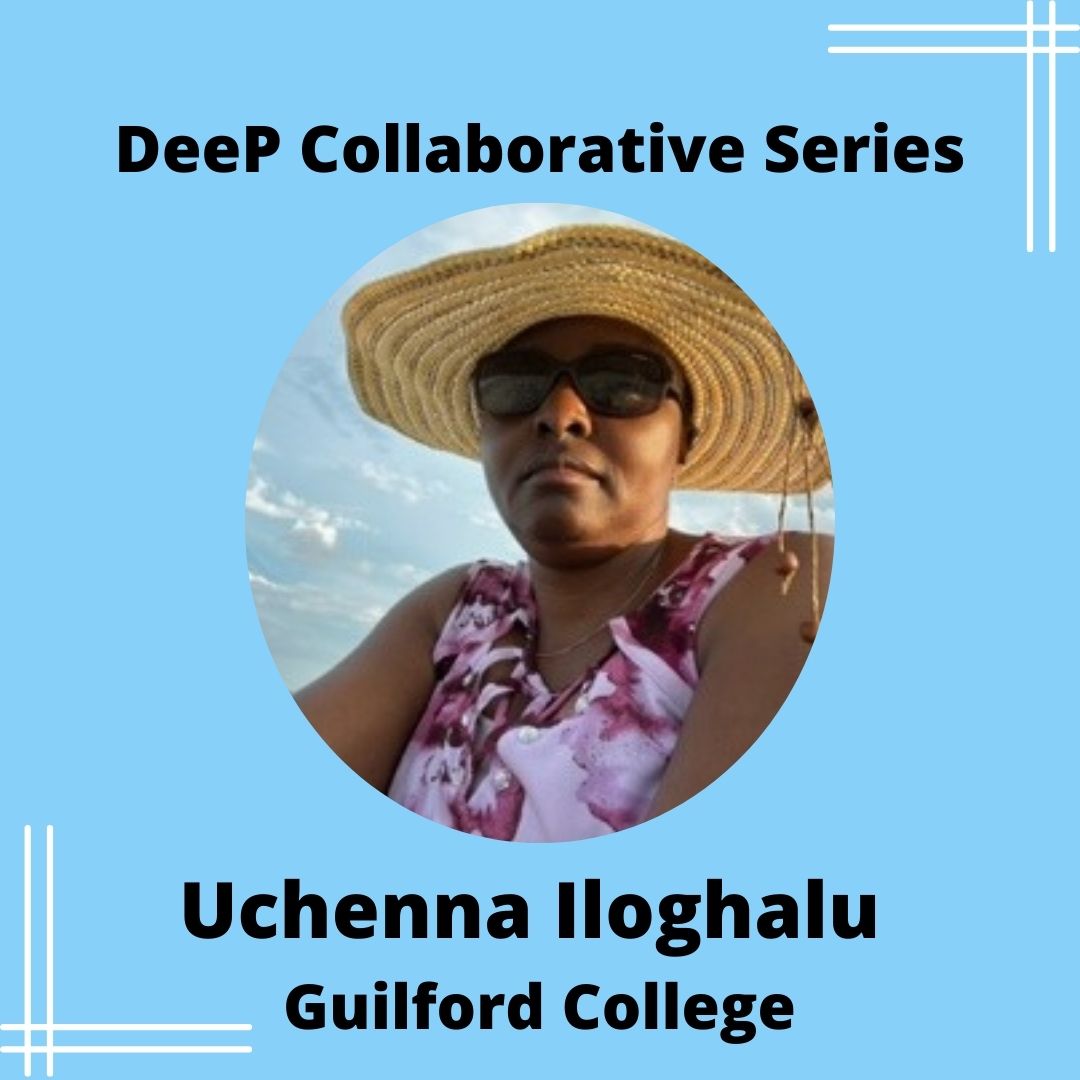
Photo of Uchenna

The Deliberative Pedagogy (DeeP) Faculty Collaborative consists of faculty from Davidson College and other higher education institutions who are committed to learning and implementing new ways to improve and deepen the quality of their class discussions. These faculty come from a wide array of disciplines and backgrounds to study and discuss deliberative pedagogy methods, share their ideas and questions with one another, and work to embed deliberation in their classrooms. In this special blog series, members of the Collaborative describe and reflect on their experiences developing and teaching their deliberation-involved courses.

By Uchenna Iloghalu (2023-24 Deliberative Pedagogy Collaborative Faculty Fellow)

Teaching non-biology majors biology is a little challenging, and more so, freshman students who have limited college course experience. These students come from various departments like English, Political Science, Education, History, Music to mention just a few. These students love to read but are not as familiar with natural systems and how they work. I was tasked to find a subtle way to make the non-biology major freshman students appreciate biology. To enhance the students’ understanding, I incorporated the practical approach I learned from the Deliberative Citizenship Initiative (DCI). This approach is focused on integrating the students’ perspective, encouraging their total participation, and improving their critical thinking.

What I did: The book entitled, “I Contain Multitudes” by Ed Yong, was used as our common source of information. This book systematically describes biological terms, concepts, processes, microbial activities, ecology, system biology, and so much more. It is written in a novel-like format, which endears it to these students, as it explains some convoluted biological concepts in magical ways.

I had 18 students in the class, and I randomly paired them together, which increases the chances of making new friends. These students were given at least two weeks to read an assigned chapter and make a presentation as well as have a constructive deliberation. For each chapter, we utilized read/pair/share/question/deliberate and jigsaw teaching styles. Class discussion, PowerPoint presentations, and blog writing were all utilized to enhance student engagement with key concepts. For example, chapter one talks about “Living Islands” and emphasizes the evolutionary processes of life, how cells and tissues are connected, as well as the knowledge of scientists and their inventions.

It was really an eye-opening experience for these students, as they were eager to make their points known to other students who were not presenting. Students who were not presenting asked questions, which helps in further understanding of the concept. More clarifications rather than disagreements were seen in each presentation.

Also, I shared rubrics that guided the students as they designed their presentation and prepared for class deliberation. The rubrics encouraged students in each group to know each other’s slides and be prepared to present them all and answer questions about them if any of the students were absent. We also had a peer assessment rubric in which the students were asked to highlight two strengths and two areas for improvement of each presenter. These were eventually shared with each student to help them improve on the next deliberation.

What I gained: I believe that the skills and concepts the students learned from the Deliberative Pedagogy (DeeP) teaching style will carry them through all their lives, particularly as they relate to interactions and discussions amongst peers who may not only have contrary opinions but may not fully comprehend relevant concepts. Deliberative pedagogy assists in bringing out important soft skills, such as the ability to listen, communicate, and not being too rigid in one’s thoughts. It also encourages students to acknowledge others’ views and be open to new ideas as they learn to work together more effectively and inclusively.

How it worked: It was really a blast as the students were in the forefront of their learning processes. They were in charge. By the time they were done reading assigned chapters, presenting their understanding in the class, and answering questions from peers, they demonstrated a mastery beyond what I imagined possible. This was demonstrated both by each presenter concluding with a take-home message and taking a quiz on the chapter within a week of the presentation.

What didn’t work and how to improve: Some students were either absent or excused on their day of presentation. This tends to set those students back and doesn’t allow them to demonstrate their learning. In the future, I’ll try to create opportunities for students who did not present as scheduled with cogent reasons to do so in the next class and to reward extra points for those who presented as scheduled. I believe the extra points will attract the students to do their presentations as scheduled and minimize unnecessary excuses.

Filed Under: Faculty Posts

  • « Go to Previous Page
  • Page 1
  • Interim pages omitted …
  • Page 20
  • Page 21
  • Page 22
  • Page 23
  • Page 24
  • Interim pages omitted …
  • Page 75
  • Go to Next Page »

Footer

Blog Post Categories

  • Announcements
  • Blog Posts
  • DCI Posts
  • Events
  • Faculty Posts
  • Fellow Posts
Image of a compass superimposed by the text "Deliberative Citizenship Initiative" and "Davidson College." Clicking on this image leads to the Initiative page.

Recent DCI Blog Posts

  • We Tried to Fix Jubilee’s “Middle Ground” – Here’s How It Went
  • A Case for Deliberation in the Natural Sciences
  • Welcoming New Staff to the DCI and DCN
  • Facebook
  • Twitter
  • Instagram
  • LinkedIn


Copyright © 2026 · Infinity Pro on Genesis Framework · WordPress · Log in