• Skip to main content
  • Skip to footer

Deliberative Citizenship Initiative

Building Democracy One Conversation at a Time

  • The Initiative
    • Programs
      • Deliberation Across the Curriculum
      • Deliberation on Campus
      • Deliberation in the Community
      • Research on Deliberation
    • Motivations
      • Why Deliberative Citizenship?
      • Why Davidson? Why Now?
    • Who’s Involved?
      • DCI Fellows Cohorts
        • 2025-2026 Fellows
        • 2024-2025 Fellows
        • 2023-2024 Fellows
        • 2022-2023 Fellows
        • 2021-2022 Fellows
        • 2020-2021 Fellows
      • DeeP Collaborative Cohorts
        • 2024-2025 DeeP Collaborative Faculty
        • 2023-2024 DeeP Collaborative Faculty
      • Advisory Council
    • History
      • What Sparked the Initiative?
    • Key Deliberative Dispositions
    • Frequently Asked Questions (FAQ)
    • Annual Report
  • Get Involved!
    • Participate in a Forum
    • Join a D Team
    • Become a Fellow
    • Take Courses
    • Get Training
    • Come to Guest Lectures
  • Events
    • Upcoming Events
      • 250th Anniversary Deliberative Forum Series on American Values
    • Past Events
  • Connections
    • The Deliberative Citizen: The DCI’s Monthly Newsletter
    • Efforts on Campus
    • Efforts in the Community
    • Efforts Elsewhere
    • Readings and Resources
      • DCI-Published Guides
      • DCI Guide to One-on-One Conversations
      • How to Disagree
      • Demonstration of Facilitation Styles
      • Deliberative Pedagogy Mini-Course
    • How We Can Help: DCI’s LET’S DELIBERATE! Partnership Opportunities
    • DCI in the News
  • DCI Blog Posts
    • Recent Blog Posts
    • All Blog Posts

The DCI Blog

Deliberating about Human Rights in a Non-dominant Language

July 23, 2025 by Abril Jimenez

The Deliberative Pedagogy (DeeP) Faculty Collaborative consists of faculty from Davidson College and other higher education institutions who are committed to learning and implementing new ways to improve and deepen the quality of their class discussions. These faculty come from a wide array of disciplines and backgrounds to study and discuss deliberative pedagogy methods, share their ideas and questions with one another, and work to embed deliberation in their classrooms. In this special blog series, members of the Collaborative describe and reflect on their experiences developing and teaching their deliberation-involved courses.

By Abril Jimenez (2024-25 Deliberative Pedagogy Collaborative Faculty Fellow)

This past semester, I had the opportunity to integrate deliberative pedagogy into my two sections of Spanish 260: Human Rights, which is a bridge course designed as the first content-rich experience for language learners at Davidson College. Drawing from my training with the DeeP Collaborative, I developed a course where deliberation was empowering at the intellectual and linguistic levels.

My Spanish 260 sections combined intermediate second-language and heritage learners. For many, this was their first time holding sustained conversations in Spanish around complex and sensitive topics. Naturally, there was anxiety: how could they express nuanced ideas and engage in argumentation and critical thinking when still building fluency? 

To address this question, I invested heavily in scaffolding the experience to ensure that linguistic hurdles would not become barriers to comprehension or participation. Before our two main deliberations, we held practice sessions focused on deliberative techniques and expectations. Following each deliberation, students engaged in reflections, both orally and in writing, to deepen their learning and assess their growth. These metacognitive moments were invaluable, as they not only helped students track their progress as Spanish speakers but also allowed them to reflect on the civic dimensions of the issues we discussed. Additionally, the two main essays for this class were an extension of the DCI deliberation guides we used. The goal was to engage with the material as many times as possible, in as many formats as possible. The repeated exposure to ideas, vocabulary, and linguistic structures significantly facilitated learning.

Centering Human Rights Through Lived Experiences

In the first half of the semester, our theme was social mobility and temporary migrant labor, particularly those on H-2A visas. The first deliberation asked: “How can we make the American Dream more attainable for immigrants?” Students grappled with structural barriers, personal agency, and policy reform…. all while navigating those ideas in Spanish and engaging with Spanish-speaking community leaders. For example, we invited Leticia Zavala, a union organizer with El Futuro es Nuestro, to share powerful insights into the lives of North Carolina farm workers.
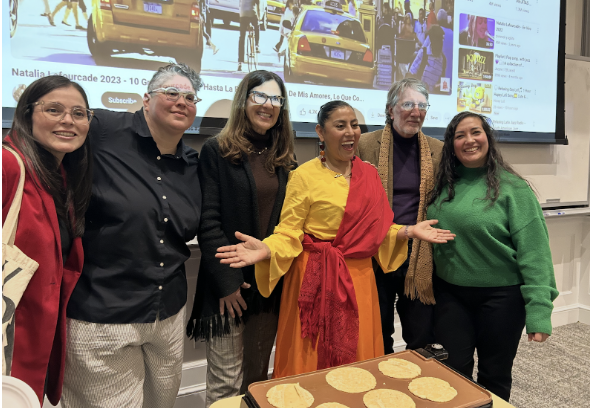
Photo: Tortilla workshop with Chef Cristina Martínez. Davidson College

We also invited Chef Cristina Martinez, an immigrant, migrant rights activist, and business owner. She led a tortilla workshop and a guest lecture on campus where faculty and students served as interpreters for the non-Spanish-speaking members of our community. This was a proud moment that blurred the line between the classroom and real-world application.
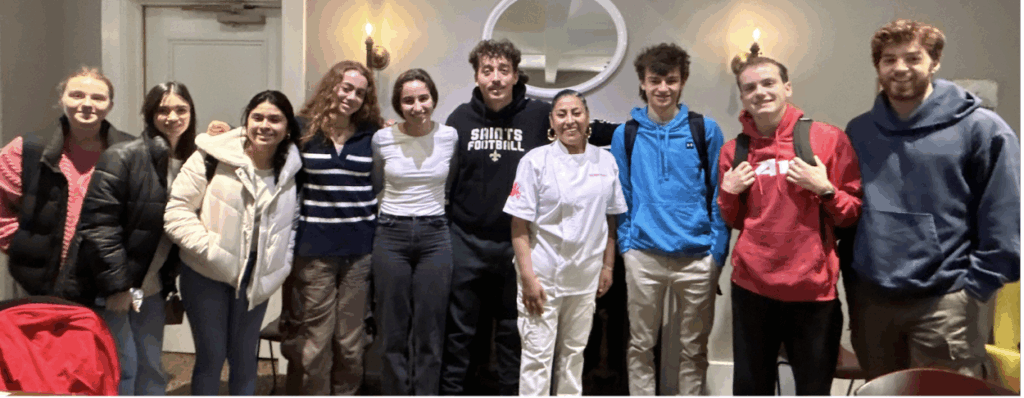
Photo: SPA 260 students at a guest lecture by Chef Cristina Martínez. Davidson College.

The second half of the semester focused on border and legal status issues, including DACA, Dreamers, asylum seekers, and unaccompanied minors. Our third guest speaker, Dr. Benjamin Roth (University of South Carolina), brought a research-based lens to these challenges. Students read and discussed one of his publications on college access for DACA students, then engaged with him in a moving and insightful conversation. A new student-led initiative to support immigrants was born after that conversation. 

This set the stage for our final deliberation: “Immigration: Who should we welcome?” Once again, students grappled with questions of ethics and policy, but this time with greater confidence and depth. Through constructive dialogue, they not only practiced their Spanish skills but also formed thoughtful opinions about the values and considerations that should guide immigration policy.

A Transformative Experience

What began as an experiment in merging language instruction with deliberative practice evolved into something far more transformative. Through carefully scaffolded conversations about immigration and human rights, students not only strengthened their Spanish skills but also deepened their ability to think critically, form opinions, and engage empathetically with complex global issues.

  • Our deliberations became fertile ground for intellectual growth, as students wrestled with ethical questions and explored diverse perspectives. One student shared, “The most meaningful part for me was the disagreements… everyone wanted different solutions and had different reasons for them.”
  • Despite the different viewpoints, many found common ground and a sense of shared purpose. As one student expressed: “I have hope for my generation… we have different opinions but a similar goal: to bring people together.”
  • Another recognized the layered nature of the issues at hand: “This deliberation reflected to me the interconnected nature of topics related to migration”.
  • Perhaps most importantly, students left the course with a sense of agency. “This deliberation and this class gave me the ability to think and form opinions.

Language development went hand-in-hand with these critical conversations, as students became more confident speaking spontaneously, using authentic vocabulary and formulating nuanced arguments.

  • One student said, “I felt more confident than in the first one and could express my ideas more clearly,” one student shared. Another noted, “The deliberation forced me to use words I hadn’t used much before.”
  • Beyond vocabulary, students learned to think and react on the spot by listening actively and responding thoughtfully. “I had to think quickly in Spanish and explain my ideas clearly and with examples,” one student explained, while another shared, “I was more intentional with my words and improved my ability to speak concisely.”  

By using Spanish to navigate real-world issues, students did not just practice speaking, they practiced empathy, perspective-taking, and democratic dialogue. I am deeply grateful to the DeeP Collaborative for helping me reimagine what language teaching can look like when civic engagement becomes a central goal.
Filed Under: Faculty Posts

Creating a Community: The Importance of Deliberative Forums

July 22, 2025 by Isabella Neri

By Isabella Neri ’27 (DCI Fellow)

Over almost six years, the DCI has fostered a robust culture of deliberation at Davidson. Many might attribute this success to DCI’s Deliberative D Teams. However, a lesser-discussed DCI program is its Deliberative Forums. The DCI has hosted 19 forums since its inception in early 2020. These forums provide the community a chance to engage with their peers in group discussions surrounding a specific topic. For example, in the Fall of 2024, the DCI hosted a forum discussing income and wealth disparities where a panel of four participants, each with their own expertise and experience surrounding the topic, deliberated while being guided by a facilitator. After the panel discussion, groups of roughly seven participants and a facilitator had their own discussions. Other models of forums exist, though they all share the same purpose of fostering a conversation between participants on a specific topic. 

Deliberative forums can act as a gateway to deeper discussions and further deliberations within the community. Forums are an introduction to what deliberation can be for those who are hesitant to get involved. Additionally, forums allow participants to think in depth about topics they may not have previously considered. For instance, someone who attended the Honor Code Forum might not have heard the perspectives of professors or even fully understood how the Honor Code functions. Many participants have expressed their appreciation for hearing new perspectives and reflecting on their discussions. Some may even take on and accept new perspectives after talking to community members or their peers. 

Forums also allow for bridges to be built between those in a community. As I have previously highlighted, forums allow us to hear new perspectives through discussing often difficult topics. They can also help us form connections with each other that we might not have thought possible. One simple conversation could be what it takes for two people to understand each other. This act of listening and understanding could be all the difference in opening the conversation to find similarities between people as a community and as individuals. Additionally, with this one conversation, we can open so many doors to move forward with deliberation. 

After the forum, participants receive a Pathways Guide that gives a reflection of the event and how we can move forward with what we’ve learned. Once a forum has been attended, there are a variety of paths you can take to immerse yourself in a deliberative world where those around you also want to learn and grow by discussing a wide range of topics through deliberative D Teams, additional forums, blog posts, or speaker events. 

Forums do not simply end when the conversation is over. In reality, the conversation is never over. There are always topics to discuss or issues to be considered. Forums simply act as a gateway to understanding how you can become more involved in deliberation. Given our current climate, it is crucial that we come together and discuss complex and difficult topics. With this in mind, forums can act as an introduction to and pathway towards healthy deliberative discussion. 

Filed Under: Fellow Posts

Report Released from the DCI’s Campus Conversation on the Honor Code

July 19, 2025 by Graham Bullock

Image that has a green DCI logo and the words, Campus Conversation Report: Resources for Continued Engagement on The Honor Code.

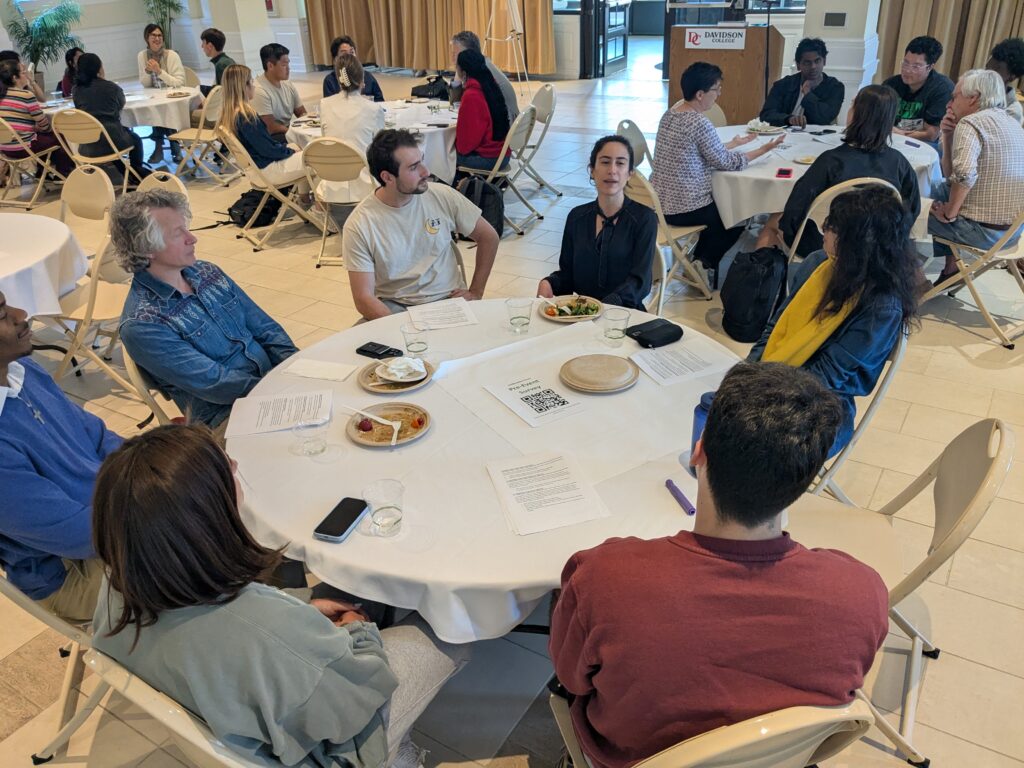
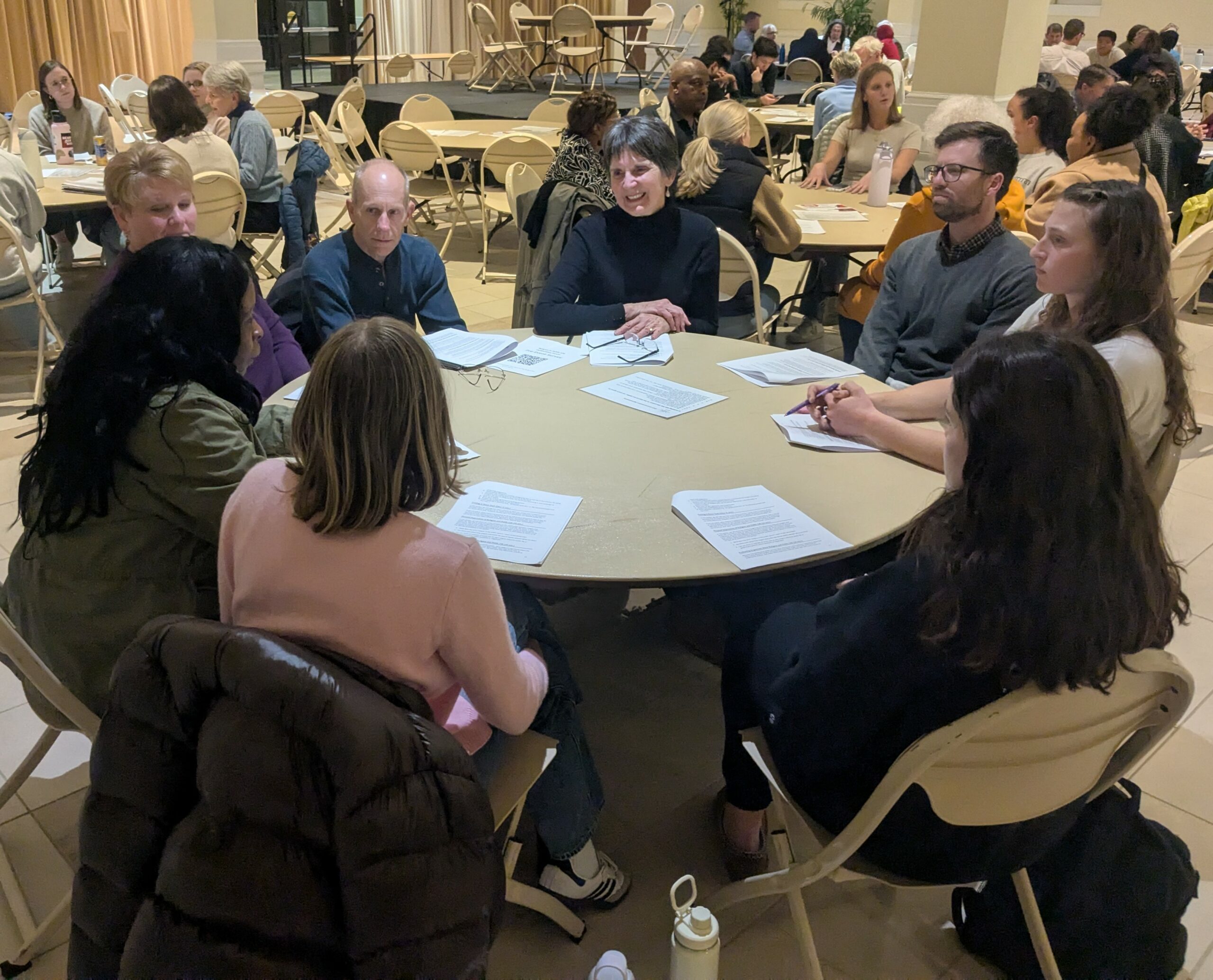
On March 27th, 2025, the Deliberative Citizenship Initiative hosted a Campus Conversation where over 50 faculty, staff, and students discussed the culture of academic integrity and the honor code at Davidson. The forum’s purpose was for the Davidson community to have a meaningful discussion about the role of academic integrity on campus. To begin the forum, the Honor Council provided an update and presentation on Davidson’s honor code. After the presentation, the participants broke into roundtable discussions where they deliberated about what academic integrity is, what a culture that embodies academic integrity looks like, and possible actions to take to improve this culture at Davidson. You can check out a summary of the event on the DCI’s website here; it includes the deliberation guide used during the discussions and some great photos of the event.

Photo from Honor Code Forum

The organizers of the event – LJ Phillips ’25, Isabella Neri ’27, Cavan Klein ’27, and DCI Faculty Director Graham Bullock – have collated, analyzed, and discussed the input that participants provided via the survey we distributed after the event. They endeavored to capture the participants’ thoughts and suggestions in the document below, “Campus Conversation Report: Resources for Continued Engagement on the Honor Code.”

Like the DCI’s pathways guides that the DCI distributes after each of its deliberative forums, the report includes ideas for moving forward on the topic of the event. Options for learning more and getting more connected and involved with regard to the honor code are included for your consideration.

This document has been shared with the Honor Council, Student Government Association, the Dean of the Faculty’s Office, the President’s Office, and the Dean of Student’s Office as they consider different ways to build a more robust culture of academic integrity at Davidson. It has also been shared with attendees of the honor code forum. Our hope is that it stimulates further discussions and well-considered actions that address the concerns and questions that have been raised about academic integrity within the Davidson community.

Check out the report below!

Campus-Conversation-Report_The-Honor-Code

Filed Under: Announcements, Events

Former DCI Faculty Fellow Earns Grant to Create Deliberative Debate Labs in More Chemistry Classes

July 18, 2025 by Graham Bullock

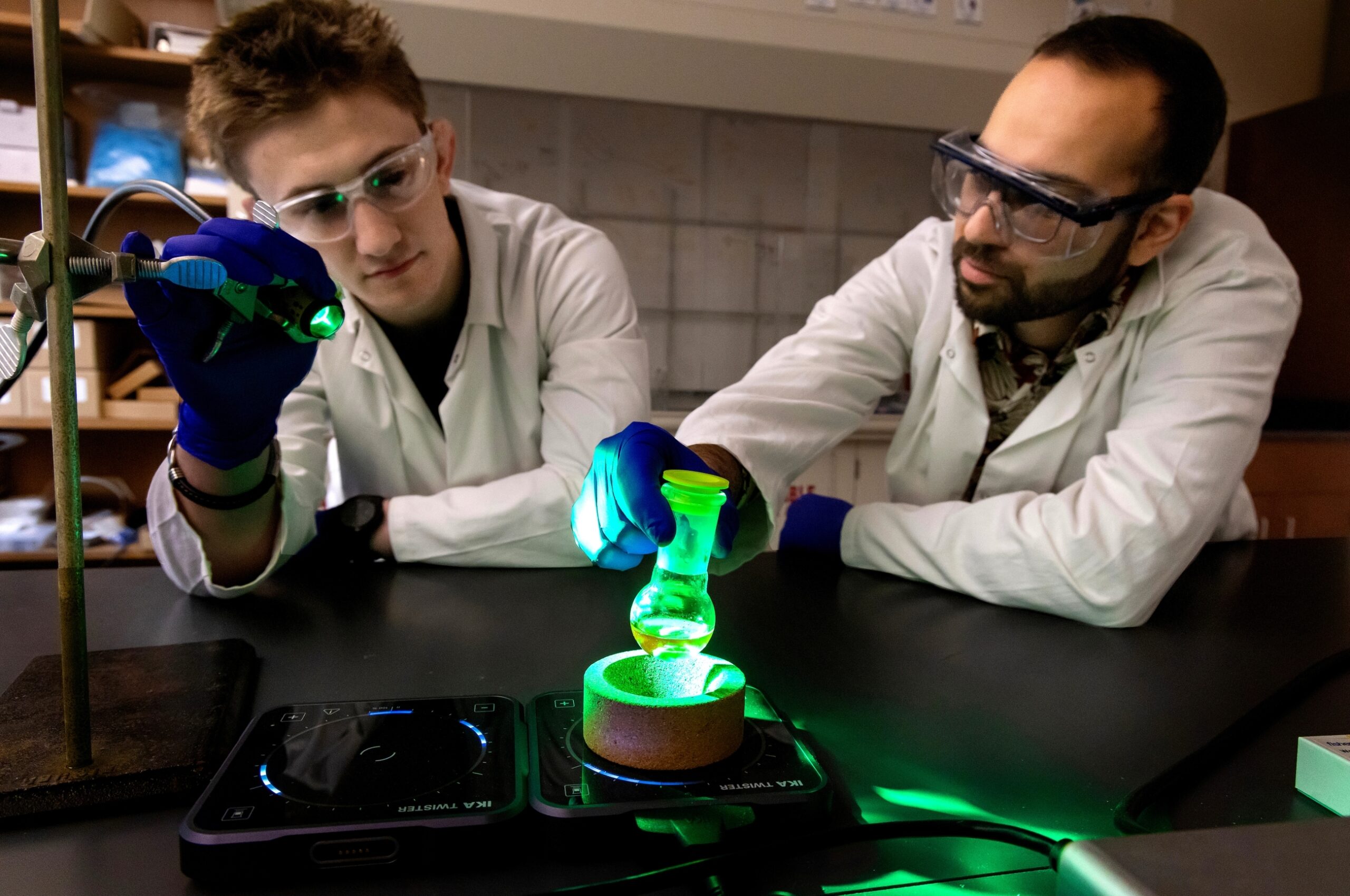
Professor and student working in a lab

When the Deliberative Citizenship Initiative (DCI) was launched nearly six years ago, the original co-conveners were committed to ensuring that it connected with faculty and students across the curriculum, including the natural sciences. When our first guest speaker, Dr. Sara Drury, visited campus in the fall of 2019, she met with a group of STEM faculty to share the work she had done with her science colleagues on embedding more deliberation into their courses. Her research has shown that such efforts can actually deepen student learning of key science concepts in the classroom. 

We’ve had several chemistry, physics, mathematics, psychology, and biology faculty members at both Davidson and other institutions pick up on this cue and participate in our Deliberative Pedagogy (DeeP) Collaborative, which is a year-long program designed to help faculty members incorporate engagement with challenging issues related to their courses into their syllabi. As just one example, Bassil El-Zaatari, an assistant professor of chemistry, at Davidson, incorporated such discussions into his polymer chemistry class. 

He organized a class discussion about the socioeconomic impacts and tradeoffs associated with the train derailment in East Palestine, Ohio that was carrying vinyl chloride, a precursor to synthesize polyvinyl chloride (PVC), a widely utilized plastic material. He developed a synthesis. He gave the class a group assignment asking them to use their chemistry knowledge to come up with a plan to deal with the growing worldwide problem of plastic pollution. You can read more about the class in his previous blogpost on the DCI Blog. 

Dr. El-Zaatari was so encouraged by the success of the deliberations he organized in the class that he plans to add similar components to more of his courses. As part of a recent grant he received as a 2025 Cottrell Scholar, he will implement “deliberative debate labs” in his courses to encourage his students to explore the intersection of chemical principles with wider world challenges. As Dr. El-Zaatari was quoted recently in an article about the award:

 “When students learn about different chemical phenomena across the curriculum, they rarely think about how it’s connected to other fields and the world around them. I want to start changing this by developing deliberative debate labs into all the courses I teach, including general chemistry, in order to cultivate a new generation of scientific thinkers who can better bridge the gap between classroom learning, laboratory work and real-world impact.”

Congratulations to Dr. El-Zaatari on his grant, which will enable him to extend the important work of deliberation to more classrooms and equip more students with the skills to engage constructively across differences on the challenges facing our world.

Filed Under: DCI Posts

DCI x WALT Collaboration!

July 17, 2025 by Graham Bullock

image of two students hosting a radio show

Earlier this spring, a representative from Davidson’s student radio station, WALT, reached out to the DCI about hosting an hour-long show on the station. It could highlight the work of the DCI, discuss the challenges and opportunities of deliberation — whatever we thought might be interesting to WALT audiences. If it went well and people were interested, it could serve as a pilot for a regular show in the coming academic year. Several DCI Fellows were interested in trying it out, and so they quickly pulled together a plan at the end of the semester — actually, for a show that was broadcast on the last day of the semester, and it went really well. Especially for the first time the DCI hit the radiowaves!

DCI Fellows Grace Zagoria ’27 and Zak Abdulahi ’27 served as hosts of the show. They talked about their own experiences facilitating conversations as part of the DCI’s Forums and D Teams, and they interviewed several other fellows about their experiences. Fatima Mukasa ’28 talked about how much she enjoyed serving as a fellow as a first-year student and as an international student from Uganda. And Valeriia Kruzhkova ’26, a junior from Ukraine, also talked about her experience as both a fellow and senior fellow with the DCI.

The hosts also interspersed some of their favorite music throughout the show, along with some fun banter among themselves along the way. Check out the full episode below, and let us know if you think we should do a regular show at dci@davidson.edu:

Filed Under: Events

  • « Go to Previous Page
  • Page 1
  • Interim pages omitted …
  • Page 18
  • Page 19
  • Page 20
  • Page 21
  • Page 22
  • Interim pages omitted …
  • Page 75
  • Go to Next Page »

Footer

Blog Post Categories

  • Announcements
  • Blog Posts
  • DCI Posts
  • Events
  • Faculty Posts
  • Fellow Posts
Image of a compass superimposed by the text "Deliberative Citizenship Initiative" and "Davidson College." Clicking on this image leads to the Initiative page.

Recent DCI Blog Posts

  • We Tried to Fix Jubilee’s “Middle Ground” – Here’s How It Went
  • A Case for Deliberation in the Natural Sciences
  • Welcoming New Staff to the DCI and DCN
  • Facebook
  • Twitter
  • Instagram
  • LinkedIn


Copyright © 2026 · Infinity Pro on Genesis Framework · WordPress · Log in