• Skip to main content
  • Skip to footer

Deliberative Citizenship Initiative

Building Democracy One Conversation at a Time

  • The Initiative
    • Programs
      • Deliberation Across the Curriculum
      • Deliberation on Campus
      • Deliberation in the Community
      • Research on Deliberation
    • Motivations
      • Why Deliberative Citizenship?
      • Why Davidson? Why Now?
    • Who’s Involved?
      • DCI Fellows Cohorts
        • 2025-2026 Fellows
        • 2024-2025 Fellows
        • 2023-2024 Fellows
        • 2022-2023 Fellows
        • 2021-2022 Fellows
        • 2020-2021 Fellows
      • DeeP Collaborative Cohorts
        • 2024-2025 DeeP Collaborative Faculty
        • 2023-2024 DeeP Collaborative Faculty
      • Advisory Council
    • History
      • What Sparked the Initiative?
    • Key Deliberative Dispositions
    • Frequently Asked Questions (FAQ)
    • Annual Report
  • Get Involved!
    • Participate in a Forum
    • Join a D Team
    • Become a Fellow
    • Take Courses
    • Get Training
    • Come to Guest Lectures
  • Events
    • Upcoming Events
      • 250th Anniversary Deliberative Forum Series on American Values
    • Past Events
  • Connections
    • The Deliberative Citizen: The DCI’s Monthly Newsletter
    • Efforts on Campus
    • Efforts in the Community
    • Efforts Elsewhere
    • Readings and Resources
      • DCI-Published Guides
      • DCI Guide to One-on-One Conversations
      • How to Disagree
      • Demonstration of Facilitation Styles
      • Deliberative Pedagogy Mini-Course
    • How We Can Help: DCI’s LET’S DELIBERATE! Partnership Opportunities
    • DCI in the News
  • DCI Blog Posts
    • Recent Blog Posts
    • All Blog Posts

The DCI Blog

DCI Working Group Recommends Text for Ginkgo Trees Planted on Campus

August 7, 2025 by Graham Bullock

Ginkgo tree leaves

Yesterday, August 6, 2025, marked the 80th anniversary of the day that an atomic bomb was dropped by the US military on Hiroshima, Japan. The bomb killed 140,000 people, including 34,000 children and 20,000 Korean nationals subjected to forced labor. Another 40,000 people were killed instantly by an atomic bomb dropped on Nagasaki three days later. Many more people in both cities were badly injured due to these attacks.

What, you might ask, do these horrors have to do with deliberation? Other than the perhaps obvious point that such death and suffering caused by war ultimately represents the breakdown of deliberation, when the involved parties no longer are able to come to any mutual understanding and compromise, but opt to resort to force and violence? Well, last year the DCI was asked by Davidson’s Vice President of Academic Affairs (VPAA) Shelley Rigger to utilize a deliberative process to develop text for signs to introduce a set of Ginkgo trees that were planted on campus in 2024. These trees, donated by Green Legacy Hiroshima, are descendants of survivors of the atomic blast in Hiroshima, and were planted as reminders of the general dangers of warfare. Some students and alumni from countries that had been occupied by Imperial Japan, however, were concerned that the focus on the trees overlooked the broader and more complex history of World War II in the Asia-Pacific. 

The DCI accepted this request and formed a working group (Keya Zhou ’25, Luna Noguchi ’25, Flo Moser ’26, Casey Scheiner ’28, Lily Ogawa ’28, and Faculty Director Graham Bullock) to respond to it. The working group recently submitted its recommended text for signage to accompany the ginkgo trees to Dean Rigger. This text is based on suggestions made by participants who attended the forum that the working group hosted in the spring of 2025 (you can read more about the forum here). The forum participants’ thoughts and suggestions were deeply thoughtful and heartfelt, and the working group did its best to capture them in its recommended text for the signs.

Over multiple discussions and several draft versions, the working group coalesced around eight general themes that were expressed in the participants’ comments. These themes are summarized both as short sentences that could be included on signs next to (or near each tree) as well as longer sections of text that could be included on a companion website accessible via QR codes on the sign(s). You can check out both sets of text recommended by the Working Group in the document below.

Ginkgo-Tree-Project-Recommended-Text-for-Signs-and-Website

Also included in the document are recommended links and resources that could be included on this website. If such a website is created, the Working Group recommends that it also includes the ginkgo project summary document, which provides more in-depth background about this effort. This document is also provided below.

Ginkgo-Tree-Project-Summary-6.2.25-1

Draft text developed by the Working Group was shared with the forum’s participants and panelists (Professors Multhaup, Mortensen, and Zhu), and their feedback was incorporated into the current version. Members of the Working Group also presented the draft text in a poster at the Verna Miller Case Symposium.

The VPAA’s office is waiting to see how many of the Ginkgo trees survive in the coming months before ordering the signs for the trees. Depending on how many survive, some of the text drafted by the Working Group may be combined and consolidated so that there is one sign per tree. We’ll share a further update on this blog once the signs are finalized and installed.

The DCI appreciated this opportunity to demonstrate how deliberative principles and practices can be used to respond to a challenging and contentious issue in a respectful and productive way. The Working Group believes that its work provides a model of a constructive deliberation process that both emphasized inclusivity and delivered a tangible output in a timely manner. The DCI welcomes similar requests from offices and organizations on and off campus that have similar challenges that we might be able to help them respond to using a deliberative, intentional, and meaningful process.  
Filed Under: DCI Posts

From Argument Culture to Deliberative Culture

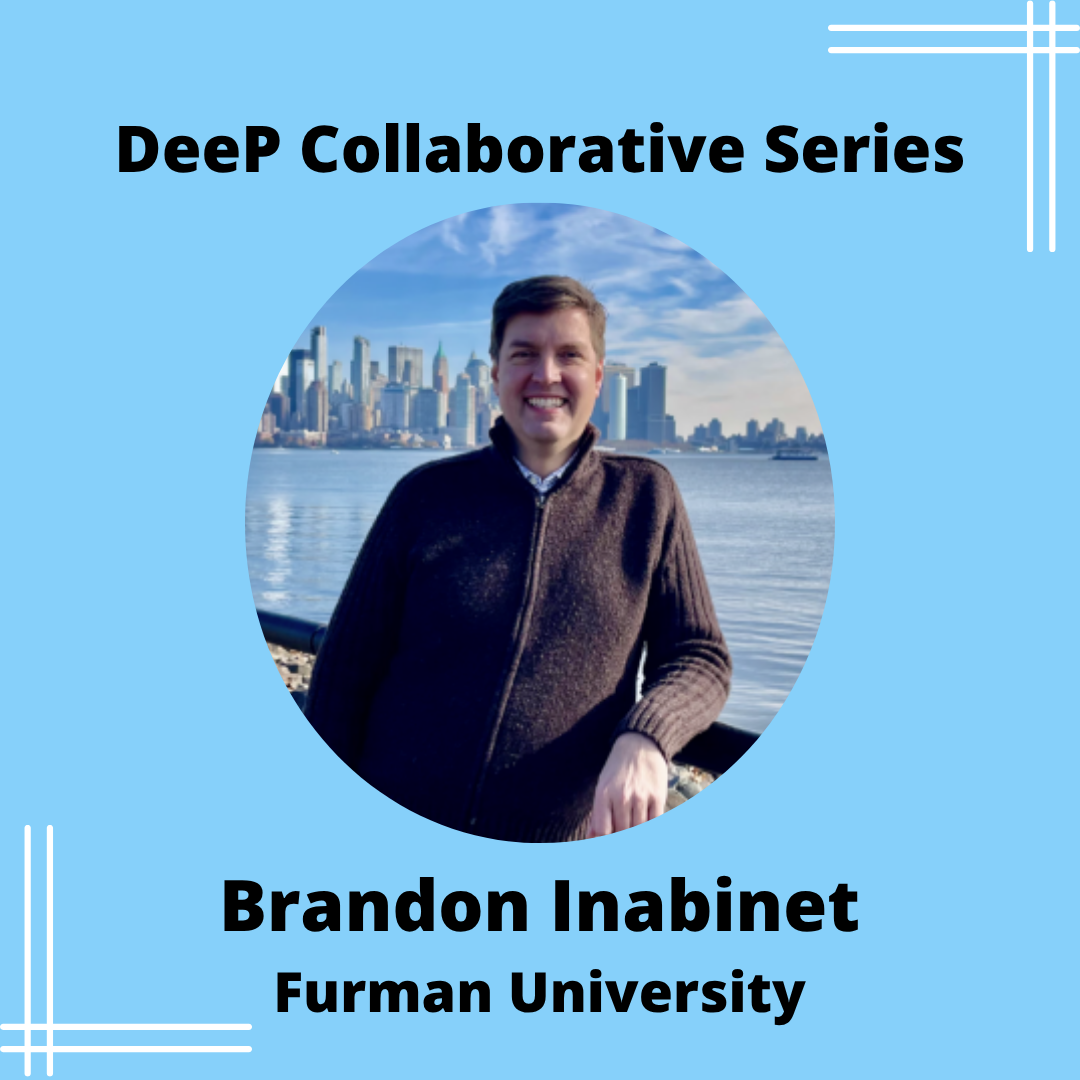
August 6, 2025 by Brandon Inabinet

The Deliberative Pedagogy (DeeP) Faculty Collaborative consists of faculty from Davidson College and other higher education institutions who are committed to learning and implementing new ways to improve and deepen the quality of their class discussions. These faculty come from a wide array of disciplines and backgrounds to study and discuss deliberative pedagogy methods, share their ideas and questions with one another, and work to embed deliberation in their classrooms. In this special blog series, members of the Collaborative describe and reflect on their experiences developing and teaching their deliberation-involved courses.

By Brandon Inabinet (2024-25 Deliberative Pedagogy Collaborative Faculty Fellow)

My starting point was easy enough, with a Rhetoric and Strategy class in a liberal arts college in a program about advocacy and civic argumentation. If not deliberation, we would have already had students studying the ancient and modern ideas about stasis and topoi, argument fields and spheres, prima facie case construction, burden of proof, and fallacies.

But my institution has an initiative On Discourse that attempts to create more lively exchange and representation of different viewpoints on campus. The class nor the major were part of the initiative. The President had invited colleagues principally from the various DEI offices and sociology to serve with law and politics faculty. What they had landed on was bolstering the intergroup dialogue program (pleasing “the left”) and sponsoring more campus events with opponents on panels or in debate (pleasing “the right”).

In the broadly uninteresting and unnoticed middle was my curriculum. I realized how centering the preparation for and practice of deliberation, with the help of Graham Bullock and Davidson’s DCI, might elevate academic and critical interests in argumentation into a lively and transformative practice. Although I have taught the debate team and held debates in class, the emerging generation’s concerns about over-competitiveness has me embracing deliberation as a set of more transferable skills and values. 

So, supplementing my normal instruction that feeds the debaters in the class, I motivated students with days in the curriculum “cleared out” for the practice of dialogue and deliberation, and a midterm project of creating deliberation guides.

Fitting in another learning objective, the students used AI technology (of their choice, mostly ChatGPT) to create the guides and visual rhetoric skills (of their choice, mostly Canva and Adobe) to meet audience needs. The latter part of this needed more instruction, as the use of researched charts and graphs alongside non-copyrighted images was surprisingly tougher for the students than the ability to detect and correct AI hallucination in research.

Another goal was dialogue before deliberation, to be able to compare these practices. In the fall semester this went well, but some calendar issues in the spring complicated this dynamic. I will go back to what I did in the fall to ensure dialogic listening is the foundation, and the motivation to diverge and converge and potentially act that comes with deliberation as the supplement.

One additional small issue I had was using deliberation guide writers as facilitators on those topics. I needed more time to prepare the students, reminding them that their new “expertise” on their assigned topics meant that they know how to navigate and question, not to weigh in themselves and bulldoze the conversation into what they had found as (recent) researchers. This was compounded because I chose to use local rather than national issues, and the deliberation guide research created newly passionate students who didn’t even realize the issue existed before it was assigned. So anytime student deliberators became quiet or confessed they weren’t fully informed became an opportunity for these researcher-facilitators to take center stage. As their professor, I had to be the “not fun” person who would intervene and disrupt this, even as the other students really wanted to hear the student facilitator’s newly found opinions.

Still, students were ambassadors for this approach and now other courses in the department and administrators in the university are interested in what we did (such as including texts Try To Love the Question and Why We Argue, and the online tool of UnifyAmerica’s College Challenge). I look forward to the expanded scope and reach of deliberative practice being a part of the broader On Discourse initiative at my institution.

Filed Under: Faculty Posts

Taking it to the Next Level: The 2024-25 DCI Fellow’s Deliberation Projects

August 5, 2025 by Graham Bullock

image of a person going up stairs

Every year, the DCI’s student fellows all develop and implement their own personal deliberation projects, and they are consistently the highlights of the year for us. After going through intensive training in how to facilitate contentious conversations and then serving as a facilitator of the DCI’s D Teams and Deliberative Forum discussions, the Fellows apply their skills to designing and hosting conversations on topics of personal interest to them. They select their topics and begin developing their project plans in the fall semester, and then revise and implement those plans in the spring semester.

DCI staff provide feedback to the fellows on their ideas and suggest relevant resources throughout the process, but these projects are very much the fellows’ own initiatives. They are responsible for identifying the topic, developing their deliberation guide, recruiting participants, finding a time and space for their discussion, and hosting it themselves. The Fellows very much appreciate this autonomy and independence they have in developing their projects. It enables them to demonstrate the full range of skills they have learned over the course of their year as a Fellow, discover the challenges and pitfalls of designing and implementing these types of conversations, and experience the joy of bringing people together to discuss hard topics and strengthen their own deliberative muscles.

In past years, these projects have generally been small-scale conversations with friends and roommates, or perhaps with a small group of students with a range of viewpoints on the issue at hand. This year, the Fellows truly outdid themselves, organizing creative, complex, and often major programs in collaboration with professors, campus offices, and local government officials. The sections below summarize each of the nine projects that the 2024-25 cohort of Fellows implemented this spring. Their topics included the honor code at Davidson, the legacies of WWII in the Asia Pacific, the Red Line station in Davidson, campus pop-up deliberations, a deliberation workshop organized for the Chidsey Leadership Program, a deliberative forum on historical narratives co-organized with the History Department, a community conversation about race, a video game deliberation, and a campus video dialogue project.

Some fellows worked individually on their projects, while others worked with other Fellows and Senior Fellows to complete their projects. Learn more below from the project summaries below, which were written by the Fellows themselves:

2024-25 Deliberation Projects Summaries

Town of Davidson Red Line Station Community Conversation

Zak photo

Garratt Rothberg ’27 and Zak Abdulahi ’27 hosted a deliberation on urban planning and the development of the Red Line Commuter Rail project in Davidson, specifically addressing local transit issues and the broader development implications for community members, students, and faculty. The deliberation was held on Davidson College’s campus on February 26th from 7:00 to 8:30 p.m. Attendees included Davidson planning directors, town commissioners, community members, and Davidson College students and faculty.

Garratt photo

Participants engaged in a deliberation guided by materials prepared by Garratt and Zak, focusing on station planning proposals, analyzing the benefits and tradeoffs of various station placements, and exploring the potential impacts of the Red Line project on local businesses, connectivity, and traffic. The deliberation featured productive conversation between a diverse group of stakeholders, culminating in participants filling out a feedback survey for the town planners with their thoughts and ideas on the station planning.

The project highlighted the importance of community input in shaping public policy projects. Within this critical setting, deliberation is a valuable tool for finding ideal policy choices that garner widespread support among citizens. 

Chidsey Leadership Program Deliberation Training Workshop

This March Tehinnah Kitcher ’27 and Atyantika Mookherjee ’27 co-led a project called “Bridging Perspectives: Empowering Leaders to Connect, Deliberate, and Drive Change Together” which united the Chidsey Program for Leadership Development and the Deliberative Citizenship Initiative (DCI).

Tehinnah photo

The Chidsey Leadership Fellows’ Program emphasizes leadership as an intentional and evolving practice, focusing on personal choice, resilience, opportunity, and connection. It views leadership as a journey shaped by decisions, the courage to tackle challenges, the openness to see possibility, and the commitment to build connections. By embracing these pillars, Chidsey Fellows learn to grow as leaders who can positively impact their communities through empathy, responsibility, and collaboration. Tehinnah and Atyantika are both Chidsey and DCI fellows. They began to notice that together, the DCI and Chidsey provide students with a powerful set of complementary skills: DCI cultivates the ability to navigate complex discussions, while Chidsey emphasizes leading with empathy and purpose.

DCI Fellow Student Profile Image

Tehinnah and Atyantika gave the Chidsey Fellows an overview of the four facilitation styles and specific techniques to enhance communication and build understanding. They drew from the same frameworks that they learned in their official DCI facilitator training. Each style offered a different way of guiding a conversation and shaping group dynamics. The Chidsey Fellows got to implement these roles through a mock deliberation. Afterwards, they had a chance to reflect on their facilitation styles and skills.

This unique collaboration between DCI and the Chidsey Leadership Program helps to create future leaders who are equipped not only with technical skills but also with a deep understanding of how to navigate complex, real-world challenges. By integrating DCI’s facilitation skills, which are centered around being attentive, respectful, and open-minded, with Chidsey’s core values, we’re fostering leaders who can engage in constructive, inclusive conversations. Such leaders are more adaptable, open to diverse viewpoints, and skilled at finding common ground, all of which are critical in a rapidly changing and interconnected world.

Tehinnah and Atyantika are excited to see the DCI continue to collaborate and engage with the campus and broader community. Future collaborations would undoubtedly provide greater insights as to how dialogue and deliberation influence other fields. In a world that is growing more polarized and intolerant, quality deliberation and dialogue is essential.

Deliberative Forum on the Power of Historical Narratives and Contested Histories

TBC photo

TBC Takougnadi ’27 organized a forum event titled “The Power of Historical Narratives and Contested Histories,” which was a panel-based deliberative discussion designed to explore the ways historical narratives are constructed, contested, and interpreted in contemporary society. The event focused on how history is told, who gets to tell it, and how differing perspectives shape our understanding of the past and present.

The event was held on April 8, 2025, on the campus of Davidson College, and lasted approximately 120 minutes with the first 45 minutes dedicated to speakers and the last 75 minutes for the table discussions. The event was hosted in a communal space, the New Football Stadium’s Gallery 18, that allowed for both panel presentations and small-group discussions around tables.

The planning process involved collaboration with faculty in the History Department, and the panelists were selected based on their academic backgrounds and relevance to the topic. The speakers were nominated with guidance from the department chair and selected by TBC. The audience included a mix of Davidson College students, faculty, and staff. In total, 34 individuals participated, including the five invited panelists.

The event opened with brief presentations from each panelist, who shared insights into how history can be framed through different lenses political, social, and cultural. These remarks helped set the stage for the deliberation. Following the panel, participants gathered around five tables for small-group discussions facilitated by volunteers. Due to a shortage of official facilitators, several attendees stepped up to lead these conversations, which proved successful and enriching. To name some, key topics of discussion included: The role of historians in shaping public memory, how marginalized voices are often excluded or misrepresented in mainstream narratives, and the impact of historical interpretation on present-day policies and identities.

The event concluded with a collective reflection, during which participants shared final thoughts and reactions informally. Many expressed appreciations for the format and content of the event, especially the opportunity to engage with peers and faculty in meaningful dialogue. Despite some logistical challenges, particularly the late timing of publicity and a lack of assigned facilitators, the event was well received. Participants also enjoyed the provided refreshments, which helped create a welcoming atmosphere.

Overall, the project was a successful effort in fostering thoughtful dialogue on a timely and important subject. It demonstrated the value of collaborative, interdisciplinary events in building civic awareness and critical thinking among members of the campus community.

Campus Conversation on the Honor Code

Profile Image of LJ.

The Honor Code Campus Conversation was organized by DCI Senior Fellow and Co-Convener LJ Philips ’25 and DCI Fellows Isabella Neri ’27 and Cavan Klein ’27. My deliberation project (along with co-hosts Isabella Neri and LJ Phillips) was a forum about the honor code. It was held in the Lilly Gallery on Davidson’s campus on March 27, 2025 from 5-6:30pm. The event was targeted towards Davidson students, faculty, and staff with the goal of providing a space for them to talk about the culture of academic integrity at Davidson and evaluate the current state of the Honor Code. There were about 45 total people in attendance including a good mix of students, faculty and staff.

Isabella photo

The first 10 minutes were reserved for people to get food, then Tyler Puleo and Mary Gray Speakman, representatives from the Honor Council, took 20 minutes to give a short presentation about the goals and formal procedures of the Honor Council. Then, the deliberation began! Beforehand, the fellows developed a deliberation guide that provided important background information and discussion questions for the participants to deliberate on, including topics such as “What is Academic Integrity,” “Evaluating Our Culture,” and “How to Foster a Culture of Academic Integrity.”

Cavan photo

The forum had about 8 tables of deliberation, and by the end of the event, the deliberators had had many good conversations. The discussions generally focused on where Davidson is with the Honor Code, how it can move forward, and what can be implemented or removed to improve the system. The night concluded with each table discussing and writing down comments, concerns, and potential solutions. These comments were then condensed and clarified to be sent to the Honor Council and included in our pathways guide, which was then shared with everyone. You can check them out yourself here.

Pop-Up Deliberation Project

Ben Files Photo
Izzy photo.

On Davidson College’s 2,000 student campus, quick greetings in passing and brief interactions are common. Fellows Ben Files ’25, Izzy Cevallos ’27, Jane McNeill ’28, and Liam Mann ’27 worked to explore how these small moments could become the foundation for intentional and thoughtful dialogue. Inspired by brief interactions on walks across campus, similar DCI events, and Duke’s mobile “couching” sessions, their pop-up deliberation worked to invite individuals to think more about the why behind their beliefs when answering questions.

Liam photo
Jane photo

Located in the courtyard between E. H. Little Library and Chambers Buildings, the group offered passerbys candy in exchange for answering a question. The questions, cut into slips, ranged from lighter personal reflection (“What’s something everyone should try at least once? What’s a small act of kindness that you think makes a big difference?) to philosophical questions (“Do we have a moral obligation to help strangers in need, even if it comes at a cost to us? Are we defined more by our actions or our intentions?) and political inquiries (“Is there an issue you’ve completely changed your mind on? What is the role of the media in relation to politics, public opinion, and elections?). 

The informal nature encouraged low-stakes participation, and participants would usually receive a follow-up question to better understand why individuals believe what they do. The fellows organizing the project found that when individuals were given the space and time to answer they were far more likely to explain what influences their beliefs. Participants appreciated the informality and demonstrated how low-stakes, informal formats can serve as a powerful entry point into the deliberative process. Stay tuned for some upcoming blog posts that will share more about these “pop-up” conversations…

Video Game Deliberation Project

Owen Brent-Levenstein ’27 wanted to explore how he could apply deliberation strategies to more everyday life contexts, and so he centered his deliberation project around one level of a video game, Bloons TD 6, that he and his friends had been unable to beat. The idea behind it was that arguments over video game strategy were more chaotic and unhealthy than almost any other type of discussion. Often in the heat of the moment, people end up yelling over each other, blaming each other, and often fail to take the time to truly compose themselves and think about what actually went wrong. So, Owen attempted to make a guide that included statistics about the game (such as the amount of money we would have at a given point in the game), and then laid out different strategies with related statistics on the strength of the characters involved. This turned out to be harder than expected, as did hosting the conversation itself. Stay tuned for a blog post from Owen that will discuss in more detail what he learned from this experience.

Campus “Take an Opinion, Leave an Opinion” Video Dialogue Project

Fatima photo

DCI Fellow Fatima Mukasa ’28 wanted to use her deliberation project to reach a wide group of people who may not know much about deliberation or the DCI. She called her project, Take an Opinion, Leave an Opinion, and it was inspired by the Tiktok page, “Read a Secret, Leave a Secret.”

Designed to foster open dialogue and critical thinking, the project invited students and faculty to anonymously share their perspectives on thought-provoking topics, which others then read and responded to. These responses were recorded and will be shared online, creating a broader platform for engagement. By encouraging open-mindedness and empathetic communication, the project aims to cultivate a space where diverse viewpoints can be expressed without stigma and aims to strengthen the Davidson community’s ability to navigate complex discussions with curiosity and respect.

She set up a table and camera near the flagpole outside Chambers, the main classroom building on campus, and asked students passing by in between classes to share their perspective on a topic by writing it down on a piece of paper and leaving it on the table. They could also pick up an opinion that was left by someone else and respond to it — on camera for 30-60 seconds. Fatima then compiled these recordings into a short video that we’ve shared below and will also be shared on social media for the broader community to view and engage with. Fatima’s hope is that her project will foster a space where people feel as though they can share their opinions and can engage with other viewpoints, allowing them to be more open-minded, more engaged, and more effective communicators.

The topics that Fatima chose were the same topics being discussed by the DCI’s D Teams, and she hosted her table a week or so after each set of D Team discussions were completed. She and other DCI Fellows included some opinions that D Team participants raised (without attribution) on the table for her visitors to respond to, creating a nice connection between these two DCI programs. Students who were on a D Team could also stop by and share their perspectives that might have come up during their discussions.

Check out Fatima’s three “Take an Opinion, Leave an Opinion” videos here — the topics are the opioid epidemic, lessons learned from COVID, and healthcare reform, the compilations feature the voices of numerous Davidson students…

Legacies of WWII in the Asia Pacific Project

DCI Fellow Student Profile Image

DCI Co-Convener and Senior Fellow Flo Moser ’26 and DCI Fellows Luna Noguchi ’25, Lily Ogawa ’28, and Casey Scheiner ’25 worked together on an extensive project relating to the eight ginkgo trees that were planted on Davidson College’s campus in Spring 2024. Descendants of trees that survived the Hiroshima atomic bombing and donated by Green Legacy Hiroshima, these trees symbolize both the dangers of nuclear weapons and the resilience of humanity and nature.

Luna photo

Following the planting, some students and alumni of Chinese and Korean backgrounds expressed concern that their planting did not sufficiently represent the broader historical context, particularly the suffering caused by Imperial Japan’s invasions across Asia. In response, Dean Shelley Rigger invited the Deliberative Citizenship Initiative (DCI) to help facilitate a community-wide deliberation on how to contextualize the trees through thoughtful signage and interpretive materials.

Lily photo

With the support and assistance of DCI Faculty Director Graham Bullock, Flo, Luna, Lily, and Casey organized a Deliberative Forum in Spring 2025 that included faculty presentations, survivor testimonials, and facilitated small-group discussions. Student, faculty, staff, and community participants deliberated about the complex legacies of war in the region and submitted written reflections on what should be included on signs and interpretative materials introducing the trees.

Casey photo

From these reflections, the team identified six core themes and drafted content for physical signs and related online resources.. The project seeks to create a reflective, inclusive memorial that acknowledges the universal human cost of war and promotes dialogue across perspectives. Through QR codes on each sign, visitors can access additional materials, and the site will grow over time as the Davidson community continues to reflect on war’s legacy and the enduring pursuit of peace. Click here to read more about the project.

Conversations about Race Project

photo of Alyssa

Alyssa Henke ’25 and Madeline Kleiner ’28 both both wanted to do their deliberation project on something related to the theater, which they both have an interest in. DCI Faculty Director Graham Bullock and Theater Professor James Webb had been talking for some time about collaborating on a project together, and Alyssa and Madeline were excited to help make such a collaboration a reality. They met and agreed that organizing a community conversation following the upcoming performance of the play, Dissonance, on campus would be a great way to connect deliberation with the dramatic arts.

Madeline photo

The play, directed by Professor Webb, portrays an extended conversation between two close female friends, one black and one white, that dives deeply into the challenges of race in American society. Often, after seeing the play, audience members are motivated to engage in a similar conversation among their friends, but don’t know if or how that might be possible. Alyssa and Madeline thought it might be helpful to organize a conversation that explored exactly that question — what is necessary for conversations about race to be possible and productive? With the support of Dr. Webb and Dr. Bullock, they developed a deliberation guide that will be used to host and facilitate such a conversation following the fall 2025 performance of the play at Davidson. Stay tuned for information for this community conversation coming soon…

Latvia and NATO Project

Grace photo

Building on her personal interest in the subject, Grace Zagoria ’27 organized a deliberation on the pros and cons of Latvia’s NATO membership with from Latvia and Davidson. In the weeks leading up to the event, she wrote a 20-page guide for the deliberation, while rallying students from Davidson’s Political Science and Russian Studies departments to join. While a last-minute scheduling conflict prevented the Latvian students from joining the discussion, more than twenty Davidson students gathered with Grace and another DCI Fellow (Cavan Klein) to discuss Latvia’s history, Russia’s aggression in Georgia and Ukraine, and the “Don’t Poke the Bear” theory. Among the participants were Davidson students from Kazakhstan, Ukraine, and Georgia, who brought both international and post-Soviet perspectives to the discussion. While a large percentage of the group argued more in favor of Latvia’s NATO membership, other deliberators cited concerns about stretching NATO’s borders too far east too soon. Regardless, all participants stayed true to the spirit of DCI’s core tenets of respect and patience, floating questions to other deliberators and expressing their agreements and disagreements along the way.

Filed Under: Blog Posts, DCI Posts

Transforming Classroom Conversations: My Journey with Deliberative Environmental Economics

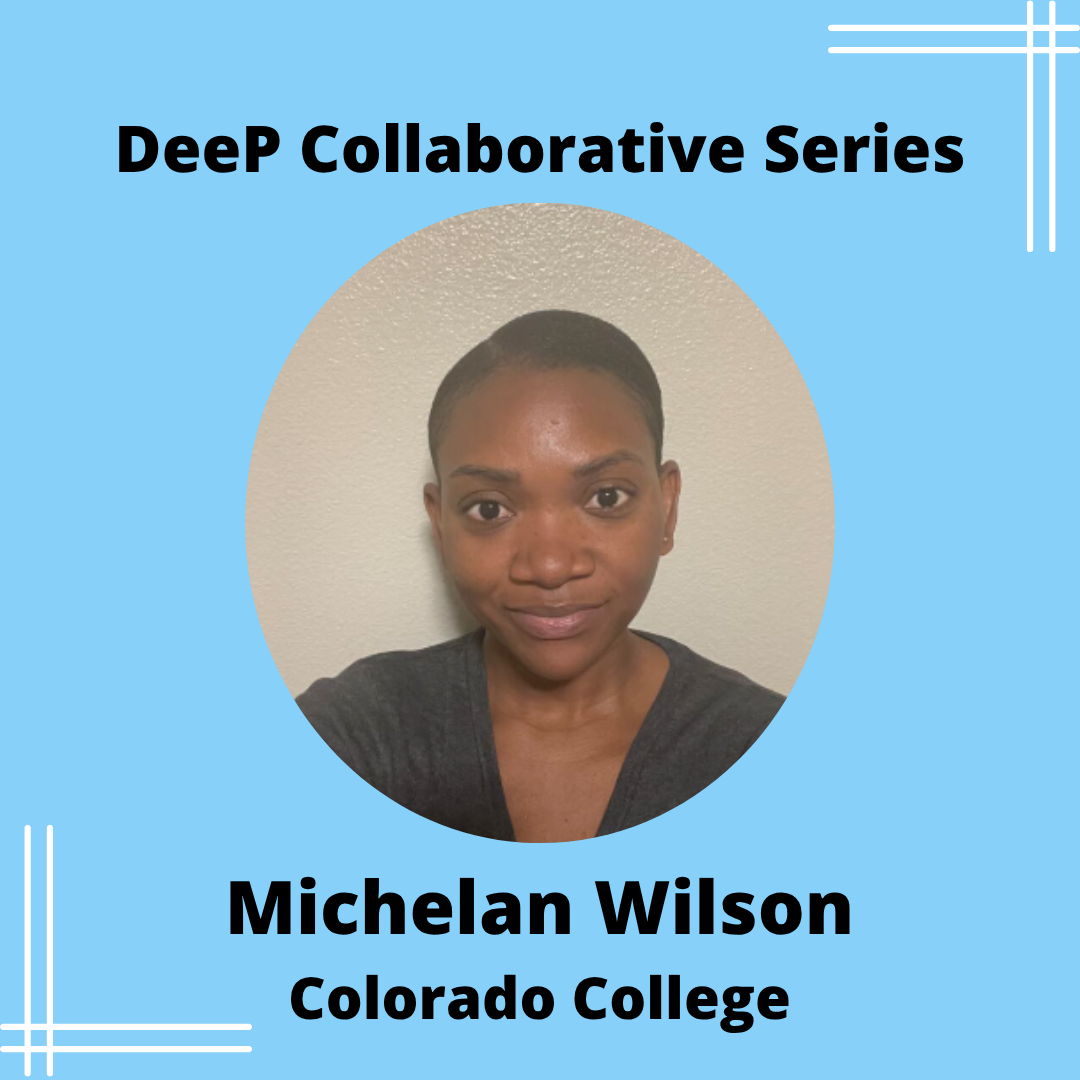
July 31, 2025 by Michelan Wilson

The Deliberative Pedagogy (DeeP) Faculty Collaborative consists of faculty from Davidson College and other higher education institutions who are committed to learning and implementing new ways to improve and deepen the quality of their class discussions. These faculty come from a wide array of disciplines and backgrounds to study and discuss deliberative pedagogy methods, share their ideas and questions with one another, and work to embed deliberation in their classrooms. In this special blog series, members of the Collaborative describe and reflect on their experiences developing and teaching their deliberation-involved courses.

By Michelan Wilson (2024-25 Deliberative Pedagogy Collaborative Faculty Fellow)

Designing and delivering a course that centers on deliberation within environmental economics has been an enriching and insightful journey. I believe that deliberation can be a powerful learning tool in this context because it encourages students to engage deeply with complex environmental issues, consider multiple perspectives, and develop nuanced solutions—skills that are essential for effective policy-making and responsible citizenship. The process involved careful planning, continuous assessment, and a focus on fostering meaningful student engagement.

The Development and Implementation Process

The process began with a clear goal: to move beyond traditional lecture-based instruction and create a space where students could actively deliberate on real-world environmental issues. I incorporated the practical approach I learned from the Deliberative Citizenship Initiative (DCI), which emphasizes facilitating structured, inclusive dialogues that build students’ capacity to engage thoughtfully with complex problems. This foundation helped shape a course environment focused on active participation, critical thinking, and collaborative problem-solving.

My Approach: Deliberations focused on trying to address key areas of conflict that arise when enacting environmental policy. I had a class of 18 students. For each deliberative activity, 8 students served as deliberators and the other 8 as observers. This was a key pedagogical shift, moving from traditional lecture formats to a more learner-centered approach, which was unfamiliar to students. As such, I acted as the facilitator for each deliberation. Preparation for deliberations involved students reading through the Deliberation Guide, which highlighted expectations, along with deliberative positions and suggested readings to support their development.

To help students understand the importance and purpose of deliberation, I assigned readings from Aiken and Talisse’s “Why We Argue” and an article titled “Cultivating Dialogue and Deliberation Through Speech, Silence, and Synthesis,” Chapter 4 of Drury’s “Creating Space for Democracy.” These readings were designed to help students grasp why we were engaging in deliberations—especially on complex, often contentious issues—and how deliberative processes can be effectively used to tackle difficult problems like those faced in Environmental Economics. Throughout the course, class time was allocated to discussing these readings, highlighting what students found convincing and less convincing about the role of deliberations as a decision-making tool in environmental economics.

Outcomes and Student Responses

The assessment revealed that students demonstrated proficiency in a wide range of deliberation skills across the course. Many students showed strong abilities in articulating reasons, synthesizing ideas, and understanding environmental trade-offs. They also demonstrated increased confidence in engaging with diverse perspectives and applying economic reasoning to real-world problems. This growth was facilitated by active participation and ongoing feedback, which helped students refine their skills.

Students’ responses were largely positive; many appreciated the opportunity to apply theoretical concepts in practical, collaborative settings. They recognized the importance of respectful dialogue and evidence-based reasoning—elements critical to effective deliberation. Some students initially struggled with the complexity of balancing various viewpoints but gradually became more proficient as the course progressed.

Challenges and Lessons Learned

While the overall experience was rewarding, certain challenges emerged. One significant constraint was the structure of Colorado College’s Block Plan, as each course runs for only 3.5 weeks. This tight timeframe left little room between deliberations for students to reflect deeply on their experiences or for me to facilitate thorough debriefs. As a result, learning how to deliberate and develop deliberative skills had to be achieved quickly, which limited some of the depth and richness of the process. Some students were more comfortable with the process from the outset, while others needed more time and guidance to fully engage.

What Worked Well

The use of detailed Deliberation Guides was instrumental in supporting student learning. These guides provided students with related readings and clearly outlined their assigned positions, which took a lot of guesswork out of the process and helped ensure that students came prepared with well-supported arguments, whether based on facts or personal experience. Knowing the positions of their fellow deliberators in advance enabled students to engage more thoughtfully and strategically, fostering richer discussions. One of the most enlightening parts of the deliberations was when students introduced themselves and shared their personal connections—or lack thereof—to the issues at hand. Observing how personal connections influenced interactions revealed how knowing more about the individuals behind the arguments changed the dynamic of the conversations. Students later reflected that understanding each other’s personal stakes impacted how they perceived and engaged with differing viewpoints. 

Additionally, the deliberative process served as a valuable learning experience beyond the formal curriculum, as it brought up aspects of environmental policy that were not explicitly covered but emerged organically through students supporting their views. This dynamic exchange enriched the class and deepened their understanding of real-world environmental issues. The use of detailed rubrics and guides clarified expectations and supported skill development, giving students clear benchmarks for their deliberative performance. Reflections and discussions helped students internalize their learning and created a space to air their misgivings about the process.

What Didn’t Work as Well

I attempted to carry out a more unstructured form of deliberation, but students were left confused and ultimately expressed a preference for a more structured approach where one point of view is addressed and thoroughly discussed before moving on to another. This underscored the importance of clear boundaries and organization in facilitating effective deliberations. Another challenge was having observers with no assigned tasks; students felt they had no purpose during that time and almost believed they did not need to attend class, which affected engagement. Additionally, I was solely responsible for assessing the deliberations, which proved difficult, especially since this was a new skill for students to develop. Although the rubrics I created were helpful in distinguishing between weak and strong participation, they were less effective in assessing more nuanced levels of engagement and skill. Furthermore, evaluating intangible qualities such as empathy was particularly challenging, as it’s difficult to measure these aspects objectively through rubrics alone. 

Next Steps and Future Directions

Building on these insights, I plan to:

  • Reduce the number of deliberations during the block to deepen reflections and provide more meaningful opportunities for engagement.
  • Provide targeted facilitation training to help students manage discussions more effectively. I was hesitant at first about the level of facilitation students could achieve independently, but I recognize that developing these skills is crucial for their growth as deliberators.
  • Incorporate more diverse stakeholder perspectives through virtual engagement or partnerships with community organizations. To make deliberations more reflective of real-world conditions, I intend to provide the same guides I use with students to stakeholders. This approach will make deliberations more authentic and help students build the confidence to take deliberative skills outside the classroom. Of course, exposing students to even more diverse perspectives will enhance their ability to formulate nuanced environmental policies.
  • Develop more systematic assessment tools to evaluate deliberative skill development alongside content mastery, ensuring a comprehensive understanding of student progress. I will also include “observers” in the assessment process, which will aid in their development as deliberators and provide different perspectives on the success or challenges of each deliberation.
  • Foster a community of practice among students for ongoing dialogue and real-world application beyond the classroom. I will endeavor to build a campus community where students actively engage in deliberations, supported by my continued collaboration with the Deliberative Citizenship Initiative (DCI) as I move forward with this work.

Filed Under: Faculty Posts

Does Televising Senate Hearings Prevent Productive Deliberation?

July 29, 2025 by Liam Mann

Liam Mann ’27 (DCI Fellow)

In an age where transparency is expected and media dominates political life, the broadcasting of Congressional proceedings appears to be both inevitable and necessary. Televising congressional proceedings seems to be a great way for citizens to understand what is going on in the government as well as hold their representatives accountable. Representatives are also given the opportunity to speak about issues concerning their constituents. However, while televising Congress has increased public access, it has also reshaped how legislators deliberate—with significant consequences for the quality and sincerity of debate.

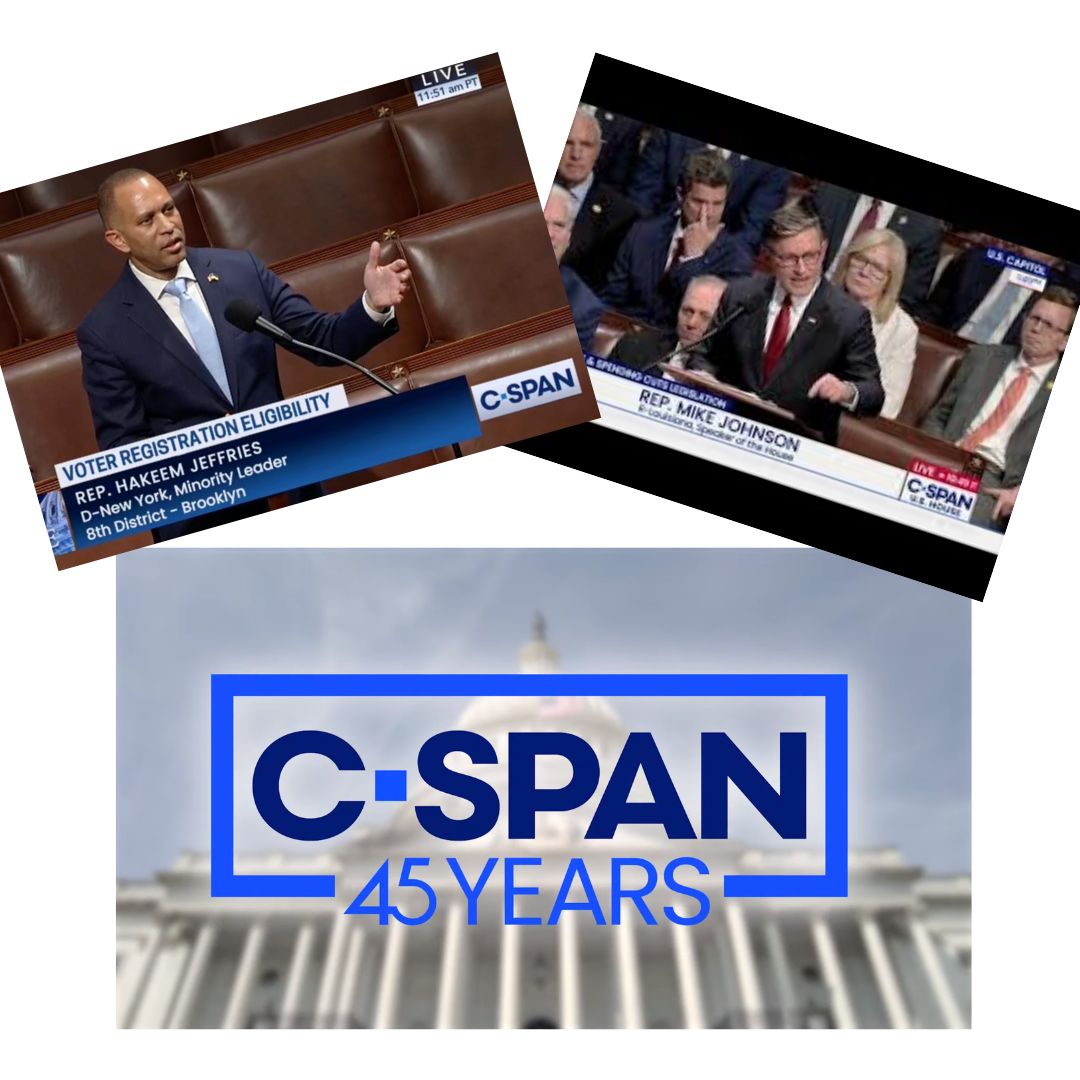
The House of Representatives began televising its sessions in 1979, and the Senate followed in 1986 with C-SPAN (a government operated television channel) coverage. Letting the people see how laws are made was seen as a way to improve public outreach and increase transparency. The expectation was that this would foster civic engagement, encourage better behavior from legislators, and enhance the legitimacy of government. In many ways, it worked. Americans could now see their representatives in action, and important Congressional events, such as impeachment hearings and the Iran Contra hearings, were viewable by the entire country. This helped lead to more dialogue and understanding around pertinent issues.

However, the camera does more than record; it alters behavior. Members of Congress, aware of their on-screen presence, often tailor their speeches not to persuade their colleagues, but to impress viewers back home or find sound bites and viral clips to increase their relevance. This shift turns deliberation into performance. In the modern social media sphere, the emphasis on short-form content incentivizes representatives to not deliberate but instead to grandstand. As philosophy professors Justin Tosi at Texas Tech University and Brandon Warmke of Bowling Green State University (2020) discuss in their book on the topic, grandstanding is “when you do or say something for the very purpose of impressing others with how righteous you are.”   

This phenomenon is now common in Congress and makes achieving compromise more difficult, ultimately hurting the lawmaking process, and in turn, the American citizen. Only 34 bills were passed in 2023, the first year of the 118th Congressional session (which lasts 2 years), less than one bill per week. This was the lowest number of bills passed in the first year of a session since the Great Depression (LoCascio et al).

Moreover, broadcasting can deter informal negotiation. Some of the most productive legislative work happens behind closed doors—in committees, in hallway conversations, or over lunch. These moments of privacy allow lawmakers to speak candidly, compromise, and build trust across the aisle. When this deliberation is televised, it becomes more difficult to deliberate and evolve one’s position, as it can be seen as “losing” an argument, lacking backbone, and not staying true to your party.

Of course, these issues are not supposed to imply that the television of Senate proceedings should be outright banned. Americans should have the ability to know how their representatives are advocating for them and understand the legislative process. However, it is vital to recognize how media can affect the behavior of those lawmakers. 

It is difficult to find balance between transparency and actually getting work done that helps America. From a cultural perspective, it is clear that our legislators should grandstand less and deliberate more. How to do so is more difficult. How do Americans incentivize our politicians to behave in their best interests? For starters, I believe that participating in deliberative sessions and putting into practice the deliberative dispositions in our own lives is a fantastic start. Without working with others ourselves, it is difficult to believe that the “other side” is ever willing to cooperate; it is difficult to believe that a middle ground ever exists. Knowing the benefits of deliberation firsthand will hopefully encourage constituents to demand the same out of our representatives, whether we voted for them or not.

LoCasio, Joe et al. 2024. 118th Congress on track to become one of the least productive in US history. ABC News. https://abcnews.go.com/Politics/118th-congress-track-become-productive-us-history/story?id=106254012

Tosi, Justin and Brandon Warmke. 2020. Why We ‘Grandstand’ and Why It Matters. Public Affairs Council. https://pac.org/impact/why-we-grandstand-and-why-it-matters

Filed Under: Fellow Posts

  • « Go to Previous Page
  • Page 1
  • Interim pages omitted …
  • Page 17
  • Page 18
  • Page 19
  • Page 20
  • Page 21
  • Interim pages omitted …
  • Page 75
  • Go to Next Page »

Footer

Blog Post Categories

  • Announcements
  • Blog Posts
  • DCI Posts
  • Events
  • Faculty Posts
  • Fellow Posts
Image of a compass superimposed by the text "Deliberative Citizenship Initiative" and "Davidson College." Clicking on this image leads to the Initiative page.

Recent DCI Blog Posts

  • We Tried to Fix Jubilee’s “Middle Ground” – Here’s How It Went
  • A Case for Deliberation in the Natural Sciences
  • Welcoming New Staff to the DCI and DCN
  • Facebook
  • Twitter
  • Instagram
  • LinkedIn


Copyright © 2026 · Infinity Pro on Genesis Framework · WordPress · Log in