• Skip to main content
  • Skip to footer

Deliberative Citizenship Initiative

Building Democracy One Conversation at a Time

  • The Initiative
    • Programs
      • Deliberation Across the Curriculum
      • Deliberation on Campus
      • Deliberation in the Community
      • Research on Deliberation
    • Motivations
      • Why Deliberative Citizenship?
      • Why Davidson? Why Now?
    • Who’s Involved?
      • DCI Fellows Cohorts
        • 2025-2026 Fellows
        • 2024-2025 Fellows
        • 2023-2024 Fellows
        • 2022-2023 Fellows
        • 2021-2022 Fellows
        • 2020-2021 Fellows
      • DeeP Collaborative Cohorts
        • 2024-2025 DeeP Collaborative Faculty
        • 2023-2024 DeeP Collaborative Faculty
      • Advisory Council
    • History
      • What Sparked the Initiative?
    • Key Deliberative Dispositions
    • Frequently Asked Questions (FAQ)
    • Annual Report
  • Get Involved!
    • Participate in a Forum
    • Join a D Team
    • Become a Fellow
    • Take Courses
    • Get Training
    • Come to Guest Lectures
  • Events
    • Upcoming Events
      • 250th Anniversary Deliberative Forum Series on American Values
    • Past Events
  • Connections
    • The Deliberative Citizen: The DCI’s Monthly Newsletter
    • Efforts on Campus
    • Efforts in the Community
    • Efforts Elsewhere
    • Readings and Resources
      • DCI-Published Guides
      • DCI Guide to One-on-One Conversations
      • How to Disagree
      • Demonstration of Facilitation Styles
      • Deliberative Pedagogy Mini-Course
    • How We Can Help: DCI’s LET’S DELIBERATE! Partnership Opportunities
    • DCI in the News
  • DCI Blog Posts
    • Recent Blog Posts
    • All Blog Posts

The DCI Blog

The DCI Has a New Assistant Director!  

July 10, 2023 by Graham Bullock

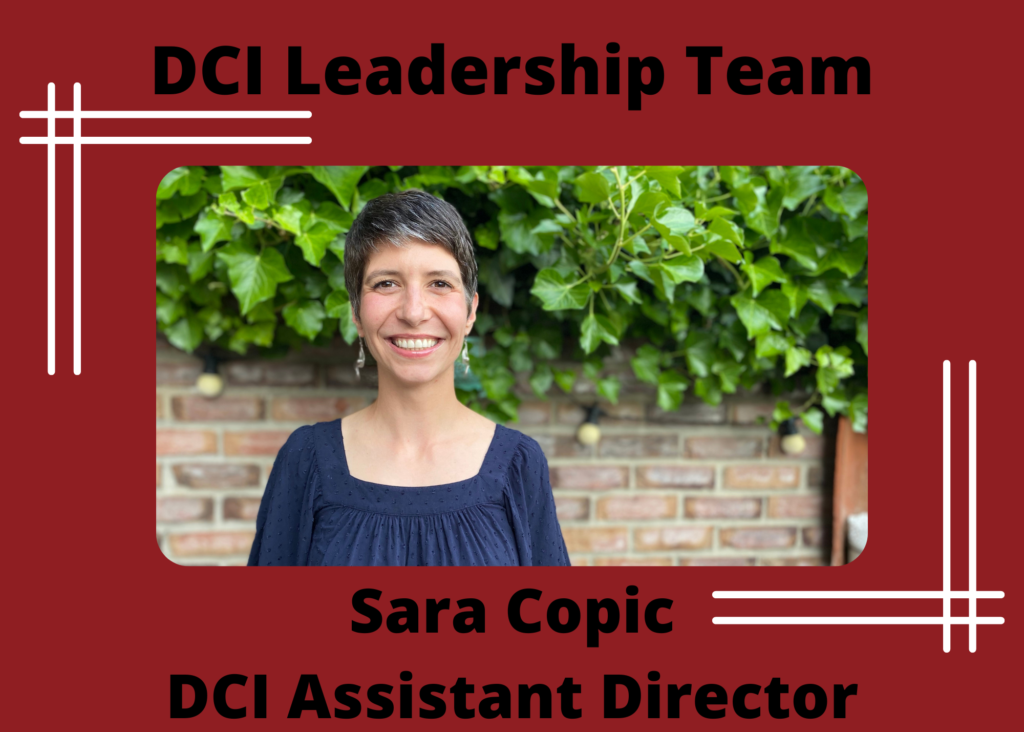
The DCI welcomes Sara Copic as our new Assistant Director! Dr. Copic will be responsible for assisting with the development, implementation, and assessment of the DCI’s programs and operations. Dr. Copic’s experience at both the University of North Carolina at Chapel Hill and the University of Notre Dame prepares her exceedingly well to help lead the DCI’s efforts to create opportunities for productive dialogue and deliberation in diverse classroom settings, outside of the classroom, and in the community.

Dr. Copic received her PhD in philosophy from UNC-Chapel Hill, where she recently served as Visiting Teaching Assistant Professor of Philosophy and taught courses in practical ethics, bioethics, the ethics of peace, war, and defense, language and communication, and more. In her research, Dr. Copic specializes in the philosophy of language. She writes about the relationship our ordinary discourse has to truth and social cooperation, and how these goals determine different types of linguistic meaning. Her teaching and research thus directly relate to some of the themes that the DCI engages with on a regular basis.

Dr. Copic has also worked as Design Project Manager in the Office of Digital Learning at the University of Notre Dame, where she led over 12 different digital education projects to successful completion, including the University’s digital resiliency initiative during the Covid-19 pandemic and projects on tech and innovation ethics, poverty, and interfaith dialogue. Dr. Copic’s experience leading complex education projects will be another asset to the DCI, where she will help design and implement programs in all of its focus areas.

In this work, Dr. Copic will apply lessons she has learned as a scholar-teacher who focuses on utilizing active learning strategies that foster an inclusive classroom environment and bridge achievement gaps between students from different backgrounds. In her teaching, she has also focused on helping students practice reflection and critical thinking not only on their own but also in community with one another.

In addition to her duties as the DCI’s Assistant Director, Sara looks forward to teaching a course at Davidson on the nature and significance of artificial intelligence in the College Writing Program in Spring 2024. Dr. Copic is an affiliate of the AI Project at UNC Chapel Hill and also writes about what lessons we can learn about meanings by studying large language models. AI is a hot topic ripe for deliberation, and Dr. Copic’s course will enable students to grapple with both its challenges and opportunities and connect with any programming the DCI organizes around this important issue. 

All to say, we are excited that Dr. Copic has joined the DCI’s leadership team! Watch out for blog posts and emails from Dr. Copic, and say hi to her if you see her on campus or in the community.
Filed Under: Announcements, DCI Posts

From Imperialism to Civil Rights: Debating and Discussing American History in HIS 142

June 27, 2023 by Dan Aldridge

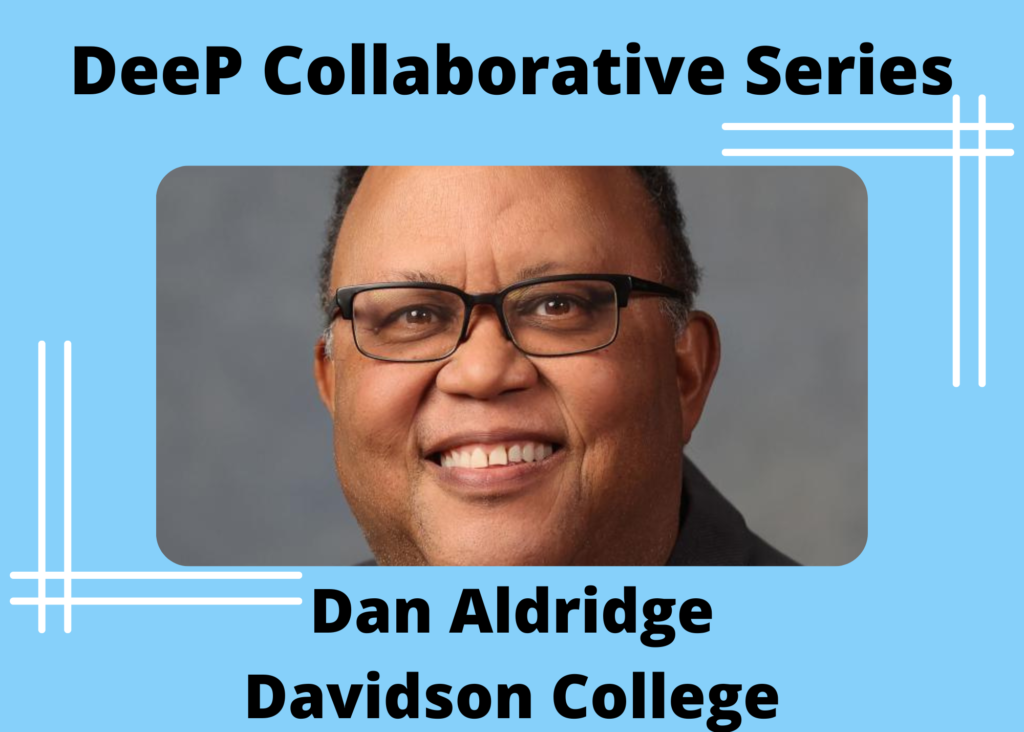
Photo of Dan Aldridge, Chair & Professor of Africana Studies, Professor of History, DeeP Collaborative Member

By Dan Aldridge (Chair & Professor of Africana Studies, Professor of History, DeeP Collaborative Member)

The Deliberative Pedagogy (DeeP) Faculty Collaborative consists of 20+ faculty from Davidson College and five other Associated Colleges of the South institutions who are committed to learning and implementing new ways to improve and deepen the quality of their class discussions. These faculty come from a wide array of disciplines and backgrounds. They come together to study and discuss different deliberative pedagogy methods, share their ideas and questions with one another, and work to embed deliberation in their classrooms. In this special blog series, members of the Collaborative describe and reflect on their experiences developing and teaching their deliberation-involved courses.

I agreed to participate in the Deliberative Pedagogy (DeeP) Collaborative because I wanted to improve the quality of student engagement with major issues in American history without fear of facing and expressing a wide range of points of view and to encourage their development as citizens who will be engaged in public issues in the decades to come.  I teach a course that is an introduction to 20th century US History aimed primarily and 1st and 2nd year students.  I focused the course on four broad “issues”: The United States’ emergence as an imperial power and future world power at the beginning of the 20th century; the life and career of Margaret Sanger as a way of exploring issues involving feminism, birth control, eugenics and related issues; varying interpretations of the meanings of the civil rights movement of the 1960s; and the different views of liberals and conservatives about the direction of American life since the 1960s.

After we finished readings, lectures, and discussions about each issue I would assign groups of students to hold a debate about the issues raised.  For example, I asked one group of four students to support the United States’ becoming an imperial and global power in the early 20th century while another group of four argued the anti-imperialist position.  After each side made its presentation the remaining students in the course would ask questions of the two debate teams.  Finally, the class as a whole would discuss the issues raised.  I have found from in-class observation, student comments, and student evaluations that they greatly enjoyed the debates and found them to be pedagogically valuable.  The debate/discussion format seems to enable students to take historical issues that seemingly belong in the “past” come alive and become more relevant to them and their contemporary lives.

Students also reacted well to reading a wide variety of points of view about historical issues including perspectives from the Right, Left, and Center.  Students read strongly pro-imperialist and somewhat racialist arguments for imperialism by authors such as Theodore Roosevelt; they read scathing critiques for US foreign policy from the Left by Noam Chomsky; they watched African American conservative intellectual Thomas Sowell critique much of the conventional wisdom about race and rights held by liberals and progressives; and they read Jeanne Theoharis argue that our understanding of civil right activism of the 1960s understates its radicalism.  They also read Catholic writers who strongly critiqued birth control, abortion and feminism as well as feminist authors who strongly supported those things.

I found that students were not angered or intimidated by being exposed to a wide variety of viewpoints, including many that would not be currently deemed to be “correct” or “polite.”  Indeed, a number commented on how they liked that the course was open to a wide variety of opinions and not committed to promoting a particular ideology or point of view.  I plan to incorporate more elements in deliberative discussion in other courses I teach where needed and appropriate.

Filed Under: Blog Posts, Faculty Posts

Catalyzing Pollution Solutions: Deliberation in a Polymer Chemistry Course

June 27, 2023 by Bassil El-Zaatari

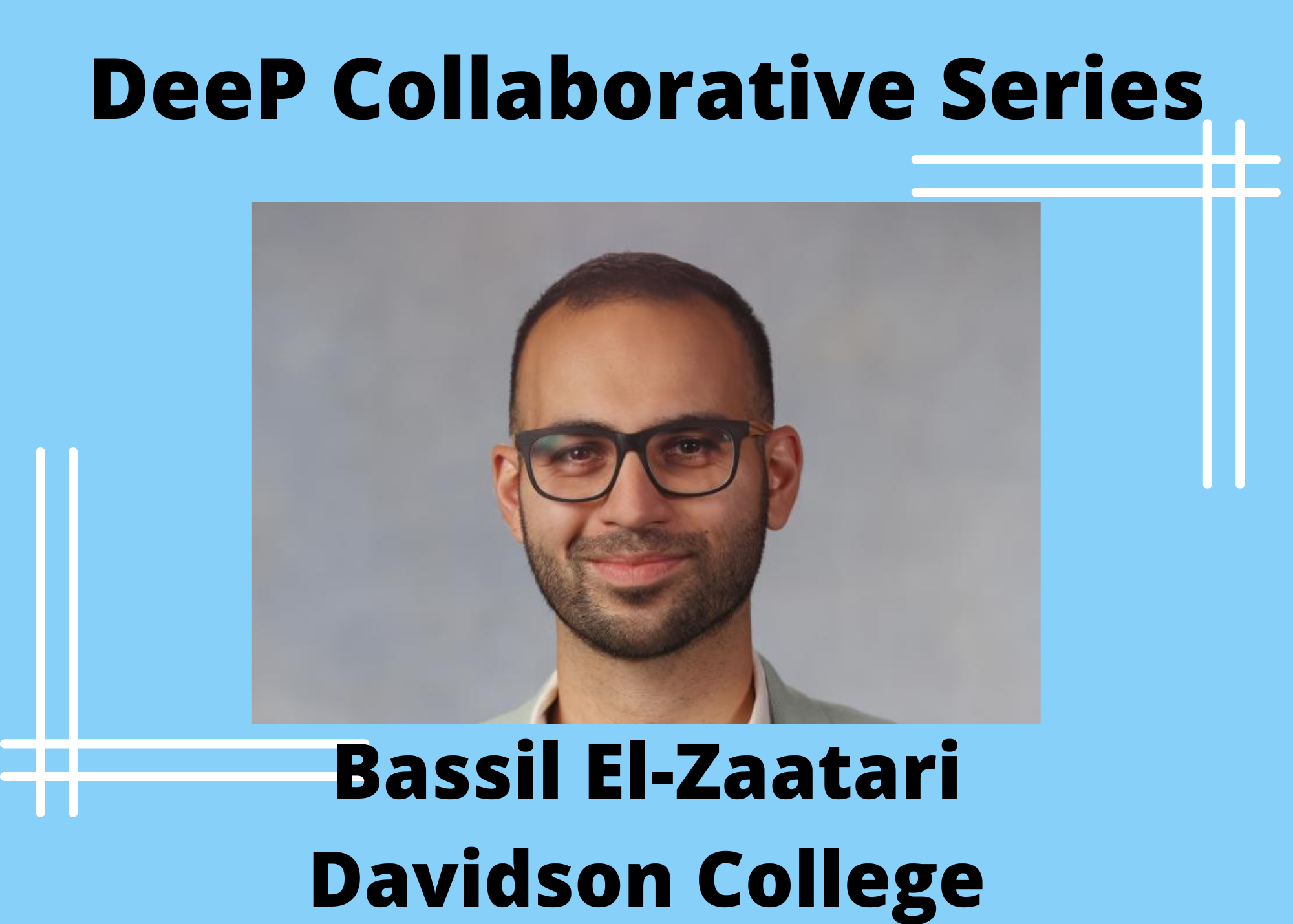
DeeP Collaborative Series with guest Bassil El-Zaatari.

The Deliberative Pedagogy (DeeP) Faculty Collaborative consists of 20+ faculty from Davidson College and five other Associated Colleges of the South institutions who are committed to learning and implementing new ways to improve and deepen the quality of their class discussions. These faculty come from a wide array of disciplines and backgrounds. They come together to study and discuss different deliberative pedagogy methods, share their ideas and questions with one another, and work to embed deliberation in their classrooms. In this special blog series, members of the Collaborative describe and reflect on their experiences developing and teaching their deliberation-involved courses.

By Bassil El-Zaatari (Assistant Professor of Chemistry, DeeP Collaborative Member)

Plastic pollution remains one of the largest challenges facing us in today’s world. Met with an ever-growing population, the use of plastic materials continues to flourish with limited ability to recycle and reprocess these materials. In fact, projections now show that by the year 2050, there may be more plastic in the ocean than fish. As I embarked on teaching polymer chemistry for the first time this semester at Davidson College, I knew I had to balance what I was teaching from a scientific perspective with thoughtful understandings of the socioeconomic, political, and historical implications of the synthesized materials discussed in class. Through the Deliberative Pedagogy (DeeP) Collaborative, I set up a framework of discussions and readings throughout the semester that culminated in a final “debate” activity during the last week of class.

On the first day of class, I explained to my students that it is critical for us, as current and future scientists, to address STEM-related controversial modern issues including stem cell research, climate change, energy policy, and pollution levels. I made sure they understood that while the ubiquity of polymers and plastics in everyday life has been critical to human advancement, the waste generated from plastic waste has been detrimental to ecosystems, especially aquatic life, and its landfill and incineration has been linked to worsening climate change.

Throughout the semester, I tried to link topics that we were learning about to broader issues and local events. One example that comes to mind was after the train derailment in East Palestine, Ohio that was carrying vinyl chloride, a precursor to synthesize polyvinyl chloride (PVC), a widely utilized plastic material. We chatted about the environmental implications of this polymer precursor from the spillage as well as methods that could have prevented it. We discussed what type of socioeconomic impacts that this derailment will have on the area for years to come and whether the need to synthesize PVC outweighed its potential hazards during manufacturing and post synthesis.

As the semester was coming to an end, the final debate tasked the students to come up with the best approach to the following prompt:

“You and your team have been appointed to solve the plastic pollution problem by world leaders from all over the world. You will have to come up with a plan of action using your polymer chemistry knowledge. You will have to decide where to start from in tackling this problem and present your findings to the class.”

This prompt was supplemented by several articles, both from scientific journals and periodicals, that the students had to read prior to the start of the activity, as well as a special topic lecture that discussed current methods of plastic recycling and reprocessing. While debating this topic, the students were prompted to keep the following questions in mind:

(1) How can we balance the importance of polymers and plastics with the waste generated from not being able to recycle, reprocess and reuse most of them?
(2) Can we reach a world in which plastic waste is a thing of the past?
(3) Does plastic free actually mean pollution free?

The activity was split into two 75-minute class periods. During the first session of the debate, the students were separated into four small groups (consisting of three or four students each) and were prompted to arrive at an evidence-supported position on this topic while weighing pertinent scientific, socioeconomic, and political implications. I walked around the different groups, listened to their conversations, and helped facilitate discussions. The students felt passionate about their positions and worked hard to convince their groupmates of the best approach to this problem, while keeping an open mind and listening to others.

Towards the end of the class period most groups had agreed on a plan of action to present during the next session. In the second session, the groups presented their findings to their classmates. Each presentation was up to ten minutes long and was followed by 5 to 10 minutes of questions from the rest of the class. I was impressed by the elegance in the solutions the classmates produced and the intensity of the Q&A session that followed.

Overall, I would say that the activity was a success and the students left the semester with a sense of scientific intersectionality that they may have not encountered in previous STEM classes. The students seemed to enjoy the activity and were passionate about their positions and defending them to others. The use of deliberation in future chemistry classes is something I intend to implement and improve on.

Filed Under: Blog Posts, Faculty Posts

2023-24 D Team and Forum Topics Survey Now Open!

June 21, 2023 by Graham Bullock

Voting box with sign "Vote Here" displayed on the front.

We are working on identifying and prioritizing topics for the DCI’s 2023-24 Deliberative Forums and D Teams, and would love your feedback on the ideas we are considering in the brief survey below. Thank you to those of you who have submitted ideas – we received a lot of great suggestions and have tried to incorporate them into the options listed. If you’d like to provide your input on the options we are considering, please complete the survey below by June 30. Thanks!

DCI 2023-24 Topics Survey

Pages: Page 1 Page 2

Filed Under: DCI Posts, Events

Emotional Readiness vs. Community Relevance? The Difficulty of Selecting Topics for Deliberation

June 21, 2023 by Laegan Smith

two heads with questions and ideas.

By Laegan Smith ’24 (DCI Fellow)

When I completed the training to become a facilitator for deliberation, one of the first things we discussed was how to select topics for deliberation. That seemed easy enough to me at first—surely you can just choose any topic and talk about it—but I soon found that there are a lot of questions that must first be asked to determine if a topic will make for a productive conversation.

For example, what issues are people interested in talking about? Will participants have enough background knowledge to deliberate about the issue? Is it possible to gather people with diverse viewpoints and opinions to deliberate? Can participants have disagreements about the issue? Are participants emotionally ready to deliberate about the issue? All these questions are used to determine whether a topic can be considered timely and “ripe” for discussion for a group.

These questions have come up again and again as the DCI has organized and hosted deliberations throughout this year. During our initial training, we were tasked with coming up with some possible deliberation topics for Davidson College and my fellow trainees and I disagreed on whether some topics could be considered “ripe” for discussion or not. I felt like the topic one of my peers suggested was too sensitive and emotionally charged to deliberate given the recent events surrounding it in the news, while my peer argued that that was the exact reason it would be a good topic for deliberation. While I was more focused on the question of emotional readiness, he was focused on the question of community interest. I realized then how subjective choosing a “ripe” topic is.

These questions came up for me again at the deliberative forum on Schools and Parents: Who Should Teach our Kids about Race, Gender, and Sexuality? that the DCI hosted last semester. After the event, I spoke to some of my peers who disagreed that the event should have been held to gauge why they didn’t want to participate. The overwhelming answer that I received was, “I refuse to deliberate about something so personal to me.” That resonated with me: though I did not feel the same way about that particular event, I felt that that was absolutely a valid reason not to partake in a deliberation. The other feedback I received was that the deliberation shouldn’t have even been held—that it was too personal and sensitive of a topic to deliberate at all.

The next week, another one of the DCI Fellows and I shared our thoughts on this issue during our weekly Commons Conversations. We and some other students discussed not only what topics we felt were timely for deliberation, but also what topics we felt should and shouldn’t be deliberated given the feedback from the forum. It was difficult to draw the line between uncomfortable topics that might hit too close to home for some people and topics that are inherently unsuitable for deliberation due to their sensitivity.

My initial reaction was that there definitely are topics that are too sensitive to be deliberated. However, the conversation raised some important questions: if topics that are too sensitive aren’t deliberated, how will we ever understand other perspectives on those topics? How will we be able to explain our point of view to someone who disagrees? How can we as a society move forward on the most personal of topics if we do not discuss them?

I don’t know the answers to these questions and I’m still not sure where the line should be drawn—it’s incredibly subjective. I’ve learned from these experiences how difficult it is to select a topic for deliberation and how impossible it is to please everyone when doing so. Ultimately, I think it’s up to the organizer of a deliberation to gauge the emotional readiness of the community it serves and up to the participant to decide whether they personally are emotionally ready to attend, and it’s okay if the answer is no.

Filed Under: Blog Posts, Fellow Posts

  • « Go to Previous Page
  • Page 1
  • Interim pages omitted …
  • Page 51
  • Page 52
  • Page 53
  • Page 54
  • Page 55
  • Interim pages omitted …
  • Page 75
  • Go to Next Page »

Footer

Blog Post Categories

  • Announcements
  • Blog Posts
  • DCI Posts
  • Events
  • Faculty Posts
  • Fellow Posts
Image of a compass superimposed by the text "Deliberative Citizenship Initiative" and "Davidson College." Clicking on this image leads to the Initiative page.

Recent DCI Blog Posts

  • We Tried to Fix Jubilee’s “Middle Ground” – Here’s How It Went
  • A Case for Deliberation in the Natural Sciences
  • Welcoming New Staff to the DCI and DCN
  • Facebook
  • Twitter
  • Instagram
  • LinkedIn


Copyright © 2026 · Infinity Pro on Genesis Framework · WordPress · Log in