• Skip to main content
  • Skip to footer

Deliberative Citizenship Initiative

Building Democracy One Conversation at a Time

  • The Initiative
    • Programs
      • Deliberation Across the Curriculum
      • Deliberation on Campus
      • Deliberation in the Community
      • Research on Deliberation
    • Motivations
      • Why Deliberative Citizenship?
      • Why Davidson? Why Now?
    • Who’s Involved?
      • DCI Fellows Cohorts
        • 2025-2026 Fellows
        • 2024-2025 Fellows
        • 2023-2024 Fellows
        • 2022-2023 Fellows
        • 2021-2022 Fellows
        • 2020-2021 Fellows
      • DeeP Collaborative Cohorts
        • 2024-2025 DeeP Collaborative Faculty
        • 2023-2024 DeeP Collaborative Faculty
      • Advisory Council
    • History
      • What Sparked the Initiative?
    • Key Deliberative Dispositions
    • Frequently Asked Questions (FAQ)
    • Annual Report
  • Get Involved!
    • Participate in a Forum
    • Join a D Team
    • Become a Fellow
    • Take Courses
    • Get Training
    • Come to Guest Lectures
  • Events
    • Upcoming Events
      • 250th Anniversary Deliberative Forum Series on American Values
    • Past Events
  • Connections
    • The Deliberative Citizen: The DCI’s Monthly Newsletter
    • Efforts on Campus
    • Efforts in the Community
    • Efforts Elsewhere
    • Readings and Resources
      • DCI-Published Guides
      • DCI Guide to One-on-One Conversations
      • How to Disagree
      • Demonstration of Facilitation Styles
      • Deliberative Pedagogy Mini-Course
    • How We Can Help: DCI’s LET’S DELIBERATE! Partnership Opportunities
    • DCI in the News
  • DCI Blog Posts
    • Recent Blog Posts
    • All Blog Posts

The DCI Blog

We’re Hiring!

January 26, 2025 by Graham Bullock Leave a Comment

Image of "job opportunity" with DCI logo

The Deliberative Citizenship Initiative is hiring a new Program Coordinator! We are seeking an energetic and hard-working person to join our team and coordinate the implementation of the initiative’s programs. These include our efforts to create opportunities for productive dialogue and deliberation in diverse classroom settings, outside of the classroom, and in the community. 

Responsibilities include organizing the logistics of the Initiative’s meetings, programs, and events; maintaining and updating the initiative’s website and social media presence; and managing the data collected by the DCI about its programs. The position is also responsible for managing and tracking the expenses and budget of the Initiative and working on special projects related to the mission of the DCI.

Visit the Davidson website to learn more about the position and the application process.

Filed Under: DCI Posts

The Power of Disagreement Within Deliberation

January 26, 2025 by Garratt Rothberg

Wood door with sign saying, "Come in, Disagreement Welcome!"

Garratt Rothberg ’27 (DCI Fellow)

The students and community members shyly strolled into the room, sitting down around the table and exchanging nervous glances. The clock had struck 6:30 PM, and my group was ready for our deliberation. As the conversation started, the participants were clearly apprehensive. For most of the participants, this was their first time taking part in a deliberation, and many aspects felt uncomfortable at first.

At one point, a participant apologized before disagreeing with someone else, as if it was something to shy away from. As the facilitator, I jumped in and reminded the group that providing space for respectful disagreement is a key feature of deliberation. At the DCI, we strive to adopt 10 key deliberative dispositions in our sessions. One of the most valuable dispositions is open-mindedness, as the honest consideration of other perspectives and ideas leads us to grow intellectually. The framework of D Teams encourages the exchange of ideas and a willingness to listen, which builds a sense of mutual understanding.

At the beginning of the deliberation, the participants were actively listening but responding to each other with a sense of hesitancy. The participant’s first statement of disagreement seemed to break the ice in my group, as the conversation continued with new vigor as participants were no longer afraid to question the ideas of others. This brought another of our dispositions to the foreground: humility. Too often, people perceive disagreement as a challenge and become upset, stemming from the reluctance to consider other perspectives and the possibility that one’s belief is wrong. In our D Teams, respectful disagreement is the goal, which forces people to consider the ideas of others and thus recognize that one may be wrong. Humility is important to maintaining a respectful atmosphere when engaging in charged conversations and is essential in our D Teams and in society.

In states of disagreement, my D Team participants quickly began to adopt another important disposition: charity. When someone said something that didn’t make complete sense, participants would ask follow-up questions and truly attempt to understand their peer’s point of view. In a deliberation, participants must assume the best about the intentions of others. After all, it is clear the participants are motivated to share their thoughts and gain new perspectives by simply signing up for the D Team. When we assume the best about each other, we gain a more complete understanding of our peers’ perspectives and more profound takeaways from the deliberation.

            A question that came up repeatedly in my final D Team session was, “What comes next?” Three sessions of deliberating brought fruitful discussions, but participants were wondering what the larger impact of their work was. In truth, D Teams are just a starting point for the work of deliberation. Implementing aspects of a deliberative democracy on a larger scale is difficult, but there are numerous places to look to for guidance. Ireland has a Citizens’ Assembly program in which a randomly selected group of 100 Irish citizens deliberate on key political issues, and the Irish government considers the resolutions they come up with in the policymaking process. This would be logistically much more difficult in the larger United States, but it is nonetheless an important experiment in deliberative democracy. While deliberation can be both uncomfortable and difficult, it is a necessary and rewarding process for our democracy to live up to its promise as a nation in which every voice is heard, respected, and appreciated.

Filed Under: Blog Posts, Fellow Posts

From Deer in the Headlights to Deliberation in the Environmental Studies Classroom

January 26, 2025 by Victoria Machado

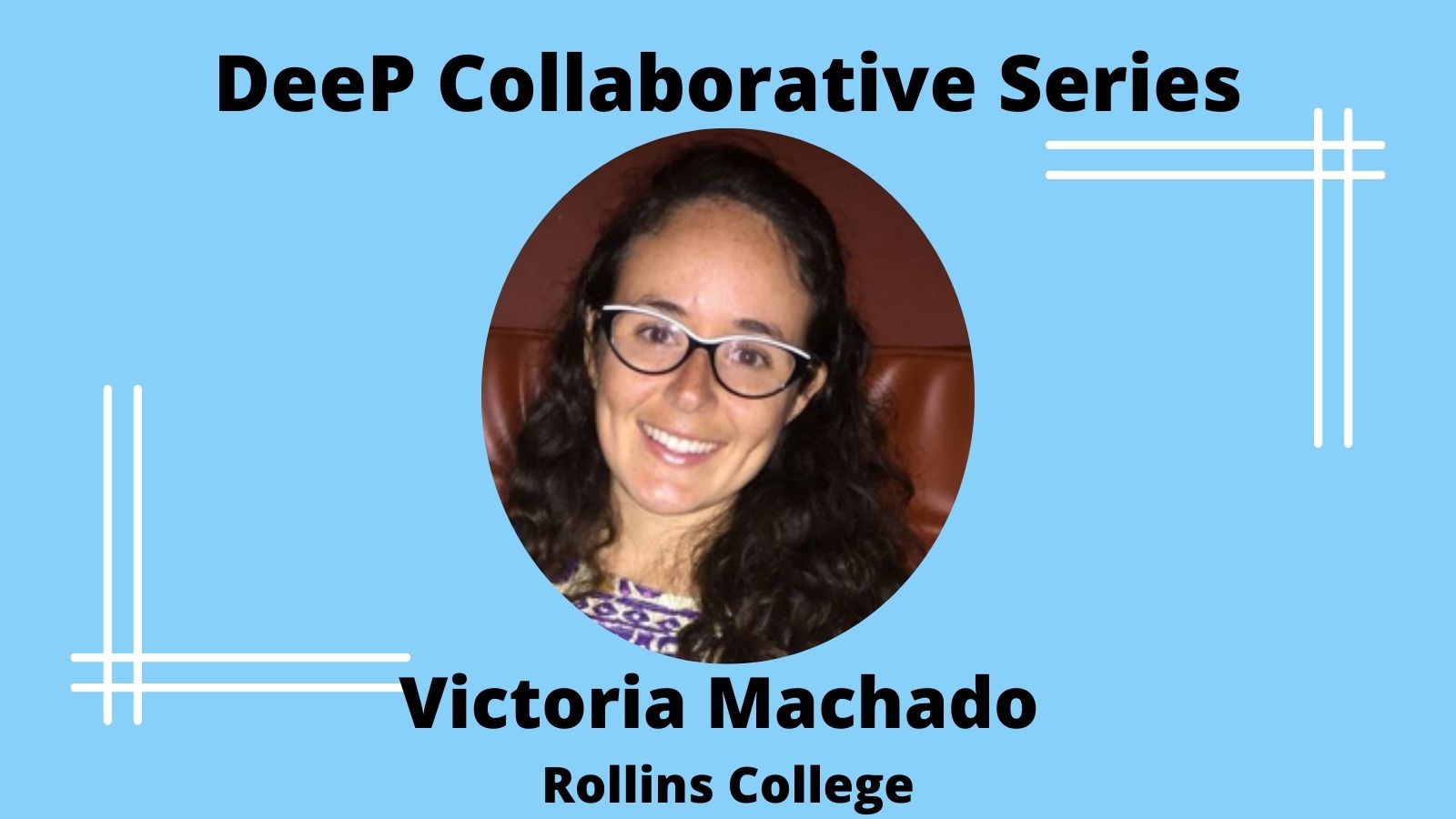
Photo of Victoria Machado

Early in my teaching career, as a graduate student teaching intro courses, I spent a lot of time sifting through material to bring into my classes. From such content, thoughtful questions arose, which I meticulously worked my way through during my lesson planning. Once in the classroom, I often expected students to be just as prepared as I was to answer the questions. Many times, since I had time to think through such questions, I found myself anticipating a certain response.

But when I posed such inquiries, I was met with a silence so strong you could hear a pin drop. Conversation wouldn’t always fall flat. Sometimes it was robust and lively, but rarely was it consistent. It was only after several freezing moments that I finally realized maybe I was asking the wrong questions, jumping too far into the conclusions, or simply not taking the time to allow students to just ponder the possibilities.

Looking back, I think it may have been a combination of the three. I have since leaped at any and every opportunity to refine my teaching and avoid feeling like the deer in the headlights. This is how I found myself in the Deliberative Pedagogy Collaborative striving to intentionally and consistently bring to my classes engagement and thoughtful conversation that asked students to wrestle with a range of outlooks in challenging ways.

I jumped into implementing deliberation in my ENV189: Environmental Crisis in its Cultural Context class by inviting students to read two chapters from Preventing Polarization: “Consume Information Mindfully” (Ch 4) and “Embrace Complexity” (Ch 6) (Blanchet & Deters 2023). Similar to my own feelings about deliberation, I felt like my students got it. Of course, we will engage with a range of topics! Of course, we will consider different viewpoints! Of course, we will wrestle with the material! All of this is easier said than done.

A few weeks later after emphasizing the importance of information literacy and complexity, I led my students through the deliberative activity of a Mock Town Hall in which they were asked to decide how to deal with water contamination from lead cables in their imaginary town. Prior to the activity, students listened to The Journal’s America is Wrapped in Toxic Lead Cables (The Wall Street Journal’s podcast, July 13, 2023), which spotlighted the real situation that the Mock Town Hall was modeled after. The episode brought in a range of voices, which allowed for a range of different perspectives.

Some students played the role of decision makers, while others took on the roles of industry executives, company workers, parents, and scientists. Students didn’t struggle with the task before them, but there was an exciting sense of challenge as I could see the wheels inside their minds turning. Many of them took on their roles with gusto. Unlike conversations of the past, which tended to simplify environmental issues, students were faced with the task of considering a range of different viewpoints and deciding what actions the town could take to solve this issue. This process went extremely well.

Later in the semester, students (in groups of 3-4) were asked to create their own deliberative activities pertaining to a range of other environmental issues in class, including greenwashing, consumption, climate migration, and climate gentrification. I was very impressed with what they came up with. Activities included debates and role playing (similar to the Mock Town Hall). Like for all new activities, some were unsure (myself included!) and some of the activities missed their mark; however, the groups that excelled cultivated strong deliberative questions that pushed the class conversation into a deeper dialogue. These groups embraced the process of conversation, critical thinking, and problem-solving.

Going forward, I will continue to use Mock Town Halls as introductions to deliberation in action. I hope to pair the readings about deliberation with the deliberative learning activity, so that all students can better grasp the reason for such activities. Pairing these back-to-back may better emphasize the importance of information literacy and complexity and how the two can work in conjunction in everyday conversations, whether engaging in collective decision making event at a town hall or encountering differing viewpoints at a family dinner. Practices like these, and more broadly speaking the DeeP Collaborative, reinvigorate my teaching and challenge me to further cultivate intentional spaces of deliberation in my classroom. Long gone are the days of feeling like a deer in the headlights. I am looking forward to continuing these practices and refining my skills next semester.

Filed Under: Blog Posts, Faculty Posts

Teaching Beyond Content: The Power of Deliberative Pedagogy

January 24, 2025 by Jane McNeill

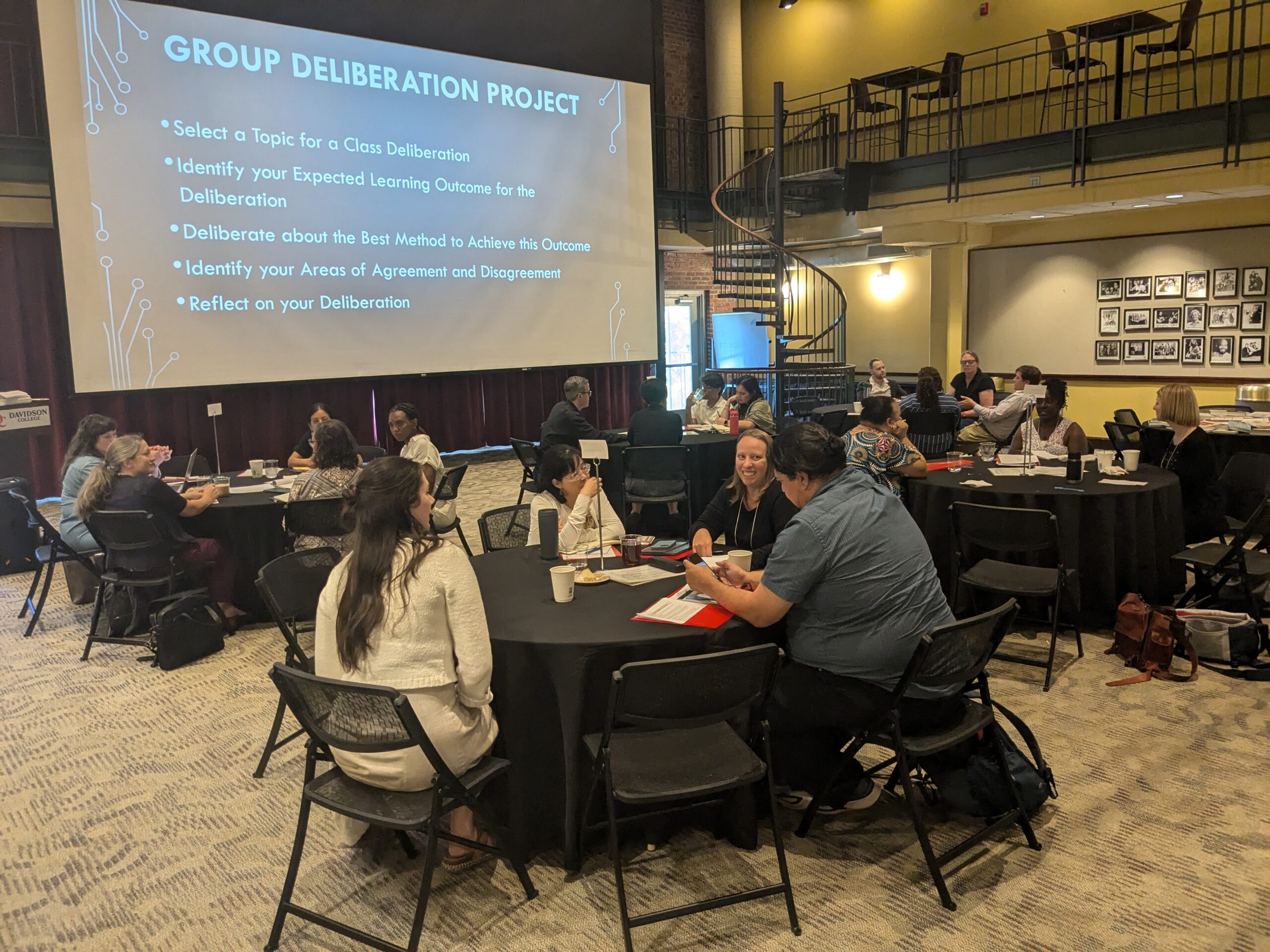
Photo of faculty members at the DCI's Deliberative Pedagogy (DeeP) Collaborative Orientation Workshop (Summer 2024)

Jane McNeill ’28 (DCI Fellow)

In August of 2021, my freshman year of high school, I was trained as a dialogic facilitator through Essential Partners as part of a pilot program called Dialogue Across Difference. This initiative grew out of Ravenscroft School’s commitment to fostering a welcoming and inclusive environment for all students and faculty. The introduction of the program was also part of a broader shift toward becoming a dialogic campus, where open, respectful, and reflective dialogue is a regular part of classroom discussions (Gifford).

I first applied to be a facilitator because I liked the idea of helping create a space where participants could engage in challenging conversations with others with whom they might disagree without the fear of judgment or hostility. The goal of these dialogues was never to persuade one another or debate; instead, we sought to reflect and share, hoping to understand each other better and perhaps find some common ground.

I participated in the program over four years, leading student-facilitated dialogues and helping create dialogue in the classroom. The dialogue that was most memorable to me as a student facilitator was one I wrote on the role of guns in our community following a local shooter. I was frankly surprised when, despite clear differences of opinion, the conversation was reasoned and reasonable. The tools I learned as a facilitator also equipped me to facilitate a dialogue between school administrators and student leaders about poor communication.

In addition to these dialogues, the program also impacted how teachers approached challenging conversations in their classrooms. In addition to training student facilitators, Essential Partners also trained teachers, sharing strategies for how to emphasize open, respectful dialogue in settings where students actively share their perspectives and ideas. In a dialogic classroom, students are encouraged not to simply absorb or recite factual information, but instead to engage deeply with the subject matter by sharing their own experiences and ideas and listening thoughtfully to the experiences of others.

My experience has been that this approach to teaching turns classrooms into communities where students feel both empowered and heard, not only to share their own experiences but also to challenge and inquire about the experiences and ideas of others and, ultimately, grow. By prioritizing dialogue as a tool that leads to understanding, my high school enhanced not only learning but also the understanding and growth of the school’s community. 

Deliberative pedagogy is an approach to teaching that focuses on fostering dialogue, critical thinking, and collaborative decision-making. At its core, deliberative pedagogy encourages students to engage and deliberate over complex issues, with diverse perspectives, forcing participants to develop skills to grapple with complex issues respectfully and thoughtfully (Patterson). A deliberative school or classroom stems typically from the training of deliberative pedagogy to teachers, enabling them to act as facilitators in structured and reflective conversations.

In environments where teachers are trained as facilitators and engage students in structured dialogues, students are then encouraged to engage with a variety of perspectives, especially on contentious topics. Disagreement is not only expected, it is valued. Disagreement prompts reflection on personal stances and allows for deeper understanding. When students encounter perspectives that differ from their own, they are encouraged to practice active listening, empathy, and open-mindedness. These skills are essential to successful dialogues. Additionally, facilitators ensure that the time is shared, and that the conversation remains productive and geared to focusing on collective understanding.

Through a deliberative pedagogy approach, participants are placed in a position where they evaluate and thoroughly examine their own assumptions and standings, while interpreting and respecting the opinions shared by others (Molnar-Main). Students additionally benefit by gaining a deeper understanding of material, hone communication and conversational skills, and improve conflict resolution skills. Tools students learn in a deliberative classroom setting equip them to engage in similar conversations beyond the classroom, where our increasingly polarized country needs more people to have more of the skills learned through dialogue.

Davidson College has its own deliberative pedagogy program, the Deliberative Citizenship Initiative (DCI). Although it is specifically designed for the college level, it uses similar strategies to foster critical thinking and discussion. DCI supports faculty in providing opportunities in a variety of classroom settings to engage students in rich and beneficial deliberation on challenging, multifaceted topics. This support and education comes in many forms, such as workshops and discussion groups that teach the objectives of deliberation in the classroom; resources and documents that explain the guiding principle of deliberation and its benefits; and the Deliberative Pedagogy (DeeP) Collaborative, an educational program for faculty members committed to integrating deliberative practices into their classrooms.

Through the DeeP Collaborative, faculty members participate in ongoing education, engage with new teaching practices, and work to contribute to a wider deliberative culture on campus (“Deliberation”). Through these various approaches taken by DCI, it provides faculty with comprehensive tools, support, and knowledge to successfully integrate deliberation into their classrooms. The image above shows faculty members participating in the DeeP Collaborative’s orientation workshop and developing deliberative activities for their courses. This implementation improves student learning and prepares students to be more engaged citizens both at Davidson and in other settings.

This year, working as a fellow with DCI has been both challenging and deeply rewarding. It has given me the opportunity to continue practicing and further honing my skills as a facilitator, leading complex and nuanced discussions with students, alumni, and community members on a wide range of multifaceted topics. These experiences have pushed me to create more inclusive and reflective spaces for everyone involved. Through our various trainings, workshops, and forums I’ve seen the power of deliberation and how effectively deliberative pedagogy fosters meaningful engagement. As I’ve worked to manage and balance the dynamics of group discussions and ensure all voices are heard, I’ve improved my understanding of how to guide conversations in ways that are both productive and respectful. Each deliberation has reinforced my belief in the power of deliberation–not just as a tool for learning within the classroom, but as a lifelong skill that nurtures critical thinking, empathy, and informed citizenship.

Works Cited

“Deliberation Across the Curriculum.” Deliberative Citizenship Initiative, deliberativecitizenship.org/deliberation-across-the-curriculum-program/. Accessed 1 Dec. 2024.

Gifford, Lorre. “Dialogue Provides ‘A Bridge to Understanding and Growth.'” Ravenscroft Magazine, 8 Nov. 2024, magazine.ravenscroft.org/our-ravens/orsp/~board/voices/post/dialogue-provides-a-bridge-to-understanding-and-growth. Accessed 1 Dec. 2024.

Molnar-Main, Dr. Stacie. Deliberation in the Classroom : Fostering Critical Thinking, Community, and Citizenship in Schools. Kettering Foundation, 2017.

Patterson, Katie. “Deliberative Pedagogy in the K-12 Classroom.” National Civic League, 2020, www.nationalcivicleague.org/wp-content/uploads/2020/08/K-12-Deliberative-Pedagogy_White-Paper_Final.pdf. Accessed 1 Dec. 2024.

Filed Under: Blog Posts, Fellow Posts

How to Escape Our Echo Chambers in a Polarized Digital World

January 24, 2025 by Tehinnah Kitcher

Echo chamber graphic.

By Tehinnah Kitcher ‘27

We live in a digital age where social media platforms like Facebook, Instagram, Twitter, and even Tiktok are used by many as tools to facilitate connection and communication. Additionally, in recent years, these social media platforms have been turned to increasingly as sources of news and information. Social media platforms have consequently become arenas for political discourse. The recent presidential election contributed greatly to the rise in politically motivated content.

Most of this political content that people engage with on social media will be consumed within an echo chamber. According to Cinelli et al. (2021), the echo chamber effect is defined as the “situation in which individuals are exposed only to information that confirms their pre-existing beliefs and opinions, leading to the reinforcement and amplification of these views” (3). This echo chamber effect contributes to political polarization by reinforcing existing beliefs and limiting exposure to diverse perspectives.

How so? Because social media algorithms are designed to present users with content that aligns with their previous interactions. Conversely, content that features opposing viewpoints is filtered out of the feed. The prioritization of such content leaves users in echo chambers where there exists a bias in information diffusion toward like-minded individuals and an inherent tendency to reinforce shared narratives (2). These echo chambers create increased political polarization and foster the spread of misinformation by isolating users from engaging with opposing viewpoints and sources. Echo chambers reinforce existing opinions. In doing so they can also be viewed as a driving factor in the amplification of extremist views.

How, then, do we escape our echo chambers?

Deliberation is one of the most effective ways to mitigate the negative effects of echo chambers, such as polarization. The Deliberative Citizenship Initiative (DCI) is committed to combating these effects by employing deliberative dispositions. By engaging in constructive dialogue we expose ourselves to diverse opinions that can provide valuable insights we have not yet considered. One must be open to discussion and new ideas in order for the deliberation to be fruitful. Deliberative discussions should be approached with curiosity and compassion, not assumption and contempt.

Another major issue that arises as a result of the echo chamber effect is misinformation. It is important to be critical of the sources being consulted. Additionally, make sure to fact check information before sharing it with others to help prevent the spread of misinformation. Another remedy involves adopting the deliberative disposition of evidential emphasis that promotes using evidence (experiential, factual, emotional, or descriptive) to support positions and elucidate generalizations. The process of seeking out evidence from diverse sources in combination with fact-checking notably reduces the spread of misinformation.

Echo chambers influence perceptions and shape political ideology by reinforcing existing beliefs and amplifying extremist views. None of us are immune to this effect. The first step of escaping the echo chamber is to be aware. The next is to take action. Make an effort to seek out diverse opinions that have been fact checked. Engage in constructive dialogue. The DCI has many avenues to pursue in this regard. Consider joining a D Team or attending a Deliberative Forum in the spring! We all have a part to play in fostering a deliberative democracy.

Citations

Cinelli, M., Morales, G. D. F., Galeazzi, A., Quattrociocchi, W., & Starnini, M. (2021). The Echo Chamber Effect on Social Media. Proceedings of the National Academy of Sciences, 118(9), 1–8. PNAS. https://doi.org/10.1073/pnas.2023301118

Filed Under: Blog Posts, Fellow Posts

  • « Go to Previous Page
  • Page 1
  • Interim pages omitted …
  • Page 27
  • Page 28
  • Page 29
  • Page 30
  • Page 31
  • Interim pages omitted …
  • Page 75
  • Go to Next Page »

Footer

Blog Post Categories

  • Announcements
  • Blog Posts
  • DCI Posts
  • Events
  • Faculty Posts
  • Fellow Posts
Image of a compass superimposed by the text "Deliberative Citizenship Initiative" and "Davidson College." Clicking on this image leads to the Initiative page.

Recent DCI Blog Posts

  • We Tried to Fix Jubilee’s “Middle Ground” – Here’s How It Went
  • A Case for Deliberation in the Natural Sciences
  • Welcoming New Staff to the DCI and DCN
  • Facebook
  • Twitter
  • Instagram
  • LinkedIn


Copyright © 2026 · Infinity Pro on Genesis Framework · WordPress · Log in