• Skip to main content
  • Skip to footer

Deliberative Citizenship Initiative

Building Democracy One Conversation at a Time

  • The Initiative
    • Programs
      • Deliberation Across the Curriculum
      • Deliberation on Campus
      • Deliberation in the Community
      • Research on Deliberation
    • Motivations
      • Why Deliberative Citizenship?
      • Why Davidson? Why Now?
    • Who’s Involved?
      • DCI Fellows Cohorts
        • 2025-2026 Fellows
        • 2024-2025 Fellows
        • 2023-2024 Fellows
        • 2022-2023 Fellows
        • 2021-2022 Fellows
        • 2020-2021 Fellows
      • DeeP Collaborative Cohorts
        • 2024-2025 DeeP Collaborative Faculty
        • 2023-2024 DeeP Collaborative Faculty
      • Advisory Council
    • History
      • What Sparked the Initiative?
    • Key Deliberative Dispositions
    • Frequently Asked Questions (FAQ)
    • Annual Report
  • Get Involved!
    • Participate in a Forum
    • Join a D Team
    • Become a Fellow
    • Take Courses
    • Get Training
    • Come to Guest Lectures
  • Events
    • Upcoming Events
      • 250th Anniversary Deliberative Forum Series on American Values
    • Past Events
  • Connections
    • The Deliberative Citizen: The DCI’s Monthly Newsletter
    • Efforts on Campus
    • Efforts in the Community
    • Efforts Elsewhere
    • Readings and Resources
      • DCI-Published Guides
      • DCI Guide to One-on-One Conversations
      • How to Disagree
      • Demonstration of Facilitation Styles
      • Deliberative Pedagogy Mini-Course
    • How We Can Help: DCI’s LET’S DELIBERATE! Partnership Opportunities
    • DCI in the News
  • DCI Blog Posts
    • Recent Blog Posts
    • All Blog Posts

The DCI Blog

Debate and Deliberation: Commonalities and Contrasts Through the Lens of the First Presidential Debate of 2020

October 1, 2020 by Cadie McNaboe Leave a Comment

Donald Trump and Joe Biden at presidential debate

By Cadie McNaboe, DCI Fellow

On September 29th, countless Americans tuned in to watch the first presidential debate between President Donald Trump and Former Vice President Joe Biden. For those who persevered through the antagonistic comments and arguments with the moderator, Fox News anchor Chris Wallace, it was clear that it was impossible to call the back and forth exchange a deliberation, and unlikely to term it a debate. NBC anchor Lester Holt, right after the debate had closed said, “If hearing that this debate is over was music to your ears, you may not be alone … I’m at a bit of a loss for words here to describe what we’ve just witnessed.”  I stand in agreement with him.

While this is only my third round of presidential debates (that I remember-it’s distinctly possible my parents set me in front of the TV to watch the debates as a child), my years of competing in debate taught me about the rigidity and rules of debating, none of which were present in this debate. The DCI defines debate as structured discourse that is oriented towards highlighting differences and exposing weaknesses; with previous presidential debates, it also has been utilized to signify an alignment towards policy and an opportunity for a “winner” to emerge through their use of political prose and powerful rhetoric. This debate, with its insults, interruptions, and cross-talk intended only to derail the moderator’s questioning, should be considered more of a reality-TV scene than anything else.

Deliberation, on the other hand, has something else to offer the American public. Based on cooperation rather than competition, deliberation seeks to build collective and individual understanding, and works to bridge the divides across the political spectrum so frequently apparent at the national level. Going beyond the constraints of debate’s binary pro-con style, deliberation calls for good-faith arguments, ones that seeks to understand our commonalities rather than our differences.

Through deliberation, with its use of an active facilitator, connections can be woven, and viewpoints can be shared through the strategic use of stories, statistics, productive cross-talk and thoughtful consideration of new perspectives beyond our own. This non-adversarial approach builds on the unique perspectives each deliberator holds, and their inherent power to share their perspective with others.

Deliberation also stands to provide an opportunity to enable action after its closing. In a debate, participants would shake hands (pre-COVID), get the judge’s feedback and “scoresheets” and then proceed to move to the next topic of concern. Instead of positing a temporary topic of  concern, deliberation allows and encourages voluntary action as a relevant part of the deliberative process. Communication around these contentious issues is essential but does little without action tied to it.

This is why after each D-Team meeting or deliberative forum, the DCI sends out Beyond the Deliberation, a compilation of tangible action pathways for participants to consider if they feel inspired to pursue any of them. These pathways, with ways to get informed, get connected, and get involved, contribute to the autonomy of each deliberator, who can individually and collectively continue the work our democracy requires. After watching the first presidential debate, it’s easy to feel unsure about the state of our country, but if instead of a reason to forfeit anything related to politics, we must use that debate as a call for cooperation as a collective response. If we do that, then we are empowered and also well positioned to begin the lifelong work of deliberation and action – for the benefit of ourselves and our democracy.

Filed Under: Blog Posts, Fellow Posts Tagged With: debate, deliberation, election

A Democracy Worth Pursuing

September 24, 2020 by Tyler McLaren Leave a Comment

By Tyler McLaren, DCI Fellow

John Locke, a founding philosopher of liberalism, offered that, “Men being, as has been said, by nature, all free, equal and independent, [cannot] be […] subjected to the political power of another, without his own consent.” Why is it then, that in our American society, which is built upon liberalism and where this ideology is so highly regarded, so many citizens have abandoned their right to make their voices heard, to vote and to engage in civil discourse, when the peopleresult is a complete forfeiture of power to a government that does not serve their interests? Why would anyone give up this power and self-agency?
One may advance the common belief that our elected officials in Washington have not listened to the American people for decades, and that political engagement is a lost cause given the government’s complexity and polarization. Simply put, it is not the American people who have given up on democracy—the government has.

Dr. Daniel Layman, Assistant Professor of Philosophy at Davidson College, offers that there is a favorable alternative to current practice both in Monday’s “Deliberation Nation – Why Deliberative Democracy is our Best Option” lecture and in his peer reviewed article, Robust Deliberative Democracy.

Layman contends that if we choose to deliberate with our fellow citizens on policy issues, instead of participating in the bargaining and bickering which has become the norm, we all have a say in politics, we all exercise our right to be equal and independent, and we are all truly free. Democracy is a team effort, and if we are to save it from apathy, disengagement, marginalization, and polarization, no players can be on the sidelines.

Skeptical? I was too before Layman moved from a utopian depiction of deliberative democracy to expose us to two core problems with deliberative democracy, which he then refuted— restoring faith in his argument, and by extension, the likelihood that we could pull this off.

First, there is a knowledge problem. If the average citizen does not know the name of their senator, what makes us think they have the knowledge to debate about contentious issues in our country? Deliberative democracy, however, does not require excessive knowledge —it is based on moral deliberation. Morals are plentiful and diverse in the American polis. We should therefore be able to define the moral parameters within which acceptable policy can be made.

Second, there is the incentive problem. Many Americans have little incentive to take politics seriously and are disinclined to devote time, energy, and resources to a political process that yields little in their favor. Yet deliberative democracy does not ask citizens to abandon their own self-interest in favor of others. Instead, it asks our citizens to conceptualize their self-interest and their ability to voice their needs as centrally dependent on their freedom from arbitrary government or others’ personal wills. It makes little logical sense, then, why anyone would subject themself to such unfreedom, under this assumption.

With a strong case as to why deliberative democracy is not just manageable, but worth managing, we must begin thinking about how we can make it possible for our citizens to begin  “sharing reasons” with one another and accepting others’ offerings to arrive at some common ground first, and then the most rationally supported policy becomes possible. Efforts promoting deliberation are a good start, but are often limited to those fortunate enough to receive a college education.  If deliberative democracy is to work, everyone must be invited to the table. Deliberative forums must be accessible, inviting, and come at no cost to the participants. Deliberation cannot privilege those who fit the mold of what politics is “supposed” to look like; everyone must have the ability to express their reason in their own way.  For this reason, I’m excited about the DCI’s current efforts and future plans to partner with local organizations to host deliberation opportunities for all members of our community, regardless of their background.

Although there is much work to be done, I have faith in the American people’s ability to find common ground not because they have to, but because it is important to their freedom.

Filed Under: Blog Posts, Fellow Posts Tagged With: deliberation, democracy

Deliberation Nation?

September 21, 2020 by Graham Bullock Leave a Comment

THIS afternoon (9/21/20) at 4:30 pm EST, the Deliberative Citizenship Initiative is hosting a virtual event with Professor Dan Layman on “robust deliberative democracy!”  Registration is free and open to the public — see below for more details (and feel free to share with others)…

Deliberation Nation_Flyer


Deliberative democracy aspires to secure political liberty by making citizens the authors of their laws. But how can it achieve this end in the face of deep disagreement, imperfect knowledge and limited altruism? Dr. Layman, Assistant Professor of Philosophy at Davidson College, will address this question by distinguishing between two forms of deliberative democracy and arguing that one of these forms can indeed overcome these three challenges, and does so in ways that are morally preferable to political systems based on voting or markets without deliberation.

This talk is based on a paper published by Dr. Layman on “Robust Deliberative Democracy” in Critical Review.  In that article, Dr. Layman takes up and responds to critiques of the deliberative democracy project by Mark Pennington and others, and he concludes that there is indeed a “place for deliberative democracy in a robust political economy.”  In this talk hosted by Davidson College’s Deliberative Citizenship Initiative, Dr. Layman will discuss the insights from his paper and address questions from the online audience.

Please join us at 4:30 pm EST for what promises to be a stimulating discussion.  Register now at https://www.eventbrite.com/e/deliberation-nation-why-deliberative-democracy-is-our-best-option-tickets-120213661297.

Filed Under: Events

One Team

September 10, 2020 by Graham Bullock

blog post images

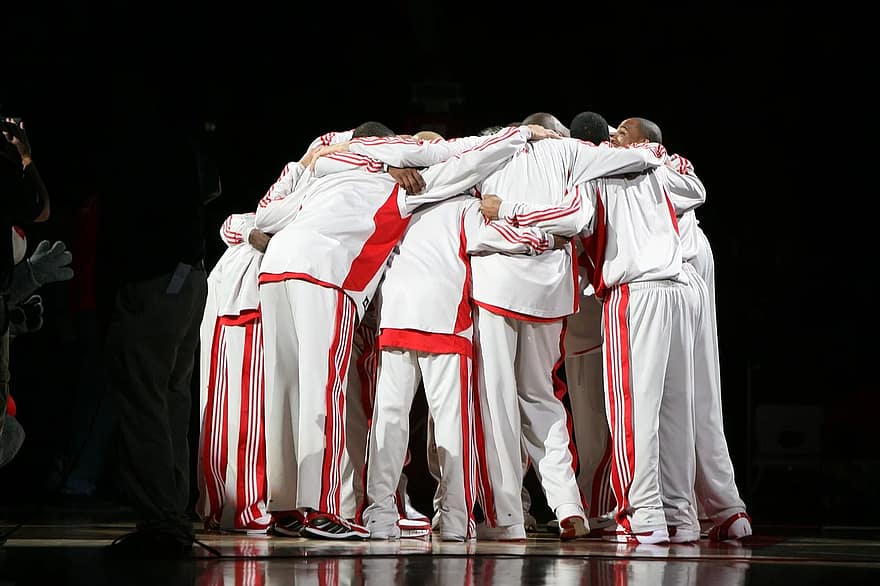
One day my high school basketball coach gave our team an unusual exercise.  He split us into two groups and put us into two separate rooms.  He told us our objective was to get the most possible points for our team, and gave us a sheet of paper with a bunch of instructions on it.  I don’t remember all of the details, but they were roughly as follows:

In a series of rounds, each team was to choose either “Red” or “Blue;” if both groups chose Red, both would earn 3 points, if both groups chose Blue, both would lose 3 points.  But if one group chose blue while the other group chose red, the group that chose blue would earn 6 points and the group that chose red would lose 6 points.  In the first few rounds, the groups were not allowed to communicate with one another; in later rounds, representatives from each group were given short opportunities to discuss their plans with each other.

So which would you choose?  Which did we?  I remember lots of debate in my group – could we trust the others to choose Red so that we would both earn points?  Or would they “backstab” us and choose Blue, causing us to lose big while they would win big?

I have since recognized this game as a classic prisoner’s dilemma, in which detectives try to play prisoners off of each other as they interrogate them in separate rooms.  It is used as a metaphor for the collective action challenges facing any two groups negotiating with each other.  It explains, for example, why it is so hard for Democrats and Republicans to reach a deal on social security or healthcare reform – both fear that the other side will attack them to score political points if they try to offer a reasonable compromise.

But what was most memorable about playing this game with my basketball team was what our coach said at the end of it.  After we went through several rounds of each group experimenting with picking Red, getting burned, and then both consistently picking Blue, we counted up our points and one group celebrated for having edged out the other.  But Coach simply said something to the effect of, “I never said you were supposed to win points for just half your team.”  And then he made us run a LOT.

This for me is an even better metaphor for our current politics.  We think the objective is for our party – our “team” – to win as many elections and policy debates as possible.  This paradigm has been called “teamsmanship,” or “tribalism,” or “hyper-partisanship;” but whatever the name, it misses what should be the real point of politics.  It should not be about one side winning or losing, it should be about both sides – all sides – winning at least a little bit.  Our coach’s point was that it was the cumulative score of the two groups that mattered, not how much one group beat the other group by.  And so it is with effective governance – it should take into account the interests and concerns of all the people, not just those who voted for the party in power.  We are all, ultimately, on one team.

This logic is embedded in the Deliberative Citizenship Initiative’s new Deliberative “D” Teams Program.  These teams are made up of 5-10 people with diverse perspectives and backgrounds who have committed to meet biweekly to discuss important issues and get to know people outside their normal social, academic and professional circles.   At this time of intense feelings, rapid change, and hyper-polarization, D Teams create spaces for people to come together to explore how and why their perspectives are both similar and different – and to begin building common solutions to our collective challenges.

We call them “Teams” to emphasize that even though participants may have significant differences of opinion, they are all on the same team, working together to understand and map the terrain of those differences, uncover the experiences and assumptions that they are based on, and work towards new possibilities that can reconcile and transcend those differences.

To experience this process of exploration and discovery, we encourage you to sign up for a D Team today.  In just three hours a month, these teams will enable you to practice your deliberative citizenship skills of listening actively, expressing yourself authentically, and engaging with others deeply and respectfully.  They are open to all Davidson faculty, staff, students, alumni, and community members and provide a great way to connect with others either online or in a socially distanced in-person format.

Sign-ups are available through a form on the DCI’s WildcatSync page at the beginning of every semester. Individuals can state their preference for a variety of D Team options, including in-person vs. virtual formats. D Teams will be scheduled at a variety of times – e.g. weekday mornings over breakfast, during the lunch hour, in the evenings, Saturday mid-morning, Sunday afternoon – to accommodate everyone’s different schedules as much as possible.

If you have any questions, please visit the DCI’s D Teams webpage or email dci@davidson.edu.  And please forward this post onto anyone you know who might be interested in learning about this opportunity.

Filed Under: Blog Posts, DCI Posts

Party Conventions and…Deliberation?

August 27, 2020 by Graham Bullock Leave a Comment

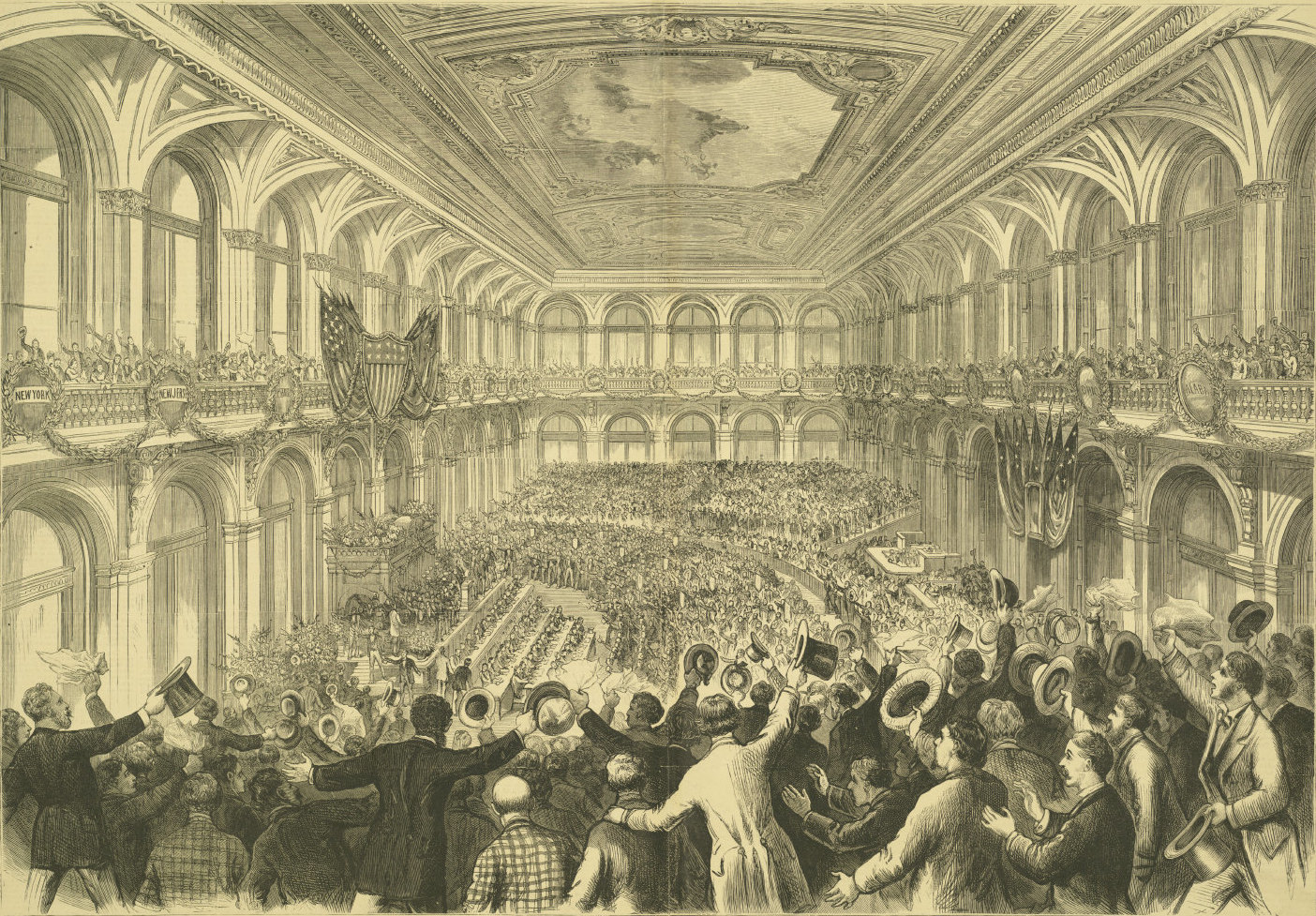
conventionFor those who have watched any of the Democratic and Republican National Conventions over the past two weeks, the notion of deliberative citizenship was probably not the first thing that came to mind.  Facing the realities of the current pandemic, these events have completed their transformation into fully ritualized and performative exercises for the parties involved.  This process began decades ago, arguably first with the decision to broadcast the convention live on the radio in 1924 and on television in 1940.1Troy, Tevi. 2016. “The Evolution of Party Conventions.” National Affairs, Summer 2016. https://www.nationalaffairs.com/publications/detail/the-evolution-of-party-conventions.  It was then accelerated by the primary/caucus system that made the outcomes of the conventions all but pre-determined.
But conventions have not always been so staged and predictable – the first Democratic Convention heard over the radio in 1924 required 103 ballots to determine its nominee (JohnDavis) and the first televised GOP Convention in 1940 nominated a surprise “dark horse” candidate (Wendell Wilkie).2Troy, Tevi. 2016. “The Evolution of Party Conventions.” National Affairs, Summer 2016. https://www.nationalaffairs.com/publications/detail/the-evolution-of-party-conventions.  Some commentators have lamented the loss of the deliberative element of conventions that drove this unpredictability but enabled a broader range of the party faithful to engage with one another on the future of their party.3Karabell, Zachary. 2020. “It’s Official: Conventions Are History. So What Replaces Them?” Politico, August 22, 2020. https://www.politico.com/news/magazine/2020/08/22/its-official-conventions-are-history-so-what-replaces-them-400099  Kilgore, Ed. 2020. “Let’s Finally Get Rid of Party Conventions.” Intelligencer, May 4, 2020. https://nymag.com/intelligencer/2020/05/who-needs-political-party-conventions.html  Shafer, Jack. 2020. “Are the Conventions Due for Cancellation?” Politico, August 19, 2020. https://www.politico.com/news/magazine/2020/08/19/are-the-conventions-due-for-cancellation-398660.  Before conventions were organized in the 1830s, presidential nominees were selected by each party’s congressional delegation of senators and representatives.4“Nominating Presidents.” n.d. United States Senate. Accessed August 27, 2020. https://www.senate.gov/artandhistory/history/minute/Nominating_presidents.htm

Even the first conventions, however, were constrained by efforts to project unity and unanimity in preparation for the coming general election.  The Chairman of the 1835 Democratic Convention, for example, asked for the proceedings to be “marked by a spirit of the utmost harmony and union” and that delegates “be willing to sacrifice all personal predilections and preferences.”5Pfau, Michael William. 2006. “Conventions of Deliberation? Convention Addresses and Deliberative Containment in the Second Party System.” Rhetoric and Public Affairs 9 (4): 635–54. https://www.nationalaffairs.com/publications/detail/the-evolution-of-party-conventions.

Given these dynamics, how can we make sense of the role of party conventions?  In theory, they are designed to enable parties and their members to exercise the three forms of civic agency that Danielle Allen outlines – “disinterested deliberation, prophetic frame shifting, and fair fighting.”6Allen, Danielle. 2016. “What Is Education For?” Boston Review, April 26, 2016. http://bostonreview.net/forum/danielle-allen-what-education  They bring together people who share at least some interests to listen to each other and collectively plot a path forward, in terms of ideology, policy, and electoral strategy.  They provide a platform for them to then share their vision with the broader public, and to continue the process of fighting – ideally following ethical norms of fairness – to win at the ballot box.

In reality, however, these forms of civic agency can often be in tension.  Some prophecies may create strategic problems or not be accessible to deliberative exploration; deliberation can be seen as hampering the process of both frame-shifting and election-winning; and the short-term focus on racking up wins may undermine both deliberative and prophetic efforts.  Great prophets may not make good deliberators or good strategists; great deliberators may have an aversion to both prophetic declarations and political battles, and great fighters may not always see the utility of either deliberation or prophecy.

Given these tensions, conventions may have bit off more than they could chew, and it was perhaps inevitable that they would shed at least one of these civic functions.  Deliberation was the natural one to go, particularly as advances in communication technology enabled long-distance coordination on party priorities.  Deliberation also can project a sense of discord and dissension among the ranks.  Party members can deliberate with each other in person, over the phone, or now over Zoom – why do they need to do it at a convention?

But the unfortunate reality is that such “grassroots” deliberation is not that common.  Polls have found that only 1 out of 4 people discussed politics in the last week with family or friends, over half have stopped talking about politics with someone and find it stressful and frustrating to talk about politics with people they disagree with, and nearly two-thirds feel the political climate prevents them from saying things they believe.7Ekins, Emily. 2020. “Poll: 62% of Americans Say They Have Political Views They’re Afraid to Share.” Cato Institute. July 22, 2020. https://www.cato.org/publications/survey-reports/poll-62-americans-say-they-have-political-views-theyre-afraid-share Jones, Jeffrey. 2019. “Americans Converse More About Family Matters Than Politics.” Gallup. July 30, 2019. https://news.gallup.com/poll/262166/americans-converse-family-matters-politics.aspx Jurkowitz, Mark, and Amy Mitchell. 2020. “Almost Half of Americans Have Stopped Talking Politics with Someone.” Pew Research Center’s Journalism Project (blog). February 5, 2020. https://www.journalism.org/2020/02/05/a-sore-subject-almost-half-of-americans-have-stopped-talking-politics-with-someone/ Pew Research Center. 2019. “The Public’s Level of Comfort Talking Politics and Trump.” Pew Research Center – U.S. Politics & Policy. June 19, 2019. https://www.pewresearch.org/politics/2019/06/19/the-publics-level-of-comfort-talking-politics-and-trump/.

This is a problem because democracy, in short, needs deliberation.  It needs it not only between those who deeply disagree, but also among those who at least appear to agree on many things.  Done poorly or ended prematurely, it can indeed reveal and exacerbate sources of tension and conflict.  But done well, deliberation enables us to understand the experiences, emotions, and reasons that underlie each other’s political positions.  It provides us with a space where we can share our prophetic commitments and can reveal to us why we should fight fairly with one another.  And it compels us to seek out and implement new solutions that address all of our concerns, not just our own.  But it takes time and planning, and it often seems expedient to prioritize action over talk.

Both talk and action are important, and sometimes action needs to come before talk.  But it is also important to realize that talk can also be a form of action, and it is necessary to create any real sense of unity, whether it is within an organization, a school, a party, or a nation.  Without such unity born out of meaningful deliberation, any action we take risks being reversed by those we never spent the time to truly talk with.  And such lack of unity creates the conditions for the implementation of policies that threaten our democratic freedoms under the pretense of an illegitimate demand for order and a false claim of fraternity.

So conventions may not be, and may never have been, the best way to foster such deliberation, but we still need to find, or create, the forums in which we – as party members, as citizens, as human beings – can productively deliberate with one another.  Our democracy depends on it.


Picture above from Cornell University Library

Filed Under: Blog Posts Tagged With: conventions, deliberation, democracy, politics

  • « Go to Previous Page
  • Page 1
  • Interim pages omitted …
  • Page 72
  • Page 73
  • Page 74
  • Page 75
  • Go to Next Page »

Footer

Blog Post Categories

  • Announcements
  • Blog Posts
  • DCI Posts
  • Events
  • Faculty Posts
  • Fellow Posts
Image of a compass superimposed by the text "Deliberative Citizenship Initiative" and "Davidson College." Clicking on this image leads to the Initiative page.

Recent DCI Blog Posts

  • We Tried to Fix Jubilee’s “Middle Ground” – Here’s How It Went
  • A Case for Deliberation in the Natural Sciences
  • Welcoming New Staff to the DCI and DCN
  • Facebook
  • Twitter
  • Instagram
  • LinkedIn


Copyright © 2026 · Infinity Pro on Genesis Framework · WordPress · Log in