• Skip to main content
  • Skip to footer

Deliberative Citizenship Initiative

Building Democracy One Conversation at a Time

  • The Initiative
    • Programs
      • Deliberation Across the Curriculum
      • Deliberation on Campus
      • Deliberation in the Community
      • Research on Deliberation
    • Motivations
      • Why Deliberative Citizenship?
      • Why Davidson? Why Now?
    • Who’s Involved?
      • DCI Fellows Cohorts
        • 2025-2026 Fellows
        • 2024-2025 Fellows
        • 2023-2024 Fellows
        • 2022-2023 Fellows
        • 2021-2022 Fellows
        • 2020-2021 Fellows
      • DeeP Collaborative Cohorts
        • 2024-2025 DeeP Collaborative Faculty
        • 2023-2024 DeeP Collaborative Faculty
      • Advisory Council
    • History
      • What Sparked the Initiative?
    • Key Deliberative Dispositions
    • Frequently Asked Questions (FAQ)
    • Annual Report
  • Get Involved!
    • Participate in a Forum
    • Join a D Team
    • Become a Fellow
    • Take Courses
    • Get Training
    • Come to Guest Lectures
  • Events
    • Upcoming Events
      • 250th Anniversary Deliberative Forum Series on American Values
    • Past Events
  • Connections
    • The Deliberative Citizen: The DCI’s Monthly Newsletter
    • Efforts on Campus
    • Efforts in the Community
    • Efforts Elsewhere
    • Readings and Resources
      • DCI-Published Guides
      • DCI Guide to One-on-One Conversations
      • How to Disagree
      • Demonstration of Facilitation Styles
      • Deliberative Pedagogy Mini-Course
    • How We Can Help: DCI’s LET’S DELIBERATE! Partnership Opportunities
    • DCI in the News
  • DCI Blog Posts
    • Recent Blog Posts
    • All Blog Posts

The DCI Blog

Communication is Key

January 28, 2021 by Camryn Ellis Leave a Comment

image of keys in a door lock

By Camryn Ellis, DCI Fellow

I applied to become a fellow for the Deliberative Citizenship Initiative at Davidson College because it seemed to be an interesting and productive program. It being a space that encourages people to engage in deliberation on social issues that are hard to talk about and are usually only met with controversy was what caught my attention. Usually when I discuss political and social issues, I find that people are not really interested in changing their perspective. It’s always them ranting about all the reasons their beliefs are right and when I question them, the critique is taken personally and then it’s just a whole mess.

I’m not going to lie though, I, too, sometimes don’t always take critiques of my beliefs too well, either. I have recently realized that I sometimes think I’m more open to different ways of thinking than I actually am. I was interested in becoming a DCI Fellow because I want to challenge myself to learn how to listen better to people who feel differently than I do and to have and facilitate conversations that may be filled with controversy.

The DCI displayed itself to be a place where I could engage with people who have different perspectives and come together to productively and respectively deliberate on important social issues. I was excited to see the diversity of lived experiences I hoped to encounter. But after the first day, I knew that racial diversity would not really be in the cards for us this semester given that no one else in the cohort of fellows (except me) was Black.

This was disappointing and honestly not what I was expecting. Then when we received the topics that the cohort had suggested and ranked highest and we would be deliberating on, I was even more confused and unsure about how I felt about this program. While I think they are important social issues to discuss, the topics of Davidson’s history of enslavement and police brutality felt very overwhelming to me, especially since I would be the only Black person who would be participating in these cohort discussions.

I decided to talk to my DCI co-facilitator about this issue and she was so understanding and validating of my experience. She always reached out to see how I was feeling throughout the semester, especially when the week’s social issue was heavily influenced by racism. We were able to work out a solution where I would not serve as a facilitator during those weeks but would play a more active role in other weeks. As our DCI facilitator training emphasized, we may not always be able or ready to facilitate conversations on any and every topic, and that is okay.

In any case, as the weeks went by, the relationship between my co-facilitator and I made me feel that I was not so alone. And from our time together as DCI co-facilitators, we not only worked together, but also became friends.

From my experience, I have learned how important it is to truly listen to others, regardless of whether or not you share similar social identities and perspectives. Whether one is listening to a friend in need or is having a discussion about the current social and political realities of America, good communication is key. I have learned that the first step to good communication isn’t to make sure you are the loudest one in the room or that you use a great deal of jargon, but to instead listen to others, validate their lived experiences, and try to emphasize the ways that you can relate to one another, rather than highlighting all the ways that you don’t.
Filed Under: Blog Posts, Fellow Posts Tagged With: D Teams, DCI, facilitation, Fellows

A Light in the Darkness

January 8, 2021 by Graham Bullock Leave a Comment

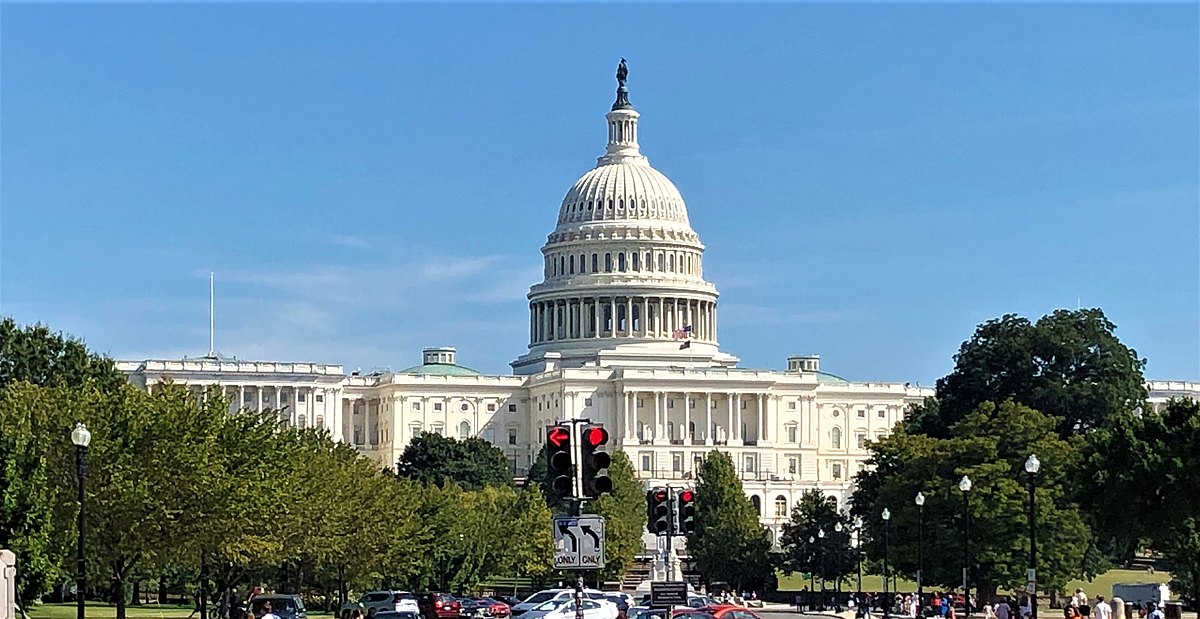
picture of US Capitol


The events of the past several days have been deeply disturbing wounds to the already troubling era we are witnessing in American history. What happened at the U.S. Capitol has catalyzed many to demand immediate action to protect and repair our democratic institutions that were under assault on Wednesday and have been threatened in ever-evolving ways since our nation’s founding. This action inclination, a key deliberative disposition, is necessary and vital to the future of our society.

Equally as important is a renewed commitment to thoughtful and respectful deliberation about what actions we should indeed take. Such deliberative engagement will help ensure that the change inspired by the events of this week outlives the violent and anti-democratic messages of the insurrectionists who besieged and desecrated the Capitol. And it can serve as a beacon of light in the darkness of polarization that we currently find ourselves in.

Given recent events, the Deliberative Citizenship Initiative is more dedicated than ever to the work of building democracy, one conversation a time. Our society is fragmented and in need of the real, long-term progress on our collective challenges that can be born out of good deliberation. Deliberation that welcomes rather than fears productive disagreement; deliberation that fosters the transformational dispositions of open-mindedness, evidential emphasis, humility, empathy, and generosity.

For those looking for a way to proactively respond to the violence and hyper-partisanship that we witnessed in Washington, DC, the DCI’s Skillbuilder and Bridgebuilder D Teams are great options. If you haven’t already, we highly encourage you to join a D Team, and ask your friends and family to do the same, in order to start building the bridges and skills necessary to heal our republic’s wounds, find our common ground, and take effective, fair, and humane action. But even if you don’t choose to join a D Team, we implore you to find some way to activate your civic voice in the service of our democracy.

The deadline to sign-up for D Teams has been extended to Monday, January 18th. More information about this opportunity is available on the DCI website (including a short video) and forms for new and returning D Team participants can be found on WildcatSync. You can contact dci@davidson.edu with any questions or receive further information.

Filed Under: DCI Posts, Events

The Case for (S)electoral Democracy

December 11, 2020 by Joshua Yesnowitz Leave a Comment

American flag

By Joshua Yesnowitz, DCI Fellow

The central question of the first-year writing seminar that I have taught this Fall semester regards the status of American democracy. In our class discussions, we have considered the defining characteristics of what we might term a healthy democracy, we have examined the challenges to democratic health that the United States presently faces, and we have examined potential reforms that might improve the nation’s democratic status. Given that the course has been meeting during the 2020 campaign, it is unsurprising that much of our attention has been focused on the role of elections in a democratic system. In reflecting upon the purposes of elections in a democratic society, William Hudson (2021), the author of our primary text, argues that US elections are quite undemocratic because among its many institutional design deficiencies, US elections do not allow for productive deliberation.[i] The partisan incentives for participants are such that several ideals of deliberation – open-minded inquiry, engaged dialogue and constructive disagreement, decision-making diversity, intellectual humility – are incompatible with the US electoral process.

To promote deliberative values in elections, Hudson (2021: 230) proposes increasing funding for public media and embracing the use of citizen assemblies and deliberative opinion polls, both of which could facilitate nuanced discussion and civic development.[ii] While these efforts are certainly well-intentioned and may succeed in making elections (marginally) more deliberative, Hélène Landemore, in her insightful new book Open Democracy: Reinventing Popular Rule for the 21st Century (2020), argues that deliberative democrats should instead advocate for “selection mechanism[s] for representatives” that would lead to legislative bodies “with good deliberative potential.”[iii]

Unlike reformers who seek to expand opportunities for deliberation before elections (among candidates and voters) and after elections (among officials), Landemore is provocatively suggesting that, if we are serious about popular rule, we should be globally shifting to democratic systems in which representative (but nonelectoral) deliberative practices and procedures are privileged in place of elections. Given the barriers to participation, the limits to who is perceived as a credible candidate for office, and the unequal outcomes that an electoral system often produces, Landemore (2020: 43) claims that elections “may legitimately be seen as preventing rather than facilitating genuine rule by the people.”

A simple yet important point that Landemore emphasizes throughout is that although the concepts have often been referred to interchangeably, representative democracy does not necessarily have to mean electoral democracy. Seeking to correct this misperception, Landemore (2020: 79) proposes “a non-electoral form of democracy that is both representative and deliberative.” This open democracy framework is a set of principles designed to maximize democraticity, that is “the degree to which a given form of representation satisfies or expresses the principle of inclusiveness and equality among citizens.”[iv] I will address one of the five institutional principles in this brief reflection – deliberation – not only due to the substantive focus of the website on which this blog post appears, but also because Landemore (2020: 37) herself claims that the objective of open democracy is to place “deliberation front and center in a theory of democracy.”[v]

In support of this proposal to move toward a system of democratic representation realized via deliberative decision processes, Landemore expertly synthesizes the voluminous scholarship on the empirical benefits of deliberation.[vi] While our author highlights many of these promising findings – for example, policies shepherded through deliberative efforts are well-reasoned; the chances of resolving collective problems are improved when deliberative approaches are employed; and ancillary positive outcomes include increased levels of community spiritedness[vii] – Landemore finds deliberation to be most desirable because of the democratic ideal of popular rule it signifies. Deliberative democrats, moreover, do not merely “consent to power” but also “exercise [their] power.”[viii] Especially refreshing is Landemore’s (2020: 140) recognition that deliberative bodies are arenas of “positive dissensus.” In these spaces, objections are welcome, conflict is present, compromise is not fetishized, and civility is not an end in itself.

In Landemore’s open democracy, deliberation would be practiced in “mini-publics” across the nation. Analogous to a “supersized version of [a] jury,”[ix] a mini-public is

a large all-purpose, randomly selected assembly of between 150 and a thousand people or so, gathered for an extended period of time…for the purpose of agenda-setting and law-making of some kind, and connected via crowdsourcing platforms and deliberative forms (including other mini-publics) to the larger population.[x]

Citizen participation will be determined by sortition (a lottery-based system of selection) and deliberators will be expected to serve for a certain period of time before their rotation in the mini-public is completed.[xi] Despite its non-electoral character, the deliberative form of democratic representation acquires its legitimacy, according to Landemore (2020: 105), from its “intrinsic democratic credentials” and assembly members will be duty-bound by a “discursive”[xii] form of accountability to provide justifications for their decisions.

The notion of “representing and being represented in turn”[xiii] is appealing, but is it viable? In the final chapters of Open Democracy, Landemore begins to explore this question through an examination of recent real-world examples that approximate some of the deliberative procedures favored by the author. (The word approximate is significant here, because all of these efforts have occurred within electoral democracies.) Iceland’s constitutional revision process in the early 2010s serves as the primary case study – with some supplementary consideration of France’s 2019 Citizen Convention on Climate Change and Brazil’s National Public Policy Conferences (which have been held since the early 2000s). While Landemore acknowledges some of the obstacles that must be overcome (including the enduring challenge of inclusion and diversity along with resistance from elected officials to enact some of the citizen-led proposals), the narrative also demonstrates genuine promise and opens up possibilities for subsequent developments. As future open democracy efforts proceed, though, a note of caution regarding the role of experts in the deliberative process is warranted. Despite Landemore’s assurance that administrators are an important (if adjacent) part of the proposed framework – “experts [will be] on tap, not on top,”[xiv] – I remain concerned about institutional memory loss caused by such high turnover (demanded by the rotation principle) and the strong possibility of “simulative democracy”[xv] (also known as elite capture whereby professional organized groups may exploit amateur assembly members in search of relevant information).

When discussing the boldness of the open democracy framework with my class earlier this Fall, several students expressed skepticism over the audacity and scope of Landemore’s project. I share some of these reservations, but as I suggested at the time, the most constructive way to engage with the text is to consider open democracy both as a formal proposal to be critiqued but also as a set of aspirational ideals upon which to critically assess our existing institutions. With its explicit commitment to inclusive and equitable forms of democratic representation and its contextualization of the relationship between partisan politics and deliberation, Open Democracy allows us to broaden our horizons for democratic reform. Returning to the beginning of this post, would open democracy improve the health of US democracy? Of course. Regrettably, though, the current state of democratic life in the United States is in such a perilous state that this metric is indeed a very low hurdle to overcome.[xvi] Hélène Landemore’s thoughtful provocation compels us to think about how to make the desirable possible; the next step, dare I say, is to deliberate on these alternative futures.


[i] Hudson argues that many features of the American system contribute to the undemocratic nature of American elections. Each of these design choices (e.g., the Electoral College, a malapportioned US Senate, separation of powers framework, single-member districts) undermine democracy because in addition to the preclusion of deliberation, they also lead to a “lack of equal representation” and an “inability to form electoral majorities.” See William E. Hudson, American Democracy in Peril: Eight Challenges to America’s Future, Ninth Edition (Washington: CQ Press. 2021: 189). While reform discussions about how to respond to these structural matters are vitally important, this post addresses proposals that seek to remedy aspects of the deliberation deficit.

[ii] For more on the democratic promise of deliberative polling, see the extensive work by James S. Fishkin and colleagues at the Stanford University Center for Deliberative Democracy (https://cdd.stanford.edu/). For media coverage of an “America in One Room” conference, one of the Center’s recent deliberative experiments, see Emily Badger and Kevin Quealy, “These Americans Tried to Listen to One Another. A Year Later, Here’s How They’re Voting.” New York Times (24 October 2020), https://www.nytimes.com/interactive/2020/10/24/upshot/these-526-voters-a-year-later.html.

[iii] Hélène Landemore, Open Democracy: Reinventing Popular Rule for the 21st Century (Princeton: Princeton University Press, 2020), 40. For an article-length presentation of open democracy principles, see Hélène Landemore, “Deliberative Democracy as Open, Not (Just) Representative Democracy.” Daedalus 146:3 (Summer 2017), 51-63. For further insight into the development of Landemore’s research program, see Nathan Heller, “Politics Without Politicians.” New Yorker (19 February 2020), https://www.newyorker.com/news/the-future-of-democracy/politics-without-politicians.

[iv] Landemore (2020: 87).  

[v] The five principles of open democracy, as detailed in Chapter 6 (pp. 128-151) of Open Democracy, are (1) participation rights; (2) deliberation; (3) the majoritarian principle; (4) democratic representation; and (5) transparency. Together as a group in the order they have been presented, these principles, Landemore (2020: 129) asserts, “aim to institutionalize the ideal of popular rule as the equal right to participate in self-rule.”

[vi] For a fine review of this research, see Nicole Curato, John S. Dryzek, Selen A. Ercan, Carolyn M. Hendriks and Simon Niemeyer, “Twelve Key Findings in Deliberative Democracy Research.” Daedalus 146:3 (Summer 2017), 28-38. As cited in Landemore (2020: 139)

[vii] Landemore (2020: 37).  

[viii] Landemore (2020: xiv).

[ix] Landemore (2020: 13). The jury comparison is somewhat unfortunate considering how Americans often look for ways in which to avoid court service.

[x] Landemore (2020: 13). These groups, according to Goodin and Dryzek (2006: 220), must be “small enough to be genuinely deliberative, and representative enough to be genuinely democratic.” See Robert E. Goodin and John S. Dryzek, “Deliberative Impacts: The Macro-Political Uptake of Mini-Publics.” Politics & Society 34:2 (2006), 219-244. As quoted in Landemore (2020: 64).

[xi] Landemore (2020: 142).

[xii] Landemore (2020: 203).

[xiii] Landemore (2020: xvii).

[xiv] Landemore (2020: 192).

[xv] Landemore (2020: 195).

[xvi] At the time of this writing, the Republican Party is seeking to overturn the results of the 2020 presidential election without any evidence to support such an effort. When majoritarian democracy as an ideal has been rejected by a major political party, I fear that introducing proposals which seek to deemphasize the role of elections would be weaponized by bad faith political actors.

Filed Under: Blog Posts, Faculty Posts

Deliberation and the Holidays: Deck the Halls Not Your Uncle

December 3, 2020 by Dalton Langdon Leave a Comment

Holiday wreath on door

By Dalton Langdon, DCI Fellow

The holidays are a time for gathering and spending time with loved ones. For many, the process of going home around the holidays is not always seen as a joyous occasion, but one of contention and argument – especially during an election year. If you are anything like me, you’ve probably thought long and hard about what you might say to your family this year about the current political atmosphere. You may have even practiced what you are going to say, fact checked yourself, or geared yourself up like you’re going to take the stage for debate. I am here to say there is an alternative approach to discussing politics with family…the path of deliberative conversation.

Through the Deliberative Citizenship Initiative, I have learned a few different skills I would like to share with you now to help ease you through the holiday season. However, before we lean into these skills, I want to first dissuade you of the notion that swearing off politics altogether is the key to a quiet, stress-free holiday break. While many think avoiding the topic of politics is the smartest move to avoid conflict, I respectfully disagree. By avoiding these difficult conversations, we allow feelings of resentment to fester and grow, until finally they are unleashed in a whirlwind of barbarous insults. Instead of playing the proverbial ostrich with our heads in the sand, I instead suggest we all consider using the following framework when having our next contentious political conversation: 1) set the stage and expectations, 2) listen with strength, 3) ask probing questions, 4) find common ground, and 5) show grace.

Set the Stage and Expectations

Before engaging with a relative this holiday season on a controversial topic, first ask yourself “what do I hope to gain from this conversation and what is my intent?” The objective of having an informal and unstructured conversation should not be to change the other person’s mind or win the conversation, but to gain perspective. Set this expectation early and make your intention well known. Disagreement will happen, that is natural; productive deliberations depend on how you react and your willingness to understand the other person’s point of view.

Listen with Strength

Listening with strength is all about active listening without judgement. While this sounds like an easy process – it does not come as intuitively as one may think. Typically speaking, we give a person about a quarter of our attention while devoting the rest of our attention to formulating a response. Active listening means giving the person your undivided attention and listening to understand them. This takes practice and can be accomplished by rephrasing what your conversation partner said previously – this way they know you are in fact hearing them.

Ask Probing Questions

Asking probing questions is just as important as actively listening. Asking follow-up or clarifying questions can showcase you are invested in learning more about the person’s perspective. To get at this deeper level of understanding, try asking the five Ws:

  • Who in your life had the most impact on the way you think about this issue?
  • What life experiences might have led you to develop this view?
  • Where do you see this issue playing out in your life?
  • When do you think your view applies? Are there any exceptions?
  • Why is this issue so important to you?

Find Common Ground

After asking probing questions, try to find connections or areas of agreement with the person. You can identify common ground by noting words or phrases your conversation partner said and trace them back to values like liberty, equality, or kindness. By finding a shared common value, you further validate the person and become aware of the perspective from which they view an issue (e.g., “it sounds like the right to choose is really important to you in this context”). Generally speaking, when it comes to politics and values there is no one objectively correct perspective, but by hearing the person out and finding common ground you can see where they are coming from and hopefully learn from their perspective.

Show Grace

Lastly and possibly most importantly, give the other person the benefit of the doubt. If we go into a conversation with a negative mindset, chances are high that we have put on our blinders and will bulldoze through the conversation. Thus, the conversation will become a self-fulfilling prediction; the conversation is going to go horribly, and we shouldn’t even try to avoid that outcome. However, if you show a bit of grace, avoid snap judgements, and assume the best about the other person, chances are you might just have a productive conversation.

I submit this framework to you not lightly, but with high hopes that we can all unbury our heads from our respective sandboxes and take the first steps toward meaningful and deliberative conversations. Happy holidays!

For more on how to have productive dialogues with friends and family, check out the DCI’s “Guide to One-On-One Conversations” and “How to Disagree.”

Filed Under: Blog Posts, Fellow Posts Tagged With: deliberation

The Taijitu of Conversation and Activism

November 20, 2020 by Heidi North Leave a Comment

By Heidi North, DCI Fellow

“…and that visibility which makes us the most vulnerable is that which also is the source of our greatest strength.” -Audre Lorde

This quote, from a legendary poet and activist for queer and civil rights, perfectly encompasses the spirit of deliberative practice and its goal in helping us to realize that civil conversations between differing perspectives, and the solutions that may arise from those, are the strength of true democracy.

I approach the art of deliberative citizenship from my identity as a queer woman, which is the lens through which I view the world. Not just queer sexuality, but queer as in an identity that runs counter to what we accept as ideal and normal in Western society. Much of my research and work within the DCI has been focused on the art of civil conversation, and the potential it has to heal the rifts in our country and end the polarization that dehumanizes the Other. I do this alongside grassroots activism within Davidson College where discussion, paired with action, is done civilly, yet with intention.

Audre Lorde embodied this dynamic — discussion paired with aggressive action. So did Martin Luther King, Jr. This relationship between conversation and activism is a taijitu; one cannot exist without the other, and neither is effective alone; it is also a core pillar of deliberation. Both require vulnerability, especially if you hold a marginalized identity and are routinely denied a place at the table, but in very different ways. Discussion allows us to peel away the layers of ourselves and our culture and understand why we are the way we are; activism confronts those realizations with action that cultivates, and sometimes forces, change.

In my D-Teams and in my DCI groups, we’ve had discussions about this balance — that we cannot just discuss these contentious issues; we have a responsibility to act and to inspire action. We have a responsibility to share resources and to make education and learning as accessible as possible. However, we also cannot act without first educating ourselves, and committing to understanding our culture and the many points of view that comprise our communities. I’ve been a student of queer theory for the past 4 years, and this is the first time that I’ve been able to see and nurture this balance in real life.

It’s interesting to see the way obstacles — whether personal, political, or social — present themselves and threaten this work being done, and the flexibility we must have to allow for those obstacles while still insisting on the crucial importance of this work and holding ourselves accountable to it. The deliberative process makes us intensely vulnerable, and can be uncomfortable at times, but we cannot be truly strong as individuals, as a nation, or as a species, until we truly and authentically participate in it.

Filed Under: Blog Posts, Fellow Posts Tagged With: facilitation

  • « Go to Previous Page
  • Page 1
  • Interim pages omitted …
  • Page 70
  • Page 71
  • Page 72
  • Page 73
  • Page 74
  • Page 75
  • Go to Next Page »

Footer

Blog Post Categories

  • Announcements
  • Blog Posts
  • DCI Posts
  • Events
  • Faculty Posts
  • Fellow Posts
Image of a compass superimposed by the text "Deliberative Citizenship Initiative" and "Davidson College." Clicking on this image leads to the Initiative page.

Recent DCI Blog Posts

  • We Tried to Fix Jubilee’s “Middle Ground” – Here’s How It Went
  • A Case for Deliberation in the Natural Sciences
  • Welcoming New Staff to the DCI and DCN
  • Facebook
  • Twitter
  • Instagram
  • LinkedIn


Copyright © 2026 · Infinity Pro on Genesis Framework · WordPress · Log in