• Skip to main content
  • Skip to footer

Deliberative Citizenship Initiative

Building Democracy One Conversation at a Time

  • The Initiative
    • Programs
      • Deliberation Across the Curriculum
      • Deliberation on Campus
      • Deliberation in the Community
      • Research on Deliberation
    • Motivations
      • Why Deliberative Citizenship?
      • Why Davidson? Why Now?
    • Who’s Involved?
      • DCI Fellows Cohorts
        • 2025-2026 Fellows
        • 2024-2025 Fellows
        • 2023-2024 Fellows
        • 2022-2023 Fellows
        • 2021-2022 Fellows
        • 2020-2021 Fellows
      • DeeP Collaborative Cohorts
        • 2024-2025 DeeP Collaborative Faculty
        • 2023-2024 DeeP Collaborative Faculty
      • Advisory Council
    • History
      • What Sparked the Initiative?
    • Key Deliberative Dispositions
    • Frequently Asked Questions (FAQ)
    • Annual Report
  • Get Involved!
    • Participate in a Forum
    • Join a D Team
    • Become a Fellow
    • Take Courses
    • Get Training
    • Come to Guest Lectures
  • Events
    • Upcoming Events
      • 250th Anniversary Deliberative Forum Series on American Values
    • Past Events
  • Connections
    • The Deliberative Citizen: The DCI’s Monthly Newsletter
    • Efforts on Campus
    • Efforts in the Community
    • Efforts Elsewhere
    • Readings and Resources
      • DCI-Published Guides
      • DCI Guide to One-on-One Conversations
      • How to Disagree
      • Demonstration of Facilitation Styles
      • Deliberative Pedagogy Mini-Course
    • How We Can Help: DCI’s LET’S DELIBERATE! Partnership Opportunities
    • DCI in the News
  • DCI Blog Posts
    • Recent Blog Posts
    • All Blog Posts

The DCI Blog

Deliberation at Davidson: What’s the Point?

October 24, 2022 by Ahtziri Gonsalez

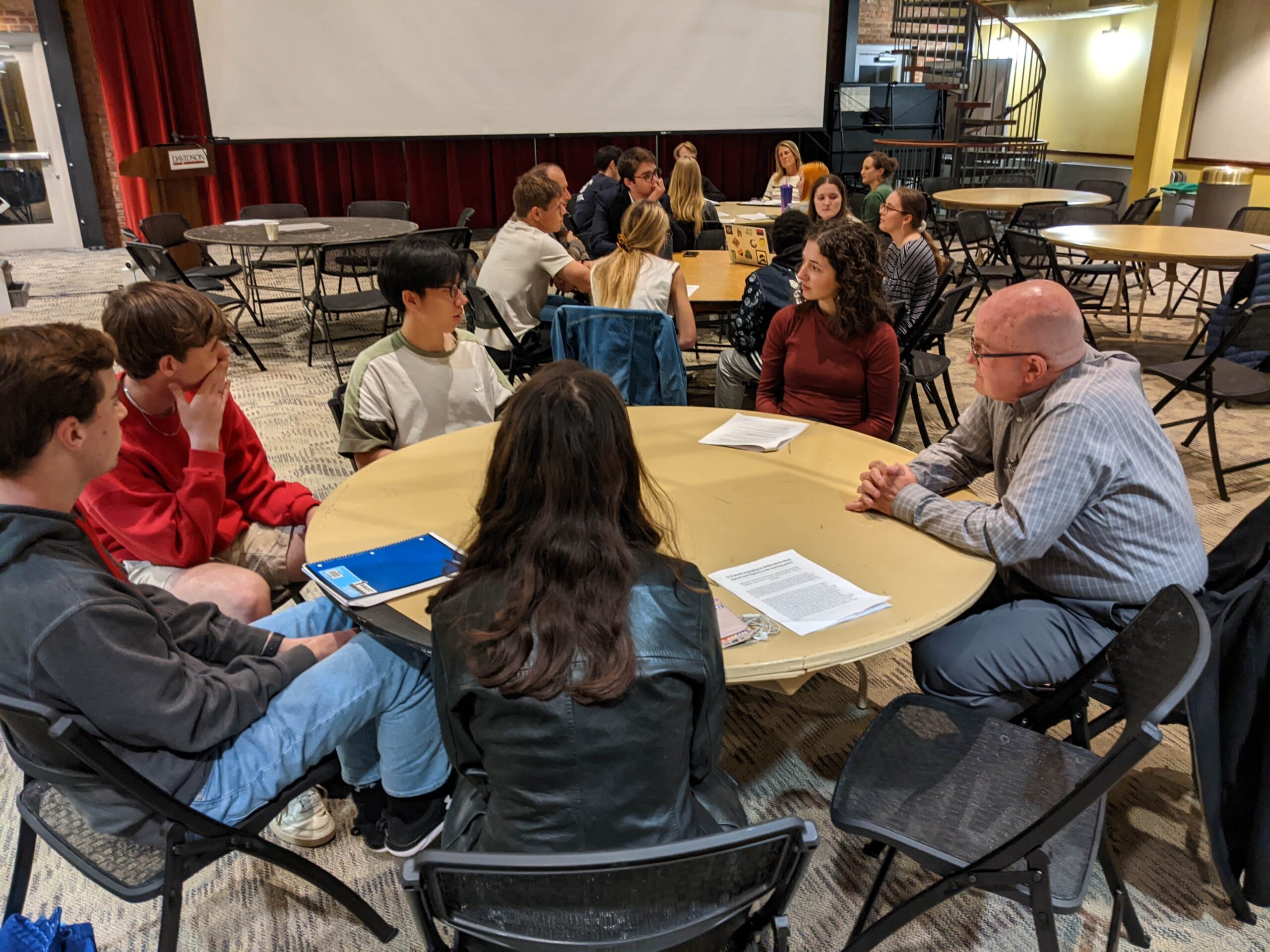
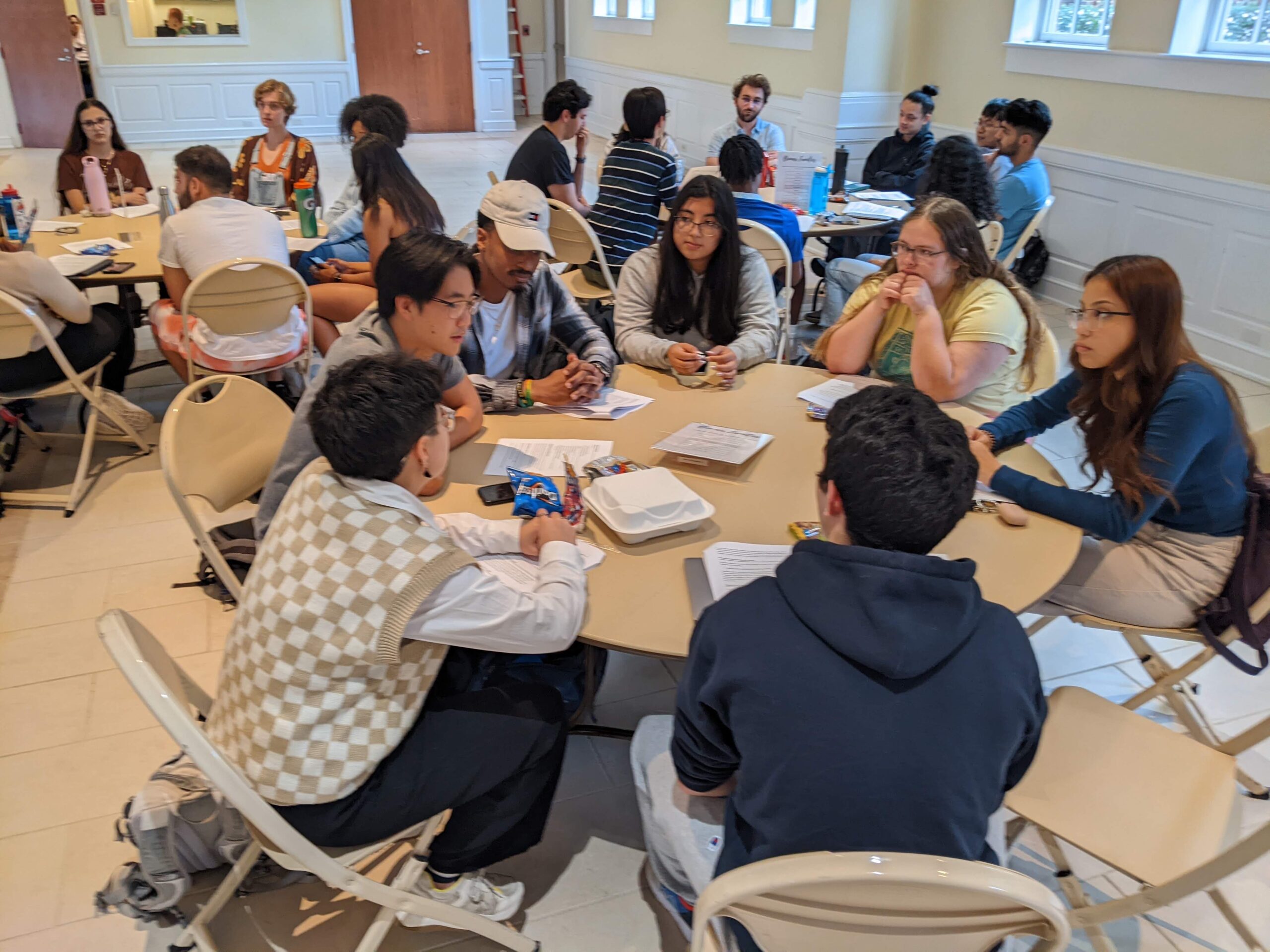
Bonner Scholars deliberating at Davidson College Lilly Gallery.

By Ahtziri Gonsalez (DCI Fellow)

Over the past few years, I have noticed that students are very vocal about bringing attention to issues in their communities. We have conversations about current issues, discuss different opinions, and help educate one another through platforms like Instagram or even the infamous YikYak. Still, when it comes to sitting down to have a conversation about different issues outside of a classroom or with people that you are not that close to, not a lot of people tend to participate. Does this matter?

Deliberation can be a word often associated with confrontation or arguments. Still, it can also be thought of as reflecting or just being open to listening to other points of view. At Davidson, getting caught up in conversations with people who feel the same way about specific issues is easy. While these conversations are essential, it is also important to remember that others might not react the same to things you might think are today’s societal norms.

Even if you have a conversation with someone who you know has completely different opinions about something you feel passionate about, shutting them out entirely and immediately forming a negative image of the person is less productive than having a conversation with them. If you sit down and talk, you might understand how they came to form their opinions while they get to hear why you believe certain things.

However, these conversations can only be productive if there is a mutual level of respect and understanding. Without these dispositions, it can be difficult to not jump to conclusions or into unproductive and accusatory argument. When this happens, it can be feel like you are arguing with the person and all of what you think they believe rather than engaging with the specific topic and question that you are actually talking about. as arguing with a person about what they think instead of arguing against the idea itself.

These conversations are very difficult to have, especially when it comes to a topic you feel strongly about. Yet, acknowledging the steps that you are taking to be able to have productive conversations still counts for something! Being open-minded is a challenging but essential skill, and practicing this in the classroom, by reading articles with views different from yours, or by attending events like the ones hosted by DCI can help broaden your understanding of various subjects.

You can also learn more about why it is so important to be able to deliberate while keeping in mind that it is not your job to educate others and that you can’t force someone to change their views. What matters is that you took the time to discuss your experiences while listening to the experiences of others and discovering how they came to think about different issues in particular ways.
Filed Under: Blog Posts, Fellow Posts

Commons Conversations and the Effects of Food on Deliberation

October 14, 2022 by LJ Phillips

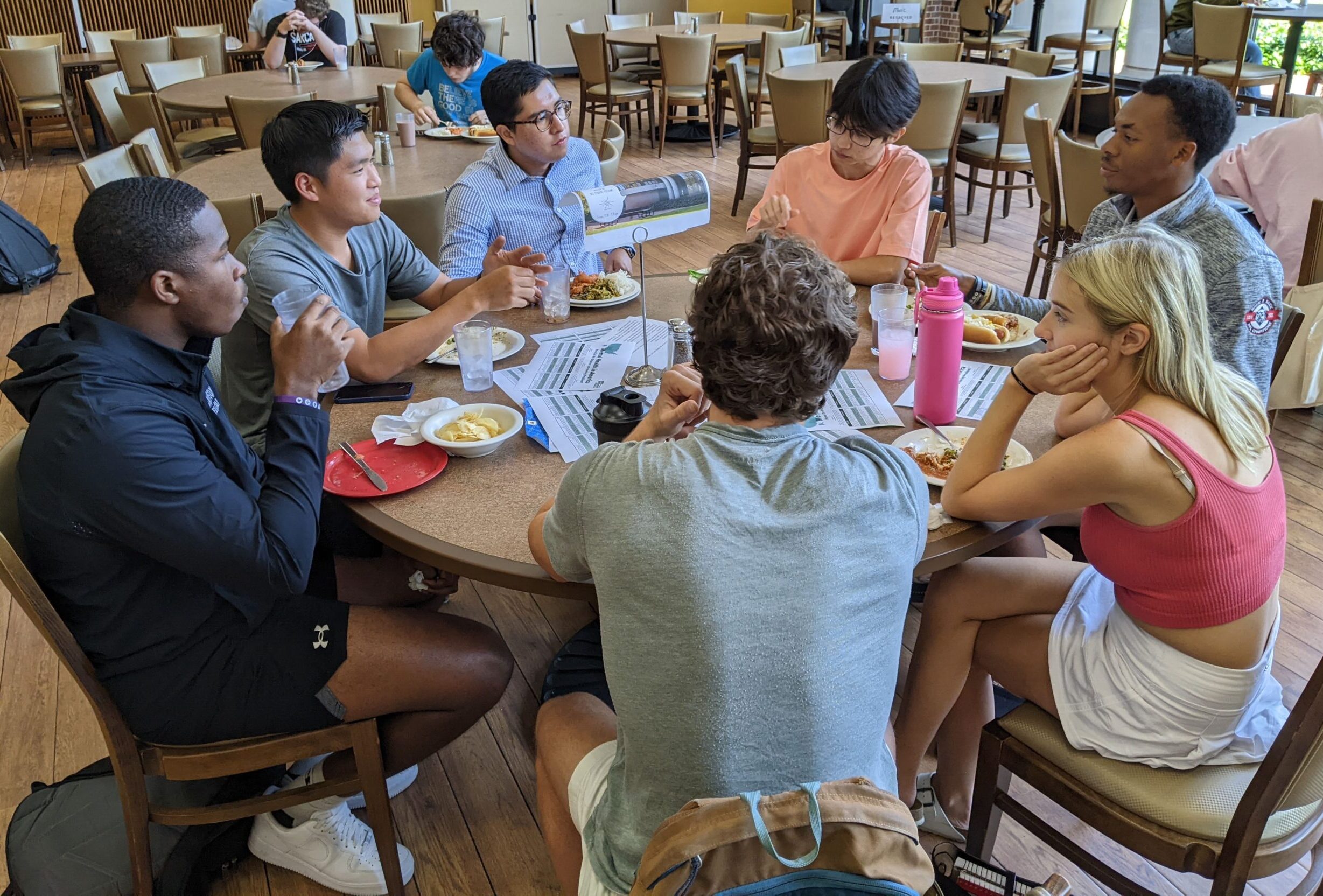
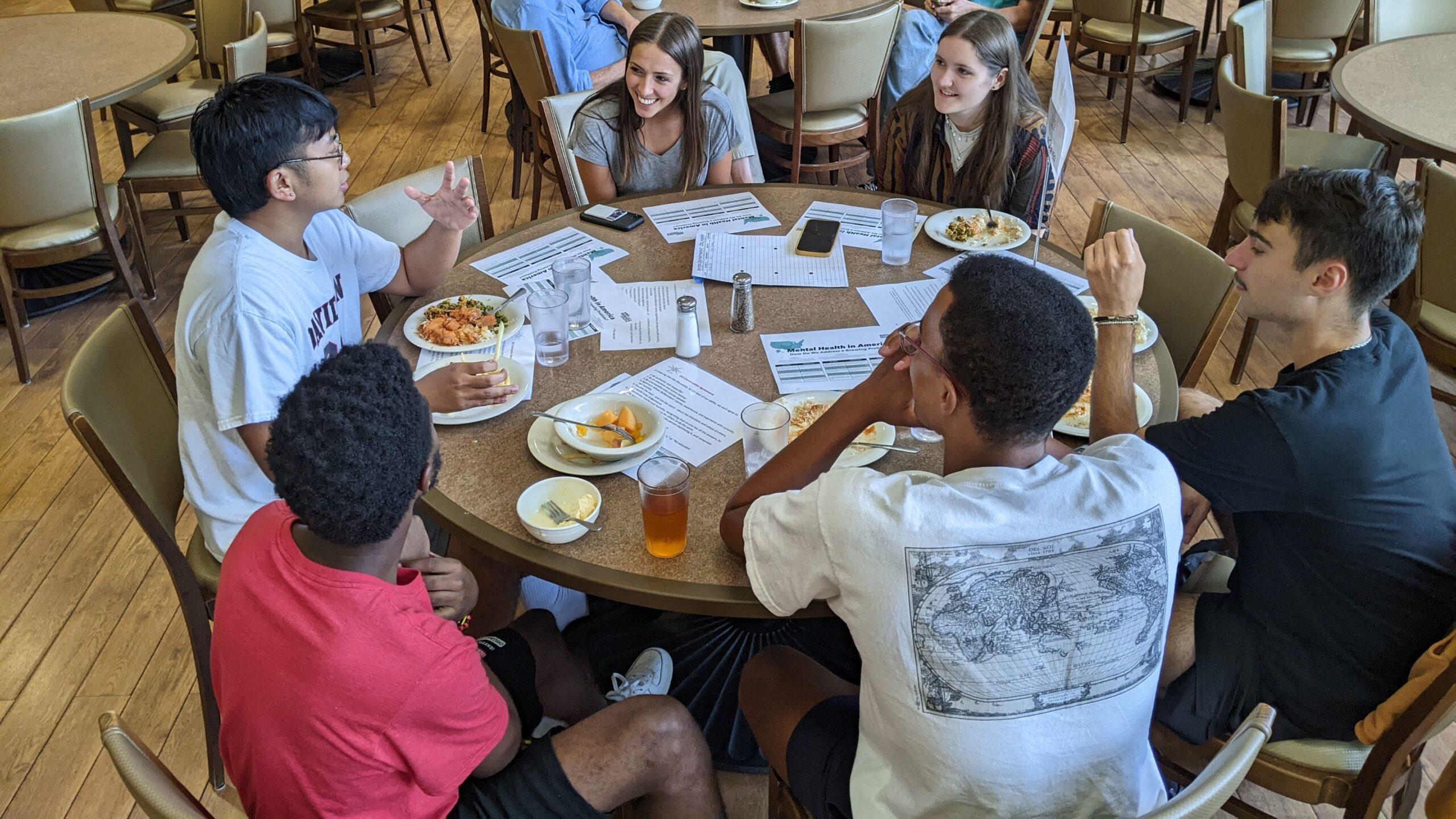
Conversations at Davidson College Commons

By LJ Phillips (DCI Fellow)

According to celebrity chef James Beard, “Food is our common ground, a universal experience.” Food always has a unique way of bringing people together. The most prominent conversations or interactions that I can remember in my life almost always involved food in some fashion. The act of eating with another person or persons makes people more sociable. We are less on-edge and are more vulnerable to one another when we share a meal.

I found this realization to be even more supported by the first Commons Conversation this semester. As a facilitator, I found it difficult at first to find people who wanted to engage in a deliberation during their lunch. People did not seem to want to spend their lunch time deliberating in the beginning but decided otherwise once we started to deliberate.

Our deliberative topic was about mental health. It is a sensitive topic for some but eating together eased the tensions throughout the table and you could visibly tell that people are not only comfortable but eager to speak to one another.

I wonder about that change in tone and mood from previous deliberations. As conversation went on people seamlessly felt accepted and were glad to share their personal opinions on the topic. This was the effect of deliberating in a less stressful environment under serene circumstances.

With regards to the actual conversation we had, it went well and the crosstalk and conversation among deliberators was orderly and coherent. The easy-going and well-meant nature of the discussion made my job as a facilitator more enjoyable and pleasant. Interruptions were not needed by me because the subsequent group respected each other despite their differences and lack of knowledge of each other.

I think the reason for such cordiality was that we were dining with one another. We can all relate in that we not only need food as humans but desire it. Eating with another person has shown to be a great way to ease tension and be more relational with someone. Whether you are eating at Vail Commons, Davis Cafe, or Zaxby’s, the personal act of sharing a dining experience brings comfort and familiarity even when it wasn’t present before.

As our deliberation continued, people also became better listeners ironically. Naturally, most would assume that when we eat and converse we become worse listeners because eating takes some of the attention away from the conversation. However, this did not happen; everyone listened intently to each person’s perspective.

What I saw that Friday in Vail Commons was an intentional, genuine conversation about a delicate matter such as mental health. It was an experience that was elevated by the act of eating lunch with other people. It really makes you ponder about how much our surroundings have on our mood and attitude toward speaking to people. Food has a positive impact on our interactions with one another. If we have more conversations where people are in comfortable settings, better and more productive deliberations will occur.

Filed Under: Blog Posts, Fellow Posts Tagged With: facilitation

“Only a Sith Deals in Absolutes:” Tips for Productive Confrontation

October 7, 2022 by Heidi Meyer

Yoda image with blurred background

“Yoda Figurine,” by Kate Haskell, licensed under CC BY 2.0

By Heidi Meyer, DCI Fellow

Times have changed since Yoda said, “Only a Sith deals in absolutes.” Nowadays it seems most people speak in absolutes. Walking around campus, which is supposed to be an incubator of thought-provoking and open-minded discussions, I frequently hear statements such as “Ew, they’re a Republican,” or “I don’t want to talk to a crazy liberal,” or “I hate talking about politics.” 

None of these mindsets are productive. Making assumptions about someone’s beliefs or characters based on a broad label, or completely shunning a topic due to its potential to stir up emotions and controversy makes us as individuals and as a society more polarized and less suited to deal with the increasing number of serious problems we face.

We, therefore, need to change the negative connotations around confrontation. Instead of fearing that if two people disagree on a topic, chaos will ensue, we need to practice leaning into disagreements and intentionally practicing having discussions and deliberations on sensitive topics. Confrontation is something that does not have to divide individuals, but instead can be a productive tool to help people come together. 

I’ve always had an affinity for confrontation, stemming from my experiences with debate in high school, which showed me how productive confrontation can be in helping individuals grow and communicate effectively and respectfully. Here are a few of the most important lessons I learned.

1) Seek first to understand before seeking to be understood. 

In the type of debate I did, participants would not know what side they would be arguing for until a coin flip at the start of each round. This meant that participants had to prepare arguments for both sides, which provided an important framework that there was no side with no good arguments defending it. Both sides had logical reasons for their stance, and it was up to each side to best articulate those reasons and weigh them against the other. This format forced participants to be open-minded enough to put themselves in the shoes of each side and try to understand the reasons behind those stances. 

2) Each side must actively listen to the other in order to respond effectively. 

To be successful in debate, one couldn’t ignore the other side, walk away, or make rude faces or comments. This is also true when trying to make important progress in life. Shutting out the other side without listening or trying to understand where they are coming from is not productive. When people feel attacked, it makes them defensive and less likely to compromise, halting progress.

3) Asking questions is an effective way to make a point 

In debate, there were specific sections of each round designated for asking questions. Through this structure, I learned that questions are useful in pointing out flaws in the logic of an argument without making the other side defensive. Questions can disarm people and force them to evaluate the reasoning behind their stances, making them more open to changing their minds if they cannot come up with an effective answer to the question. 

4) Be respectful

To make a question or any other type of point more effective, a respectful and inquisitive, rather than aggressive, tone is essential. A big part of debate was about presentation and those who were rude or aggressive tended to distract from their arguments, while those who were respectful and more diplomatic tended to deliver their arguments in a more convincing manner. 

All of these lessons apply far beyond the context of debate and are important for productive deliberations. As Walter Sinnott-Armstrong said, “We cannot address a problem if we cannot talk about it,” and I think these lessons are a great place to start the conversation.

Filed Under: Blog Posts, Fellow Posts

DCI Co-Hosts Deliberative Forum on Parents and Schools

October 4, 2022 by Graham Bullock

deliberators at the Davidson College 900 room.

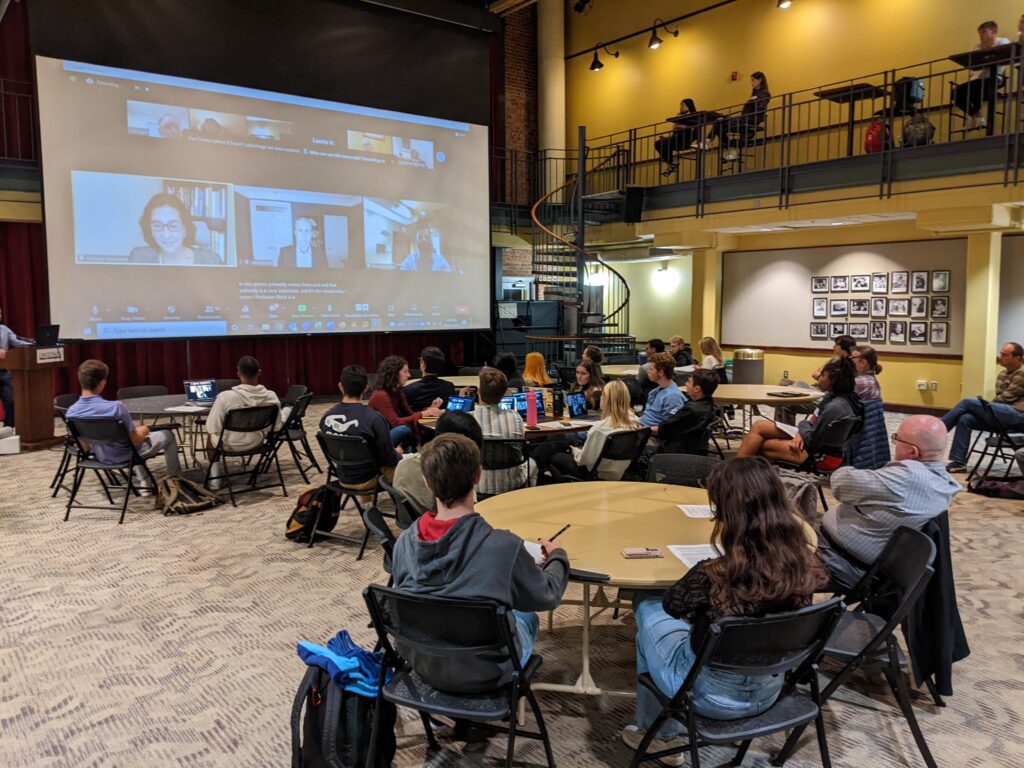
On September 29, 2022, the Deliberative Citizenship Initiative, in partnership with Davidson College’s Educational Studies Department and Political Science Department, co-hosted a Deliberative Forum on “Parents and Schools: Who Should Teach our Children about Race, Gender, and Sexuality.” The event included both an expert panel discussion and small group deliberations on the topic.

The DCI selects both locally and nationally relevant topics for its forums that citizens – in the broadest sense of the word – have strongly-held, diverse, and conflicting views on and are highly salient to current and ongoing social and political debates. The topic of this forum certainly fits this description, and the strength of views on the topic were demonstrated by the student protests that were held outside the event. Protesters objected to the inclusion of Dr. Melissa Moschella, an associate professor of philosophy at Catholic University, on the panel due to her views on abortion, race, and transgender issues.

As background, the DCI invites panelists to its Deliberative Forums in order to introduce attendees to diverse perspectives on the topic at hand and provide an opportunity for them to witness good argument and a thoughtful, respectful exchange of reasons between people who may disagree deeply. The DCI does NOT endorse the views of any of the panelists it invites but selects them based on the depth and relevance of their expertise to the topic under discussion.

panelists

The DCI is committed to the idea that listening to speakers with whom we disagree does not imply agreement; it suggests a willingness to seek out the truth together and to better understand one another’s perspective as fellow citizens with equal status at the table. Melissa Moschella and Derek Black, the event’s other invited panelist, are two of the most highly-qualified and well-published scholars who can speak to the contentious questions surrounding the role of schools and parents in educating children about social issues.

Given their diverse viewpoints, panelists like Dr. Moschella and Dr. Black may hold views that some citizens reasonably find offensive. The DCI is committed to creating spaces for people to engage with, evaluate, and challenge these positions in a productive and civil manner.

More generally, the DCI is committed to catalyzing creative, broadly-supported solutions to the major social challenges facing our community and society – including racism, sexism, and other forms of injustice – through the process of deliberation across differences.

The video of the event is posted below, and we invite everyone to view the panel discussion, which was moderated by Professor Dan Layman, an associate professor of philosophy at Davidson and a co-convener of the DCI. Dr. Layman asked direct questions of each panelist while also allowing them to follow-up on each other’s points. Their discussion was followed by an hour-long opportunity for attendees to engage with one another on these topics in discussions facilitated by the DCI’s trained facilitators. Periods when we had some technical difficulties (this was our first hybrid in-person/virtual event) and when the discussion was temporarily disrupted by protesters have been edited from the video; all comments from the panelists are still included.

Filed Under: Events Tagged With: 2022-2023, Deliberative Forums

Contending with Contentious Issues: The Power of Deliberation

September 28, 2022 by Miles Charles

DCI Fellow

Miles Charles

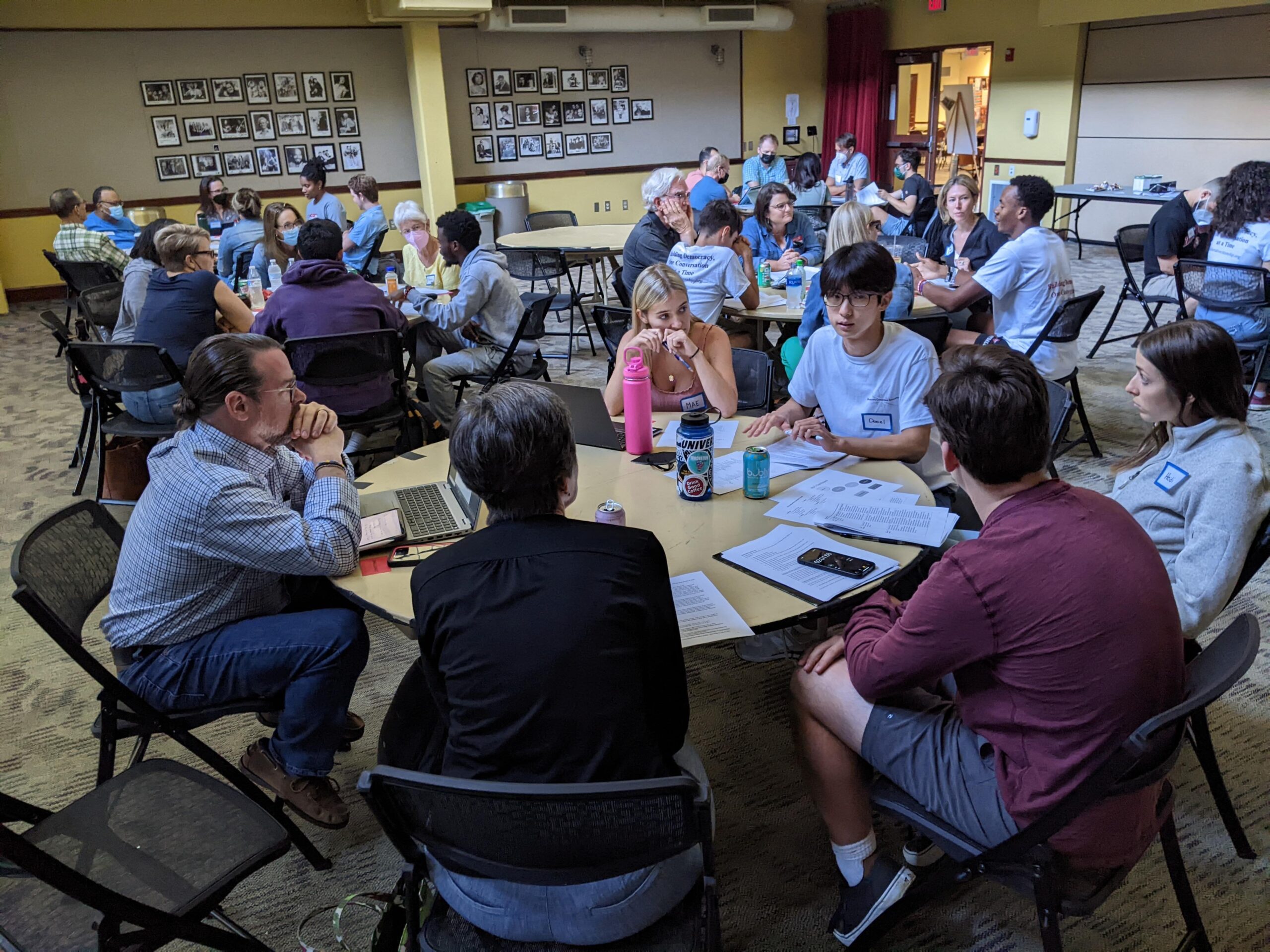
Students training for DCI Deliberations at round tables in the Davidson College 900 Room.

Deliberation, as defined by Longo and Shaffer in their work “Discussing Democracy,” is a process in which a diverse set of individuals convene and move towards making a collective decision on a contentious issue. Deliberation has the power to change the discourse in our country, away from the harmful rhetoric currently used and towards open dialogue, where everyone’s opinions on every facet of the political spectrum are heard and understood.

 While issues such as race, abortion, religion, and more have always carried a certain weight and importance within American society, throughout the past several years these issues have become more and more relevant in everyday American lives. It has culminated to a point where it is almost taboo to even mention any of the previously named topics. This is where I see the greatest potential of deliberation. It allows us to pry open issues such as race and abortion, open them to dialogue, and begin the process of understanding or at a minimum hearing the other side. 

Contentious issues, such as race, abortion, and religion, are like a powder keg. They are issues that are real, extremely prevalent, and are not going away; and by ignoring them we are simply adding powder to the keg, making the explosion of these issues worse and worse. We saw a preview of this dynamic during the summer protests of 2020 where millions of dollars worth of public and private property were destroyed nationwide. The result of negligence towards these issues is all too clear; a different approach must be taken. Deliberation and its advantages offer that opportunity.

Through my 10+ hours of facilitator training and readings, such as Longo and Shaffer’s “Discussing Democracy,” I’ve already been able to comprehend opposing viewpoints at a level I was unable to beforehand. For example, when deliberating whether to teach critical race theory (CRT) in the classrooms I was presented with a viewpoint I had yet to consider. This was the idea that while CRT is a must-teach topic, it is too complex for youth to understand. This raised the question in my mind of when and how to introduce CRT to our youth and allowed me to understand CRT, not only as a way to learn about race, but instead, view it also as a way to help young people connect with each other and understand, accept and celebrate our differences.

This broadening of my understanding is a small example of the power deliberation holds. A better example is Xernona Clayton, the civil rights legend who befriended a KKK leader and changed his mind. Xernona Clayton was leading the Model Cities Program, a federally funded program to end urban poverty, and despite the strong presence of the KKK, began to drop by Calvin Craig’s Atlanta office in an attempt to befriend him. Appealing to his Christian beliefs, Xernona would teach Clayton to change his use of words, understand the concept of black suffrage, and open his mind to desegregation.


Filed Under: Blog Posts, Fellow Posts Tagged With: facilitation

  • « Go to Previous Page
  • Page 1
  • Interim pages omitted …
  • Page 58
  • Page 59
  • Page 60
  • Page 61
  • Page 62
  • Interim pages omitted …
  • Page 75
  • Go to Next Page »

Footer

Blog Post Categories

  • Announcements
  • Blog Posts
  • DCI Posts
  • Events
  • Faculty Posts
  • Fellow Posts
Image of a compass superimposed by the text "Deliberative Citizenship Initiative" and "Davidson College." Clicking on this image leads to the Initiative page.

Recent DCI Blog Posts

  • We Tried to Fix Jubilee’s “Middle Ground” – Here’s How It Went
  • A Case for Deliberation in the Natural Sciences
  • Welcoming New Staff to the DCI and DCN
  • Facebook
  • Twitter
  • Instagram
  • LinkedIn


Copyright © 2026 · Infinity Pro on Genesis Framework · WordPress · Log in