• Skip to main content
  • Skip to footer

Deliberative Citizenship Initiative

Building Democracy One Conversation at a Time

  • The Initiative
    • Programs
      • Deliberation Across the Curriculum
      • Deliberation on Campus
      • Deliberation in the Community
      • Research on Deliberation
    • Motivations
      • Why Deliberative Citizenship?
      • Why Davidson? Why Now?
    • Who’s Involved?
      • DCI Fellows Cohorts
        • 2025-2026 Fellows
        • 2024-2025 Fellows
        • 2023-2024 Fellows
        • 2022-2023 Fellows
        • 2021-2022 Fellows
        • 2020-2021 Fellows
      • DeeP Collaborative Cohorts
        • 2024-2025 DeeP Collaborative Faculty
        • 2023-2024 DeeP Collaborative Faculty
      • Advisory Council
    • History
      • What Sparked the Initiative?
    • Key Deliberative Dispositions
    • Frequently Asked Questions (FAQ)
    • Annual Report
  • Get Involved!
    • Participate in a Forum
    • Join a D Team
    • Become a Fellow
    • Take Courses
    • Get Training
    • Come to Guest Lectures
  • Events
    • Upcoming Events
      • 250th Anniversary Deliberative Forum Series on American Values
    • Past Events
  • Connections
    • The Deliberative Citizen: The DCI’s Monthly Newsletter
    • Efforts on Campus
    • Efforts in the Community
    • Efforts Elsewhere
    • Readings and Resources
      • DCI-Published Guides
      • DCI Guide to One-on-One Conversations
      • How to Disagree
      • Demonstration of Facilitation Styles
      • Deliberative Pedagogy Mini-Course
    • How We Can Help: DCI’s LET’S DELIBERATE! Partnership Opportunities
    • DCI in the News
  • DCI Blog Posts
    • Recent Blog Posts
    • All Blog Posts

The DCI Blog

The DCI Fellows Program – Check out the New Video about this Opportunity Not To Be Missed!

May 4, 2024 by Graham Bullock Leave a Comment

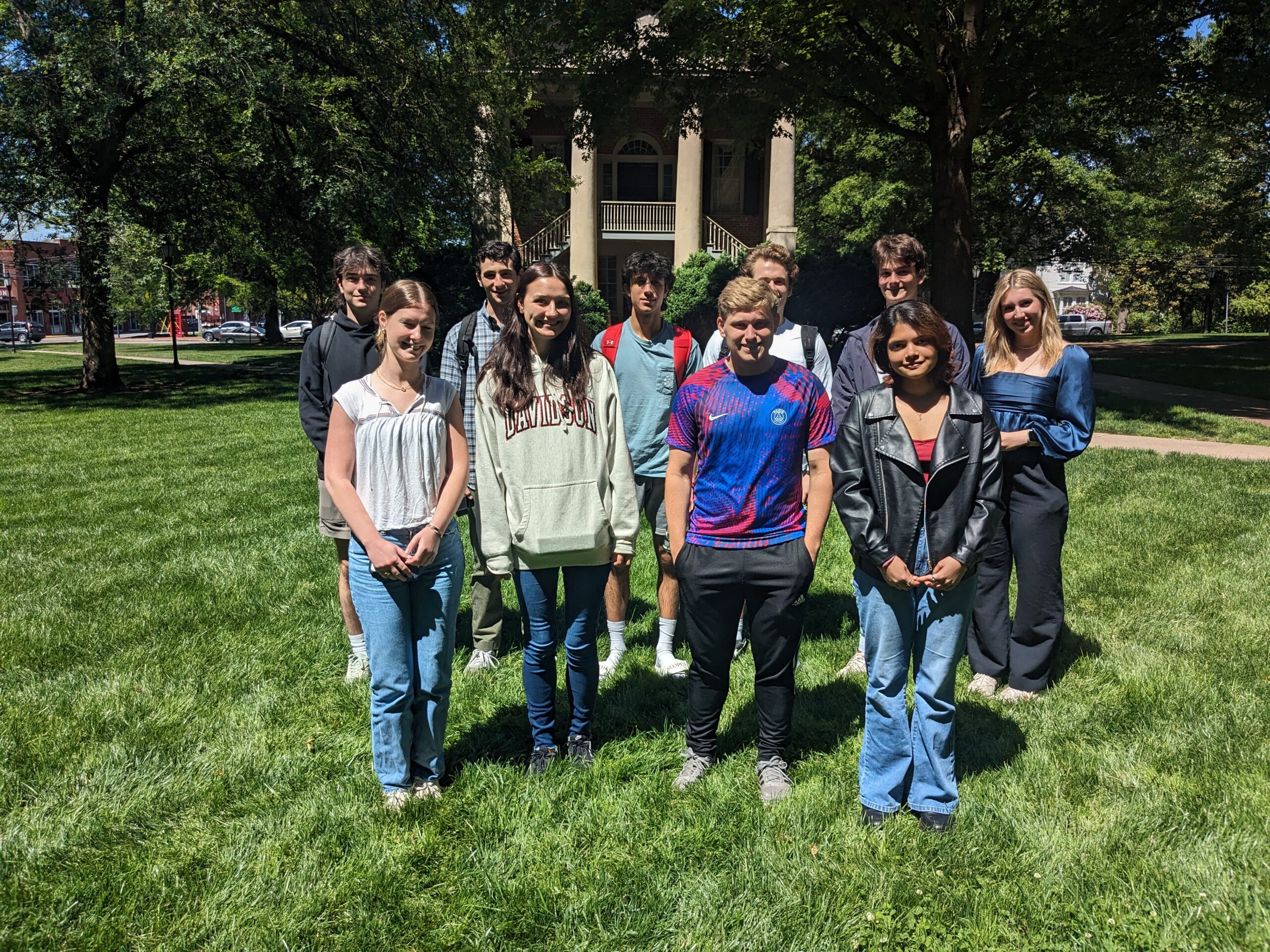
Picture of DCI Fellows.

Each year, the DCI selects 12-15 students to serve as Deliberative Citizenship Fellows.  These fellows spend the year playing a leadership role in the initiative.  They immerse themselves in deliberative theory and methods, help choose the issues for the year’s focus, facilitate robust deliberations on those issues, and reflect on and document their experiences as sponsors of these discussions.

Applications for the 2024-25 Fellowship Program are now open. All Davidson students are welcome to apply. To submit your application, please complete the ‘Deliberative Citizenship Initiative – Fellows Application’ form on WildcatSync. The priority application deadline is May 30. Applications will remain open and new submissions accepted on a rolling basis until July 31 or once all positions have been filled by qualified candidates. To learn more and apply for this opportunity, check out the short video about the program that features several of the DCI’s 2023-24 Fellows and the additional information below.

Fellows-2024-25-Flyer


DCI-Fellows-2024-25-Job-Description

To apply, click on the link below:
  • Deliberative Citizenship Fellows Application

Filed Under: Announcements, DCI Posts, Fellow Posts

Deliberating in Delaware: My time at the SNF Ithaca National Student Dialogue

April 24, 2024 by Arshiya Husain

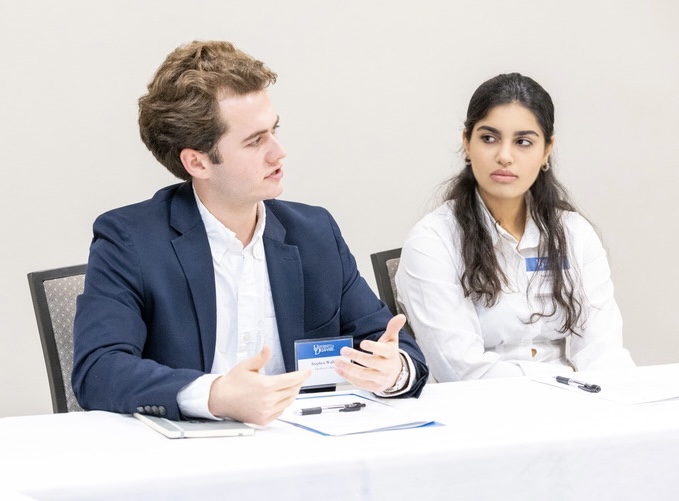
Arshi and Stephen at conference

By Arshiya (Arshi) Husain ‘26

This March, I had the opportunity to attend the SNF Ithaca National Student Dialogue at the University of Delaware. Another DCI Fellow, Stephen Walker, and I represented Davidson College amongst a group of over 100 participants from around the country. I interacted with students from various institutions and academic backgrounds: University of Missouri, Howard University, and University of Pennsylvania, to name a few.

The SNF Ithaca Initiative brings together a diverse group of college students to engage in dialogue and learn how to respectfully and effectively engage in discourse in an increasingly polarized world.

When I first stepped foot on the University of Delaware’s campus, I was met with the buzzing energy of folks in buttoned blazers ready for a weekend of meaningful deliberation. The first person I introduced myself to informed me that her ambition in life is to be able to provide gender-affirming care to transgender youth. Others told me they were interested in pursuing careers in environmental protection policy or human rights legislation.

Over the course of two days, I worked in small groups to evaluate the issue of free speech (or the lack thereof) on college campuses around the nation and whether free speech serves as an impediment to DE&I. One case we looked at closely was Liz Magill’s resignation from her presidency at the University of Pennsylvania in 2022. This particular case is centered around the pressure faced by academic institutions to address issues such as antisemitism while effectively upholding principles of free speech. Magill’s resignation, however, highlights a broader, national challenge of colleges trying to navigate freedom of expression in an increasingly politically charged climate.

This experience reinforced the importance of the work that the Deliberative Citizenship Initiative (DCI) does here at Davidson. Many colleges, I realized, lack similar initiatives and increasingly struggle with getting young folks engaged in essential discourse. While there is work yet to be done, the DCI brings Davidson one step closer to allowing for healthy dialogue on campus and helps foster a community where people can be comfortable with having uncomfortable conversations.

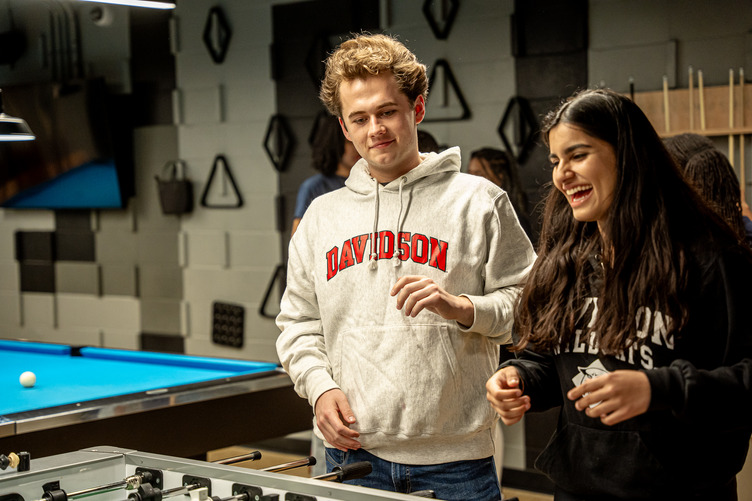
Photo of Arshi and Stephen enjoying some down-time at the University of Delaware’s Hen Zone after a full day of small group discussions and plenaries that were part of the third annual “National Student Dialogue,” hosted by The Stavros Niarchos Foundation (SNF) Ithaca Initiative.

I further had the opportunity to sit in on various panel discussions of educators involved in administrative, deliberative, and DE&I work on their respective campuses. One panelist emphasized on the intertwined nature of DE&I and free speech—”you can’t have DEI without free speech,” she said. Diversity, Equity, & Inclusion, both fundamentally and by definition, has to be inclusive of all perspectives and schools of thought. I realized that the societal default has become such that we tend to think of free speech in a context where it is harming marginalized communities.

It is high time that we reframe the way we look at this issue. We must use free speech as a tool to understand the thought processes of our neighbors and communities better—rather than as a weapon to wield in times of divisiveness. I recognize now that those who claim that DE&I and free speech can’t coexist are merely setting up a false dichotomy when, in reality, it is not an either-or situation.

In college settings, especially, it is imperative that students feel empowered to engage in civil discourse on a regular basis. I believe this is a necessary step in creating tolerant as well as diverse communities.

Filed Under: Blog Posts, Fellow Posts

“This was Fantastic:” Nearly 170 Attend DCI Guns in America Deliberative Forum

April 22, 2024 by Graham Bullock

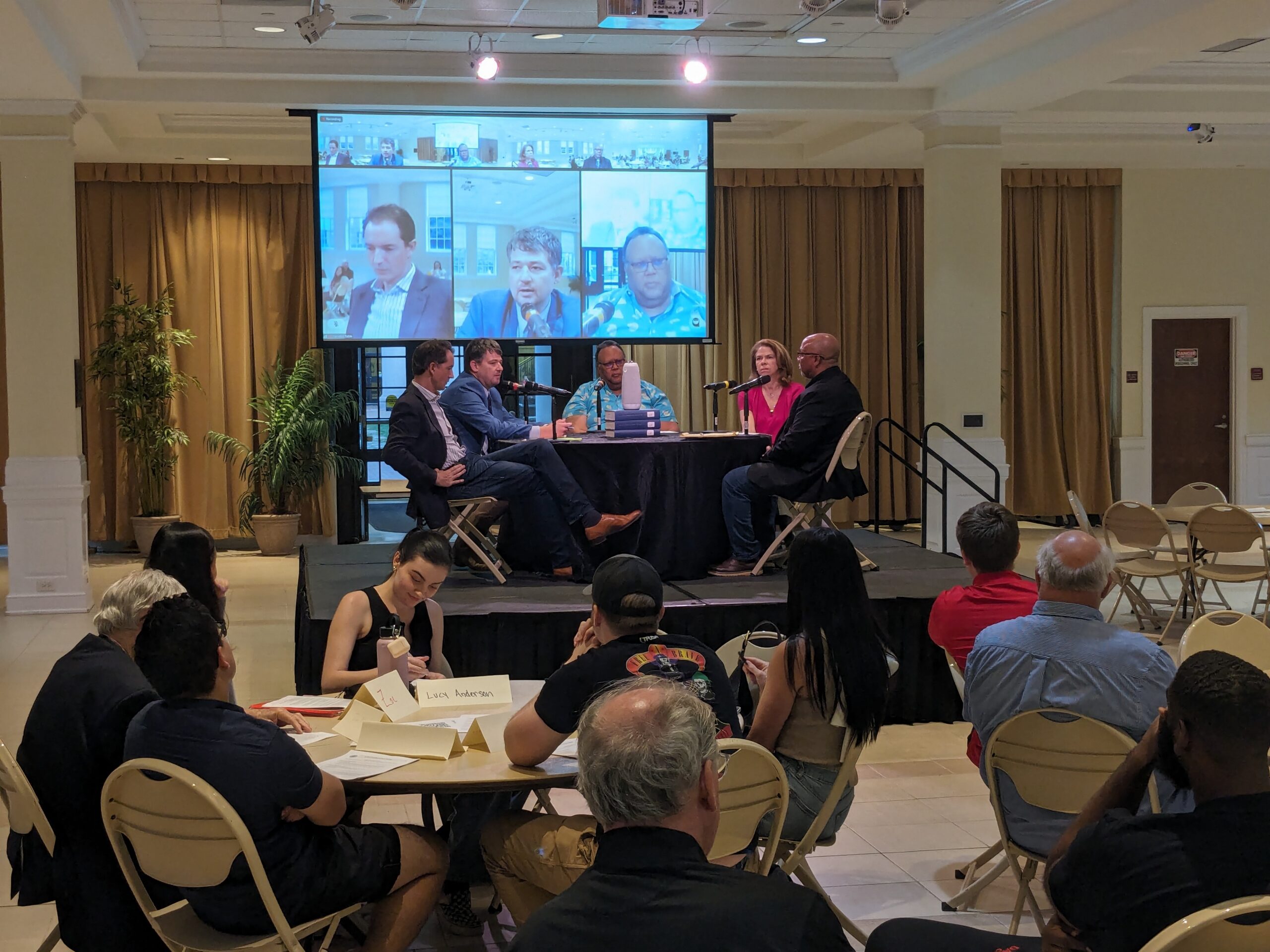
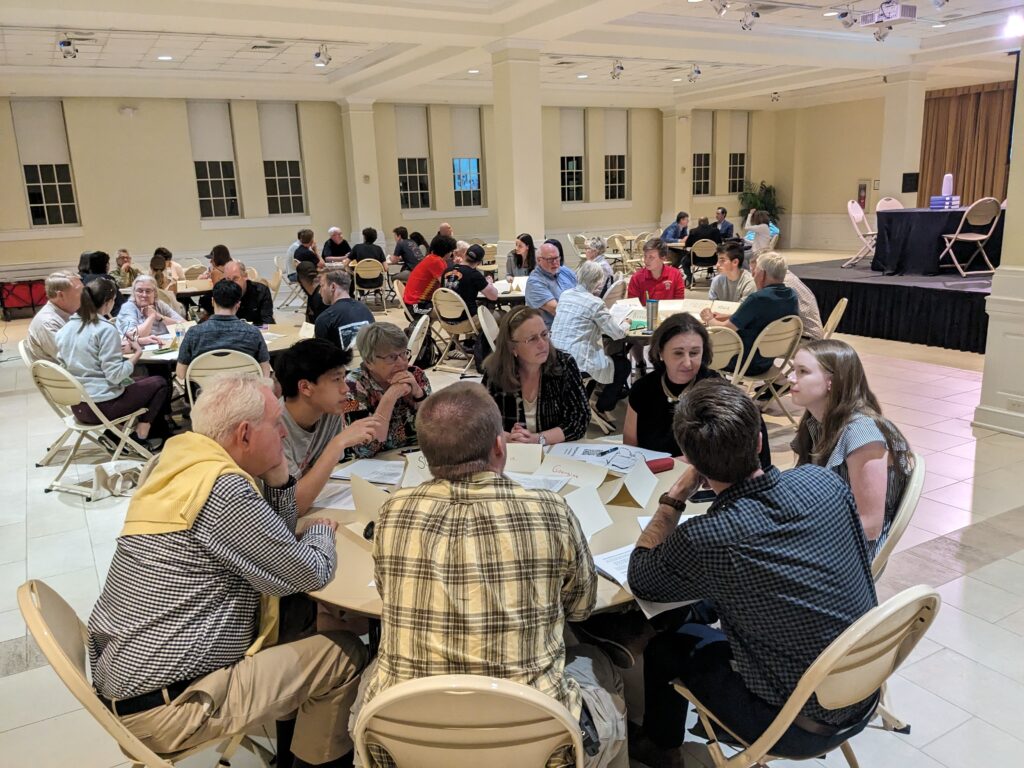
DCI Deliberative Forum photo.

“I’m so very grateful for Davidson’s DCI initiative that provides a thoughtful, meaningful, and challenging (in all the good ways a functioning democracy requires that) opportunity to engage with fellow citizens.“

DCI Guns in America Deliberative Forum Participant

On Tuesday, April 2, nearly 170 people – 94 online on Zoom and 69 in-person at Davidson College’s Lilly Family Gallery (a record number for a DCI Forum) – gathered to deliberate about one of the most contentious and challenging topics in American politics, and they did so authentically, respectfully, and thoughtfully. The topic – Guns in America: How Should We Balance Concerns about Gun Rights and Gun Risks? – was first discussed by a panel of experts and advocates who came from a wide range of backgrounds and expressed a wide range of perspectives.

They included Shannon Klug, a Former Air Force Colonel who has worked with Moms Demand Action, Be SMART, and Everytown’s Veterans Advisory Council), Philip Smith, the President of the National African Americans Gun Association, Ray Nothstine, a former Second Amendment Research Fellow at the John Locke Foundation, and Dominic Erdozain, a Research Fellow at Emory University and author of One Nation Under Guns: How Gun Culture Distorts our History and Threatens our Democracy. Their discussion was moderated by Dan Aldridge, Professor of History, Chair of Africana Studies, and a former DCI Deliberative Pedagogy (DeeP) Faculty Fellow, while Graham Bullock, Faculty Director of the DCI and Associate Professor of Political Science, served as the event’s MC.

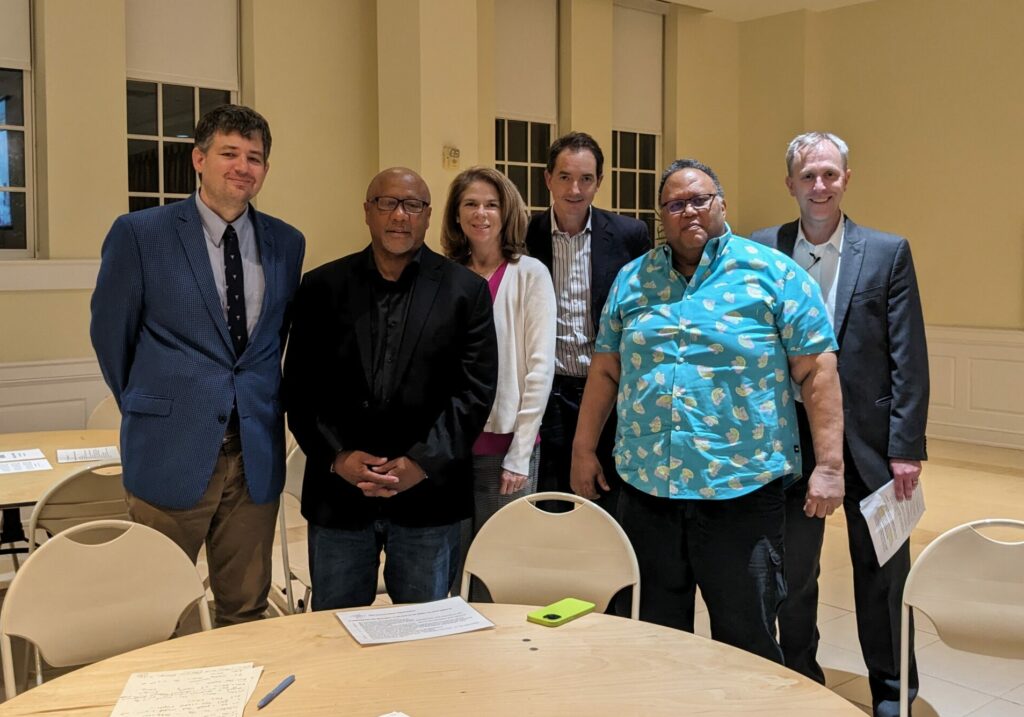
Photo of panelists and organizers standing together.
From Left: Ray Nothstine, Philip Smith, Shannon Klug, Dominic Erdozain, Dan Aldridge, and Graham Bullock

 The event was co-sponsored by Davidson College’s Deliberative Citizenship Initiative, Center for Political Engagement, College Democrats, College Libertarians, College Republicans, and Political Science Department. Representatives from each of the student political organizations asked questions of the panelists during the event, building on Dr. Aldridge’s facilitation of the discussion.

Instead of being lined up in a row of chairs, the panelists were seated around a roundtable on a stage, which enabled them to talk to each other more easily. A 360 degree video camera (a “Meeting Owl”) was placed in the center of the table, which enabled the conversation to be streamed live to participants who joined over Zoom. The video stream, which is available to view below, was also projected on a screen behind the panelists so people attending in-person could see who was speaking in case their direct view was blocked. This was the first time the DCI used this format, and it was widely praised as a helpful and engaging innovation.

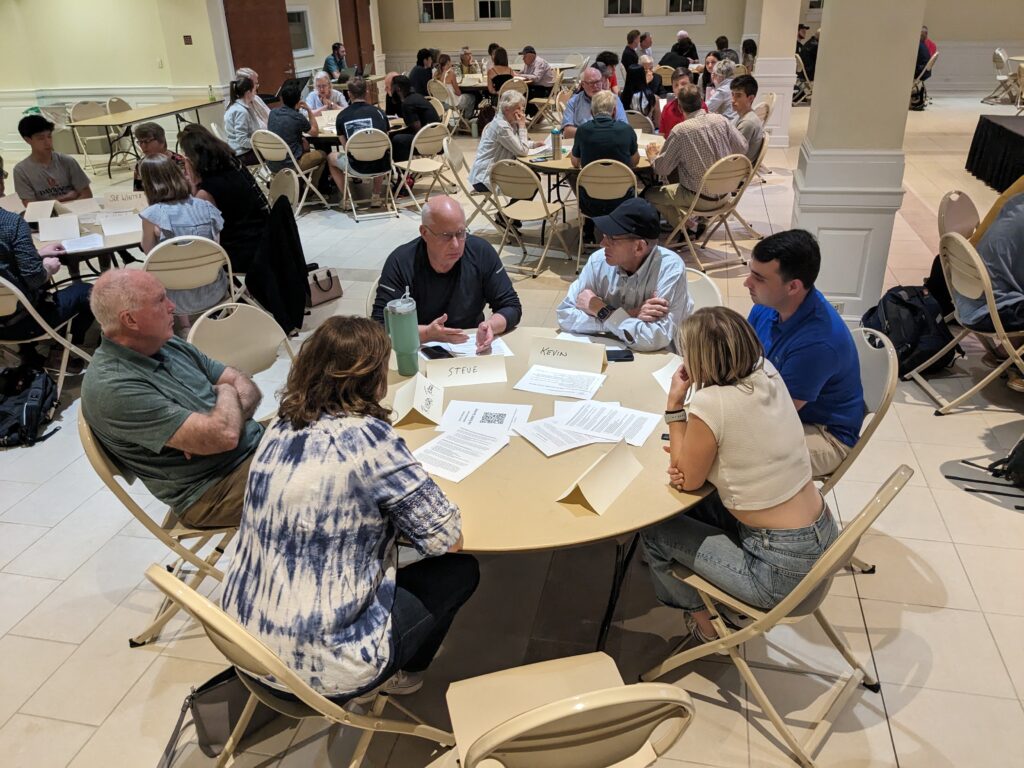
The panel discussion set the stage for an in-depth hour-long opportunity for audience members to explore the issues associated with guns in America among themselves. They broke up into small groups of 6-8 people who included Davidson students, faculty, staff, community members, and alums. Each discussion was facilitated by a trained DCI facilitator, most of whom were DCI student fellows but also included several faculty and community members. They introduced a series of discussion questions shared in a Deliberation Guide that was distributed to participants both before and at the event. The guide also provided some background information and a summary of different viewpoints on the topic so everyone had access to a baseline of knowledge going into the discussion.

The short video below provides some short clips of these discussions as well as a window into how the panelists’ roundtable deliberation was setup in the room.

These were not easy discussions and participants explored both their areas of disagreement and agreement. But they did so with kindness, curiosity, and courage, and were generally very satisfied with the experience; 82% were either satisfied or very satisfied with their small group discussion, and 98% reported they are likely or highly likely to participate in another Deliberative Forum in the future. Check out some of their comments about the event below:

  • “We live in such angry times, where every controversial topic becomes a zero sum game that is impossible to win. I’m so very grateful for Davidson’s DCI initiative that provides a thoughtful, meaningful, and challenging (in all the good ways a functioning democracy requires that) opportunity to engage with fellow citizens. It is empowering to know you have a lot to contribute to the greater understanding of critical issues, and crucially important to be reminded that you also have a lot to learn from others.”
  • “We can all learn and open our minds to others in this type of format. The guided breakout sessions gave me reason to look at my own views and rethink some of my positions. In addition, the Deliberation Guide given out is most helpful in discerning my thoughts on this topic and learning of other resources. I encourage anyone who has even made up their mind about gun laws to attend the next forum. What we do together makes a difference.”
  • “I wanted to attend the DCI forum on guns to hear from experts and fellow citizens on how we can all work together to address gun safety in America. It was refreshing to be in a room full of people who all seemed to be there for the right reasons and were all open-minded to hearing different perspectives. The work being done by the DCI is important and I believe all citizens should challenge themselves to participate in these types of programs.”
  • “Far exceeded my expectations to hear a wide variety of opinions in a balanced and logical way.”
  • “The range of views (rather than simply two opposite views) on the panel was fabulous.”
  • “This was fantastic – THANK YOU to everyone who worked so hard to provide a balanced, informative space. [Our facilitator] did an excellent job in facilitating our discussion. Loved connecting with all the other alums in my group. And am very appreciative of the well sourced materials that I may revisit more deeply on my own time.”

Our hope is that events like this forum contribute to greater understanding of different perspectives on the issues that divide us and create the foundation for sustained progress on them in the future.

Filed Under: Blog Posts, Events

Walking the Talk – Is Widespread Deliberation Feasible?

April 22, 2024 by Atyantika Mookherjee

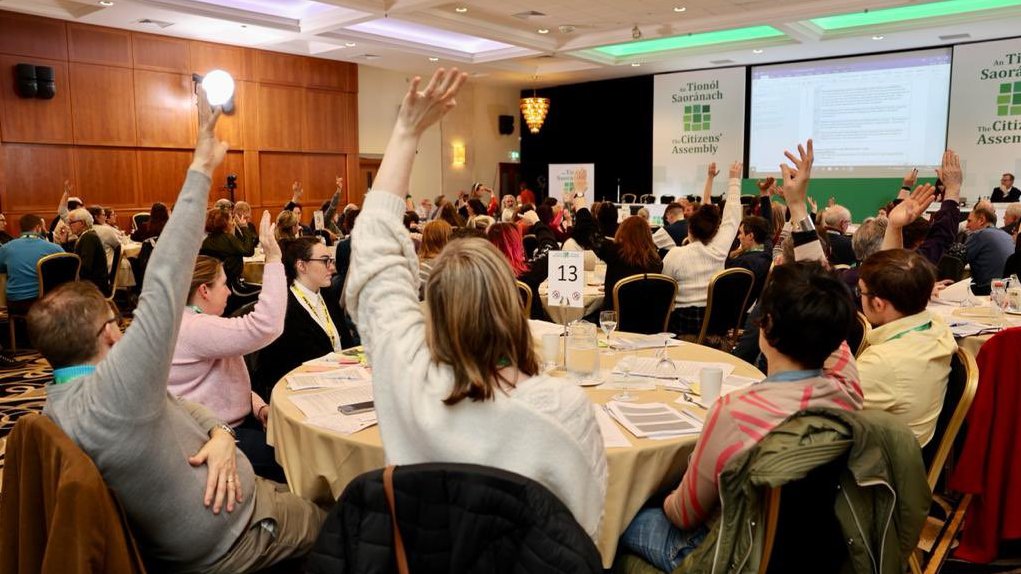
Citizens Assembly in Ireland.

Photo credit: Citizens’ Assembly of Ireland

By Atyantika Mookherjee ’27

At the Deliberative Citizenship Initiative, our D Teams, Deliberative Forums, and events aim to bring together a multitude of individuals to discuss conscientious topics to promote tolerance. In these deliberations, there is an emphasis on the importance of thoughtful exchange of ideas, diverse perspectives, and rational discourse to reach well-considered decisions. Nonetheless, while at Davidson and other college campuses, such an initiative is an active method to foster civic engagement, the question arises: is widespread deliberation truly feasible at the national level in modern societies?

At its core, widespread deliberation requires active participation from a broad spectrum of society. It entails creating platforms where individuals from diverse backgrounds can come together to discuss issues, share insights, and collaboratively seek solutions. However, one of the primary challenges to widespread deliberation is the issue of accessibility. Structural barriers such as socioeconomic disparities, geographic distance, and technological limitations can hinder broad participation. Not everyone has equal access to platforms for deliberation. Bridging these accessibility gaps requires proactive efforts to ensure that marginalized communities, including those with limited resources or marginalized voices, have avenues to participate meaningfully in deliberative processes.

Moreover, ensuring inclusivity within deliberative spaces is paramount for their effectiveness. Diversity of perspectives, experiences, and identities enriches discussions and leads to more comprehensive decision-making outcomes. However, achieving true inclusivity entails overcoming biases, discrimination, and power imbalances that can marginalize certain groups within society. Furthermore, the success of widespread deliberation depends on the willingness of individuals to engage in constructive dialogue. In an era marked by polarization, echo chambers, and information silos, fostering a culture of open-mindedness, empathy, and critical thinking is essential. People must be willing to listen to opposing viewpoints, challenge their assumptions, and engage in civil discourse even amidst disagreement.

Despite these challenges, there are promising examples of widespread deliberation being implemented in various contexts around the world. The Citizens’ Assembly initiative in Ireland, established in 2016, engages randomly selected citizens to deliberate on key societal issues. Notably, it played a crucial role in recommending abortion law reforms. Through informed deliberation, it successfully fostered inclusive decision-making and contributed to shaping public policy in Ireland, modeling an example of how deliberation is viable at the national level. Similarly, consensus conferences and participatory budgeting are initiatives that have the potential for inclusive decision-making processes that incorporate deliberative principles.

Technology further offers new opportunities to expand the reach of deliberative processes. Online platforms, social media, and digital tools can facilitate broader participation, enable diverse voices to be heard, and promote transparency in decision-making. However, it is crucial to address algorithmic biases and privacy concerns to ensure that technological innovations in deliberation uphold democratic values and principles.

Therefore, while the idea of widespread deliberation may seem daunting, it is not inherently unattainable. By addressing challenges related to accessibility, inclusivity, and civic culture, societies can move closer to realizing the vision of deliberative democracy. Embracing deliberation as a foundational principle of governance holds the promise of fostering informed societal discourse and advancing collective well-being.

Filed Under: Blog Posts, Fellow Posts

Commons Conversation Reflection: Discussing Safe Spaces with Dr. Boyer

April 19, 2024 by Atyantika Mookherjee

11×17-CC-w-Patricio-Boyer-FINAL-1

By Atyantika Mookherjee ’27

On Friday, March 22nd, a group of Davidson students gathered over lunch to discuss the concept and role of safe spaces with Dr Patricio Boyer. Dr Boyer, Director of the Humanities Program, had interesting ideas about the differing roles of safe spaces. The conversation began with an overview of the DCI’s Conversation Agreements and a round of introductions, allowing students from different majors and class years to share their reasons for interest in the topic and fostering a sense of inclusivity.

Dr Boyer then provided an overview of the topic, presenting his thoughts around how the question of a college being a safe space is a compelling one as it not only is a meeting ground for students, but also a place for faculty and staff to express their thoughts. He then opened the conversation up to the students. What followed was an engaging conversation that touched on trigger warnings, the type of media present in the classroom, and the difference between safe and brave places on college campuses.

It was incredibly interesting seeing students grapple with the question of if the classroom ought to be a safe space and the tug between content that requires a trigger warning and a comprehensive education. While – like most conversations at the DCI – there may be no easy answer, the experience was a rewarding one for all involved as we each walked away with new perspectives, more questions, and the skills to bring about productive conversations.

Filed Under: Blog Posts, Events

  • « Go to Previous Page
  • Page 1
  • Interim pages omitted …
  • Page 39
  • Page 40
  • Page 41
  • Page 42
  • Page 43
  • Interim pages omitted …
  • Page 75
  • Go to Next Page »

Footer

Blog Post Categories

  • Announcements
  • Blog Posts
  • DCI Posts
  • Events
  • Faculty Posts
  • Fellow Posts
Image of a compass superimposed by the text "Deliberative Citizenship Initiative" and "Davidson College." Clicking on this image leads to the Initiative page.

Recent DCI Blog Posts

  • We Tried to Fix Jubilee’s “Middle Ground” – Here’s How It Went
  • A Case for Deliberation in the Natural Sciences
  • Welcoming New Staff to the DCI and DCN
  • Facebook
  • Twitter
  • Instagram
  • LinkedIn


Copyright © 2026 · Infinity Pro on Genesis Framework · WordPress · Log in