Zeuxine odorata
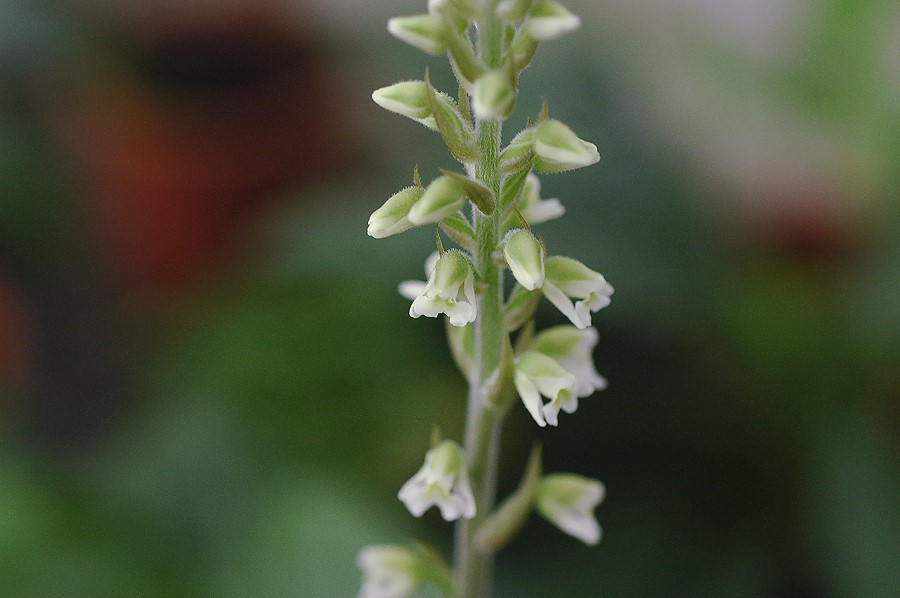
Horticulture
Shaded humid places in forests
Nomenclature/History
The history of orchid growing dates back to the late 18th century when British horticulturist became fascinated with these plants. At that time, many ships were sent to explore the tropics. Among the discoveries were many orchids that were quite different from the native European forms. Soon, wealthy plant collectors commissioned explorers to gather orchids from tropical and subtropical areas. These plants were then boxed and sent back to Europe where a large demand was created and plants were sold for high prices. Only the hardiest plants survived the long trip back in crates. Once they arrived, growers put them into dark, hot greenhouses which they believed mimicked the tropical conditions where they were collected. Few plants survived these growing conditions which added to the fascination and mystery of these plants. Knowledge about growing orchids became closely guarded secrets and only the wealthy, who could afford greenhouses, were able to fully enjoy the diversity of this plant family.
Botany
Plants robust, 30-50 cm tall. Rhizome elongate, ca. 5 mm in diam. Stem ascending, stout, 4-6-leaved. Leaves cauline, widely spaced or sometimes clustered, not withering at anthesis, obliquely elliptic to ovate-elliptic, 5-12 × 3-7 cm, base rounded, apex acute; petiole-like base 1.5-3.5 cm including tubular sheath. Inflorescence 20-35 cm, with 3 or 4 sterile bracts, puberulent; rachis 5-8 cm, subdensely 10-15-flowered; floral bracts ovate-lanceolate, ca. 15 × 8 mm, pubescent on abaxial surface and margin, apex acuminate. Flowers fragrant, resupinate, half opening, relatively large; ovary and pedicel subcylindric, 8-10 mm, sparsely pubescent. Sepals whitish green, glabrous to puberulent; dorsal sepal ovate, concave, 6-8 × 4-5.5 mm, apex obtuse; lateral sepals obliquely ovate, 8-9 × 4-4.5 mm, apex obtuse to acute. Petals white, obliquely ovate, 7-8 × 3-4.5 mm, apex mucronate; lip white, Y-shaped, 9-9.5 mm, 3-partite; hypochile slightly dilated, saccate, ca. 4 × 3 mm, containing 2 to several lamellate calli; mesochile flat, ca. 1.5 × 1.5 mm, with 2 longitudinal keels; epichile dilated, ca. 3 × 7 mm, 2-lobed; lobes diverging at an acute angle, subsquare to suborbicular, ca. 2.8 × 2.8 mm, margin undulate, yellowish at base. Column 4-4.5 mm; wings quadrate; anther cordate, ca. 2.5 mm; rostellum arms ca. 2 mm. Fl. Apr. 2n = 20.
